 |
 Portable in a very windy Cumbria
 19 August 2014 | by
 Things change and sadly I became disillusioned with the sport as seemingly endless rule changes and its increasing popularity saw it losing its core ideal, what was meant to be fun for dog and handler had sadly become too competitive, professional and commercial, too many people now make money out of the sport and what was once an enjoyable social activity is now spoilt by unsportsmanlike behaviour, complaints and bitchiness.
When my dog Boris suffered a cruciate injury the enforced time-out made me realise I didn't want to do it anymore and so I don't.. well apart from the odd exception, last weekend was the West Lakes Agility Club Show held in the small town of Haverigg on the Cumbria peninsula (Locator IO84IE)
This is a lovely old-style small friendly show with the bonus of being held just a stones throw from the sand dunes and beach. I had agreed to go and like the recent holiday in Skye it was initially planned with no thought for any radio operating.
We would be caravanning at the show for the best part of four days without any electrical hookup and the wife had volunteered to help on Saturday leaving me on my own for most of the day... so a plan was hatched at the last minute.
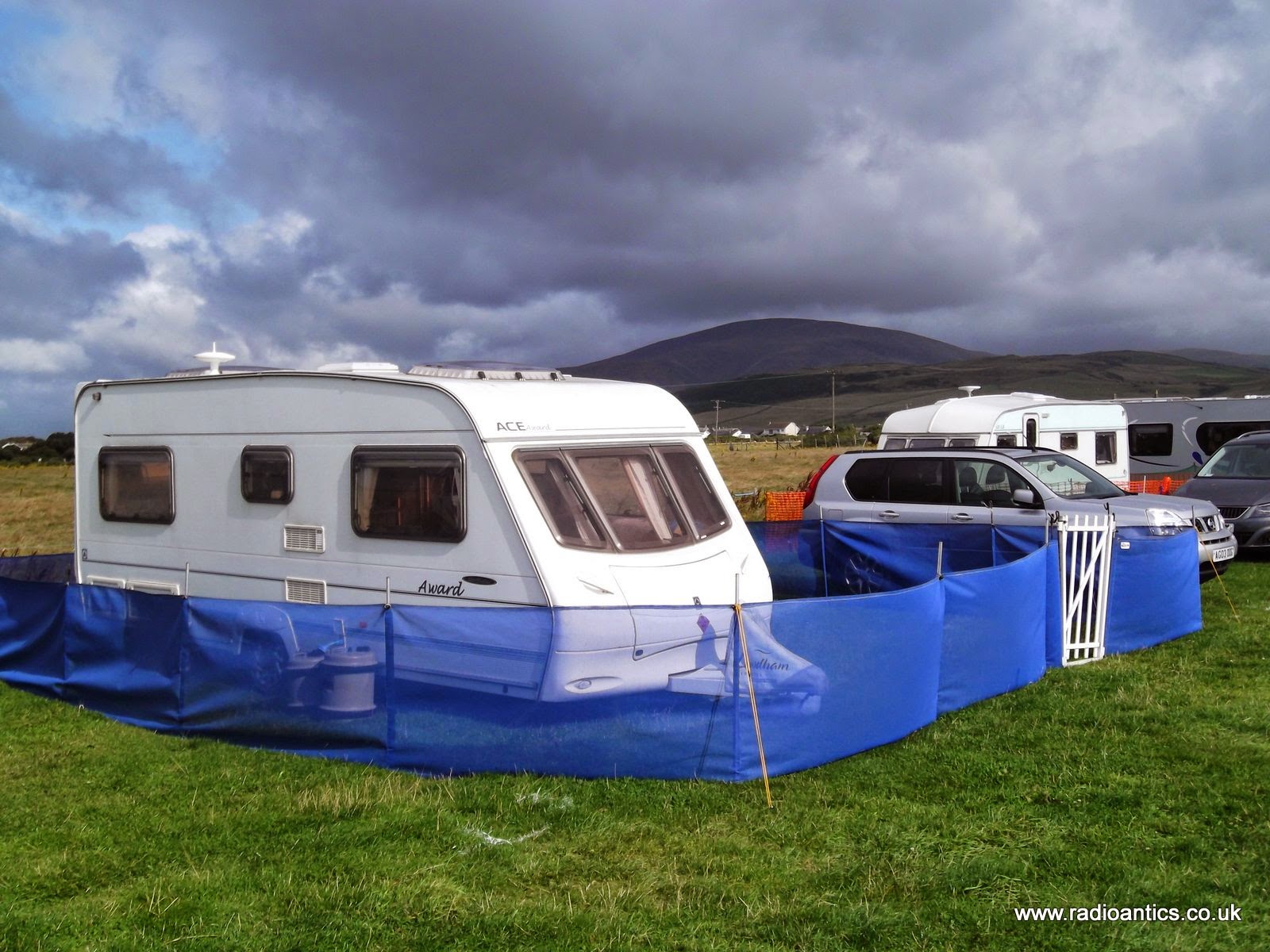
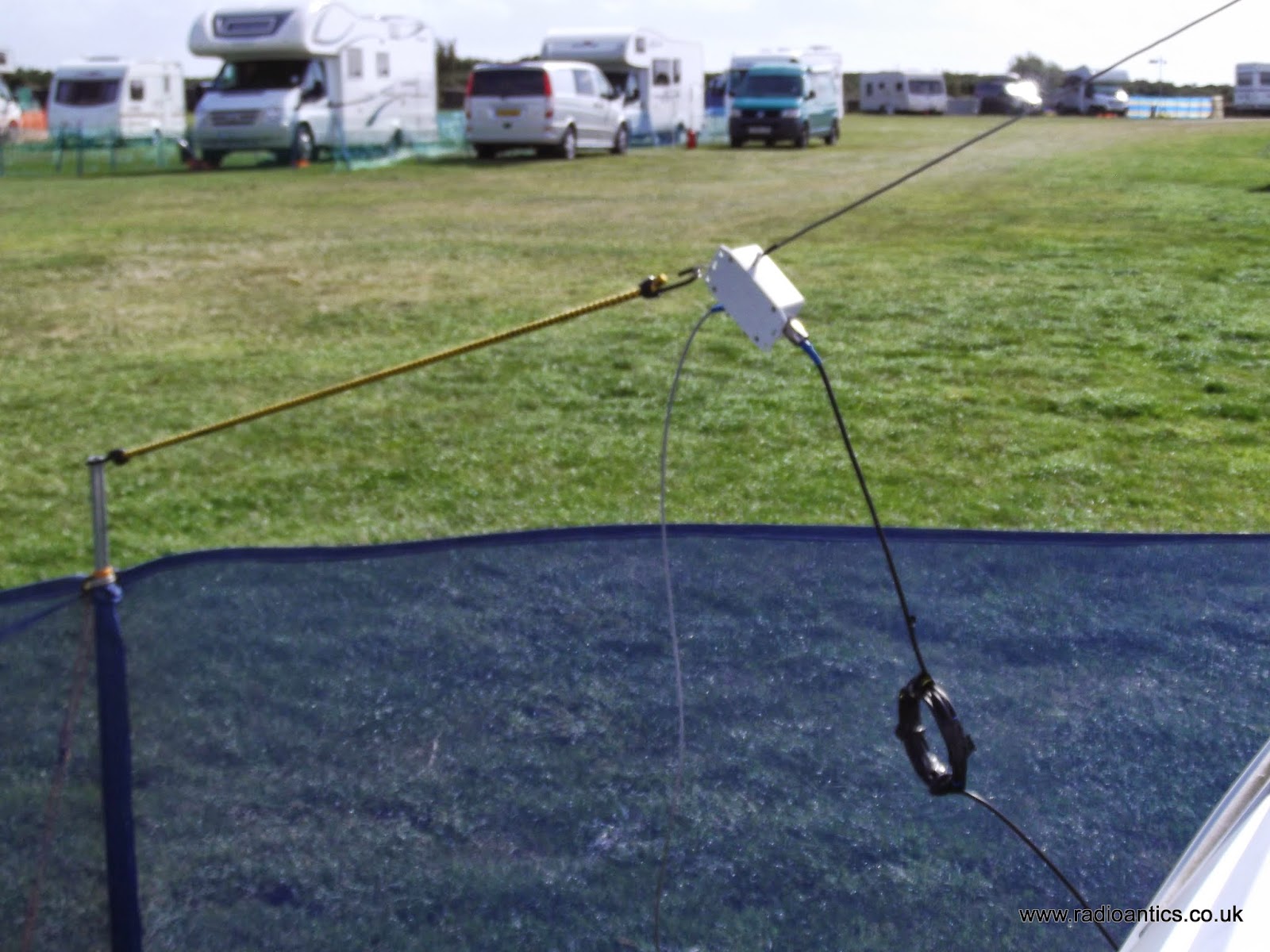
I purchased a nice new 'spare' 100A/h leisure battery and smuggled on board the FT-857D with some suitable battery clips, headphones, a fiberglass pole, some antennas. I don't own a suitable 'portable' ATU at present, having borrowed one from SKARS on several occasions but as this was a last minute thing I would have to chance operating without it. I took the M0CVO HW-20P OCF-Dipole, which has a usable VSWR on 20m, 17m, 15m, 12m and 10m without an antenna tuner and the M0CVO Magitenna, but wasn't sure what I would get from this as I'd only ever used it with a ATU.
The weather was difficult all weekend, we arrived on the Friday to be met with warm and sunny conditions but a steady strong wind. There was bit of a battle to get the caravan awning up but we managed it.Saturday the wind just got stronger, the forecast for Sunday was for even stronger winds so it was dismantled and packed away, indeed it was worse around 25-30mph with must stronger gusts.
Undeterred I got the antennas up, however the fiberglass pole I have must be getting on for 10 years old, and would often fly a pirate flag when camped at agility shows. It had already lost it's top section many moons ago but was still quite tall and so I hoisted up the OCFD balun and coax and the end of the magitenna wire in the buffeting wind and it was swinging around wildly - almost inevitably it proved too much and the remaining top section splintered!
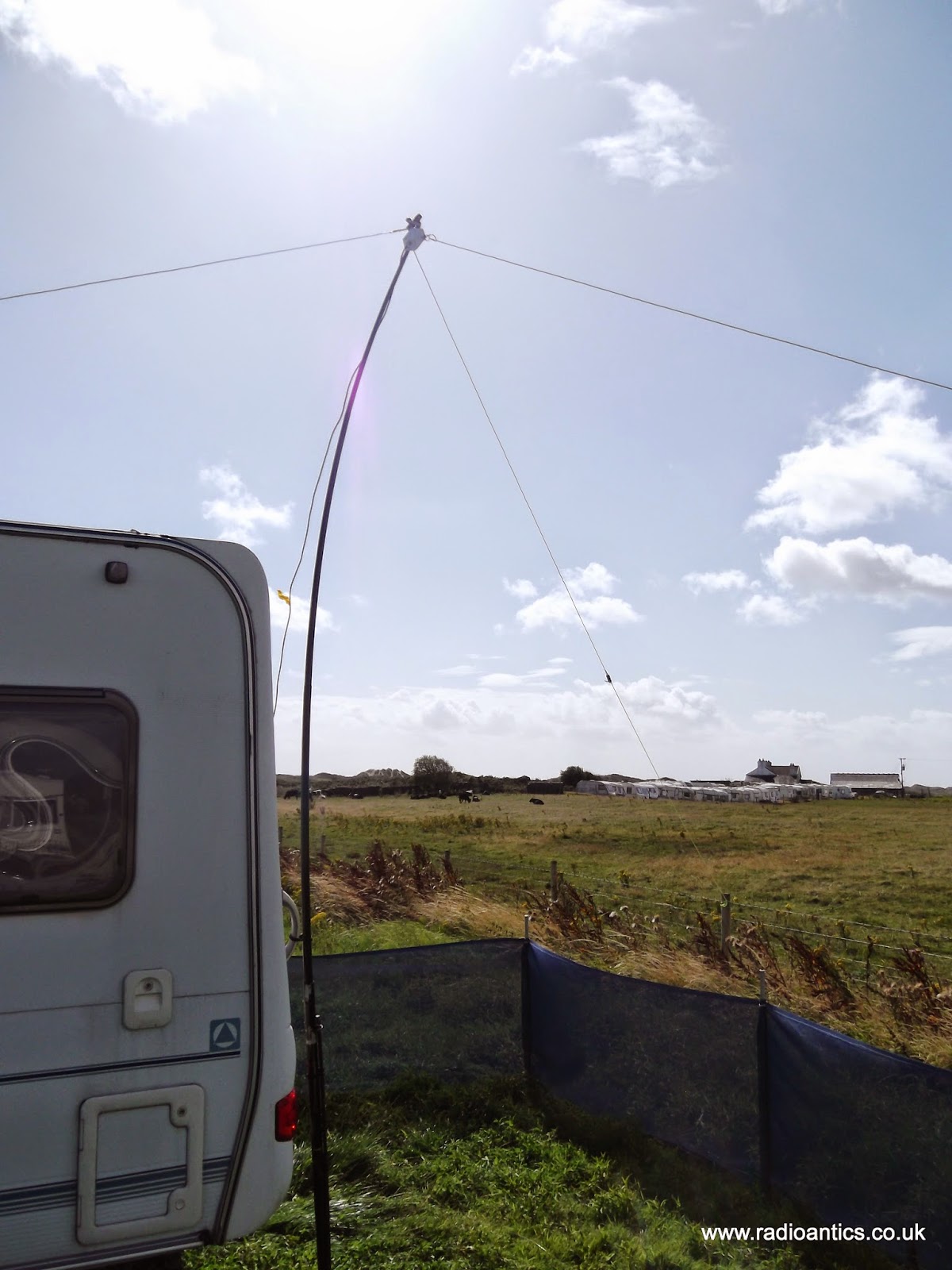
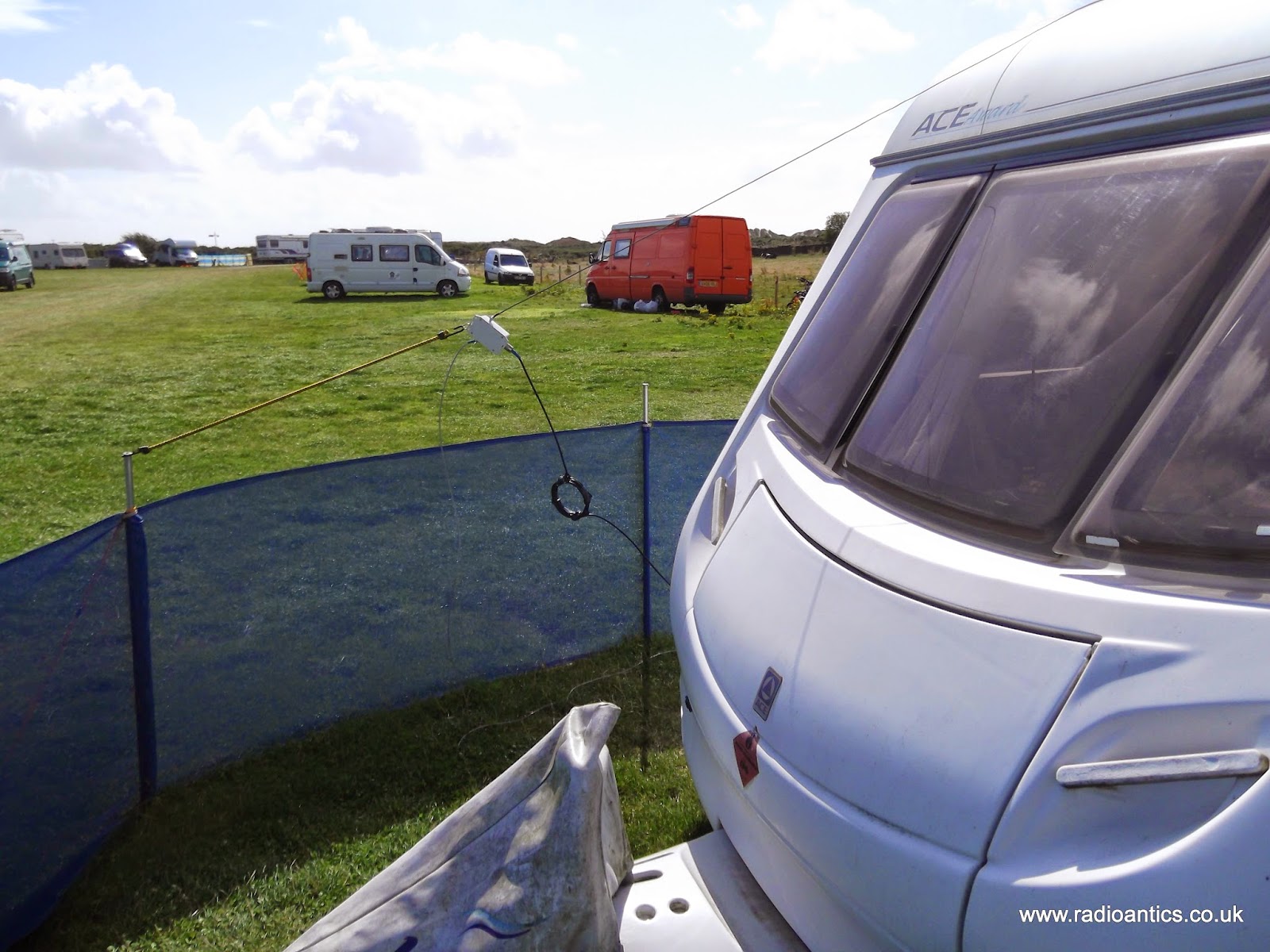
Despite losing over in a metre in length I tried again and managed to get everything up, the OCFD wires were tied out to form a sort of inverted-vee using a handy nearby fence, the Magintenna was pulled to form a sloper across over the front of the caravan, but due to the lost height actually touched the front of the roof. Amazingly I got an almost 1:1 VSWR on 40m and loud and clear RX.
This weekend was the International Lighthouse and Lightship Weekend (ILLW) this annual event has been going since 1995 and promote public awareness of lighthouses and lightships and their need for preservation and restoration, and at the same time to promote amateur radio and to foster International goodwill.
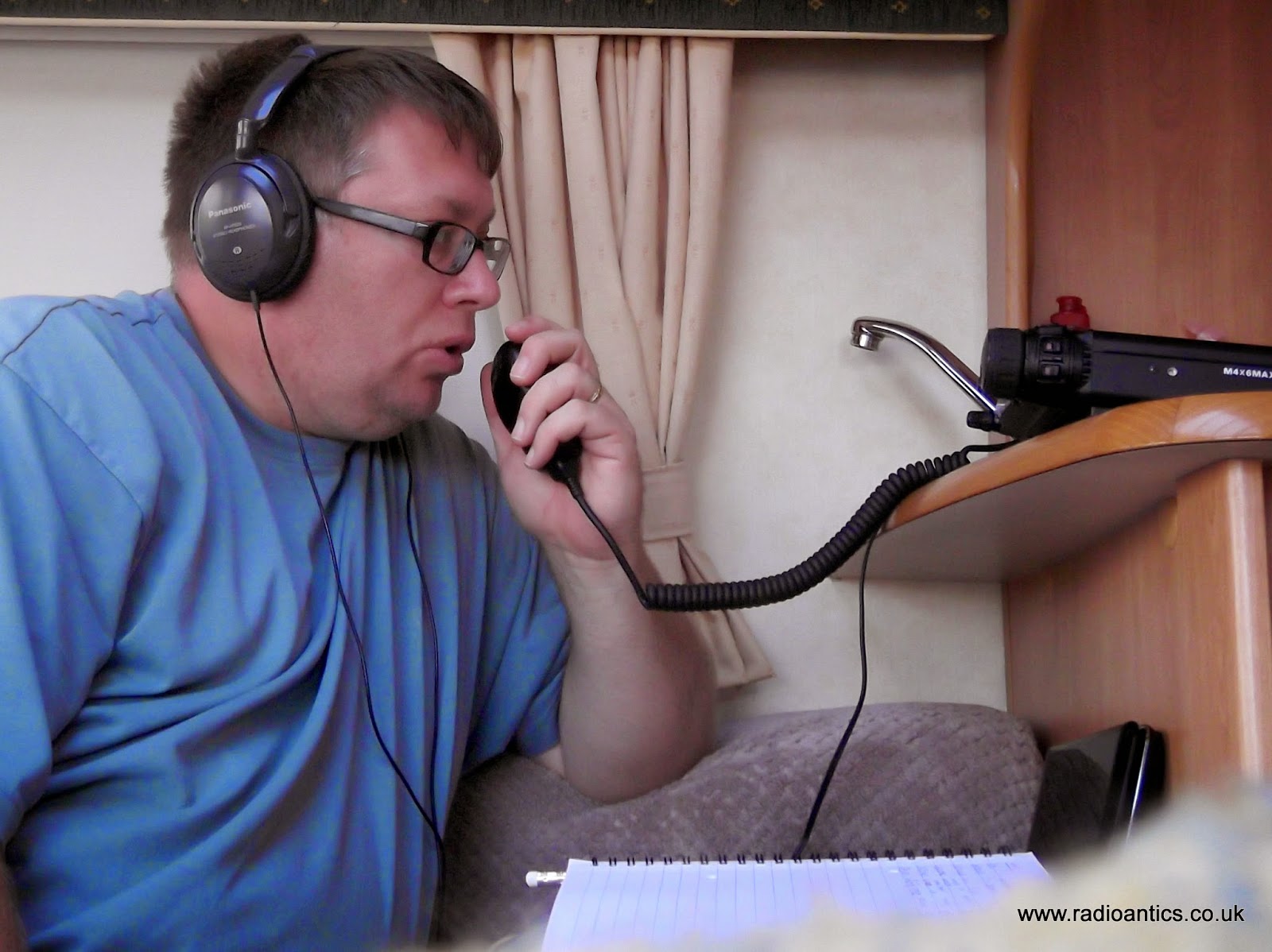
The bands were kind and I had an enjoyable Saturday afternoon and a few hours on Sunday making QSOs with a number of UK and European lighthouse stations on 40m and 20m and it seems the whole event was a great success. Alas the wind proved too much for the remainder of the fiberglass pole and it developed a large crack in the bottom section forcing me off the air.

By coincidence Haverigg has two lights, the old Hodbarrow beacon and the restored Hodbarrow Point lighthouse (pictured above from the beach). Last year we walked to the restored lighthouse but since the restoration was completed in 2004 it is sadly looking in need of some remedial work.
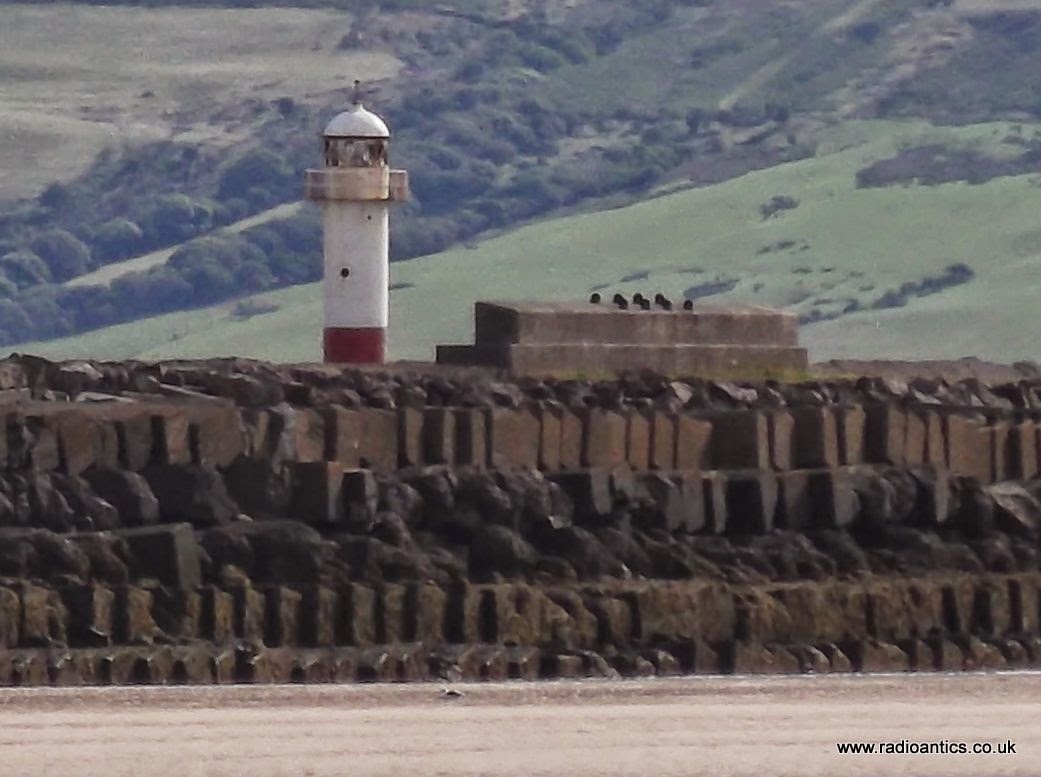
I only learned of the ILLW event at the last minute and sadly neither of the Haverigg lights were activated that weekend, next year if the show is on at the same time I may look at trying to operate from them.
Oh and the wind? Here is a video of a walk on the beach on the Sunday morning..
Andrew Garratt, MØNRD, is a regular contributor to AmateurRadio.com and writes from East Midlands, England. Contact him at [email protected].
e-Bay PCB Thermal Transfer Paper
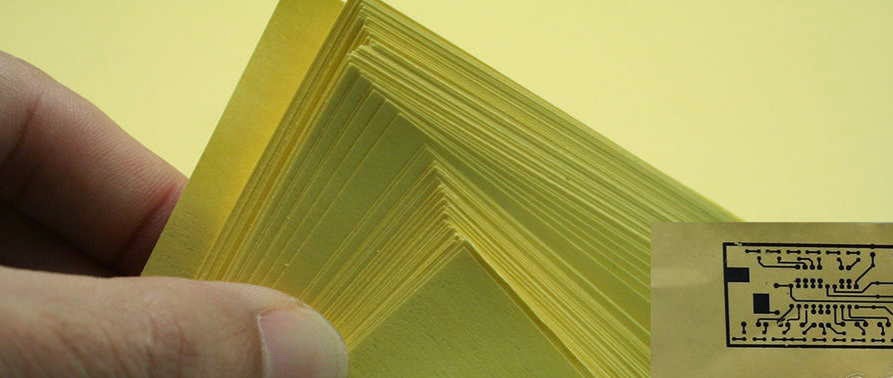 This past weekend I had the first opportunity to try my e-Bay purchased thermal transfer paper. It was to be used in my iron-on PCB work as a hopeful improvement over what I had been using...just ordinary printer paper. Supposedly the shiny photo quality papers were proving to be good performers but are expensive. Some have reported good results with glossy magazine paper but my one experience with that was not a pleasant one. Unknowingly, when I had removed the magazine page, a small amount of the sticky adhesive used in the binding process was still on the sheet. Running it through the printer caused it to melt and smear some of the laser cartridge's toner and for the next several weeks, any printing I did had a slight black streak along one edge...doh!
 My new paper from China (free shipping!) was pretty inexpensive and if it offered even a slight improvement, would be well worthwhile. This first use of the paper would be a circuit board for my earlier test-bed GW3UEP 630m transmitter. I had finished designing a PC pattern for it, using MS Paint, and was anxious to see the results.
 |
| Courtesy: http://www.gw3uep.ukfsn.org/ |
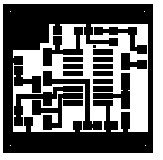
I know that a lot of folks turn up their noses at MS Paint but I have always found it to be a very versatile piece of software and have used it for making PC layouts for many years. I also use it for drawing all of the schematics appearing on my website.
After printing the pattern (printer set for maximum resolution and darkest print) and ironing-on the pattern , I allowed the board to cool for several minutes before immersing it, along with the now firmly attached yellow paper, into cold water. The first thing I noticed was how easily the paper came away from the board. It actually 'un-peeled', much like a good quality price tag sticker...you know.... the ones that don't take forever and come off in tiny bits and pieces. It peeled off smoothly with no paper residue left on the board. This was a huge improvement already. There were just a few traces of toner left on the paper as almost all had been transferred to the board.
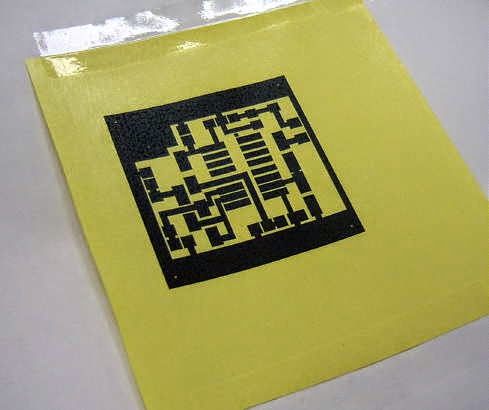 Once dried, a close examination revealed that I had pressed a little too hard with the iron and there was some evidence of 'squeeze-out' along the edges of some lines. I also found one or two very small thinner areas that probably required going over with a permanent-ink black marker pen just to make sure that those spots did not get etched. Over all I was extremely pleased with the paper and will be using it from now on.
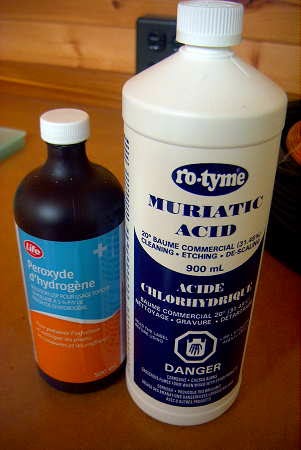
Another recent change in my PC etching regime has been a switch from the old Ferric Chloride standby to a combination of Hydrogen Peroxide and Muriatic acid. Not only does it seem to etch more cleanly (no undercutting) but it also etches very quickly and without any solution warming needed. This board was completely etched in just over 4 minutes.

The chemicals used in this method are inexpensive and are readily available at the drugstore and at the hardware store. There are numerous web-descriptions of this particular etching process but this site seems to cover the basics nicely.
The completed board turned out as shown here:
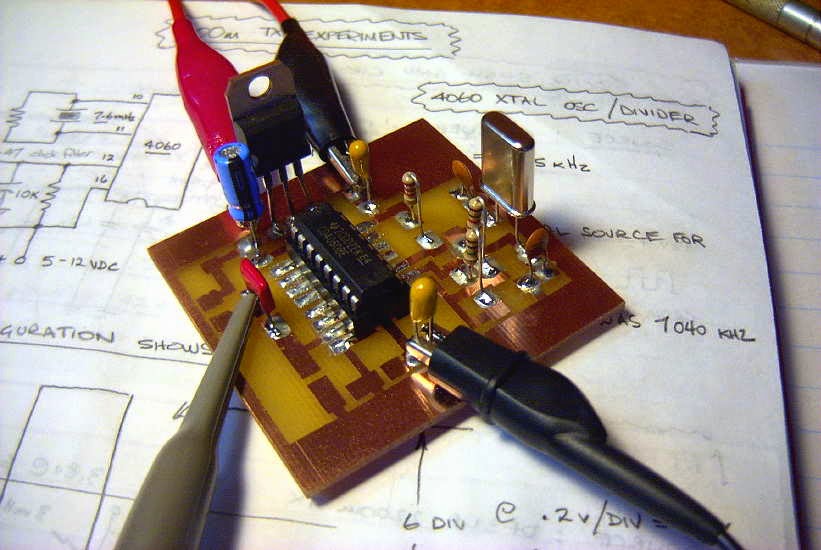
The CD4060 not only functions as a crystal oscillator but also as a versatile frequency divider. As well as fundamental frequency output, ten different 'divide-by' functions are available depending in which output pin is chosen. These range from divide-by 16,384 to divide-by 16. This circuit uses the latter, dividing the 7.6 MHz crystal down to 475 kHz at pin 7.

In summary, I can highly recommend the e-Bay yellow thermal transfer paper when used for this method of making PCB's and is much cheaper than buying photo-quality printing paper.
Steve McDonald, VE7SL, is a regular contributor to AmateurRadio.com and writes from British Columbia, Canada. Contact him at [email protected].
Largely non-radio day
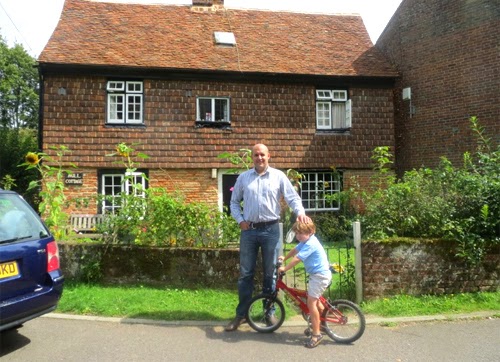 |
| Son Chris and grandson Edward outside their home. |
Although I shall probably go on 472kHz WSPR shortly, today has been a day largely without radio: we went on a train day return to Canterbury to see our son Chris and family. We have done this now 3 times and get about 4 hours with them. It was good.

Roger Lapthorn, G3XBM, is a regular contributor to AmateurRadio.com and writes from Cambridge, England.
Hamspots – a useful resource
A little while back someone introduced me to Hamspots which is a sort of filtered spotting system for digital modes. You can chose how many bands to monitor and the modes, Very useful to see JT65 and JT9-1 activity on, say, 20, 10 and 6m.

Roger Lapthorn, G3XBM, is a regular contributor to AmateurRadio.com and writes from Cambridge, England.
KA9Q on Rebooting ISEE3
Phil Karn, KA9Q is an Internet pioneer with his name on at least six RFC‘s. Best known in the world of amateur radio for his KA9Q NOS as well as numerous AMSAT satellite communications projects.
Retired from Qualcomm, Karn seems to be staying busy with other interesting projects — like this one.
Phil Karn on the reboot of the 1978 International Sun/Earth Explorer-3 (ISEE-3)/ (International Cometary Explorer) from InterWorking Labs on Vimeo.
Filed under: Ham Radio Tagged: amsat, ka9q, satellite, space, video 


Jeff Davis, KE9V, is a regular contributor to AmateurRadio.com and writes from Indiana, USA.
Practical Wireless SOTA VHF weekend 23-25 August 2014
Just a quick reminder that next weekend is the August Bank Holiday weekend and Practical Wireless are encouraging VHF/UHF operators to operate from Summits on the Air on the VHF bands. It’s not a contest, more an excuse to get out and enjoy some portable radio in some great scenery!
Richard G3CWI at SOTABeams has very kindly sponsored some prizes.
I’m planning to be out during the weekend on one or more of our local summits (there aren’t many in Oxfordshire!) and will be listening out for other SOTA activity.
Tim Kirby, G4VXE, is a regular contributor to AmateurRadio.com and writes from Oxfordshire, England. Contact him at [email protected].
Practical Wireless SOTA VHF weekend 23-25 August 2014
Just a quick reminder that next weekend is the August Bank Holiday weekend and Practical Wireless are encouraging VHF/UHF operators to operate from Summits on the Air on the VHF bands. It’s not a contest, more an excuse to get out and enjoy some portable radio in some great scenery!
Richard G3CWI at SOTABeams has very kindly sponsored some prizes.
I’m planning to be out during the weekend on one or more of our local summits (there aren’t many in Oxfordshire!) and will be listening out for other SOTA activity.
Tim Kirby, G4VXE, is a regular contributor to AmateurRadio.com and writes from Oxfordshire, England. Contact him at [email protected].
 Ham Radio Deluxe |
 W5SWL Electronics |
 Ham Radio Prep |
 KB3IFH QSL Cards  Hip Ham Shirts  HamRadioAuctions HamRadioAuctions Reliance Antennas Reliance Antennas Enigma Shop Enigma Shop |  morseDX  Ni4L Antennas  R&L Electronics R&L Electronics antennas.us antennas.us QRV QRV |
- Matt W1MST, Managing Editor
