 |
 Yet another shack clean up
 22 November 2014 | by
 As I've acquired more equipment I have found myself struggling for space and the cluttered workbench has prevented any proper construction.
Following a rearrangement in the house I had a spare 'desk' which I wanted to make of, so the plan was to move the workbench and put the new desk next to the existing desk. I had some bookshelves which were being used inefficiently and I almost threw them out but decided to make use of them by cutting them down and modifying to make new shelves to sit on the back of the desks.

I had another clean out and the remaining junk is now in large plastic storage boxes under the desk should it prove useful one day. It is still a little cluttered but I have much more room with proper access to my books and magazines.
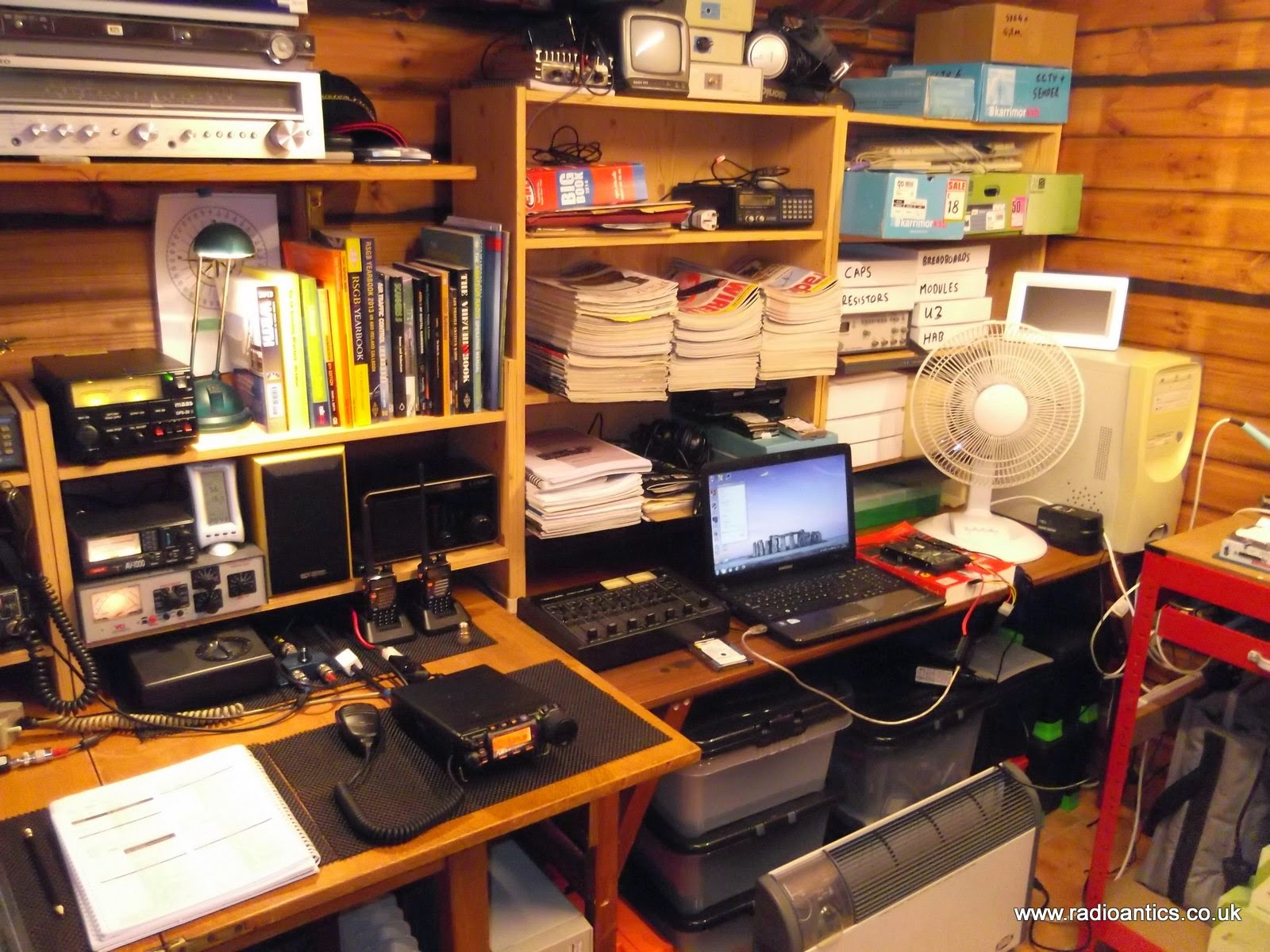
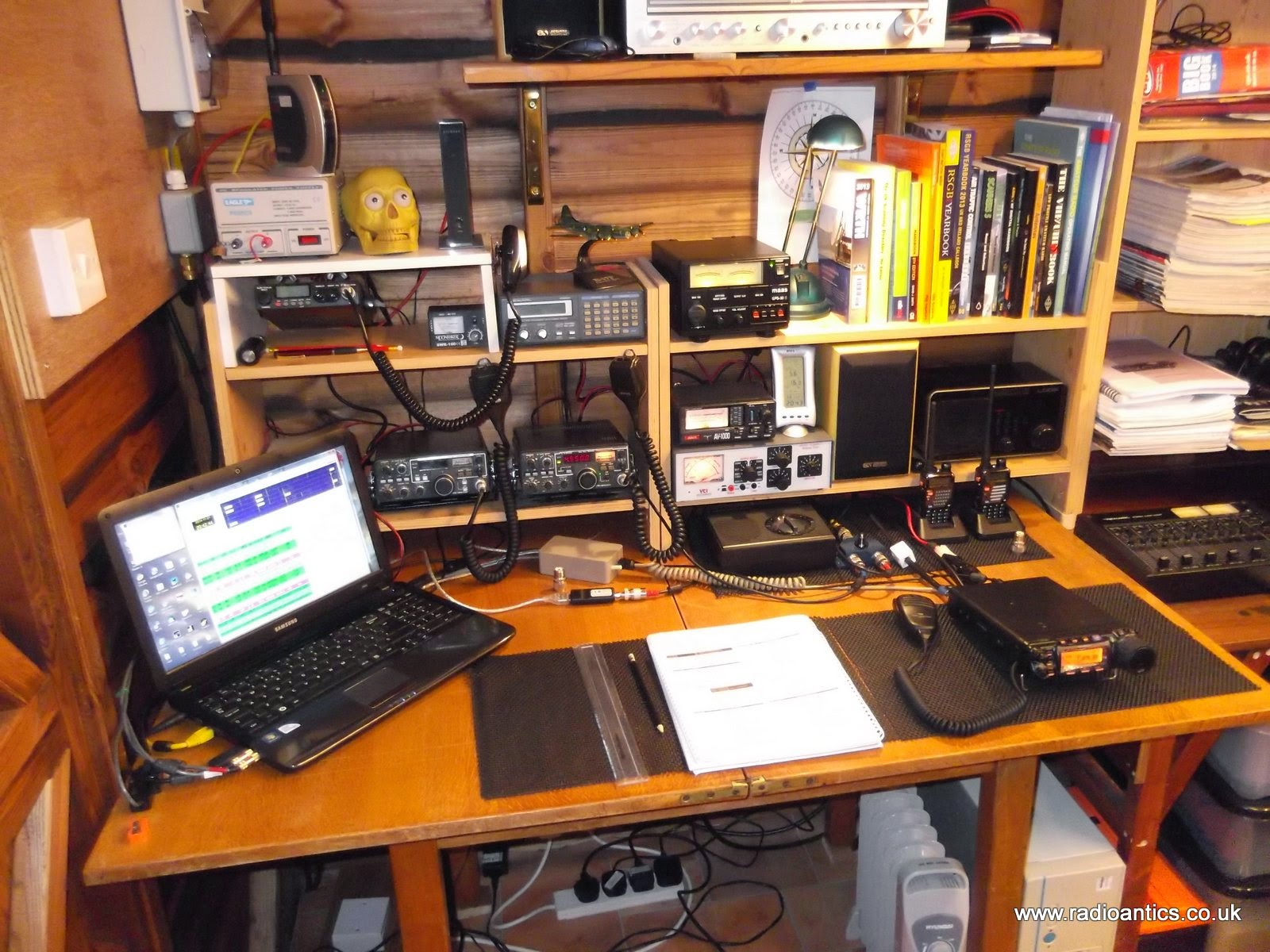
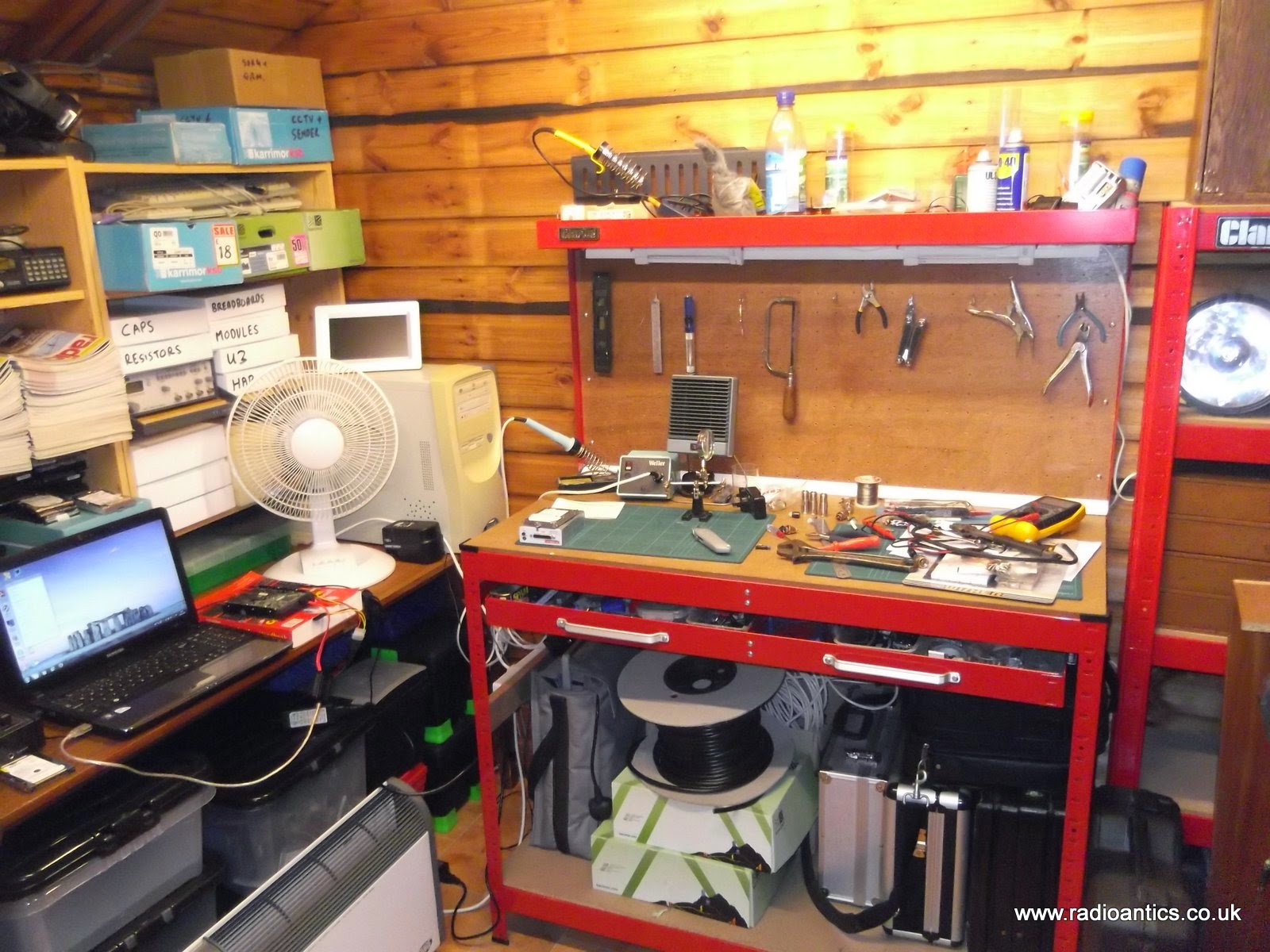
It is a work in progress, but it is a much better place to work and operate in.
Andrew Garratt, MØNRD, is a regular contributor to AmateurRadio.com and writes from East Midlands, England. Contact him at [email protected].
630m Resources – Part 1

If you're thinking about getting something going for our new 630m band, the following web resources may be of help to you.
There are a couple of 630m transmitters available on the commercial market that I know of.
JUMA , in Finland, offers the TX500, an extremely well engineered 60W Class D CW transmitter in kit form.
 |
| JUMA TX500 Transmitter: http://www.jumaradio.com/juma-tx500/ |
 |
| VK3XDK Linear Transverter: http://www.vk3xdk.net46.net/ |
From the U.S.A., WA3ETD offers a Class D transverter (non-linear) in either prebuilt or kit form.
At 13.2VDC, an output of 19-22W is claimed from the single FET final amplifier. Full details can be viewed here.
 |
| MF Solutions Transverter: http://njdtechnologies.net/ |
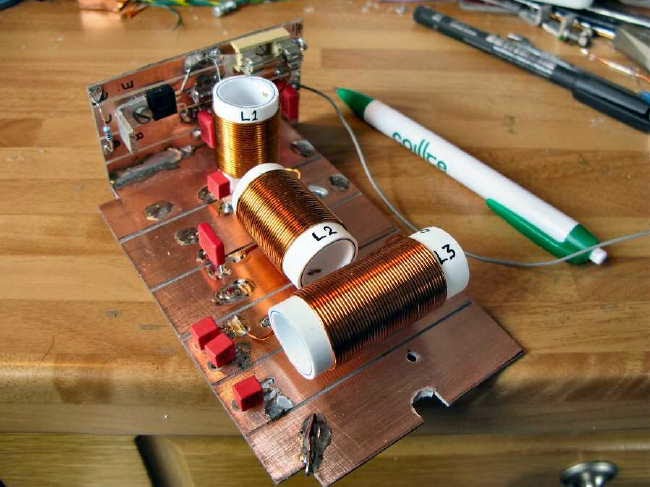
Roger's (G3XBM) has been widely reproduced in the UK and makes a nice way to get on the band on CW or with WSPR. Although the final amplifier is non-linear, with a little experimentation, it could be put into a linear mode for PSK or the JT modes. Perhaps that is what M1GEO did, as his video shows the transverter being used on SSB.
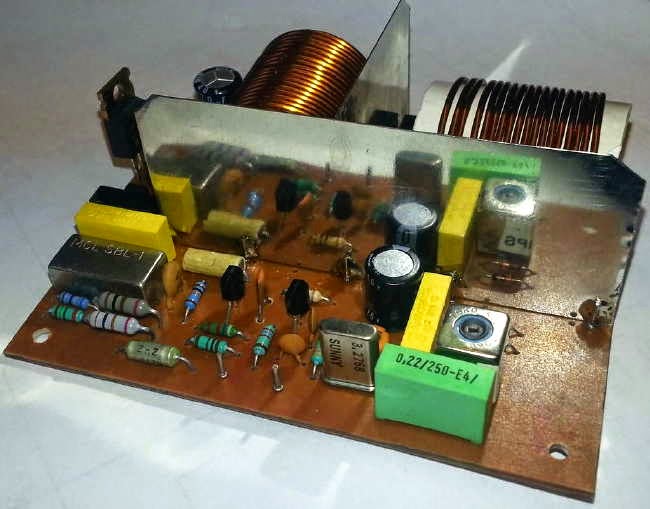 |
| M1GEO's Homebrew Version of the G3XBM Xvrtr |
 | ||
| Source: http://www.gw3uep.ukfsn.org/25W_QTX/QTX.htm |
Steve McDonald, VE7SL, is a regular contributor to AmateurRadio.com and writes from British Columbia, Canada. Contact him at [email protected].
RSGB
I have been a member of the Radio Society of Great Britain (RSGB) for 52 years now. When I first joined I was an SWL associate member – A3554 – as a young teenager. In those days you had to be proposed and seconded. Joining is much easier today. When I started there was just one licence. I took my RAE exam in 1966. It was on Friday 13th May as I recall. I attended RAE classes at Plymouth Tech every Monday night, catching the bus to Plymouth after school. Long gone days!
Over the years I have not always agreed with the RSGB’s decisions. In fact, quite recently, I did not like the decision worked up with OFCOM to allocate the 146-147MHz band to some UK amateurs by NoV. I think the RSGB could have got a much better deal for UK amateurs, but that is my personal view.
Despite this, the RSGB is our national society and deserves our support. Over the years they have supported UK amateurs very well and have a much better relationship with OFCOM than the ARRL has with the FCC in the USA where bands we have had access to for years are still not available! The monthly RadCom magazine is a good read with a mix of technical and non-technical articles.
So, if you are not an RSGB member and you live in the UK, may I encourage you to join?
See www.rsgb.org .


Roger Lapthorn, G3XBM, is a regular contributor to AmateurRadio.com and writes from Cambridge, England.
Which is your favourite Baofeng (Pofung) survey results

Thanks to all those who took the time to do the survey:
| |||||||||||||||||||||||||||||||||||||||||||||||||||||||||||||
Steve, G1KQH, is a regular contributor to AmateurRadio.com and writes from England. Contact him at [email protected].
LHS Episode #136: Introduction to FreeDV
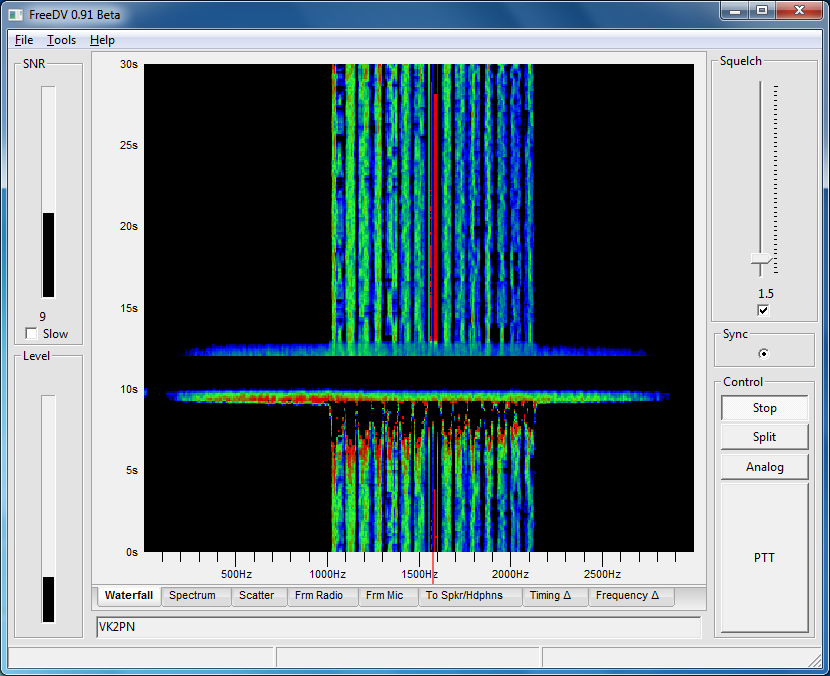 Hello, everyone! We are back again with another fun and informative episode of Linux in the Ham Shack. In this episode, your hosts discuss solar flares, lots of space weather, stable and easy-to-install Linux distributions, H.R. 4969, Quentin Tarantino, dinner rolls and the amazing and fun new transmission mode for HF known as FreeDV. Don’t miss a second of this action-packed episode.
73 de The LHS Guys
Russ Woodman, K5TUX, co-hosts the Linux in the Ham Shack podcast which is available for download in both MP3 and OGG audio format. Contact him at [email protected].
Amateur Radio Newsline Report 1945 November 21 2014
- Malaysia shows its support of ham radio emergency communications
- Unidentified German ham takes on Russian military communications
- Japan announces a deep space satellite missions
- New DMR experiments take place down – under
- Space junk turns out to be a new Russian satellite
Hunting For NDBs In CLE188
 |
| Courtesy: http://americanradiohistory.com/ |
These listening events serve several purposes. They:
- determine, worldwide, which beacons are actually in service and on-the-air so the online database can be kept up-to-date
- determine, worldwide, which beacons are out-of-service or have gone silent since the last CLE covering this range
- will indicate the state of propagation conditions at the various participant locations
- will give you an indication of how well your LF/MF receiving system is working
- give participants a fun yet challenging activity to keep their listening skills honed
Hi all,
The CLE Survey results are so interesting I almost forgot to send this!
Please join us in our 188th Co-ordinated Listening Event which starts
this Friday. All are very welcome - 'Regulars' and 'First-Timers' alike.
CLEs are not contests - if you enjoy taking part you are a winner!
Days: Friday 21st - Monday 24th November
Times: Start and end at midday, your LOCAL TIME
Range: 370 - 384.9 kHz
Just log all the NDBs that you can identify with their nominal (listed)
frequencies in the range (it includes 370 kHz, but not 385 kHz)
plus any UNIDs that you come across there.
Please send your CLE log to the List in a plain text email if possible
(not in an attachment) with CLE188 at the start of its title.
Show on each log line:
# The date (e.g. 2014-11-21, etc., or just 21) and UTC.
(the date changes at 00:00 UTC)
# kHz (the nominal published frequency, if known)
# The Call Ident.
Please show those main items FIRST - other optional details such as
Location and Distance go LATER in the same line.
If you send interim logs, please also send a 'Final' (complete) log.
As always, tell us your own location and brief details of the equipment
that you were using during the weekend.
I'll send the usual 'Any More Logs?' email at about 18:00 UTC on
Tuesday - you can check from it that your log has been found OK.All logs must arrive on the list by 09:00 UTC on Wednesday 26th
at the very latest.
I hope the combined results will be completed on that day.
To help your listening, seeklists are available via the CLE page
http://www.ndblist.info/cle.htm
Good listening - enjoy the CLE
Brian
----------------------------------------------------------
From: Brian Keyte G3SIA ndbcle'at'gmail.com
Location: Surrey, SE England (CLE co-ordinator)
----------------------------------------------------------
(If you wish you could use any one remote receiver for your loggings,
stating the location and owner - with their permission if required.
A remote listener may NOT also use another receiver, local or remote,
to make further loggings for the same CLE).
Final details can be found at the NDB List website, and worldwide results, for every participant, will be posted there a few days after the event.
The very active Yahoo ndblist Group is a great place to learn more about the 'Art of NDB DXing' or to meet other listeners in your region. There is a lot of good information available there and new members are always very welcome.
If you are contemplating getting started on 630m, listening for NDBs is an excellent way to test out your receive capabilities as there are several NDBs located near this part of the spectrum.
You need not be an ndblist member to participate in the CLEs and all reports, no matter how small, are of much value to the organizers.
Reports may be sent to the ndblist or e-mailed to either myself or CLE co- ordinator, Brian Keyte (G3SIA).
Please...don't be shy and do give the CLE a try....then let us know what NDB's can be heard from your location! Your report can then be added to the worldwide database.
Steve McDonald, VE7SL, is a regular contributor to AmateurRadio.com and writes from British Columbia, Canada. Contact him at [email protected].
 Ham Radio Deluxe |
 W5SWL Electronics |
 Ham Radio Prep |
 KB3IFH QSL Cards  Hip Ham Shirts  HamRadioAuctions HamRadioAuctions Reliance Antennas Reliance Antennas Enigma Shop Enigma Shop |  morseDX  Ni4L Antennas  R&L Electronics R&L Electronics antennas.us antennas.us QRV QRV |
- Matt W1MST, Managing Editor
