 |
 Spark transmitters and modern simple rigs
 25 November 2014 | by
 In the early days of wireless, spark transmitters were all they had. Selectivity and bandwidths were not major concerns. These days it is all so different with sometimes very crowded bands and the bandwidth of both transmitter and receiver being of major importance.
See http://en.wikipedia.org/wiki/Spark-gap_transmitter for some interesting reading. I recommend you do not try a spark transmitter as you would be very unpopular because of the wide signal and interference caused. By all means read about them though.
A modern challenge is to see just how simple rigs can be made yet still function credibly on the amateur bands today. Rigs like the Pixie are fun, but such ultra-simple transceivers are let down by deaf or easily overloaded receivers. To my mind, the receivers have to be selective, sensitive, have netting, and not be easily overloaded. The challenge is to overcome these issues! Often TX power is not the deal breaker.
UPDATE 1740z: W5OLF has just shown me a photo of is tiny 1 inch ferrite rod antenna on which he has had some success with on 10m WSPR. I tried some WSPR experiments with ferrite antennas some years ago on 40m, 30m and 20m. As long as the ferrite does not saturate they do work. See www.g3xbm.co.uk .

Roger Lapthorn, G3XBM, is a regular contributor to AmateurRadio.com and writes from Cambridge, England.
I’m dreaming of a white …….
What?!?
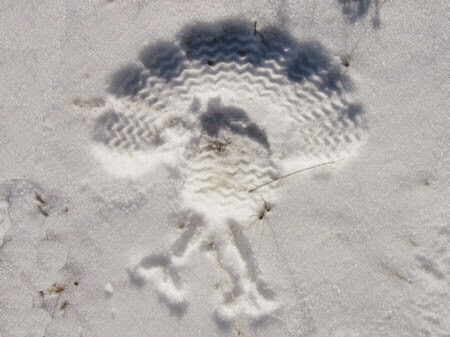
Yes, Virginia, it looks like the east coast is going to receive a rare white Thanksgiving. Even though it approached 70F (21C) here yesterday, a change is in the offing. By 8:00 AM tomorrow morning, the busiest travel day of the entire year, a classic Nor'easter will be making its way up the coast, bringing much colder air and snow with it. By Buffalo, NY and Great Lakes region standards, we're talking a mere dusting of snow - maybe only 3-8 inches (7-20 cm), but enough to make traveling to Grandma's house a trickier proposition than normal. By the way, the last time it snowed in these parts for Thanksgiving was 1989 - some 25 years ago.
On a Ham Radio note, it appears my W3EDP antenna has gone the way of the DoDo Bird, that is - extinct. I plugged it into the KX3 the other day and I noticed that it is considerably deaf. Stations that I can hear plainly and loudly with the EDZ and the Butternut are but a mere whisper on the W3EDP.
I suspect I know where the trouble is. There are only three parts to this antenna - the actual wire, the balun, the coax. I'm placing my money on the coax. I suppose water could have gotten into the balun and could be wreaking havoc, but it is a commercial brand, popular make balun. I think it's way more likely that water probably got into the coax. I probably didn't weather-proof the connection as well as I thought I had.
Unfortunately, I don't have a piece of coax long enough to replace it right now. Guess I'll be ordering some over the long Holiday weekend. I don't suppose there are any coax stores holding day-after-Thanksgiving Black Friday sales, eh?
72 de Larry W2LJ
QRP - When you care to send the very least!
Larry Makoski, W2LJ, is a regular contributor to AmateurRadio.com and writes from New Jersey, USA. Contact him at [email protected].
FTDI still bricking chips?
The Scottish company Future Technology Devices International (FTDI) released an updated version of their USB-to-Serial driver for Windows on their website late September and last month the driver became available via Microsoft Windows Update. It soon became apparent that these new drivers could 'soft brick' counterfeit and software-compatible clones of their chips by re-writing the USB product ID (PID) to "0000". This action prevents the chip from being recognised by drivers of any operating system, effectively making them inoperable unless the PID is changed back. This clumsy and ill thought out measure was intended to protect its intellectual property.
The ability to reprogram the USB Vendor/Product IDs is a feature of FTDI devices offered to equipment manufacturers and so most bricked devices could be reset by using the downloadable FTDI utility.
Obviously there was much outrage from the hobbyist community and FTDI were roundly criticised and as a result the malicious driver was supposedly removed from the Windows update system.
Or so I thought...
I am currently constructing another data mode interface for some experiments with FreeDV. It requires the usual PTT control driven using the RTS line from a serial port. I purchased a couple of simple TTL level interface boards on eBay which claimed to use FTDI chips.
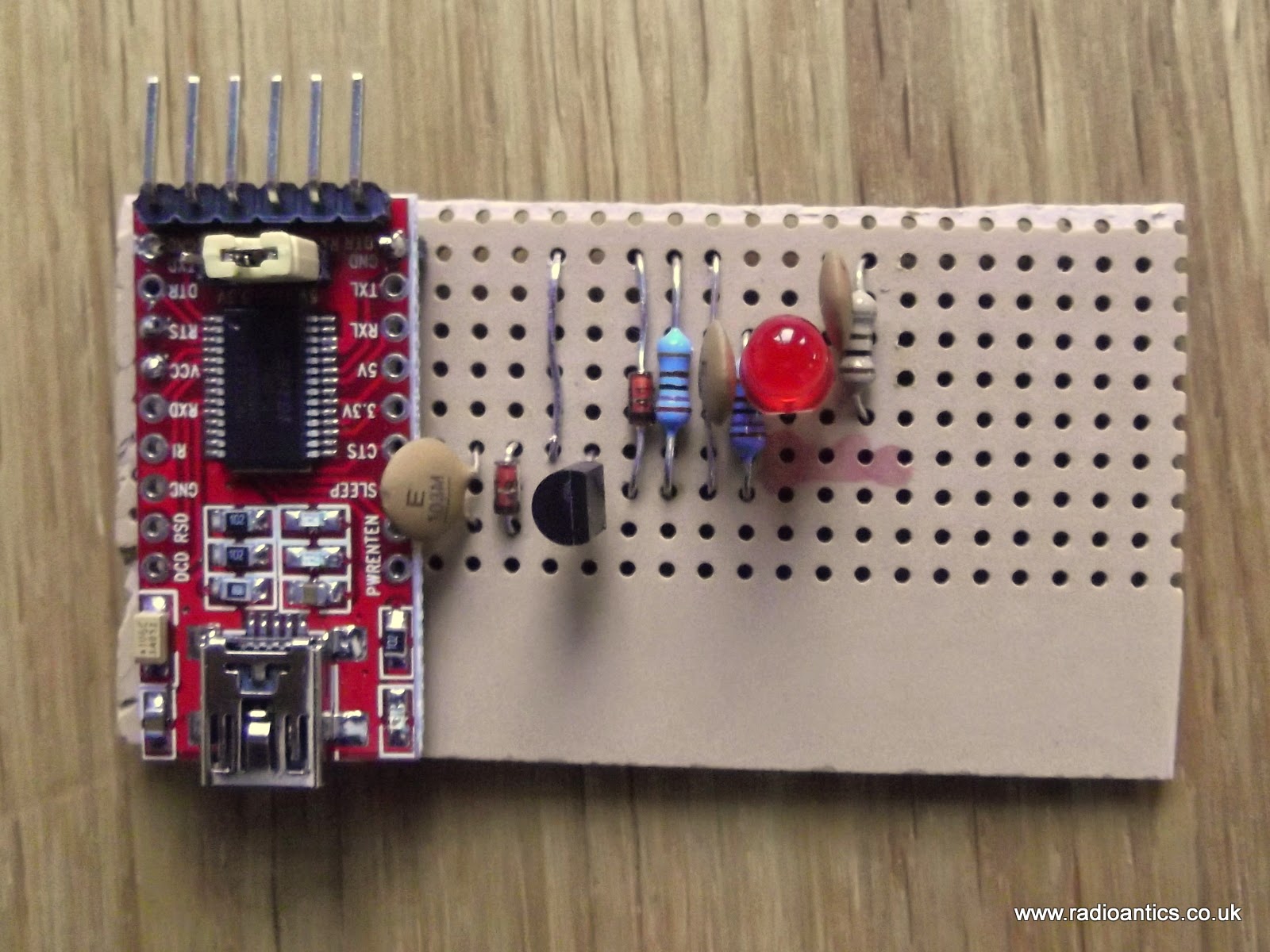
I built up a little scrappy veroboard circuit with an open-collector drive transistor and plugged into the shack PC and everything seemed okay as this PC already had an older FTDI driver installed.
I am using another computer for the FreeDV experiments and plugged the board into this thinking it too already had a safe FTDI driver installed but instead it brought up the installing driver dialogue and appeared to go online and download drivers and install them. I really didn't pay much notice as I wasn't too worried as any malicious drivers had supposedly been pulled and sure enough after installation everything appeared to work, the port appeared in device manager.
I unplugged the board to make a slight change and was surprised when I plugged it back in the PC the driver installation dialogue reappeared followed by an error message saying driver couldn't be installed and contact the manufacturer.
The serial port now appeared in the device manager with a yellow exclamation mark saying no driver installed error 28. Examining the device details showed that the VID was still 0403 but the PID was 0000 it had been bricked! Unfortunately not soft bricked as I have been unable to reset the chips PID using the FTDI utility.
I am not exactly sure what has happened but still a case of beware when it comes to FTDI devices and I shall be avoiding them from now on.
Andrew Garratt, MØNRD, is a regular contributor to AmateurRadio.com and writes from East Midlands, England. Contact him at [email protected].
630m Resources – Part 2
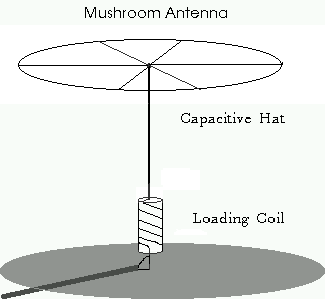
Using the transverter approach offers the advantage of providing a higher-stability signal generated by the main station's transceiver oscillator system. Most of the digital modes require a higher stability than would be needed for straight CW.
If your main interest is normal speed CW, then a digital VFO, such as the one devised by GW3UEP, would do the job.
If you are content operating on 475.0 kHz, then an inexpensive 7.6MHz crystal, in a divided-down oscillator will work well, and with good enough stability for some QRSS work as my earlier "GW3UEP Transmitter In QRSS Mode" report indicated.
The other option for frequency generation is a DDS.
 |
| N3ZI DDS |
For those wanting something a bit more robust, W1VD describes a very nice high-power transmitter. His website is packed with useful circuits and ideas for both 2200m and 630m.
 |
| W1VD Dual-Band Kilowatt : http://www.w1vd.com/ |
W7IUV also describes, in great detail, his method of generating high-power on 630m. There is much to be learned from his document describing the design and operation of his unique 'linear-mode' transmitter.
 |
| W7IUV 630m TX: http://www.w7iuv.com |
Another practical way of generating moderate power, certainly enough to meet the Canadian 5W EIRP limit, is to combine two or more 100W transmitters, such as the GW3UEP transmitter. It is reasonably simple and inexpensive to combine several modules with the use of a homebrew power combiner, as previously described.
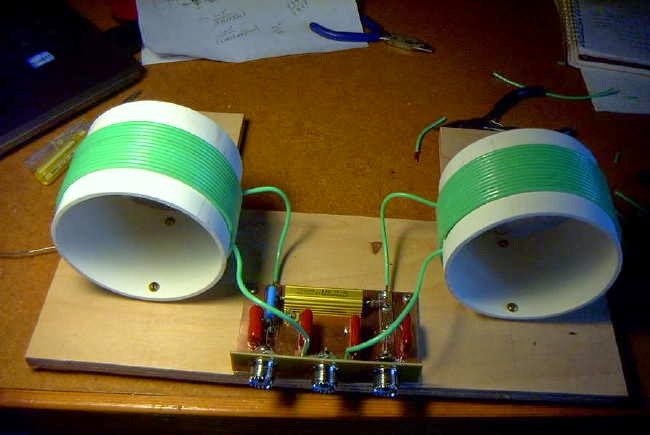 |
| Homebrew 630m two-Port Power Combiner / VE7SL |
Steve McDonald, VE7SL, is a regular contributor to AmateurRadio.com and writes from British Columbia, Canada. Contact him at [email protected].
Armchair ham radio at it’s best!
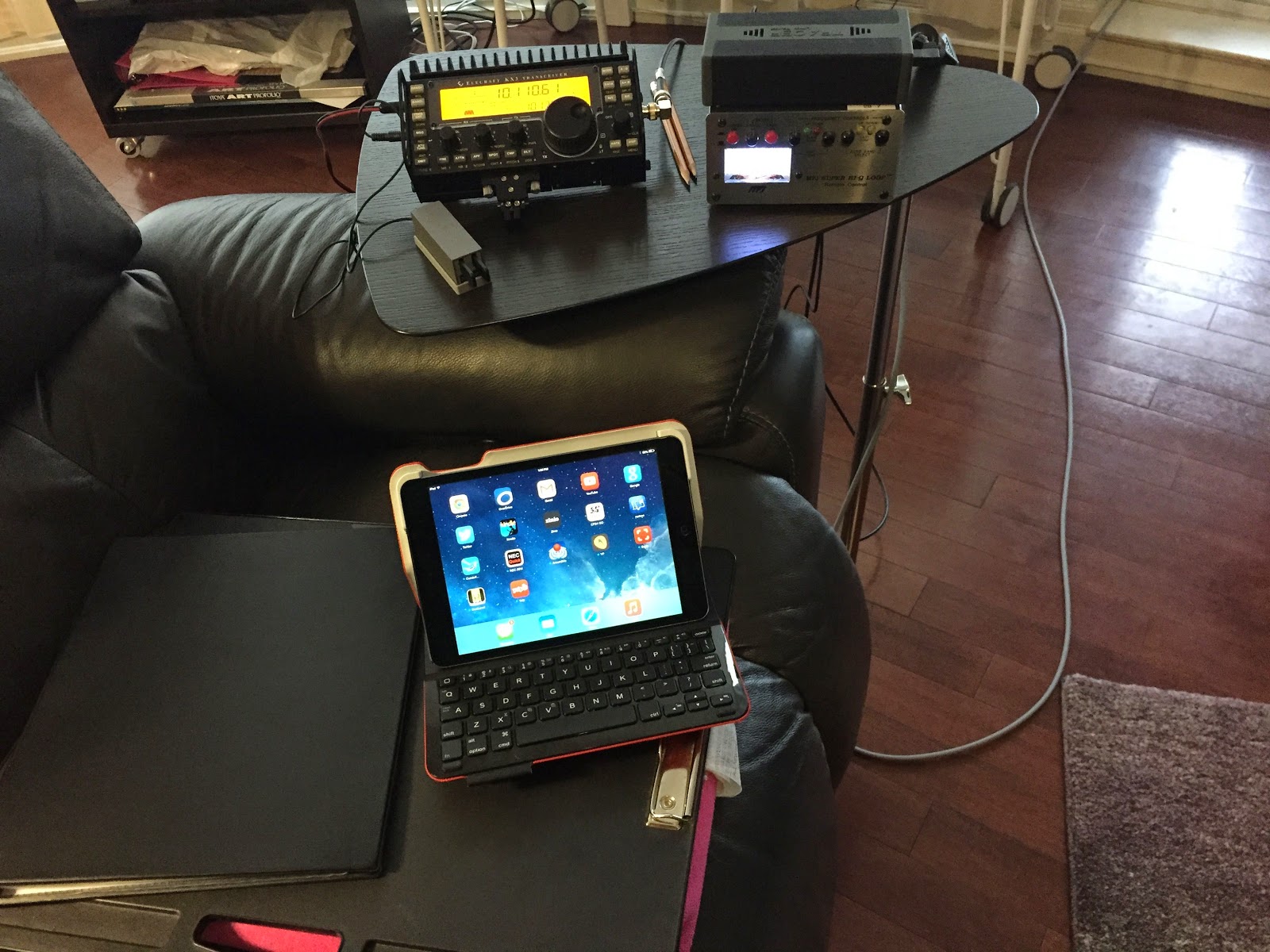 |
| The armchair setup |
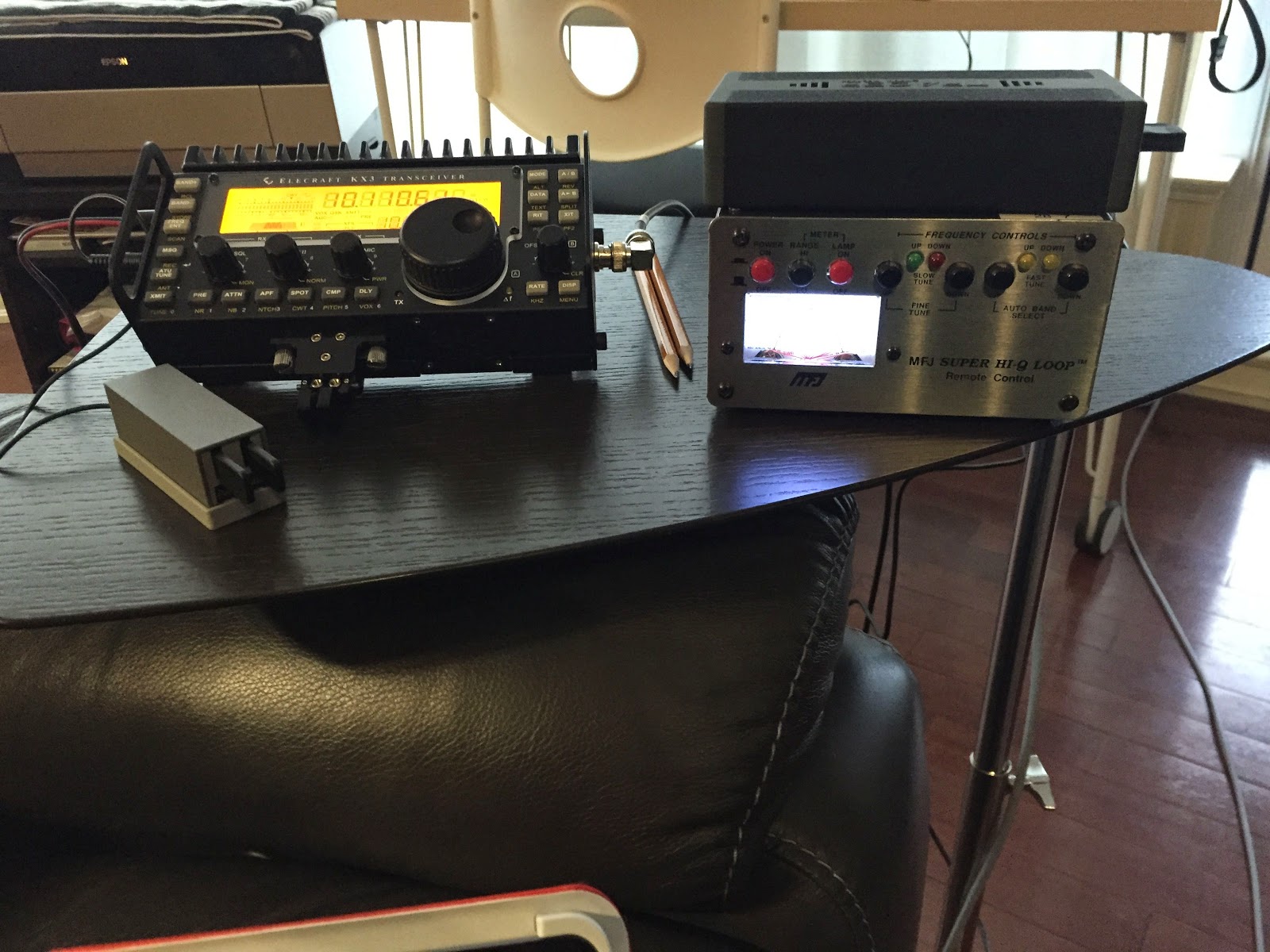 |
| A closer look |
 |
| The op desk with Palm paddle |
Mike Weir, VE9KK, is a regular contributor to AmateurRadio.com and writes from New Brunswick, Canada. Contact him at [email protected].
Announcing the January 2015 WØTLM Technician License Class
 Ham Radio Two-Day License Class
Sat Jan 31 and Sat Feb 7 (8 AM to 5 PM) 2015
Location: Black Forest Fire Station 1, Black Forest, CO
The Technician license is your gateway to the world-wide excitement of Amateur Radio …
- Earn your ham radio Technician class radio privileges
- Pass your FCC amateur radio license exam right in class on the second day
- Multiple-choice exam, No Morse Code Required
- Live equipment demonstrations
- Learn to operate on the ham bands, 10 Meters and higher
- Learn to use the many VHF/UHF FM repeaters in Colorado
- Find out how to participate in emergency communications
There is a non-refundable $25 registration fee for the class.
In addition, students must have the required study guide and read it before attending the two-day class: HamRadioSchool.com Technician License Course $20.95
(make sure you get the most recent edition of this book, updated for the new FCC exam questions)
Advance registration is required (no later than one week before the first session, earlier is better! This class usually fills up weeks in advance.)
To register for the class, contact: Bob Witte KØNR
Email: [email protected] or Phone: 719 659-3727
Sponsored by the Tri-Lakes Monument Fire Radio Association
For more information on amateur (ham) radio visit www.arrl.org or www.wedothat-radio.org
The post Announcing the January 2015 WØTLM Technician License Class appeared first on The KØNR Radio Site.
Bob Witte, KØNR, is a regular contributor to AmateurRadio.com and writes from Colorado, USA. Contact him at [email protected].
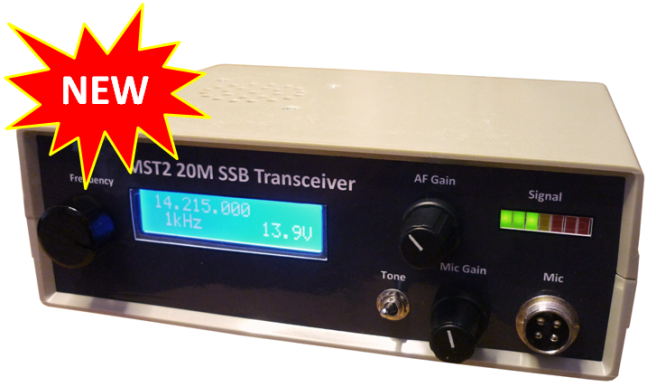
MST SSB transceiver kits
See http://www.ozqrp.com/index.html
 |
| https://pbs.twimg.com/media/B2o8mpYIgAAX6Pc.png:large |
A nice line of SSB QRP transceivers for 80, 40 or 20m with power up to 5W. These kits come from Australia and payment is by PayPal. I have no experience of these kits so have no idea how they perform when bands are busy as in Europe.
It looks like these are easy to build kits.

Roger Lapthorn, G3XBM, is a regular contributor to AmateurRadio.com and writes from Cambridge, England.
 Ham Radio Deluxe |
 W5SWL Electronics |
 Ham Radio Prep |
 KB3IFH QSL Cards  Hip Ham Shirts  HamRadioAuctions HamRadioAuctions Reliance Antennas Reliance Antennas Enigma Shop Enigma Shop |  morseDX  Ni4L Antennas  R&L Electronics R&L Electronics antennas.us antennas.us QRV QRV |
- Matt W1MST, Managing Editor
