 |
 LHS Episode #548: The Weekender CXVIII
 18 July 2024 | by
 Listen Now
Spin the Random Topic Wheel (Segment 1)
- The Best Ethnic Foods
This Weekend in Hedonism (Segment 2)
Cheryl’s Recipe Corner!
Peach Fritters
Description
Summertime is peach time, and these are great little dessert bites!
Ingredients
1 generous cup cubed fresh peach (about 1 very large, or 2 small peaches)
2 tablespoons white sugar
1/8 teaspoon vanilla extract
1 pinch ground nutmeg
1 pinch ground cinnamon
1 tablespoon panko breadcrumbs
1/2 cup self-rising flour
Ingredients (Bourbon Simple Syrup)
1/4 cup white sugar
2 tablespoons water
1 tablespoon Bourbon whiskey
Directions
Add cubed peaches to a bowl and toss well with 2 tablespoons sugar. Coverand let sit at room temperature for 30 minutes. Peaches will release their juice and a syrup will form at the bottom of the bowl. Heat oil in a deep-fryer or large saucepan to 375 degrees F (190 degrees C). Stir vanilla extract, nutmeg, cinnamon, and panko breadcrumbs into peaches. Add self-rising flour and stir until batter is no longer dry or sticky but fully moistened, about 1 minute. Rest batter for 3 to 5 minutes before frying. Transfer 6 heaping spoonfuls of batter into the hot oil, and fry for 90 seconds. Carefully tip fritters over to the other side and fry 90 seconds more. Flip again, and cook 1 minute more. Remove to cool on a rack until just barely warm. To make Bourbon syrup, combine 1/4 cup sugar, water, and Bourbon in a small saucepan. Bring to a boil over medium heat, stirring occasionally. Boil for 1 minute, and remove from heat. Cool to room temperature. (You can make syrup ahead and refrigerate until needed. This is a very light syrup, so if you want something a little thicker you can boil for an extra minute.) Serve fritters with vanilla ice cream and Bourbon syrup. Notes: You can use frozen or canned peaches if fresh peaches aren’t available. If using frozen peaches, thaw and drain very well and chop before sugaring. If using canned peaches, skip the sugar and just add a few tablespoons of the syrup from the can to chopped peaches. If you don’t have self-rising flour, it is easy to make at home. Sift 1 cup all-purpose flour, 1 1/2 teaspoons baking powder, and 1/2 teaspoon salt together, then measure out the amount you need for the recipe.
Cheryl’s Mixed Drink Corner
Georgia Peach
Description
How about a nice peachy cocktail to end the day?
Ingredients
1 ounce* peach schnapps
1 ounce white rum
2 ounces orange juice (fresh squeezed, or store-bought no sugar added juice)
1 ounces cranberry juice
Ice, for serving (try clear ice!)
For the garnish: fresh peach slice, mint sprig (optional)
Directions
Add the peach schnapps, rum, and orange juice to an ice filled highball and stir. Gently pour the cranberry juice into the center. Garnish with peach slice and mint sprig. *To convert to tablespoons, 1 ounce = 2 tablespoons
Russ’s Drink Corner
Larceny Barrel Proof Bourbon (A124)
Description
Out of thousands of Bourbons, only a handful are Wheated Bourbons. Larceny is made with wheat instead of rye as the secondary grain, and has 25% more wheat than the leading competitor. That makes for a softer, rounder sipping experience. Steal a taste the same way John E. Fitzgerald once did: uncut & straight from the barrel. This is the first Wheated Bourbon to ever be named WhiskyAdvocate’s “Whisky of the Year.”
Details
Mashbill: 68% corn, 20% wheat, 12% malted barley
Region: Bardstown, Kentucky, USA
Proof: 124.2 (62.1% ABV)
Color: Dark sepia
Nose: Toasted bread, maple, cinnamon
Taste: Caramel, citrus, Molasses, fig, hazelnut
Finish: Nondescript warmth with hints of butterscotch and oak
Price: $75 (750ml)
Rating: 84
Bill’s Whatever Corner
Segment 3 (Announcements & Feedback)
- N/A
Segment 4 (New Subscribers, New Supporters & Live Participants)
Facebook
Jeremy Robinette
Instagram
Andrew ON6SDB
Mailing List
John. N6UER
Discord
Jimi KK7UIL
HB9HIL
Alex - N1TRX
YouTube
John M
Live Chat
Tony, K4XSS
Steve, KJ5T
Jill, K1TTZ
Mike, K6GTE
Ted, WA0EIR
Jared, W7AQB
Joel, KC0YEW
K3CAN
Russ Woodman, K5TUX, co-hosts the Linux in the Ham Shack podcast which is available for download in both MP3 and OGG audio format. Contact him at [email protected].
CHOTA 2024, Anyone?
The Churches and Chapels on the Air coordinator, John Wresdall G3XYF, sent this notice out this morning:
Dear All,
thanks to all those who have let me know they are operating in CHOTA 2024
on 14 Sept . If you intend to put your church or chapel on the air please let me know. The latest list is periodically uploaded to the WACRAL site when Mike G0RBB can manage it.
73
John G3XYF
John’s email for this is: [email protected]. He is good on QRZ.com
Note: CHOTA 2024 is September 4, 2024. See other posts on this blog about CHOTA. The main site for this event is: https://wacral.org/chota-2024/. My church group had a blast last year!
Frank Howell, K4FMH, is a regular contributor to AmateurRadio.com and writes from Mississippi, USA. Contact him at [email protected].
Fun with the Sun…..

As ham radio operators no matter what mode you operate one major contributing factor regarding success or failure is the Sun. Propagation reports can be found on the internet, some with cool pictures and others with just lines of data. Things such as solar flares, coronal mass ejection (CME), solar wind and the list goes on. Being able to look at propagation data and interpret it is beneficial. An understanding can help us realize that not all solar flares, CME and high solar wind can mean poor conditions. I found a great site that goes through many areas that make up a propagation report. At some points yes it can get into too much detail but overall I found it to be very informative.
Understanding propagation can be very interesting and also can help you understand the data that is shown.
Here is the LINK to a site that gives great information about propagation.
Here are some propagation sites:
Mike Weir, VE9KK, is a regular contributor to AmateurRadio.com and writes from New Brunswick, Canada. Contact him at [email protected].
LHS Episode #547: Choppy Airwaves
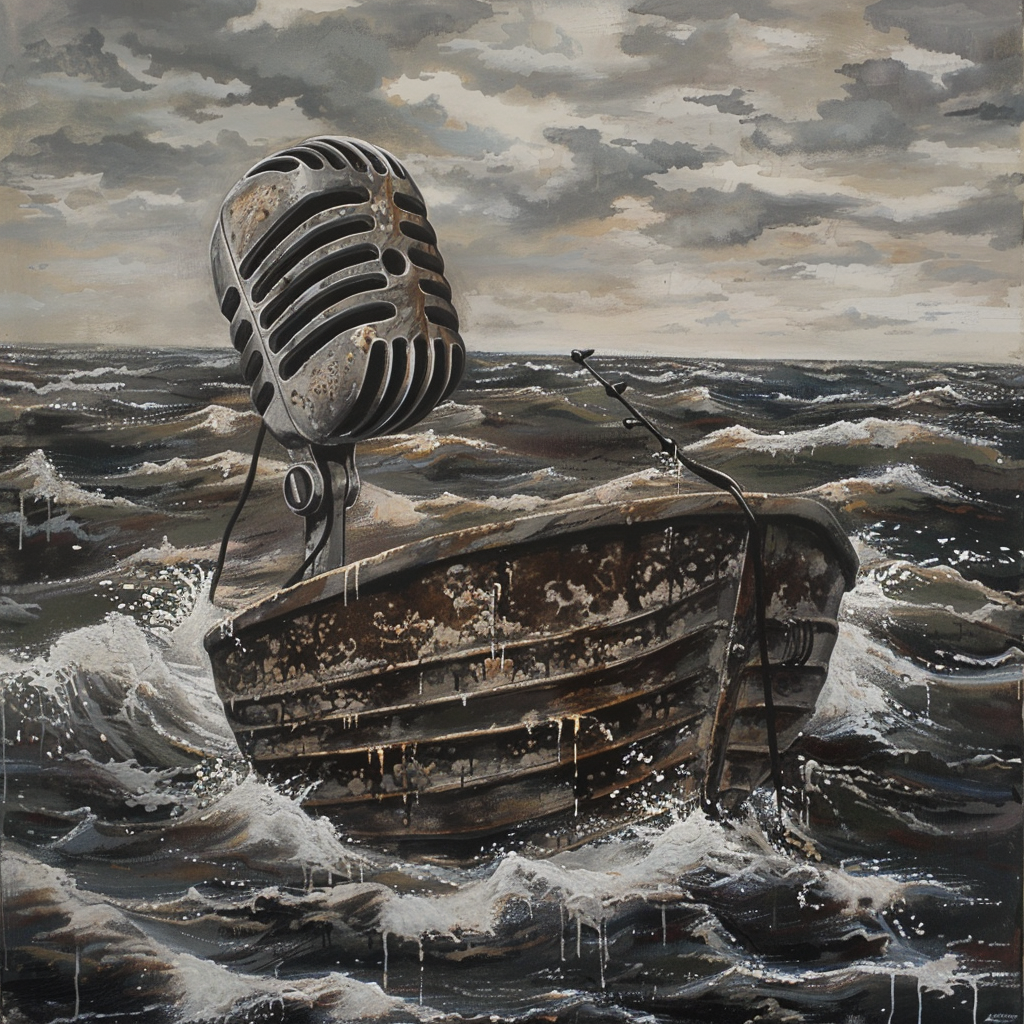
Hello and welcome to the 547th installment of Linux in the Ham Shack. In this episode, the hosts cover short topics including the return of Logbook of the World, gaming with FT-8, the RegreSSHion vulnerability that affects many systems, Nobara Linux 39, Linux running on Google Drive, the latest version of AllStar Link and much, much more. Thanks for listening and we hope you have a great week.
73 de The LHS Crew
Russ Woodman, K5TUX, co-hosts the Linux in the Ham Shack podcast which is available for download in both MP3 and OGG audio format. Contact him at [email protected].
IARU contest results

My contest contacts
This weekend was the IARU contest and you can participate in CW, SSB or both. As for me, it was CW only....surprise surprise. The solar weather can affect how radio operations in both a good way and a bad way. This weekend it was a bad way but that is ok as I tell myself the solar weather does not discriminate it treats all operators the same way. The advanced solar forecast prepared contesters for a rough ride but to add to it the Bz index, something we don't hear much about in Solar weather circles was deep in the negative direction. When you have poor solar weather and add in a -Bz index it just makes things worse. What it sounds like to a CW contester is one moment a signal is very decent and then gone and in most cases gone for some time.
This is a challenge for contesters as when you hear a call sign, come back to them and get a report you generally have no luxury for repeats. If the anomaly happens mid-contact well you most likely cannot log the contact. I find during these conditions you have more stations contacting you more than once on the same band (called a DUPE). Because of the changing condition, you may think the station heard your exchange but they did not and may be asking you for a repeat and you can't hear them asking. So due to the poor conditions, they are not able to log your contact that you think was a solid contact. Whenever I have a station call me that has called me before and is in the log (DUPE) I always work them again as you are not penalized for it. But there are a few that send "QSO BEFORE" and will not log the contact.
Anyway, I digress....this year I was able to log more contacts (56) during very poor conditions compared to last year and better yet I almost doubled my score. Last year's score was 69,484 compared to 130,130 this year. This contest starts on Saturday at 9 am local time and ends on Sunday at 9 am local time. I was up early on Sunday (5:15) to keep adding to the log. I am a morning person and up each day at 6 am so I was not too far off from my normal time.

The final results
Mike Weir, VE9KK, is a regular contributor to AmateurRadio.com and writes from New Brunswick, Canada. Contact him at [email protected].
AmateurLogic 195: Cheap Old Code
AmateurLogic.TV Episode 195 is now available for download.
George replaces a defective FT-857d display with an economical new option. Emile’s Cheap Old Code. Tommy shows how to get your GMRS license and visits the new GigaParts Superstore. Terry, 2E0IPK visits with his RigExpert AA-230 Zoom analyzer.
George Thomas, W5JDX, is co-host of AmateurLogic.TV, an original amateur radio video program hosted by George Thomas (W5JDX), Tommy Martin (N5ZNO), Peter Berrett (VK3PB), and Emile Diodene (KE5QKR). Contact him at [email protected].
ICQ Podcast Episode 434 – Ham Radio Friedrichshafen 2024
In this episode, we join Martin Butler M1MRB, Dan Romanchik KB6NU, Caryn Eve Murray KD2GUT, Edmund Spicer M0MNG, and Ed Durrant DD5LP to discuss the latest Amateur / Ham Radio news. Colin Butler (M6BOY) rounds up the news in brief and the episode's feature is a report from Ed Durrant DD5LP from Ham Radio Friedrichshafen.
We would like to thank our monthly and annual subscription donors for keeping the podcast advert free. To donate, please visit - http://www.icqpodcast.com/donate
- Direct to Full syllabus v2.0
- YOTA Camp Shack Named In Memory Of Bob Heil, K9EID (Sk)
- Spacex Awarded Contract To De-Orbit ISS
- NTS Performance Analysis Tool in Development
- Hams Intervene In Youth-On-Youth Violence In India
- ARRL Logbook of The World Returns to Service
- RSGB British Science Week Challenge
- MESAT1 Amateur Satellite in Orbit
- HamSCI Makes Significant Impact at the NSF's Annual CEDAR Workshop
Colin Butler, M6BOY, is the host of the ICQ Podcast, a weekly radio show about Amateur Radio. Contact him at [email protected].
 Ham Radio Deluxe |
 W5SWL Electronics |
 Ham Radio Prep |
 KB3IFH QSL Cards  Hip Ham Shirts  HamRadioAuctions HamRadioAuctions Reliance Antennas Reliance Antennas Enigma Shop Enigma Shop |  morseDX  Ni4L Antennas  R&L Electronics R&L Electronics antennas.us antennas.us QRV QRV |
- Matt W1MST, Managing Editor
