 |
 Building the M328 component tester (2)
 14 February 2015 | by
 Calibration of the M328
I have previously explained how to go about building the M328 in Part (1)
Now this is where it all gets very interesting!
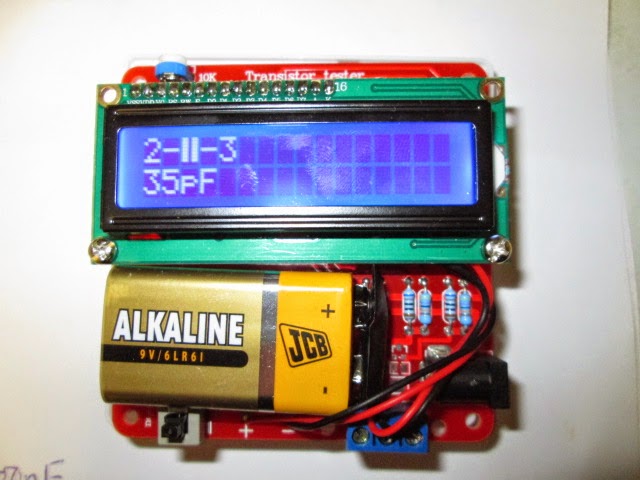
When I watched the VK3YE video (A number of times may I add), I had always wondered about the 35pF offset and why Peter couldn't eliminate it? I had read the manual written by Karl-Heinz Kubbeler, upside down and inside out around the area of calibration (Section 3.2). I had felt maybe Peter had missed a step, or maybe two? But it would only be when I finally built the project I would be able to put my theory into action! After all I couldn't just pop over to Melbourne and explain, it is not a couple miles down the road from the UK is it, and doubtful some nut with a theory would be welcome asking for a phone number anyway??
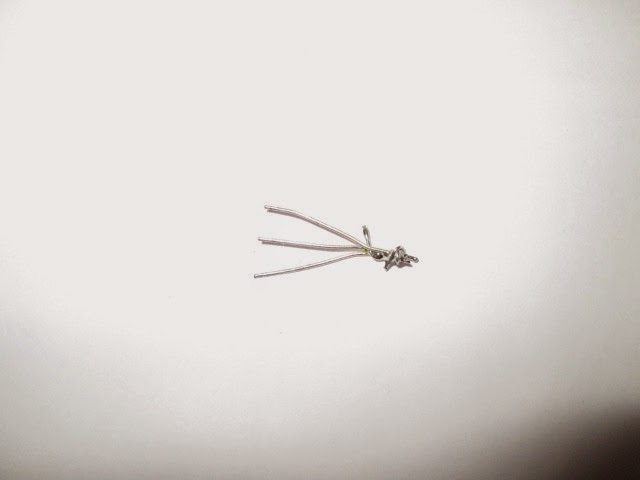
Before you start calibration you will need to make yourself a three pronged shorting link, and a get a 100nF (0.1uF) Capacitor. The Value can be greater, but not less than 100nF, which will be required for the final part of the Cal procedure:
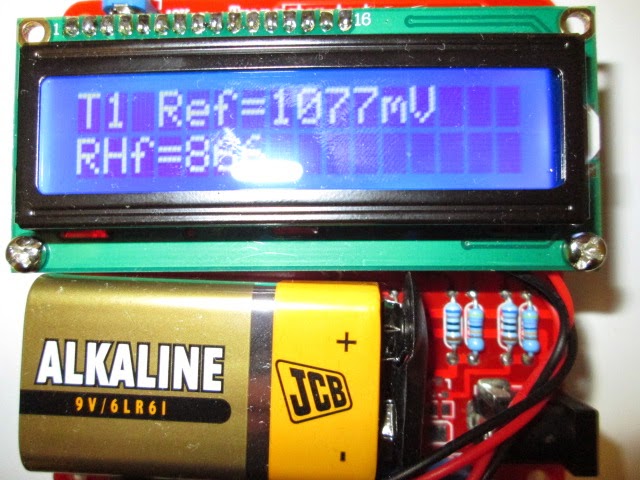
You then insert the link into all three terminals (1,2,3) on the bottom terminal block, make sure the connection is tight. Press the On button this will put the unit into Self Test Mode:
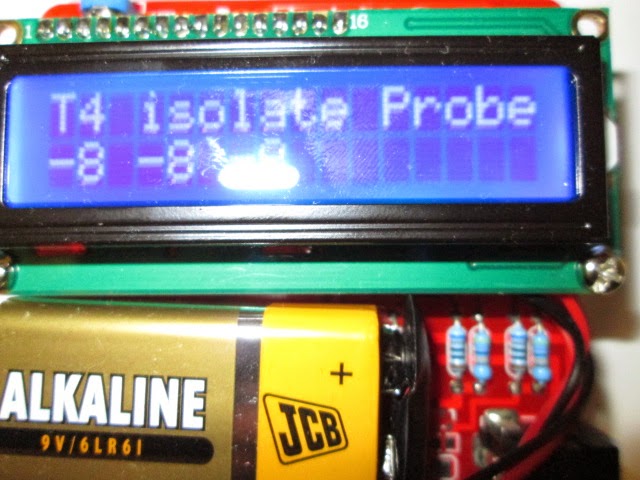
When it gets to "T4 Isolate Probe" which I assume means Test 4? Remove the Link smartly! Do NOT touch any parts of the unit:
Let it move on, until it gets to the last screen which at this point you will require the 100nF Cap and Insert it between Terminals 1 & 3
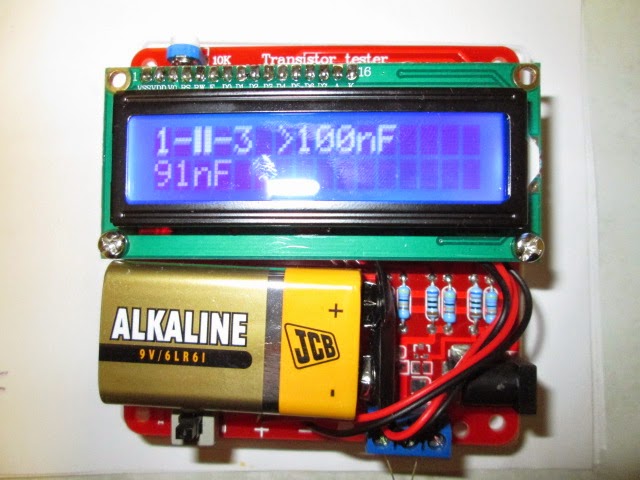
Leave the Cap connected, you will see this value pulsate on the bottom line of the display as it is calibrating. Mine read 91nF. It will keep pulsating the value until the test concludes (can take about 2 mins?). When the test finishes it will exit the calibration mode as indicated on the display, reverting to testing the Capacitor and indicating the value being tested as below:
(Sorry about the breadcrumbs on the bench, this is how one works when into resolving problems)
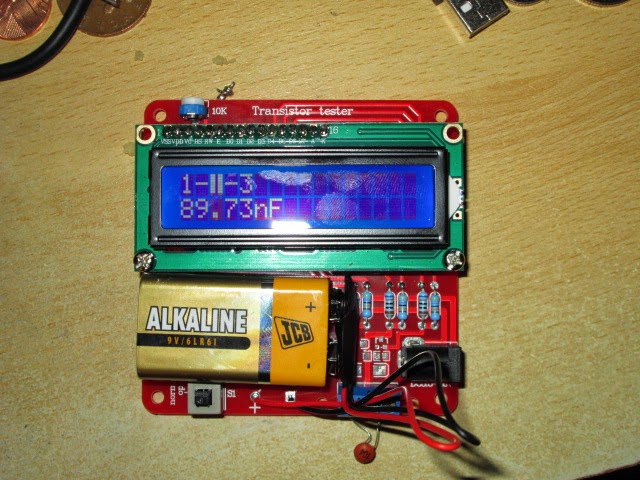
The unit then times out after about 30 secs and switches off.
Now if you have gone about this procedure correctly, when you next turn on the unit it will no longer display the 35pF offset as shown at the start of this blog, the Display will show the following after the initial Volts check and sign on etc:
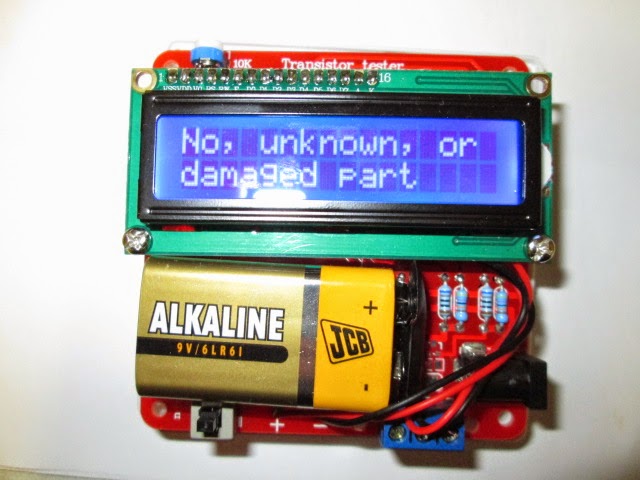
You are now ready to start testing your components. Which we will come to in Part 3.
Notes:
Shortly after I proved my theory about the elimination of the 35pF offset, I contacted VK3YE via email. Peter came straight back with a BIG thank you, after he too had tried my method out, and it had worked on his unit first time! The only problem he had found, he couldn't then test small value capacitors? Eg: 47 pF measured fine (48pF) but 22pF was not recognised Hmmm!
I spent my teatime reading the manual again, and found it!:
Steve, G1KQH, is a regular contributor to AmateurRadio.com and writes from England. Contact him at [email protected].
630m Crossband Tonight!

Just a reminder about the 630m crossband activity night this evening. There have been two updates to the plan. VE7SL will start one hour later than originally planned and John, VE7BDQ, will be listening on both 160m and 80m QSX frequencies for callers.
The frequencies will be:
- VE7SL TX 473.00KHz QSX (listening) 1808KHz (160m) and 3535KHz (80m)
- VE7BDQ TX 474.00KHz QSX (listening) 1813KHz (160m) and 3532KHz (80m)
The last time this was done, transcontinental contacts were completed ... hopefully conditions will continue to co-operate and propagation will be good tonight.
Steve McDonald, VE7SL, is a regular contributor to AmateurRadio.com and writes from British Columbia, Canada. Contact him at [email protected].
It’s time for the Kool-Aid…..:)
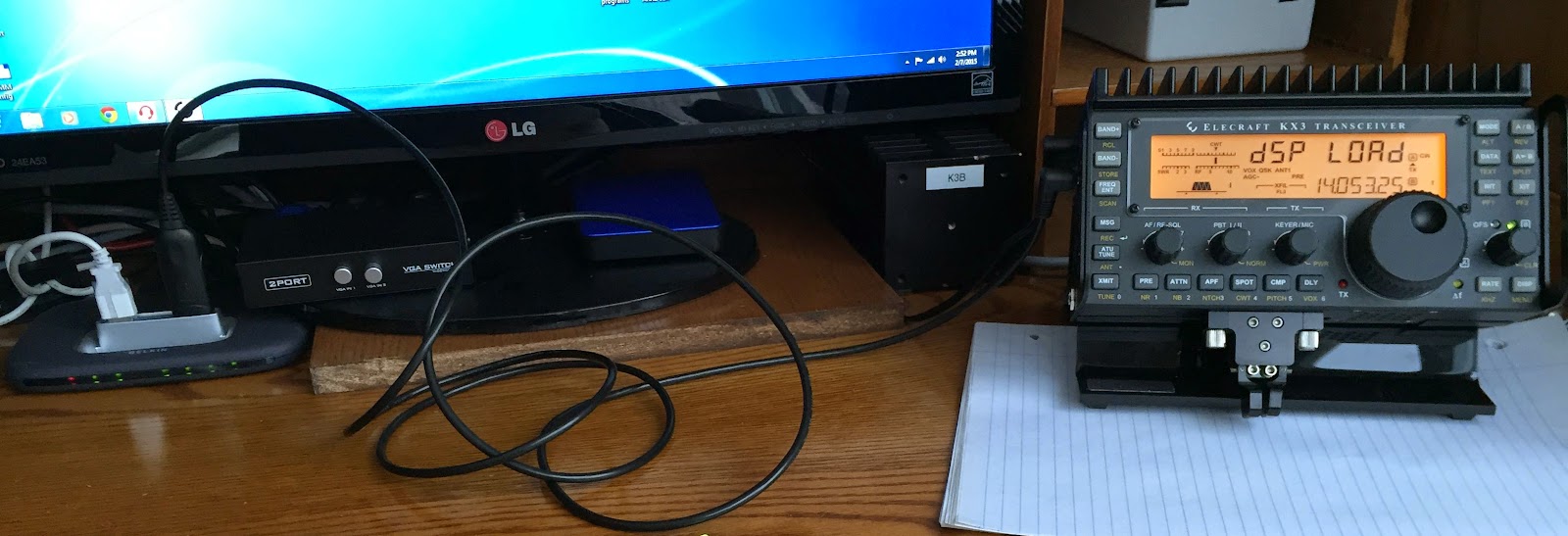 |
| It's like the Borg connected to the collective! |
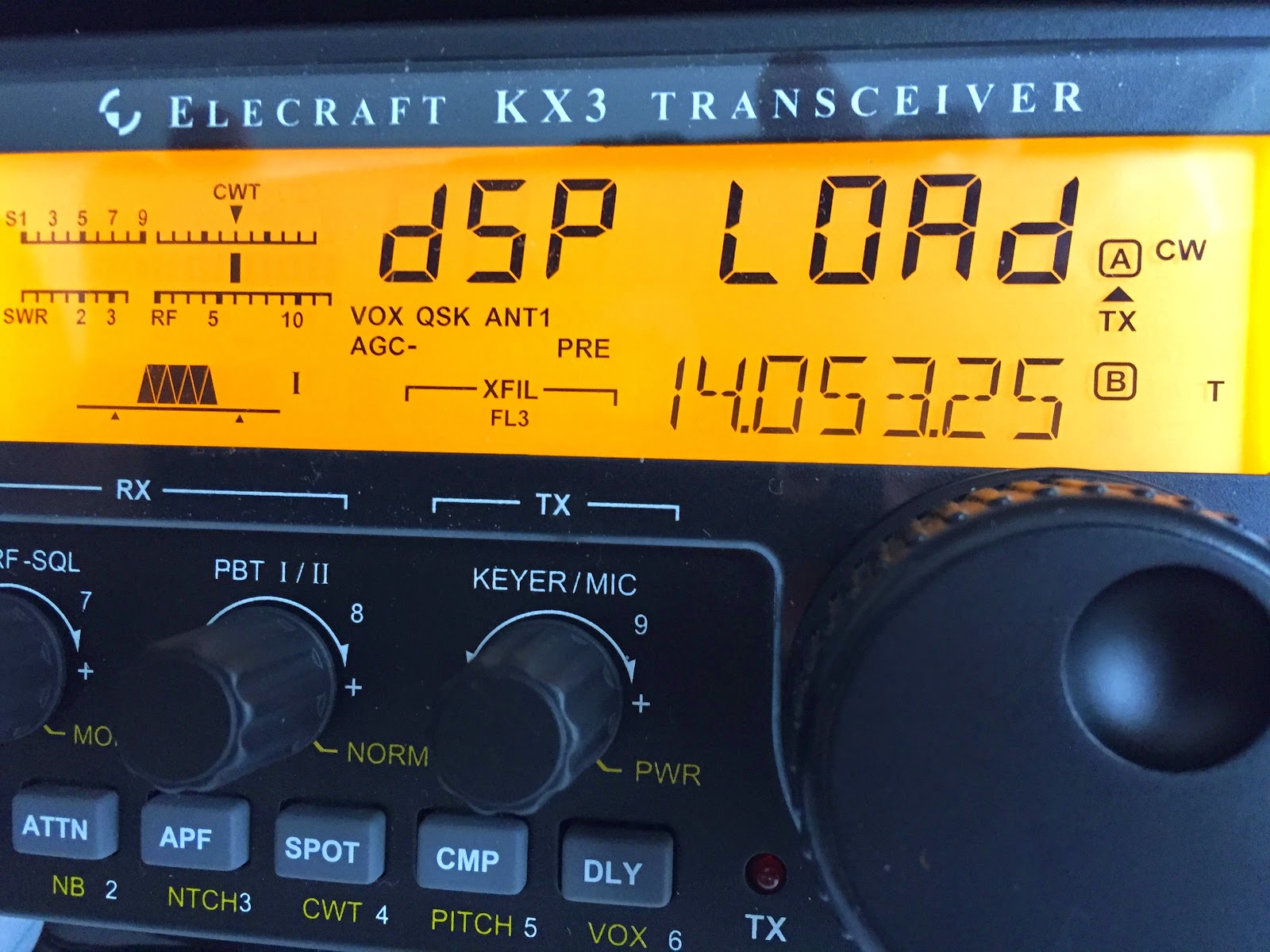 |
| New software loading |
Mike Weir, VE9KK, is a regular contributor to AmateurRadio.com and writes from New Brunswick, Canada. Contact him at [email protected].
Amateur Radio Newsline Report 1952 February 13 2015
- Ham radio responds as a volcano erupts in Guatemala
- A Super High Frequency band could face reallocation here in the USA
- The K1N Nevassa Island DXpedition winds down
- AMSAT-UK puts out first call for speakers for its 2015 Space Colloquium
- FCC renews the only United States 4 meter experimental beacon permit
- A fascinating discovery about the new Raspberry Pi 2 pico computer
THIS WEEK'S NEWSCAST
When certain stages are not viable to construct any longer!
I have a few various projects to build over the next couple of years, some that will require a regulated supply to feed various DC Volts (low noise is a must!). I had been running through my mind various ideas using regulators on some stripboard to mate up the supply rails, I had a few emails between my friend G0FTD on the subject, he said take a look at these "5" seperate LM317 boards already made up on a PCB, complete with heatsinks for just over £5 ($8 US), which works out at just over £1 each! I couldn't even buy the heatsink for a £1 over here, never mind the LM317 and the PCB. I ordered five they arrived within 10 days from HK, a couple of the LM317's were not bolted up tight to the heatsinks, but a quick tighten with a screwdriver and all was ok, what a bargain!
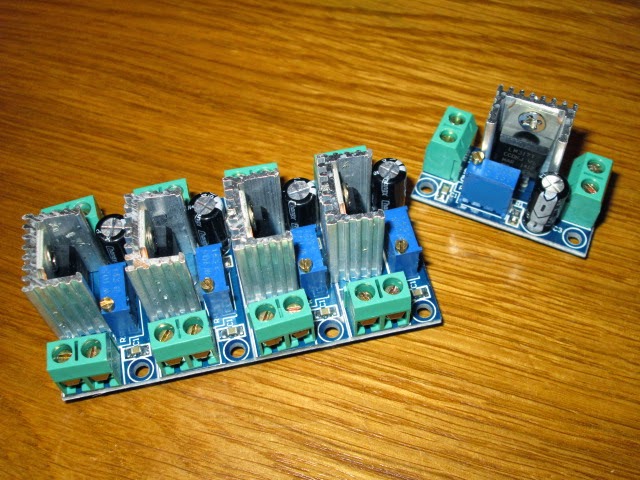
Time to test one.
Most of what I will be requiring is between 3.3V and 5V with a 12V dryfit battery on the input end.
To prove I just rigged up a quick lash up with 15V feeding one module from my bench supply:
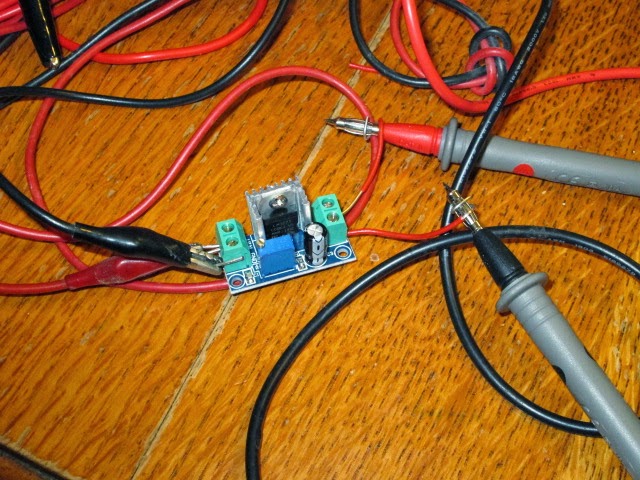
I was able to able to obtain a precision swing of between 1.25V & 13.5V as the the output is made variable with a multiturn pot attached to the PCB, ideal for what I am looking for.
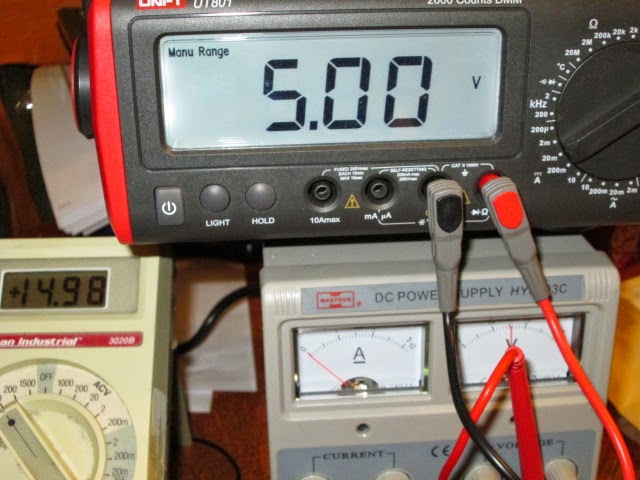
Conclusion: Another good purchase from China that is useful, money and time saving in project building!
Not only have I come across various types of regulator modules (some switching types so be careful!), but also LM386 Audio Amp modules, Timer modules and even a 3 Axis Magnetometer PCB built and ready to go!
Steve, G1KQH, is a regular contributor to AmateurRadio.com and writes from England. Contact him at [email protected].
Pixie kit from China
My low cost 40m Pixie kit – although G1KQH only paid about 60% of what I paid – is on its way from China but has not yet arrived here. I assume, with free shipping, this comes by sea. I am in no great hurry. As I mentioned before, I very much hope to build this unit as I have not built much in ages because of my brain bleed.
UPDATE 1600z: My kit arrived in the post today. Still to open the package, but judging by the speed this must have come by air. It looks well packed.

Roger Lapthorn, G3XBM, is a regular contributor to AmateurRadio.com and writes from Cambridge, England.
Digital experiments
In all my time in amateur radio I have never once experimented with microprocessor programming and I have done very little “digital” design. This seems to be a gap in my knowledge, although I am still not really interested, preferring RF design, especially QRP. I must say I remain very impressed with Wolf’s (W5OLF) tiny WSPR-AXE-CW beacon: this goes to show just how much can be achieved with so little physically. Maybe this is a whole area I should embrace? The trouble is it is impossible to be an expert at lots of things, unless you are very bright. Certainly I do not consider myself a polymath!

Roger Lapthorn, G3XBM, is a regular contributor to AmateurRadio.com and writes from Cambridge, England.
 Ham Radio Deluxe |
 W5SWL Electronics |
 Ham Radio Prep |
 KB3IFH QSL Cards  Hip Ham Shirts  HamRadioAuctions HamRadioAuctions Reliance Antennas Reliance Antennas Enigma Shop Enigma Shop |  morseDX  Ni4L Antennas  R&L Electronics R&L Electronics antennas.us antennas.us QRV QRV |
- Matt W1MST, Managing Editor
