 |
 Review Pofung (Baofeng) GT-1
 28 March 2015 | by
 I didn’t pay much attention to the GT-1 because I assumed it was just old wine in a new bottle. Time to rectify this, due to popular demand.
We all know the Baofeng BF-666S / BF-777S / BF-888S radios: 16 UHF channels, no display, low power output, a receiver which can be overloaded by snapping your fingers, but they are dirt cheap. The GT-1, co-developed by SainSonic, promises to improve on this concept by adding FM radio, a higher capacity battery and higher power output.
Look & feel
When it comes to looks, the GT-1 looks a bit more modern than its predecessors. The radio is slightly taller and less deep. All in all the GT-1 looks and feels nice. The basic concept didn’t change: 16 programmable UHF channels between 400 MHz and 470 MHz, scramble (voice inversion), a on/off/volume pot, a 16-step rotary encoder and a flashlight. Apart from emitting a steady beam of light the flashlight now offers an ‘SOS- mode: three short, three long and three short pulses.
You can order the radio with side keys in different colors: yellow, orange or green. The (of reasonable quality) manual comes in three languages: English, French and German. Nice touch.
 Battery
 According to the specs printed on the battery the nominal voltage is 7.4 Volts @ 1800 mAh, the same capacity as the UV-5R battery. Such a capacity would be in line with the higher power output promised on the radio label: a solid 5 Watts instead of ‘less or equal to 5 Watts’ printed on a BF-888S (which proved to be 2 Watts only).
The first hint of something being terribly wrong was the weight of the battery. It felt so light that I was afraid that it might end up at the other end of the living room if I had a nasty cough. Time to to take a closer look at things. Let’s take a look at the weight first as more cells always translates into a heavier battery. The amount of plastic used plays a role too, of course. So while this is not a 100% reliable method, it does give you an indication.
Battery weight comparison
Pofung GT-1: 47 grams
Baofeng BF-666S: 54 grams
Baofeng UV-5R: 80 grams
Anytone NSTIG-8R: 96 grams
As you can see the weight of the GT-1 and BF-666S batteries are close. The UV-5R and NSTIG-8R batteries are too, both proven to be 7.4 Volts @ 1800 mAh. The GT-1 battery seems just too light to be in the same 7.4 Volts / 1800 mAh league.
I took my multimeter and checked the GT-1 battery. Not to my surprise it only measured 4.0 Volts (freshly charged), so the nominal voltage is 3.7 Volts only, just like the BF-666S battery. The capacity will likely be the same too, somewhere between 1000 mAh and 1500 mAh.
 Transmitter
After finding out that the battery might even be inferior to the one supplied with its predecessor I didn’t expect the GT-1 to be able to reach 5 Watts output at all. That proved to be correct. Two samples measured the same: between 1.5 – 2 Watts, depending on the frequency.
TX Audio
A bit brighter and slightly louder than my BF series, which is a plus.
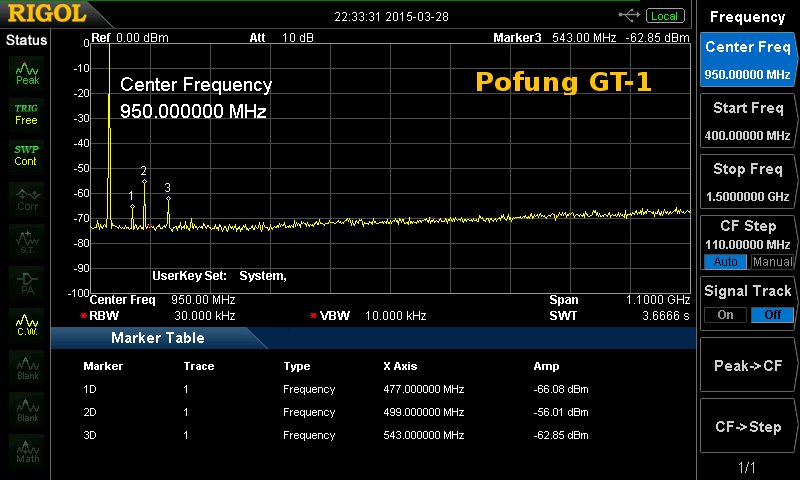
Phase noise and harmonics
Less phase noise than the BF series. There are some unusual peaks visible, but nothing scary.
 Receiver
At -126 dBm the GT-1 is sensitive enough, but that won’t help you much. It doesn’t take much of an out-of-band signal to make the radio as deaf as a post. Even the local repeater can’t be received in my city center; only if I’m about 3 kilometers away from the center the receiver comes to life.
FM Radio
By holding the upper side key while switching on the radio, the GT-1 will switch to FM radio, something the BF series don’t offer. There doesn’t appear to to be a way to tune to a preferred station though; it randomly tunes into stations it finds. This makes the feature of limited use.
RX Audio
A bit raw, just like with the BF series, but more tinny. Audio distorts quickly if you crank up the volume.
Software
The GT-1 can be programmed with the same software developed for the BF series. CHIRP works too, but lacks a few options such as switching on scramble. Changing power output from ‘High’ to ‘Low’ in the software still doesn’t work; the radio just ignores that setting.
The verdict
After being confronted with all the lies surrounding the Pofung GT-1 there’s no way I can justify a diplomatic way of saying things. The GT-1 is just old wine in a new bottle, the battery voltage / capacity is one big lie and so is the promised power output.
The receiver is still disappointing unless you live in the proverbial ‘middle of nowhere’. To make matters worse the GT-1 is more expensive than a Baofeng BF-666S / BF-777S / BF-888S.
In short: don’t buy one unless you’re a notorious masochist. Go for a UV-5R instead or, if you like/need this particular concept, buy the superior Anytone ANILE-8R.


Hans, PD0AC, is a regular contributor to AmateurRadio.com and writes from Almere, The Netherlands. Contact him at [email protected].
‘OO’ Oshawa NDB
 |
| courtesy: A. Wiecek, VE3GOP |
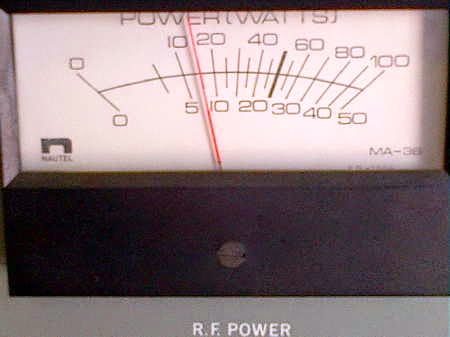
Little "OO" has also been reported in Europe by none other than Roelof, PAØRDT, while using one of his own small active whips. I think this illustrates the remarkable propagation that can, and often does, take place below the broadcast band, even with a less than optimum antenna system ... good news for those planning a 630m backyard antenna installation!
Steve McDonald, VE7SL, is a regular contributor to AmateurRadio.com and writes from British Columbia, Canada. Contact him at [email protected].
Amateur Radio Newsline Report 1958 March 27 2015
- Thailand’s new master frequency list takes 6 meters back from ham radio
- UK regulator uses ham radio input in Ultra Wideband device rule making decision
- ITU symposium endorses small satellite regulation
- Successful transmissions of two new ham radio shows from Germany
- April 1st roving reporter is back with the latest on the FCC enforcement cutbacks
THIS WEEK'S NEWSCAST
Script
Audio
Chameleon F-Loop inside testing
I started testing the F-Loop inside the house on the kitchen table because it has again gotten cold out with 45km.hr winds, and -19c with windchill. So I set up the CHA F-Loop on the table, FT-817 and WolphiLink TNC to the Samsung tablet using WSPR and decided to test. I tested last night on 20 meters with the 36″ aluminum radiator loop on and thsi is what I got:

Was heard in Alaska and into the USA, I was running about 3 watts before I set the Wolhpilink transmitter levels up to proper settings.
So once I set the drive level and receive levels the FT-817 was running perfect with WSPR.
I did some tests on 20 meters. 17 meters with much of the USA being heard, so I switched to 15 meters and turned the loop so that the radiated sides were transmitting east and west, the results are seen below:
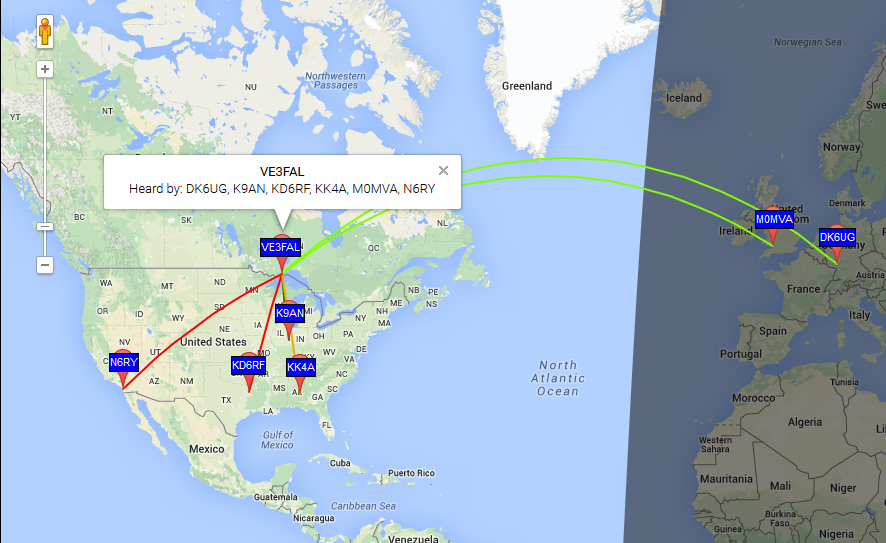
So good results considering my house is finished on the outside with stucco plaster which means it has mesh steel wire all the way around and then finished with the stucco.
http://www.chameleonantenna.com
http://www.wolphi.com/interface/
Fred
VE3FAL
Fred Lesnick, VE3FAL, is a regular contributor to AmateurRadio.com and writes from Thunder Bay Ontario, Canada. Contact him at [email protected].
QRPTTF 2015 – First Announcement!
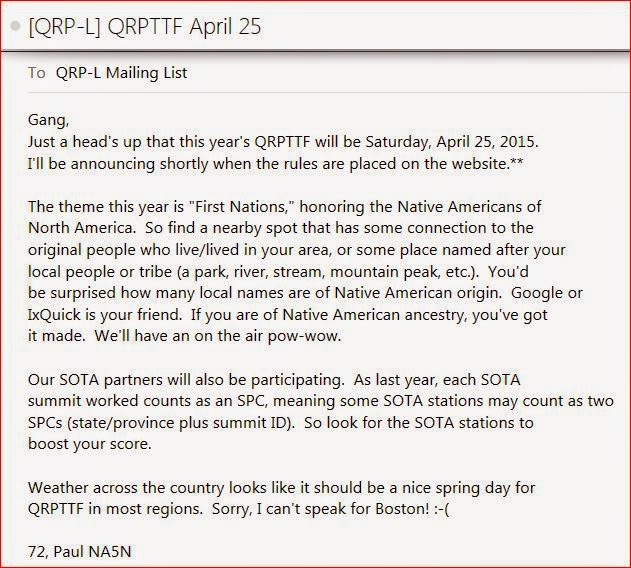
Living in New Jersey makes filling the requirements of this theme a snap!
Right off the bat, I'm thinking that I could go to Johnson Park in either Highland Park or New Brunswick and operate right on the banks of the Raritan River, which according to Wikipedia:
"The river has served an important water transportation route since the Pre-Columbian era. The name Raritan is also applied to the Raritan people, an Algonquian tribe that inhabited Staten Island, near the river's mouth."
Or perhaps I could go over to Piscataway Township and operate from there:
"The name Piscataway may stem from the area's original Native American residents, transplants from near the Piscataqua River defining the coastal border between New Hampshire and Maine, whose name derives from peske (branch) and tegwe (tidal river),[18] or alternatively from pisgeu (meaning "dark night") and awa ("Place of")[19] or from a Lenape language word meaning "Great Deer".
Or, I could even go to one of my favorite spots, Washington Rock State Park, as it is on the first ridge of the Watchung Mountains, which according to Wikipedia (again):
"The original inhabitants of the Watchungs, the Lenape, referred to the mountains as the Wach Unks, or ‘high hills’.[9][10] Evidence of the Lenape presence in the Watchungs can be seen in numerous camps sites that have been uncovered, mainly along the rivers coursing through mountains and in the small caves abundant in the volcanic rock. It is thought the Lenape favored the Watchungs for their profusion of natural resources, including abundant freshwater rivers and streams, a variety of forests, and plentiful fish and game.[11] They also took advantage of the rich soils and maintained many farm areas where they raised a variety of seasonal crops."
So I have plenty of places to choose from. Sometimes the themes that Paul comes up with can be somewhat of a challenge - for example, last year's "Cinco de Mayo" theme. There's not much in New Jersey that has a true Mexican connection.
This year's theme is pretty easy to comply with.
72 de Larry W2LJ
QRP - When you care to send the very least!
Larry Makoski, W2LJ, is a regular contributor to AmateurRadio.com and writes from New Jersey, USA. Contact him at [email protected].
LHS Episode #143: Erin Go Bragh
 It's another lonely episode without Pete. We're still not sure if he was eaten by a bear or not, but we hope he's well wherever he might be. In the meantime, we put together what we hope is an enjoyable and informative episode with information on Yaesu System Fusion, bluetooth configuration in Linux, the LXLE distribution, PyQSO and more.
73 de The LHS Guys
Russ Woodman, K5TUX, co-hosts the Linux in the Ham Shack podcast which is available for download in both MP3 and OGG audio format. Contact him at [email protected].
Yes, I am a bit of a wimp
So I've been spending my lunch hour writing this post and Googling "Field Day Wire Antennas". Last year's EARCHI EFHW (Emergency Amateur Radio Communications Hawaii End Fed Half Wave) and G5RV both worked well, and more than likely, we are going to use them again. However, we have decided to add a digital station and a GOTA station, so we need to come up with two more wire configurations.
The digital station will be W2OU's FT-817 and I believe we are using KD2FSI's FT-897. Both W2OU and I have PAR END-FEDZ 10/20/40 antennas. While easy to deploy and use, they would prohibit us from getting on 80 Meters and 15 Meters. I am considering as possibilities, the G7FEK or perhaps the D3+ antenna. Both seem somewhat easy to construct. As the weather gets warmer, I may have to build one of each and then take them to the local park to see (in reality) how easy they are to set up and what kind of results I can garner.
K2VHW has a few disassembled multi band yagis in his garage. If he can determine that he has all the pieces and parts, we broached the concept of perhaps deploying one using an extension ladder as a "tower". That would make life a little easier for the QRP SSB guys.
My goal is to keep things as simple as possible while still allowing us to get credible results. After being out in the field for 24+ hours (if you include set up), no one really wants to face the prospect of spending an enormous amount of time tearing everything apart. Come 2:00 PM on Field Day Sunday, my mind is more on a good meal and a hot shower than worrying about packing and stowing.
We have ample time yet, so more investigation seems likely. Now if only I can find my copy of Bill Orr's "Simple Wire Antennas". That would help immensely!
72 de Larry W2LJ
QRP - When you care to send the very least!
Larry Makoski, W2LJ, is a regular contributor to AmateurRadio.com and writes from New Jersey, USA. Contact him at [email protected].
 Ham Radio Deluxe |
 W5SWL Electronics |
 Ham Radio Prep |
 KB3IFH QSL Cards  Hip Ham Shirts  HamRadioAuctions HamRadioAuctions Reliance Antennas Reliance Antennas Enigma Shop Enigma Shop |  morseDX  Ni4L Antennas  R&L Electronics R&L Electronics antennas.us antennas.us QRV QRV |
- Matt W1MST, Managing Editor
