 |
 Amateur Radio Weekly – Issue 55
 4 April 2015 | by
Javascript app runs RTL-SDR in your web browser
Radio Receiver is a Chrome application that uses a USB digital TV receiver to capture radio signals and does FM and AM demodulation in the browser.
Github
DSD software decodes D-STAR audio
DSD+ is a popular Windows software tool used for decoding digital speech such as P25 and D-STAR with the RTL-SDR.
RTL-SDR.com
FCC creates Citizens Broadband Radio at 3.5GHz
The FCC staffers handling the press briefing couldn’t resist the temptation to sprinkle their discussion with CB lingo, answering some questions with things like “10-4.”
eWeek
RadioShack to be co-branded with Sprint
The current plan calls for “co-branding” about 1,440 of the surviving stores with cellular phone provider Sprint Corp.
ARRL
ISS SSTV active on weekend of April 11
The Russian Federal Space Agency (Roscosmos) has announced another round of amateur radio Slow Scan Television (SSTV) activity from the International Space Station (ISS) will take place.
AMSAT UK
Raspberry Pi Slow Scan Television (SSTV) camera
In this project the Raspberry Pi with the PiCam is used as a wireless camera which can transmit images over long distances, usually hundreds of meters!
Make:
Guerrilla Radio
How some inmates hack, rewire, and retool their radios to create walkie-talkies.
Southgate
RTL-SDR filters
A good demonstration of a pair of filters built to mitigate the front-end overload experienced on an RTL-SDR receiver.
VE7SL
Yaesu FT-450D first impressions
First impressions are of an excellent receiver with good tone and clear audio from the internal speaker.
AmateurRadio.com
A complete HF station under $1,000
I designed a complete HF radio station that would cost less than $1,000. I wanted it to operate on all modes on as many bands as possible and have it be easy to use.
KC4LMD
Is the term “ham” older than we thought?
…a telegraph station was set up, and after that, a school for training telegraph operators. In the article, they refer to the school as a “ham factory.”
KB6NU
Video
1999 introduction to Ham Radio
This vintage video gives a flavor of what amateur radio was like in the closing years of the last century.
Southgate
Deploying a Cubesat from ISS
YouTube
Amateur Radio Weekly is curated by Cale Mooth K4HCK. Sign up free to receive ham radio's most relevant news, projects, technology and events by e-mail each week at http://www.hamweekly.com.
Amateur Radio Newsline Report 1959 April 4 2015
- Hams in Oklahoma respond to severe weather outbreak
- ITU dispatches rescue radio communications gear to Vanuatu
- Broadcasters say no to FCC field office downsizing proposal
- How to replace FM repeaters with Digital Voice
- A remote controlled asteroid relocation mission before a ship to Mars
OFCOM again
Please don’t misunderstand my views on OFCOM here in the UK. Generally, they have been supportive of the amateur community and I am grateful for this.
However, I am very critical that they seem loath to make real decisions about anything hard. Perhaps this is because they need real teeth and less government fiddling in the wings? I believe they need to be fully independent of government interference and be able to make common sense decisions without excuses. All the time they seem to hide behind the law as a safe-guard from doing anything very hard.
I have been critical of the FCC many times but in several ways they take a more pragmatic approach to spectrum management. All the time OFCOM employees seem to fear taking any hard decisions in case they break the law. Perhaps we need to employ people who actually understand radio and spectrum issues. Oh sorry, I forgot, these are a dying breed. We only have “yes boys” left.

Roger Lapthorn, G3XBM, is a regular contributor to AmateurRadio.com and writes from Cambridge, England.
New MOPA Completed
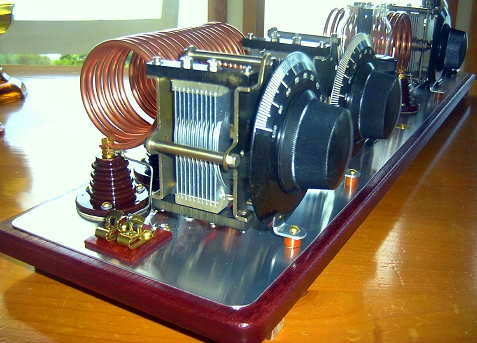
Well ... my new 1930's style MOPA transmitter is finally finished after several months of construction. I have also put together a page on my website describing the project.
For many years, December's high winds here on the coast, have always arrived coincidentally with the start of the annual 1929 QSO Party, making my signal dance around even more than usual! With the new MOPA, I'll no longer have to worry about high winds upsetting signal stabilty ... although many of us do enjoy hearing these musical sounds of '29!
By the way, there's still plenty of time for you also, to put something together for this annual fun event. You can see a whole page-full of inspiring '29 homebrew magic here (scroll to the bottom half) ... and there is plenty of help available for your project in the AWA Yahoo Builders Group ... we are always looking for more new activity, particularly here out west.
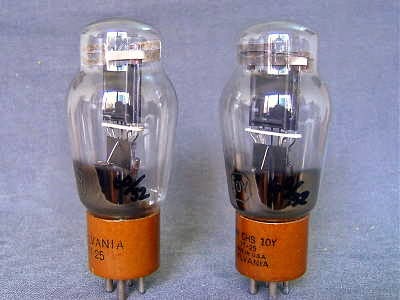 |
| courtesy: natubes.com/ |
I'm looking forward to working many of you in the next '29 QSO Party ... in the meantime, I'm thinking hard about what my next project might be!
Steve McDonald, VE7SL, is a regular contributor to AmateurRadio.com and writes from British Columbia, Canada. Contact him at [email protected].
40MHz amateur band?
Well, I had a letter today from an amateur in South Africa who I hear have been allocated a small band at 40MHz. There are already a couple of EU beacons around 40MHz (OZ and G).
It would be so good if OFCOM here in the UK saw the real value in even a very small, shared band around 40MHz. Instead, we get given chunks (1MHz at 2m and 1MHz at 4m) which will hardly get touched by most. Surely a small 100kHz shared band at 40MHz that would really be of value to radio science has merit?
Of course, allocating ad interim chunks of unused spectrum to the amateur service is a “no-brainer” for dear old OFCOM. Fine doing this, but there would have been far better options, but these would have needed brain engagement, so out of the question? I hope that the RSGB and OFCOM talk some more and add new bits of spectrum soon.

Roger Lapthorn, G3XBM, is a regular contributor to AmateurRadio.com and writes from Cambridge, England.
Four Metre Band and OFCOM rubbish decisions?
There was an announcement on the RSGB and OFCOM sites advising some UK full licence holders that 70.5 to 71.5MHz is being made available for one year by special permission for further digital experiments, a bit like 146-147MHz here in the UK.
Sorry, but has OFCOM gone stark raving mad???
I can see no good justification for this 1MHz of spectrum. 2m was already under-used and the 146-147MHz allocation is probably being used by a tiny handful of people from time to time only. DATV tests could quite as easily happen at 70cms.
I can think of far better parts of the spectrum OFCOM could have allocated e.g 100kHz around 40MHz (for Es propagation experiments), 73kHz, below 8.3kHz and a contiguous 5MHz allocation. Oh no, these require a brain to be engaged by OFCOM people.
Maybe this is an April fool’s wind-up, although I suspect it is true.
Surely if OFCOM wants to further real experimentation in radio science there are better ways of going about it? Yet again, I am totally unimpressed. Between OFCOM and the RSGB, I think this is, yet again, a stupid stupid decision. So we now have 2MHz of extra spectrum for 12 months that a very few might use. Big deal. OFCOM, engage brains, think radio science. If you want to help grow future engineers that we so badly need, these allocations will not help at all. Think again!
See http://www.rsgb.org/ .
See http://www.70mhz.org/ .

Roger Lapthorn, G3XBM, is a regular contributor to AmateurRadio.com and writes from Cambridge, England.
WordPress Security
 My site has been down for a few days due to a “security problem” that I encountered. it seems that some malware showed up on the server and my host disabled the site. It took a bit of ftp’ing to get the offending files removed but we are back on the air.
I can’t say for certain how the bad guys got into the site but it would appear they were specifically targeting sites using WordPress. I was already running a security plugin for WordPress but since the attack I’ve tightened up the parameters considerably. If I inadvertently locked you out, my apologies.
It is interested to watch how many attacks are reported by the security plugin, mostly from locations outside of the US. If you are using WordPress and don’t have a security plugin installed, I highly recommend installing one and locking things down tight.
73, Bob K0NR
The post WordPress Security appeared first on The KØNR Radio Site.
Bob Witte, KØNR, is a regular contributor to AmateurRadio.com and writes from Colorado, USA. Contact him at [email protected].
 Ham Radio Deluxe |
 W5SWL Electronics |
 Ham Radio Prep |
 KB3IFH QSL Cards  Hip Ham Shirts  HamRadioAuctions HamRadioAuctions Reliance Antennas Reliance Antennas Enigma Shop Enigma Shop |  morseDX  Ni4L Antennas  R&L Electronics R&L Electronics antennas.us antennas.us QRV QRV |
- Matt W1MST, Managing Editor
