 |
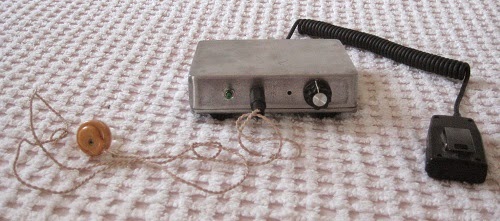
 Sixbox QRP rig for 6m
 2 May 2015 | by
  |
| Sixbox 6m AM rig – a simple design |
Several years ago I designed and built a derivative of my 2m Fredbox but for 6m AM. The same basic design would easily translate to a 10m version. Both bands could be useful for cross-town natters, especially when both 10m and 6m behave like VHF bands, which is in the quieter sun years and at night on 10m. The Sixbox is simple and certainly capable of further development.
Treat the design as a starting point. A 10m version of the RX has copied transatlantic USA AM stations well, but this is NOT a rig for DX use. It is better suited to cross-town/inter-village natters.
See https://sites.google.com/site/g3xbmqrp3/vuhf/sixbox .

Roger Lapthorn, G3XBM, is a regular contributor to AmateurRadio.com and writes from Cambridge, England.
LF / MF – Next Step For U.S. Amateurs (Part 2)
 With the release this week of NPRM (FCC 15-50), U.S. amateurs have moved one small-step closer to seeing the 2200m and 630m bands become a thing of reality.
The NPRM seeks input on a number of questions that rulemakers are still pondering when it comes to implementation of the new bands. Stakeholders are requested to submit comments on a number of issues addressed in the document and have 60 days to do so once the document has been published in the Federal Register which is updated daily.
Following submission of comments, a number of options still remain open for FCC rulemakers and I rather suspect, from the vast scope of the NPRM's inquiry, that the process could drag on for some length of time yet. Take solace in the fact that the NPRM is indeed a necessary step in the right direction and shows that the proposals are moving forward, finally!
The major focus of the NPRM appears to be centered around determining appropriate levels of power and the viability of amateurs coexisting on the frequencies shared with Power Line Carrier (PLC) systems. Indeed the major stumbling block, at least as far as 2200m is concerned, has always been the strong objection from power authorities that amateur signals will interfere with their control signals. PLC interference as well as possible interference to the Maritime Mobile Service (MMS) is also cited as a concern for the 630m proposal. One might argue that lumping these two bands together in a single NPRM is the best way to go while others might say that chance of success would be much better by treating them separately ... time will eventually tell.
Getting into more detail, the NPRM commentary specifically affecting our LF/MF interests, address the following critical points (and present stumbling blocks):
167.
Service Rules for the 135.7-137.8 kHz and 472-479 kHz bands. We are proposing service rules for the amateur service in the 135.7-137.8 kHz and 472-479 kHz bands with the principal goal of enabling sharing of this spectrum among licensed amateur stations and unlicensed PLC systems.
As the demand for radio spectrum has continued to increase, we have sought to make more efficient use of spectrum by providing for sharing of frequency bands for multiple purposes.While we recognize the importance of PLC systems to the functioning of the electric power grid, we also believe that there are benefits to providing amateurs access to these bands, including providing amateurs with new opportunities for experimentation. Moreover PLC systems and the expected amateur use of these bands have characteristics which make coexistence possible. PLC systems are limited to use on transmissions lines and, consequently, are not present in most residential neighborhoods where amateur licensees live.
The amateur service is expected to use the band mainly for experimental purposes and not for routine and widespread communications activities common in other bands. These attributes give us confidence that,
along with appropriate technical rules, amateur stations can harmoniously operate on the same frequency bands as PLC systems.
168.
The cornerstone of the technical rules we are proposing is physical separation between amateur stations and the transmission lines upon which PLC systems may be present. We propose that amateur stations be permitted to operate in these bands when separated from transmission lines by a specified distance. Such a separation, in conjunction with limits on the amateur stations’ transmitted EIRP and antenna heights, will enable PLC systems and amateur stations to coexist in these bands. In addition, we propose to limit amateur stations to operations at fixed locations only to ensure that this separation distance can be maintained reliably. We seek comment on this overall framework.
169.
In order to develop the necessary and appropriate service rules to meet our goal of providing for the coexistence of amateur services and PLC systems in these bands, we seek detailed comment on the technical characteristics of both the PLC systems and the amateur stations. This information will allow us to set an appropriate separation distance. Although the Commission in the WRC-07 NPRM inquired into the technical rules and methods that would assure coexistence, commenters provided little in the way of concrete information. ARRL submitted a technical analysis based on an NTIA technical report supporting an assertion that PLC systems in the 135.7-137.8 KHz band will be sufficiently protected from amateur stations transmitting at an EIRP of 1 W with a separation distance of 1 km from the transmission lines carrying the PLC signals. However, this NTIA technical report is from 1985 and therefore may not account for any subsequent developments.
170.
To assist us in determining the optimal separation distance, we invite commenters to submit information on the technical characteristics of PLC systems that are currently being operated by utilities or likely to be deployed in the future. How tolerant are these PLC systems of signals received from other stations transmitting in the same band? What electric field strength at the location of a transmission line will cause a PLC system operating on that line to malfunction? What types of malfunctions would the electric power grid experience from electrical interference? How many PLC systems are currently operating in the 2200 and 630 Meter bands? Can these existing PLC systems be modified and could new PLC systems be designed to operate in other portions of the 9-490 kHz band, thus avoiding co-channel operation with amateur services? At what power do these PLC systems operate and how long are the transmission lines over which they send signals? At what voltage level do the transmission lines upon which these PLC systems are deployed operate and how does the PLC systems’ tolerance of other signals depend on the voltage level? What electric field strengths are produced in the vicinity of transmission lines by the PLC signals travelling over the transmission lines?
171.
We likewise invite information on the technical characteristics of amateur stations that are likely to be deployed or have operated under experimental licenses in these two bands. What electric field strength generated by PLC systems operating on transmission lines would impede the operation of
amateur stations? A study conducted on a PLC system operating at 1 W at 152 kHz found that the PLC system generated an electric field strengths of 20 dbμV/m at 1 km. Would a signal with this field strength interfere with the operation of amateur stations? Given that high-voltage transmission lines generate a significant level of noise at this frequency range, how close to high-voltage transmission lines can amateur stations realistically operate? In recent years amateur stations have operated in these bands
under experimental licenses with most licenses permitting powers of between 1 to 20 watts ERP. How close did these amateur stations operate to transmission lines? Did any of these amateur stations receive
signals from PLC systems operating on transmission lines? Do the experiences of amateur stations and utilities in other countries and along the United States border with Canada yield any useful information?
172.
If we were to adopt our proposal to permit amateur operations only when separated by a specified distance from transmission lines, when a new transmission line is built close by an amateur station, the station either would have to relocate farther away from the transmission line or cease
operating. How should our rules address the potential for new transmission lines to be constructed closer than the specified distance to pre-existing amateur stations? We do not want to inhibit the ability of either PLC systems or amateur services to grow and expand without imposing unnecessary burdens on either. Is it possible for utilities to refrain from geographically expanding their PLC operations within the relatively small portion of the 9-490 kHz band that we are making available for amateur operations, and is this something utilities would do on their own accord, given the Part 15 status of PLC systems? Should our rules explicitly prohibit utilities from deploying new PLC systems in these bands?
....to be cont'd
Steve McDonald, VE7SL, is a regular contributor to AmateurRadio.com and writes from British Columbia, Canada. Contact him at [email protected].
Series Eight Episode Nine – International Marconi Day (02 May 2015)
In this episode, Martin M1MRB / W9ICQ is joined by Leslie Butterfield (G0CIB) and Matthew Nassau (2E0MTT) to discuss the latest Amateur / Ham Radio news. Colin M6BOY rounds up the news in brief, and this episodes feature is International Marconi Day.
- New Entry Level Licence for Germany?
- Ofcom Considers 10.475 and 47 GHz Bands for 5G
- Digital Activity Days RDRC
- Ham Radio Operator Flies Model Tricopter
- FUNcube-1 Transmitting Again
- Australian Balloon Circumnavigates the Globe
- New Award Scheme for Portable Operators
- Surprise Decrease in Australian Ham Licence Renewal Fees
Colin Butler, M6BOY, is the host of the ICQ Podcast, a weekly radio show about Amateur Radio. Contact him at [email protected].
Series Eight Episode Nine – International Marconi Day (02 May 2015)
In this episode, Martin M1MRB / W9ICQ is joined by Leslie Butterfield (G0CIB) and Matthew Nassau (2E0MTT) to discuss the latest Amateur / Ham Radio news. Colin M6BOY rounds up the news in brief, and this episodes feature is International Marconi Day.
- New Entry Level Licence for Germany?
- Ofcom Considers 10.475 and 47 GHz Bands for 5G
- Digital Activity Days RDRC
- Ham Radio Operator Flies Model Tricopter
- FUNcube-1 Transmitting Again
- Australian Balloon Circumnavigates the Globe
- New Award Scheme for Portable Operators
- Surprise Decrease in Australian Ham Licence Renewal Fees
Colin Butler, M6BOY, is the host of the ICQ Podcast, a weekly radio show about Amateur Radio. Contact him at [email protected].
HF or VHF?
Depending on the solar cycle, and how good it is, both 10m and 6m can behave quite differently. Sometimes 10m is a true HF band with good worldwide DX possibilities. In better years, even 6m can support F2 worldwide propagation. However, for a lot of the solar cycle both 10m and 6m behave like VHF bands. This means Es can be an effective mode on both bands especially in the spring and summer months. Other modes like tropo can also be used on 10m and 6m. Both bands can be used for local natters on any mode.
At the moment we are in a transition period. On better days 10m is still good for worldwide DX but as time progresses, it will behave more and more like a VHF band with long periods of quiet. Especially as we move to more VHF conditions modes like WSPR become even more useful: short DX openings can be detected with WSPR. Leaving a simple WSPR rig running can be so useful and take very little power.
As I have mentioned before, I have worked real 10m N-S DX (11000+ km) on QRP SSB even in the quietest of sunspot years. WSPR is considerably better than SSB, requiring far less power and can be used unattended running in the background. I tend to run 10m and 6m WSPR most days and monitor WSPRnet on a different PC in the lounge. It takes just seconds to go into the shack and make any adjustments needed. It means, whilst running WSPR, you can do other things.

Roger Lapthorn, G3XBM, is a regular contributor to AmateurRadio.com and writes from Cambridge, England.
Amateur Radio Newsline Report 1963 – MAY 1 2015
- Hams worldwide respond after an earthquake devastates Nepal
- FCC makes ready to introduce a pair of new ham radio bands
- AMSAT gets opportunity for a rideshare to geostationary orbit
- House committee asks why FCC wants to close field offices
THIS WEEK'S NEWSCAST
Script
Audio
Kanga Products
See http://www.kanga-products.co.uk/. Although I have to admit that I have not used this supplier or its sister site in the USA, they seem to have a useful range of kits and products in stock. If you are after QRP or QRSS frequency crystals, then these are at a decent price. I have no idea how well priced their other items like solder are compared with other suppliers.
As I have said before, these suppliers could soon disappear if they do not get enough trade. The competition from China is fierce indeed and many very good bargains may be had on eBay. I wish Kanga well.

Roger Lapthorn, G3XBM, is a regular contributor to AmateurRadio.com and writes from Cambridge, England.
 Ham Radio Deluxe |
 W5SWL Electronics |
 Ham Radio Prep |
 KB3IFH QSL Cards  Hip Ham Shirts  HamRadioAuctions HamRadioAuctions Reliance Antennas Reliance Antennas Enigma Shop Enigma Shop |  morseDX  Ni4L Antennas  R&L Electronics R&L Electronics antennas.us antennas.us QRV QRV |
- Matt W1MST, Managing Editor
