 |
 Amateur radio as a gateway to a career in engineering?
 6 May 2015 | by
 See http://www.kb6nu.com/is-amateur-radio-still-a-gateway-to-electrical-engineering/ .
At one time, amateur radio was a good gateway into an engineering career, but I have real doubts this is true today. In my younger days, when I started as a professional radio engineer nearly everyone who was any good was a radio amateur. When I left 7 years ago, I was the only person doing any amateur radio building over my lunch break. The magic is no longer there. In fact people are embarrassed to admit they are radio amateurs. We need to find what connects with the younger generation or the future of our hobby is at great risk.
I think I have mentioned on my blog before that when interviewing potential RF design engineers with good honours degrees I was appalled to find that most knew nothing about radio. I knew more as a schoolboy. This is a sad indictment of our times. It was not that I was good (I was not) but the quality of good engineers was not there any more. There was little intrinsic interest in radio – if it was in the course they might know about it. As youngsters, we were excited about radio! Where is that spark today?

Roger Lapthorn, G3XBM, is a regular contributor to AmateurRadio.com and writes from Cambridge, England.
QRP Kits reopens
That font of all knowledge Steve G1KQH reports:
“Hendricks QRP Kits http://www.qrpkits.com has re-opened for business under its new proprietors, James Bennett and Kathy Long of Pacific Antenna. James writes:“We are excited to resume operations as of May 1 providing Hendricks QRP Kits and in the very near future, we will be bringing back the entire Pacific Antenna line of antenna kits and parts. We very much appreciate the patience that has been shown as we worked through this transition and we look forward to serving the QRP community. 73 James and Kathy”

Roger Lapthorn, G3XBM, is a regular contributor to AmateurRadio.com and writes from Cambridge, England.
New Sunspot Region: Flare Activity Expected This Week
There is a new sunspot region rotating into view, producing moderately-strong (M-class) x-ray flares. This video shows you the first 11 hours of May 5, 2015
Expect flares throughout this week, which will degrade HF propagation DURING the flare, but enhance propagation overall (due to the higher Radio Flux). There might be occasional coronal mass ejections, too.
https://www.youtube.com/watch?v=lgis5Bg8dBk
Visit, subscribe: NW7US Radio Communications and Propagation YouTube Channel
Some PMR fun
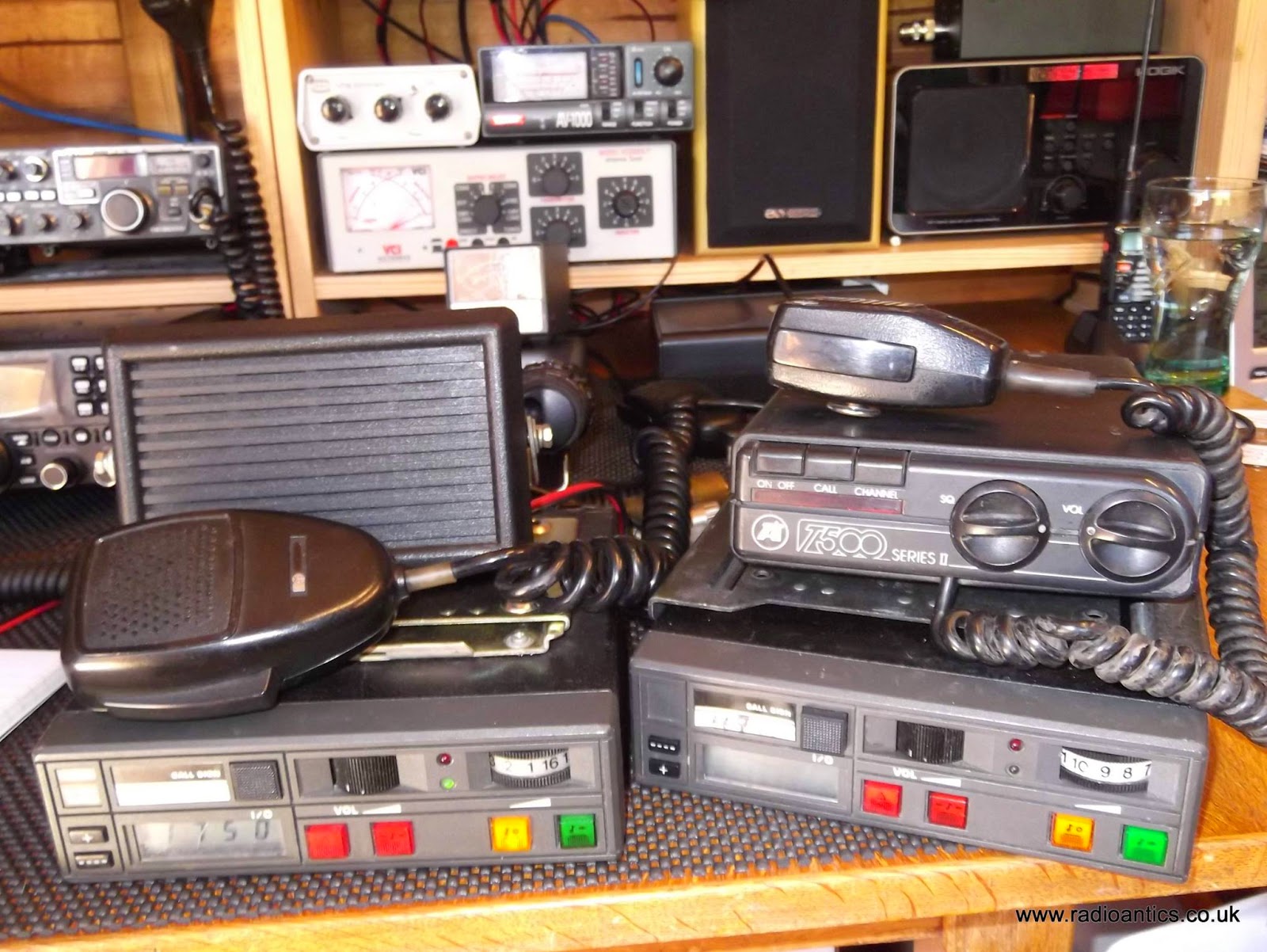
One is a Tait T535 2-Channel Mobile PMR which can be converted to amateur 2m operation relatively easily. Details are available on the internet including David Pye's website. I intend to use this unit to set up a permanent APRS internet gateway/digipeater.
While walking around with the Tait I attracted the attention of another seller who had some PYE MX294 units for sale. One was already converted to work on the 25kHz spaced simplex and repeater channels with CTCSS. The other was only partly converted and they came with a box full of spare boards and mounting plates and an original microphone and speaker. I wasn't really looking for any more units but seemed a bargain for £20.
The PYE MX294 was indeed converted and seemed to work fine on the simplex channels, and while it was receiving and transmitting on the repeater channels it wasn't transmitting the CTCSS sub-tone. With some sage information from Ian MW0IAN on twitter it was a simple issue to solve, using the oscilloscope I confirmed the tone was being generated it was the pot controlling the level that was set too low.
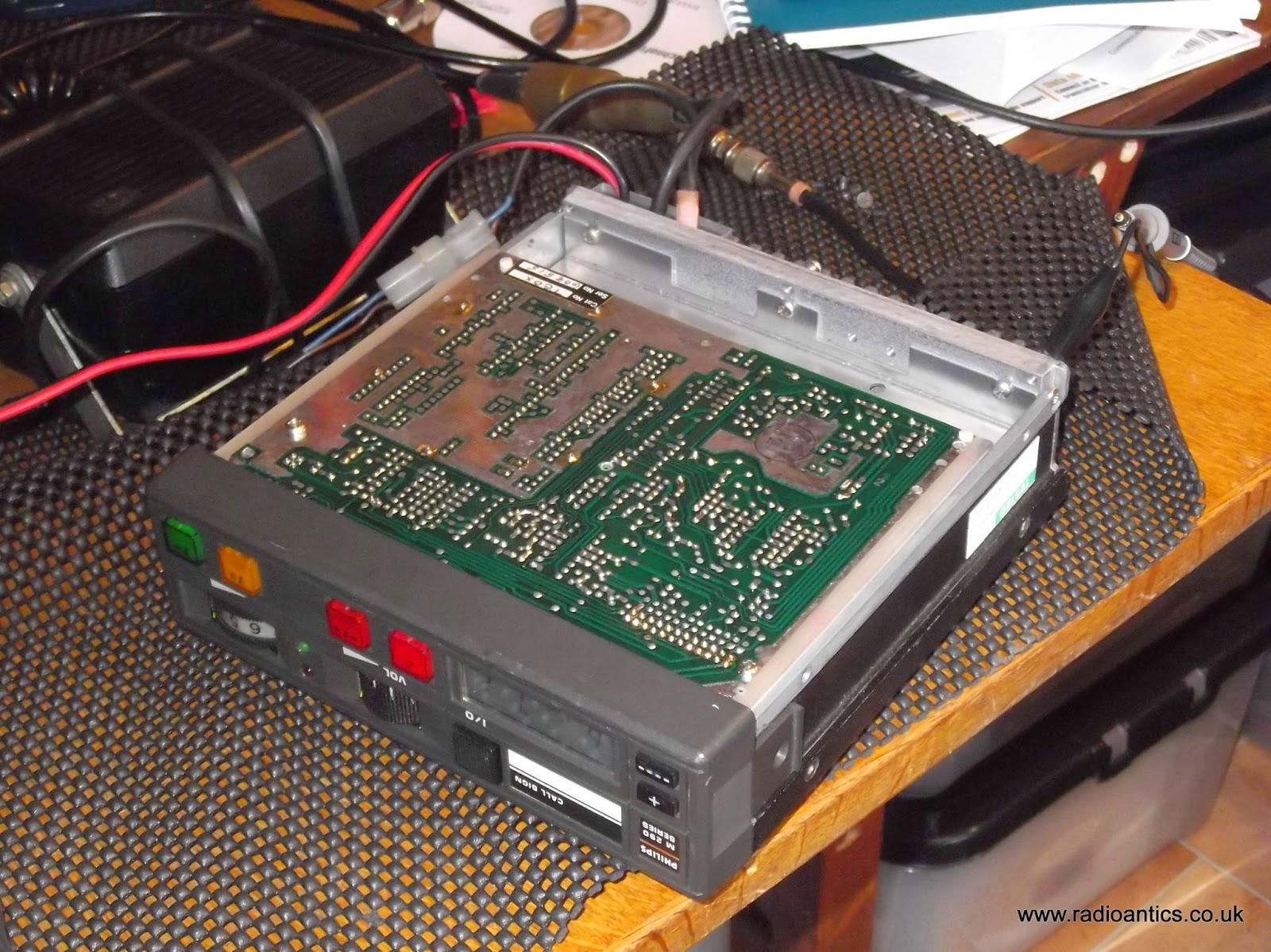
The Tait is proving a little more involved. It has a diode matrix board to set the Tx/Rx frequencies which has been set incorrectly. It also had a CTCSS board that was hard-wired in rather than socketed which I have now removed. The information of which diodes to link/unlink is freely available, however I decided to create a small windows utility to simplify the calculation. This is available for download from my website, it is supplied as is and with no warranty.

There are a number of modifications to add multi-channel to this radio by the use of eproms, but I am considering devising an Arduino solution to allow setting of frequencies and possibly selection of CTCSS.
Andrew Garratt, MØNRD, is a regular contributor to AmateurRadio.com and writes from East Midlands, England. Contact him at [email protected].
Fredbox – 2m transceiver

Many years ago I designed and made the 2m AM Fredbox 2m AM transceiver. At the time it was the smallest 2m transceiver I’d ever seen or used. Several close copies were made. It worked some impressive DX including several 60 mile handheld contacts and one over 100 miles to Brittany from the South Devon coast. All these were with whip antennas on the rig and not beams. Most QSOs were with locals. The power was only 10mW AM. It was ideal for contacts around Cambridge where I lived at that time.
Some years ago, I rebuilt the transceiver and had some decent QSOs yet again.
As with the Sixbox, I would suggest the design is taken as a springboard for your own version. It is certainly ripe for further development.
See https://sites.google.com/site/g3xbmqrp3/vuhf/fredbox .

Roger Lapthorn, G3XBM, is a regular contributor to AmateurRadio.com and writes from Cambridge, England.
Heathkit?
 Some of you might remember me talking about the return of Heathkit.
There has been a lot of mystery surrounding the status of Heathkit, as they popped up a couple of years ago and announced that they were returning. There was a survey posted online for a long time asking people what they wanted to see from a new Heathkit. The new Heathkit management hosted a Q and A session on Reddit speaking more about their plans to return. Then, nothing. No announcements, no news. There was brief mention in December when the folks at Adafruit (a company that supports the MAKER community) were briefly in touch with the new Heathkit, and were told that things are still progressing, and there will be no information on what the products will be until they are ready. All through this, I have been skeptical, as many people would be, since we have heard this story before.
Now, there are changes over at Heathkit.com. They are clearly gearing up for products, and support. They have even started an eBay store where they are selling parts, and some classic equipment.
Cross your fingers.
–Neil W2NDG
Neil Goldstein, W2NDG, is a regular contributor to AmateurRadio.com and writes from New York, USA. Contact him at [email protected].
Weekly Propagation Summary – 2015 May 04 16:10 UTC
Here is this week’s space weather and geophysical report, issued 2015 May 04 0612 UTC.
Highlights of Solar and Geomagnetic Activity
27 April – 03 May 2015
Solar activity was at very low to low levels during the period. Very
low levels were observed on 27 April and on 02 May. Solar activity
was in decline during the beginning of the period as Region 2331
(S10, L=021, class/area Dai/240 on 26 Apr) rotated around the SW
limb on 29 April. Only isolated low level C-class flaring was
observed for the majority of the period until new Region 2335 (S15,
L=192, class/area Dai/220 on 02 May) rotated around the SE limb on
30 April. This region slowly developed in both area and magnetic
class during its first few days on the visible disk and culminated
in seven C-class flares; the largest of which was a C2 flare at
01/0257 UTC. Other activity of note included an 18 degree filament
eruption, centered near S46E09, observed lifting off the visible
disk between 02/1500-1830 UTC. Associated with this eruption was a
partial-halo coronal mass ejection (CME) first observed in
SOHO/LASCO C2 imagery at 02/2036 UTC with an approximate speed of
473 km/s. Although the majority of the ejecta appeared to be
southward of the ecliptic plane, WSA/ENLIL modelling of the event
showed a potential impact after midday on 06 May.
No proton events were observed at geosynchronous orbit.
The greater than 2 MeV electron flux at geosynchronous orbit was at
normal to moderate levels. Moderate levels were observed on 27-29
April and again on 02-03 May.
Geomagnetic field activity was mostly quiet through late in the
period. At approximately 30/0515 UTC, total field showed an increase
from 6 nT to 11 nT with a weak increase in solar wind speed from
approximately 280 km/s to 350 km/s. Further increases in speed to
around 450 km/s occurred on 01 May as a weak, positive polarity
coronal hole high speed stream (CH HSS) became geoeffective. CH HSS
influence continued through the end of the period. The geomagnetic
field responded with quiet to unsettled conditions on 02-03 May.
Forecast of Solar and Geomagnetic Activity
04 May – 30 May 2015
Solar activity is expected to be at very low to low levels with a
chance for M-class (R1-R2, Minor-Moderate) flare activity from 04-21
May and again from 28-30 May with the return of old Regions 2322
(N11, L=116) and 2325 (N05, L=050).
No proton events are expected at geosynchronous orbit.
The greater than 2 MeV electron flux at geosynchronous orbit is
expected to be at normal to moderate levels with high levels
possible from 07-08, 13-21, and 29-30 May due to CH HSS activity.
Geomagnetic field activity is expected to be at quiet to unsettled
levels from 05-07 May with active periods likely on 06-07 May due to
a combination of CH HSS effects and the arrival of the 02 May CME by
mid to late on 06 May. Unsettled to active conditions with likely
minor storm periods (G1-Minor) are expected from 12-15 and 17-20 May
due to a recurrent CH HSS. A weak CH HSS is expected to become
geoeffective from 27-30 May causing quiet to unsettled conditions.
Don’t forget to visit our live space weather and radio propagation web site, at: http://SunSpotWatch.com/
Live Aurora mapping is at http://aurora.sunspotwatch.com/
If you are on Twitter, please follow these two users:
+ https://Twitter.com/NW7US
+ https://Twitter.com/hfradiospacewx
Get the space weather and radio propagation self-study course, today. Visit http://nw7us.us/swc for the latest sale and for more information!
Check out the stunning view of our Sun in action, as seen during the last five years with the Solar Dynamics Observatory (SDO):
https://www.youtube.com/watch?v=zXN-MdoGM9g
We’re on Facebook: http://NW7US.us/swhfr
Visit, subscribe: NW7US Radio Communications and Propagation YouTube Channel
 Ham Radio Deluxe |
 W5SWL Electronics |
 Ham Radio Prep |
 KB3IFH QSL Cards  Hip Ham Shirts  HamRadioAuctions HamRadioAuctions Reliance Antennas Reliance Antennas Enigma Shop Enigma Shop |  morseDX  Ni4L Antennas  R&L Electronics R&L Electronics antennas.us antennas.us QRV QRV |
- Matt W1MST, Managing Editor
