 |
 Armed Forces Crossband Opportunities
 8 May 2015 | by
  |
| Courtesy: http://swldx.us/blog/ |
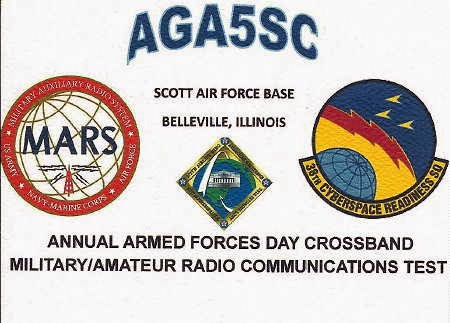
Each station has a slightly different operating schedule and full details of operating times and crossband frequencies can be downloaded from here.
In addition to the usual SSB / CW modes, this year will see several digital modes such as MT63, AMTOR FEC, as well as two new modes ... MIL-STD and ALE.
The needed MIL-STD (Serial PSK) software can be downloaded for free from MS-DMT software.
The activity gives hams and SWL's the chance to exercise their technical and operating skills. All stations will provide a special QSL for contacts made or for reports of reception.
Join the fun and gather some unique wallpaper at the same time ... not many hams have a QSL from 'WAR' on the wall!
Steve McDonald, VE7SL, is a regular contributor to AmateurRadio.com and writes from British Columbia, Canada. Contact him at [email protected].
Roll your own valves (tubes)
A few weeks back – in the post about wartime crystal production – I made a tangential reference to my all time favourite YouTube video – Claude Paillard F2FO distilling down to less than 20 minutes his meticulous work making a triode valve, effectively by hand. Watching it again, this time I spent a bit more time looking over the many pages of background information he had posted on his website detailing his research into triodes of the 1920s, the techniques he used and the equipment he used or made to complete this project and create a very cute looking valve wearing blue shorts.

This prompted me to start a more methodical reading of the documents, and to work through the translations to ensure I understood what he had done. (Google translate is great, but it missed a significant amount.) If you’re vaguely interested in the technology of the earliest days of radio, and have ever wondered how these valves were made, the documents take you on a special journey through the eyes of an explorer with a brilliant workshop and skills to match. His research is comprehensive. By way of exploring how early valves were made he produces a full detailed and illustrated life story of the evolution of valve types and introduces important valve families like the 6L6 and its descendants like the 6V6 and the 807 of the late 1930s. He also takes you on an excursion to discover the history of creating an effective vacuum, critical in the creation of the valve aka the vacuum tube.
It’s also an enjoyable way to build up a French vocab for the terminology of valve radio gear. Along the way I stumbled across the Electropedia, a brilliant resource for translating technical terms from French to English with a number of other languages included. But some of the terms Claude Paillard uses reflect an earlier era and vocabulary. He talks about the plaque (plate) of a valve rather than l’anode. I’d love to find online versions of the French radio engineering references he cites from the 1920s.

Another plus of this experience is reading the history of radio from the perspective of a country other than Britain or the US. The French version of radio history introduces interesting characters and stories to the familiar names and places. An inspiration behind the work of F2FO is the history of the triode TM (Télégraphie Militaire). A good outline is at Michel Siméon’s website.

Paul Berché was another prolific author of French radio texts.
Shortwave Interval Signals
See https://sites.google.com/site/g3xbmqrp3/hf/interval .
For a touch of pure nostalgia try the link above. Like many, my first experience with short wave was as an SWL, listening on a simple receiver to some of these broadcasters. Many were trying to indoctrinate me whereas all I was really interested in was a QSL card! I recall some great gifts from China! I heard some impressive DX back in the 1960s.
Of course radio amateur DXing came later and radio amateurs ran considerably less power. These days I regularly copy stations running less than 5W from the other side of the planet, but I can still recall the thrill of hearing a 5kW broadcaster in the Windward Islands and copying Radio Australia on a crystal set – all the way from Australia too!

Roger Lapthorn, G3XBM, is a regular contributor to AmateurRadio.com and writes from Cambridge, England.
Ultimate software is up to date
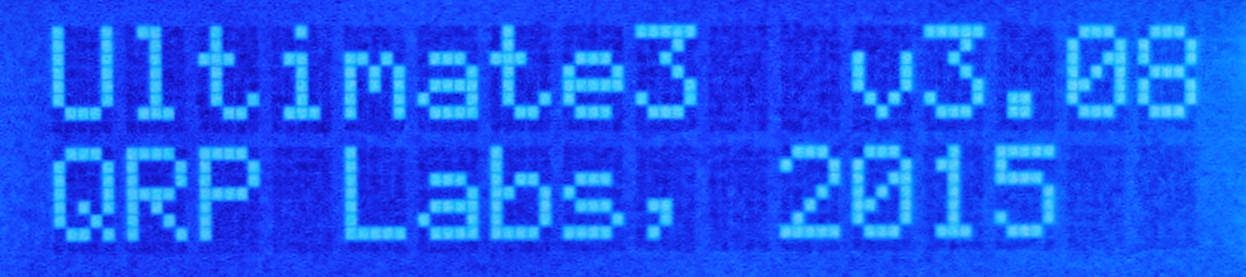
As I have mentioned several times on this blog, I have thoroughly enjoyed WSPR modes ever since Hans, G0UPL came out with the first Ultimate QRSS/WSPR kit.

That means that I have three different versions of the kit. Since Hans has kept on updating the software and even published the compiled versions, it is also possible to upgrade even the old ones.

I have done that and the displays here show the Ultimate 3, the Ultimate 2, and the Ultimate 1 with the latest software.
It is possible to upgrade the chips in-circuit, but I found that it is simpler to remove the chip temporarily from the socket and move it to a simple veroboard with crystal oscillator components. It is connected to my Ebay version of the USBtinyISP.

Sverre Holm, LA3ZA, is a regular contributor to AmateurRadio.com and writes from Norway. Contact him at [email protected].
Ultimate software is up to date
As I have mentioned several times on this blog, I have thoroughly enjoyed WSPR modes ever since Hans, G0UPL came out with the first Ultimate QRSS/WSPR kit.
That means that I have three different versions of the kit. Since Hans has kept on updating the software and even published the compiled versions, it is also possible to upgrade even the old ones.
I have done that and the displays here show the Ultimate 3, the Ultimate 2, and the Ultimate 1 with the latest software.
It is possible to upgrade the chips in-circuit, but I found that it is simpler to remove the chip temporarily from the socket and move it to a simple veroboard with crystal oscillator components. It is connected to my Ebay version of the USBtinyISP.
Sverre Holm, LA3ZA, is a regular contributor to AmateurRadio.com and writes from Norway. Contact him at [email protected].
Miscelleneous Radio Stuff
As I have blogged in the past, I have a QTH is Santa Fe, NM. From there I have done the majority of my SOTA expeditions. There is a great ham radio community there and an even better SOTA community. Including myself, there are four hams who have earned SOTA Mountain Goat status in the Santa Fe areas and soon to be five. So we have a lot of fun in the mountains of New Mexico. To bring some organization to that group, we have formed the New Mexico Mountain Goat club to promote efficiently summit radio operations. This week the club call was finally issued, NM5MG. So listen for this call around Memorial Day weekend (end of May).
I have built my first stealth antenna with help from AD6D, in the form of a flagpole, at my Santa Fe QTH. The 20 ft. flagpole from ZeroFive antennas works great. I've installed an LDG tuner at the base to get the antenna resonant 10 -20m and added a piece of wire, attached to the flag fastener and raised to the top, in an inverted L configuration to get tuned resonance on 40m and 80m. No doubt it is a compromise, but I'm on the air and can work a lot of stuff.
I will be travelling to Dayton for the first time in 15+ years. I am looking forward to seeing old friends there. My focus in ham radio has matured a lot since the last time I was there, so looking forward to the flea market.
I am also working on perfecting remote operation of my home QTH station in Boerne, TX. Early results are encouraging. I just to need to tweak a few things and get comfortable with the process.
Hopefully next time, I can write some specifics about these projects.
Mike Crownover, AD5A, is a regular contributor to AmateurRadio.com and writes from Texas, USA. Contact him at [email protected].
Miscelleneous Radio Stuff
As I have blogged in the past, I have a QTH is Santa Fe, NM. From there I have done the majority of my SOTA expeditions. There is a great ham radio community there and an even better SOTA community. Including myself, there are four hams who have earned SOTA Mountain Goat status in the Santa Fe areas and soon to be five. So we have a lot of fun in the mountains of New Mexico. To bring some organization to that group, we have formed the New Mexico Mountain Goat club to promote efficiently summit radio operations. This week the club call was finally issued, NM5MG. So listen for this call around Memorial Day weekend (end of May).
I have built my first stealth antenna with help from AD6D, in the form of a flagpole, at my Santa Fe QTH. The 20 ft. flagpole from ZeroFive antennas works great. I've installed an LDG tuner at the base to get the antenna resonant 10 -20m and added a piece of wire, attached to the flag fastener and raised to the top, in an inverted L configuration to get tuned resonance on 40m and 80m. No doubt it is a compromise, but I'm on the air and can work a lot of stuff.
I will be travelling to Dayton for the first time in 15+ years. I am looking forward to seeing old friends there. My focus in ham radio has matured a lot since the last time I was there, so looking forward to the flea market.
I am also working on perfecting remote operation of my home QTH station in Boerne, TX. Early results are encouraging. I just to need to tweak a few things and get comfortable with the process.
Hopefully next time, I can write some specifics about these projects.
Mike Crownover, AD5A, is a regular contributor to AmateurRadio.com and writes from Texas, USA. Contact him at [email protected].
 Ham Radio Deluxe |
 W5SWL Electronics |
 Ham Radio Prep |
 KB3IFH QSL Cards  Hip Ham Shirts  HamRadioAuctions HamRadioAuctions Reliance Antennas Reliance Antennas Enigma Shop Enigma Shop |  morseDX  Ni4L Antennas  R&L Electronics R&L Electronics antennas.us antennas.us QRV QRV |
- Matt W1MST, Managing Editor
