 |
 Series Eight Episode Eleven – Monitoring Your RF (31 May 2015)
 31 May 2015 | by
 In this episode, Martin M1MRB / W9ICQ is joined by Leslie Butterfield (G0CIB) and Chris Howard M0TCH to discuss the latest Amateur / Ham Radio news. Colin M6BOY rounds up the news in brief, and this episodes feature is - Monitoring your RF
- Fox-1 Operating Guide
- Good Evening Net from India
- UK Regional Secondary Locators Guidance
- Funding for National Radio Archive
- Liquid Metal Antenna
- Ham Radio Licenses for CubeSat Students
- Icom IC-7600 HF New Firmware
- Radio with No Analog Parts?
Colin Butler, M6BOY, is the host of the ICQ Podcast, a weekly radio show about Amateur Radio. Contact him at [email protected].
Series Eight Episode Eleven – Monitoring Your RF (31 May 2015)
In this episode, Martin M1MRB / W9ICQ is joined by Leslie Butterfield (G0CIB) and Chris Howard M0TCH to discuss the latest Amateur / Ham Radio news. Colin M6BOY rounds up the news in brief, and this episodes feature is - Monitoring your RF
- Fox-1 Operating Guide
- Good Evening Net from India
- UK Regional Secondary Locators Guidance
- Funding for National Radio Archive
- Liquid Metal Antenna
- Ham Radio Licenses for CubeSat Students
- Icom IC-7600 HF New Firmware
- Radio with No Analog Parts?
Colin Butler, M6BOY, is the host of the ICQ Podcast, a weekly radio show about Amateur Radio. Contact him at [email protected].
MOSFET crystal sets
Some years ago, QST had an article on a crystal set based on a zero bias MOSFET. Although I have yet to try this sort of design I have no doubt they will work well. Crystal sets derive all their power from the TX and in the past I have achieved some remarkable (well for me!) results. Best was receiving Radio Australia (from Australia) as well as some amateur Gs on 80m and 160m at a considerable distance. In the USA some 75m AM amateur stations are regularly heard at great distances.
See http://makearadio.com/visitorsprojects/ralf-mosfet.php .

Roger Lapthorn, G3XBM, is a regular contributor to AmateurRadio.com and writes from Cambridge, England.
GQRP Club and SPRAT magazine
Several times in the past I have said that, if all other magazines had to be cancelled I’d keep GQRP Club’s SPRAT magazine. This small format magazine comes out quarterly and is excellent value for money. You don’t get the endless adverts by the few remaining national radio companies in the UK, just a few adverts from companies selling bits. Every quarter there are articles showing things to build or ideas on which to base your own projects.
SPRAT really is first class and all produced by unpaid volunteers who love our hobby. As much as I enjoy browsing PW and RadCom, I look forward to getting SPRAT far more.
See http://www.gqrp.com/ .

Roger Lapthorn, G3XBM, is a regular contributor to AmateurRadio.com and writes from Cambridge, England.
The Reverend revued
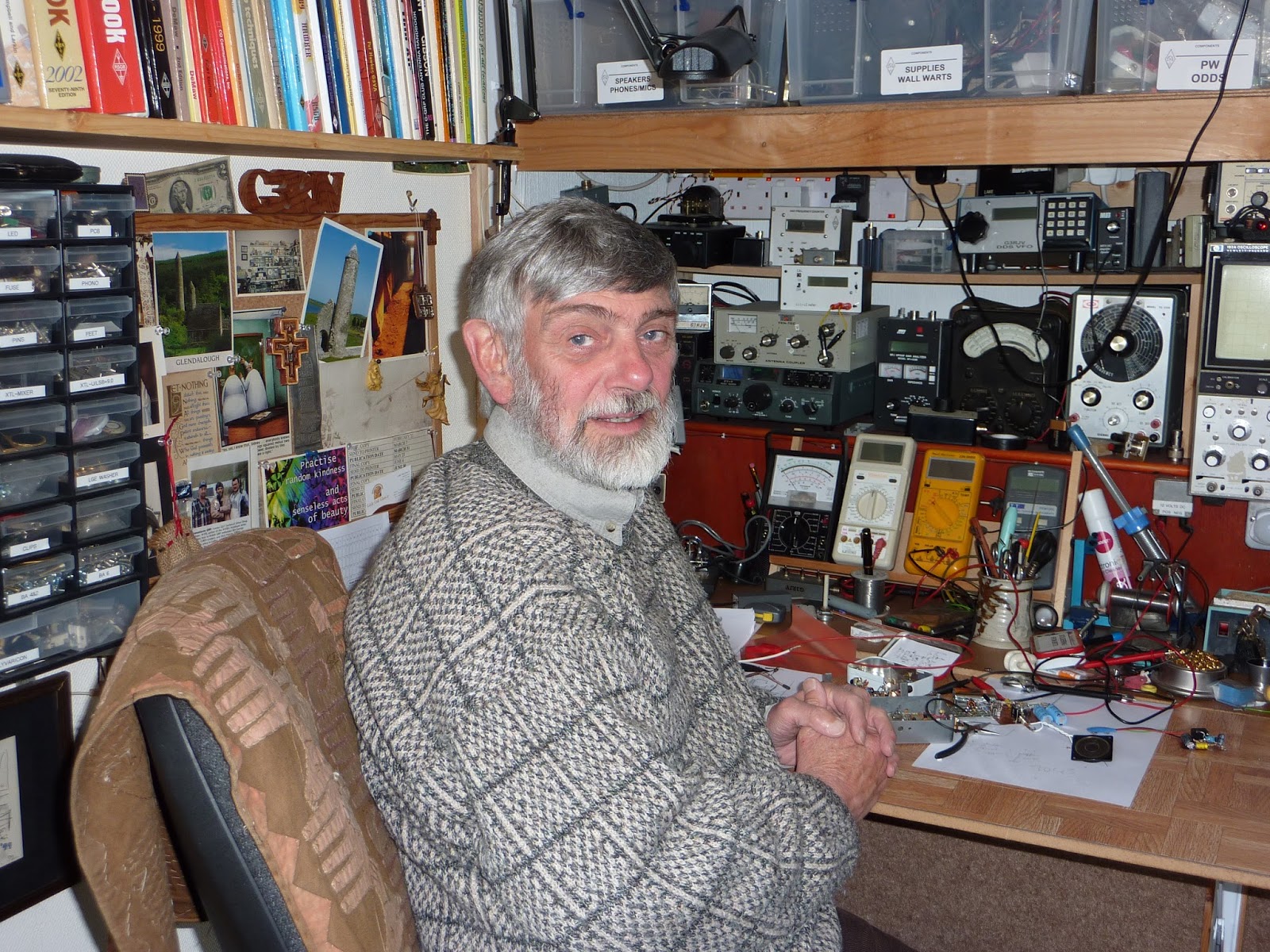
History lesson: The first time I came to know of a George Dobbs, was back in the mid 1970s when I was a schoolboy at around the age of 12. I built his project Making A Transistor Radio published in a Ladybird book. A three transistor germanium circuit that was slowly put together in stages from a crystal set, to a fully working regen radio. Built without a soldering iron, perhaps he didn't want us to burn our fingers? Components clamped down under screws and screwcups on a piece of wood. The radio worked first time and was the first electronic project I ever built. At the time I didn't know much about George Dobbs, only 20 years or so in the late 1990s, I would return back to the book and discover that this was the G3RJV George Dobbs associated with the G-QRP club he formed in 1974. Since then, George has gone on to write many QRP related books, monthly insert Carrying on the Practical Way in Practical Wireless, and of course QRP in Radcom and a few others.
So it was an honour to find he had devoted his entire QRP page over to my blog. My wife has got fed up with me by now picking up and down Radcom every five minutes and reading the page over and over again. She said of course you're going to blog it, you bet sure I am!
George starts his review of my blog explaining the name "The Font of all Knowledge" and how linguistic scholars that make up half of the RSGB would lay me open to scorn for using the name Font, but how Oxforddictionaries.com claims household split over the word scone. Of course being a man of the cloth he would know from the amount consumed at the tea parties he has resided over at the Vicarage over the years of his service. The real secret is I take no applause for the name, this I give over to my linguistic friend, scholar, and blogger Roger G3XBM, who is the one whom is responsible for thinking it all up. Before I started my blog I was passing him over information "and still do" about useful links that could prove valuable to be included in his blog. Roger refered to me as the Font of All Knowledge, so I decided to use this when I created my blog late last year.
I now hope that puts peoples minds at rest where the name came from.
Once George has made every one happy, and comfortable, with the name and the importance of its place within the hobby. He then continues forward taking a look at the items I have reviewed, the pixie kit which G3XBM also picked up on and built one.
The Oscilloscope Kit, I recently noted and passed the information over to G3XBM:
http://www.banggood.com/DIY-Digital-Oscilloscope-Kit-Electronic-Learning-Kit-p-969762.html
PSDR from Michael Colton:
http://g1kqh.blogspot.co.uk/2014/10/pdsr-from-michael-cotton.html
I have been very happy with what I have seen G3RJV write, and I am glad the blog continues to score many daily hits from Amateurs around the world. Of course its up to me to find things new, this will continue, when I see something good, and of value, along with other aspects of the hobby I am involved in.
Thank you G3RJV for bringing this to the forefront of Radcom, and thanks to G3XBM for creating the name "The Font of all Knowledge" Swoon! (I only went to a Comprehensive school that got burnt to the ground twice in 4 years while I was being educated there.)
Thanks to Graham G3MFJ for supplying the photo.
Steve, G1KQH, is a regular contributor to AmateurRadio.com and writes from England. Contact him at [email protected].
Amateur Radio Weekly – Issue 62

Still amazes me
It still amazes me that 5 Watts of RF energy can span the globe. To quote my son Joey, “What sorcery is this?”
W2LJ
Radio Contest? Why?
The basic objective of most radio contests is to make as many radio contacts as possible. This is influenced by the scoring method used for the contest.
Ham Radio School
Interview: KGB spy who relied on numbers stations
Jack Barsky held a job at some of the top corporations in the U.S. and lived a seemingly normal life — all while spying for the Soviet Union
60 Minutes
Les Paul’s pirate radio station in Queens
Not only did he build the first solid body electric guitar and invent multi-track recording but he was responsible for creating a pirate radio station in Queens in the 30s.
glasscapsule
Radio call saves SOTA climber following fall
A Littleton, Colorado, radio amateur and mountaineer was happy to have his hand-held transceiver along on May 17 after he slipped and fell from an icy ledge in Berthoud Pass while snowshoeing.
ARRL
29 MHz – the forgotten frequency for amateur radio satellites
Hans van de Groenendaaal ZS6AKV writes in the EngineerIT magazine about the potential for 29 MHz as a satellite uplink band.
AMSAT UK
Photos from the Voice of America Museum
Immediately after packing up our table at the Dayton Hamvention, my buddies Eric (WD8RIF), Miles (KD8KNC), and I made the 30 minute journey to Bethany, Ohio, to visit the VOA Bethany museum.
The SWLing Post
Video
Elecraft K3S Transceiver demo
First details of the new K3S transceiver, presented by Peter Waters G3OJV.
Waters & Stanton
How to wind a toroid inductor
The real trick is often how to hold the toroid core while doing the winding of the wire.
W2AEW
How to
3D print: 3 element 2m (145 MHz) ultra portable yagi
MakerBotThingiverse
Using the Raspberry Pi as an RTL-SDR streaming server
Do you have an unused Raspberry Pi lying around your bench somewhere and just can’t figure out what to do with it? You could build a wireless RTL-SDR streaming server.
/dev/thrash
WsprryPi: Raspberry Pi WSPR transmitter
The I/O pins provide access to a clock signal and it is possible to modulate this clock signal via software.
Gerolf Ziegenhain
Amateur Radio Weekly is curated by Cale Mooth K4HCK. Sign up free to receive ham radio's most relevant news, projects, technology and events by e-mail each week at http://www.hamweekly.com.
Big wheel antenna
 |
| Big Wheel for 2m |
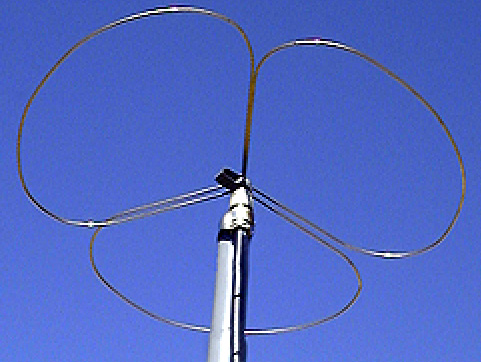
A good 2m antenna for horizontal polarisation is the big wheel. Quite a few beacons use these as they require no rotator and a couple of these stacked give about 5dBd gain horizontally. So, these would be ideal for fixed station use. They would suit me well for UKAC 2m contests and general 2m SSB/CW use. I know that my 3 el, hand rotated, beam has about the same gain. One big wheel alone is better than a halo, but two suitably phased would be better than a small beam.
Roger Lapthorn, G3XBM, is a regular contributor to AmateurRadio.com and writes from Cambridge, England.
 Ham Radio Deluxe |
 W5SWL Electronics |
 Ham Radio Prep |
 KB3IFH QSL Cards  Hip Ham Shirts  HamRadioAuctions HamRadioAuctions Reliance Antennas Reliance Antennas Enigma Shop Enigma Shop |  morseDX  Ni4L Antennas  R&L Electronics R&L Electronics antennas.us antennas.us QRV QRV |
- Matt W1MST, Managing Editor
