 |
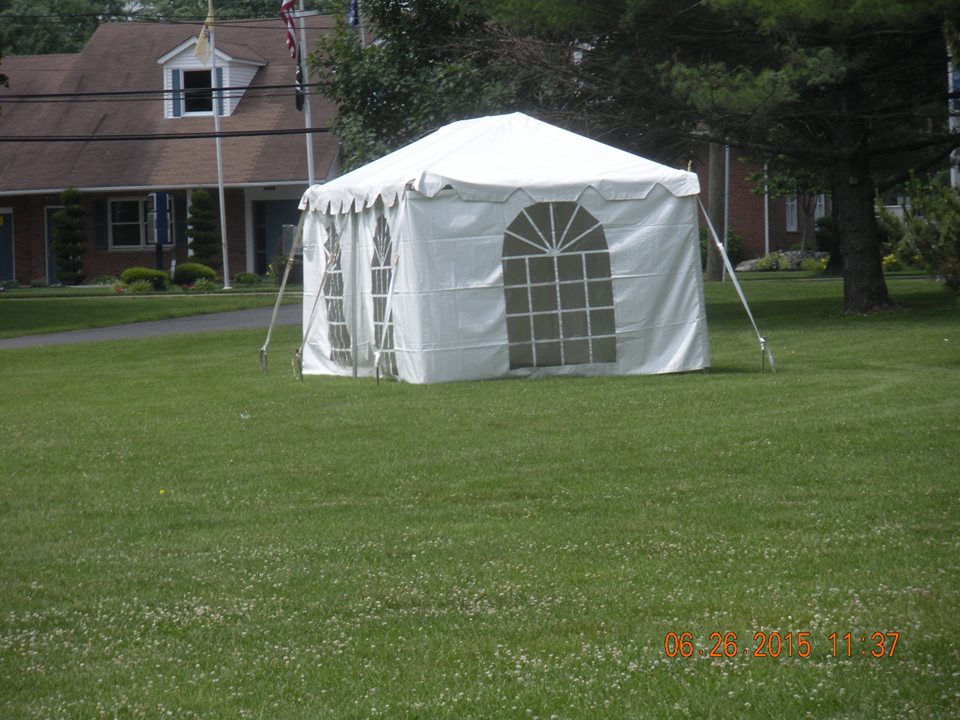
 Getting ready for Field Day
 26 June 2015 | by
Larry Makoski, W2LJ, is a regular contributor to AmateurRadio.com and writes from New Jersey, USA. Contact him at [email protected].
CLE 195 Results

Propagation conditions co-operated for the recent CLE weekend but the weather did not. The high level of lightning activity resulted in some stations hearing just a fraction of what they usually hear in the 270 - 319KHz region. Although most of the lightning was a few states / provinces to my east, the results here were the same, with noise levels receding by ~18db when sunrise arrived over the lightning-affected regions.
It seems that almost everybody logged 500-watter YQ-305 in Churchill, Manitoba except me as this monster eluded me all weekend ... yet little 25-watter, YPM, in Pikangikum, Ontario made it through in fine form ... very odd.
The following stations were logged, all on the first night of the three-evening affair, with no new catches being added after night one:
20 07:00 272 XS 343 Prince George, BC, CAN
20 08:00 274 YPM 1299 Pikangikum Apt, ON, CAN
20 10:00 274 FR 928 Fort Resolution, NT, CAN
20 08:00 275 GEY 779 Greybull, WY, USA
20 11:00 278 1U 521 Masset Municipal Apt, BC, CAN
20 11:00 281 CRN 1510 Cairn Mtn - Sparrevohn LRRS, ALS
20 11:00 283 DUT 1867 Dutch Harbor - Unalaska Apt, ALS
20 09:00 284 QD 1014 The Pas Municipal Apt, MB, CAN
20 11:00 284 FHR 26 Friday Harbor Apt, WA, USA
20 09:00 286 EKS 600 Ennis - Big Sky Apt, MT, USA
20 10:00 287 PE 560 Peace River, AB, CAN
20 10:00 290 YYF 171 Penticton, BC, CAN
20 10:00 292 ZET 518 Devon - Edmonton IAP, AB, CAN
20 10:00 293 MB 18 Mill Bay - Sidney, BC, CAN
20 10:00 295 8C 537 Fairview Municipal Apt, AB, CAN
20 11:00 296 LGD 349 La Grande, OR, USA
20 09:00 299 TV 417 Turner Valley, AB, CAN
20 10:00 302 QW 705 North Battleford, SK, CAN
20 10:00 304 FH 485 Mc Leod (Whitecourt), AB, CAN
20 09:00 305 Z1 484 Three Hills, AB, CAN
20 11:00 305 ONO 448 Ontario Municipal Apt, OR, USA
20 10:00 307 M5 605 Manning, AB, CAN
20 10:00 308 ZZD 515 Calmar (Edmonton Intl Apt), AB, CAN
20 10:00 311 9Y 421 Pincher Creek, AB, CAN
20 11:00 312 UNT 173 Naramata, BC, CAN
20 10:00 317 VC 873 La Ronge, SK, CAN
Most listeners seemed to be more affected by the natural QRN than by DGPS Stations' QRM.
Europe seemed to be relatively lucky with less static interference, especially for those able to pick their listening times.
CLE196 will be over the weekend of 24-27 July.
Steve McDonald, VE7SL, is a regular contributor to AmateurRadio.com and writes from British Columbia, Canada. Contact him at [email protected].
I fancy some 472kHz WSPR!
It is ages since I was active on 472kHz, so I might fire up the FT817 and transverter to see if anyone can spot my 5mW ERP or I can spot others. I shall use the earth-electrode “antenna” and go QRT on 6m to free up the FT817.
It is summertime, so noise levels will be higher, making my weak signal harder to copy than in the winter. It will take me about 5 minutes to swap bands and reset everything. The FT817 has to be set to 500mW and split mode so I receive directly on the 472kHz band but TX on the 80m band into the transverter.
If you copy me on 472kHz WSPR please report it.
UPDATE 2009z: Well, that was a good start! I just switched to MF and received 2 spots by G8HUH in IO81mg (250km) in daylight. I shall now leave 474.2kHz WSPR running overnight to see what else happens. With 5mW (maybe less) ERP I am quite happy with his -26/-27dB S/N reports.
UPDATE 2126z: So far G8HUH (250km) has spotted me 10 times this evening. I have spotted no-one and no-one else has spotted me, as yet.

Roger Lapthorn, G3XBM, is a regular contributor to AmateurRadio.com and writes from Cambridge, England.
Mr. Carlson’s Lab – A YouTube Treasure
As you have probably noticed, most modern fixed capacitors no longer indicate the 'grounded' end or the lead going to the internal shielding. At one time, the capacitor's polarity was commonly marked with a band on one end but this is no longer the case ... even though one side is indeed still the shielded side. Depending on exactly what part of the circuit your fixed capacitor is being used in, connecting it in the reverse direction (shield going to signal side), can introduce hum, RF pickup, instability and generally result in poorer capacitor / circuit performance ... and all it takes to determine which lead is which is an oscilloscope!
The second video I viewed shows the process used to resurrect a Yaesu FT-1000MP in truly terrible condition. In a very professional step-by-step process the video shows the logical and systematic approach at making the radio better than new.
Both videos are done by a truly gifted engineer, Paul Carlson, VE7ZWZ, and are exceptionally well done ... the quality one would expect to have to pay for rather than freely view on YouTube.
If you visit Paul's YouTube channel, you'll find a host of other radio and audio-related videos and I guarantee that you will learn something of value ... and probably hang around to watch several more. They are really well done.
Steve McDonald, VE7SL, is a regular contributor to AmateurRadio.com and writes from British Columbia, Canada. Contact him at [email protected].
Pofung UV-6R Dual Band Handheld
Pofung UV-6R 136-174MHz & UHF:400-470MHz Dual Band Handheld FM Professional Two-way Radio

Lots of radio in a small package. Built well and performs well.
http://www.radioddity.com/skin/frontend/default/lanting/download/UV-6R%20User%20Manual
Brilliant Easy to read display
The first thing that impressed me aside from the size and quality was the brilliant and easy to read display of this radio. The two line display and the choice of display color make this radio easy to use and navigate through the menu system. The various option for screen color lighting also make the radio easy to read. The fact that the display lighting can be changed to suit the operator is a nice feature.
Superb audio quality
I have to say that after owning a few of the big 3 brand of radios I was thrown back by the outstanding and loud audio this radio has. I was not sure what to expect at first with such a small radio but the audio is outstanding, sounds great and no distortion even at full volume.
Features and Specifications:
- Dual Band Transceiver
- Brilliant L.C.D. Display
- D.C.S. and C.T.C.S.S. encoding
- VOX function
- Flashlight/Alarm feature
- FM radio band receive
- 128 memory channels
- Dual watch
- Menu driven programming
- Software available for programming (cable sold separately)
- Drop in Li-On charger
- 7.4v 1800mah Li-On battery
- High (5w) and Low (1w) power settings
- Accessory ports for adding speaker microphone (sold separately)
- Belt clip ( Soft case also sold separately)
- Selectable frequency steps
- Selectable repeater offsets
- Adjustable squelch via menu
- Adjustable TOT (Transmission Timer)
- Cross band receive/transmit
- Dual VFO
- Narrow and Wide FM selectable
And much more to even include in features.
The radio itself is great little performer. Battery life on receive is fantastic, battery life on transmit has yet to be determined. Looks rugged and fits nicely in the hand.
For the price of this radio (under $50.00 with free shipping to Canada and U.S.A.) you cannot go wrong for a radio to throw in your shirt pocket or your backpack as a take along radio to listen to N.O.A.A. weather stations, FM stations and monitor local repeaters. Accessories are all about one third each of the cost of the radio, which makes the low price of this radio even more impressive. The small antenna with SMA connector though lacks in receive performance of course, but other antennas can be purchased and used with this radio to get out of those fringe areas.
The Pofung UV-6R is a great introduction to the increasing line of radios on the market. It makes it affordable for the first time user and easy to operate; it also performs well and gets great audio reports into the repeaters. It’s light weight and long battery life make a great emergency radio for that go-kit or to have on hand when needed for that last minute hike.
Fred Lesnick
VE3FAL
**** (4 out of 5)
Fred Lesnick, VE3FAL, is a regular contributor to AmateurRadio.com and writes from Thunder Bay Ontario, Canada. Contact him at [email protected].
Series Eight Episode Thirteen – Friedrichshafen Preview (24 June 2015)
In this episode, Martin M1MRB / W9ICQ, Ed Durrant DD5LP ,Martin Rothwell M0SGL and Colin Butler M6BOY discuss the upcoming Ham Radio Friedrichshafen Event.
Colin Butler, M6BOY, is the host of the ICQ Podcast, a weekly radio show about Amateur Radio. Contact him at [email protected].
Series Eight Episode Thirteen – Friedrichshafen Preview (24 June 2015)
In this episode, Martin M1MRB / W9ICQ, Ed Durrant DD5LP ,Martin Rothwell M0SGL and Colin Butler M6BOY discuss the upcoming Ham Radio Friedrichshafen Event.
Colin Butler, M6BOY, is the host of the ICQ Podcast, a weekly radio show about Amateur Radio. Contact him at [email protected].
 Ham Radio Deluxe |
 W5SWL Electronics |
 Ham Radio Prep |
 KB3IFH QSL Cards  Hip Ham Shirts  HamRadioAuctions HamRadioAuctions Reliance Antennas Reliance Antennas Enigma Shop Enigma Shop |  morseDX  Ni4L Antennas  R&L Electronics R&L Electronics antennas.us antennas.us QRV QRV |
- Matt W1MST, Managing Editor
