 |
 The Idea Factory
 6 June 2015 | by
 The Idea Factory by John Gertner tells the story of Bell Labs from the 1930s to 1990s. Bell Laboratories was the research arm of AT&T, the US phone company that had a monopoly position for decades, providing local phone service, long distance, and telecommunications equipment. I just finished the book yesterday, and I highly recommend it. 
Bell Labs was responsible for so many innovations and discoveries it is mind-boggling. In fact, it’s difficult to find a modern device or technology Bell Labs didn’t have some involvement in or influence on. Some of the things they accomplished include inventing the transistor and solid state electronics, developed microwave communications, created the Unix operating system, created automated electronic switching of telephone calls, developed fiber optics, authored information theory which lead to the creation of the digital computer, developed integrated circuits, created lasers, launched satellites, invented solar cells, and designed cellular telephone. Bell Labs was perhaps the greatest collection of inventors, scientists, physicists, chemists, mathematicians, academics, and metallurgists ever assembled. What made Bell Labs so unique and so successful? Some reasons include:
- Bell Labs researchers understood how and why the technology worked. It was a departure from “cut and try” inventing, like that of Edison.
- All employees could talk to and mingle with any other employee, and the buildings and corporate culture was designed to insure this interaction. Junior researchers could bounce ideas off of senior (and often famous) employees in hallways, meeting rooms, and even in dinners in their home living rooms.
- There was no direct motivation to produce usable, profitable products. Some technology research, like the laser, even had no identifiable problem to solve or real life application at the time.
- There was no pressure for researchers to seek funding or grants. Funding came from revenue from the long distance and local telephone service operating companies of AT&T.
- Research projects that were not bearing fruit could be ended without damning the researcher.
- Researchers were free to pursue their own side projects and interests, and were actually expected to take on projects other than their direct assignments.
- Bell Labs shared all technology and research with the public, due to an agreement with the US government in exchange to preserve its monopoly.
From the start of research to use in “The System” as they called the Bell System, was usually 20 to 30 years. Technology and equipment were designed to last 40 years, or more. Bell Labs was split from AT&T after Divestiture in 1984 and is now a shadow of itself, a division of Alcatel Lucent, still in the buildings in Murray Hill, NJ where the transistor was invented. Their innovations continue to live on in most electronics and communications we use today.
Gertner covers the technologies and inventions of Bell Labs, skillfully and accurately describing them in a way that non-techies can understand but also resonates with technical geeks like me. More importantly he goes in depth into the history of the people that made it all happen, people like Claude Shannon, Mervin Kelly, John Pierce, and William Shockley, not only talking about their accomplishments but also their culture, family, struggles, idiosyncrasies, and failures.
The book ends with somewhat of an indirect commentary on the demise of Bell Labs and the irony in that the technology they created led to Silicon Valley and the bubble/IPO/get rich quick and quarterly corporate financial results mentality we have today. It’s no longer possible to achieve the monumental discoveries in major leaps like Bell Labs accomplished. Unfortunately we have resigned ourselves to incremental improvements focused mainly on selling products, and not the pursuit of pure science and technology, which ultimately leads to better products and improvements in our lives. Gertner makes note of the outstanding accomplishments of Bell Labs in light of the relationship with AT&T, the government, and the monopoly that was maintained, noting that it shows the tight relationship between government and capitalism. I think there are lessons to be learned by both sides of the political spectrum from this, in regards to government involvement and regulations, and large corporations, both of which are often demonized today.
The Idea Factory doesn’t specifically mention amateur radio, but undoubtedly many radio amateurs worked at Bell Labs. I think the book and the story of Bell Labs offers some lessons for us, however. While none of us will have grand accomplishments like Claude Shannon, we can be be innovators, be creative, and pursue technology and science for merely the sake of pursuing it. Most of the major Bell Labs researchers came from modest means, often in rural America. The next Brattain or Bardeen may be that young kid in our midst who is interested in radio, astronomy, science fiction, or microcontrollers. We need to not be satisfied with just being operators of radio technology, but understand it and experiment, and create.
My writing can’t do Bell Labs or The Idea Factory justice, however if you’re into technology and innovation, I highly recommend this book.
This article originally appeared on Radio Artisan.

Anthony, K3NG, is a regular contributor to AmateurRadio.com.
Amateur Radio Weekly – Issue 63

Large plasma tubes confirmed to exist above the Earth’s atmosphere
These structures are the likely cause of unwanted signal distortions affecting both civilian and military satellite-based navigation systems.
io9
Britain’s pirate radio stations are not going down without a fight
Tied to a branch in the canopy of an old birch tree is the transmitter for Rage FM, Taunton’s only pirate radio station. Owning it could get Alfie, the proprietor, two years in prison.
Newsweek
Tytera TYT MD-380 DMR Handheld review
DMR, Digital Mobile Radio, seems to be taking off as the digital voice mode of choice, and the arrival of the Tytera TYT MD-380 DMR is great news.
Essex Ham
DMRUK: all digital worldwide TDMA repeater network
Time-Division Multiple-Access (TDMA) preserves the full channel width and divides it into alternating time slots that can each carry an individual call.
DMRUK
Switching power supply noise more common than power lines
LED-type lightbulbs that are becoming more common also can be noise-generators.
ARRL
Not all Jameco power supplies are linear and regulated
I cracked open one of these to see what was up here and sure enough it was using a MC34063A inverting switching regulator.
The SWLing Post
High performance radio – operating the Hilberling PT-8000A
The Hilberling PT-8000A Transceiver is much like a new high-end AC Cobra sports car – a classic format product fine-tuned to as close to perfection as the manufacturer can engineer, executed with near-jewelry precision & finish.
With Varying Frequency
Flex 6500: 11m band opening
I thought I had seen band openings before, but this is what I saw with the new Flex 6500 this morning.
AA6E
How to
Paper clip paddles [PDF]
The actuation is reliable and the contacts seem to be reliable as well. I plan to switch to this new paddle for at least my portable work.
K8AG / North American QRP CW Club
Ten steps to mastering Morse Code
James Altucher is one of those guys that seems to be able to do just about anything. Here’s how I’d apply his advice to mastering Morse Code.
KB6NU
Video
Testing the Yaesu FT-991 on 2m
We compare the FT-991 receiver performance on 2m with two other radios. Justin, G0KSC, from Waters & Stanton, puts them through their paces.
Waters & Stanton
Siru SDR20 Multi-Touch Software Defined Radio
Siru Innovation’s SDR20 multi-touch radio is a high performance scalable software defined radio platform for designing and deploying next generation radios.
Vimeo
Amateur Radio Weekly is curated by Cale Mooth K4HCK. Sign up free to receive ham radio's most relevant news, projects, technology and events by e-mail each week at http://www.hamweekly.com.
U.S. LF Bands – Rulemaking Ruminations (Part 2)
 (...cont'd)
* TWO: We need more technical showings this time, with as many solid
details as possible. I hope the Part 5 licensees are prepared to crunch
numbers, but those of us who only monitored are also able to contribute.
(Much more on this in future correspondence, I expect.) In par. 169. the FCC enquires: "to meet our goal of providing for the coexistence of amateur services and PLC systems in these bands, we seek detailed comment on the technical characteristics of both the PLC systems and the amateur stations.
This information will allow us to set an appropriate separation distance."
The very next sentence, though, I recognize as a somewhat worrisome bit of FCC-speak: "Although the Commission in the WRC-07 NPRM inquired into the technical rules and methods that would assure coexistence, commenters provided little in the way of concrete information." Read that as said with a slightly scolding tone, but with a facial expression that says they're keeping an open mind.
The utilities, IMO, provided no concrete technical information at all. ARRL
cited the 1985 NTIA study on which the 1 W EIRP and 1 km separation idea is based, but the FCC is concerned whether that's still valid. Well, one would hope that any changes made to PLCs over the past 30 years would be toward making the system more robust, not more vulnerable to evildoers, accidents, and natural disasters, but this could prove an area of contention. That may be something the big guys have to fight out; I don't know how much we as individual licensees or observers can contribute. But there ARE other technical matters the FCC needs and wants to know, which we may be able to furnish.
For instance, what sort of PLC signal levels have we actually experienced in the proposed bands? How serious were their impact on licensed activity, and how have PLCs been coped with in actual operation? Also at paragraphs 171, 178, and 178, the FCC is asking for some really fundamental, crucial data.
Namely: What sort of power levels have the Part 5 licensees actually
radiated, and at what actual separations from transmission lines? What
maximum size should an amateur antenna be, and--the biggie, in my view--what is the efficiency of both "typical" and potential amateur antenna systems?
(The Commission would like us to include information from Canadian and
European hams on these issues as well. Details of amateur practice in the
rest of the world could be very helpful in formulating rules here.)
Those operators who have the capability of measuring their true field
strength are in an especially excellent position to help quantify current
practice. Those who can't do that, but are able to measure their ground
losses accurately, can make reasonable calculations to show the maximum
efficiency possible with antennas of various heights. That's likely
preferable to doing it all in NEC modeling, since not all such software is
really good at predicting ground system losses, especially at LF. I'll
gladly offer my own ground system's resistance numbers to anyone who wants to do the math, for instance, as its 32 radials of 104 to 135 ft length in 15 mS/m soil are probably representative of a fairly decent ground for
antennas up to 100 feet high...and I'll be doing another set of readings
very soon, which can include measurements at 2200 m this year in addition to the runs I routinely do at 1750 m.
* THREE: At 172, the FCC observes: "If we were to adopt our proposal to
permit amateur operations only when separated by a specified distance from transmission lines, when a new transmission line is built close by an
amateur station, the station either would have to relocate farther away from the transmission line or cease operating." Scary, huh. But they go on to ask: "How should our rules address the potential for new transmission lines to be constructed closer than the specified distance to pre-existing amateur stations? We do not want to inhibit the ability of either PLC systems or amateur services to grow and expand without imposing unnecessary burdens on either. Is it possible for utilities to refrain from geographically expanding their PLC operations within the relatively small portion of the 9-490 kHz band that we are making available for amateur operations, and is this something utilities would do on their own accord, given the Part 15 status of PLC systems? Should our rules explicitly prohibit utilities from deploying new PLC systems in these bands?"
My answer: yes, please. Look back at par. 26, in the WRC-07 R&O section
where the Commission explains their basis for adding the 2200 m allocation:
"We intend to structure these service rules to promote shared use of the
band among amateurs and PLC systems. Amateurs will not be able to use their allocation status to force unlicensed PLC operations out of the band, and utilities will have no cause to abandon or incur large costs to modify
existing PLC systems." Read that again: "Amateurs will not be able to use
their allocation status to force unlicensed PLC operations out of the band."
That's the reality of the matter, and yet I think it also works in our
favor.
So far as I know, this situation is unique in the history of radio regulation. I can't think of another example where an incumbent, but unlicensed and unallocated, user of radio spectrum has been afforded such protection from any allocated and licensed service. However, most of us who commented in the 2013 proceeding DID AGREE with the Commission that PLC technology has been a special case for a long time, and most recognized that acceptance of its existence was the only way to move the discussion off dead center and get to the point where we are now.
But I maintain this coin has two sides. If we in a licensed, allocated service are willing to accept that we cannot displace existing PLCs now or in the future, then it is ONLY FAIR that the unlicensed, unallocated users should not be able to displace the licensed users, either, now or in the future. Otherwise, it is not truly sharing.
The only way I can see to guarantee protection to licensed users, comparable to what the unlicensed ones will have, is to incorporate within Part 15 a prohibition on any changes in power, transmission mode, and route of existing PLC systems, or installation of new ones, within a reasonable band centered on the new amateur allocations. That achieves the stated goal of not displacing existing systems or burdening the utlities by forcing any changes to them, while only removing two small slices of spectrum from consideration for future installations. That seems an entirely reasonable compromise to me.
Your comments are welcome--and essential!
73
John Davis
You can view comments as well as file your own, via the link from this page:
http://apps.fcc.gov/ecfs/proceeding/view?name=15-99
Steve McDonald, VE7SL, is a regular contributor to AmateurRadio.com and writes from British Columbia, Canada. Contact him at [email protected].
My memory is good just short!
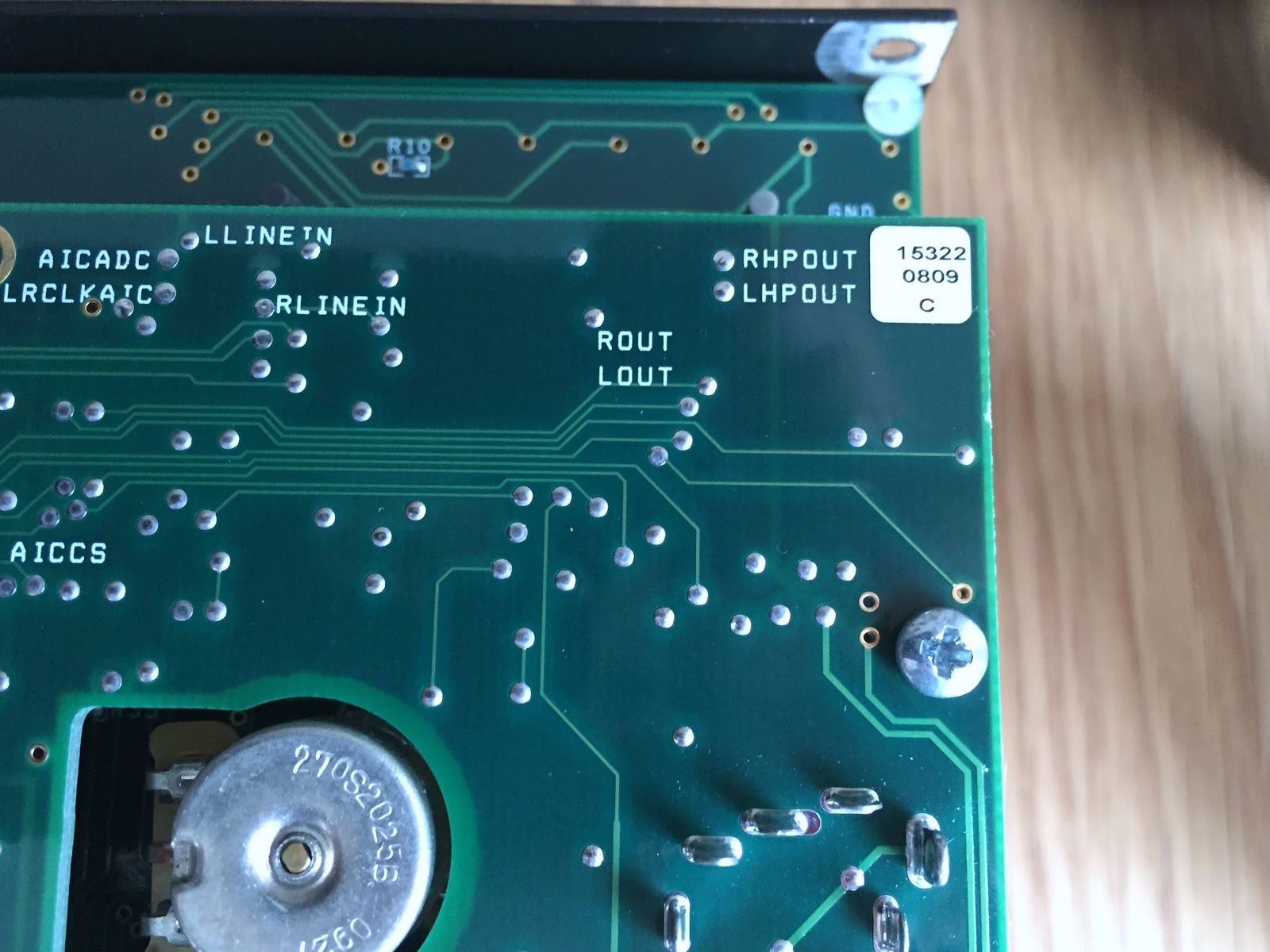 |
| DSP board version |
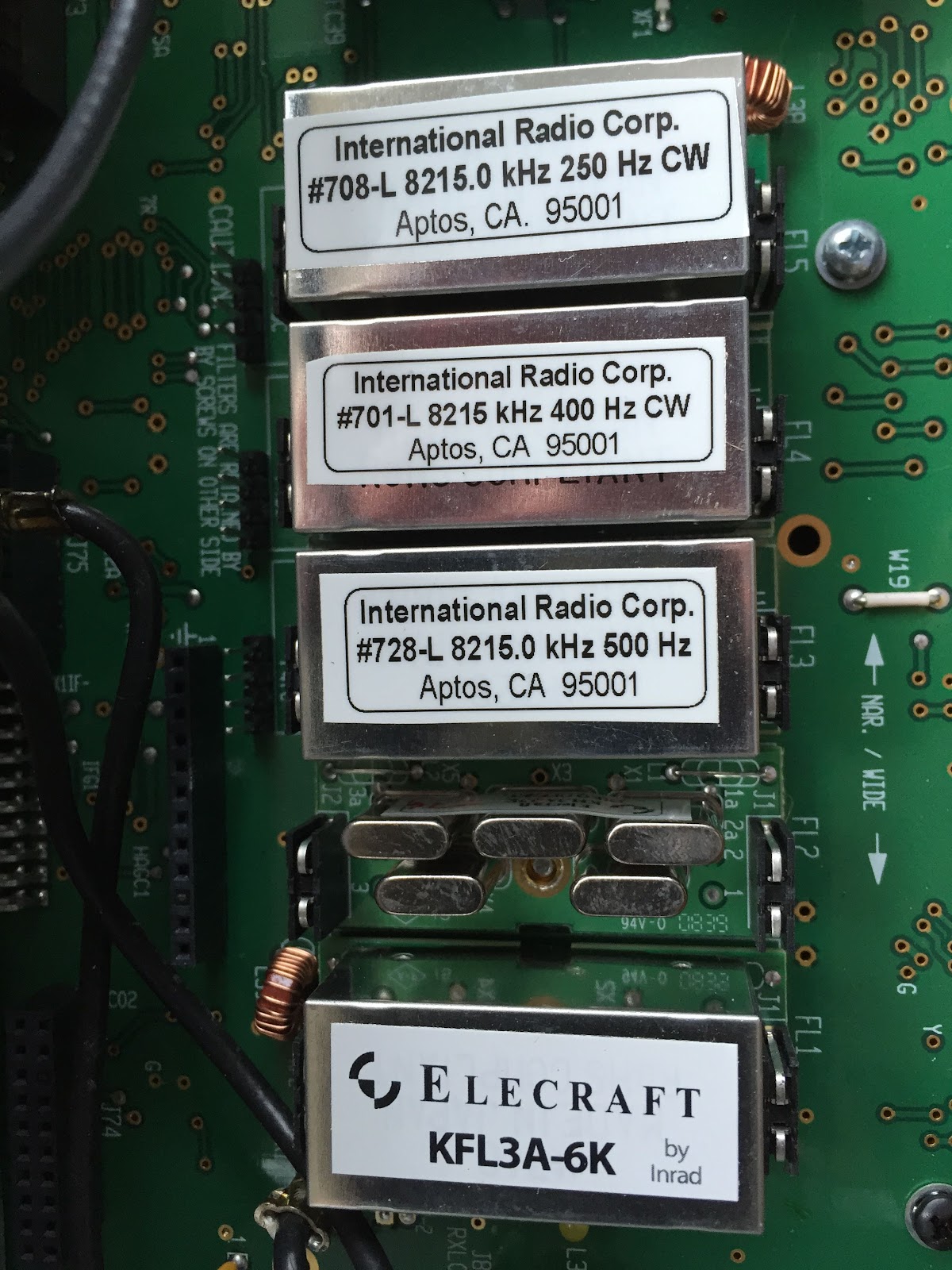 |
| Filters that are in the K3 |
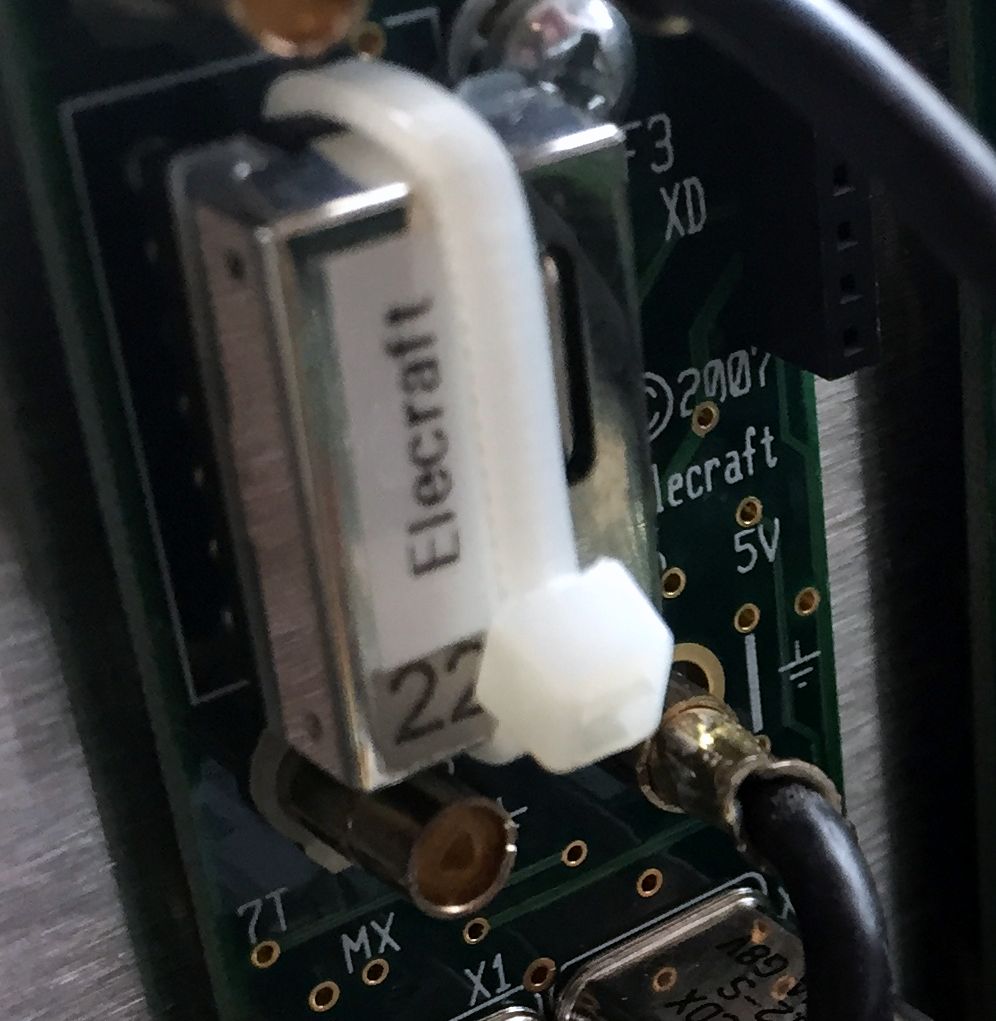
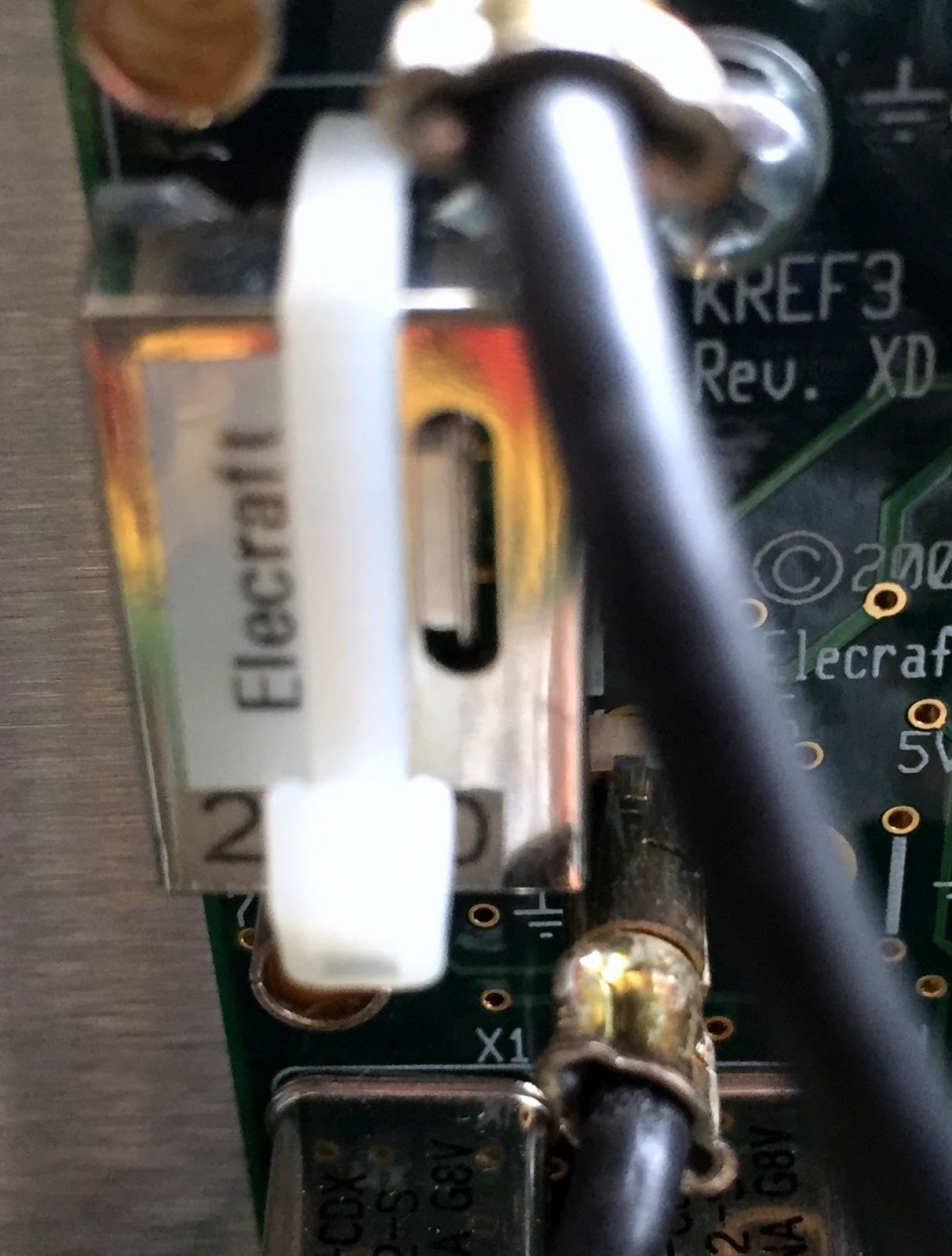 |
| The mystery TCXO |
Mike Weir, VE9KK, is a regular contributor to AmateurRadio.com and writes from New Brunswick, Canada. Contact him at [email protected].
Testing a New Antenna Along the Pemi River
I rode my bike along the Pemigewasset River today and made eight QSOs in the CWT sprint with a new lightweight dipole antenna.

It’s been raining for three days, so it’s a relief to have some sunshine! AND… the mosquitoes are out. They’re pretty prolific at home, but they weren’t too bad along the river today. There were some puddles along the trail and the river is high, but it was beautiful on the bike.

I stopped about a mile down the trail at a corner along the riverside. I thought there would be a breeze to keep the mosquitoes away, and I was right.

Yesterday I built a new antenna because I saw a note from Steve WG0AT that he had been testing it out. I bought 50 feet of twisted pair with #22 wire and teflon insulation. I untwisted 22 feet and built a 44 foot dipole. I had about 30 feet of feed line left. I didn’t use a center insulator, but instead put an inch of heat shrink at the feed point with an underwriters knot.

I set the dipole up between two giant pine trees. The antenna was up about 25 feet. I started out on 15 meters because I could hear lots of activity from the CWT sprint there. The antenna tuned right up with the KX3 and the internal tuner. Later, I switched to 20 meters.
Here’s my log:
3 Jun-15 1913 21.031 K9QVB CW 599 599 Ill
3 Jun-15 1914 21.028 K5OT CW 599 599 TX
3 Jun-15 1915 21.027 N4ZZ CW 599 599 TN
3 Jun-15 1917 21.028 K7SV CW 599 599 VA
3 Jun-15 1919 21.030 W7SW CW 599 599 AZ
3 Jun-15 1925 14.029 K9QVB CW 599 599 Ill
3 Jun-15 1929 14.033 K4LTA CW 599 599 TN
3 Jun-15 1930 14.027 NW2K CW 599 599 NY
I only operated for about 20 minutes, but the antenna seemed to do pretty well. I packed up and headed back. On the way, I stopped to watch two Canada geese and 5 chicks swimming in the cove. I was too late to catch them on camera.

Jim Cluett, W1PID, is a regular contributor to AmateurRadio.com and writes from New Hampshire, USA. Contact him at [email protected].
Breaking news – FOBB 2015 is on!
Today at 9:38 AM
Larry Makoski, W2LJ, is a regular contributor to AmateurRadio.com and writes from New Jersey, USA. Contact him at [email protected].
Listening to code practice
"Whoa! What's that now? How can listening to code practice help improve sending?" you might be asking yourself (and me).
By listening to the timing gents (and ladies) ...... it's all in the timing - and the spaces.
Too many times I get carried away and ignore my spacing. Spacing between individual characters and spacing between words and even spacing between sentences is critical. Ignore spacing and I'll bet you dollars to donuts that you leave others scratching their heads trying to figure out what you're sending. You probably run into a lot of "Gotta QRT now" scenarios, too.
By paying attention to your timing and spaces, and you'll be that guy that everyone wants to QSO with - you'll be that guy with the "good fist". Run on sentences and run on words are not only hard to read - they're also hard to hear.
So I listen to W1AW to remind myself from time to time what perfect code sounds like. The more often I hear perfect code, the better I am equipped to emulate it. Oh, and this doesn't apply only to the QRQ guys, although I suspects it's more important for them. Proper spacing applies to the QRS guys as well - no one is exempt.
Do yourself a favor and tune into W1AW every now and then - especially if you feel you don't need to.
72 de Larry W2LJ
QRP - When you care to send the very least!
Larry Makoski, W2LJ, is a regular contributor to AmateurRadio.com and writes from New Jersey, USA. Contact him at [email protected].
 Ham Radio Deluxe |
 W5SWL Electronics |
 Ham Radio Prep |
 KB3IFH QSL Cards  Hip Ham Shirts  HamRadioAuctions HamRadioAuctions Reliance Antennas Reliance Antennas Enigma Shop Enigma Shop |  morseDX  Ni4L Antennas  R&L Electronics R&L Electronics antennas.us antennas.us QRV QRV |
- Matt W1MST, Managing Editor
