 |
 DX from Bald Ledge
 4 August 2015 | by
 Judy and I hiked to Bald Ledge in New Hampton today. We had a view to die for, and I worked some nice DX too… Spain, Bulgaria and the Czech Republic.

We started hiking at Sky Pond. It’s a crystal clear remote pond in the wilderness. It’s a favorite of local fishermen, but not known by many. From the pond we hiked a half mile up an old range road and then north on a woods trail for about a mile.
Bald Ledge is about 600 feet above the west shore of Lake Winona.

I tossed a 28 foot wire over a pine tree and sat down on the ledge facing northeast with the KX3. 20 meters had a few light signals. 15 meters was completely dead, so I started out on 17 meters where there were some strong signals.
EA5GX Sergio in Spain was calling CQ and we made a quick contact. There was some QSB, but he gave me a 579. It was nearly 15 minutes before I made a second contact. There were a couple of pileups, but I stayed away from them. Finally I heard LZ1GU in Bulgaria calling CQ. Harry was strong and he gave me a 569. “Are you happy?” Judy asked. “No….” I answered. “I need another QSO.”

Two nice QSOs and a perfect spot to spend an hour or so? Who wouldn’t be happy?
I like to get at least three contacts, so I scanned 20 meters again. There was Jiri… OK2RRR, the same station I had worked yesterday from Old Hill Village. He was booming in and I called him. Again he gave me 589. NOW I was happy! He told me he had received my email with the photos I sent him from yesterday, and he was pleased I was out hiking on a beautiful hill top. “Enjoy the hike,” he sent as he said 73 and wished me well.

Judy and I shared some fruit and I packed up for the walk back. When we reached Sky Pond, we both took our shoes off and waded in the water. Fantastic!
Jim Cluett, W1PID, is a regular contributor to AmateurRadio.com and writes from New Hampshire, USA. Contact him at [email protected].
Project "on hold" – AM Tenbox
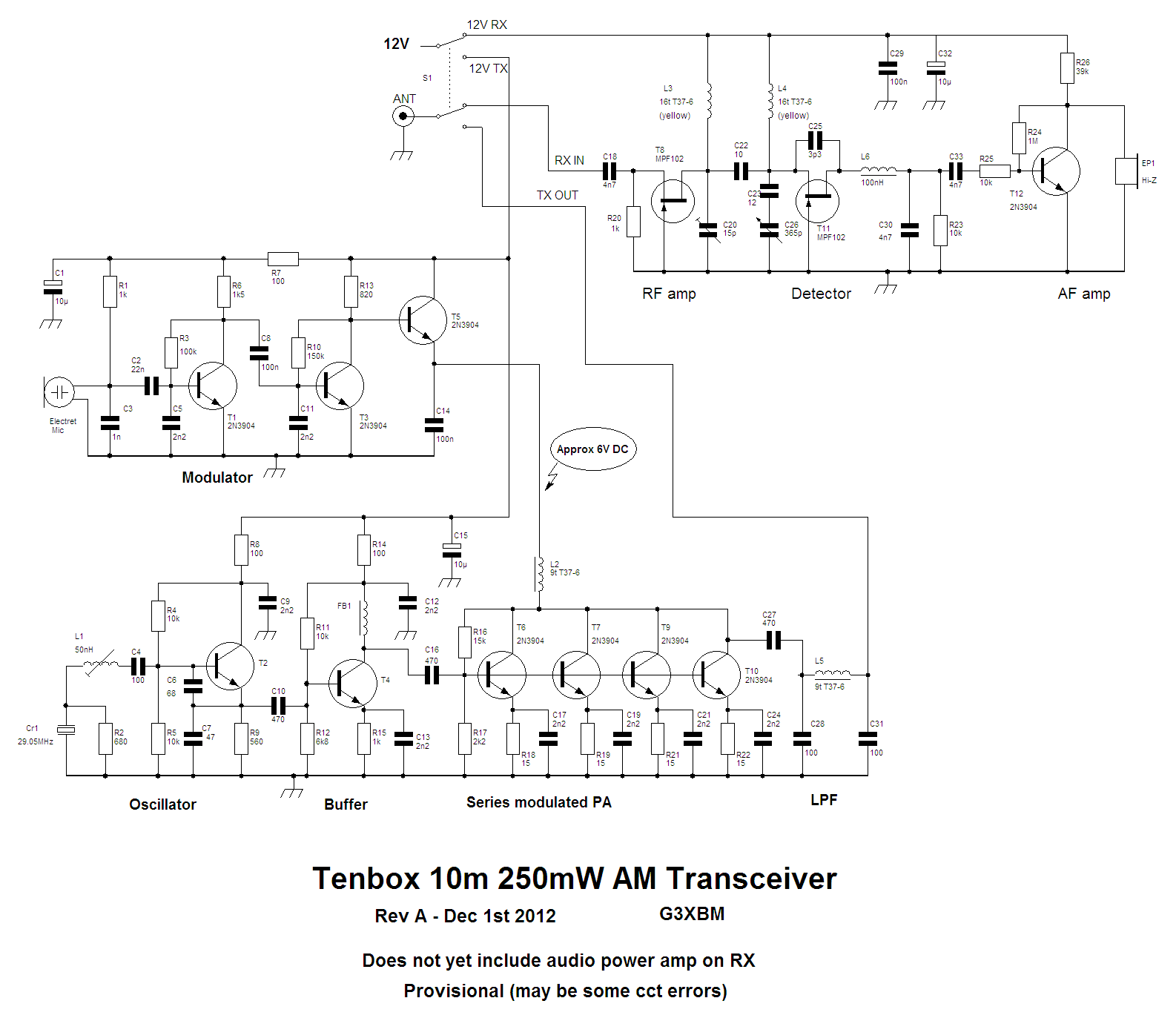
Like many of my projects, this transceiver is “on hold” due to my stroke. I am still too unwell to do much in the way of designing and building. One day, not too far away, I hope to complete this project. If anyone else wants to do this, please use my schematic as a starting point. With a small PCB it would make a nice club project.
It will make an ideal simple rig for nattering across town, especially as 10m loses its fizz and starts to act more like a vhf band again. Such conditions may be with us for years. I fancy putting this in a box like the old Heathkit Lunchboxes with a proper LS amp and LS.
See https://sites.google.com/site/g3xbmqrp3/hf/tenbox .

Roger Lapthorn, G3XBM, is a regular contributor to AmateurRadio.com and writes from Cambridge, England.
Weekly Propagation Summary – 2015 Aug 03 16:10 UTC
Here is this week’s space weather and geophysical report, issued 2015 Aug 03 0155 UTC.
Highlights of Solar and Geomagnetic Activity 27 July – 02 August 2015
Solar activity was dominated by B-class flare activity (very low levels) throughout the majority of the summary period, however, Region 2390 (S17, L=199, class/area=Dai/170 on 27 Jul) produced a single C1 flare (low levels) at 01/2005 UTC, which was the largest event of the period. No Earth-directed coronal mass ejections (CMEs) were observed during the summary period.
No proton events were observed at geosynchronous orbit.
The greater than 2 MeV electron flux at geosynchronous orbit was at normal levels on 31 Aug with moderate levels observed throughout the remainder of the summary period.
Geomagnetic field activity reached active levels on 27, 30-31 Jul and 02 Aug in response to an enhanced solar wind environment caused by the influence of multiple weak coronal hole high speed streams (CH HSSs). Geomagnetic field activity remained at quiet to unsettled levels throughout the remainder of the summary period.
Forecast of Solar and Geomagnetic Activity 03 August – 29 August 2015
Solar activity is expected to be at very low (B-class flare activity) to low levels (C-class flare activity) throughout the outlook period.
No proton events are expected at geosynchronous orbit.
The greater than 2 MeV electron flux at geosynchronous orbit is expected to be at moderate levels on 07-08, 17-21, 23, and 26-29 Aug in response to enhanced geomagnetic field activity cause by the influence of multiple recurrent coronal hole high speed streams (CH HSSs). High electron flux levels are expected for the remainder of the outlook period.
Geomagnetic field activity is expected to reach G1 (Minor) geomagnetic storm levels on 28 Aug with active levels expected on 06-07, 17, 20, 26-27, and 29 Aug, all due to the influence of multiple recurrent CH HSSs. The geomagnetic field is expected to be at quiet to unsettled levels throughout the remainder of the outlook period.
Don’t forget to visit our live space weather and radio propagation web site, at: http://SunSpotWatch.com/
Live Aurora mapping is at http://aurora.sunspotwatch.com/
If you are on Twitter, please follow these two users: + https://Twitter.com/NW7US + https://Twitter.com/hfradiospacewx
Get the space weather and radio propagation self-study course, today. Visit http://nw7us.us/swc for the latest sale and for more information!
Check out the stunning view of our Sun in action, as seen during the last five years with the Solar Dynamics Observatory (SDO): https://www.youtube.com/watch?v=zXN-MdoGM9g
We’re on Facebook: http://NW7US.us/swhfr
Visit, subscribe: NW7US Radio Communications and Propagation YouTube Channel
CW Contesting
 |
| courtesy: http://k1el.tripod.com/ |
It's been a few years since I've done any CW contesting, mainly because the laptop I have always used became slow and sluggish as well as developing a keying glitch when keying was done via the serial port connection. Apparently it is, or was, a fairly common problem with some operating systems when serial port keying was employed.
Last year I purchased and built the WinKeyer USB keyer, mainly to use as a USB keying interface, and hopefully kill the keying stutter. The stutter would manifest itself in the form of delayed element spacing. For example, the 'C' in a 'CQ' would sound like 'NN'- every once in awhile ... not every time, but often enough to drive me crazy. From lots of 'Googling', I learned that USB keying should solve the problem.
The first thing I did was to download and run 'CCleaner' to scrub the computer of unused files and clean up the registry. My contesting laptop uses Windows XP, which I've always liked but my old system was taking about eight minutes to boot-up from a cold start! Following the CCleaner run, I did a hard drive defragmentation, shut the system down, and pressed the 'on' button. This time the system booted completely in less than two minutes, the fastest in several years!
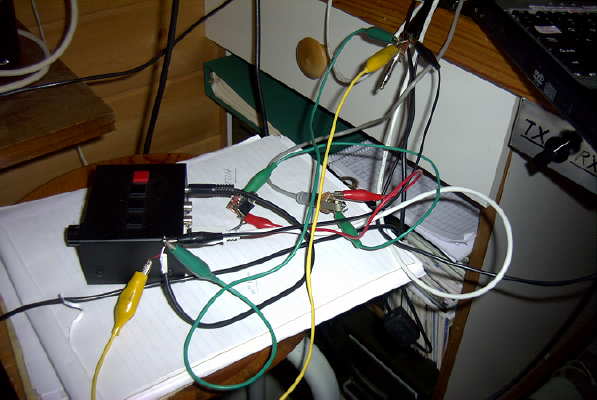
After, interfacing everything with a half-dozen clip leads (I didn't have the required cables), configuring the WinKeyer and setting up the N1MM logging software for this weekend's NA CW QSO Party, I cautiously waded into the fray.
 |
| Yikes! |
Like riding a bicycle, it all came back to me quickly. The NA guys are hardcore CW fans and send fast, typically 30WPM or better. I started in the 'Search & Pounce' (S&P) mode to ease into the logging software's required keystrokes but soon felt comfortable enough to change to the 'Run' mode.
Handling the pileups and typing fast enough to keep up was challenging yet exhilarating ... it had been a few years since my last test, the 160m Stew Perry Contest, my favorite. I could only take the heat for so long and after about two hours of steady operating decided to call it a day. It was nice to shake out the new interface and also test my own skills once again. I completed my short test with 137 QSO's and 5891 points ... not much by 'NA' standards but still, for me, a ton of fun and a good 'back-in-the-saddle' re-start.
Now that the software is working well (there were zero keying glitches during the test), I'm looking forward to getting back into some CW contesting again and to improve my ear-brain-computer skills.
Time to get busy and build some interfacing cables and get rid of the clip-lead rat's nest for the next exercise.
Contesting events can be found at WA7BNM's excellent WA7BNM Contest Calender website
Steve McDonald, VE7SL, is a regular contributor to AmateurRadio.com and writes from British Columbia, Canada. Contact him at [email protected].
Prices of Japanese radios?
I wonder when the next round of price drops will come on Japanese gear? The big Japanese players such as Yaesu, Icom and Kenwood have had an easy ride of late and been able to dictate prices. Now the competition is waking up, I expect they will be facing tougher times.
The latest exchange rates (UK pound to Japanese Yen) is £1 is worth about 193 Yen. Not many years ago it was less than 130 Yen to the pound. In real terms, Japanese goods should be much less expensive. At the moment both the UK dealers and Japanese are doing very well thank you from a customer base prepared to pay high prices. Expect big falls between now and the year end. This will be partly due exchange rates becoming much better (for those in the UK) and partly due to the increasing threat from the non-Japanese suppliers. Don’t you find it amazing how low cost some Chinese hand portables are compared with similar products from Japan? Rip-off come to mind – charge high prices for Japanese goods as long as the suckers pay.
No, the age of UK amateur radio consumers being taken for a ride is ending. The next time you discuss prices with UK dealers remind them of competition and exchange rates! At the moment their margins must be very high. Japanese goods are priced too high in the UK – fact. A few years ago I was more sympathetic, but not any more. UK consumers should pay a fair price with the dealers getting a fair margin, but please don’t take us all for mugs. I shall buy when the prices are fair and not before.
If I have this wrong, I shall be interested to hear the dealers viewpoint. Exchange rates have got vastly better and I do not see this reflected in end user prices here in the UK. Someone is making very handsome profits.
Consumers – vote with your wallets and do not buy overpriced radios. I have said before, the FT817 is classic example: all development costs were recovered years ago, so the price should be considerably lower than it is. Dealers have dropped the price somewhat, but it is nowhere near what it should be for a very mature design.

Roger Lapthorn, G3XBM, is a regular contributor to AmateurRadio.com and writes from Cambridge, England.
Sneeking off to track a HAB
Yesterday we were visiting my mother-in-law and I had seen that the University of Southampton Spaceflight Society were launching a High Altitude Balloon from the New Forest. I am never one to miss the chance to track them and decided at the last minute to throw the Alinco DJ-X10 receiver and an audio lead into the bag with the laptop which by happy coincidence we were taking since it contained the holiday photographs.
After an enjoyable Sunday lunch I dutifully did the washing up and then as the others succumbed to postprandial somnolence I sneaked off to see if I could receive anything as the flight was already well under way.
I put the Alinco on an upstairs windowsill with the W-881 Watson Super Gainer antenna fitted. The radio which has SSB capability was still tuned to 434.650MHz as this was the frequency I used on the EGG1 tracker and amazingly I heard clear RTTY telemetry of the CHRISHAB tracker and connecting it to the laptop with a simple earphone-to-microphone input lead was getting clear decodes.
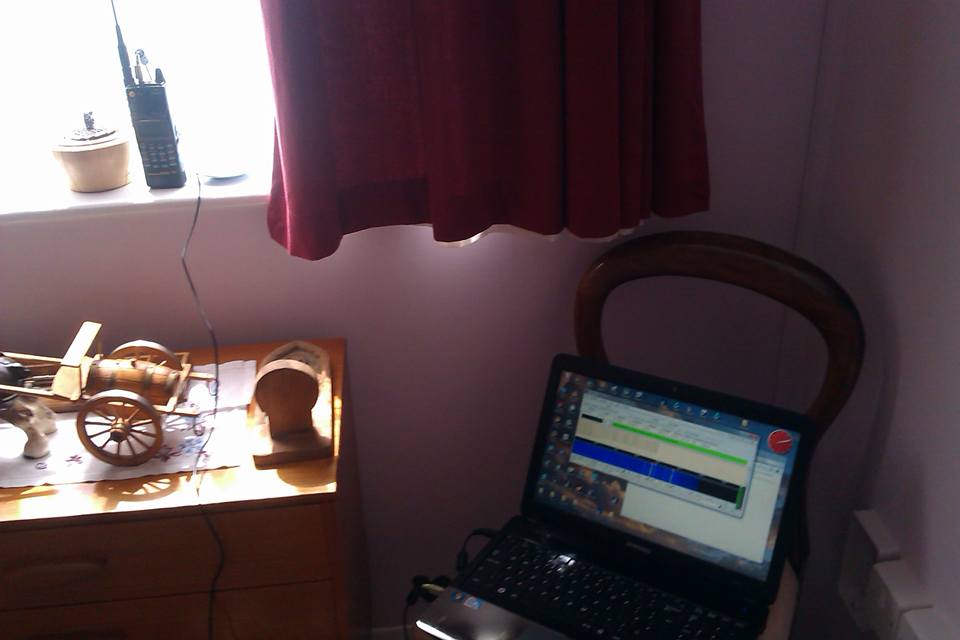
Being a silver surfer my mother-in-law has a broadband connection so was able to upload the packets to the tracker system.
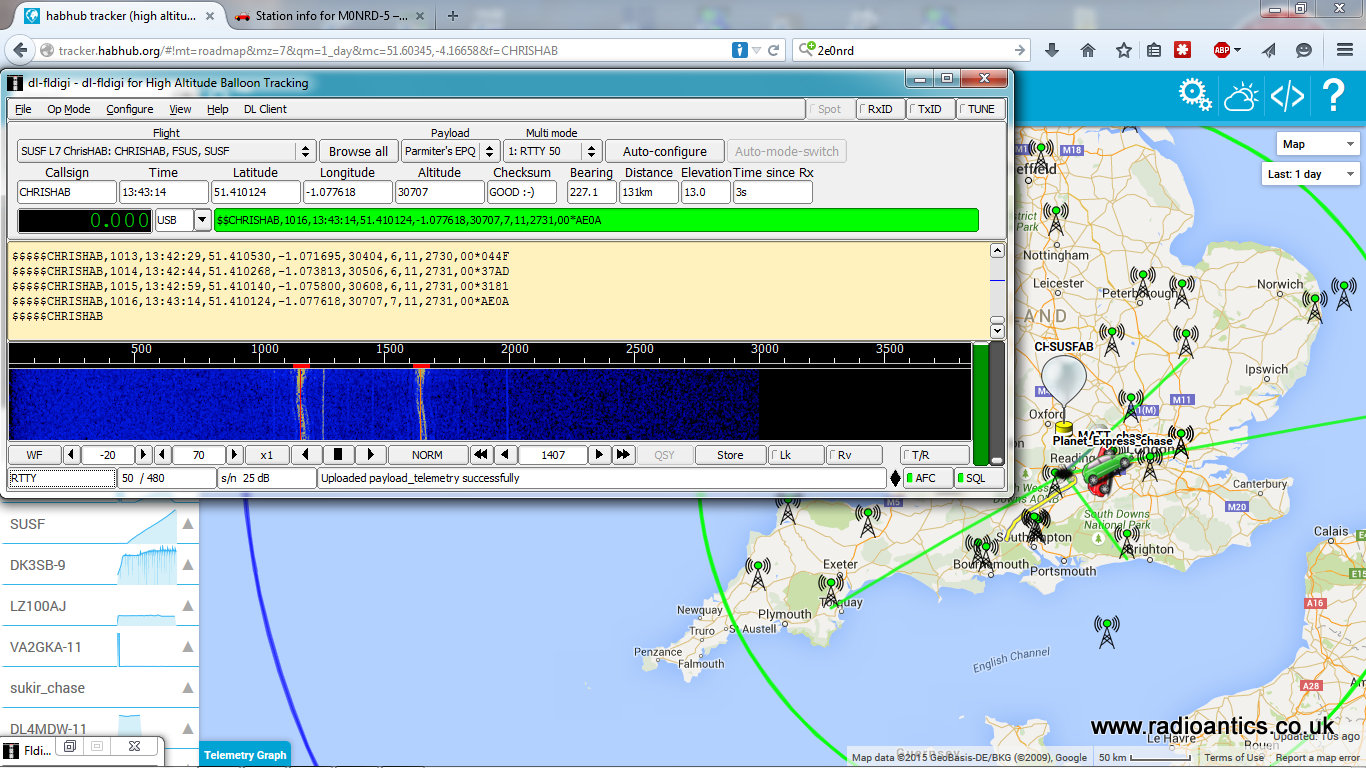
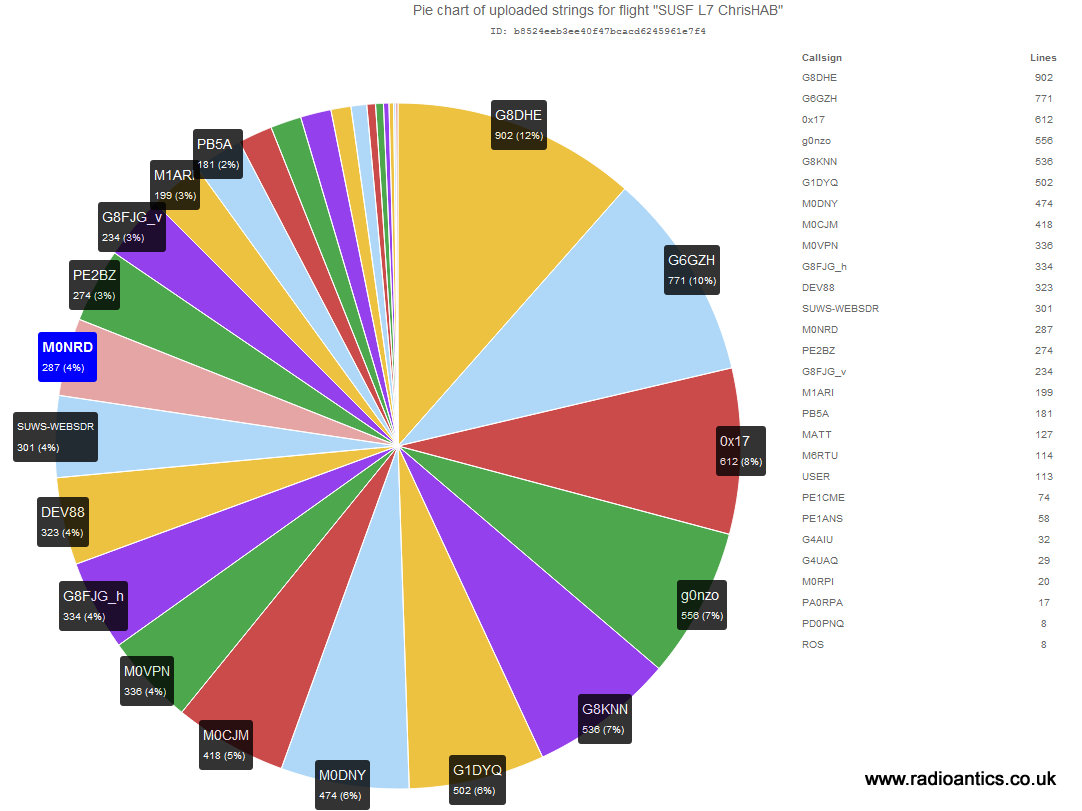
I left it running while I returned to be sociable. When I checked back later the flight had ended but I was more than happy with the number of decodes I had achieved with this modest set up and proves with all things radio it pays sometimes just to give it a try!
The previous day I visited my mother and got to try my brother's very nice new Yaesu VX-8R hand held. I made a short QSO with MX0PPC the Central Amateur Radio Circle (CARC) who were running some intermediate classes that afternoon. My brother is getting to grips with it and its in built APRS and GPS and soon hopes to be spotted by the International Space Station digipeater.
Andrew Garratt, MØNRD, is a regular contributor to AmateurRadio.com and writes from East Midlands, England. Contact him at [email protected].
Sneeking off to track a HAB
Yesterday we were visiting my mother-in-law and I had seen that the University of Southampton Spaceflight Society were launching a High Altitude Balloon from the New Forest. I am never one to miss the chance to track them and decided at the last minute to throw the Alinco DJ-X10 receiver and an audio lead into the bag with the laptop which by happy coincidence we were taking since it contained the holiday photographs.
After an enjoyable Sunday lunch I dutifully did the washing up and then as the others succumbed to postprandial somnolence I sneaked off to see if I could receive anything as the flight was already well under way.
I put the Alinco on an upstairs windowsill with the W-881 Watson Super Gainer antenna fitted. The radio which has SSB capability was still tuned to 434.650MHz as this was the frequency I used on the EGG1 tracker and amazingly I heard clear RTTY telemetry of the CHRISHAB tracker and connecting it to the laptop with a simple earphone-to-microphone input lead was getting clear decodes.
Being a silver surfer my mother-in-law has a broadband connection so was able to upload the packets to the tracker system.
I left it running while I returned to be sociable. When I checked back later the flight had ended but I was more than happy with the number of decodes I had achieved with this modest set up and proves with all things radio it pays sometimes just to give it a try!
The previous day I visited my mother and got to try my brother's very nice new Yaesu VX-8R hand held. I made a short QSO with MX0PPC the Central Amateur Radio Circle (CARC) who were running some intermediate classes that afternoon. My brother is getting to grips with it and its in built APRS and GPS and soon hopes to be spotted by the International Space Station digipeater.
Andrew Garratt, MØNRD, is a regular contributor to AmateurRadio.com and writes from East Midlands, England. Contact him at [email protected].
 Ham Radio Deluxe |
 W5SWL Electronics |
 Ham Radio Prep |
 KB3IFH QSL Cards  Hip Ham Shirts  HamRadioAuctions HamRadioAuctions Reliance Antennas Reliance Antennas Enigma Shop Enigma Shop |  morseDX  Ni4L Antennas  R&L Electronics R&L Electronics antennas.us antennas.us QRV QRV |
- Matt W1MST, Managing Editor
