 |
 Amateur Radio Weekly – Issue 76
 5 September 2015 | by
Pi-Go 12v power adapter for Raspberry Pi
The Pi-Go connects to the GPIO header and supplies a solid 5V at up to 3A for the Pi and its connected peripherals.
Kickstarter
$50SAT falls silent
The $50SAT amateur radio spacecraft has ceased transmitting after nearly 20 months in space.
AMSAT UK
Labor Day weekend: a great time for pirate radio action
Monday, September 7, is Labor Day throughout most of North America; shortwave pirates love to operate on long holiday weekends.
The SWLing Post
New versions K1JT weak signal digital modes
Think of this mode as FSK441 slowed down to 315 baud; the bandwidth is therefore narrow enough to make the mode legal in the “CW and data” portion of the 10 meter band.
amateurradio.com
HI HI: LOL of the 19th century
LOL in the age of the telegraph.
The Conversation
Sound of a sinking ship
Listen to the Morse code interchange between a sinking cruise ship and fellow ships.
hamradio.me
Open letter to Ham Radio manufacturers
Once upon a time, companies like yours developed equipment for hams entering the hobby as Novice licensees.
KC4LMD
Liquid metal changes shape to tune antenna
Liquid at room temperature, these alloys have the useful property of oxidizing on contact with air and forming a skin.
Hack A Day
Solar storm of 1859
Telegraph systems all over Europe and North America failed, in some cases giving telegraph operators electric shocks. Telegraph pylons threw sparks. Some telegraph operators could continue to send and receive messages despite having disconnected their power supplies.
Wikipedia
Video
Video of ICOM IC-7300 in action
IZØKBA
Digital voice and SSB comparison
You can really notice the reduced audio bandwidth and ever present noise of SSB compared to FreeDV. This is just the start – we are gradually improving the low SNR robustness and speech quality of FreeDV.
Rowetel
and finally…
RTTY decoder for Commodore 64
Decodes RTTY audio to readable text on the screen of your Commodore 64.
ebay
Amateur Radio Weekly is curated by Cale Mooth K4HCK. Sign up free to receive ham radio's most relevant news, projects, technology and events by e-mail each week at http://www.hamweekly.com.
The Wouxun KG-UV8D arrival.
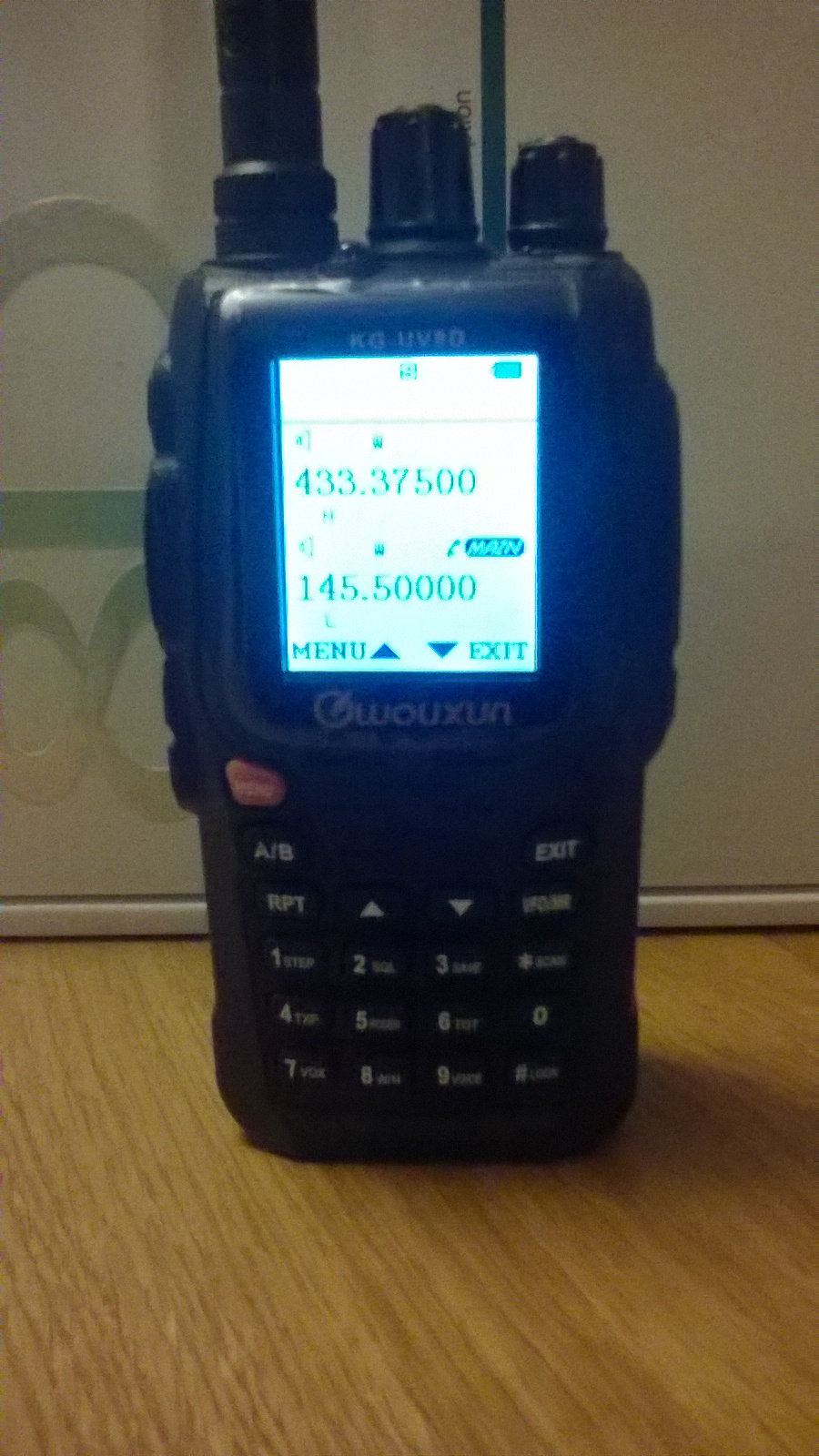
There is a lot of technical info out on there about this radio, the best, if you want a fair and unbiased review, get down to Hans PD0AC who has tested many Chinese radios with the proper test gear to a professional standard.
What do I have to say about it so far:
Like all new toys one is always eager to have a play. The radio came complete with external charger, wrist strap, belt clip, dual band antenna etc. A quick read of the well detailed manual might put your head in a spin, plenty of stuff to note. But like most of these Chinese radios once you understand the menu system it is easy to get to grips with. I slided the 2600mAh battery on the back of the main chassis case, it snapped and locked into place with a firm click. This made the radio feel quite weighty and rugged, I only have small hands and they only just made it around the body while holding it firm.
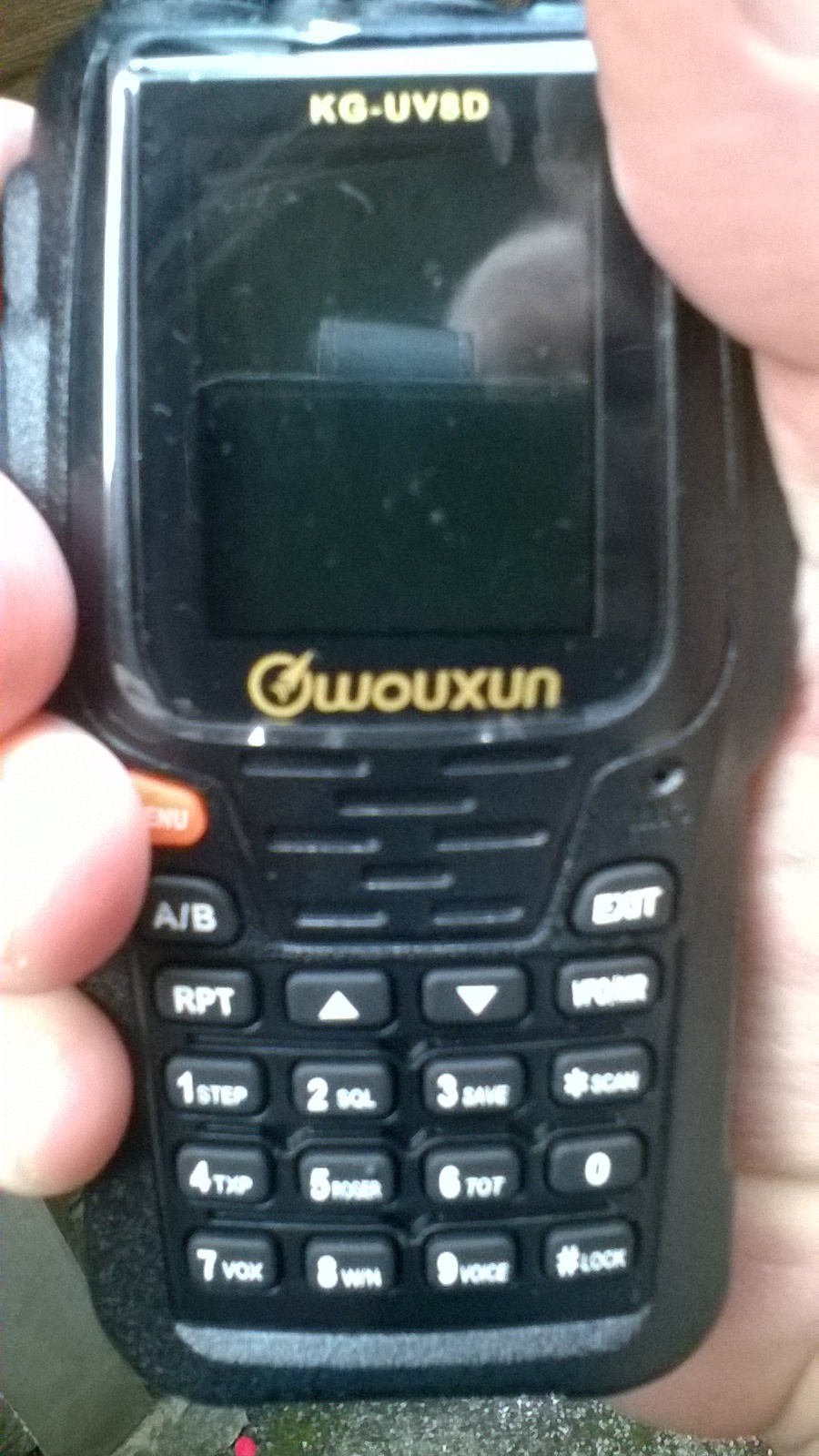
Switching on, we were in business, a clear bright display made a change from the simple plain two line LCD HT's I have.
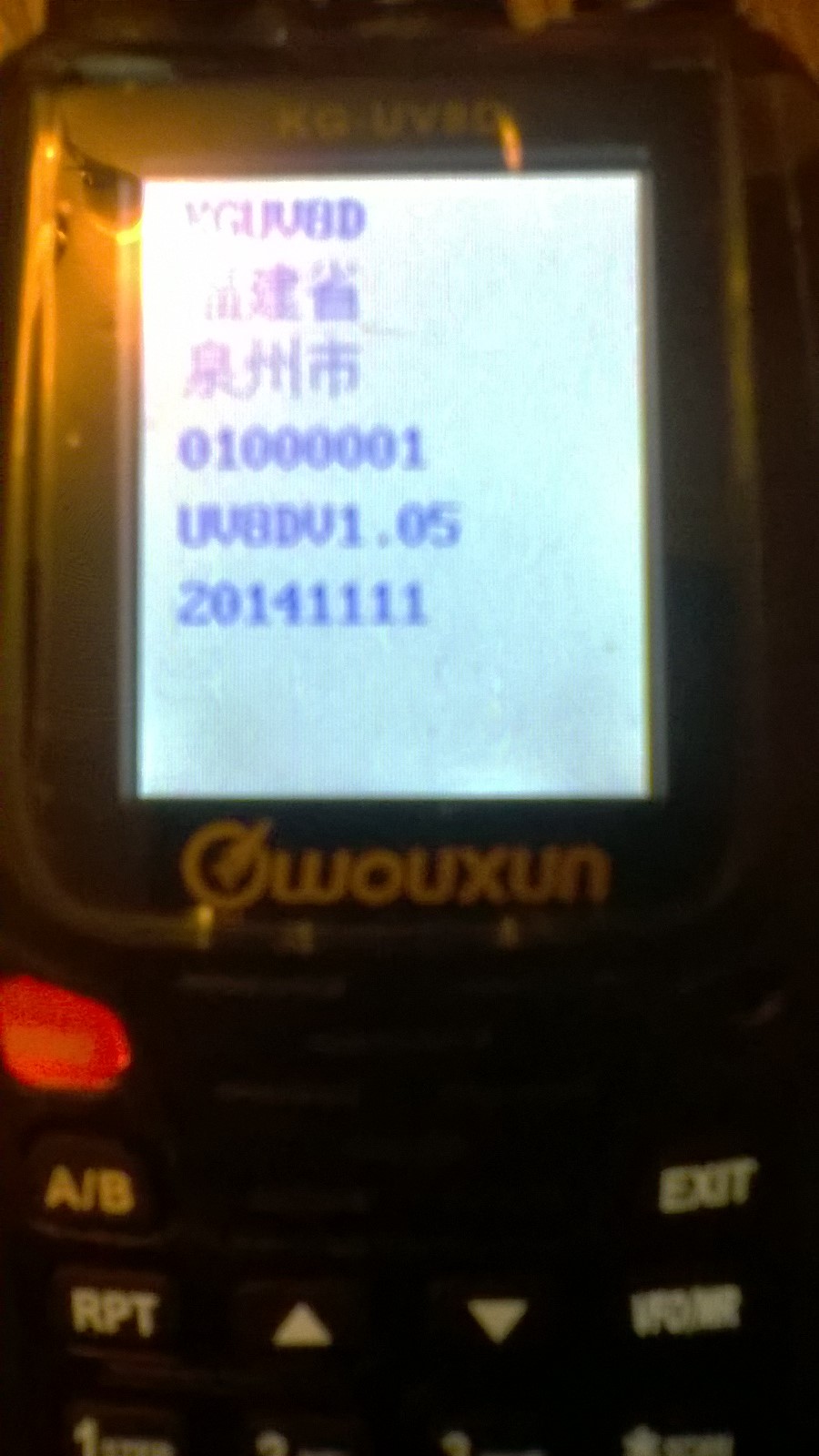
A quick test to check the internal firmware version, is achieved by holding down the 3 key while turning on the radio. Mine showed Version V1.05, which I understand is the latest which is shipped with the radio during production. *Note there is no user way of upgrading the firmware from an external PC..
2m and 70cm are always very quiet around here, but I was lucky my friend Gary M0TTO was just signing with someone on the 2m band over at Lichfield QTH. I pushed the PTT and gave him a shout, he came straight back to me, he reported the audio sounded really nice and crisp! I said what was the signal strength like? He said end stop! But of course it would be, he only lives about 6 streets away, I turned the power down to Low, still end stop. The received audio sounded good, and plenty of volume still left in the wick should I have required a bit more. In the middle of the QSO it suddenly stopped TX, I was still pressing the PTT, I released the PTT and then pressed it again, it started Transmitting again, but shortly after the same thing happened. I was a bit curious at first, but I remember these radios have a Time Out Timer "TOT" Menu 06 this was only set at 60 secs, I increased the time out period and it stopped the annoyance.
Conclusion: I have always rated Wouxun as being the better of the quality end of production from China, I feel this radio brings them into a new era and still keeps them at the top! Certainly they have had problems in production like any other, but I am sure the Japanese big three feel the threat. So far I am pleased with what I have bought at the price of £69 inc UK delivery makes it an excellent buy. I still have to program it up for repeaters etc with the free software. Which can be downloaded from Wouxun or you can use the free Chirp multi radio programming software, which also supports this radio in a basic format at the moment.
Steve, G1KQH, is a regular contributor to AmateurRadio.com and writes from England. Contact him at [email protected].
The Wouxun KG-UV8D arrival.
There is a lot of technical info out on there about this radio, the best, if you want a fair and unbiased review, get down to Hans PD0AC who has tested many Chinese radios with the proper test gear to a professional standard.
What do I have to say about it so far:
Like all new toys one is always eager to have a play, The radio came complete with external charger, wrist strap, belt clip, dual band antenna etc. A quick read of the well detailed manual might put your head in a spin, plenty of stuff to note. But like most of these Chinese radios once you understand the menu system it is easy to get to grips with. I slided the 2600mAh battery on the back of the main chassis case, it snapped and locked into place with a firm click. This made the radio feel quite weighty and rugged, I only have small hands and they only just made it around the body while holding it firm.
Switching on, we were in business, a clear bright display made a change from the simple plain two line LCD HT's I have.
A quick test to check the internal firmware version, is achieved by holding down the 3 key while turning on the radio. Mine showed Version V1.05, which I understand is the latest which is shipped with the radio during production. * Note there is no user way of upgrading the firmware from an external PC..
2m and 70cm are always very quiet around here, but I was lucky my friend Gary M0TTO was just signing with someone on the 2m band over at Lichfield QTH. I pushed the PTT and gave him a shout, he came straight back to me, he reported the audio sounded really nice and crisp! I said what was the signal strength like? He said end stop! But of course it would be, he only lives about 6 streets away, I turned the power down to Low, still end stop..The received audio sounded good, and plenty of volume still left in the wick should I have required a bit more. In the middle of the QSO it suddenly stopped TX, I was still pressing the PTT, I released the PTT and then pressed it again, it started Transmitting again, but shortly after the same thing happened. I was a bit curious at first, but I remember these radios have a Time Out Timer "TOT" Menu 06 this was only set at 60 secs, I increased the time out period and it stopped the annoyance.
Conclusion: I have always rated Wouxun as being the better of the quality end of production from China, I feel this radio brings them into a new era and still keeps them at the top! Certainly they have had problems in production like any other, but I am sure the Japanese big three feel the threat. So far I am pleased with what I have bought at the price of £69 inc UK delivery makes it an excellent buy. I still have to program it up for repeaters etc with the free software. Which can be downloaded from Wouxun or you can use the free Chirp multi radio programming software, which also supports this radio in a basic format at the moment.
Steve, G1KQH, is a regular contributor to AmateurRadio.com and writes from England. Contact him at [email protected].
LF/MF Moving Closer For U.S. Amateurs
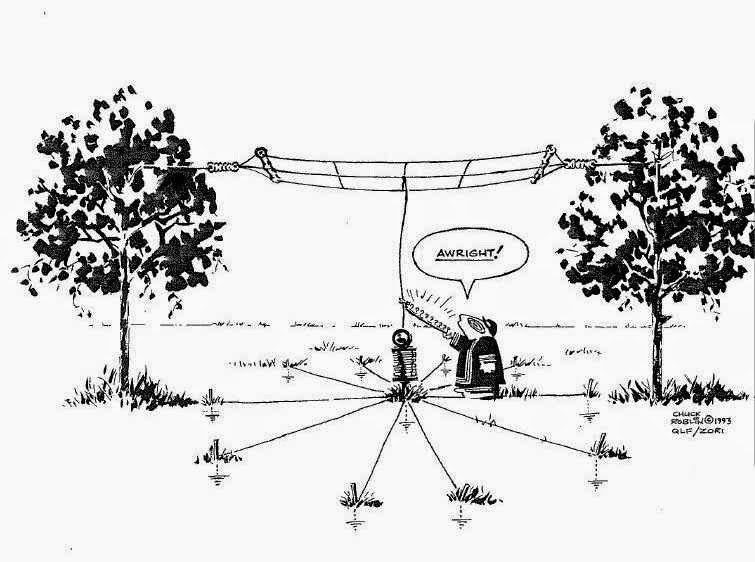
With all commentary periods for the FCC's 'Notice of Proposed Rulemaking' (Docket 15-99) now closed, it appears that one of the last comments to be filed may contain the most powerful arguments in favor of swift implementation.
In its extremely detailed 42-paged submission, the ARRL states, in no uncertain terms, the reasons why access to both the 2200m LF band and the 630m MF band should not be held back and that service rules should be 'finalized'. Indeed the powerful arguments stated in favor of implementation should go a long way in making this happen sooner rather than later.
The FCC's position is that there is little to no evidence to indicate that amateur radio operation on either band would be incompatible with power company PLC systems, going as far as stating that at distances of 1km or more from PLC lines, "there is no chance of interference". Further supporting their claim, the thousands of hours of experimental operation were offered as powerful proof and that the ARRL was “unaware of any reports of interference to PLC systems arising from that operation conducted pursuant to numerous Part 5 experimental licenses…in the large band utilized by PLCs.”
In addition, the ARRL had harsh words regarding the FCC's attempt to legitimize the growing number of fish-net beacons in the 160m band, and pulled no punches regarding their position in this matter.
"There is no indication that these buoys are compatible with other uses in the band, no track record of interference avoidance or resolution, and certainly no indication that the current operators can be relied on for compliance with the Commission’s rules."
"The Commission is urged to avoid enacting rules that it has no effective ability or intention to enforce. That fishing vessels have, with impunity, illegally deployed radio buoys in this band on a widespread basis (whether or not due to misrepresentations of the importers and retailers of these devices or due to a disregard of the Commission’s rules generally) without even nominal enforcement actions by the Commission, provides no basis for assuming that there will be compliance with any deployment limitations (including geographic deployment restrictions) on these buoys going forward. Nor is there any basis for the assumption that there will be any enforcement action taken with respect to continued illegal operation of the buoys if and when interference is caused. Spectrum planning by the Commission in this context has to be based on ex ante determinations of compatibility rather than mere assumptions, especially where the record indicates such a low level of historical compliance."
A summary of the comments can be read here in the ARRL News while all comments filed for the NPRM be found here temporarily, while the FCC site is down for maintenance.
Steve McDonald, VE7SL, is a regular contributor to AmateurRadio.com and writes from British Columbia, Canada. Contact him at [email protected].
Amateur Radio Newsline Report 1975 September 4, 2015
- ONE FOR THE AGES
- THE CYCLE OF LIFE
- THE PRIDE OF DENMARK
- THEY'VE GOT YL POWER
- RADIO AMATEUR CRIES "UNCLE"
- HELP FOR A HIKER
- FROM RAGCHEW TO RICHES
- DARE TO GO DIGITAL
- MORE DIGITAL DOINGS
- KEEPING IT SAFE
- THE STUDENT BECOMES THE TEACHER
- TRANSITION TO RADIO
- ROW, ROW, ROW YOUR BOAT
- WHEN STUDENTS AIM HIGH
- THE WORLD OF DX
- PUTTING A LID ON IT
A Few New Ham Radio Podcasts
 Listening to podcasts has been part of my daily habit for almost a decade. I lean heavily towards audio podcasts (as opposed to video), so I can listen to them while driving. My smartphone is always loaded with hours of content on a variety of topics which is especially useful for international flights.
Podcasts come and go (or podfade) and recently I’ve noticed a few new ham radio podcasts. Well, they might not be all that new…perhaps I just woke up and noticed them. Anyway, I am passing them along in case you have not come across them.
The QSO Today Podcast by Eric 4Z1UG:
QSO Today is a weekly conversation between me, Eric Guth, 4Z1UG, and my amateur radio operator guest. Each guest tells his or her’s ham radio story to the present time. I select guests based on their contributions to the hobby through their publishing of articles and books on ham radio, their involvement in the creation of new technologies that enhance the hobby, and the role that they played to bring the amateur radio to others.
The Fo Time – The Other Ham Radio Podcast by Cale K4CDN:
It’s a new Podcast for the Up and Coming Amateur Radio Operator aka Ham Radio Operator. Whether you’re looking for the latest news, a different take on an idea, or just some good humor, Fo Time is the Podcast for you.
If you aren’t sure about the name, this might help.
The 100 Watts and a Wire by Christian KØSTH:
Created by Christian Cudnik, KØSTH in 2015, 100 Watts and a Wire is a program celebrating amateur radio through the eyes of a new ham. The show features topical conversation and interviews, news and an entertaining look at the adventures of a ham trying to figure it all out.
I’ve found all three of these podcasts to be well done and interesting. They all typically run about an hour long. Frankly, that’s a bit much for me, mostly because it does not fit my commute time. Not bad for an airplane ride, but too long for driving to work. More importantly, my smartphone is overflowing with interesting audio content, so I have to be selective.
Other Podcasts
I’ll mention a few other podcasts that deserve attention: The Ham Nation podcast has set a new standard for ham radio video podcasts. Hats off to Bob Heil and crew for their efforts. The Amateur Radio Newsline got its start by delivering audio programs via telephone for hams to play on their local repeater. Many repeaters still play their program but I get their feed via my smartphone. They continue to do an excellent job of stuffing interesting content into a 20-minute format. While not a ham radio podcast, This Week in Tech from TWiT remains a quality source of tech news and opinion (lots of opinion).
Give these podcasts a listen and let me know what you think.
73, Bob K0NR
The post A Few New Ham Radio Podcasts appeared first on The KØNR Radio Site.
Bob Witte, KØNR, is a regular contributor to AmateurRadio.com and writes from Colorado, USA. Contact him at [email protected].
Acorn II SDR Kit
This year at the RSGB convention we will be running a buildathon based upon the same format of the other successful build events in the past – this is an excellent time to attract a new audience to our events.
This year however we are using a new kit. The Acorn II kit developed by Kanga Products and M0XPD, is a Software Defined Radio kit that runs on the SSB portion of 40m. But the kit can also be configured to run on any HF band – assuming you have a Band pass filter & a suitable Local Oscillator. The kit has been developed to allow you to pipe in an external Local Oscillator and allow you to connect Band pass filters for other HF bands.
The kit was developed to run with the M0XPD Si5351A Arduino shield, which allows you to use the Arduino as a VFO. And can plug straight into the radio as a local oscillator
Using just a stereo line in on a sound card, and some widely available SDR software (Such as HDSDR), you can get great results from little financial outlay. It is indeed a great introduction into SDR.
I built one of the prototypes here is a video of the build. I will cover configuration & set up in a forthcoming video – perhaps when I have access to a good 40m antenna
Dan Trudgian, MØTGN, is a regular contributor to AmateurRadio.com and writes from Wiltshire, England. He's a radio nut, IT guru, general good guy and an all round good egg. Contact him him here.
 Ham Radio Deluxe |
 W5SWL Electronics |
 Ham Radio Prep |
 KB3IFH QSL Cards  Hip Ham Shirts  HamRadioAuctions HamRadioAuctions Reliance Antennas Reliance Antennas Enigma Shop Enigma Shop |  morseDX  Ni4L Antennas  R&L Electronics R&L Electronics antennas.us antennas.us QRV QRV |
- Matt W1MST, Managing Editor
