 |
 Nasty OT Ham – Reality or Myth?
 27 August 2015 | by
 It's not uncommon for me to read the articles, and then inevitably, come across some comment by a self-proclaimed "newbie" wherein he or she begins to bemoan the treatment they've received from some "old fart", nasty, mean ol' Ham.
The common scenario seems to be:
"I'm new, bright-eyed, bushy tailed, full of exuberance and spit and vinegar - but yet somewhat lacking in knowledge and experience. I've gone to WB#XYZ repeater or to the Amateur Radio Club of Greater Podunk, where my inquiries were met with laughter, ridicule, sarcasm and down right meanness from Joe Ham. I am now going to sell all my Amateur Radio equipment because I'm traumatized and I never even want to hear the words "Amateur Radio" again."
I've seen this retold several times, in several different instances. I hate to question the veracity of the people making these claims - but can they be true? This has become a pet peeve of mine.
I've mentioned many times now, that I've been licensed for over 35 years. In all that time, I have never, ever, not even once come across treatment like that from an older Ham. Don't get me wrong, I've had to withstand my share of newbie ribbing, and have received my share of friendly and gentle reprimanding when doing something wrong - but nothing like these guys are describing.
A case in point. Shortly after upgrading to General in 1979, I joined the Old Bridge Amateur Radio Association. They owned and operated the KB2TX repeater at the time (well actually, it became the KB2TX repeater after Walt, the owner, changed his callsign to KB2TX - I forget what it was before that). Anyway, I had installed a used non-Icom microphone with a DTMF pad on my Icom 2 Meter mobile, so that I could make phone patches if the need came up. Back in those days, (am I dating myself?) it was rare for a mobile microphone to come with a keypad pre-installed. Unbeknownst to me, the microphone's element wasn't working. The DTMF tones were making it through, but my voice wasn't. So Walt got on the air and in his usual gruff and no-nosense manner announced, "Hey! Whoever's sending the tones - you've got no audio. Stop it and identify yourself". I was saying "KA2DOH (my call at the time) testing.", but it wasn't coming through. I had Walt's phone number and gave him a call, explaining the problem. After listening to my profuse apology, he got quiet and thought for a few seconds. Instead of giving me a tongue lashing, as technically I was breaking the rules, he suggested that the impedance of the microphone element might not be the proper valuthat the rig was looking for - a mismatch. Sure enough, that's what it turned out to be.
I listened and I learned something (that had never occurred to me) and was able to remedy the situation by going to Radio Shack, where I purchased and soldered into my microphone an element with the proper impedance. Walt could have dressed me down, and read me the riot act, but he didn't. He was that way to everybody. In fact, in dealing with all the Old Timers throughout my Amateur Radio career (there were many) - they were all like that. I can't ever remember a time where I received a snotty, snarky or sarcastic reply to a question. In fact, in my dealing with experienced Hams, they have always been helpful, accommodating and educational. And I live in New Jersey, too - supposedly the home of unfriendly, sarcastic, snarky and just plain mean ol' human beings in general!
So where does this curmudgeon live? DOES this curmudgeon live? Or have we become so hyper-sensitive to any kind of criticism that even helpful criticism is taken as an incidence of ego-shattering reprimand?
Maybe they do exist, and maybe I'm lucky that I've never come across one. Maybe I just need to go down on bended knee and be grateful that I've never run across the "No kids, no lids, no space cadets" type of Ham. I can tell you that I have become dear friends with several "Old Timer" Hams who did have very rough and gruff reputations, only to find out after spending some time talking with and listening to them, that they had hearts of pure gold. Sometimes that's all it takes, just listening for a bit instead of always chattering and insisting that we know everything, and that we're always right - when maybe, just perhaps, we're not.
Food for thought.
72 de Larry W2LJ
QRP - When you care to send the very least!
Larry Makoski, W2LJ, is a regular contributor to AmateurRadio.com and writes from New Jersey, USA. Contact him at [email protected].
Tuna Tin Fun
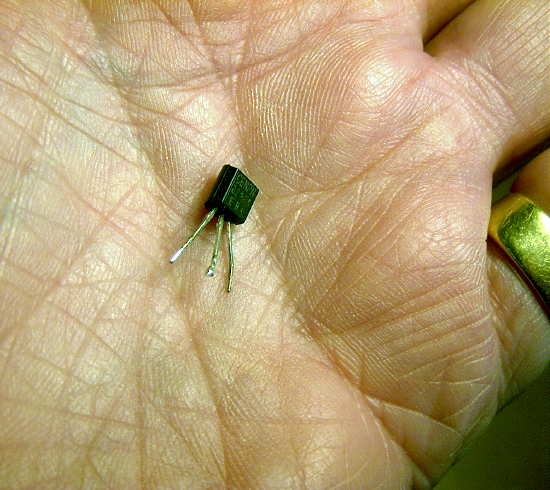
I was doing a little housekeeping in the shack this past week and ran across small piece of anti-static foam with a transistor sticking out of it. It was the transistor from my Tuna Tin II final amplifier's stage ... the actual transistor that I had used to 'Work All States' on 7040KHz using my Tuna Tin back in 2000. Looking at it in my hand brought back a lot of wonderful memories from the fall of that year when I spent so much of my time looking for new states.
Like many others at the time, I was swept up in the second 'Tuna Tin revolution' when the NorCal QRP Club released a very inexpensive kit for the Tuna Tin II. It turned out to be the best $13 I had ever spent on ham radio bits as it brought me so much operating fun while making many new acquaintances in the process.
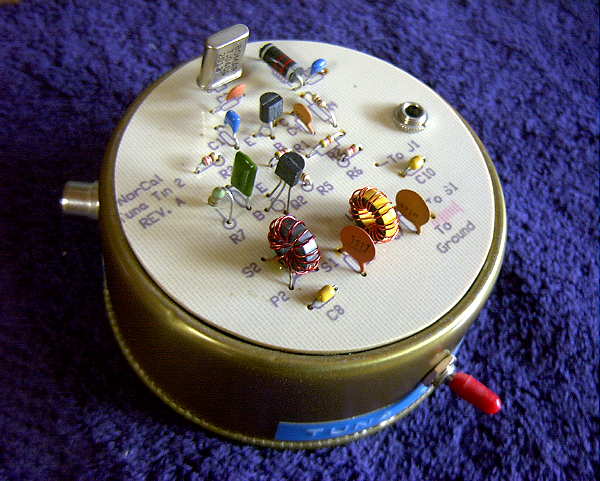
I recall the afternoon that I completed the kit ... attaching my antenna and calling 'CQ' on 7040 with a hand key plugged into the Tin. My afternoon call brought an immediate response from a station in Oregon who gave me a 579 report! Needless to say I was elated that it's ~360mw had done so well.
Over the next few days I worked a few more stations in the western states even stretching out to northern California and had pretty much decided that most of my QSO's with it would be fairly short range ... until the pre-dawn hours of August 6th when my hand-keyed 'CQ' was answered by NØTU (Steve), in Colorado! We had a nice solid ragchew until we ran out of darkness but the contact had given me re-newed optimism. If I could get a decent signal into Colorado, then perhaps I could actually work further afield ... maybe it was even possible to work all 50 states!
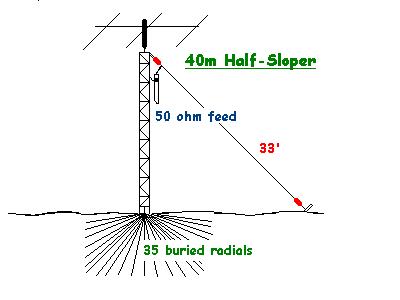
With that, I set myself a goal of trying to work them all. Although my 40m half-sloper was well matched and had proven to be a good performer in the 40m pileups, it only had four buried radials. The first thing I did was to bury another 30 radials around the base of the 48' tower, hoping to lower my ground losses as much as possible. With just one-third of a watt, there was no power to waste.
Back in those days, I was still working and could only get to the Mayne Island QTH on weekends. With the Friday night ferry arriving at around 8PM, by the time the woodstove had been fired-up and dinner taken care of, I very often didn't get to the Tuna Tin until around 11PM. As it turned out, the late hour operation worked out well and it didn't take long for my state total to climb. The toughest states were the New England '1's and as I neared the end, I still needed several. In late November, 40m revealed its magic-side and an early-evening 'CQ' brought replies from three W1's, all at once, each one a new state. Finally, in early December, I worked Wyoming for state number fifty!
The fifty QSL's were duly gathered and sent to the ARRL for an official "WAS" award. Although there was no special endorsement for the Tuna Tin, other than for 'QRP', there was a nice note about it in the 'ARRL Letter' as well as in QST:
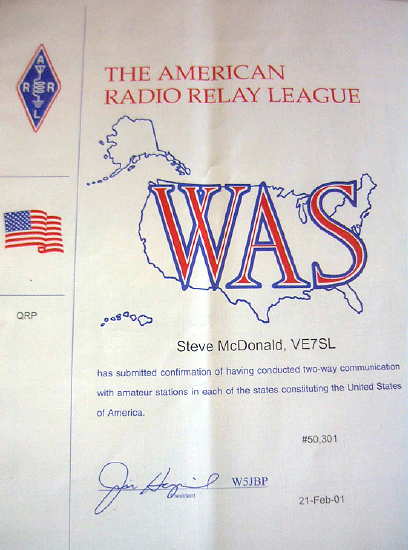
First Tuna Tin 2 WAS claimed: When the Tuna Tin 2 low-power transmitter article appeared in QST in 1976, its author Doug DeMaw, W1CER (later W1FB), envisioned it as a weekend project that could be used for short-range contacts.
Now, a quarter of a century later, a Canadian amateur has claimed the first Tuna Tin 2 Worked All States Award! Steve McDonald, VE7SL, got caught up in "Tuna Tin 2 Mania" and bought one of the popular TT2 kits. After working about 30 states with the little rig, WAS suddenly seemed plausible. McDonald realized his dream several months later when he turned in his cards for WAS. All contacts for the award had been completed while he was running about 400 mW from a Tuna Tin 2. As far as the ARRL awards folks know, this marked the first time WAS was achieved with a Tuna Tin 2--although there is no special endorsement for having done so. "Doug DeMaw knew in his heart that the rig would be useful and popular, but I don't think he ever envisioned that this little transmitter would still be working its QRP magic over 25 years after it first appeared in the pages of QST," said ARRL Lab Supervisor Ed Hare, W1RFI--himself a QRP and TT2 aficionado who has promoted the Tuna Tin 2 Revival and was McDonald's Connecticut contact for WAS. Congratulations to VE7SL on a tremendous operating accomplishment.--Ed Hare, W1RFI
Holding the battle-scarred 2N2222 in the palm of my hand reminded me of just how much excitement can be had with just a few simple parts and the magic of radio.
Steve McDonald, VE7SL, is a regular contributor to AmateurRadio.com and writes from British Columbia, Canada. Contact him at [email protected].
Practical Amateur Radio Podcast–I’m Back!!

As previously mentioned, I took some time away from the hobby and as a result I also took time away from podcasting about our wonderful hobby.
About a month ago, I eased back in to the hobby and have been having a blast getting on the air. Anyway…this last Sunday I recorded and released the Practical Amateur Radio Podcast episode 69. PARP 69 discusses the practical use of antenna analyzers and tuners. I also discuss the extraordinary Elmer efforts of Dan Romanchik, KB6NU and his “No Non-Sense” study guides and other projects. I also introduce PARP listeners to the newly formed amateur radio podcast, 100 Watts & A Wire hosted by Christian Cudnik, K0STH and Katie Allen, WY7YL. You can visit the PARP website to listen and subscribe.
My plan for future episodes of PARP is taking shape, but my commitment to the hobby comes first. After all, I need to be active in our wonderful hobby to be at my best podcasting about it.
Thanks for all who have listened to PARP over the years and thanks for your continued support.
Until next time…
73 de KD0BIK (Jerry)
Jerry Taylor, KD0BIK, is a regular contributor to AmateurRadio.com and writes from Colorado, USA. He is the host of the Practical Amateur Radio Podcast. Contact him at [email protected].
IC7300, FT991 or wait for the FT817 replacement?
At the moment I am looking for a new rig, but I am prepared to wait some time. I have never been keen on running high power and 5-10W would serve me well. I like that the new IC7300 is SDR based, but I like that the FT991 includes 2m and 70cm.
At the moment I think I’ll just wait for the FT817 replacement. I hope this includes 4m, but it sounds like it uses the same IF as the FT991, so I guess 4m is unlikely. Ideally I think the IC7300s (10W version) would be a good bet, especially if this comes out with 4m too.
I dislike fans, so I assume the IC7300S and FT817 replacement will not have these? Lets hope ICOM market the IC7300S as a QRP radio in Europe. 10W pep is a decent power. Certainly enough power for most occasions.
UPDATE 0934z: It would not surprise me if the FT817 replacement stayed at 5W but they also had a companion booster amplifier, maybe 20-50W. As we will be on the way down in the solar cycle next year (2016) this may be a reasonable compromise. What would they do about the auto ATU? I guess any bolt-on amp would have to have its own. I still think Yaesu seriously misjudged the market for this rig and the timing. There are so many FT817s out there and people have been gagging for a replacement/enhanced version for years. Now Yaesu is playing catch-up rather than leading. As I said yesterday, this new radio will need some seriously good features if it is to sell as well as the FT817 has done. Oh, expect some very good deals on the FT817ND early next year. The dealers will want to clear shelves in readiness of the new one.

Roger Lapthorn, G3XBM, is a regular contributor to AmateurRadio.com and writes from Cambridge, England.
MADHEN Eggsplorer-1 – We’ve got the data!

Following the euphoria of the Eggsplorer-1 payload being found six weeks after launch washed up and retrieved from the beach in Terschelling, Netherlands it has been an agonising wait to see what the Dutch police would send back. My impatience got the better of me last week and I contacted them directly to be told that unfortunately due to the awful smell and condition of the box they had simply removed the memory card and had posted that back as requested.
More days past and I was beginning to think irony was going to play a cruel trick and the card after its fantastical journey would end up lost in the post. I shouldn't have been so pessimistic as it arrived today! Along with the card was a detailed map showing the final location and labels from the side of the box.
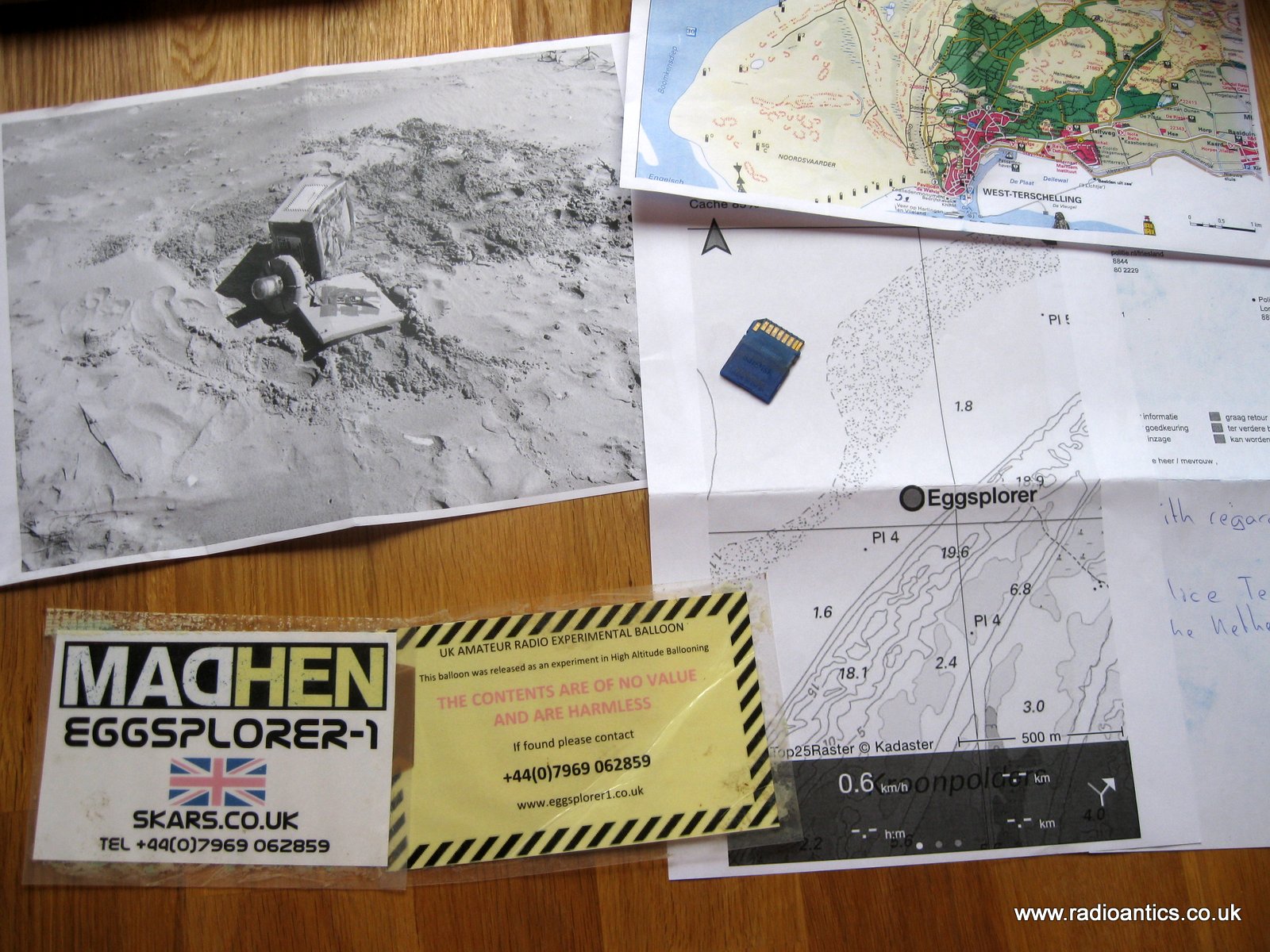

There was a nice note from the police.

The SD memory card seemed to have had survived more or less intact, though there was some corrosion on the contacts and crucially a small corner of the card was broken off.
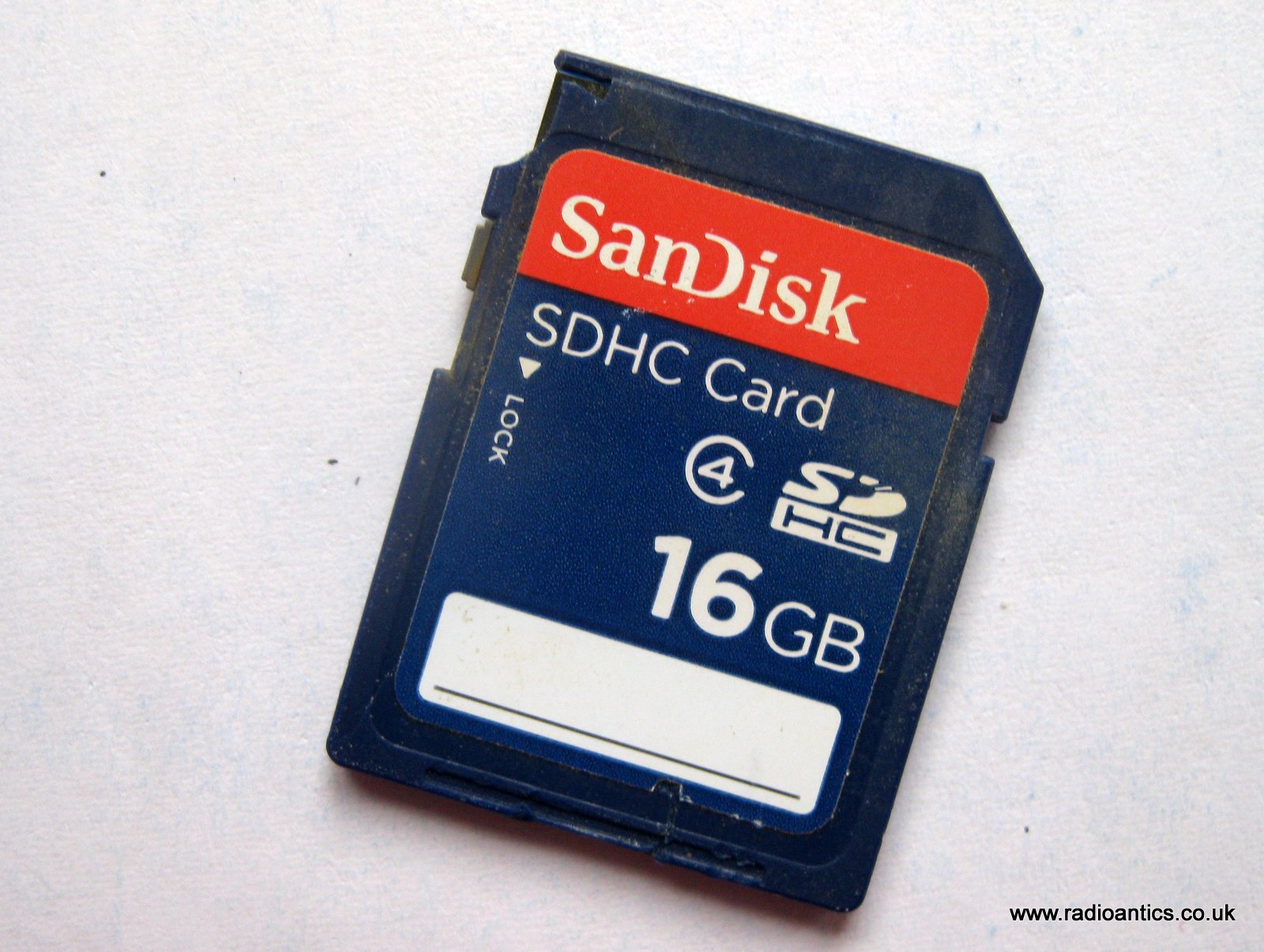
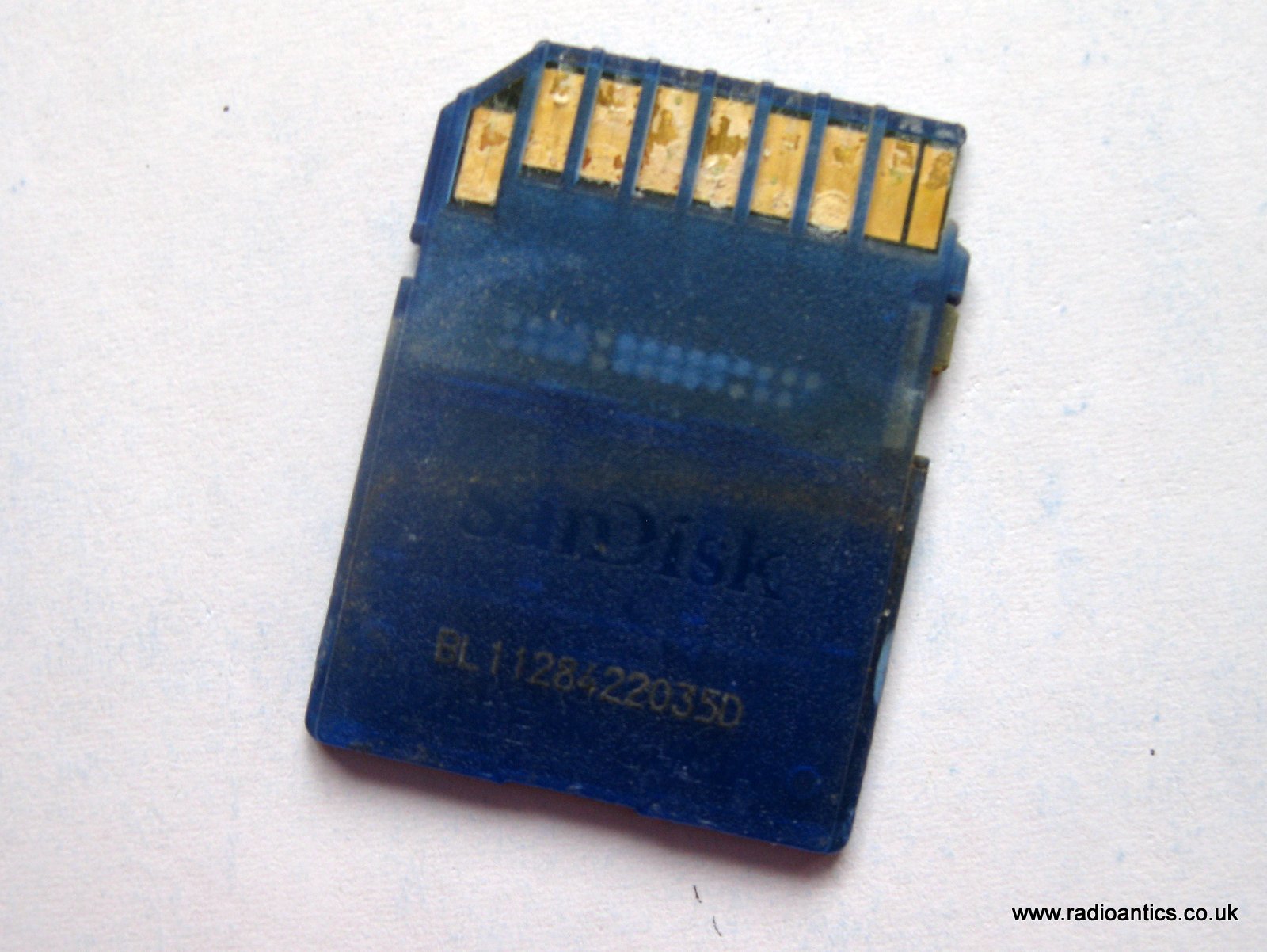
The plan was to use the Win32 Disk Imager program to make a direct raw image of the card and work on that copy. I first used a small wad of wire wool to gently clean up the contacts
I was encouraged when I inserted the card into my Microsoft Windows laptop and it was detected, however my heart sank when any attempt to access it or use the imager program was met with an error. I gave it another gentle going over with the wire wool and thankfully was then able to make a image file, the next stage was to extract the precious data.
The card of course contained the Linux based Raspberry Pi file system and in order to access it on a Windows machine I used the freeware linux-reader from DiskInternals which allows access to Ext2/Ext3/Ext4, HFS and ReiserFS file systems within Windows.
It was a simple case of using the "mount image file" option and the partitions were then accessible and everything appeared intact, there were images on the card unfortunately not the "egg in space" image I wanted, just some nice "egg in the clouds" shots.

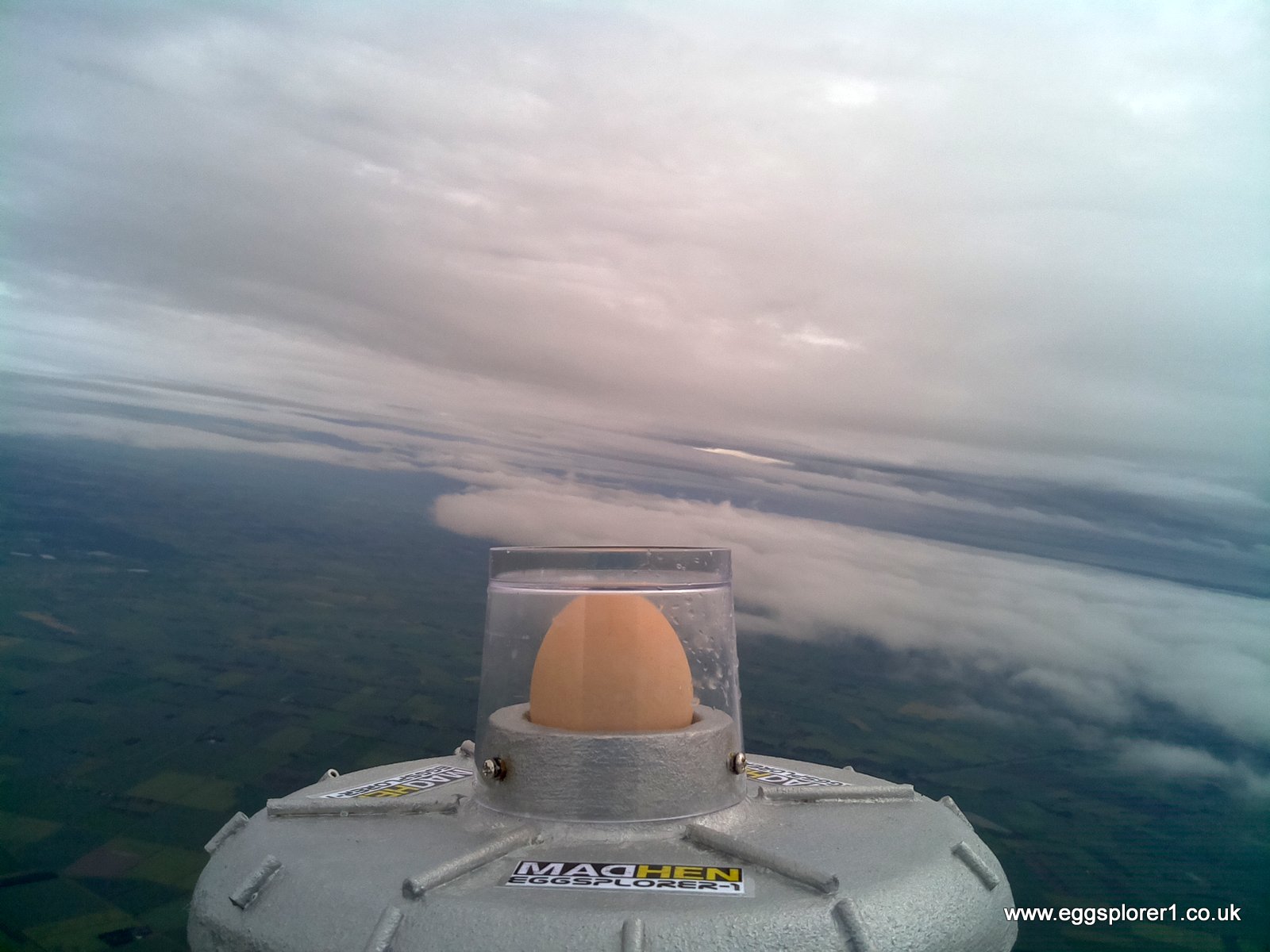
The telemetry log file confirmed the worst, the flight computer had indeed stopped/crashed at approx 2.5km up and no further images had been captured of the 31km accent into the stratosphere (confirmed by the backup tracker) I had hoped the transmission had stopped because of a fault in the antenna or the radio module board alas this wasn't the case.
On the day of the launch I did have problems with the payload not booting up. It had worked flawlessly under test the previous weeks and I had secured everything in the box ready for the flight. The day before the launch I had spotted there was another balloon going up in the UK at the same time and we had both opted for the same frequency. So at the eleventh hour I was forced to take out the SD card to change the configuration to prevent the transmission clash.
The launch day start up problem was the SD card. I had removed and reinserted it to get it to start up and secured it down with plenty of gaffa tape. Looking at the card now and the fact the broken corner is old damage I am convinced this is the reason for the failure as the card may well have become dislodged due to turbulence.
While slightly disappointed it is still a miracle I have any images at all and can only thank Jan and the Dutch Police again.
I have certainly learned a lot and hope the National Hamfest HAB that I and South Kesteven ARS are flying is more successful

Andrew Garratt, MØNRD, is a regular contributor to AmateurRadio.com and writes from East Midlands, England. Contact him at [email protected].
MADHEN Eggsplorer-1 – We’ve got the data!
Following the euphoria of the Eggsplorer-1 payload being found six weeks after launch washed up and retrieved from the beach in Terschelling, Netherlands it has been an agonising wait to see what the Dutch police would send back. My impatience got the better of me last week and I contacted them directly to be told that unfortunately due to the awful smell and condition of the box they had simply removed the memory card and had posted that back as requested.
More days past and I was beginning to think irony was going to play a cruel trick and the card after its fantastical journey would end up lost in the post. I shouldn't have been so pessimistic as it arrived today! Along with the card was a detailed map showing the final location and labels from the side of the box.
There was a nice note from the police.
The SD memory card seemed to have had survived more or less intact, though there was some corrosion on the contacts and crucially a small corner of the card was broken off.
The plan was to use the Win32 Disk Imager program to make a direct raw image of the card and work on that copy. I first used a small wad of wire wool to gently clean up the contacts
I was encouraged when I inserted the card into my Microsoft Windows laptop and it was detected, however my heart sank when any attempt to access it or use the imager program was met with an error. I gave it another gentle going over with the wire wool and thankfully was then able to make a image file, the next stage was to extract the precious data.
The card of course contained the Linux based Raspberry Pi file system and in order to access it on a Windows machine I used the freeware linux-reader from DiskInternals which allows access to Ext2/Ext3/Ext4, HFS and ReiserFS file systems within Windows.
It was a simple case of using the "mount image file" option and the partitions were then accessible and everything appeared intact, there were images on the card unfortunately not the "egg in space" image I wanted, just some nice "egg in the clouds" shots.
The telemetry log file confirmed the worst, the flight computer had indeed stopped/crashed at approx 2.5km up and no further images had been captured of the 31km accent into the stratosphere (confirmed by the backup tracker) I had hoped the transmission had stopped because of a fault in the antenna or the radio module board alas this wasn't the case.
On the day of the launch I did have problems with the payload not booting up. It had worked flawlessly under test the previous weeks and I had secured everything in the box ready for the flight. The day before the launch I had spotted there was another balloon going up in the UK at the same time and we had both opted for the same frequency. So at the eleventh hour I was forced to take out the SD card to change the configuration to prevent the transmission clash.
The launch day start up problem was the SD card. I had removed and reinserted it to get it to start up and secured it down with plenty of gaffa tape. Looking at the card now and the fact the broken corner is old damage I am convinced this is the reason for the failure as the card may well have become dislodged due to turbulence.
While slightly disappointed it is still a miracle I have any images at all and can only thank Jan and the Dutch Police again.
I have certainly learned a lot and hope the National Hamfest HAB that I and South Kesteven ARS are flying is more successful
Andrew Garratt, MØNRD, is a regular contributor to AmateurRadio.com and writes from East Midlands, England. Contact him at [email protected].
Peanut Power Sprint – September 27th.
The Bees have swarmed and the Skeeters have been hunted. Now it time for a snack - The Peanut Power Sprint!
Everyone plays... Outdoors, indoors, lo/hi power, ... there is even a QRO category.
http://www.hornucopia.com/contestcal/contestdetails.php?ref=571
Sponsored by the North Georgia QRP Club (NoGaQrP), this sprint will be held on Sept. 27, 2015 from 4PM to 6PM EDT (Sept. 27 - 2000z to 2200z). Full rules are on the NoGaQrP website - nogaqrp.org Your QSO will be worth more if you have a PEANUT number; assigned NEW each year (see below).
The club is making this one different from most other QRP QSO events.
1. It is open to all amateurs at any power level. This is to attract some new folks to QRP while running their comfortable power - QRO (<100 watts pls) All are welcome and there is a QRO category. This is a FUN event. Not cut-throat!
2. It is a short sprint lasting only two hours; not tying up the entire afternoon. Although brief, run reasonable CW speeds for all to copy.
3. It starts late in the day (right after close of TX QSO party!) which will mean those on the west coast will begin at 1PM PDT, later than most contests.
4. There are categories for all situations - the prestigious category is the Peanut Power category - 1w CW or less, 2W PEP SSB or less - operating from the field! This is the GOOBER CLASS! SOTA anyone?
5. Plaques will be awarded for each of 5 category winners (minimum 3 entries).
http://www.nogaqrp.org/PeanutPower/2014/PeanutPowerPlaques2014/plaques.php
6. Sprint encourages SSB as well as CW contacts. The exchange: RS(T), State/Province/Country(SPC) and your Peanut Number or Power. Call CQ NUT and have FUN!
7. Multipliers count each band/each mode. Work GA ( or any SPC) on 3 bands and 2 modes each = 6 multiplier. Puts emphasis on switching bands and modes during the event. Check SSB on the quarter hour. (SPC means State Province Country)
8. This will encourage activity on the 3 permitted bands - 40, 20, and 15M. There are suggested frequencies for each band/mode. Notice we are encouraging the now almost dead portion of 40M - 7061 khz and up.
9. Logs are not submitted - simply a score - but keep handy in case requested for verification. Watch website for results. There is an online score calculator. It's all on the website - nogaqrp.org
10. Work stations holding a Peanut Power Number (PPN) for 7 points. Stations worked who do not hold a PPN (will send their power) yield 3 points. Yes, QRO stations can request and receive a PPN. You do not declare your category until you decide to send in your entry. If you get halfway through and change your power, simply enter under a different category than you originally thought!
To request a PPN, send an email to NoGaNuT PeTe at [email protected] Requests for special numbers may no longer be accommodated. See the current list via the website. Or click here to see the latest list: http://byjimeny.com/PPN2015.pdf
Include the word PEANUT POWER NUMBER in the title of your request please.
Dang, those goobers are tasting great! http://tinyurl.com/olkg4za
NoGaNuT JiM, W4QO
This is a really fun Sprint/Operating Event. If you have EVER been intimidated by QRP Contesting, this is the contest for you!
I'd like to make a special request to all the Skeeters to please buzz on over to the NoGA site and request to become a peanut for an afternoon. I guarantee you will have a blast!
72 de Larry W2LJ - Peanut #43
QRP - When you care to send the very least!
Larry Makoski, W2LJ, is a regular contributor to AmateurRadio.com and writes from New Jersey, USA. Contact him at [email protected].
 Ham Radio Deluxe |
 W5SWL Electronics |
 Ham Radio Prep |
 KB3IFH QSL Cards  Hip Ham Shirts  HamRadioAuctions HamRadioAuctions Reliance Antennas Reliance Antennas Enigma Shop Enigma Shop |  morseDX  Ni4L Antennas  R&L Electronics R&L Electronics antennas.us antennas.us QRV QRV |
- Matt W1MST, Managing Editor
