 |
 SX-2000 HF (to 4m) QRP transceiver and SunSDR-MB1
 27 September 2015 | by
 This was news to me. I have never seen this before although the post on the website below was earlier this summer. It looks like a poor man’s IC7300 and covers the same range but at QRP power levels. It is an Italian transceiver. Personally I prefer the ICOM. I have no idea about price. It looks like a “back shed job” to me.
See http://www.cqdx.ru/ham/qro-qrp/qrp-hf-transceiver-with-touch-screen/ .
On the same website are details of the Sun SDR-MB1 assembled prototype, which is another rig I have never heard about! There is a video of this at https://youtu.be/SIfvVUw0774 . This rig looks more professional and the YouTube link quotes a price of $5500. This was 3 months ago.

Roger Lapthorn, G3XBM, is a regular contributor to AmateurRadio.com and writes from Cambridge, England.
You’ve Got Questions, We’ve Got Answers
 K3NG has performed an important public service by tabulating the answers to the top ten amateur radio questions swirling about the interwebz. This will save thousands of hours for hams searching for this critical information.
Unfortunately, he did not include the questions, so you will have to use your imagination on that. But its not difficult.
73, Bob K0NR
The post You’ve Got Questions, We’ve Got Answers appeared first on The KØNR Radio Site.
Bob Witte, KØNR, is a regular contributor to AmateurRadio.com and writes from Colorado, USA. Contact him at [email protected].
Amateur Radio Weekly – Issue 79

Chinese Ham sats now active
Six satellites (XW-2A to XW-2F) carry 435/145 MHz U/V linear transponders for SSB/CW communications.
AMSAT UK
Steal this Ham Radio (technology)
If you think hams just use Morse code and voice communications, you are thinking of your grandfather’s ham radio.
Hack A Day
APRS in your pocket
For a lightweight portable station, all you need is a handheld transceiver, a tiny packet TNC, and an Android smartphone.
VE6AB
Reverse engineer wireless traffic lights with SDR
It was very easy to see that this is AFSK1200 alternating between 1200Hz and 2400Hz.
Carriers Everywhere
All about the Amateur Radio Parity Act of 2015
ARRL dedicates single webpage to Amateur Radio Parity Act of 2015 concept and status.
ARRL
Is college football a ham radio killer?
I’m attributing the big dip in sales on Saturday, September 19, to college football.
KB6NU
High altitude balloon travels 6,800km
Our first superpressure HAB to use solar panels for recharging the battery.
Bristol SEDS
Working DL8DJM aeronautical mobile
Aeronautical Mobile contacts are pretty rare and the team in the gazebo fell silent as Johannes DL8DJM/AM told us that he was flying from Edinburgh to South Italy, about 100km from Amsterdam at 43,000ft.
Essex Ham
Fox telemetry decoder software available
Fox-1A is scheduled to be launched on October 8, 2015.
AMSAT UK
Video
Add APRS maps and an IGate to the Yaesu FTM-400DR
This video shows how to add APRS maps to the FTM-400DR using a cheap Windows tablet and the data cable that is included with the radio.
YouTube
New York Air Traffic Control on HF
New York air traffic control on the shortwave bands, which they use for longer distance communications than the VHF comms can handle.
The Radio Hobbyist
Theory of Simplex and Phantom Circuits: Balanced Conditions
US Army training film TF11-2062 (1944)
YouTube
Amateur Radio Weekly is curated by Cale Mooth K4HCK. Sign up free to receive ham radio's most relevant news, projects, technology and events by e-mail each week at http://www.hamweekly.com.
Arduino Morse Tutor – Update
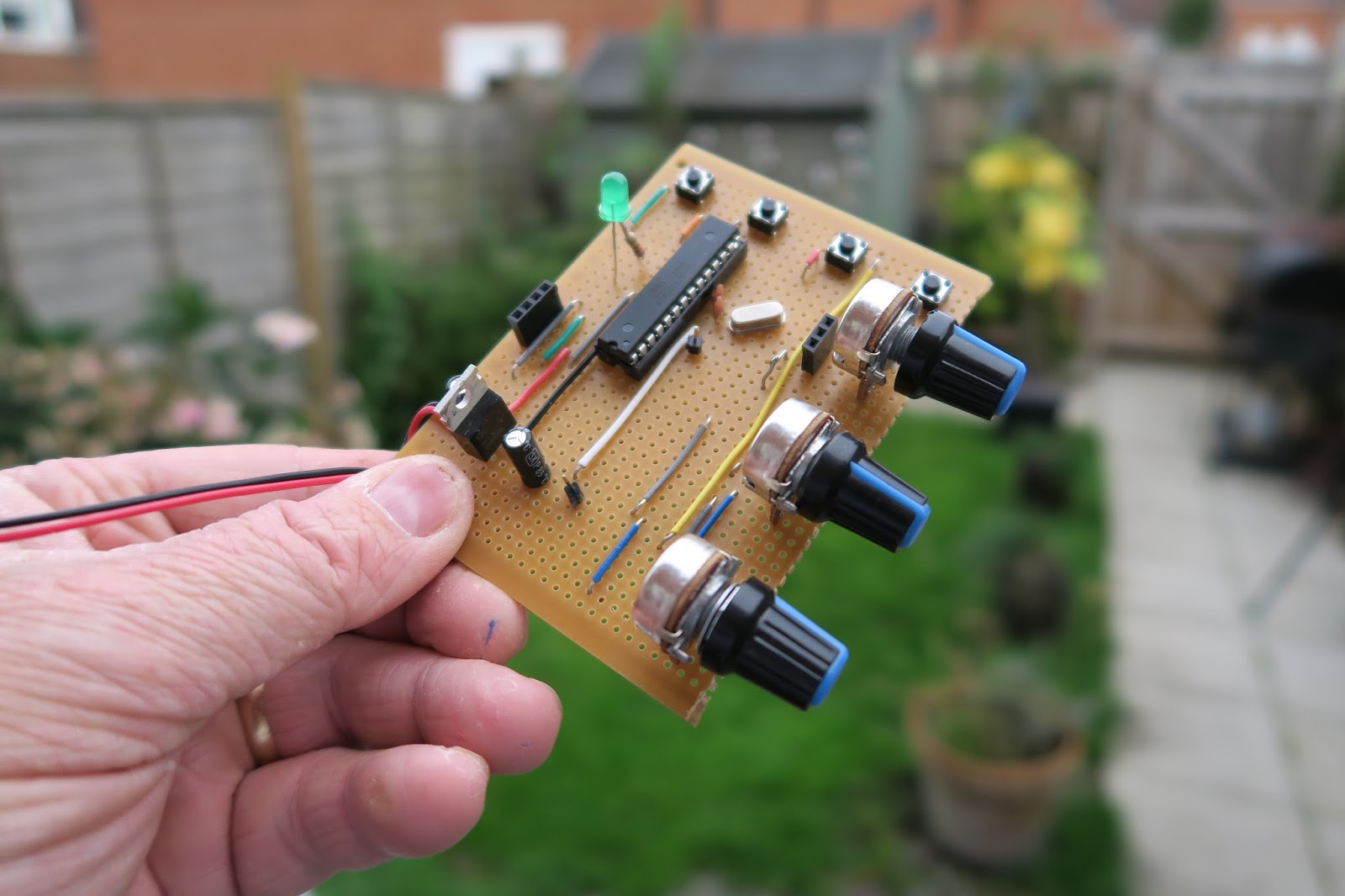
Its quite humbling really. Ive had this blog now for a number of years. I’ve always had a bit of a love/hate relationship with it. I love the concept of sharing my experiences, failures and successes with who ever stumbles across the blog. But mostly only a couple of entries get found and commented on. Namely my MQ26SR antenna posts are the most popular entries on this blog and I get about 1 email a month asking very specific questions.
That all changed this week. With the addition of my latest Arduino project. All of a sudden and quite literally overnight – the traffic to this blog skyrocketed. My inbox was awash of emails asking questions, my twitter feed was stacked with retweets and favorites of this circuit. I seem to have struck a chord with many folks who, like me, were looking for a Morse Tutor, but don’t want to sit in front of a PC all day.
I’ve had some really wonderful feedback. I have been offered Crowd funding, beta testers and asked if I can supply more information. So I hope this entry can help with my plans for my Morse Tutor version 2, So here are some headlines for you all.
- I am making a kit. I have this in hand and a PCB design is on the screen right now.
- This will be launched as soon as I have figured out some minor gremlins.
- There will be added functionality. And some really cool features too – watch this space.
- The Sketch I have created so far is only a fraction of what is on offer. (plus also a lot of fixes have been included in the Version 2 build)
- Below are 2 drawings – 1 Schematic, 1 Breadboard. This will support Version 1.01 of the code.
Version 2 will include an Audio Amp, an SD card and proper switching logic (either a rotary encoder, or latch chip) four new modes of training and all ready as either a pre assembled kit or kit of parts for you to build & box yourself. And trust me on this, it wont be expensive either.


Dan Trudgian, MØTGN, is a regular contributor to AmateurRadio.com and writes from Wiltshire, England. He's a radio nut, IT guru, general good guy and an all round good egg. Contact him him here.
Arduino Morse Tutor – Update
Its quite humbling really. Ive had this blog now for a number of years. I’ve always had a bit of a love/hate relationship with it. I love the concept of sharing my experiences, failures and successes with who ever stumbles across the blog. But mostly only a couple of entries get found and commented on. Namely my MQ26SR antenna posts are the most popular entries on this blog and I get about 1 email a month asking very specific questions.
That all changed this week. With the addition of my latest Arduino project. All of a sudden and quite literally overnight – the traffic to this blog skyrocketed. My inbox was awash of emails asking questions, my twitter feed was stacked with retweets and favorites of this circuit. I seem to have struck a chord with many folks who, like me, were looking for a Morse Tutor, but don’t want to sit in front of a PC all day.
I’ve had some really wonderful feedback. I have been offered Crowd funding, beta testers and asked if I can supply more information. So I hope this entry can help with my plans for my Morse Tutor version 2, So here are some headlines for you all.
- I am making a kit. I have this in hand and a PCB design is on the screen right now.
- This will be launched as soon as I have figured out some minor gremlins.
- There will be added functionality. And some really cool features too – watch this space.
- The Sketch I have created so far is only a fraction of what is on offer. (plus also a lot of fixes have been included in the Version 2 build)
- Below are 2 drawings – 1 Schematic, 1 Breadboard. This will support Version 1.01 of the code.
Version 2 will include an Audio Amp, an SD card and proper switching logic (either a rotary encoder, or latch chip) four new modes of training and all ready as either a pre assembled kit or kit of parts for you to build & box yourself. And trust me on this, it wont be expensive either.
Dan Trudgian, MØTGN, is a regular contributor to AmateurRadio.com and writes from Wiltshire, England. He's a radio nut, IT guru, general good guy and an all round good egg. Contact him him here.
‘Tin Whiskers’
 I've just recently read of a phenomenon that I had never heard of before this week ... "Tin Whiskers". Tin whiskers are hairlike crystalline structures that can grow from tin surfaces and have the potential to wreak havoc on modern electronics.
Ever since the European RoHS (Restriction of Hazardous Materials) implementation, most manufacturers have been forced to switch to lead-free solder. It seems that lead, when combined with tin, inhibits the growth of tin crystals. Although tin whiskers have been around for many years, it is just since the switch to lead-free solder that their impact on circuit boards (particularly with SMD sizes) has been garnering a lot of attention. Even the military, which has always demanded a higher standard for its components and circuit fabrication, is worried. With almost everything, from alarm clocks to aircraft, reliant on electronic circuit boards, are we awash in a sea of electronic ticking time-bombs? Some experts believe that we are.
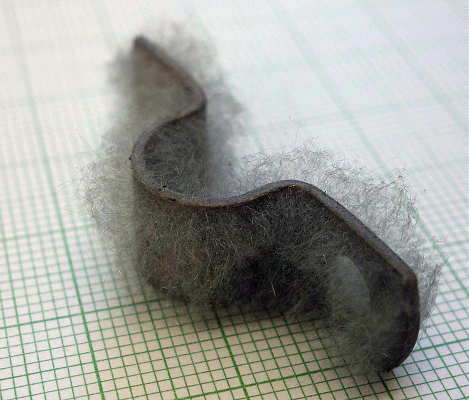 |
| courtesy: https://en.m.wikipedia.org/ |
An article in Aviation Today reports:
It’s rational to ask, after a few years of RoHS policy in force, does this effect ever really cause any problems? As it happens, yes, and some examples are so spectacular that it’s amazing they have not reversed the policy for RoHS. In Europe, the most impressive example was $1 billion recall of Swatch watches from Switzerland, as the use of lead-free solder caused a roughly 5 percent watch failure rate in 2006. The “solution” to this problem was yet another rule exemption, and lead was again used in Swatch construction. A real RoHS policy triumph there.
John Keller, Editor in Chief of Military & Aerospace Electronics magazine reported in a 2005 article that:
Reports indicate that six satellites sustained partial or complete loss due to tin whiskers. These involved Galaxy-3, Solidaridad 1, Direct TV3, and HS 601 satellites built between 1998 and 2002. Problems also have been reported with the F-15 jet fighter radar, the Patriot missile, and the Airborne Warning and Control System (AWACS) aircraft.
One prominent manufacturer, Apple, has been using lead-free solders since 2004, reportedly, without any issues. As noted by Kurt Jacobsen, author of "Within A Whisker of Failure" (published in The Guardian):
Perhaps manufacturers haven't developed an "experience base", or perhaps it isn't registering as a problem. Many customers will probably chalk failed devices off to their own isolated tough luck, when the cause might really have been microscopic whiskers inside their machines.
And Bob Willis, Technical Director for the Surface Mount and Related Technology Group in the UK mused:
Overall, was it sensible to go lead-free? "I would say no," ... Earlier obsolescence means more discarded devices. Critics argue that substitutes are more toxic and energy-wasteful than the lead they replace - and that lead doesn't leach from circuit boards, because it doesn't migrate as lead in paint or petrol does.
Well worth reading and perhaps one of the best summaries of the dilemma can be found in "Death By Tin Whisker" by Walter Shawlee:
This is clearly a problem that has to be addressed for the avionics industry sooner rather than later. Either a clearly worded exemption from lead use is required, or the frankly ineffective removal of lead from electronic assembly construction rule should be abandoned. This misguided policy has introduced a random failure mode into every item now being made under these standards or with RoHS compliant parts, a simply unacceptable risk for all involved. Plus, the ridiculously small (2 percent) targeted lead-use area fails utterly and completely to address the very real concerns of lead toxicity in the environment. Clearly, all of these issues are something worth thinking about, and their impact on our industry and all of us is significant if no useful action is taken.
Although this is all new to me personally, perhaps this is old-hat by now, since the problem has been around for the past few years. Maybe a viable solution has been found already or will we see the introduction of lead into solder once again? I also wonder about the millions of life-critical circuit boards already in place that are, at this moment, quietly growing 'tin whiskers'.
Steve McDonald, VE7SL, is a regular contributor to AmateurRadio.com and writes from British Columbia, Canada. Contact him at [email protected].
Amateur Radio Newsline Report 1978 September 25, 2015
- TWO SILENT KEYS LOST TO TRAGEDIES
- FIGHTING ALS
- NO HAM IS AN ISLAND
- RAMPING UP AGAINST RADIO INTRUDERS
- AT THE END OF THE PAPER TRAIL
- LICENSE CHANGES OVERSEAS
- WHEN PIGS FLY
- YLS and XYLS ARE “ALL EAARS”
- DXPEDITION ON THE MOVE
- HAM AND CB: WHEN TWO WORLDS COLLIDE
- BIG BUSINESS IN BALI
- NEW UNITY FOR ALBANIAN HAMS
- THE WORLD OF DX
- THE CODE OF SISTERHOOD
 Ham Radio Deluxe |
 W5SWL Electronics |
 Ham Radio Prep |
 KB3IFH QSL Cards  Hip Ham Shirts  HamRadioAuctions HamRadioAuctions Reliance Antennas Reliance Antennas Enigma Shop Enigma Shop |  morseDX  Ni4L Antennas  R&L Electronics R&L Electronics antennas.us antennas.us QRV QRV |
- Matt W1MST, Managing Editor
