 |
 Minimum QRP – VK3YE
 13 October 2015 | by
 The book is available for purchase direct from Amazon for a few Pounds, Dollars, or whatever currency your country uses. Just search "Minimum QRP"
The book is written and put over in the simple Peter Parker methodical way, but if you still don't understand the book, don't worry, you can always refer back to his amazing back catalogue of VK3YE video material on his channel. If you like the VK3YE Youtube output buy the book, you will not be disappointed, there is something in it for everyone from the novice to the converted.
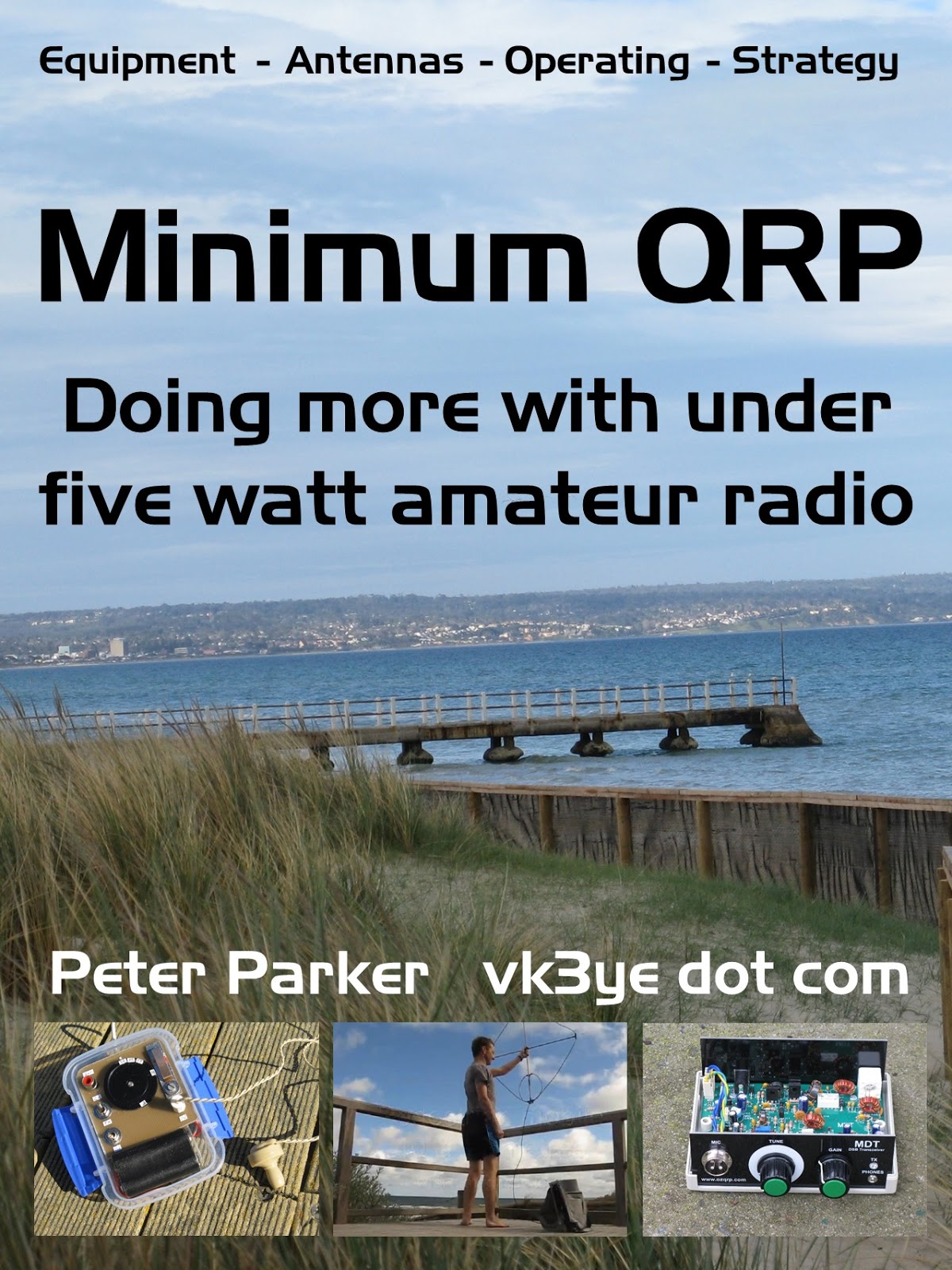
Further details from the VK3YE Website: http://home.alphalink.com.au/~parkerp/miniqrp.htm
If you don't own a Kindle like myself, this doesn't stop you reading and purchasing. There is a Kindle App available for Android and iPad. Or if you just want to use Windows on your PC to read, there is a Kindle program to download for free from Amazon. App information and download link here for UK users. Once you buy the ebook the file is then downloaded into your Kindle folder.
Steve, G1KQH, is a regular contributor to AmateurRadio.com and writes from England. Contact him at [email protected].
AmateurLogic 83: Our 10th Anniversary
AmateurLogic.TV Episode 83 is now available for download.
ALTV’s 10 Anniversary Special! We relive some of the highlights of the past decade of AmateurLogic.
1:42:04
George Thomas, W5JDX, is co-host of AmateurLogic.TV, an original amateur radio video program hosted by George Thomas (W5JDX), Tommy Martin (N5ZNO), Peter Berrett (VK3PB), and Emile Diodene (KE5QKR). Contact him at [email protected].
Another 630m Crossband Weekend
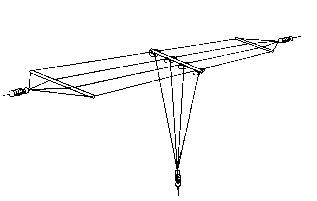 Fritz Raab (W1FR), the ARRL's 600m Experiment Coordinator, has indicated that this year's '630m Special Operating Event' will be held on the weekend of November 13 / 14. Mark your calendars if you plan to participate as it looks as though, once again, along with the numerous U.S. experimental stations beaconing and coastal maritime stations, several Canadian 630m stations will be active and looking for realtime CW 'crossband' contacts! Canadian stations will 'CQ' on specific frequencies and will listen for calling stations on designated HF (80/40m) answering (QRSS) frequencies.
Unlike last year, the Canadian stations will be operating for several hours on both nights, since there will be no conflict with the ARRL's CW Sweepstakes Contest as in 2014. Please stay tuned as there will be further details to follow regarding specific stations, frequencies and times ... notifications will be published on both the ARRL and RAC web 'news' pages as well as on numerous ham radio reflectors.
There's still lots of time to tweak up your 630m receiving capabilities ... it should be an interesting weekend, especially if the mid-November propagation cooperates.
A summary of last year's Friday night crossband activity can be found here.
Steve McDonald, VE7SL, is a regular contributor to AmateurRadio.com and writes from British Columbia, Canada. Contact him at [email protected].
October QST went missing?
Of course I receive the automatic email telling me I can read the electronic version of QST, somehow though this method never has the same appeal as the real paper version.
September was nearly at the end, the leaves were falling off the trees Autumn was well in process, but still no QST. I knew it was lost, can we even trust the postman these days to deliver our mail? I contacted the circulation department at the ARRL, I soon received a quick response to my email. I was asked to hold fire until the 1st of October and contact them again, which was only a few days more to wait, a bit more patience never hurt anyone. The 1st came, still no QST, so I was back on the keyboard again, I was informed one would be sent out straight away from the USA. Today it arrrived 7 days later..
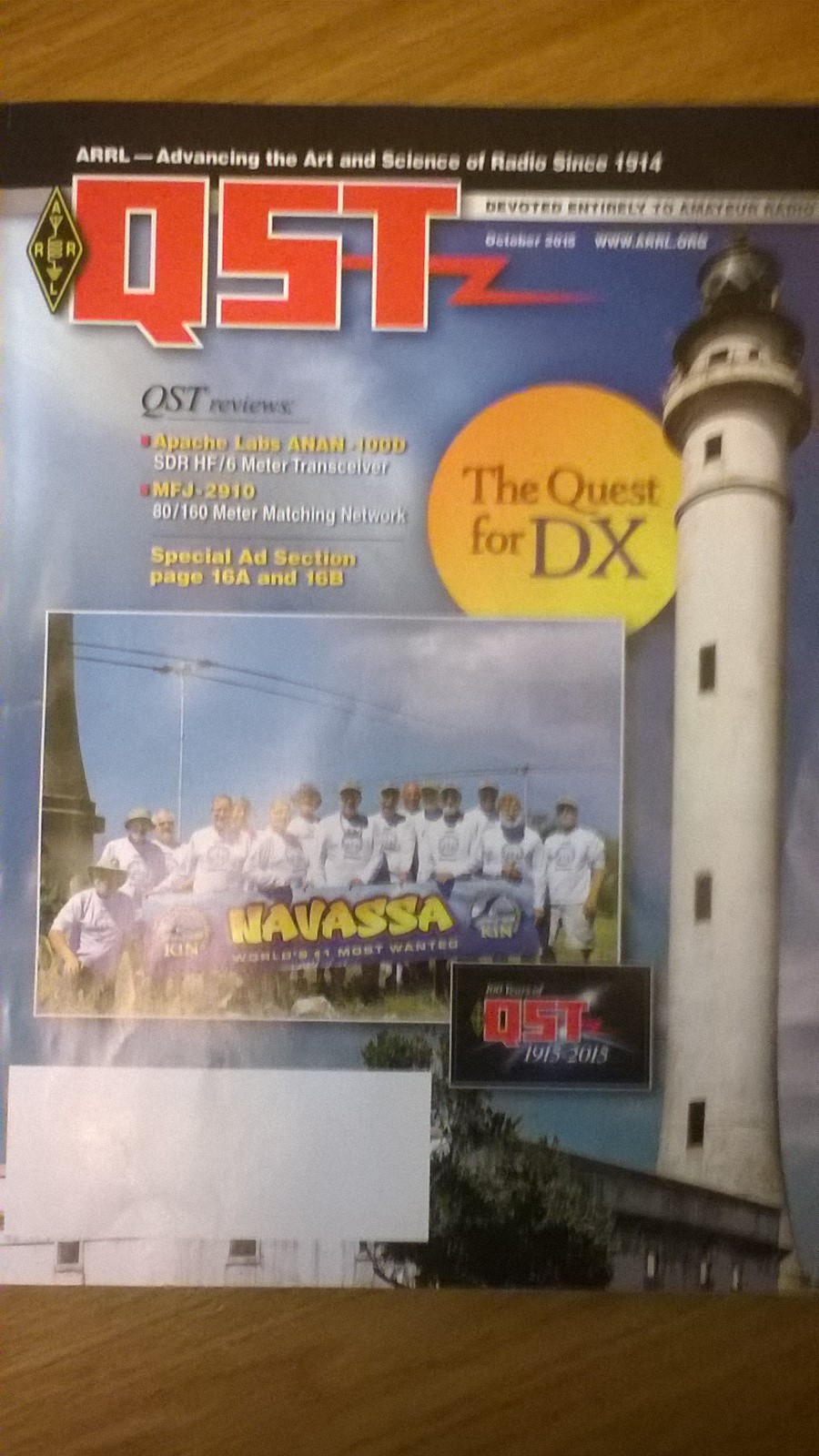
After many years of being an overseas ARRL member this is the first time I have never received QST. It is good one can send an email and get sorted very "quickly" well done ARRL!
Steve, G1KQH, is a regular contributor to AmateurRadio.com and writes from England. Contact him at [email protected].
October QST went missing?
Of course I receive the automatic email telling me I can read the electronic version of QST, somehow though this method never has the same appeal as the real paper version.
September was nearly at the end, the leaves were falling off the trees Autumn was well in process, but still no QST. I knew it was lost, can we even trust the postman these days to deliver our mail? I contacted the circulation department at the ARRL, I soon received a quick response to my email. I was asked to hold fire until the 1st of October and contact them again, which was only a few days more to wait, a bit more patience never hurt anyone. The 1st came, still no QST, so I was back on the keyboard again, I was informed one would be sent out straight away from the USA. Today it arrrived 7 days later..
After many years of being an overseas ARRL member this is the first time I have never received QST. It is good one can send an email and get sorted very "quickly" well done ARRL!
Steve, G1KQH, is a regular contributor to AmateurRadio.com and writes from England. Contact him at [email protected].
5MHz band?
The next world radio conference (WRC-2015) is drawing close to opening. Worldwide, radio amateurs are hoping for a contiguous 5MHz allocation, rather than the channelised allocations common in many countries. A 60m band would be really useful as the sunspot numbers decline and the higher HF bands become far less useful for DX. Whether this contiguous allocation will happen remains to be seen. Most of the lobbying has been done, so I guess we now have to wait and hope.

Roger Lapthorn, G3XBM, is a regular contributor to AmateurRadio.com and writes from Cambridge, England.
ICOM IC7300 in RadCom?
My new copy of RadCom is due towards the end of next week. I wonder, if as in PW, there will be a “tight lipped” policy as appears to be the case for all advertising in PW a few weeks ago? You can almost hear ICOM saying, “do NOT sell the IC7300, as this is for NEXT year, if at all”.
Certainly the UK selling price of the Yaesu FT991 has, as predicted, dropped some way. This will go lower still in the months ahead. If the IC7300 has had to be delayed (software issue maybe, or are they afraid the lack of 2m/70cm will be a problem, or is there a major design issue, or are they worried about the selling price versus the Yaesu FT991?) this would be a great shame.
I was expecting to see this in the UK by Christmas and selling for less than the FT991. I now have my doubts. The next RadCom may give us some clues.
See http://www.cqdx.ru/ham/new-equipment/icom-ic-7300-hf-50-mhz-transceiver/ .

Roger Lapthorn, G3XBM, is a regular contributor to AmateurRadio.com and writes from Cambridge, England.
 Ham Radio Deluxe |
 W5SWL Electronics |
 Ham Radio Prep |
 KB3IFH QSL Cards  Hip Ham Shirts  HamRadioAuctions HamRadioAuctions Reliance Antennas Reliance Antennas Enigma Shop Enigma Shop |  morseDX  Ni4L Antennas  R&L Electronics R&L Electronics antennas.us antennas.us QRV QRV |
- Matt W1MST, Managing Editor
