 |
 Setting a Baofeng on FIRE!
 20 October 2015 | by
 I came across this video through the qrz.com forums. K5CLC did some extreme testing of a Baofeng UV-5R, including setting it on FIRE! The results are interesting. Skip to 2:57 to see the flames. I really like my Baofeng HT…not as my primary radio but as the one that is with me when I’m working on the farm, tinkering in the barn, or anytime I’m likely to have dirty hands.
Michael Brown, KG9DW, is a regular contributor to AmateurRadio.com and writes from Illinois, USA. Contact him at [email protected].
Challenging Topband
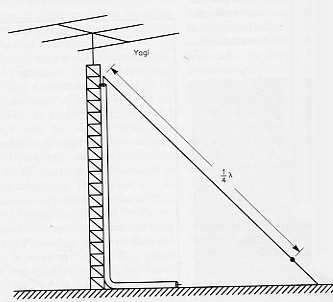 |
| The 'Half-Sloper' |
When I purchased my first house in the suburbs in '74, I was finally able to put up a real antenna ... a 'half-sloper', fed from the top of my new 48' tower, along with an extensive set of radials running along the perimeters of my yard. I also hung both 80 and 40m half-slopers from the same feedpoint, giving me coverage on all three of the low bands.
Once the Japanese manufacturers started adding 160m coverage to the various lines of transceivers, the band really started to get popular, as up until that time, very few commercial transmitters covered 160m. Most of the E.F. Johnsons, the DX-100, and some of the late Drake radios were doing the heavy-lifting unless one was enterprising enough to homebrew or modify a rig for 160.
I immediately set out to work all 50 states from my suburban location, running a pair of 6146's at around 150 watts input. It took me a few winters to get them all, with Rhode Island being the most difficult, at #50.
My 160m W.A.S. certificate was #264.
Conditions always varied with the solar cycle but a surprising amount of DX was worked at my low power level. A couple of the more memorable contacts from those days were with H44IA in the Solomons and with VK9NS, on Norfolk Island.
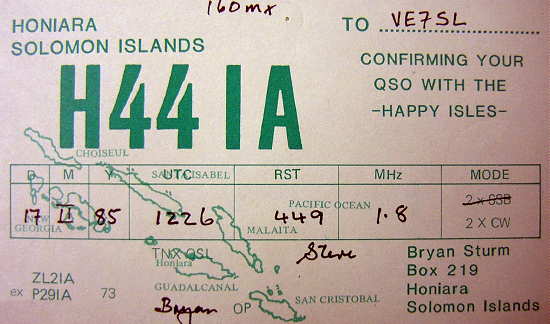
H44IA was worked at 0426 local time in February. I recall calling several JA stations that morning with no response (I always found difficulty working JA on 160) and was more than surprised when the H44 came right back to my response to his CQ.
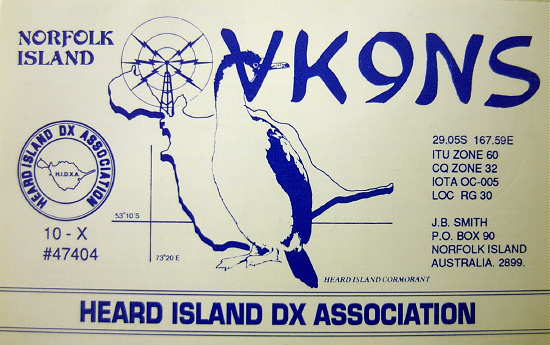
Jim Smith, VK9NS (SK), seemingly spent more time at various exotic locations than at home. Over the years I was able to work him on a number of his Pacific-island expeditions, but it was gratifying to finally catch him from another rare spot ... his home! This contact was in mid-July, right at sunrise.
I've worked a number of island expeditions over the years on topband, but one of the rarest was in the mid-Indian Ocean, FT5ZM, on Amsterdam Island ... also right at sunrise.

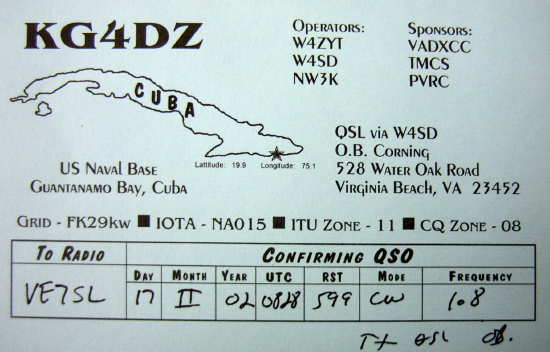
Another 'closer' island has always been a bit rare on 160, Guantanamo Bay, Cuba ... worked in mid- February, just after midnight.
In all of my years in the suburbs, I was never able to hear Europe on topband. It seemed that the noise-curtain surrounding my reasonably quiet location was still just too high for such 'over the pole' west coast treats. It wasn't until I moved to Mayne Island, off the SW coast of B.C., and re-installed my half-sloper, that the Europeans finally began to fill my log. Some nights, during solar-low years, the Europeans were workable before sunset ... on other nights, there were no signals other than Europeans, filling the band from 1800-1830, at times making the topband sound like 20m CW ... definitely not like the city.
4Z1UF was worked in February, just after 8PM local time while R1FJT in Franz Josef Land was worked right at sunset in late October.


Africa is always tough on the low bands but the solar-low years of Cycle 23 brought some amazingly good conditions to the west coast. The two new ones, below, were both worked in November of '08 at around 10PM local time, right at sunrise in Africa.


Learning the quirks of topband propagation is still an ongoing project but over the years, 160m has been my favorite wintertime hangout. With T2GC on Tuvalu Island, worked last week, my present 160m DXCC total stands at 156 worked and 155 confirmed.
If you're looking for something different, some new fun... a bit of an operating challenge ... I know you'll find it on topband!
Steve McDonald, VE7SL, is a regular contributor to AmateurRadio.com and writes from British Columbia, Canada. Contact him at [email protected].
Our hobby – very diverse
There can be few hobbies that embrace so much as amateur radio. Some enjoy QRP, often making their own simple gear and each QSO is a thrill. Others spend a great deal of money on rigs, towers and antennas and enjoy just talking to others around the world. Some like the challenge of microwaves or optical. The list is endless.
We are lucky that our hobby can be enjoyed by all ages and abilities and in so many different ways. It is very easy to be critical of how others enjoy the hobby – I know as I am guilty of this! We should be thankful we are a “broad church” and allow each of us to enjoy the hobby in the way that suits us best. I used to enjoy building and field work, but because of my stroke I have had to adapt. Thankfully, I enjoy the hobby as much as ever.

Roger Lapthorn, G3XBM, is a regular contributor to AmateurRadio.com and writes from Cambridge, England.
Xiegu X108G Outdoor Version at JOTA 2015
Took the X108G Outdoor Version out to JOTA this weekend outdoors near Neys Provincial Park near Marathon, Ontario, temps during the day were 3c and at night was -4c first night and second night was -7c. We operated from a dining tent outside and was running battery power and a windom at about 15′.
We had light snow and rain during our outing and Saturday morning we did a hike to The Crack which is a large path through the rugged rock in the area.
http://superiorhiking.com/the-crack-in-the-rock/
Here are a few pictures of the weekend and a few links to YouTube videos of the X108G in action:


Was a great weekend out in the bush and having the 1st Thunder Scout Troop again take part in JOTA
Fred Lesnick, VE3FAL, is a regular contributor to AmateurRadio.com and writes from Thunder Bay Ontario, Canada. Contact him at [email protected].
GQRP / Kanga receiver

I was sent a kit this week by Kanga UK, who supplied me a new regen receiver. The kit in question makes its debut at the GQRP convention at Rishworth UK this week. Its appearance is marked by the annual buildathon.
The buildathon is a great way for anyone who has an interest in electronics, radio or has indeed has no experience in construction, build a kit and walk away with a working radio. The step by step guide we supply with the kits allows easy installation of the components and instant gratification.
I wrote the instructions for this kit and whilst doing so, I managed to video the whole build. The video is sped up, but the build actually took about 2 hours, not rushing and includes the videoing & taking pictures.
Dan Trudgian, MØTGN, is a regular contributor to AmateurRadio.com and writes from Wiltshire, England. He's a radio nut, IT guru, general good guy and an all round good egg. Contact him him here.
GQRP / Kanga receiver
I was sent a kit this week by Kanga UK, who supplied me a new regen receiver. The kit in question makes its debut at the GQRP convention at Rishworth UK this week. Its appearance is marked by the annual buildathon.
The buildathon is a great way for anyone who has an interest in electronics, radio or has indeed has no experience in construction, build a kit and walk away with a working radio. The step by step guide we supply with the kits allows easy installation of the components and instant gratification.
I wrote the instructions for this kit and whilst doing so, I managed to video the whole build. The video is sped up, but the build actually took about 2 hours, not rushing and includes the videoing & taking pictures.
Dan Trudgian, MØTGN, is a regular contributor to AmateurRadio.com and writes from Wiltshire, England. He's a radio nut, IT guru, general good guy and an all round good egg. Contact him him here.
A wonderful weekend of JOTA
But this week I had to get my head straight since the South Kesteven ARS (of which I am Chairman) were involved for the second year in the Scouting Jamboree on the Air (JOTA) weekend operating GB5FSG for the 1st Foston Scouts.
But before that we were also involved with another local scouting group, the 1st Barrowby where we assisted in a class of 12 Cubs with their communication badge.
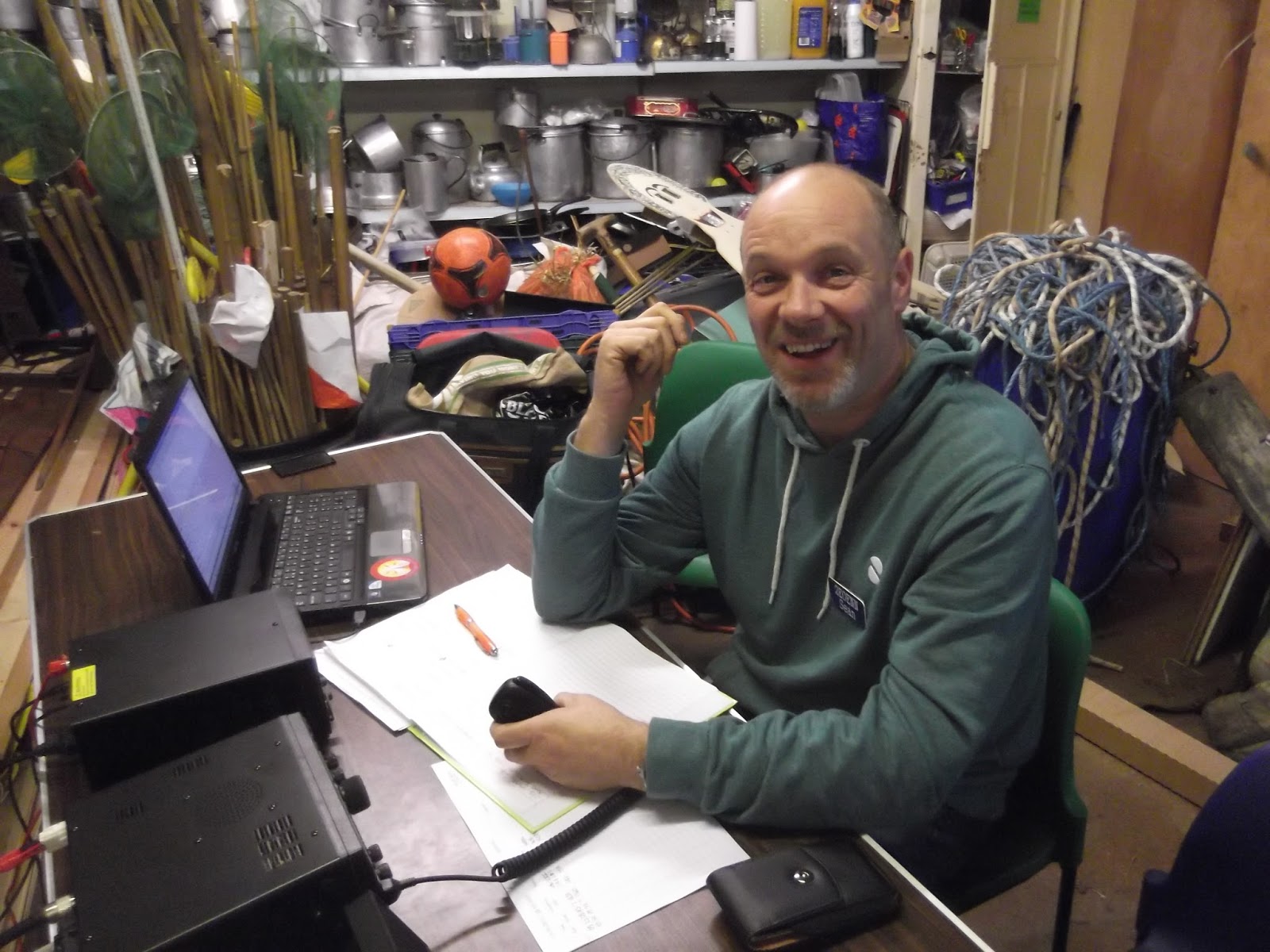
Together with Stewart (M0SDM), Sean (2E0ENN) and Konrad (2E0KVF) we spent an evening giving them a introduction to amateur radio. Konrad who is an ex-scout leader explained the hobby, Stewart and Sean helped them pass messages via a radio. There was also a timely visible pass of the International Space Station during the evening and I hoped they might be able to see it while I demonstrated transmitting APRS messages via the onboard digipeater.
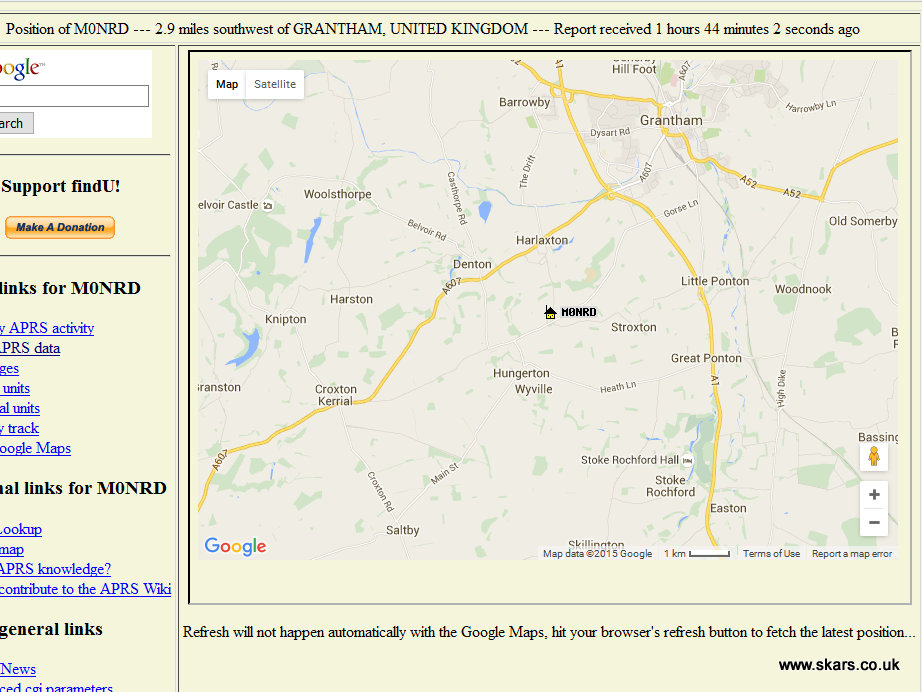
Using my new dual band Yagi, laptop and FT857D in the boot of my car I did successfully get messages digipeated and igated however the cloud and rain prevented the cubs seeing the ISS pass overhead (I put the coordinates in slightly wrong, so are shown slightly south of where we were)

The evening was a great success and the enthusiasm shown by the Scout leaders hopefully means SKARS will be involved in more activities for the Barrowby Scout group. Interestingly we were not the first local club they approached to assist but after they were given the cold shoulder by them we were happy to take up the challenge. The Barrowby group were also interested in being involved in the Jamboree on the Air (JOTA) next year.
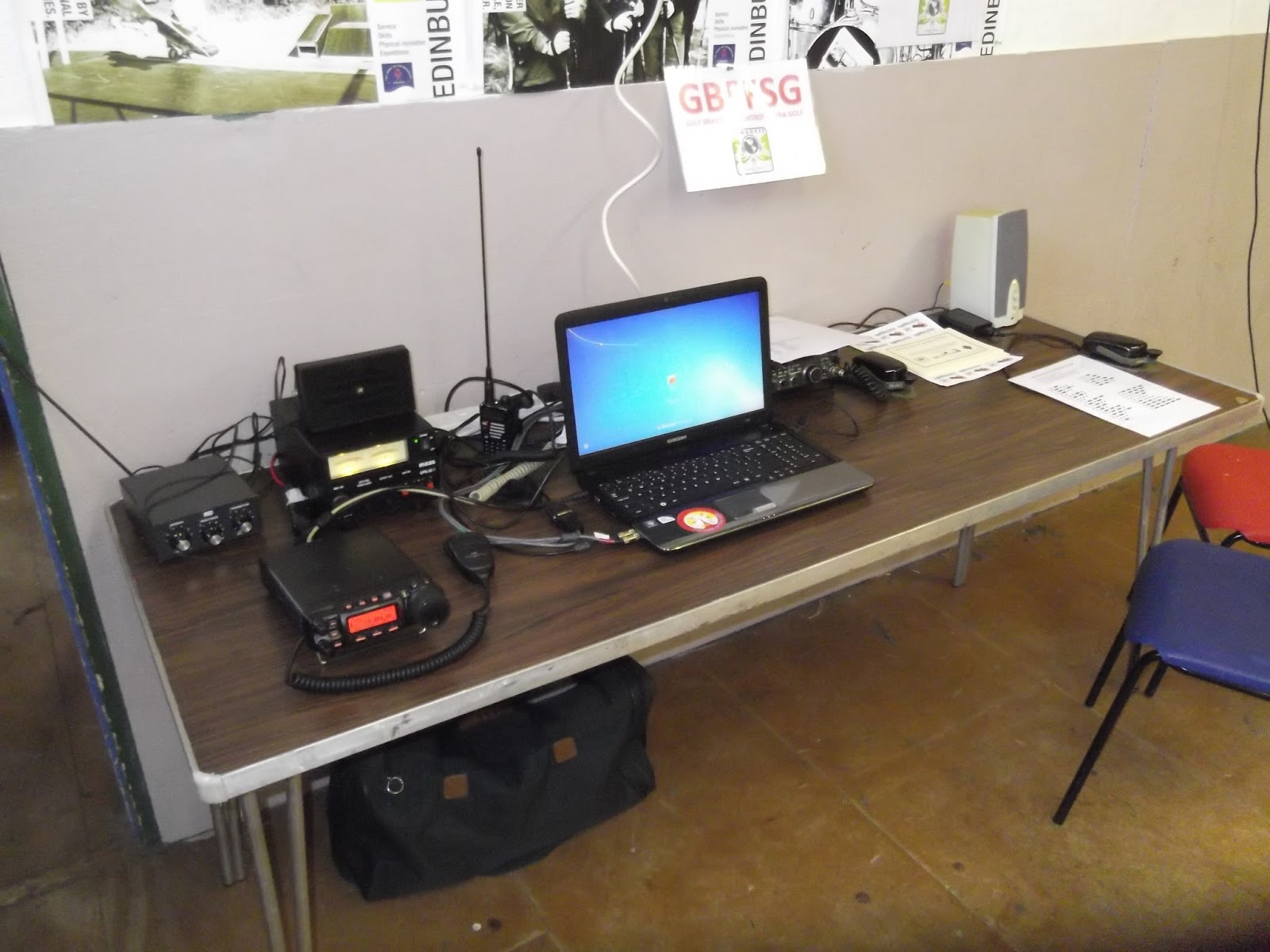
So on to the main event this week, the GB5FSG JOTA station, operated by Stewart, Sean and myself. It is exactly a year since I gained my full licence and this was my first Notice of Variation for a special event station, last year under the previous chairman we had run GB2FFC with some success but this year we hoped to improve the experience for the Cubs/Beavers and Scouts.
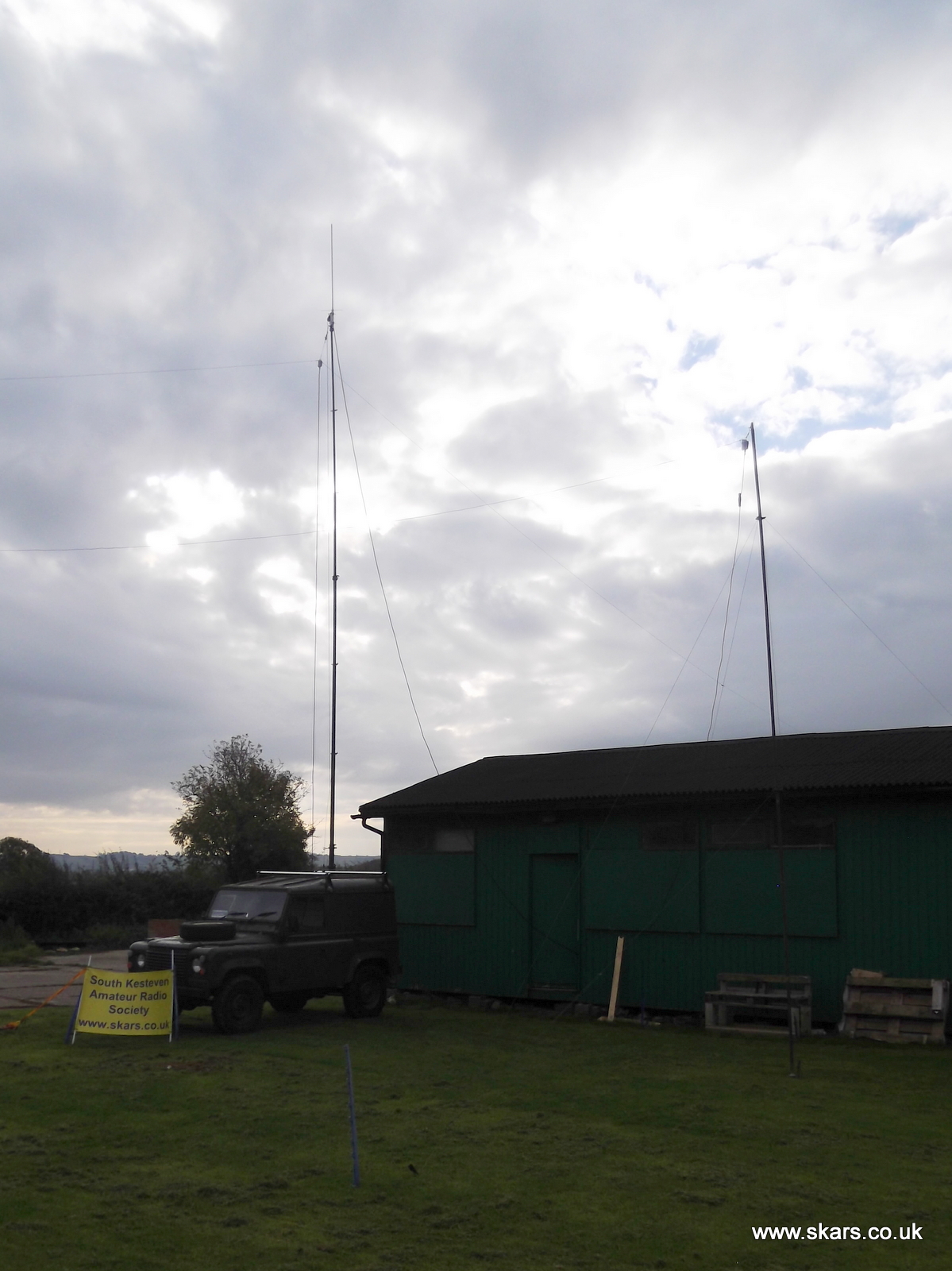
Firstly we had a much improved antenna installation, with Stewart's Land Rover and impressive pushup mast we had an excellent OCFD dipole, resonant on several bands including 40m along with another smaller pole holding up an end fed long wire for the datamode station. We also put up a collinear for a 2m VHF station.
Last year we were hampered by the noise of excitable children in the main room of the scout hut which made operating and hearing contacts difficult. This year we asked for some separation from the hubbub and had planned to use a tent. Instead we setup in the storage area in the back of the hut which proved ideal as it allowed us to control the number of children and allowed easier working conditions - it was a little chilly but much warmer than a tent would have been.
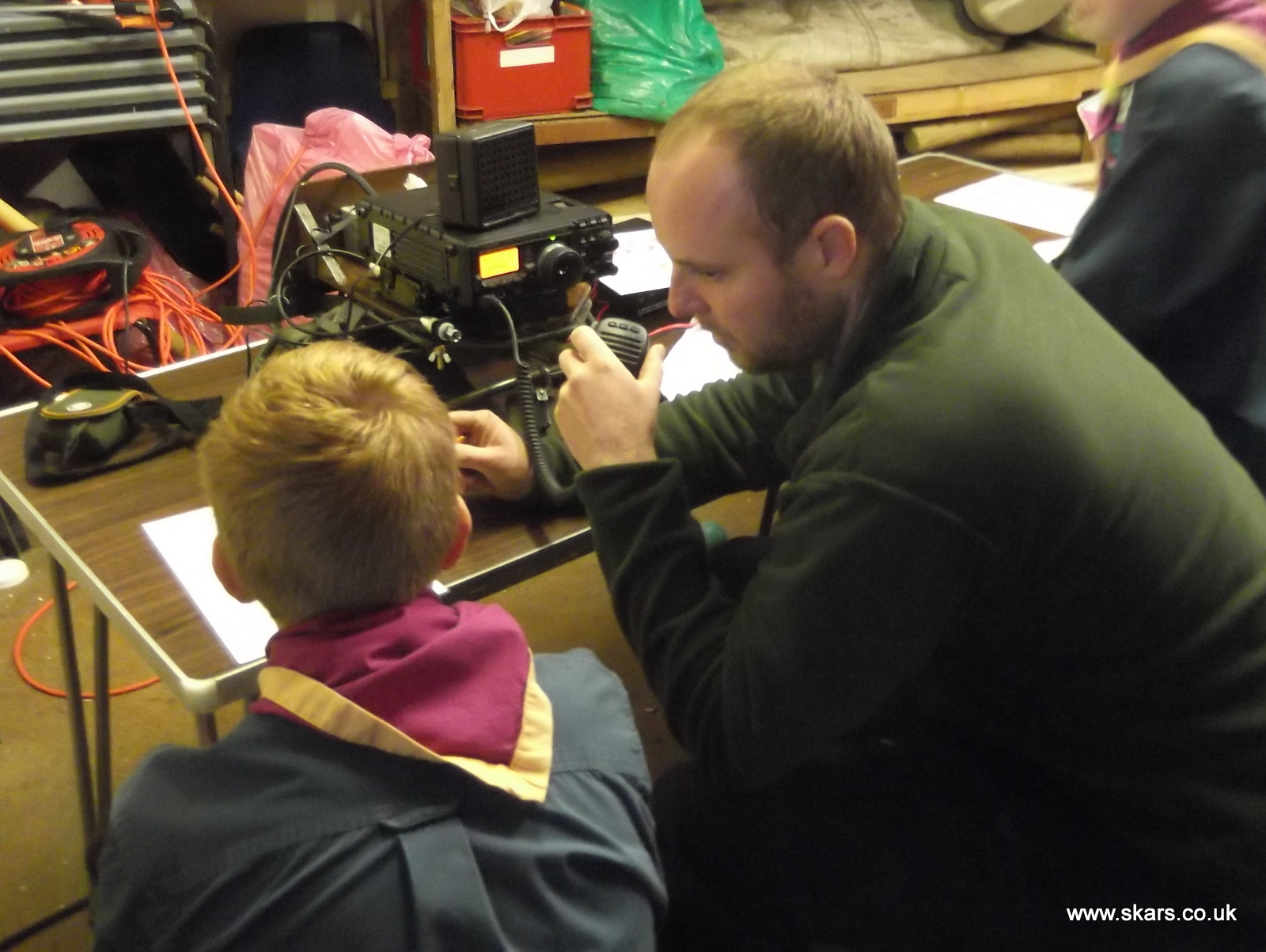
On Saturday we used Stewart's FT897 as the main HF rig, Sean operated a 2m meter station with a number of contacts. Like last year I had my FT857 operating a datamode (primarily PSK) but a damaged feeder issue curtailed this for most of the day and we soon concentrated on the HF SSB voice contact as conditions were good and the band was busy with other JOTA stations.
In keeping with the aims of JOTA we didn't chase numbers instead we had some lengthy quality contacts, including a marathon 30 minute plus contact with I believe was GB2WSG the 2nd Wellington Scout Group with lots of two-way greeting messages being sent to really give the children a full experience of using the radio.
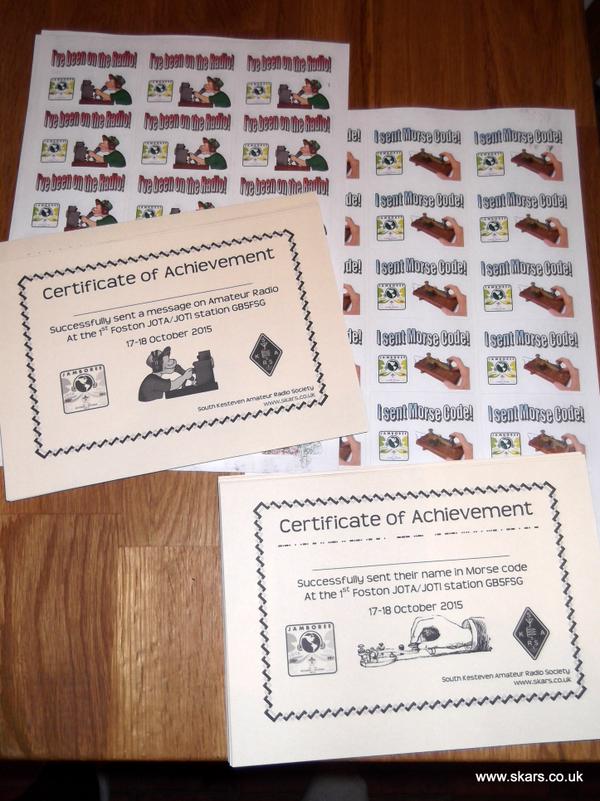
The day before I had quickly constructed a Morse code oscillator (since I didn't have one) using an arduino board and an old computer speaker for added volume and this proved popular as the children tapped out their own names, their friends names, call signs, their ages and various words.
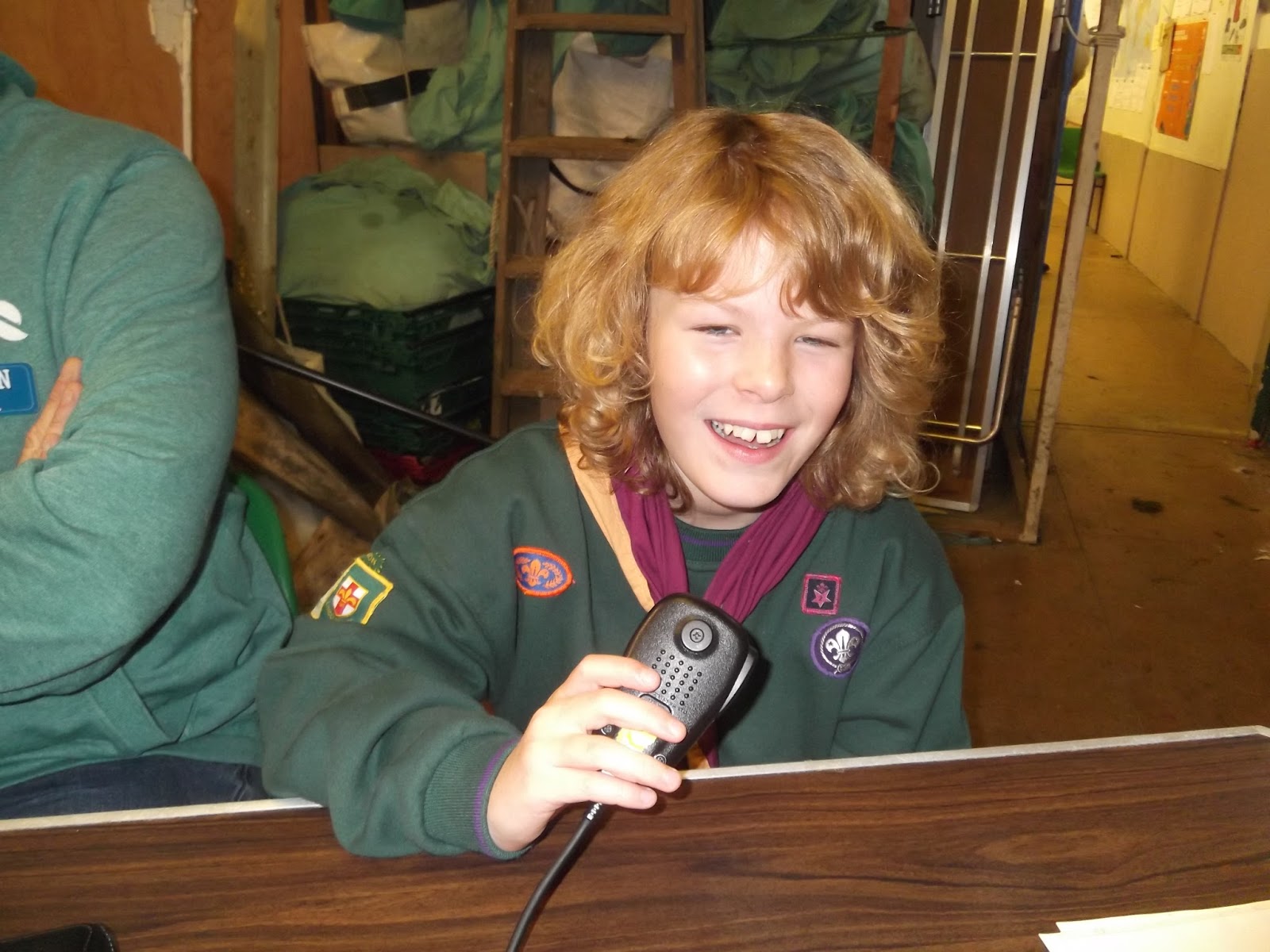
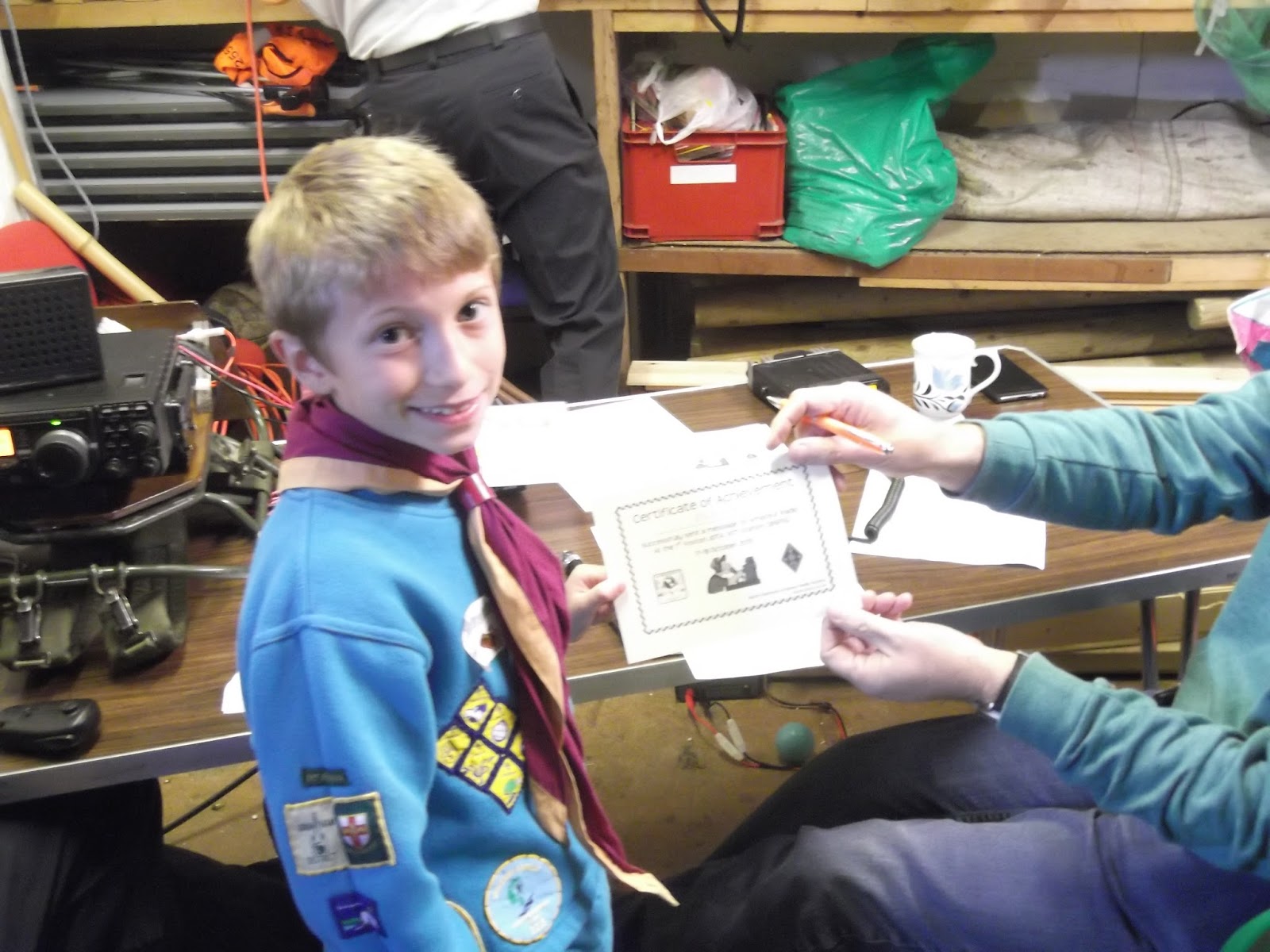
Working with the Scouts this week has really was a therapeutic exercise for my soul and made me glad I got licenced and was able to get involved with this. I am not naturally comfortable with children, since I am not a parent. But it was rewarding seeing the look of wonder on some of their faces as they passed messages.. like it was magic ;-)
Andrew Garratt, MØNRD, is a regular contributor to AmateurRadio.com and writes from East Midlands, England. Contact him at [email protected].
 Ham Radio Deluxe |
 W5SWL Electronics |
 Ham Radio Prep |
 KB3IFH QSL Cards  Hip Ham Shirts  HamRadioAuctions HamRadioAuctions Reliance Antennas Reliance Antennas Enigma Shop Enigma Shop |  morseDX  Ni4L Antennas  R&L Electronics R&L Electronics antennas.us antennas.us QRV QRV |
- Matt W1MST, Managing Editor
