 |
 Danger in Calm Seas
 30 December 2015 | by
 It’s tempting to say that amateur radio is about to close the book on its best year ever.
The number of licensees is up, attendance at Dayton Hamvention was up, participation in contests and other on-the-air operating events is up, the number of ARRL members is up too. The League has spent much of the year promoting the Amateur Radio Parity Act in Washington and is seeing real progress on that front.
When it comes to publicity, ham radio is HOT. Not a day goes by without a news item about our activities appearing in major publications — we’ve finally figure out how to proselytize our service!
Yes, it’s been a very good year for ham radio and it’s certainly nice to savor this moment…
There. Enough.
Now let’s look at the work that lies ahead in the New Year…
Amateur radio has weathered all kinds of storms, and there seems no immediate threat to our service. Of course, that might have been said by almost any US ham radio enthusiast on December 6, 1941 too. Still, our position seems as secure as it can as we face another year. But just like owning a home, our hobby requires constant maintenance and attention if we want it to be a secure dwelling that lasts a long time.
There’s always room for improvement, but I’ve compiled here a list of just three things that I believe to be the most vexing to the amateur radio service. These three things present a clear and present danger to our continued growth and enjoyment of the radio hobby.
Intentional Interference to DXpeditions
Whether you enjoy it or not, DXing is the crown jewel of amateur radio. There’s nothing else that we do that captures the imagination of fellow hobbyists and the unwashed masses, the way a DXpedition can. The human spirit craves adventure, like climbing into a boat to cross dangerous stretches of ocean only to arrive at some of the most remote and inhospitable places on the planet, for the sole purpose of handing out contacts to home-bound hams half a world away.
It is exhilaration squared!
But sadly, there are a few around the globe who derive pleasure from interfering with the activities from these exotic locales. And it’s enough of a problem to erode the patience of even stalwart DXers to continue the practice. After all, major DXpeditions require untold hours of planning and preparation. Large sums of money must be raised and passage on planes and boats booked. Permission must be obtained from whatever country pretends to be in charge of some rock in the ocean. And having cleared those hurtles and being completely at the mercy of HF propagation, to beat all those odds only to be foiled by some idiot intent on jamming the operation — who wouldn’t throw in the towel?
With no hope of convincing all of the mentally disturbed people around the planet who own transmitters to cut it out, the big operations are turning to technology for a solution. Maybe it will work or maybe it will become such a hassle that we all just give up in despair?
This is a big problem not only because we could lose an integral activity inside the hobby, but if a handful of radio terrorists can so easily ruin a DXpedition, then it’s fair to question the value of our service during an actual emergency.
And yes, these same mentally ill terrorists jam those communications too.
We’re Losing Ground in the Brain Game
Life on this planet is driven by technology yet shockingly few of its inhabitants have a clue about how anything works. I’m purposely trying to avoid the phrase, “the dumbing down of amateur radio”, because it might offend, but I believe it captures the essence of a festering problem. Our hobby is based on radio which in turn, is based on electronics. The days of new radio discoveries made by teenage radio hams burning the midnight oil in their basement laboratories is long past. But there needs to be at least a modicum of knowledge to keep this thing moving forward.
I don’t believe this trend was caused by changes in amateur radio licensing methodology. Eliminating the code requirement didn’t suddenly make people ignorant. Rather, it mirrors the trend of the general populace who now carry more technology in their shirt pocket than we took to the Moon in 1969 and yet have no clue how any of it works — or harbor any interest in finding out.
Fortunately, radio has advanced to the point where high-quality equipment can be purchased ready to use. We no longer have to build our stations from parts salvaged from a junked television chassis. Not all of us will have the knowledge or wizardry to design advanced electronic circuits or develop cutting edge software. But all of us have the ability to understand antennas, radio propagation, to learn how to properly check into a net, pass traffic, or prepare for emergency communications.
If the sum of your radio knowledge is how to work the push-to-talk button and chew the fat with your buddies, you might have an amateur radio license, but you’re not a radio ham.
Local clubs could take the lead here. We need a “no ham left behind” training policy. It is virtually impossible to run out of ideas for club meetings. Sessions on how to build a dipole, soldering, how and when to best use radio filters, repairing a rotor, working a satellite with a handheld, how to call CQ, how to work DX — including a lesson on split operation. The list is endless once you fully buy into the notion that every radio ham needs to know a hundred things and needs to be curious enough to learn a thousand more.
It’s no coincidence that Apple has become the most valuable corporation on the planet by selling high-tech gadgets that “just work”. That attitude may work (for a season) in the outside world, but the contagion of not knowing and not caring to learn technical things is a certain slow death for amateur radio.
Declining Activity and Interest
I’ve saved our biggest problem for last. While amateur radio licensing may be on the upswing in the United States, interest in our hobby continues to wane. We’ve gotten really good at getting “them” in the door, but we’re downright lousy when it comes to inspiring “them” to take advantage of all this hobby offers.
All of us use the excuse of not having ‘enough time’ to do all the things we would like to do. But that’s something of a cop out. The number of hours in a day, week, month or year haven’t changed from one generation to the next. What we choose to do during those hours is subject to change. It’s an attention deficit problem. During those times I’ve become very passionate about a particular activity, I’ve managed to pursue it almost without limit. Admit it, you have too.
Over 700,000 licensees in the FCC database yet only about one-third of those are actually “active”.
350,000 Technician licensees are floating out there yet one of the biggest complaints in all of hamdom is that thousands of repeaters sit silent and unused. When the random stranger does break squelch, no one answers his call.
Full participation isn’t realistic. There are doubtless thousands who continue to hold a license yet now reside in a nursing home or senior living facility without access to radio. Some are young and busy with career or starting a family. Others have taken time off to pursue a degree or specialized training. Since licenses are issued for ten years with a grace period before cancellation, it wouldn’t be surprising to discover that thousands of licensees are dead — their call signs not yet purged from the database.
Approach the data any way you like, it’s a major problem.
We’re going to have to discover new methods for getting hams motivated and activated. Sorry, the old ways are no longer valid. Just coming up with a new contest, for instance, won’t cut it because our lifestyle arrangements are considerably different in this new century. We’re more mobile, constantly on the move. Few of us under 60 years of age want to be quarantined in a radio “shack” for an entire weekend.
(I predict two-hour sprints will completely replace contest weekends in the coming decade).
The ARRL may have a hit on its hands with the upcoming National Parks on the Air event where they’ve combined the opportunity to operate from the trail with online ‘leaderboards’ to encourage further participation. I don’t know if this was intentional or merely leftover serendipity from their hugely successful Centennial QSO Party but it’s brilliant and we need more like it.
The decline in solar activity certainly won’t help motivate HF operators so we’re going to have to think outside the box. More VHF/UHF activities, six meters, and I’m hopefully optimistic that we will soon see a lot more ham radio activity in space — given the many new planned transponders and even a geo-synchronous payload.
Rekindling the flame for many who have lost interest and become radio inactive won’t be easy but it should become our top priority. In fact, I would suggest that clubs who are too busy cranking out new licensees to focus on this problem — are actually hurting the amateur radio service.
We don’t need more licensees. We need more active hams. Chew on that and see what you can come up with because, we need a solution and we need it fairly soon.

Jeff Davis, KE9V, is a regular contributor to AmateurRadio.com and writes from Indiana, USA.
2016 dreams…….I mean goals.

Mike Weir, VE9KK, is a regular contributor to AmateurRadio.com and writes from New Brunswick, Canada. Contact him at [email protected].
Now Casting: Ham Radio Experts for a TV Series
I received an e-mail from casting director Austin James of FSA Entertainment in Los Angeles about a new series he’s casting for a major cable network. He asked me to pass it along to you:

NOW CASTING RADIO EXPERTS
(Ham Radio, Shortwave/high frequency, technicians, enthusiasts/hobbyists)
AND ADVENTURERS WITH A THIRST FOR SOLVING MYSTERIES
FOR A NEW SERIES ON A MAJOR CABLE NETWORK!
Seeking a team made up of radio experts, code breakers and adventurers to embark on a mission to uncover the true meaning behind anonymous radio transmissions – “number stations.”
We are looking for experts who have thirst for solving mysteries, are adventurous & charismatic and have a STRONG knowledge of radio (including shortwave and Ham) as well as an interest in ‘number stations’ to be featured in this new and exciting series. We are looking for our ‘Indiana Jones’ of the shortwave world.
We are ALSO looking for ADVENTURERS – people who are not afraid to explore and investigate a wide range of worldwide mysteries; someone who is persistent, charismatic and fearless!
We are looking for people who have EXPERIENCE in travel, research and problem solving. For example: code crackers, techies, radio conspiracy theorists, private investigators, former FBI/CIA, hackers, former military, researchers, history buffs and urban explorers.
To be considered, please email the following information ASAP to: [email protected]
Please include:
- Name
- Age
- Phone number
- Email address
- Brief bio of you and your relevant experience to this (radio, explorer etc.)
- 2 recent photos
Matt Thomas, W1MST, is the managing editor of AmateurRadio.com. Contact him at [email protected].
Notes from the shack
 Over winter break I have been putting in a lot of time behind the radio. Here’s the wrap up:
First – more DX. In general, this is a good time of year to catch hams behind their rigs. Some contacts that I am particularly proud of:
4U1WB, The World Bank in Washington D.C.
ZD7DL, St Helena Island
WH6S, Kauai
C5YK, The Gambia
9H5BZ, Malta
MI5AFK, Northern Ireland
FG5GP, the island of Guadeloupe
ZS6TVB, South Africa
EA8DAZ, Canary Islands
VP2ETE, Anguilla
Second – working a lot of DX. There is the 90th anniversary of the International Amateur Radio Union (IARU) special event activations. Plenty of good DX participating in this and working multiple bands.
Cuba
Bermuda
Finland
Germany
Aruba
Venezuela
Jamaica
Ireland
Italy
Slovenia
Brazil
Third – working Santa (aka AA4EE) on Christmas Eve. The girls really enjoyed telling Santa what they wanted. Thank you Santa!
Four – joining the OMISS and the 3905 Century Club nets. I am not sure if I fully understand these nets. I get the convenience in pursuing Worked All States awards. That makes sense. However each club also has an additional bevy of other types of awards. The actual contacts during the nets seem a bit unfulfilling. But I may not yet fully understand these nets. I need to thoroughly read all the literature.
Five – Log of the World: I have uploaded the vast majority of my logs. I mentioned before about uploading my YI9MI logs. I also went back and uploaded my log from KD7PJQ back in Virginia. The logs from Korea (HL2/AD7MI and HL9MI) are now uploaded. All my logs using AD7MI have been uploaded.
Scott Hedberg, NØZB, is a regular contributor to AmateurRadio.com and writes from Kansas, USA. Contact him at [email protected].
An interesting challenge
http://ny4g.blogspot.com/2015/12/qrp-dxcc-challenge.html
He calls it "QRP Wars - The Morse Awakens".
Cute.
Now the question is - can it be done?
My answer is, "Yes, I think it can." Even with the worsening solar conditions. But (and there's alway's a "but") I think this competition favors those who are retired and can send mondo amounts of time on the radio. It also favors those of us on the East coast, who are closer to Europe and the Caribbean. And with the ARRL DX Contest which is held in February, if you really put your mind to it, it should be possible to work QRP DXCC within 100 days.
Am I going to put my money where my mouth is?
Not sure at this point. I just might try it for fun and just may keep a "diary" of the effort here on the blog - just for the halibut. Let me cogitate on it for a while. I have a couple of days left until 2016 rolls around.
72 de Larry W2LJ
QRP - When you care to send the very least!
Larry Makoski, W2LJ, is a regular contributor to AmateurRadio.com and writes from New Jersey, USA. Contact him at [email protected].
Great Circle Map Generator
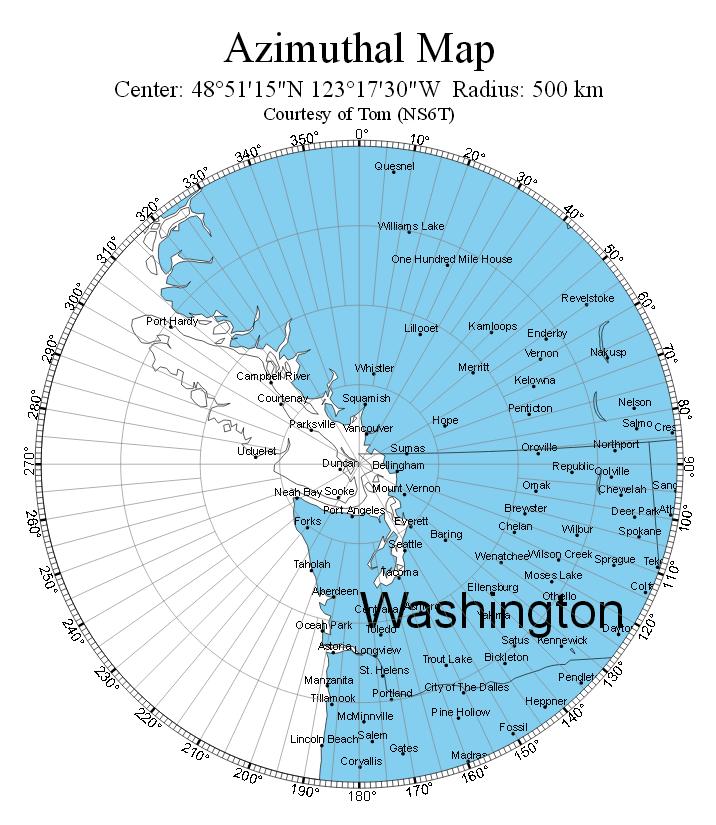
The map generator is the brainchild of Tom, NS6T, and can be found on his 'HAM STUFF' website along with some other interesting bits. The actual map generator can be found here.The user interface is simple and map generation times are fast. Anyone with a beam will likely be interested in this, should they not already have a great circle map for their present QTH.
I used my six-letter grid square identifier for centering the map. Depending on the 'distance' value used, one can tailor the map for local / regional work or for a worldwide setting.
This is the map generated for a distance unit of 500km and would be helpful for local VHF'ing:
This map was produced when a distance unit of 4500km was used ... nice for the 6m grid square hunter:

This worldwide map was produced with an input of 18000km:

Hopefully you might find the map generator of some value in your own shack.
Steve McDonald, VE7SL, is a regular contributor to AmateurRadio.com and writes from British Columbia, Canada. Contact him at [email protected].
Finer than a frog’s hair split twice
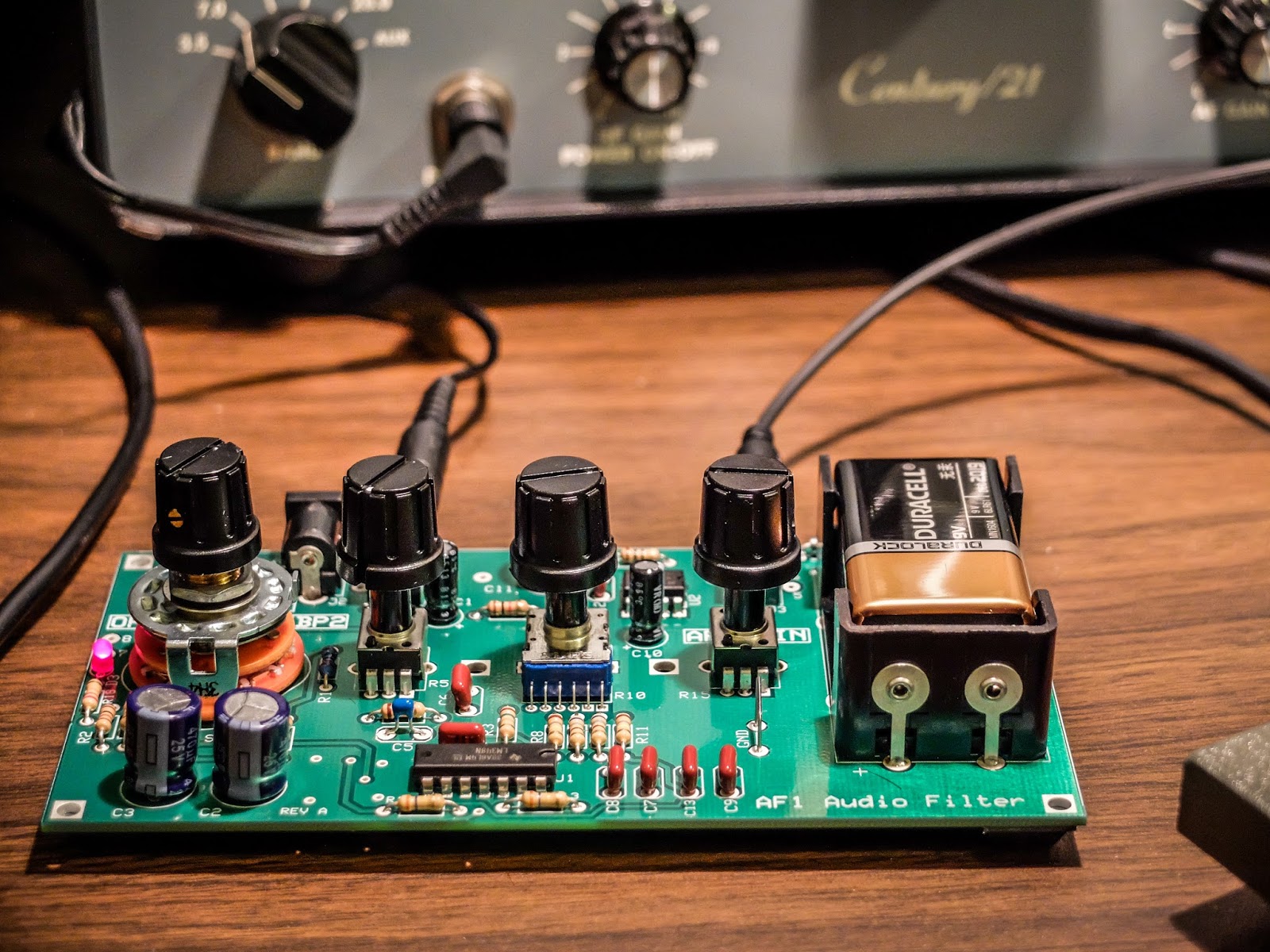
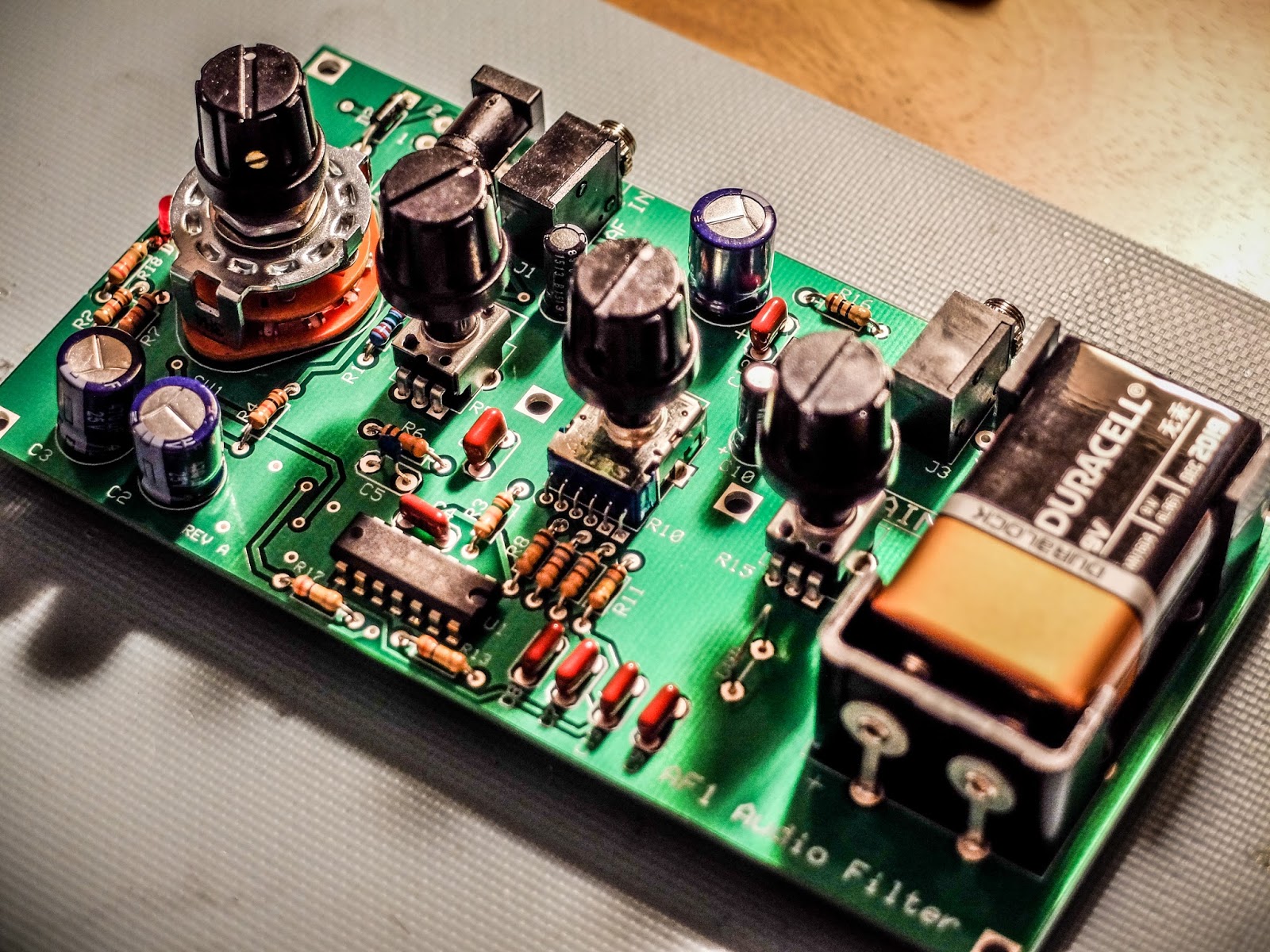
Elecraft AF-1 Audio Filter Kit
 |
| Elecraft AF-1 Audio Filter Kit |
Building the kit
Performance
Summary


Richard Carpenter, AA4OO, is a regular contributor to AmateurRadio.com and writes from North Carolina, USA. Contact him at [email protected].
 Ham Radio Deluxe |
 W5SWL Electronics |
 Ham Radio Prep |
 KB3IFH QSL Cards  Hip Ham Shirts  HamRadioAuctions HamRadioAuctions Reliance Antennas Reliance Antennas Enigma Shop Enigma Shop |  morseDX  Ni4L Antennas  R&L Electronics R&L Electronics antennas.us antennas.us QRV QRV |
- Matt W1MST, Managing Editor
