 |
 PAØRDT E-Probe Improved VLF Noise Performance
 13 February 2016 | by
  |
| courtesy: http://www.leeszuba.com/projects/ |
A recent blog posting of four videos showing the installation of a new (Roelof-made) PAØRDT active E-probe antenna revealed that there appeared to be a difference between his earlier model and his latest. It was noticed that the noise ingression levels were different between them, with one showing less noise on LF than on HF, while the other one behaved just the opposite. The newer PFU has the antenna ground isolated from the receiver's ground while the older one does not. Noise coupling, with the new one was higher on HF and lower on LF, which was just the opposite of what was noted with the older unit with its un-isolated ground ... overall LF performance over the newer system was deemed to be better as seen in the final video here.
The only difference seemed to be in the coupling isolation transformer, used in the power feed unit (PFU), likely similar to the one shown at the bottom of this page.
Roleof's transformers are wound on a Magnetics 0W40705TC toroid, whose high mu ferrite has an Al value of ~8350. I mentioned to Roelof that is seemed unusual that the noise levels would be greater on HF than on LF, with the new transformer, as usually it's the other way around when it comes to noise. The changes noted in the video lead to further transformer testing by Roelof, who indicated :
The isolating transformer consists of two bifilar windings on a high mu core. My guess is that the interwinding capacitance spoils the isolation at HF. I have just tested an isolating transformer with two separate windings opposite each other on the tiny core. Sure enough, this solves the feedthrough at HF and VLF performance is not impaired at all.
I have never given this a second thought as I believed it was specific for my location. Never too old to learn!
found the following.
The current transformer with a twisted bifilar winding is a
transmission line transformer. In a 50 ohm system, it covers 4 kHz (!) to 200 MHz at -3dB. Which is very good.
The new one, using the same core and separate windings is an other
story. It covers just 4 kHz to 8 MHz at -3dB. At 30 MHz the loss is
13 dB. So, excellent for VLF / LF/ MF, it won't do for upper HF.
I will try other core material and see if a feasible compromise is
possible.
To be continued.
further...
I first tried a FT-37-43 toroid with 10 turns for each winding.
This core is suitable for higher frequencies and I expected it to
work better than my high mu (8300) cores.
Nope, it was far worse and at 30 MHz the loss was already > 20 dB.
I reverted back to my magical cores and reduced the number of turns
to 3. This yielded a nice bandwidth (-3dB)from 50 kHz to 50 MHz.
Used in the mini-whip interface, there is no more a difference
between shared grounds and isolated grounds on either VLF / LF or
HF.
Though the lower -3dB point is at 50 kHz, I still have excellent
reception of the Russian Alpha stations between 10 and 15 kHz.
It looks like this transformer is an excellent compromise for this
purpose.
I have often found that in practice, high mu cores are excellent for
wideband transmission line transformers. They are good for
traditional rf transformers as well!
and:
I just have tested a binocular core, the BN-73-202, available from
W8DIZ.
With two windings of two turns each of insulated hook up wire (to
keep interwinding capacitance low), gives a transformer from 80 kHz
to over 100 MHz. In practice reception down to 10 kHz is still
excellent.
There is no difference between isolated or common grounds either.
The coupling with this binocular core is a little better than with a
toroid. At LF / MW, I don't find any loss at all.
The FT-50-75 will do fine with two windings of 4 turns each.
I have some FT-50-77 cores at hand and will see how they work out.
I am surprised at the wide bandwidth that can be achieved.
and:
I have been testing a FT-50-77 ferrite toroid for use as wideband
isolation transformer.
Three turns on the Magnetics (aka magical) cores, give an inductance
of 60 uH. Used as a wideband Isolation transformer, the -3dB
bandwidth ranges from 80 kHz to 50 MHz.
For about the same inductance, the FT-50-77 core needs 6 windings.
Used as wideband isolation transformer, the lower - 3dB point is 100
kHz, the upper is 12 MHz. At 30 MHz the loss is already 8.5 dB.
Though not suitable as wideband isolating transformer, it still can
be used for the range 100 kHz - 3 MHz.
It looks that for good wideband performance the Al value must be >
5000 and the number of turns should be =< 3.
Interesting stuff and the best thing is that it has really lowered
my noise floor!
A summary posting to the RSGB's LF reflector indicates that the new transformer scheme is providing quieter VLF reception and good performance up to 200MHz
For years, I have been using a rf - isolating transformer to
separate antenna and receiver ground.
This is a home made transmission line transformer, consisting of 11
bifilar turns on a small high mu toroid (AL=8300). The inductance is
1.2 mH. The measured -3dB bandwidth in a 50 ohm system covers 4 kHz
- 200 MHz.
It appeared that the isolation was not perfect, due to the
inter-winding capacitance. I have made a new transformer on the same
core with two windings of each tree turns. The windings are opposite
each other on the core. The bandwidth is now 45 kHz - 50 MHz. The
loss is 1.3 dB.
Despite the raise in the lower -3dB point, reception at VLF is much
improved due to lower noise ingress. See attachment.
The screen runs from 1 kHz - 13 kHz. At the right hand the dashes
from the Russian Alpha system can be seen. The white band is with
common ground. Harmonics of the 50 Hz mains can be easily spotted.
In reality the picture will be better,as the sensitivity of the
PERSEUS drops considerable below 10 kHz.
The level of interference on 380 kHz caused by a plasma TV in the
neighbourhood is also much reduced.

An excellent video demonstrating the dramatic effects of isolating the ground in the e-probe antenna system on LF was posted today by PY3CRX. Marcus used the Magnetics hi-mu core with 5 + 5 turns (~ 390 + 390 uh).
For those not having access to the Magnetics material, it looks like the BN-73-202 binocular core is a good performer, from 10kHz - 100MHz. The FT-75 and 77 material also fair well but with differing bandwidths. Cores are available from Amidon as well as from W8DIZ's Kits & Parts.
Steve McDonald, VE7SL, is a regular contributor to AmateurRadio.com and writes from British Columbia, Canada. Contact him at [email protected].
Amateur Radio Weekly – Issue 98

Ham radio licenses at all-time high
Amateur Radio (ham radio) has been around for more than 100 years. The United States government began licensing Amateur Radio operators in 1912.
Ironton Tribune
History of HamTV on the ISS
February 11th was a historic event: Tim Peake activated the Ham Video transmitter on board Columbus.
AMSAT UK
KiwiSDR: 30 MHz bandwidth SDR for VLF/LF/MF/HF
The KiwiSDR is an up and coming VLF/LF/MF/HF capable SDR that has a large 30 MHz of instantaneous bandwidth and coverage from 10 kHz to 30 MHz. It is designed to be low cost and used as an online internet based SDR in a similar way to how WebSDR is used.
RTL-SDR.com
Ham Radio In The Back Country
I recorded the lat/long coordinates supplied by my D72 that I had set up to manually beacon as VE6AB-7 and was being heard and digipeated by my APRS weather station VE6AB-8 mounted in the cargo bay of my mobile parked on a forestry road a kilometer or so away.
Jerry’s Journal
Hack A Day is looking for writers
Contributors are hired as private contractors and paid for each post. You should have the technical expertise to understand the projects you write about, and a passion for the wide range of topics we feature.
Hack A Day
Protecting the Elecraft KX3 on the Hills
Protection of my expensive investment (well, the KX3 isn’t cheap is it?!) is paramount and I have three stages.
M0JCQ’s Ham Blog
How to
Ham solar energy plant: 100 watts For $300
The Off Grid Ham 100 Watts for $300 Solar Energy Plant will produce reliable power but is a no frills affair.
Off Grid Ham
The Beautiful Genius Load
Up to now I only had one dummy load and it was built into my MFJ Deluxe Versa Tuner II so I thought it was high time to have something a bit more portable.
Ham Radio – QRP
How to decode maritime broadcasts in RTTY, Sitor B, and NAVTEX
Non-voice high seas weather broadcasts and safety messages to mariners can be found by spinning your VFO dial to 8.472 MHz USB.
The SWLing Post
Video
Speedy Cutover Service, SXS switching cutover to ESS
With the speedy cutover service – 51 installers simultaneously cutting 927 cables as fast as possible, all on cue – the interrupted service could be brought down to well under a single minute.
AT&T Tech Channel
Decoding DMR on OS X using an RTL SDR and DSD Plus
This video shows that decoding DMR using DSD+ command line tool is possible on a Mac running OSX
YouTube
Demonstration of radio frequency interference
RFI simply means that there is a part in the radio spectrum that we wouldn’t like to see, it is usually unintentionally caused by devices around us .
YouTube
Amateur Radio Weekly is curated by Cale Mooth K4HCK. Sign up free to receive ham radio's most relevant news, projects, technology and events by e-mail each week at http://www.hamweekly.com.
PART1: Mod for Signalink USB so it can be used with 2 radios
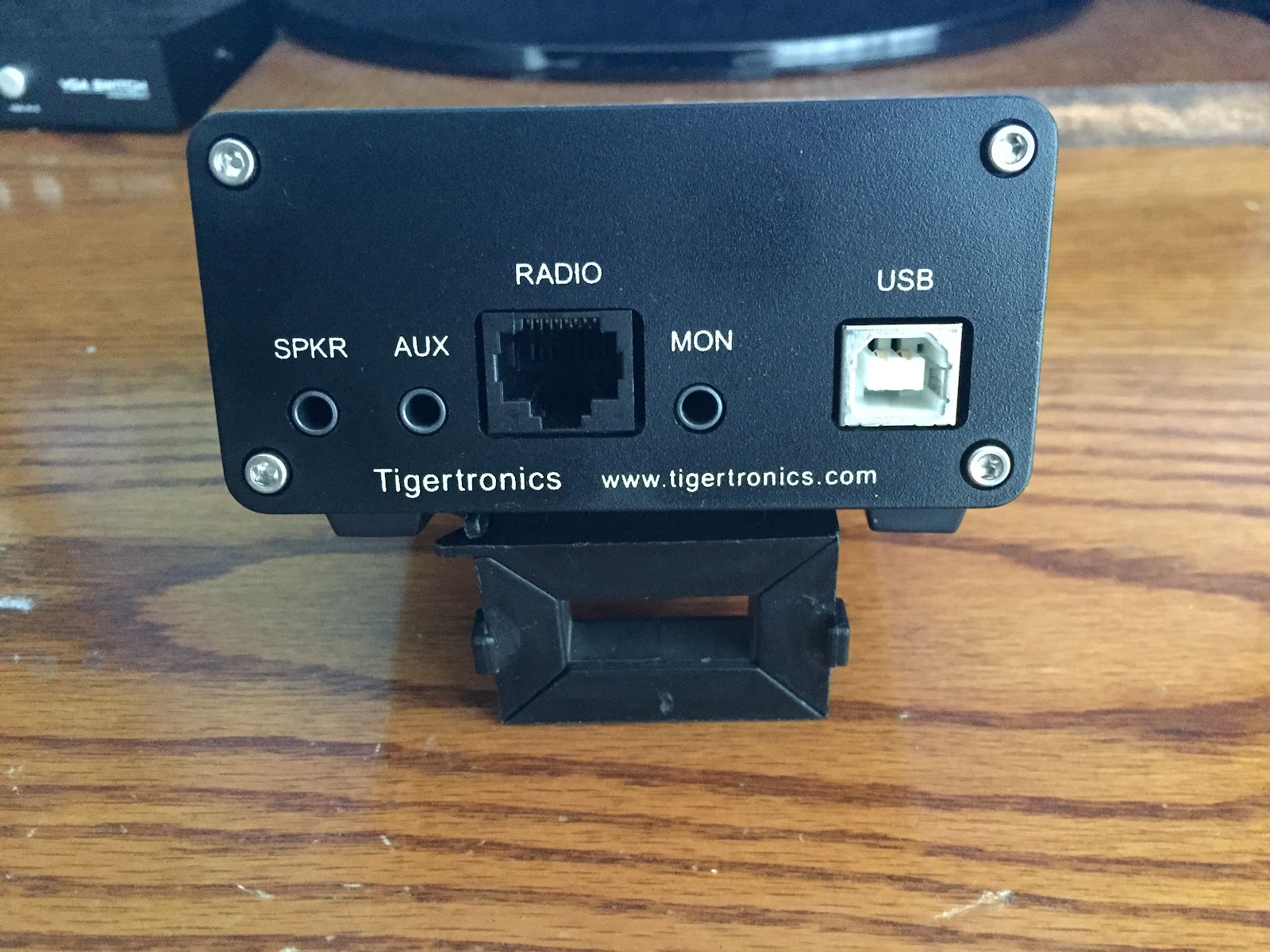 |
| Rear view before the mod's |
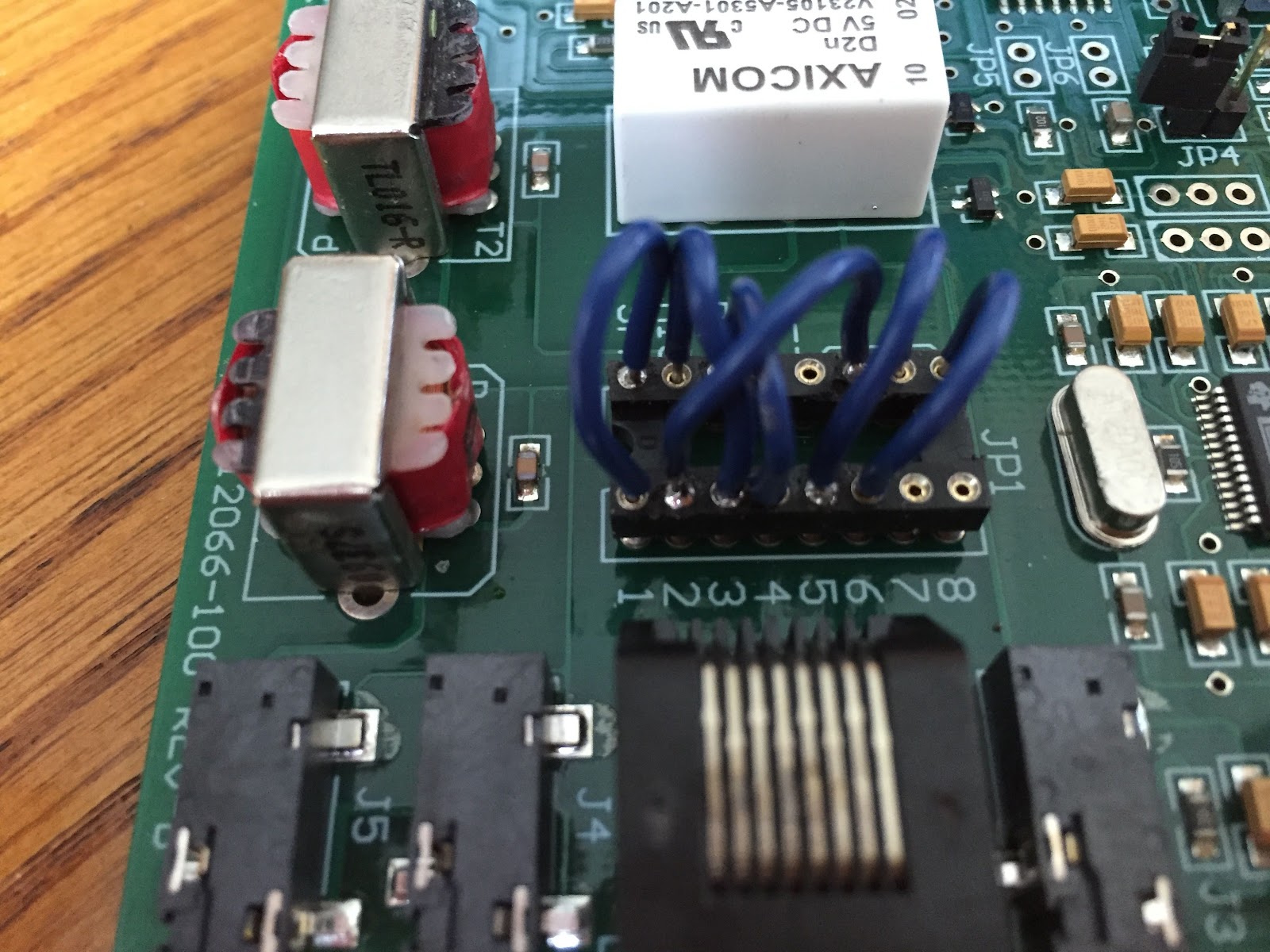 |
| Soldered jumpers |
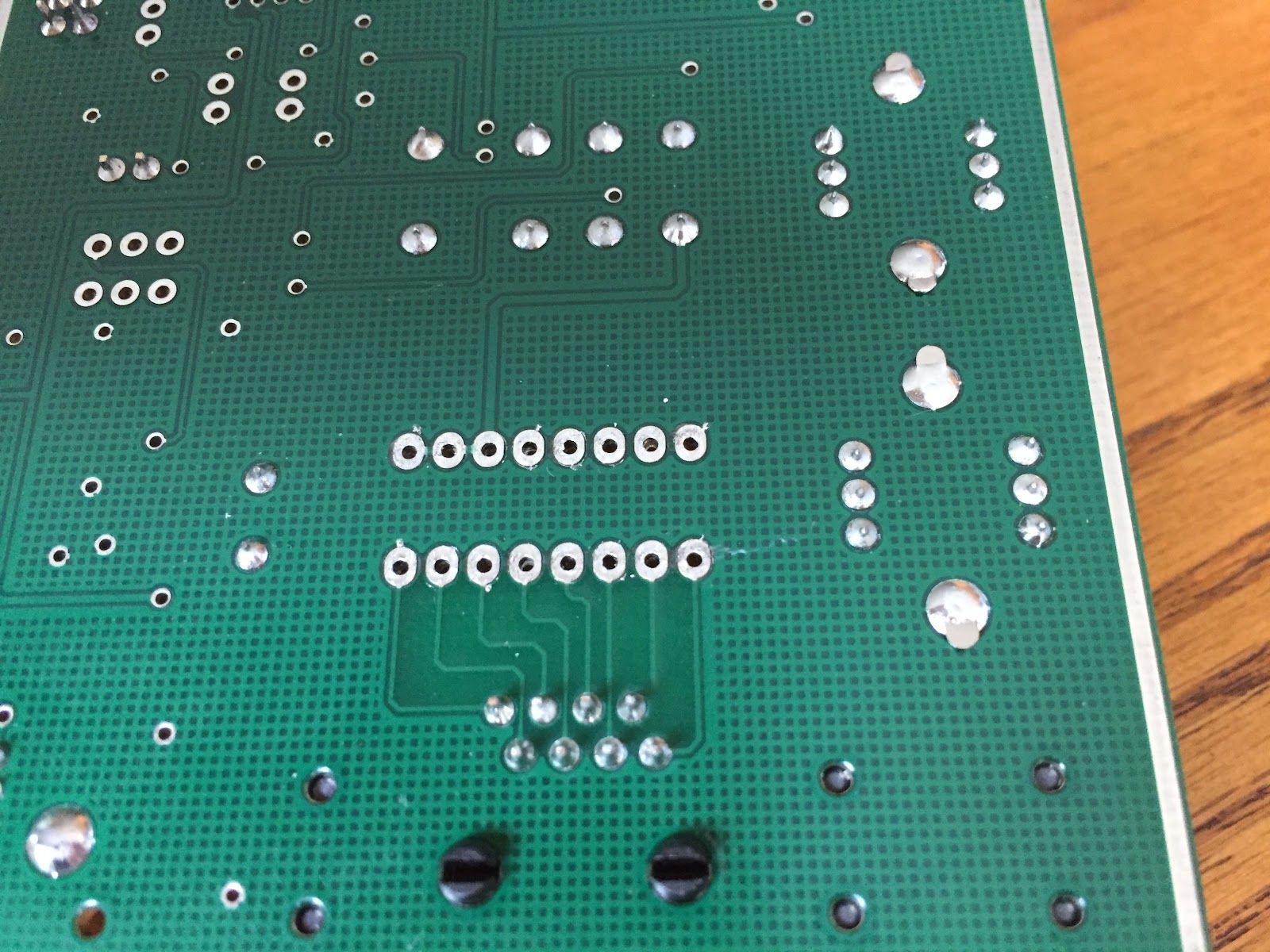 |
| After the Hakko 808 is done |
Mike Weir, VE9KK, is a regular contributor to AmateurRadio.com and writes from New Brunswick, Canada. Contact him at [email protected].
Minima Digital Board
After procrastinating for a very long time I finally summoned up the ‘whatever it was I needed to summon up’ to get a move on with the Minima transceiver. I planned on tackling the digital board first as it seemed logical. It did however need me to solder an Si570 onto the board without any solder paste. So it was going to be a bit of a struggle.
The method I chose was to put a healthy load of flux on the pads and a blob on both of the ends. Align the chip then solder one end, applying a small amount of pressure onto the chip. Then the other end, then back to the first and then to the second again. Making sure I had seated it correctly. after that the other pads seemed dead easy.
The result was that it worked (I think). Although I am unsure as to why is does stay on a single frequency. This will need a bit of looking at. Here’s a very brief video.
Alex Hill, G7KSE, is a regular contributor to AmateurRadio.com and writes from Cumbria, UK. Contact him at [email protected].
CW Lives!
 |
| courtesy: https://www.dvidshub.net/new |
Well it seems as if the U.S. Navy has rediscovered something that most hams, especially older ones, have know for a long time ... CW is pretty darn handy!
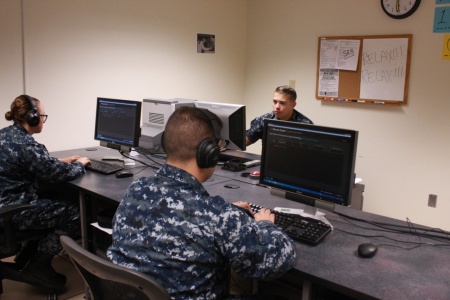
After many years of abandonment by the various branches of the armed forces, the Navy has taken another look at the usefulness of knowing how to use CW and has been training a limited number of their Cryptologic Technicians (CTR's) each year, at the Center for Information Dominance (CID) based at Corry Station in Pensacola, Florida,
I've always absolutely loved CW, ever since first learning it at around twelve years of age, eventually using my new-found skill to help me get a ticket when I turned fifteen. A big stumbling-block for many, the requirement to send and receive CW was eventually eliminated with the introduction of the no-code licence and had many hams believing it would be the end of ham radio.
As the Coast Guard and maritimers around the world abandoned CW, somehow, it has managed to not only survive, but to seemingly flourish on the ham bands. Granted, operating habits and patterns may be changing and fewer stations are to be found, randomly CQ-ing, seeking a nice CW ragchew, but a short listen during any contest weekend or during a rare DX-pedition pileup will quickly reveal that the art of CW itself is still alive and well in 2016!
One of the reasons for CW's longevity, aside from the fact that it's just plain fun, is it's ability to be understood under the worst of conditions, unlike many other modes ... and it can be used with the simplest of equipment, without needing a computer.
 |
| courtesy: https://www.dvidshub.net/new |
"In the updated course, sailors learn how to operate radio-receiving and associated computer-based equipment. From basic safeguards of security to communication procedures and systems theory to operation of communications equipment, the course teaches how to intercept Morse communications, as well as copy and send Morse code."
"Morse code continues to be an inexpensive and efficient means of communication for many states throughout the globe,” said Senior Chief Cryptologic Technician (Collection) (IDW/NAC/SW/AW) Tony Gonzales, CTR rate training manager for CID headquarters. “Manual Morse operators here at Corry Station are learning a skill set that has stood the test of time. Many of our most senior CTRs began their careers as Manual Morse operators.”
Somehow, it's very gratifying to see that the Navy is still keen on training sailors in the art ... affirming what hams have known since the earliest days of radio.
It's not clear if these folks are learning to actually send with a hand key or keyer but I rather suspect that their sending skills may be limited to how fast they can type as I don't see any keys in the training-center's photos ... but it's a start.
Maybe we'll hear a few of them on CW sometime in the future.
Steve McDonald, VE7SL, is a regular contributor to AmateurRadio.com and writes from British Columbia, Canada. Contact him at [email protected].
KX3 and FT817
Further to my earlier comments in a blog post yesterday, I have received several comments about both rigs. The general view remains that the performance of the KX3 exceeds that of the FT817ND although it is in many ways less suited to field use than the FT817.
I have never owned owned a KX3 as these are very expensive in the UK. I own both a very old FT817 and a recent FT817ND. For the modes I use mostly, the FT817s do a great job. I just wish Elecraft radios were not so expensive and looked, and were, more robust. I for one would think twice about using an expensive KX3 as a field radio. I am sure they work really well, but they look flimsy. A fully loaded KX3 is currently more than twice the cost of the FT817, which is a fine radio. My FT817 gets used from MF (with my homebrew transverter) all the way to 70cms. The FT817 has worked all over the world, including indoor handheld SSB QSOs with the USA.
For the avoidance of any doubt I love the FT817 radios and would like a KX3 for home use, if the latter was less expensive. My views, others may not agree.

Roger Lapthorn, G3XBM, is a regular contributor to AmateurRadio.com and writes from Cambridge, England.
630m Midwinter Summary
Friday and Saturday evening's 'Midwinter 630m Activity' event was an interesting demonstration of the band's capability and, by most accounts, a real success.
At first-glance, the propagation gods appeared to favor Friday night but I'm not really so sure as both nights were quite different.
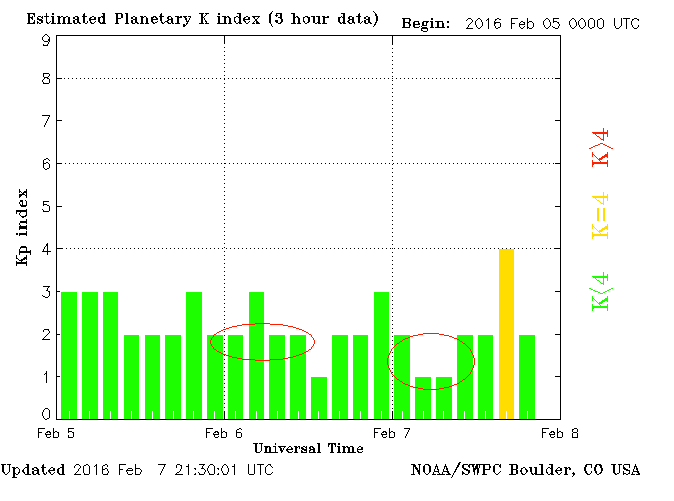
Friday night's extremely high winds and pounding rain played havoc with most of the west coast antenna systems, producing fluctuating SWR's and scopematch traces dancing crazily for most of the night. Geomagnetic conditions were playing tricks on both evenings as well, with the K-index varying between '1' and '4' ... but the sudden dip to '1' on Saturday night was immediately obvious out west. Stations that had struggled to hear any signs of the CQ-ing VE7's suddenly reported aural reception and several quick contacts were made before calling it a night at around 0700Z. Some of the lower ERP stations were never able to crack the Saturday night, generally high, K-curtain, making for a less interesting night.
 |
| courtesy: NOAA and http://www.solarham.net/planetk.htm |
The highlight of the event was assuredly the activity from Canada's most recent arrival to the band, Mitch (VE3OT) in London, Ontario. A veteran 2200m operator, Mitch recently modified his system to add 630m capability and after a few setbacks, managed to provide a lot of excitement for the crossbanders back east. I'm sure that Mitch's participation has resulted in many eastern amateurs making plans for 630m in the months ahead.
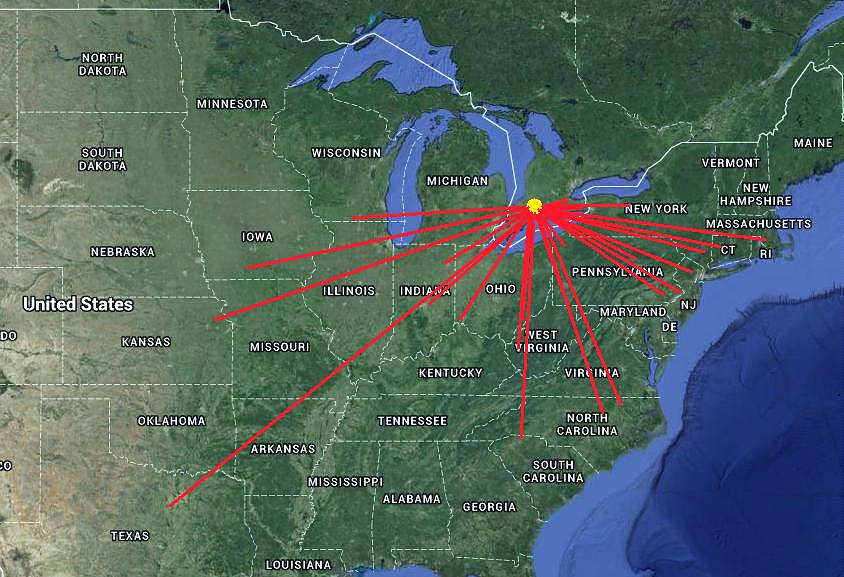
Mitch managed twenty-five two-way crossband contacts, all along the eastern seaboard and as far south as Texas, with his well-heard 200W and 340' backyard loop ... proving once again that you don't need to live in the country with several acres to have a ton of fun on 630m!
 |
| VE3OT's Crossband Coverage courtesy: https://www.google.ca/maps |
An interesting observation, noticed during previous events and reconfirmed once again, is the ability of the smaller and lower antennas used by some of the city stations, to propagate much stronger signals into closer regions such as Washington, Oregon and northern California.
On more than one occasion, my signal was reported as 'unreadable' or 'just above the noise floor', while the other backyarders were reported with, sometimes, 'booming' signals. I can only surmise that these antennas offer more high-angled (NVIS-like) radiation compared with my high seaside inverted-L, which likely has a lower takeoff angle ... Saturday night's activity tended to back up this observation. When it comes down to it, I think that all amateur 630m antennas are basically NVIS radiators due to their small size and low height but some are just a tiny bit 'less NVIS' than others!
As conditions enjoyed a short spike late on Saturday evening, NO3M and WA3TTS, both in Pennsylvania, reported good reception of my CQ's and crossband QSO's were quickly completed with both stations, as well as with KB5NJD in Texas. During the short propagation lift, ABØCW, in Colorado, also called in for a quick exchange, indicating that my previously unheard signal had quickly built from nothing to a 549.
Another highlight of the night was a report from Paul, K7CW, from his quiet receiving location in Tahuya, Washington. Paul reports reception of both VE3OT and VO1NA, with the latter being a 'first' from the west coast!
Hi Steve,
Here is my report of things I took part in or observed tonight:
0204Z - Worked VE7SL 473/3566 kHz RST 559.
0209Z - Worked VE7CNF 476.5/3558 kHz Pretty fast QSB RST 529 to 559.
0214Z - 0409Z WG2XSV 476.1 Beacon RST 559. Announced QRT and QSY at 0409Z.
0219Z - Heard VO1NA 477.4 kHz Weak with QSB. I could get or or three characters now and then. Too weak to attempt a QSO. Signal faded to nothing after about 15 minutes.
0225Z - Heard VE3OT 477.0 kHz Weak but much better than VO1NA. Also with QSB fading to nothing. I called several times, but couldn't tell if he came back to me. Strong enough to make a hopeful try. Also disappeared after about 15 minutes.
0241Z - Came across WD2XSH/20 RST 599+ in QSO with WH2XGP RST 589. 474.5 kHz.
0300Z - WD2XSH/20 472.0 599+ now in beacon mode.
0400Z - VE7BDQ 474.0 kHz RST 539 showed up and called CQ twice. I responded on 3555 kHz, but he did not call me back. He then disappeared from the QRG. There was a strong birdie on 475 kHz, but I don't think VA7MM came on.
0409Z - WG2XSV 476.1 Beacon interrupted by announcement of QRT and QSY.
0434Z - Came across VE7BDQ 474.0 kHz again calling CQ. He worked VA7JX, but apparently couldn't hear me.
With that, I took one more look for VO1NA and stopped.
Another interesting night.
73, Paul K7CW
Thanks also to AI8Z in Colorado and W7OIL in Washington for submitting reception reports!
THE LOGS
From Mitch, VE3OT, in London, ON:
Friday night:
NØFW (OH)
WA3TTS (PA)
KB5NJD (TX)
K4LY (SC)
K3OO (PA)
VE3MM (ON)
N4PY (NC)
WA9ETW (WI)
K9LA (IN)
NO3M (PA)
N2TK (NY)
KK8X (MI)
N2ZK (NY)
N8RR (WV)
VA3SC (ON)
Saturday night:
WD8DSB (IN)
K3UL ( PA)
WB2QMY (NJ)
AA1P (MA)
W2JEK (NJ)
WA3LAB (PA)
K3PA (KS)
NF4C (NC)
W1VD (CT)
WØJW (IA)
From Joe, VO1NA, in Torbay, NF:
N1CGP (ME)
VO1FOG
VO1BQ
reception reports from around the province, almost all reporting
a positive reception. Also got reports from DF6NM and PAØRDT
From John, VE7BDQ, in Delta, BC. (a description of John's station as well as other VE7's, can all be viewed here):
KGØD/7 (WA)
KU7Z (UT)
VE7KW
WØYSE/7 (WA)
VE7BGJ
W6RKC (CA)
WB2AWQ (NV)
VE7CNF
VA7MM
VE7SL
VA7JX
From Toby, VE7CNF, in Burnaby, BC:
Friday night:
KU7Z (UT)
WØYSE/7 (WA)
VE7KW
VE7BGJ
KGØD/7 (WA)
W6RKC (CA)
VE7BDQ
VA7MM
Saturday night:
K7CW (WA)
N7BYD (MT)
WØYSE/7 (WA)
VE7SL
VA7MM
As well, Toby was copied on QRSS3 mode in Illinois, late Saturday night.
From Mark, VA7MM, in Port Coquitlam, BC:
VE7KW
KU7D (UT)
VE7BGJ
WØYSE/7 (WA)
W6RKC (CA)
Beacon copied: WD2XSH/2Ø 472 kHz
Report of my signal received from N6SKM
Saturday night:
VE7BDQ
VE7SL
VE7CNF
From myself, VE7SL, on Mayne Island, BC:
Friday night:
VE7KW
KU7Z (UT)
W6RKC (CA)
VE7BGJ
KB5NJD (TX)
NO3M (PA)
KGØD/7 (WA)
VA7MM
WØYSE/7 (WA)
WB2AWQ (NV)
Saturday night:
K7CW (WA)
VE7CNF
VA7CNF
VA7JX
K7SF (OR)
VE7BDQ
KB5NJD (TX)
N7BYD (MT)
WØYSE/7 (WA)
NO3M (PA)
ABØCW (CO)
WA3TTS (PA)
VA7MM
For an even more detailed description of the weekend event, see KB5NJD's 630m blogs here.
Thanks to all participants ... you have created another successful 630m operating event. Hopefully U.S. amateurs will have access to the band before next winter, allowing all of the two-way activity to take place within the band itself ... how different that will be! Otherwise, another crossband weekend will be in store for the fall of 2016!
Steve McDonald, VE7SL, is a regular contributor to AmateurRadio.com and writes from British Columbia, Canada. Contact him at [email protected].
 Ham Radio Deluxe |
 W5SWL Electronics |
 Ham Radio Prep |
 KB3IFH QSL Cards  Hip Ham Shirts  HamRadioAuctions HamRadioAuctions Reliance Antennas Reliance Antennas Enigma Shop Enigma Shop |  morseDX  Ni4L Antennas  R&L Electronics R&L Electronics antennas.us antennas.us QRV QRV |
- Matt W1MST, Managing Editor
