 |
 For those of us who are less technically inclined.
 29 February 2016 | by
 For those of you in the same boat, I would highly recommend the contents of the You Tube channel provided and maintained by Alan Wolke W2AEW. Alan is a fellow member of the Raritan Valley Radio Club. As a VE, I've attended a couple of Ham Crams where Alan was the lead instructor - I can readily testify that Alan knows his stuff, inside and out, upside down and backwards.
Alan has "The Knack" in more ways than one. Not only is he technically gifted, but the also has the ability to take the Greek out of electronics (no offense to my friends from Greece or of Greek decent), and make difficult concepts understandable, in plain English. And that's a pretty good talent to have when you're a Technical Specialist for Tektronics.
In addition to Alan's You Tube channel, to which I think just about every Amateur Radio op should be subscribed to, Alan gave an excellent interview to Eric on "QSO Today". You can listen to it here - http://www.qsotoday.com/podcasts/w2aew
Now, I'm not saying that if you watch all of Alan's videos that you'll be able to instantly comprehend every technical article you read in any Amateur Radio publication. But I can tell you that more and more of the content will be understandable and that you won't be totally clueless - like I used to feel. I'm getting better, but still have a long way to go.
72 de Larry W2LJ
QRP - When you care to send the very least!
Larry Makoski, W2LJ, is a regular contributor to AmateurRadio.com and writes from New Jersey, USA. Contact him at [email protected].
Weekly Propagation Summary – 2016 Feb 29 16:10 UTC
Here is this week’s space weather and geophysical report, issued 2016 Feb 29 0233 UTC.
Highlights of Solar and Geomagnetic Activity 22 – 28 February 2016
Solar activity reached low levels with only C-class flare activity observed this period. Region 2506 (S05, L=224, class/area=110/Dai o 28 Feb) was responsible for nearly all flare activity this period including three low-level C-class flares, the largest of which was a C3/Sf flare at 0500 UTC on 27 Feb. A filament eruption centered near S16E19 (vicinity of Region 2506) was observed in SDO/AIA imagery between 0030-0130 UTC on 18 Feb but no associated coronal mass ejection (CME) was observed in LASCO coronagraph imagery suggesting the bulk of the plasma was reabsorbed. No Earth-directed CMEs were observed this period.
No proton events were observed at geosynchronous orbit.
The greater than 2 MeV electron flux at geosynchronous orbit reached high levels on 22-24 and 28 Feb with moderate levels observed throughout the remainder of the period.
Geomagnetic field activity briefly reached unsettled levels on 23-24 and 26 Feb with quiet conditions observed throughout the remainder of the period under a nominal solar wind regime.
Forecast of Solar and Geomagnetic Activity 29 February – 26 March 2016
Solar activity is expected to be very low with a chance for C-class flares on 29 Feb and 15-26 Mar. Solar activity is expected to increase to low levels with a chance for M-class flares (R1-R2 (Minor-Moderate) Radio Blackouts) on 01-14 Mar due to the return of old Region 2497 (N12, L=240) which produced four M-class flares last rotation.
No proton events are expected at geosynchronous orbit barring any significant flare activity.
The greater than 2 MeV electron flux at geosynchronous orbit is expected to reach high levels on 15-22 Mar, moderate levels on 04-05, 07-08, 13-14, and 23-26 Mar, and at normal levels for the remainder of the period.
Geomagnetic field activity is expected to reach G1 (Minor) geomagnetic storm levels on 14-16 Mar and active levels on 01, 06, and 17 Mar due to the effects of multiple recurrent coronal hole high speed streams (CH HSSs). Quiet or quiet to unsettled geomagnetic field conditions under a nominal solar wind regime are expected for the remainder of the period.
Don’t forget to visit our live space weather and radio propagation web site, at: http://SunSpotWatch.com/
Live Aurora mapping is at http://aurora.sunspotwatch.com/
If you are on Twitter, please follow these two users: + https://Twitter.com/NW7US + https://Twitter.com/hfradiospacewx
Get the space weather and radio propagation self-study course, today. Visit http://nw7us.us/swc for the latest sale and for more information!
Check out the stunning view of our Sun in action, as seen during the last five years with the Solar Dynamics Observatory (SDO): https://www.youtube.com/watch?v=zXN-MdoGM9g
We’re on Facebook: http://NW7US.us/swhfr
Visit, subscribe: NW7US Radio Communications and Propagation YouTube Channel
Ham College 14
Radio wave propagation.
01:12:42
George Thomas, W5JDX, is co-host of AmateurLogic.TV, an original amateur radio video program hosted by George Thomas (W5JDX), Tommy Martin (N5ZNO), Peter Berrett (VK3PB), and Emile Diodene (KE5QKR). Contact him at [email protected].
Changing a bulb at 1,500 feet
 Tower climber Kevin Schmidt is captured by Prairie Aerial’s multi-rotor drone ascending the 1,500-foot KDLT TV tower in Salem, South Dakota.
Although the tower wasn’t in active use at the time the video was made, the lightbulb atop it still needed to be changed. It gives you new appreciation for the work these men and women do maintaining these amazing structures.
The video below, which recently surpassed six million views on YouTube, was recently chosen to be featured in the New York City Drone Film Festival being held next month.
Matt Thomas, W1MST, is the managing editor of AmateurRadio.com. Contact him at [email protected].
V29RW: Slacker DXpedition to Antigua
Recently, I had another opportunity to take ham radio along on vacation to a Caribbean island, this time to Antigua. This was not a super-gonzo turbo-charged DXpedition. I just worked in some radio action in between snorkeling and beach walking. This is referred to as a “holiday style” DXpedition, or maybe it’s just the slacker approach.

Radio Equipment
The radio gear needed to fit easily into my luggage. After all, we’ve got snorkel gear to take along. I wanted to put out a healthy signal from the island, so I rejected the idea of running QRP, opting instead for a 100W transmitter. Ultimately, I chose to take a Yaesu FT-991 which is full-power and full-featured but still relatively compact. It easily fit into my carry-on bag along with some other items. Having a built-in antenna tuner was a real plus and it was also good to have the 2m and 70 cm bands.
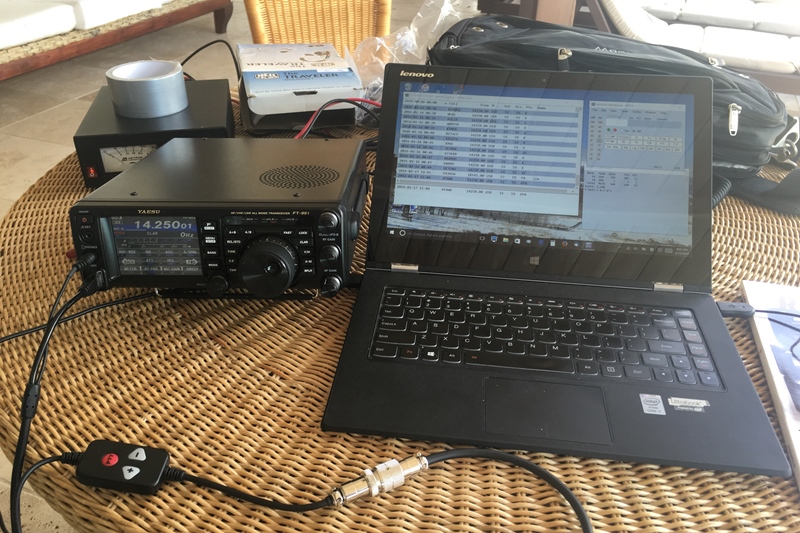
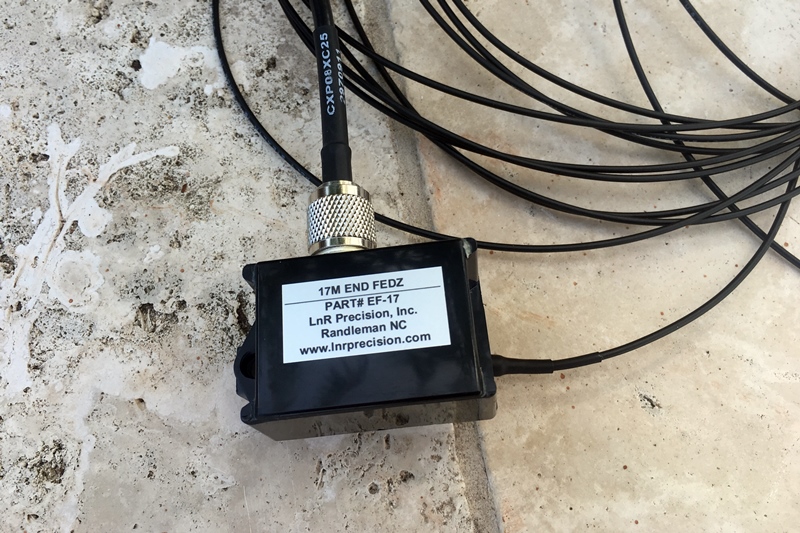
Choosing an antenna was a critical item. My first thought was to take my Buddistick antenna which covers the HF bands I was interested in working: 20m, 17m, 15m and 10m. I used that antenna from the Virgin Islands and it was really handy for taking to the beach. This time I wanted something bigger under the theory that size does matter. On the other hand, I wasn’t going to take full size yagis for each of the bands. I finally settled in on using End-Fed Half Wave (EFHW) antennas for the 4 bands (from LNR Precision). This gave me a simple half-wave antenna on each band with no coils, no traps, nothing funny going on. These antennas radiate well and have decent bandwidth…any SWR degradation can be tweaked up quickly using the FT-991 antenna tuner.
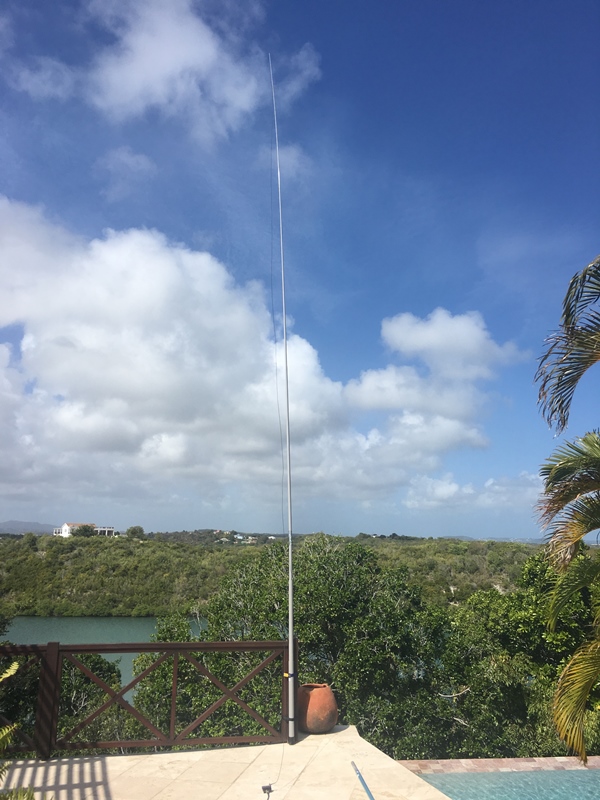
Steve WGØAT suggested I use the SOTABEAMS 30-foot mast to support the EFHW antennas. It is an incredible mast that collapses to 26.5 inches, small enough to fit into my bag. This antenna set up is common with the SOTA activators: EFHW supported by some kind of lightweight pole. I also tossed in a 19-inch magmount antenna for 2m and 70cm. (I did find a good repeater on on 147.0 MHz but did not spend much time on it.)
Rounding out the kit was an Astron switching power supply, a 25-foot length of RG-8X coaxial cable, a Heil Traveler headset and a few patch cords. I found it tempting to keep throwing more stuff in the bag so I adopted the backpacker mentality of taking just what I needed and not much more. For computer logging, I chose N1MM Plus software, set to log type to “DX”.
I have to confess that I did manage to break the 30-foot mast early in the trip. The house was on a hill and we always had a strong breeze coming through. One day it flexed the mast enough to break it. This was quickly repaired with duct tape. After that, I did not use the 2 top sections of the mast which reduced the amount of sway in the wind (and stress on the mast).
On The Air
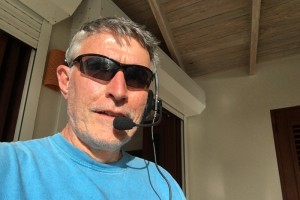
My operating time was a bit sporadic and my operating strategy was simple: work the highest band (of 20m, 17m, 15m and 10m) that had some decent propagation to somewhere. Antigua is not extremely rare but it seemed to attract attention. Typically, I called CQ, worked a few stations and then a big pileup would develop. I made lots of QSOs with stations in North America, South America and Europe. I also made a few contacts into Africa but none with Asia. Signal reports were generally good (S9 +), so the antennas were doing the job.
All in all, I was pleased with the contacts I made, given the slacker effort. I especially enjoyed working 17m, a band I have not spent that much time on. The propagation is similar to 20m but noticeably less jammed with signals.
  Band  QSOs DXCC
    14   309   36
    18   162   13
    21    21   10
    28    91    6
 Total   583   65
QSLs for V29RW should be sent to my home callsign: KØNR (direct or via the bureau). Logbook of the World contacts have already been confirmed. Instant gratification, baby!
73, Bob KØNR, V29RW
Licensing info: It was relatively easy to get a ham radio license in Antigua, based on my US license (fees were $30 US). See this web page.
The post V29RW: Slacker DXpedition to Antigua appeared first on The KØNR Radio Site.
Bob Witte, KØNR, is a regular contributor to AmateurRadio.com and writes from Colorado, USA. Contact him at [email protected].
Heathkit Pipetenna
 The resurrected Heathkit company has launched a dual band antenna. As much as I want them to succeed is this the best they can do?
They absolutely have to produce decent kits at decent prices or they will not survive. Their offerings so far do not exactly set the world alight. No, the offerings so far have not excited me. Years ago I started out with a Heathkit Electronics Workshop. Years later I had an HW8 which gave me loads of contacts with small wire antennas.
Please, think of your potential customer base, think about prices, and look at your competitors. I have no doubt a few loyal USA customers will support you, but far far more is needed in the competitive world of the 21st century.

Roger Lapthorn, G3XBM, is a regular contributor to AmateurRadio.com and writes from Cambridge, England.
The FCC says you have a new callsign. Now what?
Once I knew that I had a new callsign, I sat down a wrote down a list of what I needed to do…
(1) QRZ.com website. When my callsign changed a few years back from AD7MI to NI0L, I jumped on the air to “test it out”. On 20m, I was having a PSK31 QSO when the distant party thought I was a pirate station because on QRZ.com my new callsign did not reflect the name and QTH I was using. A pirate! I explained that it was a new callsign but I could tell that the other guy was not buying it.
I thought I would need to go on to QRZ.com and register as a new user. I made a posting in the QRZ.com forum category dedicated to callsign problems. The end result: just wait… the change will take place automatically in a few days.
And that is the case. If you are a US ham and change your callsign, just wait. Within two or three days the callsign change will be reflected on QRZ.com. If you get on the air before QRZ.com is updated, be prepared for people to think you are a pirate.

(2) Log of The World. Easy to do. Just submit for a new certificate under the new callsign. ARRL usually responds within one working day.
(3) EchoIRLP node. This ended up being much easier than I thought it would be.
a. To change your callsign in the IRLP database, go to this webpage using a computer connected to the same router as the IRLP node.
b. Go into your node and edit irlp/custom/environment file to change the old callsign to the new callsign. Restart the node and verify the changes have taken effect.
c. For the EchoLink side:
– Validate your new callsign.
– Check for validation of the new EchoLink call sign / node number on EchoLink using the EchoLink PC client software. Remember, EchoIRLP only allows link (-L) or repeater (-R) nodes.
– Note: you can only register the new callsign once the EchoLink folks of pulled the latest and greatest database update from the FCC. This may take a day or two. Once that is done, you can validate your new callsign. Your new callsign will be assigned a new EchoLink node number. If you want to use your previous node number, EchoLink allows you to swap node numbers between your old callsign and your new callsign.
– Once you are validated and have swapped node numbers edit the files and settings listed below:
/home/EchoIRLP/ custom/tbd. conf
ConferenceCall =
ConferencePass =
/home/EchoIRLP/ custom/echo_ environment
export ECHO_MYCALL=
/home/EchoIRLP/ custom/userdata. txt
Restart IRLP from root login with script /home/irlp/custom/ rc.irlp, or reboot the node.
IRLP node 4433 and EchoLink node 536398 are up and operational.
(4) APRS – change the callsign in my vehicle, HTs, and UI-View32. Pretty straight forward. The home weather station info can now be found here.
(5) Change the blog website. I have been keeping an amateur radio blog for about 10 years now. Web hosting companies make it pretty easy to get a domain for your website and then setup web hosting. I like using WordPress to setup and maintain the actual blog. Fairly straight forward but flexible to do just about anything you would want for a amateur radio blog. The new website is up and running.
(6) Callsign license plate. Kansas makes the pretty simple. I went down to my county office on Friday after work. The application process was smooth and the wait should be about 4-6 weeks.
(7) New QSL card. I am thinking of going with this:

Scott Hedberg, NØZB, is a regular contributor to AmateurRadio.com and writes from Kansas, USA. Contact him at [email protected].
 Ham Radio Deluxe |
 W5SWL Electronics |
 Ham Radio Prep |
 KB3IFH QSL Cards  Hip Ham Shirts  HamRadioAuctions HamRadioAuctions Reliance Antennas Reliance Antennas Enigma Shop Enigma Shop |  morseDX  Ni4L Antennas  R&L Electronics R&L Electronics antennas.us antennas.us QRV QRV |
- Matt W1MST, Managing Editor
