 |
 A very special evening
 4 March 2016 | by
The first Wednesday of each month is our informal "Operating Night" meeting. This tradition was instituted by our founding and current Club President, Marv K2VHW. His idea was to have an evening set aside where the older members of the club could meet with the newer Amateur Radio ops and engage with them about some radio or operating related topic.
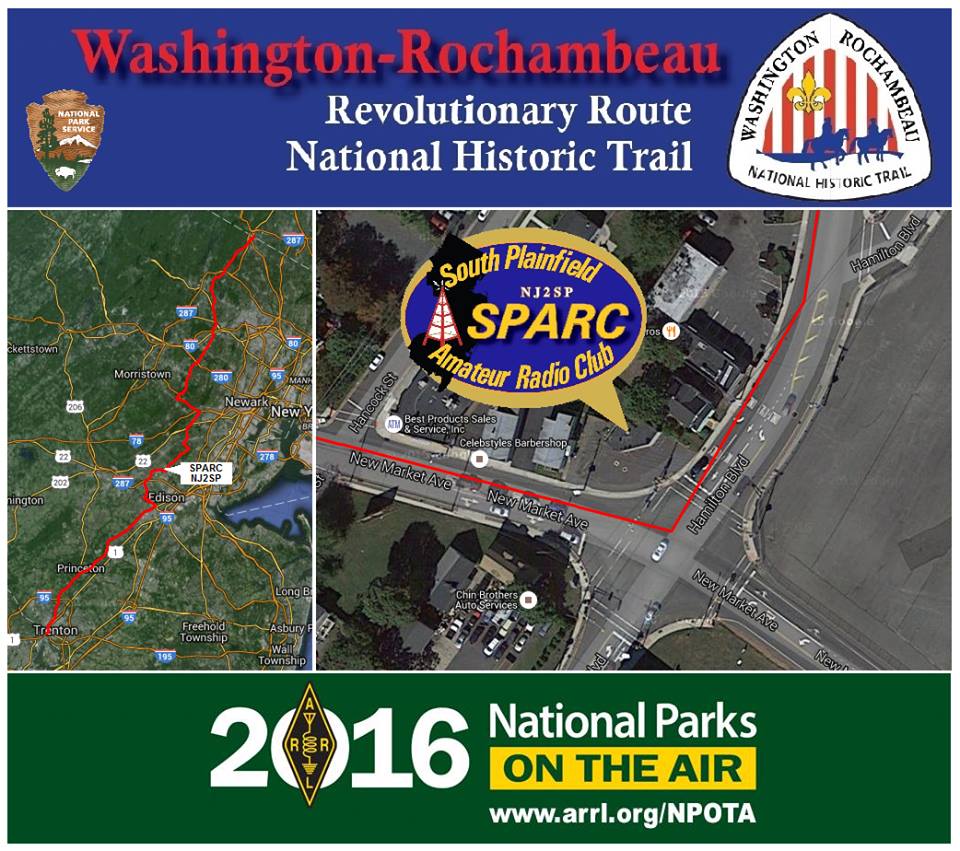
Marv has been down and out with some back troubles, so at our February meeting, Ron N2LCZ. our Recording Secretary, suggested that for the March operating night, that we should do an NPOTA activation. The Washington-Rochambeau National Historical Trail (TR23) runs right in front of our meeting place, the South Plainfield CERT Building, which is on the corner of Hamilton Boulevard and New Market Avenue - Hamilton Boulevard is part of the trail.
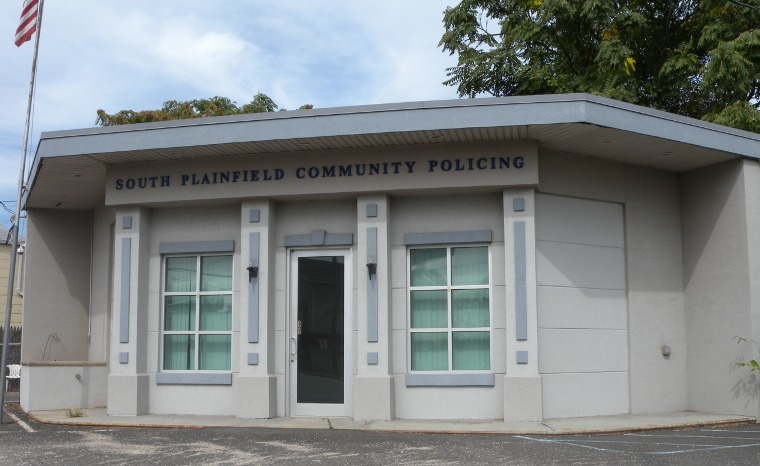
We are, quite literally, only about 25 feet or so from the roadway, and the Trail. Our meeting place was originally a gasoline filling station that was converted by the South Plainfield Police Department into a satellite Community Policing Building. When the SPPD took over the mantle of Emergency Management, they generously offered use of the building to the South Plainfield CERT/RACES team. SPARC is allowed to use the building for its meetings.
So last night we got together to put NJ2SP on the air. Dave KD2FSI set up some equipment, his Yaesu HF transceiver and ran some coax out to the screwdriver antenna on his van. Power was provided by a Werker deep cycle battery. We started out on 20 Meters, where unfortunately, we had a close to S9 noise level. Even so, we made QSOs from the West coast to Suriname.
When 20 Meters dried up, we switched over to 40 Meters where the background noise level was slightly lower, but the incoming signals were much louder. And that's where the bulk of our 51 QSOs were made. We were busy for the better part of an hour.
The best part about it all was that neither Dave or I made the QSOs. I sat there as a logger and "QSO Coach" (and control operator) while some of the other members of SPARC, who have no regular access to HF took over. It was not hard to tell that they had a blast and after one or two QSOs, they were behaving like HF veterans.
The high point of the evening was when a visiting YL sat down and took over the microphone. I scribbled out a brief script for her, so she would know what to say and she took off and hit the ground running. 40 Meters seemed like it was quieting down, but as soon as her voice went over the air, the dam broke loose and we had another pileup on our hands. Lee Ann has visited our club a few times and is deciding whether or not she would like to pursue obtaining her own license.
I am willing to bet that last night sealed the deal.
72 de Larry W2LJ
QRP - When you care to send the very least!
Larry Makoski, W2LJ, is a regular contributor to AmateurRadio.com and writes from New Jersey, USA. Contact him at [email protected].
The Sub-Hobby
It’s often been said that amateur radio is a hobby consisting of many sub-hobbies. This is true when you consider the different modes we use (like RTTY, CW, PSK), technical endeavors like equipment design and building, special operating techniques like satellite and moonbounce, different bands each with their own characteristics and fans like LF, HF, VHF/UHF, and microwave, and activity based sub-hobbies like contesting and DXing. It’s multidimensional and there is often overlap between the various sub-hobbies.
Unfortunately there’s a detrimental sub-hobby that’s been around a long time, perhaps as far back as when there was spark and a new mode called CW was emerging. It’s complaining about what everyone else is doing or how they’re doing it.
I was reminded of this on an unnamed social networking site that starts with the letter F and rhymes with the word crook. Perhaps you’ve been there. A poster in an amateur radio group couldn’t make sense out of people sending and receiving CW using computers, and quipped that operating this way was taking the “radio out of radio”. Never mind that you can’t do this sort of operating without a radio. The most vocal complainers in amateur radio tend to rant about amateurs who don’t operate CW, so it was ironic that this complaint was about people actually operating CW but not in a way that the poster and others like to do it. As expected, the discussion was lively with many people lamenting over this operating method, and a lesser few defending it.
Any time I look an amateur radio activity, I ask a few basic questions:
- Is someone getting enjoyment out of it?
- Is it not harming anyone else and not detracting from anyone’s enjoyment of the hobby?
- Does it positively reflect amateur radio, both within the amateur radio community and the general public, or at least not reflect negatively on the hobby?
- Is it spectrally and resource efficient, and reasonable from an engineering perspective?
- Is it consistent with the spirit and nature of amateur radio?
If you can answer YES to all of these questions, I see no reason to complain about the activity.
If there’s one thing I’ve learned over the years about amateur radio, it’s that if you’re more concerned about what others are doing, and not what you’re doing, and having fun doing it, it’s a sure fire way to be unhappy in amateur radio.

Anthony, K3NG, is a regular contributor to AmateurRadio.com.
CLE 204 Results
With a very quiet sun for the entire week, this past weekend's CLE proved to have much better conditions than normally experienced.
Conditions were 'good' but not 'great'. Really 'great' nights are few and far between but with the rapidly declining solar cycle, we should see more and more of these over the next few winters.
Most listeners around the world reported good conditions, with the nod going to Friday night as being the best. I thought that all three nights were good, but heard nothing new on night number three.
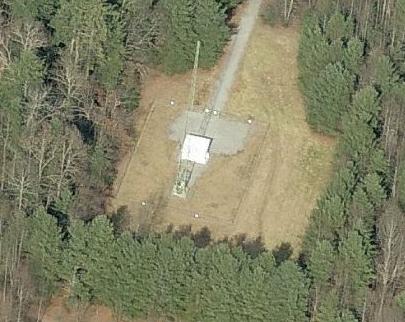
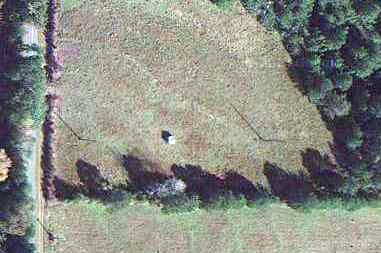
A surprise catch, with a good signal, was 'BRA -379' in Asheville, North Carolina. It's classified as an 'H-class' NDB and is an outer marker locator. I believe the H-class indicates a 400W transmitter and with the large vertical antenna, seems to get out very well.
 |
| courtesy: http://www.bing.com/maps |
 |
| courtesy: http://www.bing.com/maps |
Fortunately, Perseus has an extremely effective 'notch' filter, and this, along with putting 'AP' in my LF loop's null, allowed me to hear two other NDB's beneath it ... 'ZFA' (Faro, Yukon) and 'UX' (Hall Beach, Nunavut).
The following 44 stations were heard on the Perseus SDR while using either the LF loop or my inverted 'L', tuned to 370 kHz.
27 06:00 370.0 YBV Berens River, MB, CAN
27 06:00 370.0 PAI Whiteman, CA, USA
27 06:00 371.0 YK Yakima, WA, USA
27 11:00 371.0 UK Laughlin, CA, USA
27 06:00 371.0 PUR Marshall, MO, USA
27 06:00 371.0 ITU Great Falls, MT, USA
27 05:00 371.0 GW Kuujjuarapik, QC, CAN
27 06:00 372.0 ZPA Prince Albert, SK, CAN
27 08:00 372.0 YCO Kugluktuk, NU, CAN
27 05:00 373.0 MF Table Rock, OR, USA
27 06:00 374.0 LV Livermore, CA, USA
28 09:00 374.0 HY Hays, KS, USA
27 05:00 374.0 EX Kelowna, BC, CAN
27 08:00 374.0 EE Forada, MN, USA
28 09:30 375.0 SPH Springhill, LA, USA
27 05:00 375.0 FS Fort Simpson, NT, CAN
27 07:00 375.0 CP Casper, WY, USA
27 08:00 375.0 BM Balmoral, MB, CAN
27 08:00 375.0 BD Moose Jaw, SK, CAN
27 08:30 376.0 ZIN Matthew Town, BAH
27 07:00 376.0 YAG Fort Frances, ON, CAN
27 05:00 376.0 PVQ Deadhorse, ALS
27 07:00 376.0 LC Columbus, OH, USA
27 09:00 377.0 EHA Elkhart, KS, USA
27 08:00 377.0 BUB Burwell, NE, USA
27 08:00 378.0 ZFA Faro, YT, CAN
27 05:00 378.0 UX Hall Beach, NU, CAN
27 07:00 378.0 OT North Bend, OR, USA
27 05:00 378.0 AP Mayne Island, BC, CAN
27 08:00 379.0 ZEG Edmonton, AB, CAN
28 11:00 379.0 IWW Kenai, ALS
27 07:00 379.0 DL Duluth, MN, USA
27 08:00 379.0 BRA Asheville, NC, USA
27 10:00 380.0 OEL Oakley, KS, USA
27 08:00 380.0 GC Gillette, WY, USA
27 05:00 380.0 BBD Brady, TX, USA
27 08:00 381.5 SJX St James, MI, USA
27 10:00 382.0 YPW Powell River, BC, CAN
27 10:00 382.0 YE Fort Nelson, BC, CAN
27 06:00 382.0 SP Springfield, IL, USA
27 08:00 382.0 JNR Unalakleet, ALS
27 08:00 382.0 AW Marysville, WA, USA
27 10:00 383.0 PI Pocatello, ID, USA
27 07:00 383.0 CNP Chappell, NE, USA
27 10:00 384.0 3F Ile-a-la-crosse, SK, CAN
The listening results for all North American listeners and those outside of Europe can be found here.
Steve McDonald, VE7SL, is a regular contributor to AmateurRadio.com and writes from British Columbia, Canada. Contact him at [email protected].
Growing a 2-meter Flowering J-Pole

Dave Savidge, AF5DN, lives in a neighborhood governed by a highly-restrictive homeowners’ association (HOA). Many of these neighborhoods have strict “no antenna” policies purportedly to protect the aesthetics of the community.
The Texan ham needed to hit a repeater some distance away, so he built a stealth J-pole antenna disguised as a flowering vine. The design allows him to hide the 2-meter antenna in plain sight on his front balcony — while also providing a nice decorative touch!
The base of the J-pole sits in a split-PVC holder, embedded in a poured concrete base. This provides weight and stability in the bottom of the flower pot. The J-pole is held in the PVC holder by a hose clamp. There is a hole cut in the bottom of the pot to feed through the coax leading to a low-profile weather-proof MFJ window antenna feedthrough.
The flowers were sourced from his local Michaels craft store. The other components are readily available at Home Depot and Lowes. There are many great J-pole plans available free online, including this 2m/440 dual-band “Copper Cactus” from N7QVC.
Do you live in an HOA? What antenna designs do you use to maintain a “low-profile?”
Matt Thomas, W1MST, is the managing editor of AmateurRadio.com. Contact him at [email protected].
Amateur Radio Weekly celebrates 100th issue
 Amateur Radio Weekly, a curated ham radio newsletter, celebrated its one hundredth issue on Saturday, February 27.
Cale Mooth, K4HCK, got the idea for the newsletter back in 2014. The Nashville ham had seen e-mail newsletters from Cooper Press like JavaScript Weekly and wanted to create something similar for the amateur radio community.
“Nothing like that seemed to exist in the ham world,” Mooth says. “Hams are great builders and engineers, but I think we leave a lot to be desired in the marketing effort. Ham Radio is a hobby, so we’re also limited in the amount of time we spend with it. The idea for a quick, weekly summary of what’s happening in ham radio was the main driver.”
When Mooth began publishing his weekly newsletter, he never dreamed it would become so successful.
“The first two issues or so were sent to my email address and that was about it,” he says. “To see the readership grow and to receive feedback from not only the local ham community but from all around the world has been amazing.”

“I think what really makes the newsletter appealing is the curated nature of the stories,” Mooth says. “It’s not a randomized, unmonitored feed. I’m constantly looking for interesting, and most importantly, material that might be useful to another ham.”
Mooth says he’s not completely sure what’s next for Amateur Radio Weekly, but he has some ideas.
“Specialized versions of the newsletter is interesting to me,” he says. “Separate issues dedicated entirely to emcomm, contesting, etc. Something with more of an editorial aspect to it would be a lot of fun. Now I just need to figure out how to add more hours to the day!”
Despite being busy with his job in product management at a software company, he’s still having a great time. When it comes to online content, he loves to find diamonds in the rough.
“My favorite thing is running across a random ham that has posted a great review or how-to article on their blog,” he says. “It’s often more personal and compelling than what you might find from a professional publication.”
Mooth sees Amateur Radio Weekly as his contribution toward making sure hams get the useful and relevant information they need, no matter which facet of ham radio they enjoy.
“Ultimately, it’s all about lifting up the ham community and promoting the hobby,” he says.
Matt Thomas, W1MST, is the managing editor of AmateurRadio.com. Contact him at [email protected].
The Spectrum Monitor — March, 2016
 Stories you’ll find in our March, 2016 issue:
2016 TSM Air Show Special
By Brian and Jo Marie Topolski
Monitoring the action in the air at any of North America’s many air shows can be daunting. You have to know where to listen and when to listen to fully enjoy the spectacle. Veteran air show attendees and TSM contributors, Brian and Jo Marie Topolski, give us some valuable hints about air show action. Don’t forget to bring your scanner, camera and ear protection—it’s going to get really loud!
Flying with Fat Albert and Sean D. Tucker
By Kevin Burke
Longtime air show attendee, photographer and veteran air-band monitor, Kevin Burke, has found himself in several uncomfortable situations, all in pursuit of a great shot of some of the world’s most advanced aircraft in action. Whether it’s a nausea-inducing ride in a C-130 doing aerobatic maneuvers or hanging from a seatbelt in a support plane watching Sean D. Tucker tear up the skies in his 400-horsepower biplane, Kevin is in the game!
How to Track Military and Civilian Aircraft on your Home Computer
By Larry Van Horn N5FPW
Monitoring military and civilian aircraft activities via your scanner has come a long way. Not too long ago it was the domain of well-heeled hobbyists with highly honed technical skills. Now, thanks to off-the-shelf receivers and readily available software, you can personally keep track of almost anything that flies, almost anywhere in the world. Veteran milcom monitor, Larry Van Horn, shows us how it’s done.
A Beginner’s Guide to Monitoring Aviation
By Dave Kelly
Air comms in the sky aren’t just for private and commercial aviation; the military provides some of the more interesting action you can hear. And, it’s not just VHF and UHF frequencies you need to monitor. Dave walks us through the basics of aviation monitoring with tips on where and when to tune in. And, here’s a hint, you don’t have to live near a major airport or military base to hear something interesting.
2016 TSM Air Show Guide
From March through November the best precision aircraft and skydiving teams will be in the air at an airbase near. Here are the 2016 schedules for the US Air Force Thunderbirds; the US Navy Blue Angels; the Canadian Forces Snowbirds; US Army Golden Knights; Breitling Jet Team; Team Oracle Presents Sean D. Tucker, and GEICO Skytypers as provided by each team.
Scanning America
By Dan Veenaman
Michigan Interoperability System; Rebanding Progress
Federal Wavelengths
By Chris Parris
Federal Monitoring at Super Bowl 50
Utility Planet
By Hugh Stegman NV6H
ALE: The Mode that Linked the World
Digital HF: Intercept and Analyze
By Mike Chace-Ortiz AB1TZ/G6DHU
Is an Egyptian HF Diplomatic Network Overhaul Underway?
HF Utility Logs
By Mike Chace-Ortiz and Hugh Stegman
Digitally Speaking
By Cory Sickles WA3UVV
What Else Can You Do With It?
VHF and Above
By Joe Lynch N6CL
The History of the VUCC Award
Amateur Radio Insights
By Kirk Kleinschmidt NT0Z
Forgotten Antenna Fundamentals and Other Curious Tidbits—Part 3
Radio 101
By Ken Reitz KS4ZR
The Goodwill Radio Connection
Radio Propagation
By Tomas Hood NW7US
The Somersaulting Sun
The World of Shortwave Listening
By Keith Perron
Radio Netherlands: Archiving Shortwave Radio History
The Shortwave Listener
By Fred Waterer
DJs, The Bard, and “My Favorite Country”
Amateur Radio Satellites
By Keith Baker KB1SF/VA3KSF
AMSATs Then and Now
The Longwave Zone
By Kevin O’Hern Carey WB2QMY
News, Mail, and Updates
Adventures in Radio Restoration
By Rich Post KB8TAD
Another Lafayette Radio: New Life for an HA-230
Antenna Connections
By Dan Farber AC0LW
Antenna Stealth: A Working Philosophy
Radio Horizons
Teak Air Show Guide 2016 17th Edition by Larry Van Horn N5FPW
The Spectrum Monitor is available in PDF format which can be read on any desktop, laptop, iPad®, Kindle® Fire, or other device capable of opening a PDF file. Annual subscription is $24. Individual monthly issues are available for $3 each.
Ken Reitz, KS4ZR, is publisher and managing editor of The Spectrum Monitor. Contact him at [email protected].
Making the Palm Mini Paddle Stay Put
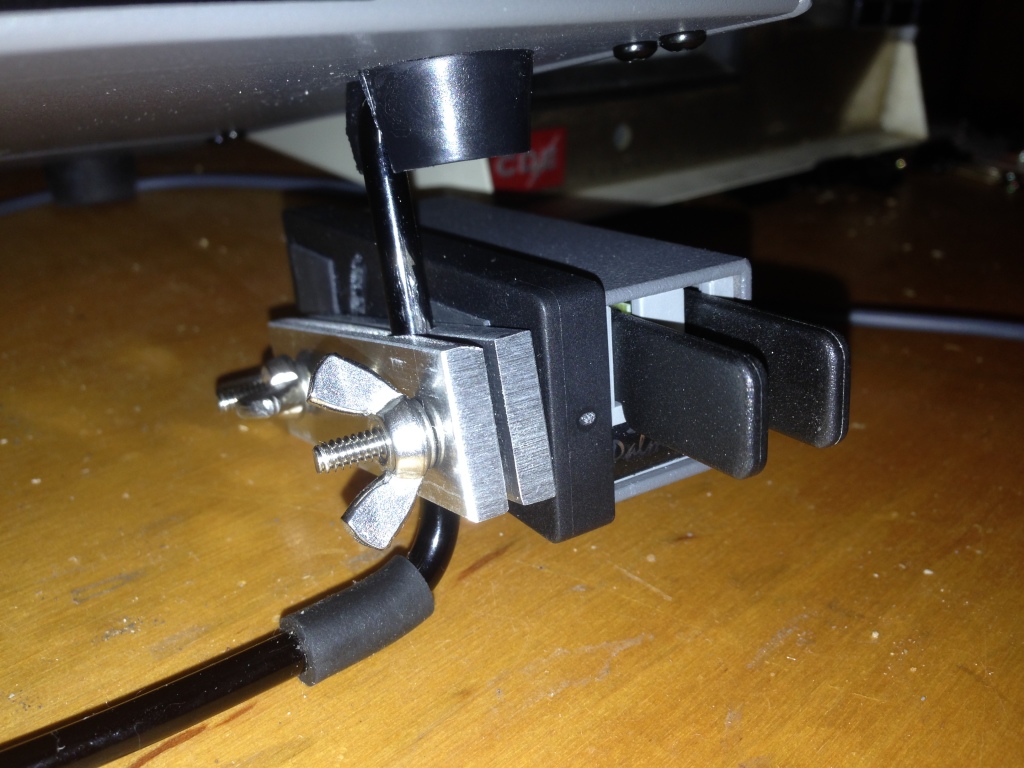
In my on-going quest to produce a lightweight yet good-performing kit of portable equipment to carry along on my exotic work travels, I set my sights once again upon the Morse keying paddles. When I was a student, I carried what I had: a black-base Bencher BY-1. This caught the attention of nearly every airport security screener and was obviously quite heavy, but it stayed put on the table (for the most part) when I aggressively worked a pileup. A few years back, my wonderful, loving, and patient wife, solicited suggestions for Christmas gifts and I suggested a Palm Radio Mini Paddle. (She’s grateful when I provide a link to a web site with a shopping cart in these situations.)
The Palm is really a joy to use and is extraordinarily lightweight, which is perfect for travel. However, I’ve always struggled with how to keep it steady on a table. I have the magnetic base, but that presupposes a ferromagnetic surface to which it will mount. Since both the Elecraft K3 and K2 have aluminum panels, I can’t count on the radio. I tried a variety of additional things, up to and including, trying to design a 3D-printed carrier that is akin to the Begali Traveler. So, I shelved the project, only using the Palm key for casual portable operating when mass trumped long-term operating comfort and efficiency. Good fortune happened upon me and I built this.
When I decided to add an amplifier (more on this in the future) to my portable setup, again pressure set in on the mass of everything. So, I revisited the Palm Mini project. I had purchased a number of mounting clips for the key (hedging my bets against the ephemeral nature of ham radio businesses); so, I set out to attach one to the K2. I’d seen the photo of the base attached to the right-hand side panel of the K2 by the power switch. But, I really didn’t want to drill holes in the panel, plus that puts the paddles too high when the tilt bail is raised (which is necessary to see the display).
So, I fabricated two strips of 3/16-inch aluminum plate (leftover from the hexagonal beam I built a few years ago) with a hole bored down between them to clamp on the tilt bail of the K2 or the K3. There’s nothing particularly critical about the construction of it, although I used a Bridgeport mill to do all the cutting; you might be able to do it in a drill press. I think I ended up with a #14 drill for the clamp hole. I used 6-32 hardware because I had it on-hand and I like the bigger stuff. I had to enlarge the adjustment slot in the Palm base to handle the bigger diameter.
Ethan Miller, K8GU, is a regular contributor to AmateurRadio.com and writes from Maryland, USA. Contact him at [email protected].
 Ham Radio Deluxe |
 W5SWL Electronics |
 Ham Radio Prep |
 KB3IFH QSL Cards  Hip Ham Shirts  HamRadioAuctions HamRadioAuctions Reliance Antennas Reliance Antennas Enigma Shop Enigma Shop |  morseDX  Ni4L Antennas  R&L Electronics R&L Electronics antennas.us antennas.us QRV QRV |
- Matt W1MST, Managing Editor
