 |
 Portable Ops 13/45: Sing it with me….YyyyyMCAaaaa
 1 April 2016 | by
 On Tuesday and Thursday nights my daughter takes Tae kwon do at the local YMCA. I typically run a few miles while she in class, but last night I decided to setup portable and play a little radio. The SKCC sprints run from 7-9pm once a month local time, and her class starts at 7:00 pm.
Since I would like to participate in these sprints, I have been looking for a location in the parking lot I could do this while she was in class.
The parking lot at the YMCA is large and at one end there are zero cars parked. There are small trees that I can attach my portable antenna to.
So last night I decided to test it out. The antenna strapped easily to a small tree and the coax easily reached in my car where I operate.
I made one contact…
AC4FZ (4987T) – Wally was working another station on 10.120 and once the QSO was over, I gave him a call. He was nice and loud here in Kansas. Wally was in North Carolina and had a nice signal and fist – with just a slight bit of QSB. He was a 559 here and he gave me a 549 – I am constantly amazed and just what 5 watts can accomplish!
That was it for the night, but I am glad I tested the setup for the SKCC sprint at the end of April – I will be active!
Burke Jones, NØHYD, is a regular contributor to AmateurRadio.com and writes from Kansas, USA. Contact him at [email protected].
Portable Ops 11 & 12: Two New States and 2 x QRP!
This post is a two-fer, I didn’t get a chance to write up #11 portable operations, so I just decided to combine them.
Do you ever have one of those QSO’s where everything seems to go wrong?? I did when I worked WB3GCK. Right now I don’t have a true straight key, so I use one lever of the paddles on my KX3 set to HAND mode. Sometimes the contacts don’t make great connection and they dits and dahs sound funny. Well during this QSO this was happening a bunch! On top of that my KX3 started complaining about the voltage level of the battery. So mid QSO I had to attached my external battery which required me to change where the KX3 was sitting – it was just a mess!
But Craig WB3GCK seemed very gracious and we just carried on.
So who did I work??
3/29/13 – I just had about 30 minutes to play between meetings….so just two contacts…
KG7VTO (14714) – Bob had a great signal from Oregon on 20 meters, plus a great sounding fist.
KK6GLP – I have worked Mike before and his signal sounded great as usual from California.
3/30/13 – Had a ton of fun this day! These were all from me calling CQ on 18.080…
N1WPU (1312) – Ted answered my CQ from Maine! He was running 75 watts into a G5RV and had a really nice signal and fist.
WB3GCK (15052T) – Craig came back to my CQ and he was also QRP at 5 watts. Craig is also a fellow blogger, and a blog I frequent! He has just recently obtained Tribune status in the SKCC. From reading his blog it looks like he was bitten by the same SKCC bug I have been bitten by! You can read his blog here http://wb3gck.craiglabarge.com/. This is actually the second time I have worked Craig. The last time was back in 2013 when he was vacationing in North Carolina!
WB1AJX (12872T) – The last contact for the day was with Howard running his KX3 at 5 watts. We had a nice exchange from Rhode Island to Kansas for another nice 2xQRP contact.
So for this day it looks like there was a pipeline from Kansas to the far Northeast of the USA. I had never worked Maine or Rhode Island before – so that is awesome. Plus to have two 2xQRP contacts was a real kick as well!
The main reason I moved to 17 meters was because there was at least one VERY LARGE pileup going on 20 meters – it ran from about 14.035 to 14.057 – completely spread out! I never did figure out the DX everyone was trying to work – but the pileup was destroying the band.
Burke Jones, NØHYD, is a regular contributor to AmateurRadio.com and writes from Kansas, USA. Contact him at [email protected].
Portable Ops 11 & 12: Two New States and 2 x QRP!
This post is a two-fer, I didn’t get a chance to write up #11 portable operations, so I just decided to combine them.
Do you ever have one of those QSO’s where everything seems to go wrong?? I did when I worked WB3GCK. Right now I don’t have a true straight key, so I use one lever of the paddles on my KX3 set to HAND mode. Sometimes the contacts don’t make great connection and they dits and dahs sound funny. Well during this QSO this was happening a bunch! On top of that my KX3 started complaining about the voltage level of the battery. So mid QSO I had to attached my external battery which required me to change where the KX was sitting – it was just a mess!
But Craig WB3GCK seemed very gracious and we just carried on.
So who did I work??
3/29/13 – I just had about 30 minutes to play between meetings….so just two contacts…
KG7VTO (14714) – Bob had a great signal from Oregon on 20 meters, plus a great sounding fist.
KK6GLP – I have worked Mike before and his signal sounded great as usual from California.
3/30/13 – Had a ton of fun this day! These were all from me calling CQ on 18.080…
N1WPU (1312) – Ted answered my CQ from Maine! He was running 75 watts into a G5RV and had a really nice signal and fist.
WB3GCK (15052T) – Craig came back to my CQ and he was also QRP at 5 watts. Craig is also a fellow blogger, and a blog I frequent! He has just recently obtained Tribune status in the SKCC. From reading his blog it looks like he was bitten by the same SKCC bug I have been bitten by! You can read his blog here http://wb3gck.craiglabarge.com/. This is actually the second time I have worked Craig. The last time was back in 2013 when he was vacationing in North Carolina!
WB1AJX (12872T) – The last contact for the day was with Howard running his KX3 at 5 watts. We had a nice exchange from Rhode Island to Kansas for another nice 2xQRP contact.
So for this day it looks like there was a pipeline from Kansas to the far Northeast of the USA. I had never worked Maine or Rhode Island before – so that is awesome. Plus to have two 2xQRP contacts was a real kick as well!
The main reason I moved to 17 meters was because there was at least one VERY LARGE pileup going on 20 meters – it ran from about 14.035 to 14.057 – completely spread out! I never did figure out the DX everyone was trying to work – but the pileup was destroying the band.
Burke Jones, NØHYD, is a regular contributor to AmateurRadio.com and writes from Kansas, USA. Contact him at [email protected].
The Spectrum Monitor — April, 2016
 Stories you’ll find in our April, 2016 issue:
Let Portable Antennas give you a Noise-Free Vacation
By Keith Baker KB1SF/VA3KSF
An increasing cacophony of mostly man-made RF noise on our HF bands makes it ever more difficult to hear particularly weak incoming stations, sometimes to the point of making reception of favorite shortwave or ham DX stations all but impossible at home. Keith shows us how you can take a break from noise using portable antennas that really work.
What You Should Know before Investing in an Antenna
By Richard Fisher KI6SN
Whether you are a relative newcomer to amateur radio, SWLing, TV DXing or VHF-UHF scanning, or are a seasoned card-carrying veteran, only you will know the antenna parameters best suited for your amateur station or listening post. Your own passions, needs, capabilities, real estate, budget and a jillion other factors inform your antenna choices. Richard helps sort out the options and explains how to get the most S-units per dollar spent in pursuit of DX.
Wi-Fi Radio Primer Part 1
By Thomas Witherspoon K4SWL
Always a hard-core shortwave radio listener, Thomas likes the tactile experience of turning the knobs of the shortwave, tuning in stations across the globe. So, when online listening became popular, it never occurred to him to give it a try. Then, at the 2012 Winter SWL Fest, an excellent presentation on the merits and technologies behind Wi-Fi radio intrigued him. After downloading and installing the Pro version of the TuneIn radio app, he had to admit, it was a pretty powerful listening experience…one he could easily get used to.
Piggy-Bank Ham Radio Part 1
By Cory GB Sickles WA3UVV
After hearing someone bemoan the “high cost” of amateur radio and how such a “prohibitive expense” was preventing many from becoming hams, his knee jerk reaction was, “Really?” Sure, if you’re referring to a super-mega-über contest station, then he might agree, but just to get started, you don’t need deep pockets—just some preparation and some well-placed effort. Cory outlines a “cheap and dirty” way to start enjoying HF—with the basic Technician class license. Just as ham radio itself has no barriers as to age, the ideas he shares can work for anyone, whether you’re a student, retiree or somewhere in between.
Multiple FTA Satellite Reception Techniques Revisited
By Mike Kohl
The most cost effective way to get into Free-to-Air satellite reception is with 75 to 90-cm antennas for most Ku-band reception because they’re cheaper and shipping costs are less. But needing to monitor multiple FTA satellites forces a decision about whether to use multiple Ku-band antennas linked together with a DiSEqC switch, or to motorize one or more antennas. Which Ku-band satellites do we actually watch on a regular basis? After the busy Galaxy 19 satellite at 97 degrees West, what satellites do we need continuous access from on a 24 hour basis? Mike shows us how to properly set up a motorized Ku-band dish or use a DiSEqC switch.
Scanning America
By Dan Veenaman
Growing Acceptance of TETRA
Federal Wavelengths
By Chris Parris
The 2016 Political Season
Utility Planet
By Hugh Stegman NV6H
Uncovering U-2s on HF
Digital HF: Intercept and Analyze
By Mike Chace-Ortiz AB1TZ/G6DHU
US ALE Smorgasbord
HF Utility Logs
By Mike Chace-Ortiz and Hugh Stegman
Digitally Speaking
By Cory Sickles WA3UVV
Digital Destinations
VHF and Above
By Joe Lynch N6CL
The Meteor Shower Nobody Saw—Revisited—Again
Amateur Radio Insights
By Kirk Kleinschmidt NT0Z
Home-Brewing and Kit Building Isn’t What It Used To Be—But It’s Almost What It Will Be!
Radio 101
By Ken Reitz KS4ZR
Last of the Standalone DRM Portable Radios?
Radio Propagation
By Tomas Hood NW7US
Season of Lights (Aurora)
The World of Shortwave Listening
By Rob Wagner VK3BVW
Clandestine Stations Alive and Well
The Shortwave Listener
By Fred Waterer
The Queen’s Birthday, KBC Cutback and VOA Tibet
Maritime Monitoring
By Ron Walsh VE3GO
Radio Action on the Great Lakes Returns
The Longwave Zone
By Kevin O’Hern Carey WB2QMY
Spring Remedies
Adventures in Radio Restoration
By Rich Post KB8TAD
Sound and Light: The Mitchell Lumitone 1260
Antenna Connections
By Dan Farber AC0LW
Multi-banding a Single Antenna: Several Routes Beckon
The Spectrum Monitor is available in PDF format which can be read on any desktop, laptop, iPad®, Kindle® Fire, or other device capable of opening a PDF file. Annual subscription is $24. Individual monthly issues are available for $3 each.
Ken Reitz, KS4ZR, is publisher and managing editor of The Spectrum Monitor. Contact him at [email protected].
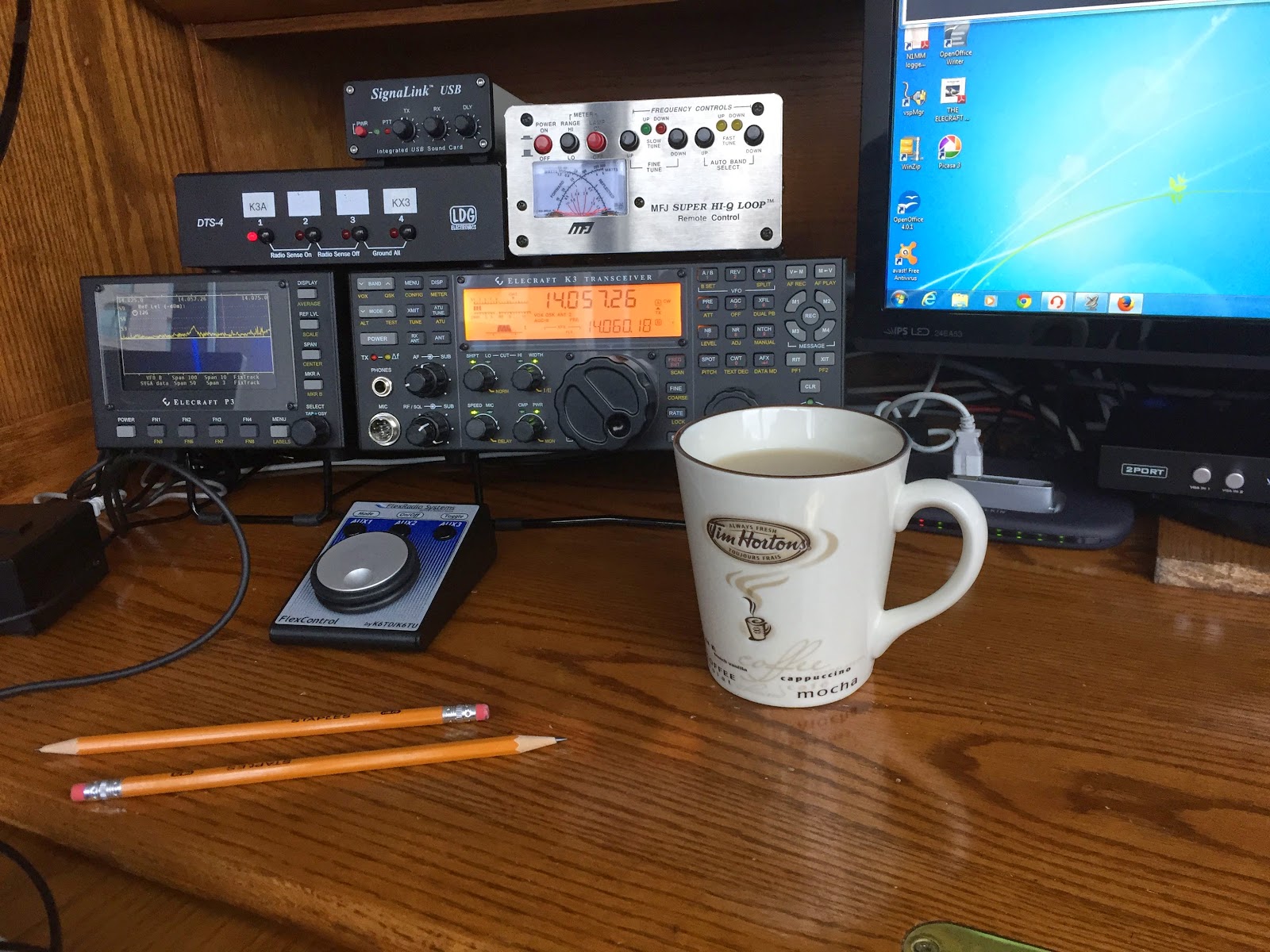
Slow time on the bands.
Mike Weir, VE9KK, is a regular contributor to AmateurRadio.com and writes from New Brunswick, Canada. Contact him at [email protected].
A Tale of Two Mics
 I’m fairly new to this amateur radio community and I’ve already learned a lot. What excites me about it, beyond making contacts, is the making of parts and equipment. Homemade or homebrew items are sprinkled liberally around the community. I appreciate what I have learned and I’m excited to learn more.
So, here’s my problem:
I went through a couple of radios, mainly mobile radios, until I found suitable base radio for starters. After my young son decided to play with my adjustable power supply, he fried my Yaesu 8900, beyond repair. I took it to a local operator, who, after careful investigation and minor repair, declared the radio dead. He offered his condolences and offered that he might be selling a radio, not that he was trying to force me to buy it. I inquired about this radio. It was a Kenwood TS-2000. Looks nice and has a lot of buttons. He told me he was going to take it to the local ham fest to sell and if it didn’t he’d make it a good deal for me.
As fate would have it, the radio didn’t sell. Indeed, he sold it to me for an undisclosed amount that was more than a good deal for me. He added an HP DPS-1200FB server power supply to avoid the incident to which my Yaesu had succumbed. I was happy and overwhelmed. This radio was more than I ever imagined, and I’m still learning about it after almost a year.
Eventually, I discovered that VOX is very useful for HF work. So, I added a cheap computer studio mic and went to work on HF. Then, there are the local nets on the local repeaters. While not forbidden to use VOX on the repeater, setting things was just a bit tricky. So, I opted to use the supplied Kenwood dynamic push-to-talk mic for repeater work.
Now, the two mics are in play. Any time I switched between the repeaters and HF, I also switched mics. I had to disconnect one and attach the other, which, besides being cumbersome, just made me worried I’d eventually mess up the connectors.
Behold! The idea for a microphone selector switch was born.
Greg Walters, KK4TIX, is a special contributor to AmateurRadio.com and writes from Kentucky, USA.
It’s ALIVE !
The 1Watter 40m #551 -- Lives
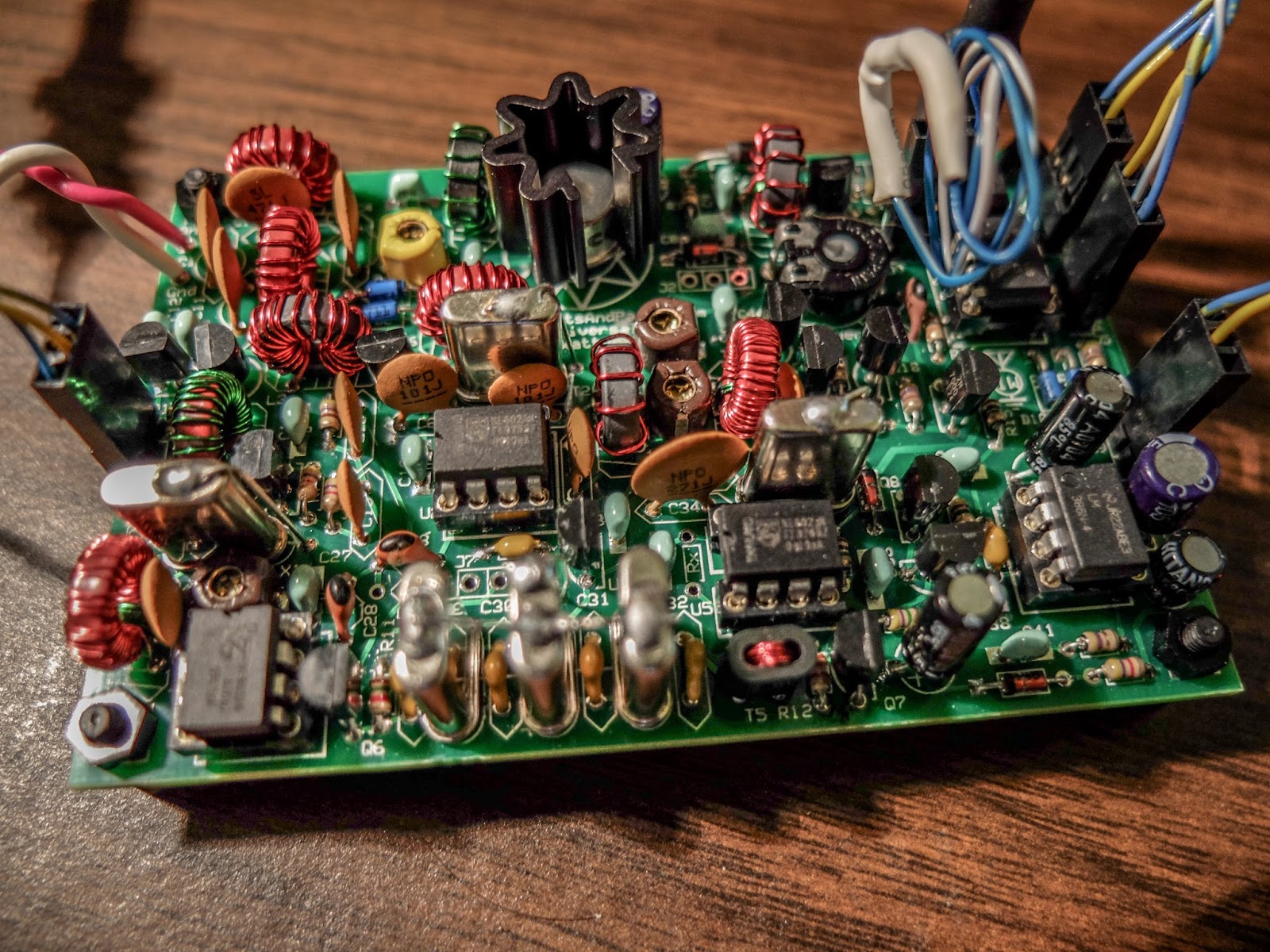 |
| The 1Watter 40m on it's inaugural QSO |
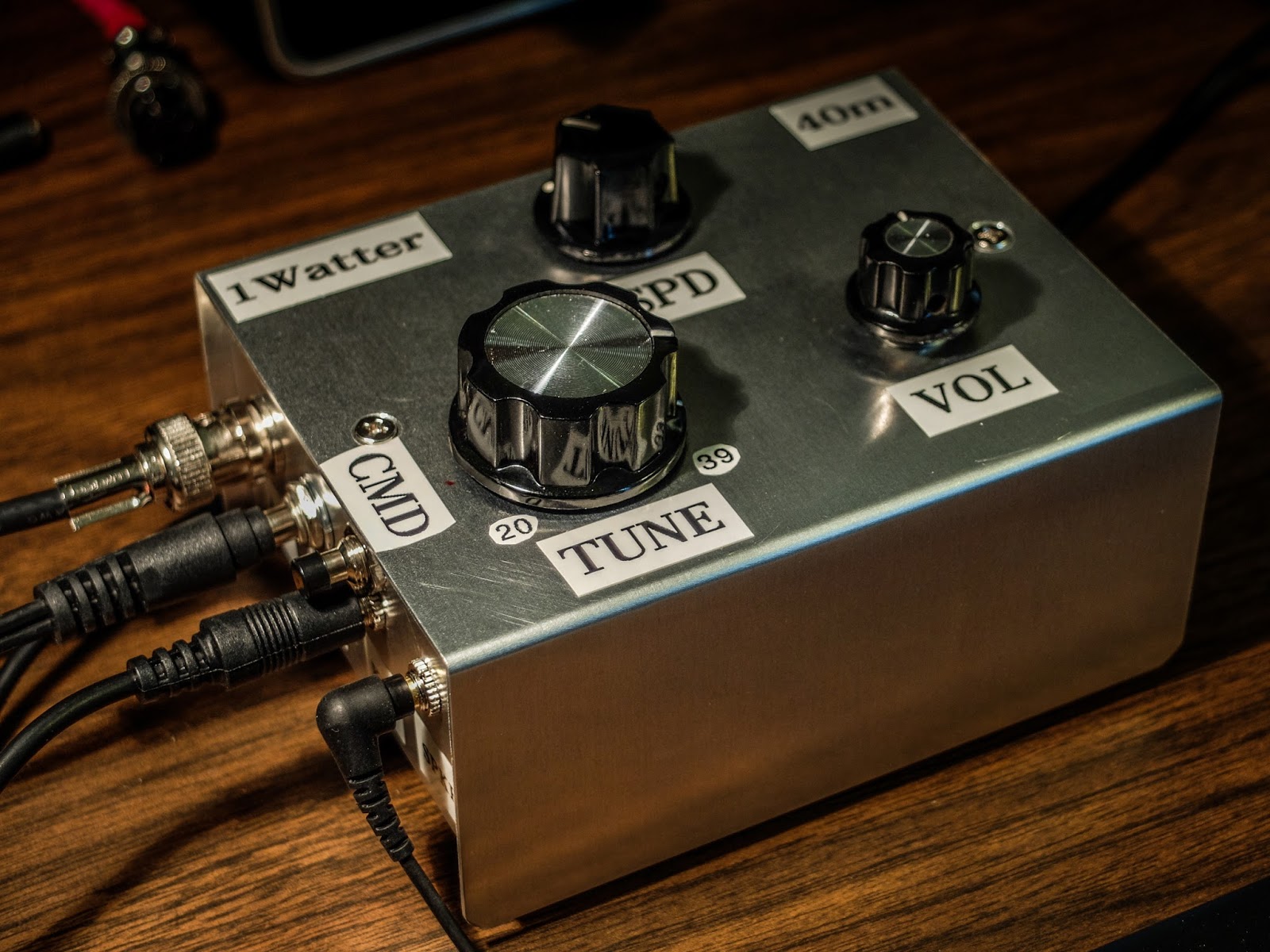 |
| Inside the enclosure |
The 1Watter is a kit from kits and parts dot com
- 1 mighty watt of output
- Good selectivity from the 3 crystal filters
- A VCXO tuned frequency range for the 40m band from approximately 7,020 kHz through 7,039 kHz
- A built-in full functioned keyer with provision for adding a speed pot and messages
- Included command button accesses the functions of the electronic keyer
- Natural sounding sidetone (nicer than my Ten-Tec Century/21)
The Build
 |
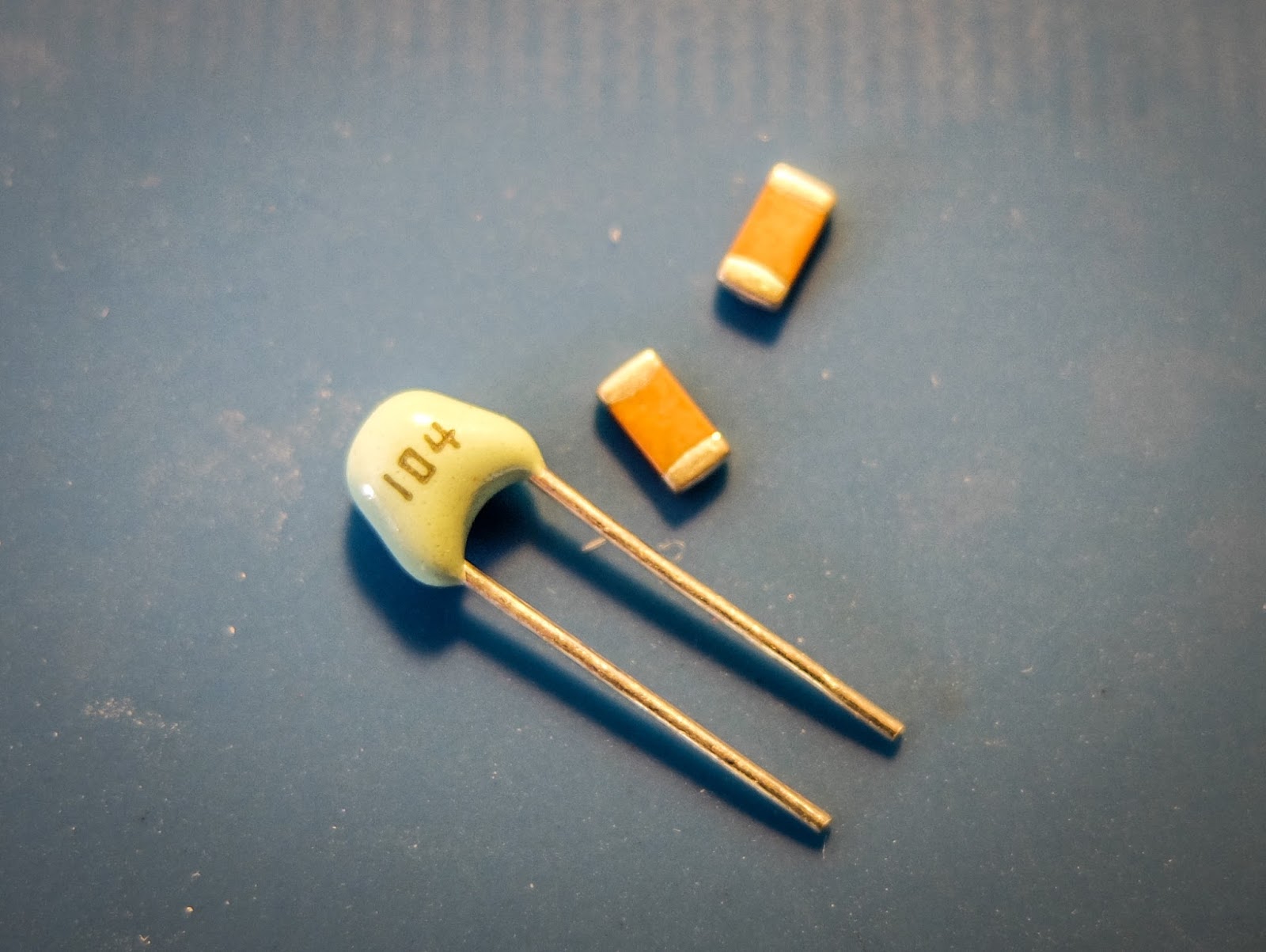
| SMT and through hole caps are supplied |
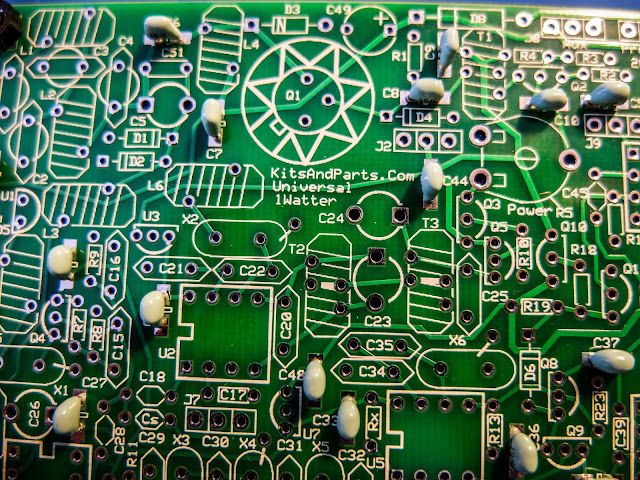 |
| using through hole capacitors rather than the SMTs |
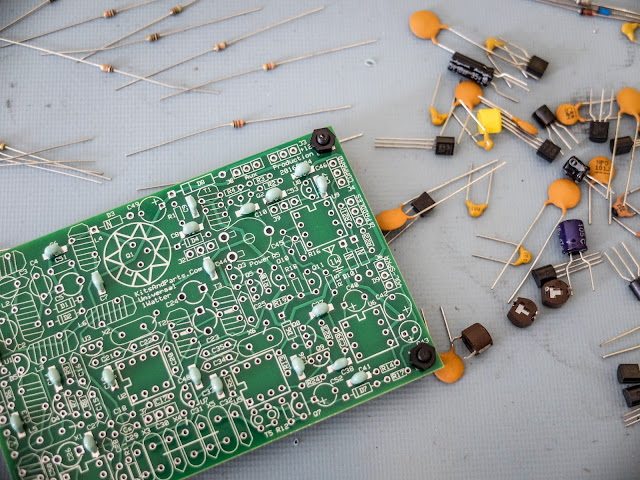 |
| some of the bits and bobs |
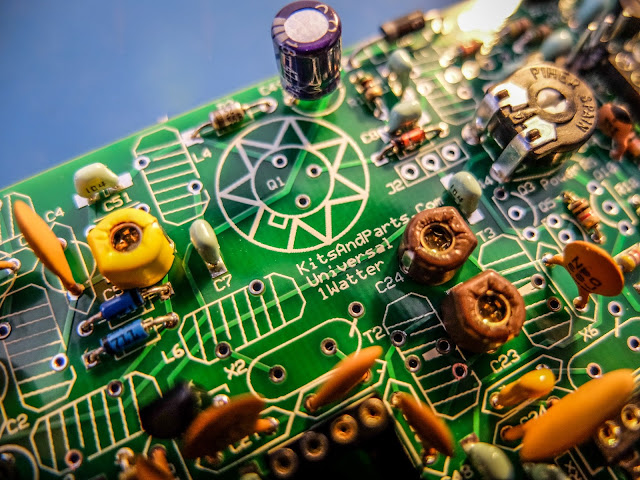 |
| build is progressing |
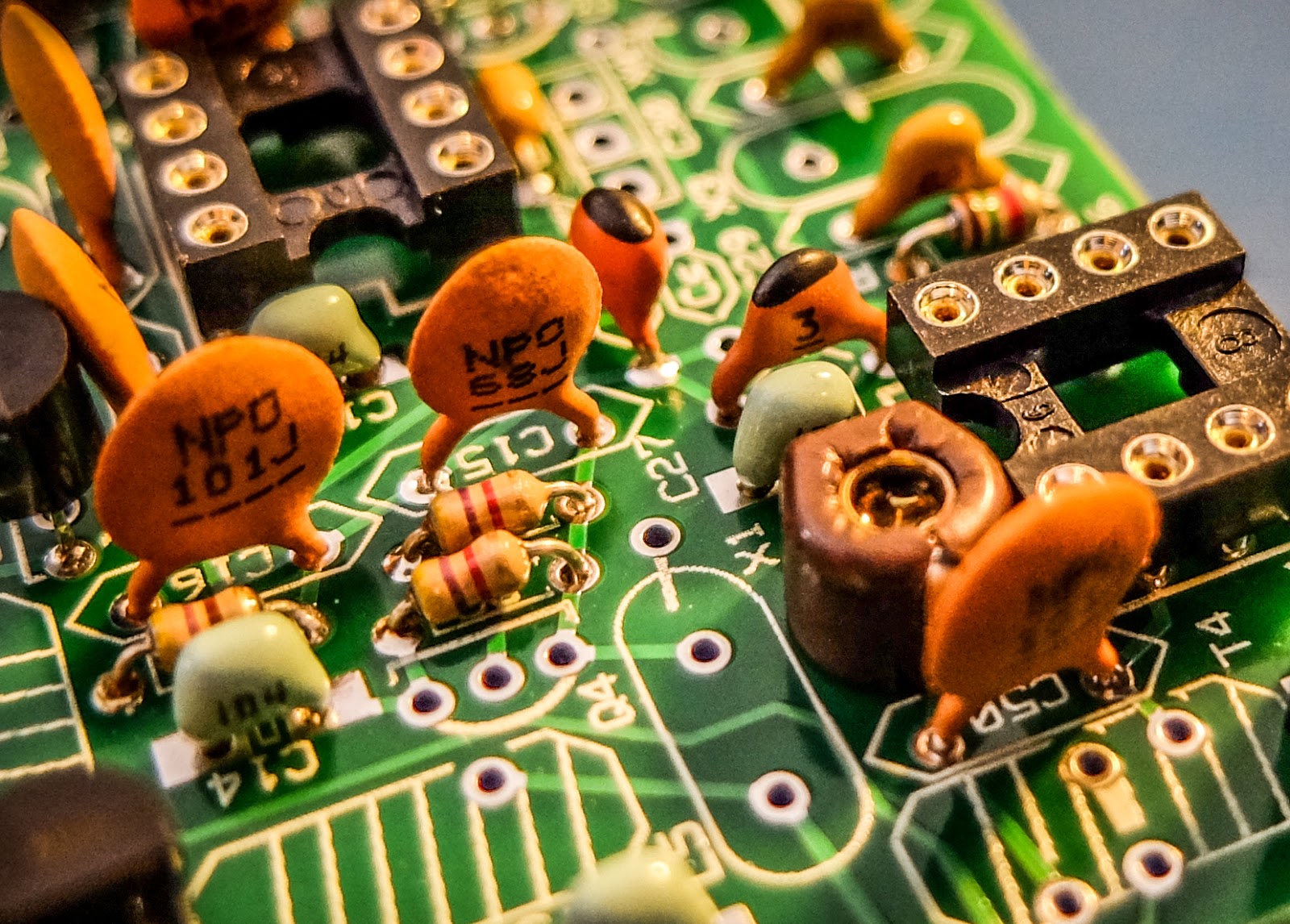 |
| close up |
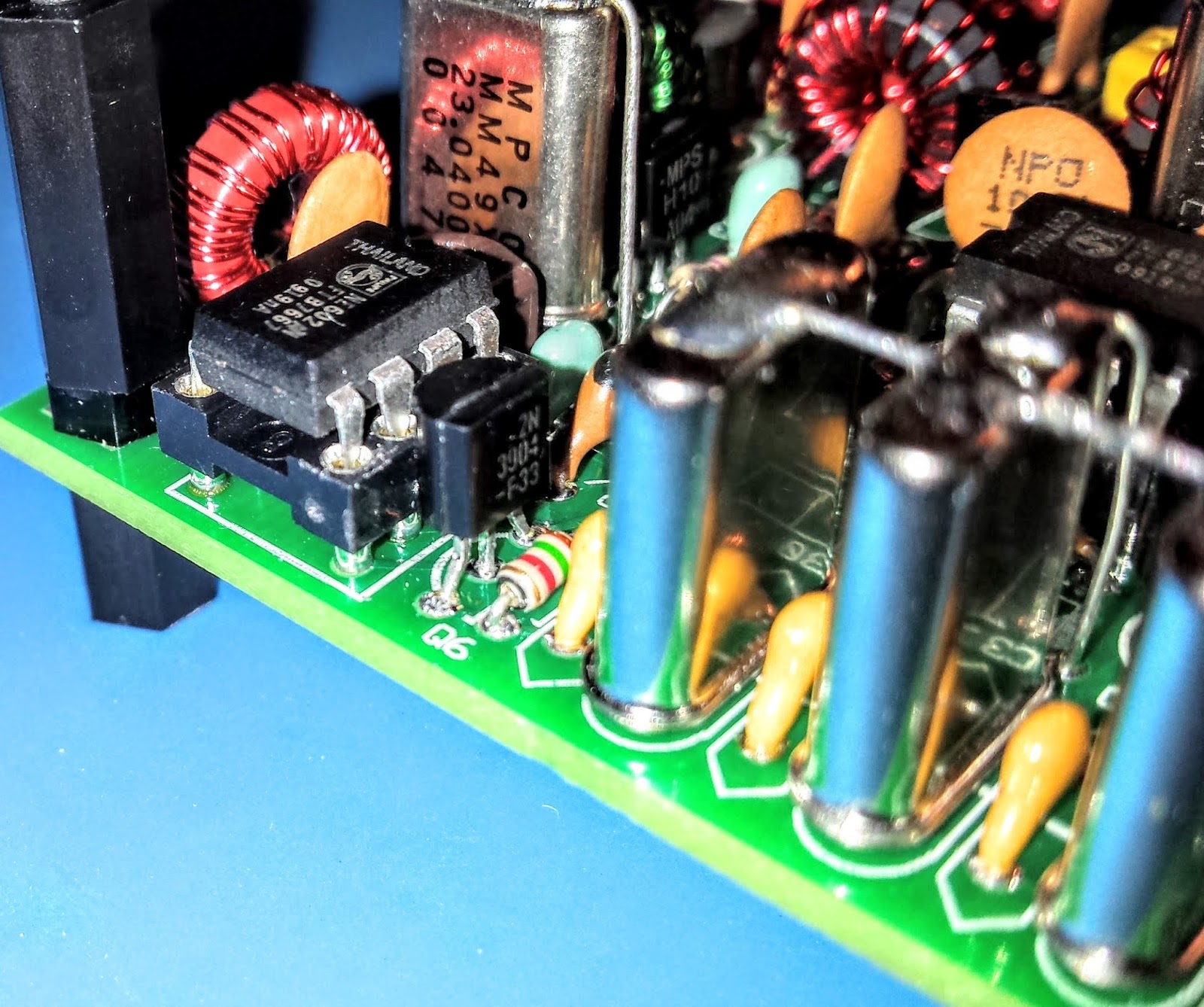 |
| XTAL filters give it good selectivity |
 |
| Everything except the final transistor |
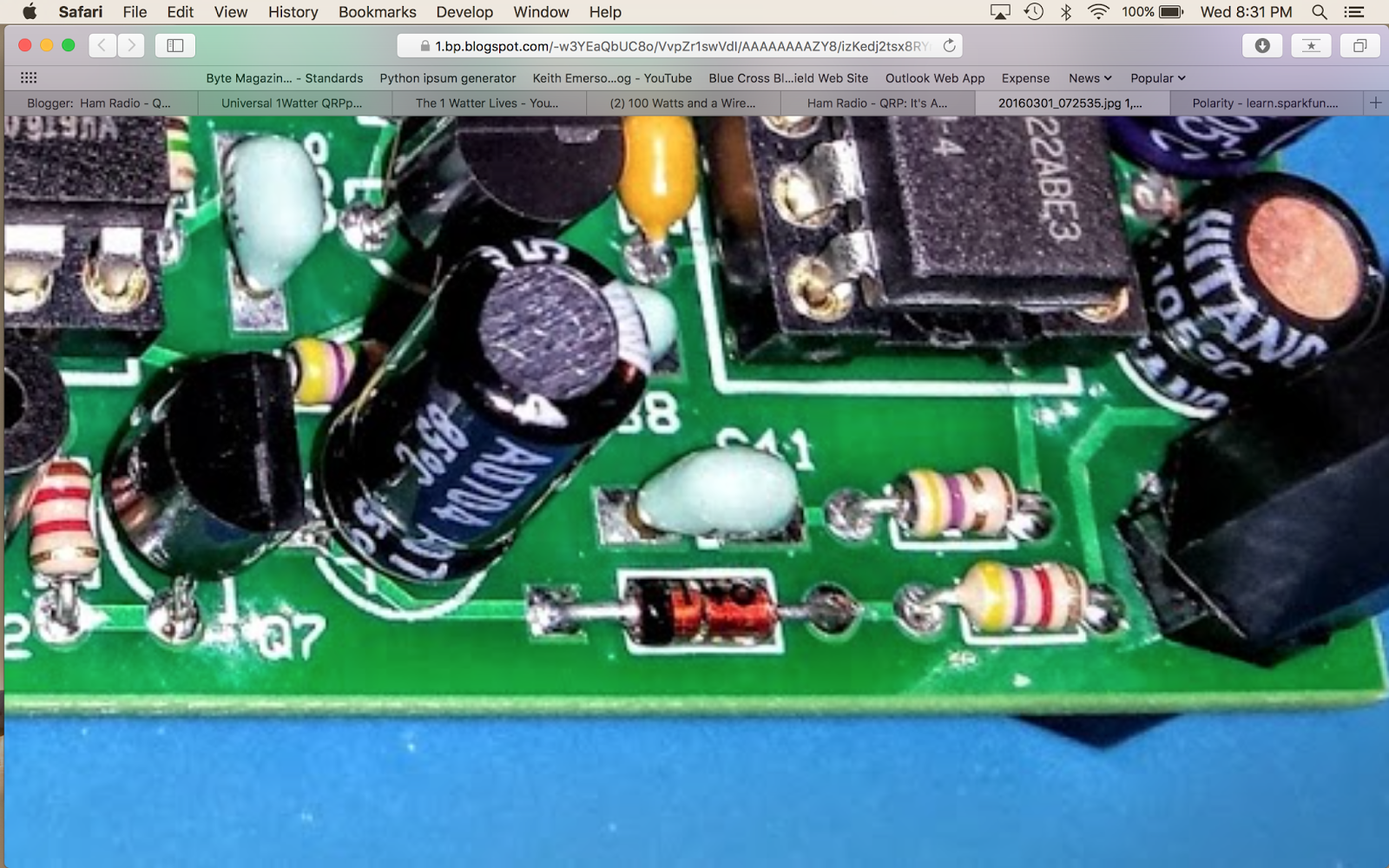 |
| AGC circuit |
Debugging
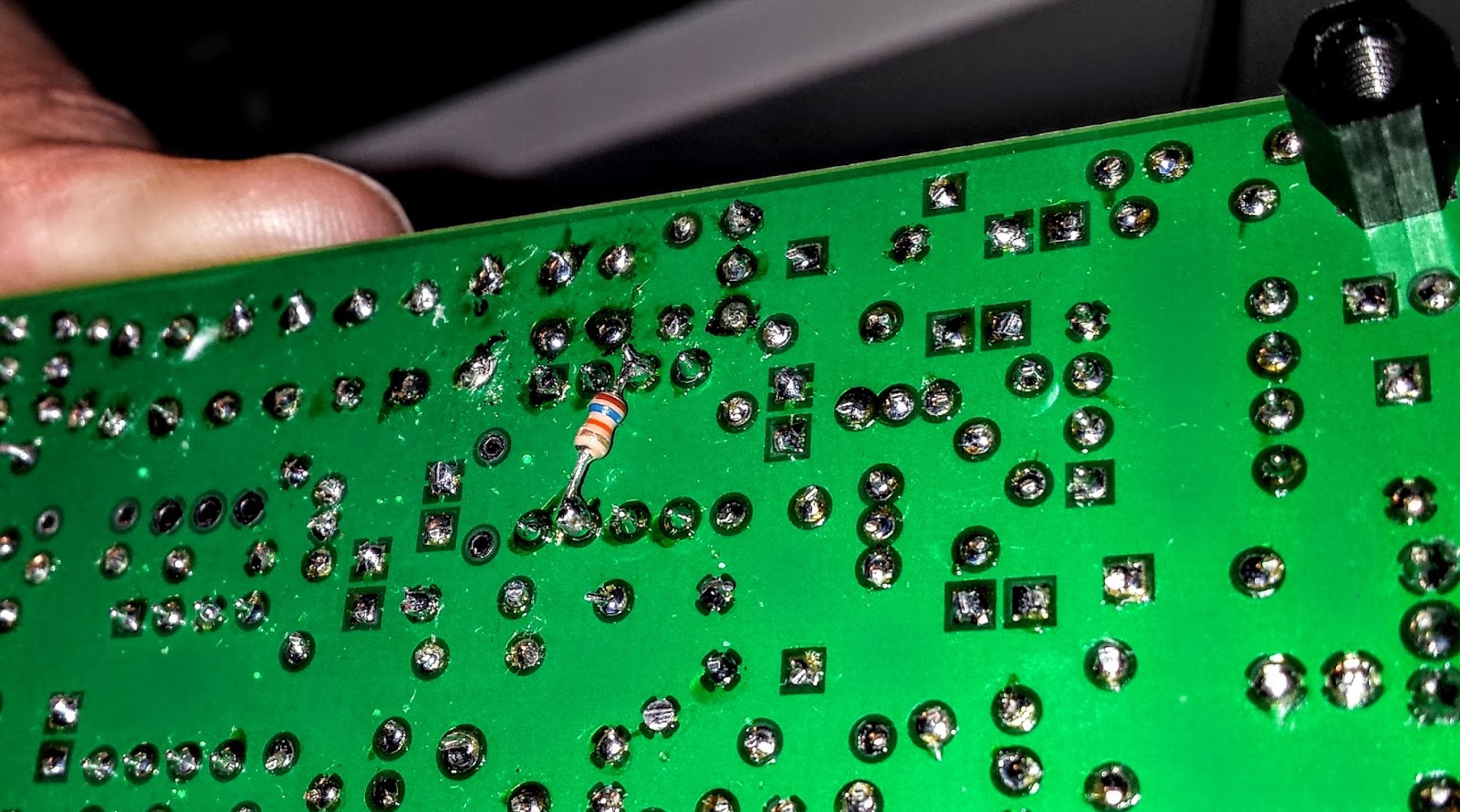 |
| The FIX for all those problems required an extra resistor connected across U5 |
Learning from problems
Being the first person to build a particular version of a kit brings its own set of challenges, especially when you're as new to kit building debugging RF problems as I am. However I'm actually glad the kit didn't work right at the initial build.The process of debugging the board, was a great learning process. I studied the schematics and learned, as best I could, the function of each circuit so that I could better understand how to test it. During the debugging process Diz instructed me that although RF signal generators and scopes are useful you can tell a lot by touching a RF component with an inductive metal object and listening for a buzz or hum from the BFO.
So all-in-all, even though the bug in the board was not due to a error on my part, I'm glad it occurred. I understand more about superhet radio design than I did before and more than if the kit had worked right off the bat.
On the air
 |
| Frequency control pot on the left |
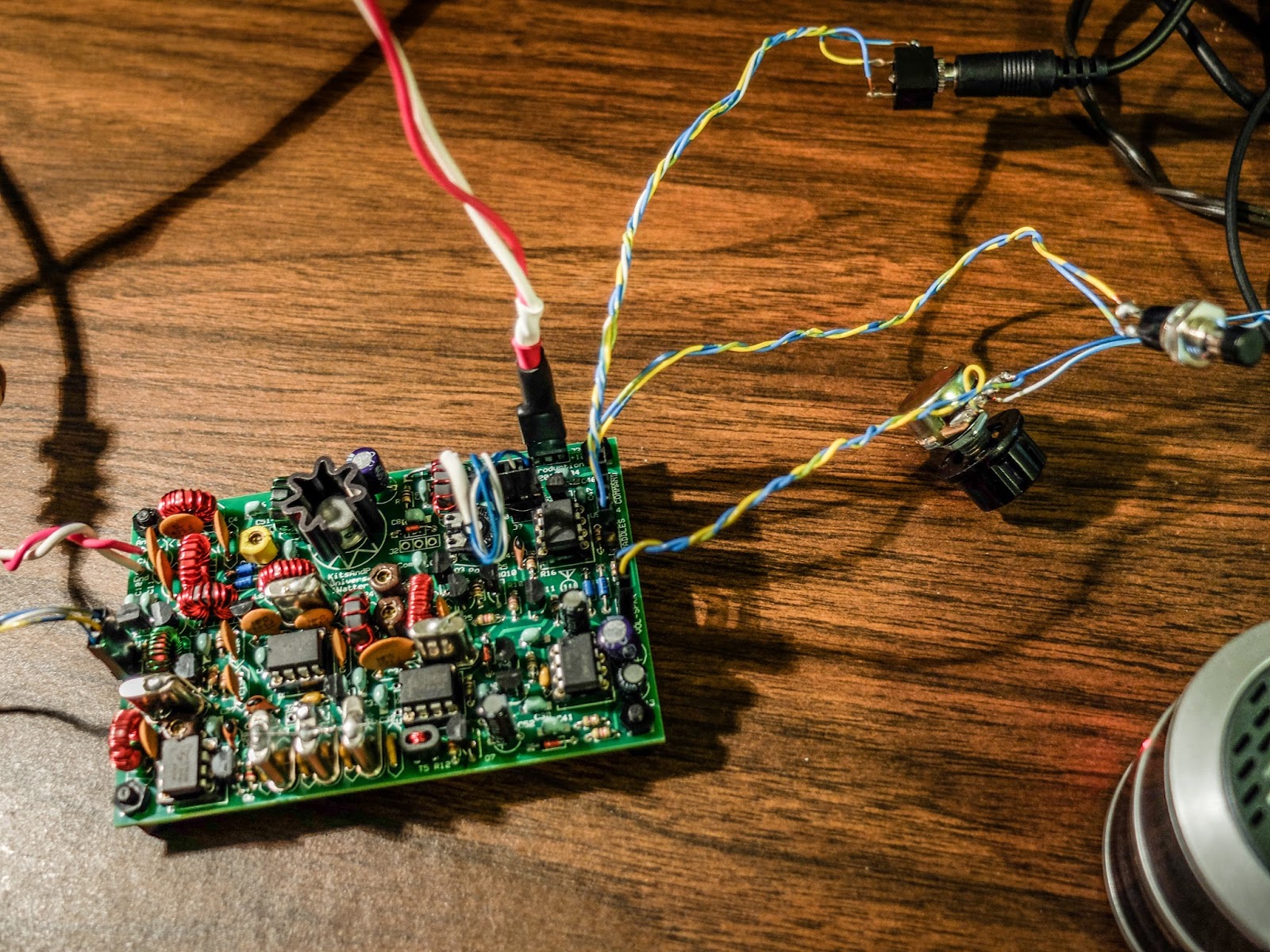 |
| Volume control, output jack, cmd pot and paddle input |
For this first on-air excursion I was using it at the default startup 15wpm keyer speed. You can default the speed higher with a different resistor value.
I have a resistor shrink wrapped and connected in-line to the blue-white wire coiling above the radio connecting to the speed pot terminal. In essence fixing the speed at 15wpm until I add the speed pot.
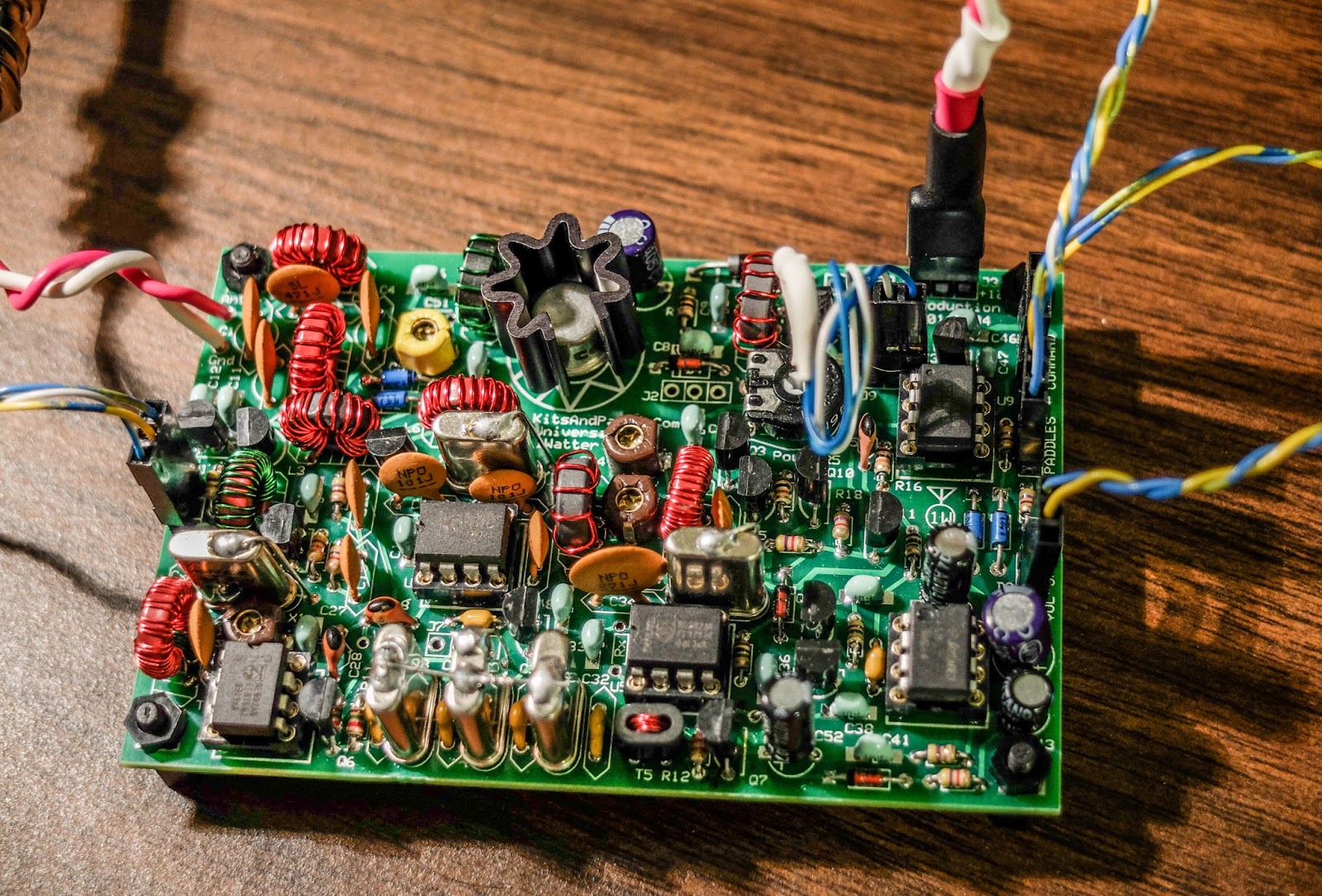 |
| Ready to transmit |
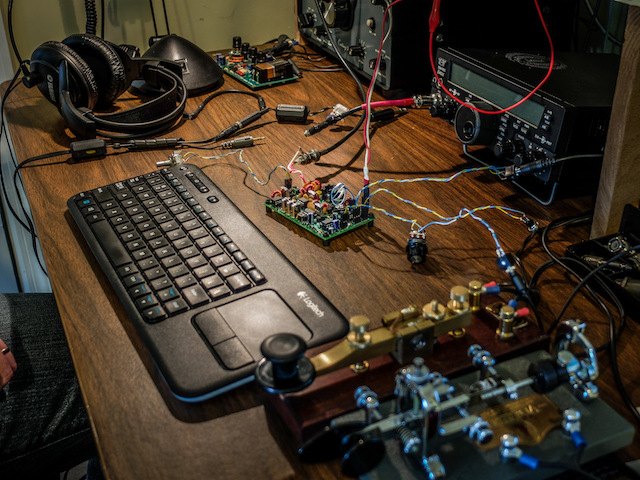 |
| On the air... I was using my paddle out of the photo to the right of the Bug |
First On Air QSO
Summary
Just imagine. This little $50 single band kit has good selectivity, a nice built-in keyer with a natural sounding sidetone, and lest we forget... You get a MIGHTY 1 WATT of OUTPUT. What more could a QRP ham need.
UPDATE: 04/01/2016
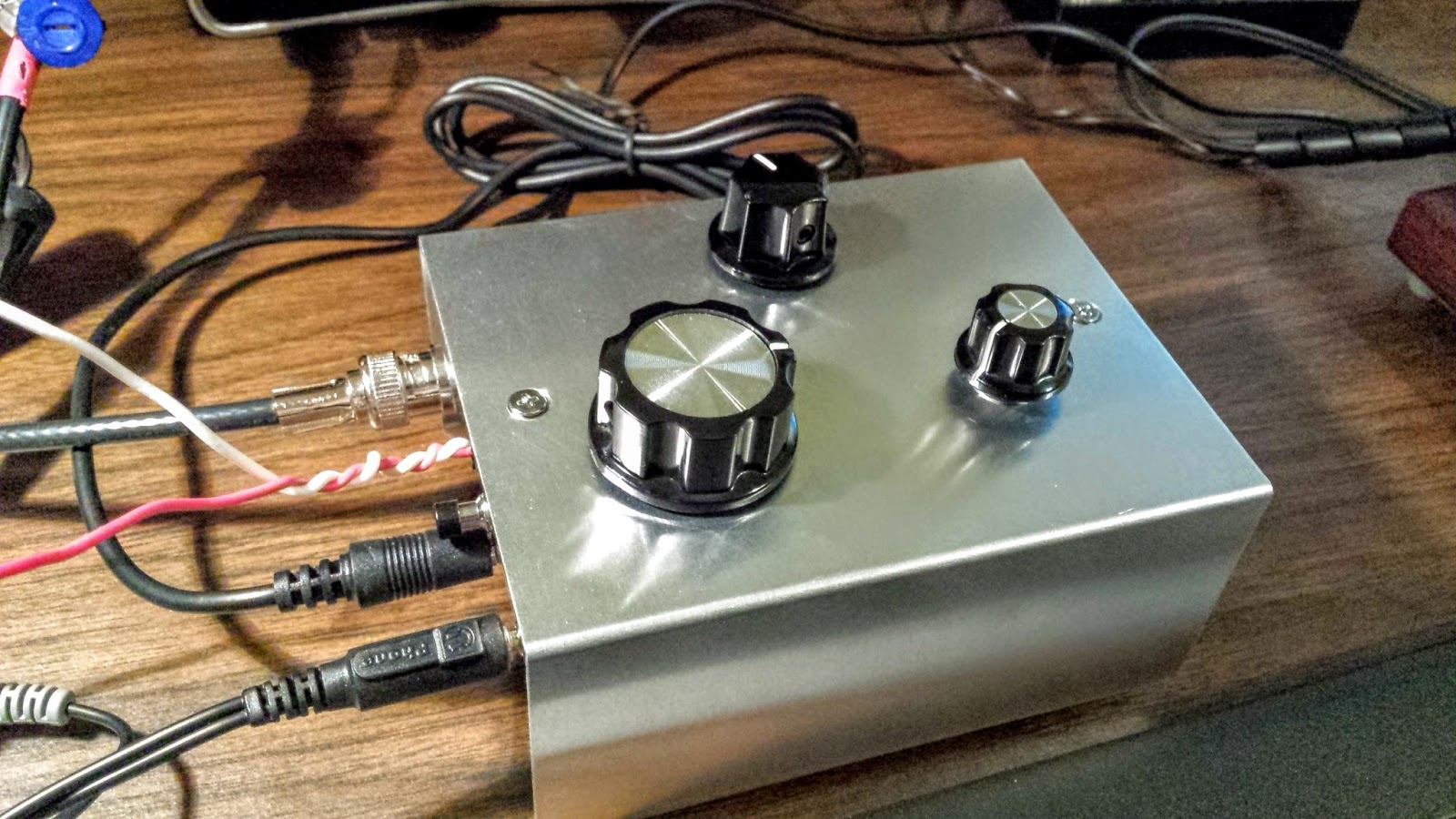 |
| !Watter installed in a case |
UPDATE: 04/05/2016
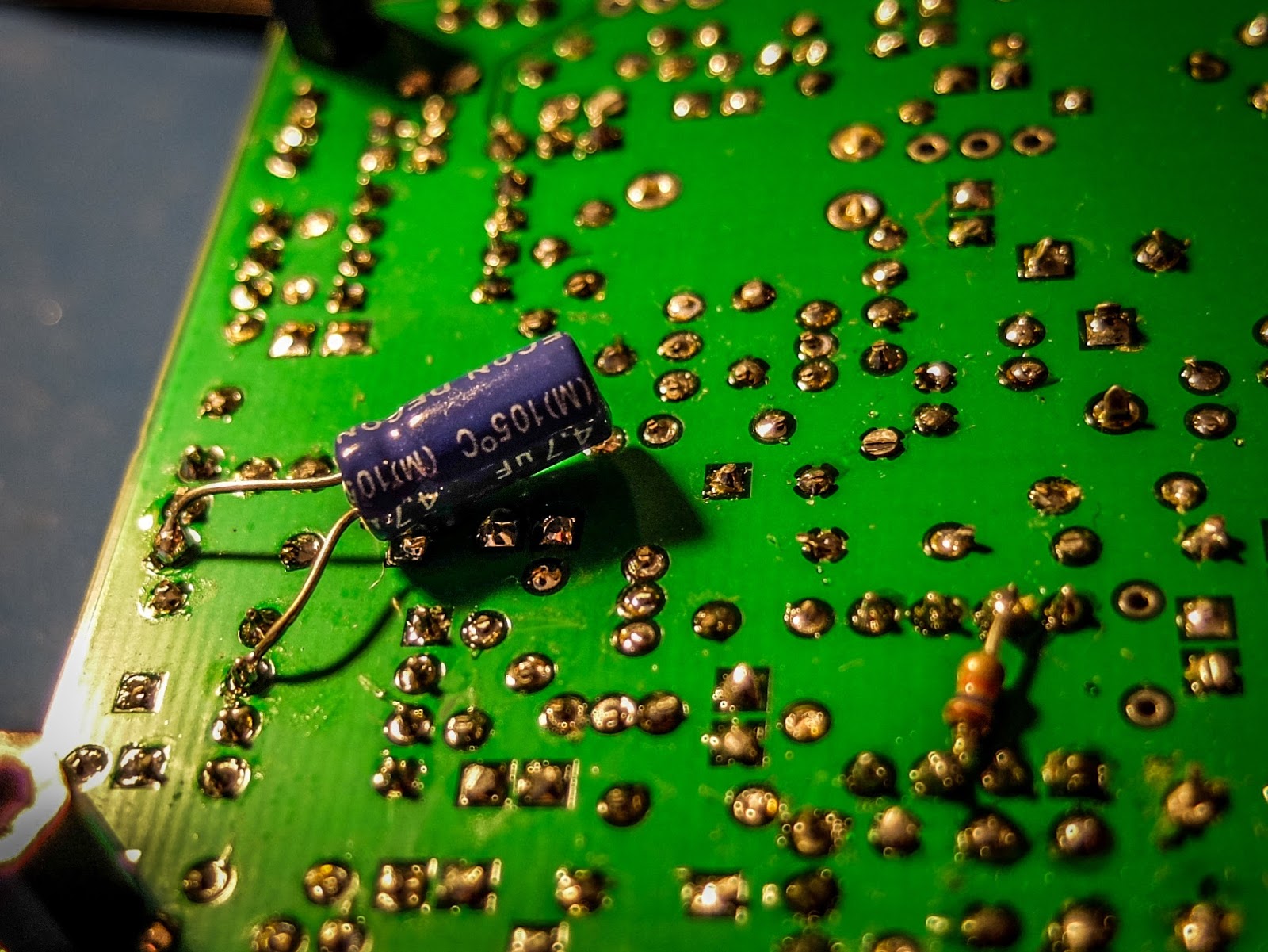 |
| cap fix for LM386 oscillations |
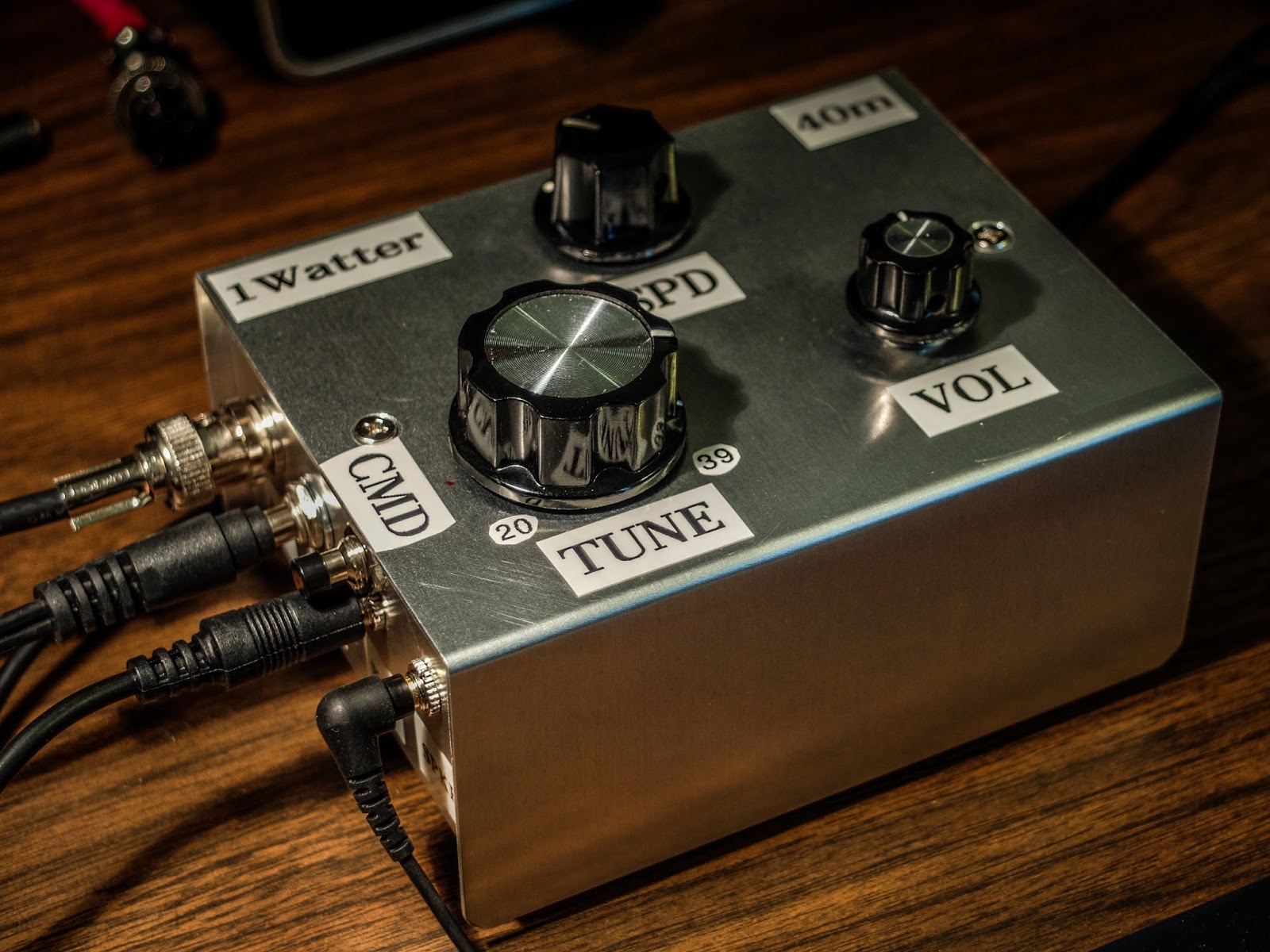 |
| 1Watter in enclosure with all the proper connectors for the case |
Richard Carpenter, AA4OO, is a regular contributor to AmateurRadio.com and writes from North Carolina, USA. Contact him at [email protected].
 Ham Radio Deluxe |
 W5SWL Electronics |
 Ham Radio Prep |
 KB3IFH QSL Cards  Hip Ham Shirts  HamRadioAuctions HamRadioAuctions Reliance Antennas Reliance Antennas Enigma Shop Enigma Shop |  morseDX  Ni4L Antennas  R&L Electronics R&L Electronics antennas.us antennas.us QRV QRV |
- Matt W1MST, Managing Editor
