 |
 Amateur Radio Weekly – Issue 110
 7 May 2016 | by
FreeDV 2400A and 2400B demos
This digital voice mode will run on any legacy FM analog radio.
Rowetel
FCC action anticipated on ARRL’s “Symbol Rate” petition
ARRL seeks to change the Amateur Service Part 97 rules to delete the symbol rate limit in §97.307(f) and replace it with a maximum bandwidth for data emissions of 2.8 kHz.
ARRL
Review: Leixen NOTE 25 Watt HT
The NOTE is a 16 Channel UHF transceiver, the likes of which I have never seen before.
Miklor
10 Milliwatt WSPR Beacon
The Etherkit Si5351A Breakout Board combined with the Si5351Arduino library provides a low-cost, wide range PLL with excellent frequency resolution.
Etherkit
RF coverage tool
VE2DBE
Listen more than you send
Make the most of your opportunities to listen to live QSOs from your home station.
Ham Radio QRP
Pirate from Baghdad
Hassan has bootleged multiple calls for several years.
Southgate
2016 Digital Mode Most Wanted Survey
These surveys help DXpedition planners and are of interest to all digital operators.
Southgate
BridgeCom releases 220 MHz Mobile Radio
Features include 30 watt Mitsubishi power amplifier, Bluetooth option, and included programming cable.
BridgeCom
How to
Decoding APRS packets with SDR Dongle
S55MA Ham Blog
Dashboard for MMDVM DMR relay
F5KMY
Video
Digital Amateur TV in action
Rpidatv is a program that allows a Raspberry Pi to transmit DATV without the need for any additional hardware.
RTL-SDR.com
HackRF replay attack on Jeep Patriot
Demo of a replay attack on a Jeep Patriot’s keyless entry system.
YouTube
Amateur Radio Weekly is curated by Cale Mooth K4HCK. Sign up free to receive ham radio's most relevant news, projects, technology and events by e-mail each week at http://www.hamweekly.com.
You have two ears but only one mouth
Listen more than you send
Listen more than you talk because God gave you two ears but only one mouth
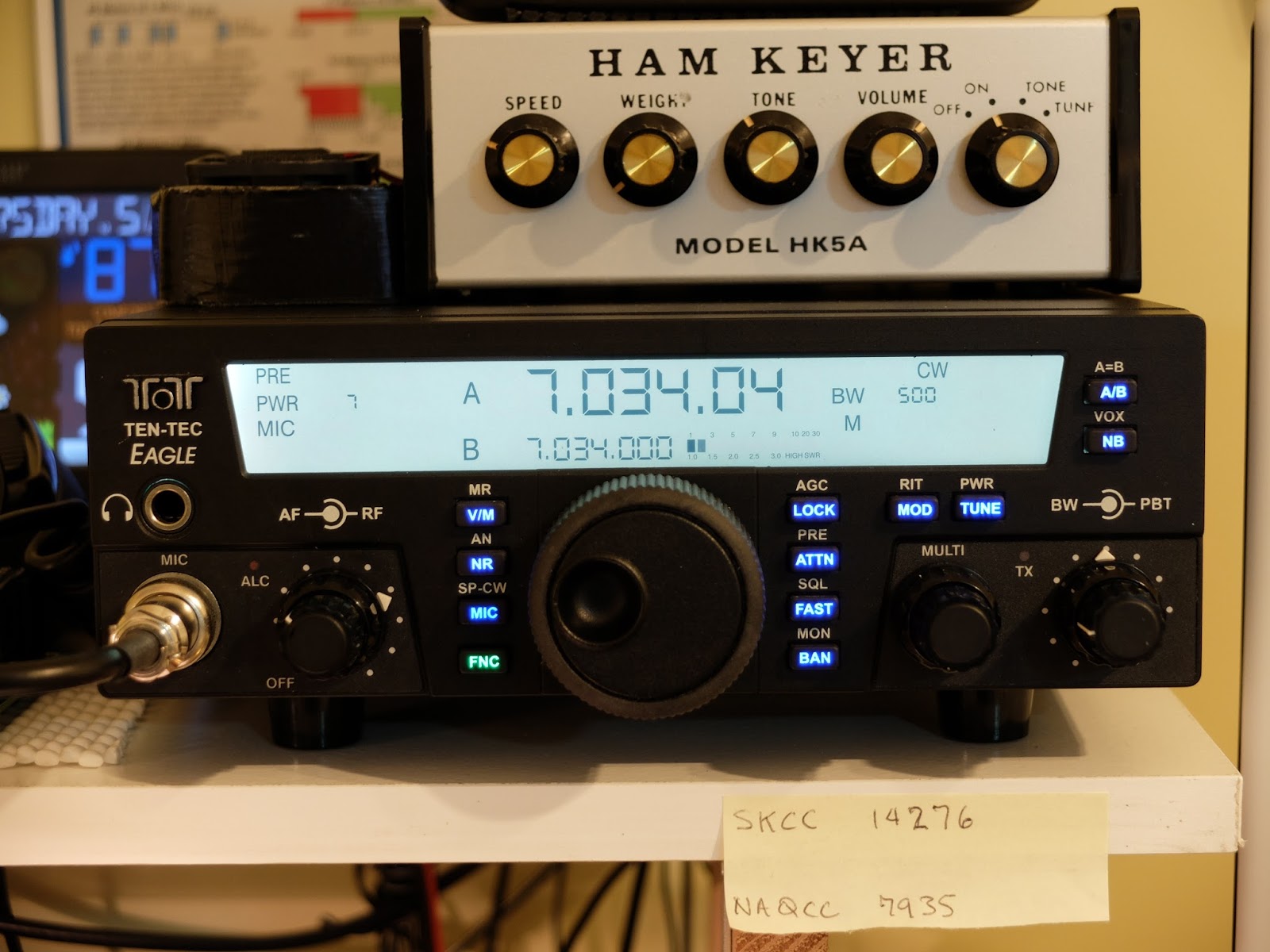
Listening to on air CW QSOs using your own HF radio...
Find conversations that are at different speeds for your practice copy. In my experience, when I only practice copying higher speed CW for a time, my ability to recognize slower CW gets rusty so practice copying all speeds. I was worked by a station some months back when I was sending at only 13wpm who came back on the second exchange and replied that I was too slow to copy and he quit the QSO. I don't want to be like that.
Along with copying QRS stations, practice copying stations that are well above your comfortable copy speed in order to stretch yourself. You will likely miss much of the conversation but your ability to start recognizing common words and abbreviations will increase. Another side effect I find is that when I listen to a 25wpm (well above my present copy speed) exchange between two operators who have equally strong signals, I'll usually copy one station better than the other. I try to figure out why that's the case. Something about that operator's style is easier to copy and when I discern why that is, I try to emulate it.
I want to be able to copy all speeds of CW; both to encourage new QRS operators and ragchew with the QRQ old-timers.
 |
| On Air Practice |
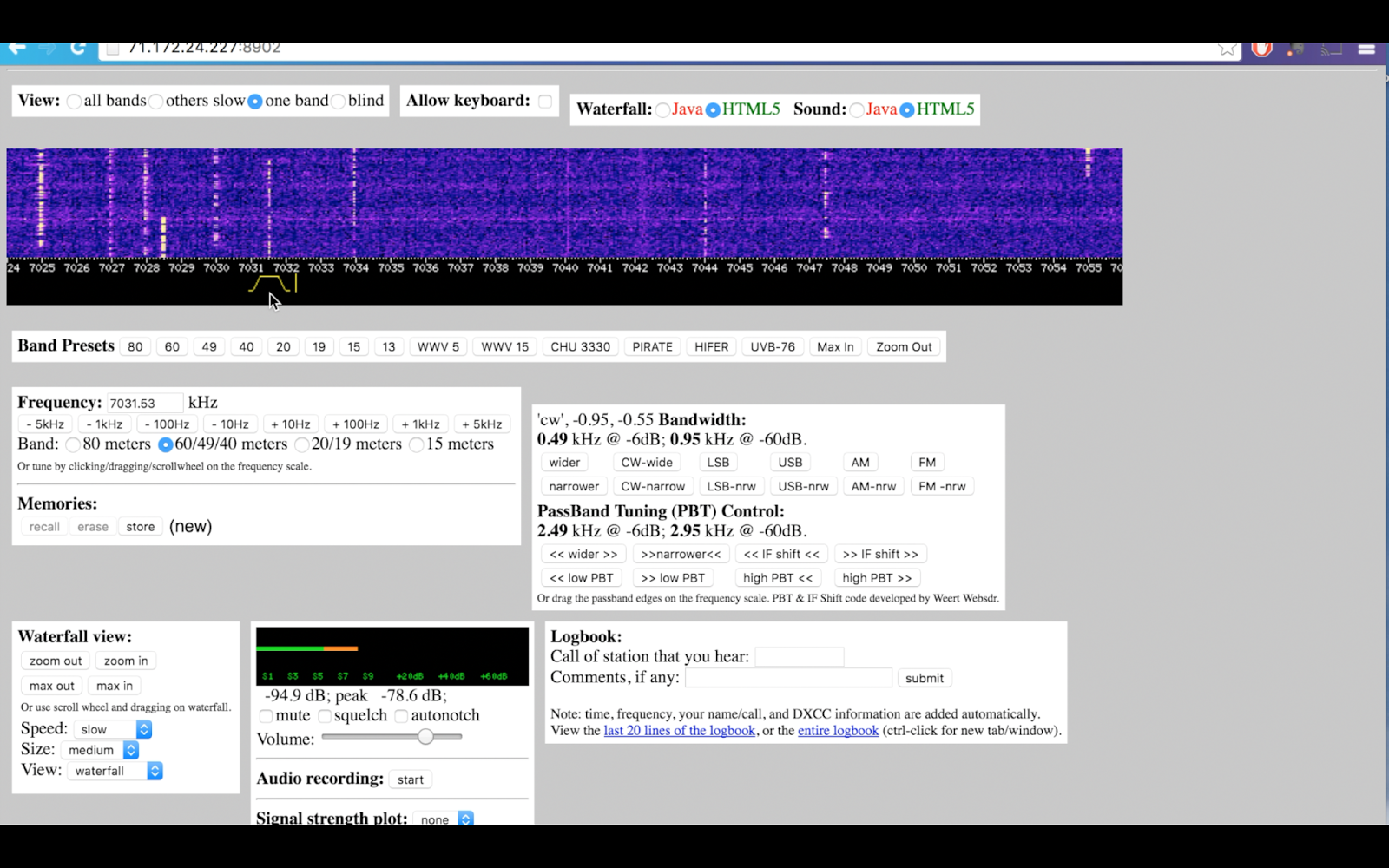
Listen to on air CW QSOs using remote radios
Web SDR stations are accessible from http://websdr.org and allow you to listen to CW anytime you have access to the internet. Web SDR stations are available from around the world, potentially from countries you haven't been able to regularly hear from your QTH. So it allows you to hear different sending styles from around the world.
 |
| Web SDR station |
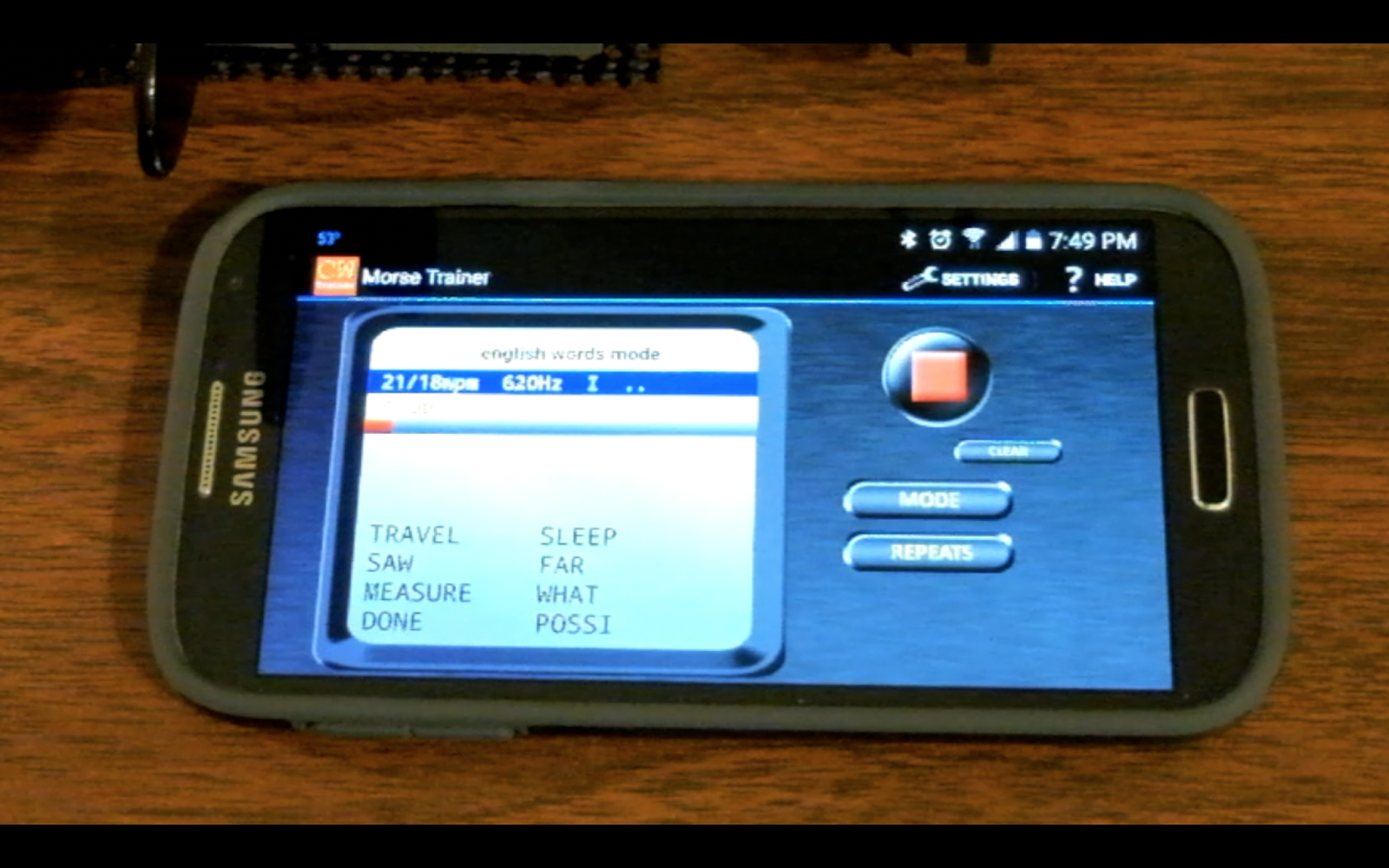
Listen to machine generated CW
 |
| Morse Trainer app for Android |
Sights and sounds
Richard Carpenter, AA4OO, is a regular contributor to AmateurRadio.com and writes from North Carolina, USA. Contact him at [email protected].
When you backup it’s not all about going in reverse!

- Why even bother with a backup, it’s not a business computer, I have no crucial financial documents, I don’t store any pictures on my PC………let me stop here and say “have you EVER had to re-install you amateur radio software?” I just did and have done in the past, all I can say is “it can be a real pain in the ass”. You find a new respect for….
- Getting your software to seamlessly work with your rig again.
- Hoping your Eqsl, LOTW or Clublog is up to date so you don’t lose contacts.
- Sending out emails to get passwords so downloaded programs I paid for will work again.
- All your software’s niffy macros you worked so hard to tweak are now gone.
- Revisiting the virtual comport software program that worked well and now you have to figure it out again….the problem being you forgot how you got it to work great last time.
- So answering a loud and clear “YES” to the above question it’s time to check out the backup programs out there. I found lots of them and as stated earlier I wanted to avoid at all costs complicated ones. I chose Acronis 2016 and there are lots out there that I imagine are better or just as good but this is the one I chose. For me Acronis was easy to understand, walked you through your backup in detail and it worked!
- Where was I going to back up too……….my new hard drive is partitioned but it makes no sense to back up on the same drive that could end up failing? I have a second drive in my PC (Seagate 1TB) and that was my choice.
- Step 3 just seemed too easy and the more reading I did the more it was driven home……backup to more than one place and preferably 3 places! I ended up choosing my network Western digital 3TB external drive and a Western Digital passport USB drive. Oh and just for the record I have no connection to Western Digital…..:) From my readings one choice should be a “cloud” type storage. For me it was just too pricey and I have these drives at home and ready to use.
- I did a full backup of the drive including system reserve portion. This backup will always be kept as is, this way I have a copy of the drive just after a clean install of the OS and all programs.
- I have scheduled an incremental backup for once per month as I don’t change too much on my PC over the course of a month so I felt this length of time should be fine. I use Log40m and configured it to auto upload my QSO’s to club log, Eqsl and LOTW so I will not have uto be concerned with updating my log file it will be store in 3 places online.
- Each time a back is done the program will perform a “validation” of the backup. Having said this I have found when a failed validation has happened and I run it again the backup will then pass? Not too sure what’s up with that and may need more investigation.
- The PC is set to shut down once the backup is completed, this way I can leave and go to work.
- I receive an email once the backup is done along with a report.
- I did have the software set to repeat the backup if the validation fails but I found the software can get into a “loop” of backing up all day if a continued failed validation persists.
Mike Weir, VE9KK, is a regular contributor to AmateurRadio.com and writes from New Brunswick, Canada. Contact him at [email protected].
QSL Bounty
Four of the cards were for recent 2m EME contacts ...

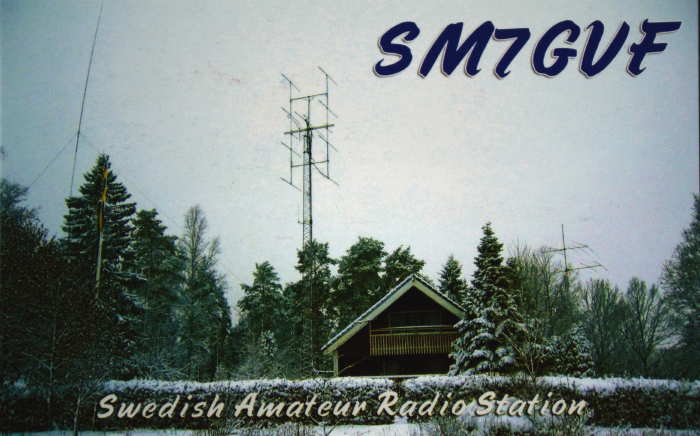
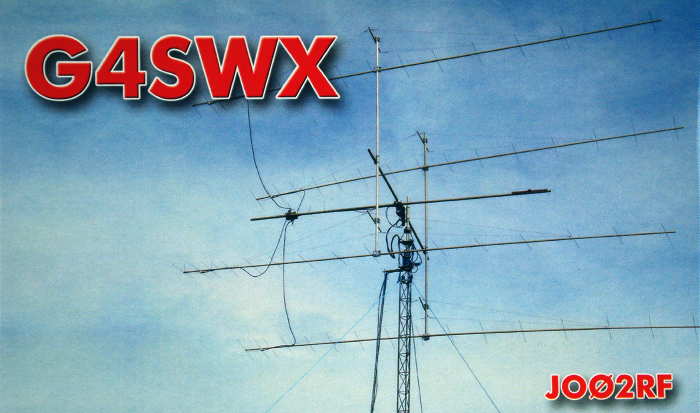
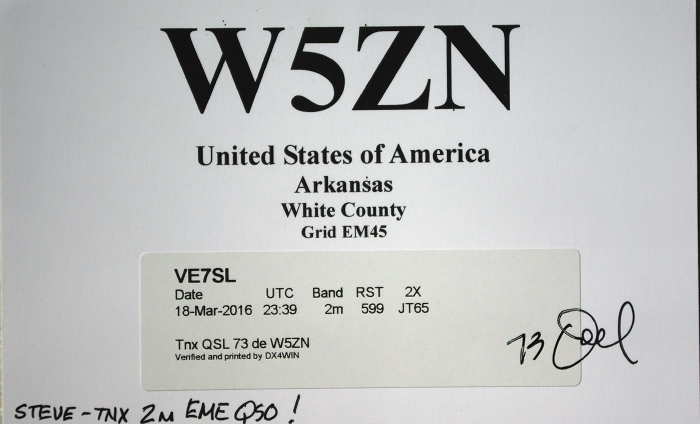
... and one was for 160m, confirming a winter CW QSO with Haiti, bringing my 160m DXCC total to 158 confirmed.
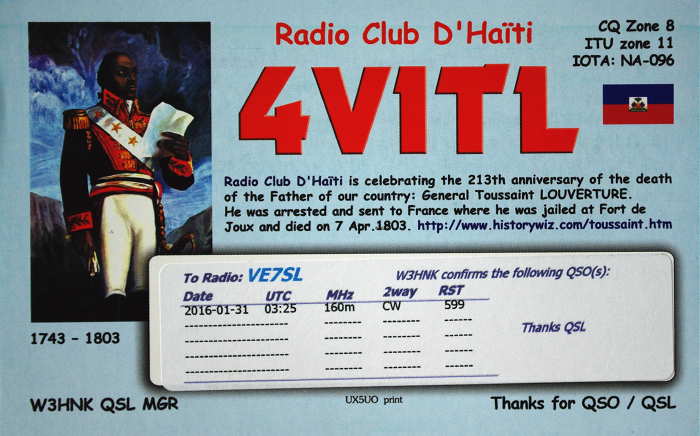
I have always loved QSL's, and looking back, the whole concept of collecting these small treasures was one of the things that initially attracted me to the radio world, when reading a magazine article about shortwave listening and collecting QSL's. I'm not so sure I love the QSL bureau though, but that's a whole other topic ...
Steve McDonald, VE7SL, is a regular contributor to AmateurRadio.com and writes from British Columbia, Canada. Contact him at [email protected].
The Spectrum Monitor — May, 2016
 Stories you’ll find in our May, 2016 issue:
Wi-Fi Radio Primer Part 2: Review of Stand Alone Wi-Fi Radios
By Thomas Witherspoon K4SWL
Wi-Fi radios, by and large, look like traditional radios; they typically have backlit digital displays, front panel buttons to recall memories, and an internal speaker. They function like them, too, in that they play radio stations––but there’s where the resemblance stops. Streaming lnternet audio, and their dependence upon an aggregator to do this, sets them entirely apart. This month Thomas looks closely at some popular Wi-Fi radio choices to find the good, the better and the expensive.
Piggy Bank Ham Radio Part 2
By Cory GB Sickles WA3UVV
Last month, Cory introduced you to the possibilities of getting involved and having fun with ham radio on the HF bands—using (among other things) CW (Morse code), some ingenuity and networking with fellow hams to get started—all within a target budget of less than $100. This month, he explores some of the details of putting together your first station, including a simple antenna you can build, complete with an inexpensive QRP tuner for just $25 as well as tips on making that first CW contact.
Saving AM Broadcasting in North America
By Mike Kohl
For decades the AM broadcast industry has slipped further and further behind what it thought was its main competition: FM broadcast radio. Now, with satellite radio and Internet streaming taking more market share with each passing year, AM radio is frantically looking for a way to bail out a sinking ship. Mike outlines some of the options available to the oldest sector of the broadcast industry through regulation and market incentives. But, will any or all options be enough?
Becoming Radio Active when the Rubber Hits the Road
By Richard Fisher KI6SN
Many hams spend more time in their cars than in their shacks, leading to the notion of going mobile and not just for 2-meters. But it’s not nearly as easy as you might think. Trying to get an HF signal out of a moving, noisy, metal shack using impossibly short antennas are only a few of the difficulties to be overcome. Richard examines the mobile operations of a few of the most successful road operators to find out how to do it right.
TSM Reviews:
Comet CA-500 MKII Antenna Analyzer and A Pair of Cans for your Radio Pleasure
By Mark Haverstock K8MSH
There’s an old saying in ham radio: if you can’t hear ‘em, you can’t work ‘em! A good pair of headphones (sometimes referred to as “cans”) can make the difference in working DX or just being enjoying a QSO in a noisy home environment. Mark takes a look at two popular headphone sets: Audio Technica’s BPH1S broadcast headset and Heil Sound’s Proset Elite amateur radio headset. Both have their advantages and both are under $200.
Scanning America
By Dan Veenaman
Calvert, St. Mary’s (MD) and Lewis (NY) Counties
Federal Wavelengths
By Chris Parris
Summer Vacation Scanning
Utility Planet
By Hugh Stegman NV6H
HF in Death Valley
Digital HF: Intercept and Analyze
By Mike Chace-Ortiz AB1TZ/G6DHU
International ALE Networks
HF Utility Logs
By Mike Chace-Ortiz and Hugh Stegman
Digitally Speaking
By Cory Sickles WA3UVV
New DV Gear from the LMR World
VHF and Above
By Joe Lynch N6CL
Summits on the Air
Amateur Radio Insights
By Kirk Kleinschmidt NT0Z
Forgotten Antenna Fundamentals and Other Curious Tidbits—Part 4
Radio 101
By Ken Reitz KS4ZR
Channel Master’s FlatWave TV Antenna; Help for 3M’s WorkTunes Radio
The World of Shortwave Listening
By Jeff White
Spanning Two Continents and the Mediterranean: Turkey and Cyprus on Shortwave
The Shortwave Listener
By Fred Waterer
“Isle of Music,” BBC, RHC and More
Amateur Radio Astronomy
By Stan Nelson KB5VL
Revisiting Radio Jove with a Low Cost Computer
The Longwave Zone
By Kevin O’Hern Carey WB2QMY
Longwave Beacons: the Ideal DX Target
Adventures in Radio Restoration
By Rich Post KB8TAD
Not Another Heavy Hammarlund HQ-129X!?
Antenna Connections
By Dan Farber AC0LW
Antenna Height Above Ground
The Spectrum Monitor is available in PDF format which can be read on any desktop, laptop, iPad®, Kindle® Fire, or other device capable of opening a PDF file. Annual subscription is $24. Individual monthly issues are available for $3 each.
Ken Reitz, KS4ZR, is publisher and managing editor of The Spectrum Monitor. Contact him at [email protected].
April 2016 QRP Operating Wrap-Up
It was another pretty active month on the radio for me and my KX3. I have now operated portable 22 times – with my goal being 45 for the year – I think I will make it no problem!
I continued this month really having fun with the SKCC QSO’s and chasing members for my first 100 SKCC contacts so I could claim the Centurion Award. I ended the month with 83 total contacts toward my ‘C’ – just 17 more and I will be there.
With WES coming up this weekend I should be able to get there in short order!
So here is the recap on the MONTHLY numbers:
Total QSO’s all modes: 81
Total CW QSO’s: 75
Total PSK31 QSO’s: 6
Total SKCC QSO’s: 65
I apologize to those I have worked but have not documented here on the blog during my portable operations – but sometimes lack of time gets the best of me!
A couple DX highlights from this month – I worked ZL2BLQ in New Zealand on 15 meters and LW3EX on 10 meters with just 5 watts and my portable QRP antenna from a local park!
Even with these poor propagation conditions, I am still having a blast with just 5 watts and a wire!
Burke Jones, NØHYD, is a regular contributor to AmateurRadio.com and writes from Kansas, USA. Contact him at [email protected].
April 2016 QRP Operating Wrap-Up
It was another pretty active month on the radio for me and my KX3. I have now operated portable 22 times – with my goal being 45 for the year – I think I will make it no problem!
I continued this month really having fun with the SKCC QSO’s and chasing members for my first 100 SKCC contacts so I could claim the Centurion Award. I ended the month with 83 total contacts toward my ‘C’ – just 17 more and I will be there.
With WES coming up this weekend I should be able to get there in short order!
So here is the recap on the MONTHLY numbers:
Total QSO’s all modes: 81
Total CW QSO’s: 75
Total PSK31 QSO’s: 6
Total SKCC QSO’s: 65
I apologize to those I have worked but have not documented here on the blog during my portable operations – but sometimes lack of time gets the best of me!
A couple DX highlights from this month – I worked ZL2BLQ in New Zealand on 15 meters and LW3EX on 10 meters with just 5 watts and my portable QRP antenna from a local park!
Even with these poor propagation conditions, I am still having a blast with just 5 watts and a wire!
Burke Jones, NØHYD, is a regular contributor to AmateurRadio.com and writes from Kansas, USA. Contact him at [email protected].
 Ham Radio Deluxe |
 W5SWL Electronics |
 Ham Radio Prep |
 KB3IFH QSL Cards  Hip Ham Shirts  HamRadioAuctions HamRadioAuctions Reliance Antennas Reliance Antennas Enigma Shop Enigma Shop |  morseDX  Ni4L Antennas  R&L Electronics R&L Electronics antennas.us antennas.us QRV QRV |
- Matt W1MST, Managing Editor
