 |
 Activating SOTA’s at Philmont Scout Ranch
 21 July 2016 | by
 Philmont rates their treks by the magnitude of difficulty from Challenging, Rugged, Strenuous and Super Strenuous. The trek I was on was in the Super Strenuous category, for those familiar with the system, our Trek was # 31. I have been training for this trek for over a year and would need all that accumulated fitness to make the trip. We had a crew of eight, two adults and six teenage boys. What you learn, or maybe remember, is that youth covers lots of physical ills, in other words, they recover quickly.
 |
| Baldy Mountain getting closer |
 |
| Operating from Baldy Mountain AD5A In The Middle and AB5EB On The Right |
 |
| Baldy Mountain From Scheaffers Peak Yes, We Hiked That Distance |
 |
| My Grandson, KF5GYD Operating From Scheaffer's Peak |
After the activation of Scheaffer's Peak, we had to put our packs back on and finish the last nine miles of the trek. Another long day, but at the end, what a sense of accomplishment. Hiking 84 miles in rugged back country and activating two new SOTA summits.
Mike Crownover, AD5A, is a regular contributor to AmateurRadio.com and writes from Texas, USA. Contact him at [email protected].
630m – The Path To VK
 |
| Roger, VK4YB |
I've been exchanging e-mails lately with Roger, VK4YB, in Queensland, Australia.
Roger is located about 30 miles from the ocean and has been the only VK signal that I have been able to hear on 630m WSPR mode. He seems to have the strongest signal out of Australia on 630m with his 90 watts and 120' tree supported wire vertical. John, VE7BDQ, has been heard twice down under with his modest station running at the allowable 5W EIRP limit, being reported in the fall of 2015 and again this spring. As well, John has heard Roger, the only signal from VK that either of us has copied.
I would like to be able to run some schedules with Roger in the fall, when transpacific paths should peak again. With that in mind, construction has begun on a new 630m transverter that will allow me to drive my present FET amplifier at full EIRP. Our schedules will utilize the JT9 weak signal mode, similar to JT65 but designed for the noisier LF and MF bands. It uses about 10% of the bandwidth that a JT65 signal requires, about 15Hz, and gains about 2db more sensitivity. A two-way QSO, under the best conditions, would take four minutes if all went well. A typical exchange of the required information, if initiated at my end, would look something like this:
VK4YB VE7SL
VE7SL VK4YB -20
R -18
RR 73
73 73 (not really needed but indicates RR received)
The path from my end is difficult as I am on the east side of Mayne Island and in Roger's direction, about one mile from a 600' hill directly in line with VK. Any RF heading Roger's way will need to leave here at a fairly high angle, which is likely the case anyway considering the low and short (in terms of wavelength) inverted-L antenna.
The path profile from here to the open Pacific Ocean is shown below, with my end being on the right edge, just behind those two hills. The rest of the obstructions are on Saltspring Island and then Vancouver Island, before hitting open water.
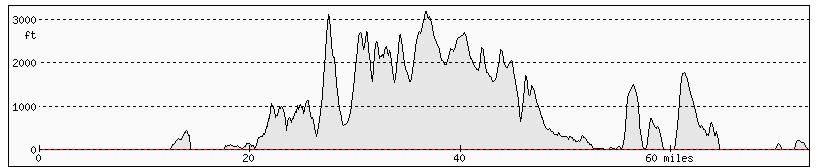 |
| VE7SL To VK4YB courtesy: Hey What's That Path Profiler |
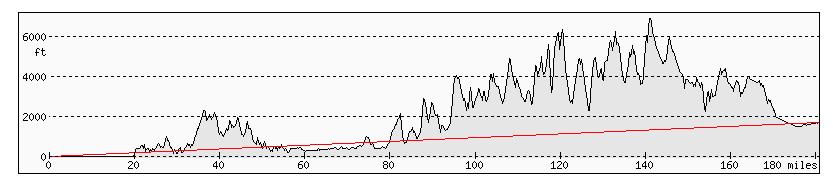 |
| W7IUV To VK4YB courtesy: Hey What's That Path Profiler |
 |
| To VK4YB courtesy: Hey What's That Path Profiler |
The path from John, VE7BDQ, already heard in VK, is also easier than from here. Not far from the water, John has a pretty clear shot across Georgia Strait, giving his signal lots of time to gain altitude and clear those pesky Vancouver Island peaks.
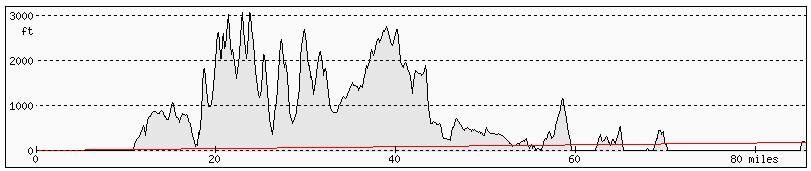 |
| VE7BDQ To VK4YB courtesy: Hey What's That Path Profiler |
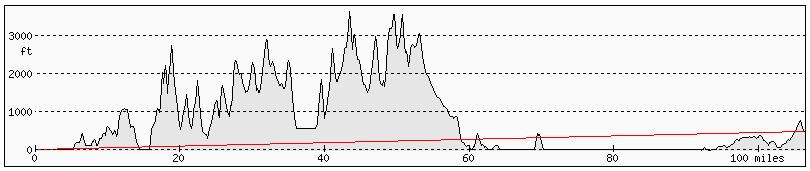 |
| VE7CNF To VK4YB courtesy: Hey What's That Path Profiler |
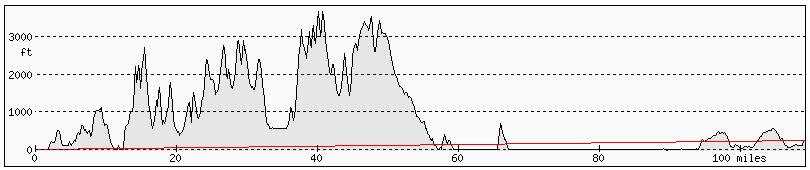 |
| VA7MM To VK4YB courtesy: Hey What's That Path Profiler |
 |
| VE7CA To VK4YB courtesy: Hey What's That Path Profiler |
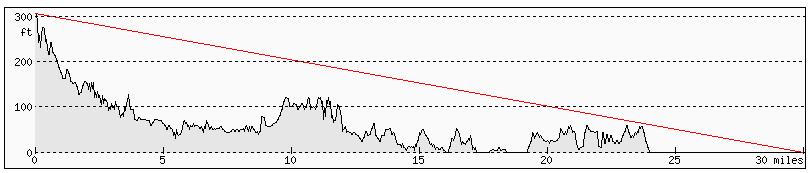 |
| VK4YB Path To Pacific courtesy: Hey What's That Path Profiler |
As the solar activity slowly abates (but not this week!), propagation on 630m will slowly get better and better ... hopefully along with increased levels of Canadians transmitting on the band, and lots of stations in the USA. It is hoped that our enthusiastic neighbours to the south aren't too far away from getting the band fairly soon. Better get those soldering irons warmed-up so you are all ready to go!
Steve McDonald, VE7SL, is a regular contributor to AmateurRadio.com and writes from British Columbia, Canada. Contact him at [email protected].
Weekly Propagation Summary – 2016 Jul 18 16:10 UTC
Here is this week’s space weather and geophysical report, issued 2016 Jul 18 0416 UTC.
Highlights of Solar and Geomagnetic Activity 11 – 17 July 2016
Solar activity was at very low levels from 11-14 July with only a few simple sunspot regions. Region 2565 (N05, L=175, class/area Cko/350 on 17 Jul) rotated onto the east limb on 11 July as a simple Hsx spot class with a simple alpha magnetic class. By late on 14 July, another spot group began to emerge behind Region 2565 and was numbered 2567 (N05, L=165, class/area Dhi/330 on 17 Jul). Region 2567 quickly grew to over 300 millionths in area and was initially classified as a beta-gamma-delta magnetic group before some magnetic simplification occurred on 16 July. The region was downgraded to a beta-gamma magnetic class for the remainder of the period. Region 2567 became the most active region during 15-17 July producing 13 C-class flares. However, the close proximity of the two regions, as well as an active inversion line between the two, resulted in several flares to be attributed to Region 2565 on 17 July. The first was a long duration C1/Sf flare at 17/0803 UTC which was responsible for two CMEs observed in SOHO/LASCO C2 imagery beginning at 17/1124 UTC and 17/1248 UTC. The first was a faint asymmetric halo CME while the second was directed mostly off the east limb. Initial WSA-Enlil model output of the events showed a slow transit with effects possible on 21 July. The largest flare of the period, however, was a C6 at 17/2335 UTC which also occurred on the inversion line and was subsequently attributed to Region 2565.
No proton events were observed at geosynchronous orbit.
The greater than 2 MeV electron flux at geosynchronous orbit reached high levels throughout the period with a maximum flux of 5,512 pfu observed at 17/1630 UTC.
Geomagnetic field activity ranged from quiet to G1 (Minor) storm levels. The majority of the period was under the influence of high speed solar wind streams from a large, positive polarity, polar connected coronal hole as well as an isolated, positive polarity coronal hole. Solar wind speeds reached highs around 550 km/s early on 11 July, 650 km/s late on 12 July, and 700 km/s early on 15 July before finally decreasing to around 440 km/s by the end of the period. Total field during the period only managed to reach a maximum of 9 nT at 12/0552 UTC. Prolonged periods of southward Bz reaching -8 nT on 12 July and -6 nT on 14 July resulted in periods of G1 (Minor) storm levels on 12 July and active periods on 14 July. The rest of the period was at quiet to unsettled levels with quiet conditions observed on 17 July.
Forecast of Solar and Geomagnetic Activity 18 July – 13 August 2016
Solar activity is expected to be at low levels with a chance for M-class (R1-R2, Minor-Moderate) flares from 18-24 July as Regions 2565 and 2567 transit across the visible disk. Very low levels are expected for 25 Juy-04 August. A return to low levels with a chance for M-class flaring is expected for 05-13 August with the return of Regions 2565 and 2567.
No proton events are expected at geosynchronous orbit.
The greater than 2 MeV electron flux at geosynchronous orbit is expected to be at high levels on 18-19, 23-27 July, and again on 05-13 August due to recurrent CH HSS activity. Normal to moderate levels are expected for the remaining forecast period.
Geomagnetic field activity is expected to be at unsettled to active levels on 19-20, 22-24, 28, 30 July and on 03-08, 10-11 August with G1 (Minor) storm levels likely on 03-04 and 08 August due to recurrent CH HSS activity. A CME associated with the 17 July long-duration C1 flare is likely to arrive early on 21 July causing unsettled to active levels.
Don’t forget to visit our live space weather and radio propagation web site, at: http://SunSpotWatch.com/
Live Aurora mapping is at http://aurora.sunspotwatch.com/
If you are on Twitter, please follow these two users: + https://Twitter.com/NW7US + https://Twitter.com/hfradiospacewx
Get the space weather and radio propagation self-study course, today. Visit http://nw7us.us/swc for the latest sale and for more information!
Check out the stunning view of our Sun in action, as seen during the last five years with the Solar Dynamics Observatory (SDO): https://www.youtube.com/watch?v=zXN-MdoGM9g
We’re on Facebook: http://NW7US.us/swhfr
Visit, subscribe: NW7US Radio Communications and Propagation YouTube Channel
Amateur Radio Weekly – Issue 120

New: Baofeng UV-50X3 tri-band mobile
Baofeng just launched the UV-50X3 triband mobile radio and it looks like a jab, cross and left hook to the established Japanese manufacturers who were caught dreaming about DMR, C4FM, D-STAR and other leprechauns.
QRPblog
Chinese radio makers versus the big leagues
Have I been burnt or disappointed? You can bet your bottom dollar I have, and many of my reviews and past blogs would tell you that.
AmateurRadio.com
Attendance at Dayton tops 25,000 for second year in a row
For those keeping track, in 2014 the official count was 24,873 visitors, and attendance in 2013 was 24,542.
ARRL
Ham radio decline in Germany
In 2002 there were about 80,000 radio amateurs in Germany, by 2015 this had fallen to 67,349.
Southgate
VU3DES: Passing a ‘Technician Class’ US License exam
FCC FRN registration has clear options for applicants without an American Contact (mailing) Address. Using the FRN I could fill out the exam application forms and appear for the exam.
VU3DES
What’s special about 50 ohms?
A cable that has least loss at 77 ohms, also has maximum power handling capacity at 30 ohms. The mean between 30 and 77 ohms is 53.5 ohms.
Hack A Day
My Jeep portable Ham Radio station
Amateur radio is part of our gear. There are times when cell service is unreliable, trails are unpopulated, or we intentionally move off the grid. The Willys offers us an opportunity to expand our use of amateur radio as part of our leisure activities.
N4AE
A guide to listening to CB radio with an RTL-SDR dongle
Mario discusses how an RTL-SDR dongle can be used to have some fun listening to CB without needing to go out and buy a full CB radio.
RTL-SDR.com
Interference from an LDG autotuner
Hans did suffer from heavy noise (S9) on his FT-817 affecting his receive especially from digital weak signals like WSPR and JT modes.
PE4BAS
rtl-trx: Transmit and receive RTTY using an RTL-SDR dongle
Local oscillator leakage from an RTL-SDR dongle can be used as a very low power FSK transmitter.
GitHub
Ham radio tower frustrates neighbors
For 10 years, residents of a Maple Ridge neighbourhood have been fighting to have an amateur radio tower taken down, but a coalition of ham enthusiasts says they’re providing a valuable service.
CBC
Video
W7L Seven Lakes
YouTube
Crossbow antenna launcher
KF7IJZ
Amateur Radio Weekly is curated by Cale Mooth K4HCK. Sign up free to receive ham radio's most relevant news, projects, technology and events by e-mail each week at http://www.hamweekly.com.
Growing 6m JT65 Activity
 |
| image courtesy: http://g8yph.blogspot.ca/ |
On several occasions this week, I have heard or worked dozens of others on JT mode while the bottom end of the band appears void of signals. Thursday morning was a good example, with several contacts down into the southeastern 'EM' grids on JT mode while seeing no reports of similar contacts being made on CW or SSB from my region.
This summer, there appears to be much more interest in 6m JT65 than ever before, as I see many familiar CW operators up the band on digital. There is no doubt that JT65's ability to dig deep into the atmospheric band noise and decode signals too weak to be heard on CW, provides an advantage when conditions are marginal. Perhaps this alone explains why I see such a difference between the two segments of the band. This is when JT65 really shines as it is primarily a weak-signal mode.
When the band really opens up however, things are different ... things can get messy pretty fast when the JT65 band fills-up with S9+ signals! Under these conditions, moving well away from the crowd is often better than trying to fight overlapping signals, often made worse by S9++ signals in your own grid, transmitting on the opposite sequence. In this respect, the JT65 segment is like a wider version of the 50.125MHz calling frequency ... the one spot in the conventional mode section of the band where anything goes ... the wild west of 6m.
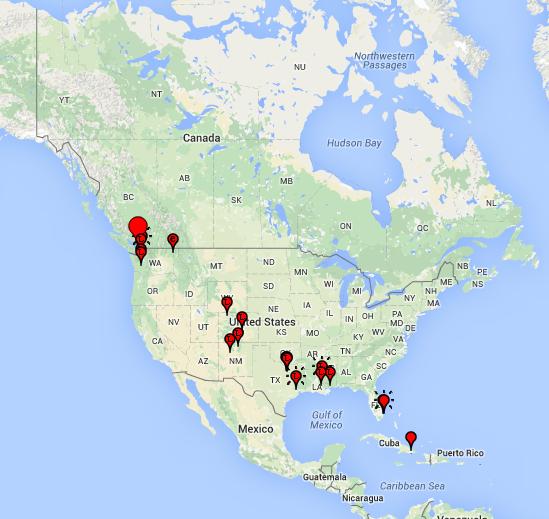 |
| Dead Band Spots - courtesy: https://www.pskreporter.info/pskmap.html |
During one particularly noteworthy period of no action in the lower part of the band, JT65 signals were either copied or exchanged with CO8, V31, TG9, KP4 and XE. Many of these signals were heard for several hours, making the difference even more striking.
Perhaps having all of the JT signals crammed into a 2kHz sliver just makes it seem busier but the mode is certainly gaining steam. Now actually working guys on JT65 is akin to watching paint dry, as its weak-signal sensitivity comes at the expense of time ... the same information that could be sent on CW in 10 seconds, requires a full minute. A complete QSO takes a minimum of four minutes and the 13-character message buffer does not exactly encourage much conversation, other than calls, signal reports, grid squares and 'RRs'. All the same, calling CQ and waiting for the telltale signs of a reply to appear on the scrolling waterfall is somewhat mesmerizing, not unlike an addictive video game of sorts ... just one more CQ!
Will I abandon the CW end of the band? Never ... but having another mode to play with on the magic band is proving to be much more interesting than listening to the usual din of white noise, waiting for the band to 'really' open.
You can read more about JT65 and download the free software, WSJT-X, here.
Steve McDonald, VE7SL, is a regular contributor to AmateurRadio.com and writes from British Columbia, Canada. Contact him at [email protected].
DX from the Swimming Hole
It was hot today, so Judy and I drove up to Sky Pond for a quick swim. I brought the KX3 and worked Sweden and Virginia.

The pond is pristine and in the middle of nowhere. As soon as we got there, I jumped in the water for a quick swim. Judy swam way out into the pond and I came back to shore and tossed a wire in a tree by the water. I set up the KX3 on 20 meters and tuned around. Boy… is propagation bad! But then… a station
coming out of the noise. 7S70AT.. what the heck is that? As luck would have it, he answered and we made the QSO. I pulled out my cell phone and checked the call… Sweden… a special event.

Then I went to 40 meters. Not many stations here either. But fortunately Ed KG4W in Virginia was just finishing up a QSO and we moved up 1 kHz and had a nice chat. He gave me a 579. I told him it was 84F and hot here today, and that I was swimming at the pond. He set me straight by explaining that it was 92F at his house… now, that’s hot!

After working Ed, I packed up and Judy and I drove home much refreshed. It’s amazing what a swim and a couple of QSOs will do on a hot day.
Jim Cluett, W1PID, is a regular contributor to AmateurRadio.com and writes from New Hampshire, USA. Contact him at [email protected].
Chinese radio makers versus the big leagues, my perspective
I have been a ham radio operator for most of my life, was a shortwave listener from my teens and still am, and of course was able to play in the CB craze that took place in the late 70’s and into the 80’s. High school was where I got my start at amateur radio and electronics. I am not an electronics technician, nor will I ever admit I am even close, but I am a guy who has had a blast and an addiction to ham radio, mostly QRP, CW and portable ops. Combine that with my addiction of outdoors, winter survival, canoeing, hunting and camping and those are some $eriou$ hobbie$. Oh and I cannot forget photography, heaven forbid..
In the radio hobby I like to play, test , trade , and swap gear all the time to use, if it is new I want it. Portable and low power gear and small antennas is where I like to be, but where am I going with this? I have owned, Heathkit, Swan, Kenwood, Icom, SGC, Yaesu, Hy-Gain, Tokyo, Index Labs, OHR, Alinco and more gear in the past as well as Elecraft whom I think I can throw in with the big boys as they have come the furthest out of the small guys.
Recently in the last few years I have been playing, testing, reviewing, been a beta tester, manual writer for a few of those in the Chinese market, (oh and lets not forget the European market as well, we are seeing rigs from Greece, Russia and all over). Among those is my friend Yimin who lives just outside of Toronto and is the owner of Youkits Canada. Yimin has tried his hardest to put out quality gear at a price that won’t break the bank. Some in kit form and others assembled, and still backs it up with support and returns, unlike some of the other builders out there.
On the market today we see Xiegu, Bofung, CRK Kits, BG2FX with his FX line of gear and others. I have had the Xiegu X1M, neat little rig but had many quirks. I have the X108G which has come light years ahead since it’s first days of life and still continues to get better, Xiegu also offers support, firmware upgrades and a return policy, they have gotten to be a fair size company.
What makes some of this Chinese gear look so good? Is it the fact that the price tags seem lower then the big guns on the market ? Does it stand up to quality control testing that the big guns do? Is it clean on transmit evading those spurious transmissions? These maybe some of the questions that get asked. For me it is just that I like new toys and like to play. Have I been burnt or disappointed? You can bet your bottom dollar I have, and many of my reviews and past blogs would tell you that. But I still like to play with this gear and see how it works. Dollar wise is another topic that is a hard one to stomach as most producers be it in China or other Countries sell in US$, so for me as a Canadian whose dollar is less, the exchange kills, and makes these radios no cheaper in the long run, tag on the fact that shipping from Canada is also very costly if I need to ship back to China, so how do you win?
Of all the radios that I was most disappointed wit it was the KN-920 that was built by I believe BA6BF and was sold via Aliexpress and a few other warehouse dealers. The KN-920 one weekend blew it’s finals burnt some of the PC board off. It was still under warranty but to ship back would have cost huge dollars. The builder send me 3 sets of finals to try replace with same result each and every time, the seller at Aliexpress was only concerned with the money he was going to lose if I was to get or return the item, at this point the consumer, customer or other meant $hit. I see on ebay they have a KN-850 now, I hope they learned something from it, but highly doubt it. Top that with no manuals, no instructions etc. Many of these builders do not speak English as is the case of BG2FX who builds the FX series of radios.
So why do we still buy or have a thirst for new gear? It is because we all want to play and not break the bank. Or in my case , that is it. I own a KX3 and just bought a KX2 for canoe trips, camping and more because it is self contained, small and does all bands and modes including digital , and also serves as a shortwave radio when out in the wilds.
So is all Chinese gear made the same ? I think not, some builders are using recycled products, out of tolerance products, solder that creates whiskers (both in part to lack of heat and the elements that make solder real , like tin and lead) and put together in their homes or offices and then put out into the market. Other builders like YouKits and Xiegu have put some thought into their builds and ideas and have actually looked at it from the consumer side, oh yea, there will be horror stories, but in my ham career I can tell you some about the big 4 as well in the past, mention IC-706 and see how many feathers have been ruffled and how long to get that beast right.
I need to add as a caveat that of all the portable Chinese radios that I have tried and do own, the HB1 series by Youkits is my favorite as a cw qrp rig. I own the MKII and MKIII and take those up North with me on a regular basis as they are also self contained with battery, light weight and cover the bands I use.
Just a quick intro to my YouTube Channel and look at a few of the rigs in action using the same antenna.
Have a great summer one and all, and don’t forget to practice your emergency plan, have a 72 emergency kit ready and stay safe on the road, lakes, fields or where ever you may be.
Again this is just my perspective.
Cheers
Fred Lesnick
VE3FAL
Thunder Bay, Ontario
Canada
Fred Lesnick, VE3FAL, is a regular contributor to AmateurRadio.com and writes from Thunder Bay Ontario, Canada. Contact him at [email protected].
 Ham Radio Deluxe |
 W5SWL Electronics |
 Ham Radio Prep |
 KB3IFH QSL Cards  Hip Ham Shirts  HamRadioAuctions HamRadioAuctions Reliance Antennas Reliance Antennas Enigma Shop Enigma Shop |  morseDX  Ni4L Antennas  R&L Electronics R&L Electronics antennas.us antennas.us QRV QRV |
- Matt W1MST, Managing Editor
