 |
 Timbuktu from the Pemigewasset River
 20 September 2016 | by
 The smell of autumn is in the air today. It’s beautiful and warm. Judy and I take a bicycle ride along the Pemigewasset River. I work Africa, Ukraine, Croatia and Spain.

We ride down along Needle Shop Brook and turn north along the river. There are fallen apples and brown leaves on the road. It feels and smells like fall. But it’s warm and still. A perfect day for a bike ride.
We ride about a half mile north and I see what I think is a piece of metal across the trail. I swerve quickly to avoid it, and realize it’s a snake! It slithers away into the grass. It’s a Northern Water Snake soaking up the warm, fall sunshine.
We ride perhaps 3 miles and I start looking for a place to set up the KX3. There is a sunny field to the west with some large maple trees nearby. Judy goes into the field and I throw a 30 foot wire over the branch of a huge maple.

I start out on 20 meters at the low end of the band. EO25U is calling CQ. We exchange quick 599s. This is Ukraine… a special event celebrating 25 years of independence. I tune up the band and quickly work AN400R… another special event… this time in Spain celebrating the life of Cervantes, the famous Spanish author of Don Quixote.
The photo below is my view while operating.

I switch to 17 meters. It’s active and right away I work 9A50CMB. This is the MARJAN Radio Club call in Croatia. Miki gives me a 559, and I tune up the band a little. Here is TZ4AM working stations. He answers me on the first call and gives me a 559. I didn’t know this station is in Mali, central Africa. I find out later when I look it up at home. Wow… the first time I’ve actually worked Timbuktu!
Now I pack up and head south to where we left the car.

These days are way too short. In just a few weeks New Hampshire Fish and Game will release pheasant in this area for hunters. Not an ideal spot for bike rides or radio.
Jim Cluett, W1PID, is a regular contributor to AmateurRadio.com and writes from New Hampshire, USA. Contact him at [email protected].
Hunting For NDBs In CLE211
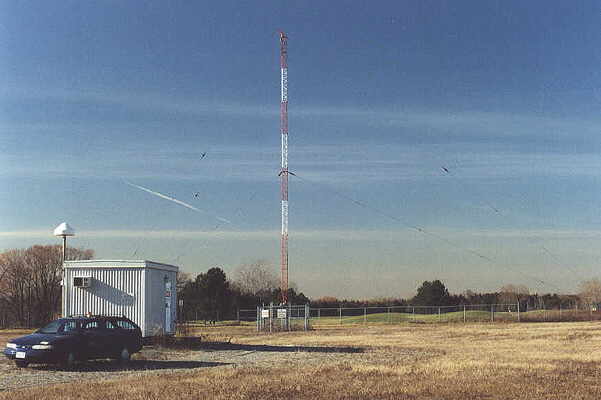 |
| 'OO'- - 391 kHz Oshawa, ON |
This coming weekend will see another CLE challenge, this time in the 15 kHz slice from 385.0 - 399.9 kHz.
A 'CLE' is a 'Co-ordinated Listening Event', as NDB DXers around the world focus their listening time on one small slice of the NDB spectrum.
A nice challenge in this one is to hear the Oshawa, Ontario NDB, 'OO' on 391 kHz. This one runs at just 7 1/2 watts output and gets out amazingly well having been logged here last year. It has even been heard in Europe!
From CLE organizer Brian Keyte, G3SIA, comes the usual 'heads-up':
Hi all,
Our 211th Listening Event is only a few days away.
The Northern Hemisphere summertime storms have subsided, the equinox
will have passed when the CLE starts and we can all hope for some good
reception conditions.
Whether you are a keen propagation watcher or just a take-what-comes
listener (like me), please join in.
Days: Friday 23 September - Monday 26 September
Times: Start and end at midday LOCAL TIME
Range: 385.0 - 399.9 kHz
Please log all the NDBs you can identify that are listed in the range
(it includes 385 kHz but not 400 kHz) plus any UNIDs that you find there.
We last used this frequency range for CLE194 in May 2014.
Please send your CLE log to the List in a plain text email if possible
(not in an attachment) with 'CLE211' at the start of its title.
Show on each log line:
# The date (e.g. 2016-09-24, etc., or just 24) and UTC.
(the date changes at 00:00 UTC)
# kHz (the nominal published frequency, if known)
# The Call Ident.
Show those main items FIRST - other optional details such as Location
and Distance go LATER in the same line.
As always, tell us your own location and brief details of the equipment
that you were using during the weekend.
Good listening - enjoy the CLE
----------------------------------------------------------
From: Brian Keyte G3SIA ndbcle'at'gmail.com
Location: Surrey, SE England (CLE co-ordinator)
----------------------------------------------------------
(If you wish you could use any one remote receiver for your loggings,
stating the location and owner - with their permission if required.
A remote listener may NOT also use another receiver, local or remote,
to make further loggings for the same CLE).
73
Brian
These listening events serve several purposes. They:
- determine, worldwide, which beacons are actually in service and on-the-air so the online database can be kept up-to-date
- determine, worldwide, which beacons are out-of-service or have gone silent since the last CLE covering this range
- will indicate the state of propagation conditions at the various participant locations
- will give you an indication of how well your LF/MF receiving system is working
- give participants a fun yet challenging activity to keep their listening skills honed
Final details can be found at the NDB List website, and worldwide results, for every participant, will be posted there a few days after the event. If you are a member of the ndblist Group, results will also be e-mailed and posted there.
The very active Yahoo ndblist Group is a great place to learn more about the 'Art of NDB DXing' or to meet other listeners in your region. There is a lot of good information available there and new members are always very welcome. As well, you can follow the results of other CLE participants from night to night as propagation is always an active topic of discussion.
If you are contemplating getting started on 630m, listening for NDBs is an excellent way to test out your receive capabilities as there are several NDBs located near this part of the spectrum.
You need not be an ndblist member to participate in the CLEs and all reports, no matter how small, are of much value to the organizers. 'First-time' logs are always VERY welcome!
Reports may be sent to the ndblist or e-mailed to either myself or CLE co-ordinator, Brian Keyte (G3SIA), whose address appears above.
Please ... give the CLE a try ... then let us know what NDB's can be heard from your location! Your report can then be added to the worldwide database to help keep it up-to-date.
Good hunting!
Steve McDonald, VE7SL, is a regular contributor to AmateurRadio.com and writes from British Columbia, Canada. Contact him at [email protected].
Weekly Propagation Summary – 2016 Sep 19 16:10 UTC
Here is this week’s space weather and geophysical report, issued 2016 Sep 19 0130 UTC.
Highlights of Solar and Geomagnetic Activity 12 – 18 September 2016
Solar activity was at very low levels throughout the period. Region 2585 (N08, L=222, class/area=Ekc/590 on 03 Sep) was the largest and most magnetically complex region on the disk this week, however, the region only produced low-level B-class flare activity before rotating out of view early in the period. Region 2592 (N14, L=027, class/area=Bxo/10 on 18 Sep) produced several low-level B-class flares in the latter half of the week, but was relatively simple throughout the period. No Earth-directed coronal mass ejections (CMEs) were observed this period.
No proton events were observed at geosynchronous orbit.
The greater than 2 MeV electron flux at geosynchronous orbit reached high levels on 12-14 Sep, moderate levels on 18 Sep, and were at normal levels on 15-17 Sep.
Geomagnetic field activity was quiet on 13, 16-27 Sep and quiet to unsettled on 12, 14-15, and 18 Sep under a mostly nominal solar wind regime.
Forecast of Solar and Geomagnetic Activity 19 September – 15 October 2016
Solar activity is expected to be at very low levels with a change for C-class flares throughout the period.
No proton events are expected at geosynchronous orbit.
The greater than 2 MeV electron flux at geosynchronous orbit is expected to reach very high levels on 02-05 Oct with high levels expected on 21-25, 29 Sep-01 Oct, and 06-11 Oct following solar wind enhancements associated with the influence of multiple coronal hole high speed streams. Electron flux is expected to be at normal or normal to moderate levels throughout the remainder of the period.
Geomagnetic field activity is likely to reach G2 (Moderate) geomagnetic storm levels on 28-30 Sep and G1 (Minor) storm levels on 19-20 Sep and 01 Oct due to the anticipated influence of multiple, recurrent coronal hole high speed streams. Active conditions are expected on 21 Sep and 02-05 Oct with generally quiet or quiet to unsettled conditions likely throughout the remainder of the period.
Don’t forget to visit our live space weather and radio propagation web site, at: http://SunSpotWatch.com/
Live Aurora mapping is at http://aurora.sunspotwatch.com/
If you are on Twitter, please follow these two users: + https://Twitter.com/NW7US + https://Twitter.com/hfradiospacewx
Get the space weather and radio propagation self-study course, today. Visit http://nw7us.us/swc for the latest sale and for more information!
Check out the stunning view of our Sun in action, as seen during the last five years with the Solar Dynamics Observatory (SDO): https://www.youtube.com/watch?v=zXN-MdoGM9g
We’re on Facebook: http://NW7US.us/swhfr
Visit, subscribe: NW7US Radio Communications and Propagation YouTube Channel
Ch-ch-ch-ch-changes
By the end of this week my website pa2bx.nl will go down. The reason is simple: I will relinquish my Dutch call and no longer be PA2BX. The Dutch government started asking 31 Euros per year for maintaining a database with my call in it, while it used to be free. Not being stingy here. I know they also use the 31 Euros for other things that are beneficial for Dutch hams. But for me it’s just a little too expensive for something I use maybe once every 5 years. 31 Euros is a week’s worth of groceries in Taiwan and I have two big mouths to feed. I can re-apply for a new Dutch call any time, so nothing is lost.
Luckily my web provider is so cheap that I’m going to keep them and from the beginning of October you are welcome at BX2ABT.com (B–X to Any Bloody Thing). I’m testing a new CMS at the moment and it looks like the new site is going to be nicer and easier to maintain than before.
In other news: I broke with my QSL manager, which made me decide to stop with QSLing altogether. I make only a few QSOs nowadays and lost interest in QSL cards a bit (call it a mid-life crisis thing). I still have a stack of cards from my Longtan QTH, but once they run out I won’t have new ones printed. If you still need one of my cards, my address is on the BX2ABT HamQTH.com entry.
Hans "Fong" van den Boogert, BX2ABT, is a regular contributor to AmateurRadio.com and writes from Taiwan. Contact him at [email protected].
Weekend plans go semi awry.
My first planned activity was to participate in the NJ QSO Party on Saturday. The work party that I attended at the Middlesex County Office of Emergency Management went longer than I anticipated. I'm glad we got the work done that we did, though, as it was important that it got done before the Simulated Emergency test in October. When I got home, there was still plenty of time to participate in the contest - no doubt. Other chores had to be taken care of first, though; and I made sure I got those done. End result? One very tired W2LJ and no NJQP on Saturday.
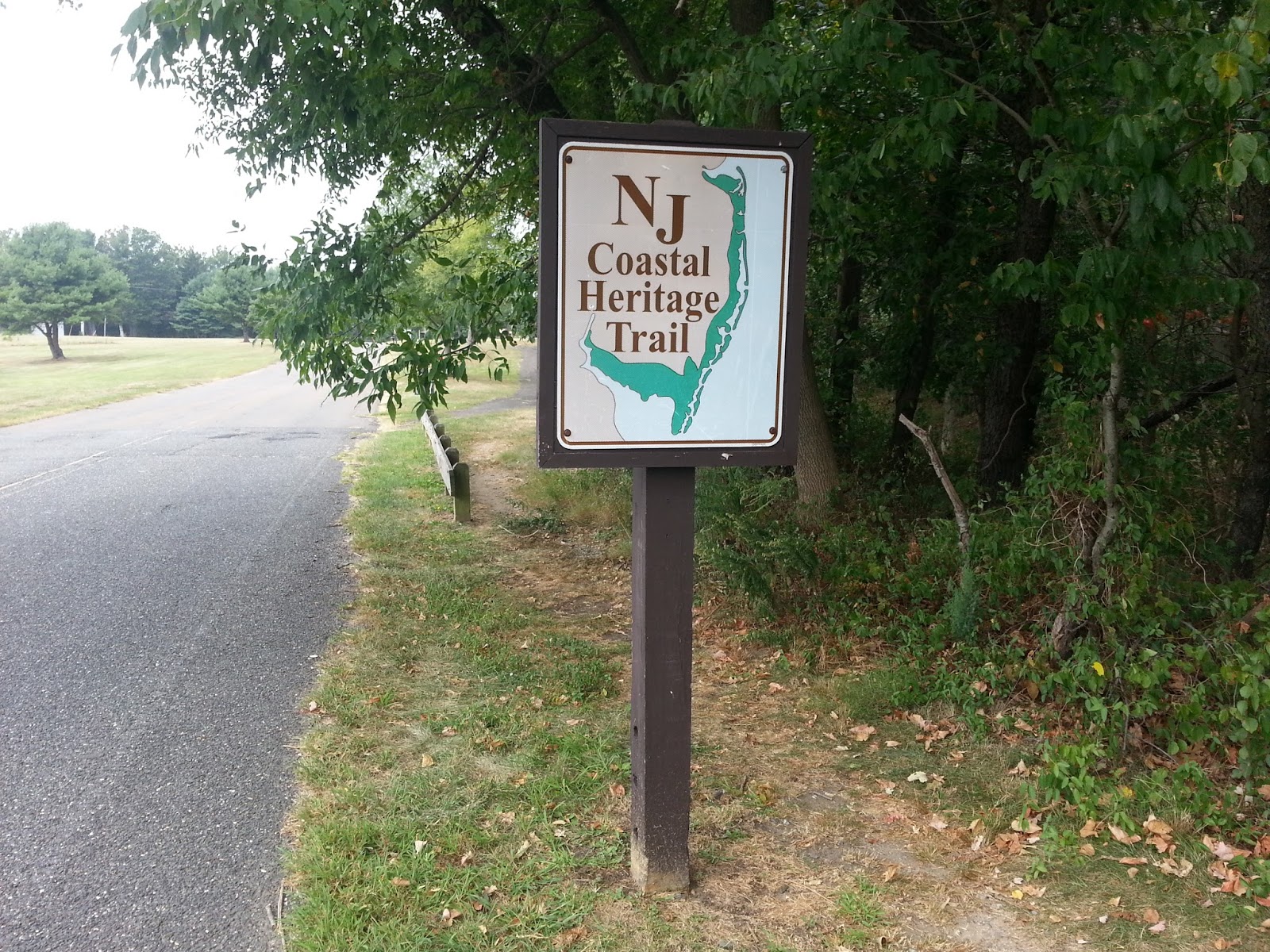
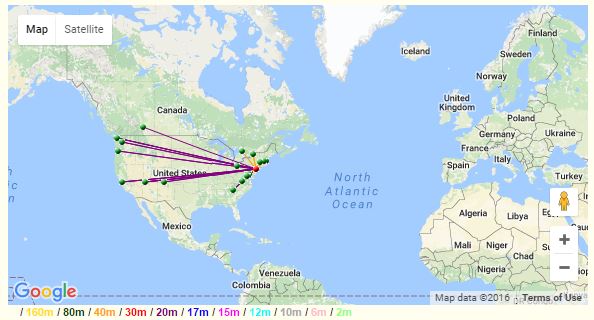
After dinner, I sat down with the tablet and saw on the ARRL NPOTA Facebook page that Peter K0BAK was doing a sweep of NJ activations this weekend, including AA17, the New Jersey Coastal Heritage Trail. My heart sank a bit because he's such a superb operator and activator - does AA17 really need to be activated twice the same day? And if you had the chance to work either me or Peter .... heck, even I'd rather work Peter than me !!!
Larry Makoski, W2LJ, is a regular contributor to AmateurRadio.com and writes from New Jersey, USA. Contact him at [email protected].
Weekend plans go semi awry.
My first planned activity was to participate in the NJ QSO Party on Saturday. The work party that I attended at the Middlesex County Office of Emergency Management went longer than I anticipated. I'm glad we got the work done that we did, though, as it was important that it got done before the Simulated Emergency test in October. When I got home, there was still plenty of time to participate in the contest - no doubt. Other chores had to be taken care of first, though; and I made sure I got those done. End result? One very tired W2LJ and no NJQP on Saturday.
After dinner, I sat down with the tablet and saw on the ARRL NPOTA Facebook page that Peter K0BAK was doing a sweep of NJ activations this weekend, including AA17, the New Jersey Coastal Heritage Trail. My heart sank a bit because he's such a superb operator and activator - does AA17 really need to be activated twice the same day? And if you had the chance to work either me or Peter .... heck, even I'd rather work Peter than me !!!
Larry Makoski, W2LJ, is a regular contributor to AmateurRadio.com and writes from New Jersey, USA. Contact him at [email protected].
ICQ Podcast Episode 220 – Taking part in SSB Field Day
In this episode, Martin M1MRB / W9ICQ is joined by Leslie Butterfield G0CIB, Edmund Spicer M0MNG, Matthew Nassau M0NJX and Andy Mace M0MUX to discuss the latest Amateur / Ham Radio news. Colin M6BOY rounds up the news in brief, and this episodes feature is Taking part in SSB Field Day.
- CEPT Novice Licence and HAREC Changes
- UK CubeSat Forum - Lunar Opportunity
- Companies Plead Guilty to Capacitors Price Fixing
- FCC Proposes Substantial Fine for Unlicensed Amateur Operation / False Police Call
- Morse code at Eurovision?
- Australian Club's 60th Birthday
- WIA Seek New Ham Radio Allocations
- Aberdeen Radio Club Celebrate 70th Anniversary
Colin Butler, M6BOY, is the host of the ICQ Podcast, a weekly radio show about Amateur Radio. Contact him at [email protected].
 Ham Radio Deluxe |
 W5SWL Electronics |
 Ham Radio Prep |
 KB3IFH QSL Cards  Hip Ham Shirts  HamRadioAuctions HamRadioAuctions Reliance Antennas Reliance Antennas Enigma Shop Enigma Shop |  morseDX  Ni4L Antennas  R&L Electronics R&L Electronics antennas.us antennas.us QRV QRV |
- Matt W1MST, Managing Editor
