 |
 Exciting times – Baofeng DM-5R arrives in the UK.
 1 October 2016 | by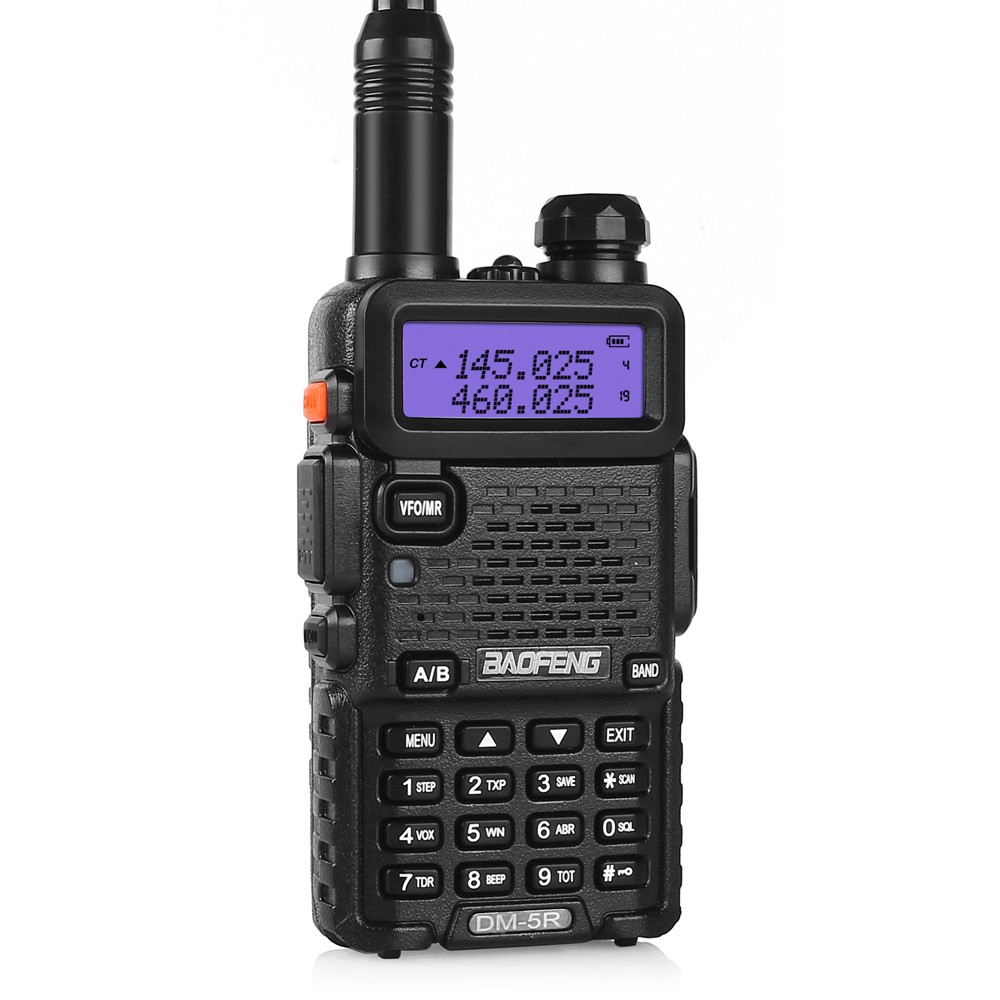
Steve, G1KQH, is a regular contributor to AmateurRadio.com and writes from England. Contact him at [email protected].
CLE 211 Results
This past weekend's CLE saw noticeably improved conditions compared with the previous event.
With the fall DX season fast-approaching, the combination of diminishing thunderstorm activity and improved propagation provided some interesting catches. Friday night was the best with Saturday having a brief period of favorable prop, while no new stations were heard on Sunday night, the poorest.
It was particularly nice to hear strong signals from the eastern provinces on Friday, highlighted with an excellent signal from 'JT' (390 kHz) in Stephenville, Newfoundland. This long haul east-west propagation can only be found with quite geomagnetic conditions as was the case on Friday.

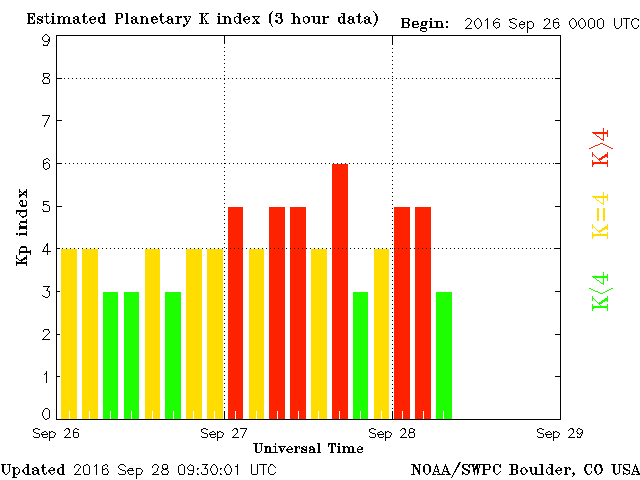
After examining the geomagnetic 'K' data for Saturday (25th), it's interesting to note that the four catches for that night all coincided exactly with the brief green bar (K= 0-3) centered on the hours around 0900 UTC (circled).
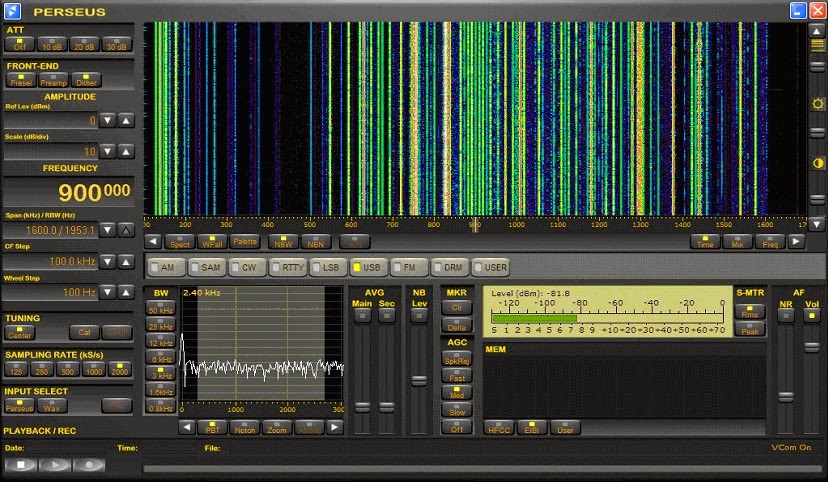
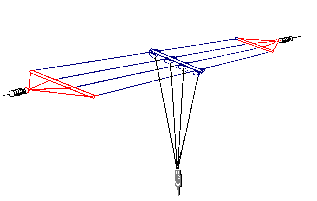
The following NDBs were heard using my Perseus SDR and 'inverted-L' resonated to ~ 300kHz:
24 06:30 385.0 WL Williams Lake, BC, CAN
24 13:00 385.0 OCC Yakutat, ALS
24 10:00 385.0 MR Pacific Grove, CA, USA
24 13:00 385.0 EHM Cape Newenham, ALS
24 08:30 386.0 SYF St. Francis, KS, USA
24 06:30 386.0 HAU Helena, MT, USA
24 06:00 386.0 4N Oxford House, MB, CAN
24 06:30 388.0 MM Fort Mc Murray, AB, CAN
24 09:30 388.0 JW Pigeon, AB, CAN
24 06:30 388.0 GLY Clinton, MO, USA
24 06:30 389.0 YWB Kelowna, BC, CAN
24 08:00 389.0 TW Twin Falls, ID, USA
25 08:30 389.0 EN Kenosha, WI, USA
24 06:00 389.0 CSB Cambridge, NE,USA
24 06:30 390.0 JT Stephenville, NL, CAN
24 06:00 390.0 HBT Sand Point, ALS
24 06:00 390.0 AES Northway, ALS
24 06:30 391.0 TK Telkwa, BC, CAN
24 13:00 391.0 EEF Sisters Island, ALS
24 06:00 391.0 DDP Dorado, PTR
24 06:30 391.0 4W Kelsey, MB, CAN
24 08:30 392.0 ZFN Tulita, NT, CAN
24 06:00 392.0 PNA Wenz, WY, USA
24 06:30 392.0 ML Charlevoix, QC, CAN
25 08:30 392.0 FMZ Fairmont, NE, USA
25 08:30 392.0 BAJ Sterling, CO, USA
24 06:00 392.0 AGZ Wagner, SD, USA
25 09:30 393.0 TOG Togiak, ALS
24 08:30 393.0 2M Opapimiskan Lake,ON, CAN
24 13:00 394.0 RWO Kodiak, ALS
24 08:30 394.0 DQ Dawson Creek, BC, CAN
24 08:30 395.0 YL Lynn Lake, MB, CAN
24 06:00 395.0 ULS Ulysses, KS, USA
24 08:30 395.0 L7 Estevan, SK, CAN
24 08:30 396.0 YPH Inukjuak, QC, CAN
24 13:00 396.0 CMJ Ketchikan, ALS
24 08:30 397.0 ZSS Saskatoon, SK, CAN
24 08:00 397.0 SB San Bernardino, CA, USA
24 08:00 397.0 CIR Cairo, IL, USA
24 08:30 398.0 YOD Cold Lake, AB, CAN
24 08:30 398.0 3D Cumberland House, SK, CAN
24 08:30 399.0 ZHD Dryden, ON, CAN
24 13:00 399.0 SRI St George, ALS
The results from all participants can be found at the NDB List website, or if you are a member of the ndblist Group, results have also been e-mailed and posted there.
The very active Yahoo ndblist Group is a great place to learn more about the 'art' of NDB DXing or to meet other listeners in your region. There is a lot of helpful information available there and new members are always very welcome. As well, you can follow and chat with other NDB chasers regarding antennas, techniques, unidentified signals and nightly propagation.
Steve McDonald, VE7SL, is a regular contributor to AmateurRadio.com and writes from British Columbia, Canada. Contact him at [email protected].
Amateur Radio Weekly – Issue 127

Log file azimuthal maps
This tool reads your ham radio logs and generates an equidistant azimuthal world map plot of your contacts using Scalable Vector Graphics.
N1YWB
The amazing BOG
A ‘BOG’ or ‘Beverage On Ground’ seems to come in many varieties and is usually, out of necessity, shorter than a ‘real’ beverage.
AmateurRadio.com
CHIRP Radio Programming webinar
Attendees will learn: What CHIRP is, which radios are supported, how to get CHIRP, and how to troubleshoot CHIRP.
ARRL
Sotabeams Laserbeam DSP Filter
It is cheap, simple, razor sharp and a really useful add on.
G7KSE
Ham Radio on a boat
Ham shack and lab on a 50-foot Delta power boat.
microship.com
QRP is unfair to chasers
If you understand propagation, then a QRP signal will be loud to someone, somewhere.
W2LJ
Smoky Mountains NPOTA activation recap
I took my field kit which included the Elecraft KX2, QRP Ranger battery pack (not pictured), and EFT Trail-Friendly antenna.
The SWLing Post
Homebrew 20kWh powerwall
He’s working on adding a huge number of 18650 Lithium cells to his home’s power grid and posting about his adventures along the way.
Hack A Day
Video
Android DMR HT
RFinder Android Radio DMR QSO International Worldwide.
YouTube
Slow Scan Digital Video (SSDV)
First end-to-end test of a 115.2kbaud FSK modem, transmitting slow-scan digital video.
YouTube
Amateur Radio Weekly is curated by Cale Mooth K4HCK. Sign up free to receive ham radio's most relevant news, projects, technology and events by e-mail each week at http://www.hamweekly.com.
630m And Recent Geomagnetic Activity
High levels of geomagnetic activity have usually, but not always, been the kiss-off-death for LF/MF propagation.
These past few months have seen fairly regular field disturbances, often pushing the K index to a level '5' or higher. However, while usually attenuating the east-west and northerly polar paths, the Trans-Pacific path often seems to benefit from these events ... particularly last night.
Perhaps it is related to the equinox's normal preference for this path or maybe the goop the sun is sending us at this point in the cycle is different or not as energetic as it is at mid-cycle. Nevertheless it's really encouraging to see that not all disturbances are detrimental to LF propagation.
For a daily summary of all overnight activity and much more, see KB5NJD's '630m Daily Reports'.
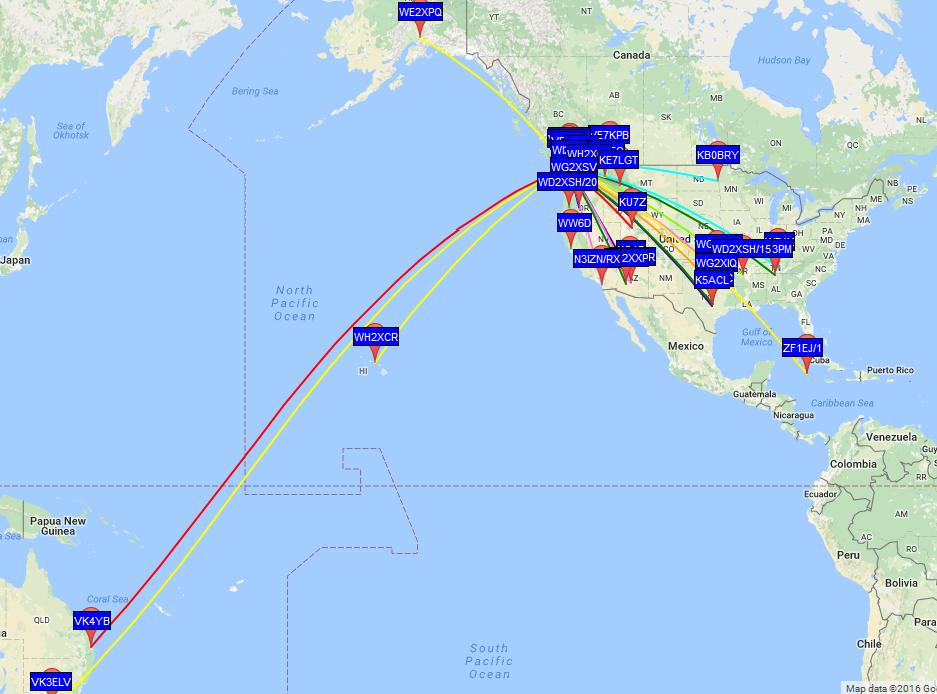
The WSPRnet map reproduced below shows the extent of reception during my own overnight WSPR 630m beaconing session. Missing are many of the normal spots from the eastern provinces and east coast states, indicating the attenuation on this path. Everything else seems enhanced.
 |
| courtesy: WSPRnet |
The path to down under, in-spite of my obstruction in that direction, perked-up as well, with VK4YB decoded here 19 times as well as VK3ELV's 150W and inverted-L near Wangaratta, Victoria.
13:56 VK4YB 0.4756 -28 QG62ku 11820
13:50 VK4YB 0.4756 -28 QG62ku 11820
13:44 VK4YB 0.4756 -24 QG62ku 11820
13:40 VK4YB 0.4756 -24 QG62ku 11820
13:30 VK4YB 0.4756 -27 QG62ku 11820
13:24 VK4YB 0.4756 -20 QG62ku 11820
13:18 VK4YB 0.4756 -24 QG62ku 11820
13:12 VK4YB 0.4756 -22 QG62ku 11820
12:42 VK4YB 0.4756 -26 QG62ku 11820
12:14 VK4YB 0.4756 -20 QG62ku 11820
12:02 VK4YB 0.4756 -23 QG62ku 11820
11:58 VK4YB 0.4756 -25 QG62ku 11820
11:52 VK4YB 0.4756 -25 QG62ku 11820
11:40 VK4YB 0.4756 -29 QG62ku 11820
11:32 VK4YB 0.4756 -26 QG62ku 11820
11:24 VK4YB 0.4756 -25 QG62ku 11820
11:12 VK4YB 0.4756 -22 QG62ku 11820
10:56 VK4YB 0.4756 -26 QG62ku 11820
10:54 VK4YB 0.4756 -25 QG62ku 11820
Merv, WH2XCR in Hawaii, was spotted here 56 times, with numerous transmissions at 'easy CW' levels. He even spotted me twice, with his 80m dipole, presently laying on the ground!
It was also encouraging to see 21 spots from Eden, ZF1EJ in the Cayman Islands, with several at CW levels.
The following stations all uploaded spots of my overnight WSPR signals, as nightly activity continues to grow with the DX season now at the doorstep. Given equal ERP, most of these stations would be workable on either CW or on JT9.
WH2XGP DN07dg 319 122
WG2XSV CN85sr 353 169
WI2XJQ CN87ts 138 150
NO1D DM34tn 1825 147
N3IZN/RX DM13ji 1796 161
WW6D CM88pl 1155 177
VE7CNF CN89ng 55 33
VA7MM CN89og 59 38
WE2XPQ BP51ip 2151 321
W5EMC EM10cl 2963 124
K5ACL EM10bd 2987 125
WG2XXM EM15lj 2610 115
ZF1EJ/1 EK99ig 4977 116
KE7LGT DN26xm 739 107
W3PM EM64or 3365 104
ZF1EJ EK99ig 4977 116
VE7KPB DN29cm 550 79
KU7Z DN41af 1227 129
WH2XCR BL11je 4295 236
KB0BRY EN17nc 1966 86
WD2XSH/20 CN83 598 178
WG2XIQ EM12 2841 120
WE4X EM65ut 3326 102
VE7BDQ CN89la 26 44
KB7W CN93jx 565 163
W6LEO DN17oq 498 103
WH2XAR DM33vp 1924 147
As interest in 630m continues to expand, many U.S. amateurs are already building their stations so they will be ready to go when the word finally comes. I suspect that 630m may soon sound like a small slice of 40m on a busy night ... will you be ready?
Steve McDonald, VE7SL, is a regular contributor to AmateurRadio.com and writes from British Columbia, Canada. Contact him at [email protected].
Tip: Use Snap Ring Pliers to Tighten a Loose HT Antenna Connection
 Got this great tip from Larry KG4ZAR:
Every ham seems to have a HT or two in their shack and sooner or later they find the rubber duck antenna loose.
Most times it’s the locking ring/nut on the chassis mount that’s worked loose. If you use one of the improved 1/4 wave aftermarket antennas, this becomes a more frequent problem.
Trying to tighten up this ring (especially on one of the Chinese radios) usually means grabbing a pair of needle nose pliers and making a mess of things, along with pinching your fingers when the pliers slip off the ring.
A much simpler way to tighten these rings is to purchase a cheap set of “snap ring pliers.” A set of these pliers (with various interchangeable tips) are under $10 at Harbor Freight and you’ll find many other uses once you own a set.
Matt Thomas, W1MST, is the managing editor of AmateurRadio.com. Contact him at [email protected].
The Spectrum Monitor — October, 2016
 Stories you’ll find in our October, 2016 issue:
LnR’s New LD-11: A Very Red, QRP, All-Mode, All-Band Transceiver
By Thomas Witherspoon K4SWL
LnR Precision, Inc., is a North Carolina-based company that specializes in antennas, straight-keys, and QRP transceivers. Earlier this year, when the company announced their latest QRP transceiver, the LD-11, Thomas Witherspoon was especially intrigued. The new LD-11 supports 160-10 meter operation with all modes (SSB, CW, CW-R, Digi, AM and FM). Find out why Thomas says its performance-for-price-point puts it in a market with some heavy-hitters like the venerable Yaesu FT-817ND, the Elecraft KX3, and the new Elecraft KX2.
The Slow Creep of Scanner Encryption
By Chris Parris
Those within the radio communications industry have been actively marketing the ability to encrypt the latest generations of business and personal radio communications fairly inexpensively. This trend follows one that has been on a steady march for years in the public safety communications industry, and it affects many more people than just scanner listeners. But why is this happening? Federal Wavelengths columnist, Chris Parris, takes a look at what encryption is, who is using it and how it affects all of us in the radio monitoring hobby.
Monitoring Russia’s Northern Fleet
By Tony Roper
In its current form, the Northern Fleet is still the largest in the Russian navy, consisting of approximately 80 warships, half of which are submarines, as well as this number again in service ships, tugs and icebreakers. Longtime military monitor, Tony Roper, shows us how he monitors the activities of this fleet through Morse code transmissions directly from the ships as well as using Web-based tools, such as Google Earth, and webcams to physically see the ships in action.
GMRS –The ‘Other’ Citizens Band – Part 2
By Cory GB Sickles WA3UVV
GMRS is a fun and useful aspect of Part 95 communications, seemingly as far removed from Class D CB as you can possibly get. And, while GMRS can be enjoyed without repeaters, having a well-placed and performing machine in your area makes it even more so. In this installment, Cory explains the hardware needed to set up such a repeater; how to start a local GMRS club, what the likely costs of will be, and he takes a looks a some successful GMRS clubs in different parts of the US.
The Hams Behind the Fender Guitar Legend
By Richard Fisher KI6SN
Gary Gray W6DOE’s Uncle Leo became a ham in about 1931 or ’32. “I’m not sure he ever renewed his license,” Gary told Richard Fisher in an interview. “He was most likely on the air using CW . . . There wasn’t much phone back then. He did a lot of electronic work as a ham.” One of the things Leo Fender, who held the first W6DOE call, recounted to Gary was how he started a career in audio by building amplifiers for public address systems. The rest, as they say, is musical history. With meticulous attention to musical and electronic detail, the Fender guitar and amplifier legend was born.
Scanning America
By Dan Veenaman
Howard County, Indiana and Monitoring Airborne TETRA
Federal Wavelengths
By Chris Parris
Scanning Smaller Federal Agencies
Utility Planet
By Hugh Stegman NV6H
US DGPS: Bad News and Good News
Digital HF: Intercept and Analyze
By Mike Chace-Ortiz AB1TZ/G6DHU
Getting Started with Digital GPS Decoding
HF Utility Logs
By Mike Chace-Ortiz and Hugh Stegman
Digitally Speaking
By Cory Sickles WA3UVV
Still in the Box? Put it on the Air!
VHF and Above
By Joe Lynch N6CL
Earth-Moon-Earth Communications
Amateur Radio Insights
By Kirk Kleinschmidt NT0Z
Radio Fun with an Uncooperative Ionosphere
Radio 101
By Ken Reitz KS4ZR
Obsessing about Awards and School Club Roundup
Radio Propagation
By Tomas Hood NW7US
Space Weather: Interfering with Global Positioning Satellites
The World of Shortwave Listening
By Andrew Yoder
Halloween Shortwave Pirates and Global Pirate Weekend
The Shortwave Listener
By Fred Waterer
Listening to Shortwave and Internet Radio
Maritime Monitoring
By Ron Walsh VE3GO
Stormy WX and an End to Some DGPS
The Longwave Zone
By Kevin O’Hern Carey WB2QMY
WSPRs on the Band
Adventures in Radio Restoration
By Rich Post KB8TAD
The Triple-Conversion Puzzle: Hammarlund HQ-180A
Antenna Connections
By Dan Farber AC0LW
Tools of the Trade: Antenna Work Essentials
Radio Horizons
New Digital Radio Mondiale Receiver
The Spectrum Monitor is available in PDF format which can be read on any desktop, laptop, iPad®, Kindle® Fire, or other device capable of opening a PDF file. Annual subscription is $24. Individual monthly issues are available for $3 each.
Ken Reitz, KS4ZR, is publisher and managing editor of The Spectrum Monitor. Contact him at [email protected].
Ham College 21
In this episode we conclude discussing Noise and Interference, and begin covering Schematics.
56:24
George Thomas, W5JDX, is co-host of AmateurLogic.TV, an original amateur radio video program hosted by George Thomas (W5JDX), Tommy Martin (N5ZNO), Peter Berrett (VK3PB), and Emile Diodene (KE5QKR). Contact him at [email protected].
 Ham Radio Deluxe |
 W5SWL Electronics |
 Ham Radio Prep |
 KB3IFH QSL Cards  Hip Ham Shirts  HamRadioAuctions HamRadioAuctions Reliance Antennas Reliance Antennas Enigma Shop Enigma Shop |  morseDX  Ni4L Antennas  R&L Electronics R&L Electronics antennas.us antennas.us QRV QRV |
- Matt W1MST, Managing Editor
