 |
 More On The PAØRDT E-Probe
 17 November 2016 | by
  |
| Courtesy: http://www.leeszuba.com/projects/ |
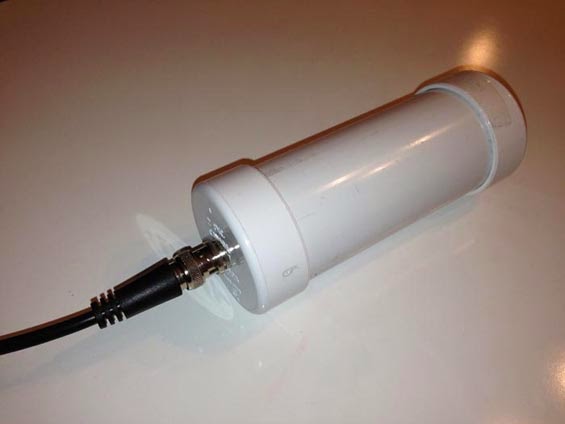
Another recent reflector question about noise mitigation for active e-probe antennas brought further incite from Roelof Bakker, PAØRDT.
I found particular interest in his method of determining if the noise is being picked up by the antenna or being introduced by the feedline. As well, Roelof suggests one of the most important aspects of homebrewing ... keeping detailed notes of all tests or changes. He also suggests maintaining a healthy outlook regarding noise and rather than getting discouraged, take on the challenge of overcoming it!
Hello all,
I have been dealing with this subject for more then 10 years now and
I am pleased to pass on what I did learn so far.
The first item to look at is noise pick up on the feed line. This
can be a coax cable or a CAT5/6/7 network cable. Looking for noise
pick up on the feed line should be done without the active antenna
connected. Otherwise everything should be the same as when using the
antenna.
Ideally the antenna should be replaced by a 50 ohm termination that
can handle the power that is supplied by the DC-power supply feeding
the antenna. However, this is not necessary to achieve good results.
I am fortunate to own a PERSEUS SDR, that besides an excellent
receiver is also a nice piece of test gear. For noise pick-up
measurements I use HF-Span that changes the PERSEUS into a 0-40 MHz
spectrum analyser with a noise floor of -112 dBm. For narrow band
measurements the PERSEUS is used with Linrad, which can provide
accurate results.
Whilst looking at noise pick-up on the cable, one can unplug all
suspect devices and check if the noise is still present.
The most effective measure is grounding the shield of the coax cable
at the bottom of the mast, but I had still noise ingress of about -
100 dBm around 15 MHz. This could be solved by moving the power
supply and interface of the antenna from the operating position to
the location of the cable entry to the house. This minimises the
length of cable inside the house before the a rf-isolating
transformer used in the interface.
It is mandatory to use a separate radio earth, isolated from the
mains earth. My PC is connected to a mains outlet with a mains earth
connection, but no other equipment in the shack is using the mains
earth. This works for me.
There is also a discussion about the use of a common mode choke
versus a rf-isolating transformer. I have tried both and they both
work. However a rf-isolating transformer is much easier (and
cheaper) to build than common mode chokes with a winding of coax
cable.
In this regard, I should mention a source of interference that is
easily overlooked: receivers. It is not uncommon to own more than
one receiver and it appears that the antenna port is often far from
clean. I am using four SDR's which are fed from a balanced Norton
amplifier / four port splitter and these produce noticeable noise.
Using four rf-isolating transformers at the outputs of the splitter
eliminated the noise. My mini-whip is feeding up to 8 receivers
(hardware) via amplifiers /splitters / rf-isolating transformers
without degrading the receiver noise floor by mutual noise ingress.
The last point is about masts. A metal mast will decrease the signal
level when the antenna is mounted close to it. A short PVC extension
mast will help. The reason I am using a non-conductive mast is a
practical one as cheap and sturdy stackable camouflage net mast
sections were and are still available in western Europe. These are
ideal for either testing antennas and for permanent installations.
Metal masts can introduce problems by being resonant at a certain
frequency and receiving noise that can be transferred to the feed
line. However, checking the feed-line as described above will make
clear if this is the case or not. If there are no problems, there is
nothing against the use of a metal mast.
As every location is different, it is no use to provide an exact
recipe to solve noise problems. I believe that a systematic approach
is mandatory; take notes etc. as it is too easy to run in circles.
By all means do measure what you are doing, otherwise you will walk
in the dark for sure.
The good news is that it is still possible to build a low noise
reception system in the city and doing so can be fun! What might
also help is to change the attitude from 'it should not be there
after all' to 'what can I do about it!'
Best regards and 73,
Roelof Bakker, pa0rdt
If you're thinking about having a listen on LF or on 630m, the e-probe antenna can be a very effective solution .... and it takes up very little space. The finer details regarding the PAØRDT active antenna may be found here and here. All previous blog postings related to this topic may be found here.
Steve McDonald, VE7SL, is a regular contributor to AmateurRadio.com and writes from British Columbia, Canada. Contact him at [email protected].
Hams on Strava
Count me amongst those who consider DXpeditioning and radiosport contesting true sports on par with chess, professional poker, America’s Cup sailing, and similar pursuits. Operating SO2R for 48 hours straight in CQ WW, chasing WRTC qualification, and pounding out 160m Qs all night from sub-Antarctic Islands are not for the faint of heart, literally!
No surprise, then, that many DXers and Contesters also participate in endurance sports such as running, cycling, and triathlon when not on the radio. The ‘king’ contester/endurance athlete must be Thomas OZ1AA who spent five years cycling around the world and operated contests from whatever country he happened to be riding through along the way. Thomas’ amazing Cycling The Globe Blog is here:
http://www.cyclingtheglobe.com/
Thomas logged his cycling travels on Strava, a smartphone app that uses GPS to track cycling, running, and other sports, with share/compare social media functionality. Think of Strava as Logbook of the World for cycling and running. Thomas’ Strava feed is here:
https://www.strava.com/athletes/7378076?oq=thomas
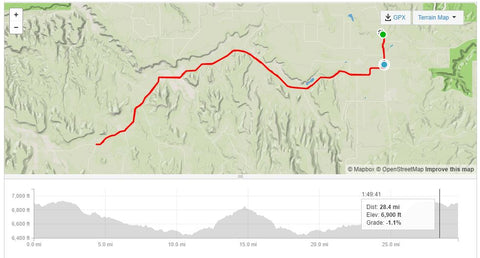
Are there other hams on Strava? Yes! At Force 12, yours truly (AA7XT, triathlon) and Jon (KL2A, running) are both active Strava users:
https://www.strava.com/athletes/2467
https://www.strava.com/athletes/15413914
If you look at the Strava users that Jon and I follow, you’ll see many DXers and contesters including Juan TG9AJR, Mark N5OT, Jeff N5TJ (CQ WW World Record Holder and an accomplished bicycle racer), and many more. There are also numerous ham oriented Strava Groups. I’m a member of the “DXCC” and “DX Runners” groups.
If you’re on Strava or are going to sign up (it’s free!), please do connect with Jon and myself. Maybe we can have a meetup at Dayton and go for a morning group run? Or create a combo annual contest points + mileage Strava Challenge?
I should note that Force 12 engineer/builder Jeremy KE0CGU is the best athlete at the company but does not use Strava (Jeremy prefers his time outside to be away from gadgets – purist!). Jeremy commutes to F12 via bike regardless of the weather and also has competed in mountain ultra-running and long distance mountain bike events.

Bill Hein, AA7XT, is a regular contributor to AmateurRadio.com and writes from Colorado, USA. He is co-owner of Force 12 and InnovAntennas. Contact him at [email protected].
Please Thank a Vet
A few day after Veterans Day, I am still awash in the recognition vets received on their special day. In the interest of full disclosure, I spent two years on active duty and four years in the Army Signal Corps Reserve during the Korean War era, which probably doesn’t make me an impartial observer.
In actuality, this story began about ten years ago. I was visiting relatives in Florida and was dispatched to the supermarket to procure a few last-minute items. As I was walking into the store a distinguished looking old timer was heading toward a car with Purple Heart courtesy license plates. (The Purple Heart is presented to United State military personnel who have been wounded in combat.) I walked over to him and put out my hand and said, “thank you for your service and sacrifice, I sincerely appreciate both.” Whereupon he started to cry and said, “I’ve had these plates for ten years and you’re the first person who has every said a word!” In the discussion that followed, he told me he was a Marine who received a serious leg wound while fighting on Iwo Jima. Sixty years later he still walked with a serious limp. He also received the Bronze Star for valor in action. My new-found friend dispatched me with a big hug and an emotional, “thank you.” This chance encounter made my vacation and literally changed my life.
Over the ensuing years, I’ve frequently thought about this WWII hero. I wish I had taken his name and address so I could have remained in contact. It has also reminded me of the vast number of vets who gave their life or years of their life in the service of our country. You may be totally anti-war but in my opinion, even the most avid pacifists owe homage to those who died or were willing to serve to give them the right to protest.
Looking for vets I would simply say, “thank you for your service” and shake their hand if the occasion presented itself. I am especially on the lookout for Viet Nam vets as they were the object of disdain when they came home. People would spit at them and called all types of names. Possible a few acts of kindness now can help erase the pain of their homecoming. When encountering a WWII vet, there aren’t many left, I try and engage them in conversation. If I’m in the check-out line at a convenience store and there is a vet behind me with a container of coffee, I frequently tell the person at the cash register, “take out for the vet’s coffee.”
Don’t be surprised if thanking a vet, or other random acts of kindness, makes you feel better. Knowing you have brought a smile and a good feeling to another human being is a very special thing.
Urb LeJeune, W1UL, is the creator of Ham-Cram, a ham radio test preparation website. He writes from New Jersey, USA. Contact him at [email protected].
HamRadioNow: Ham Radio 8.0
What will Amateur Radio – and radio in general – look like in the future? And maybe not that far in the future. Say 5 or 10 years?
At this year’s ARRL & TAPR Digital Communications Conference, two well-known hams in satellite and microwave circles made that question the focus of their Sunday Seminar talk. The Sunday Seminar at the DCC is a four hour ‘deep dive’ into a single topic, from 8 AM to noon on the final day of the three-day conference. The Friday and Saturday sessions are all 45-minute talks, and while they can get pretty technical, they’re still more overviews of their subject matter. This year’s conference was in September 2016 in St. Petersburg FL.
The two hams are Michelle Thompson W5NYV and Dr. Bob McGwier N4YH. It’s hard to reduce their session to a short summary, but I’ll try. If you want more, I recorded the whole thing on video for HamRadioNow Episode 276, and there’s an 11-minute synopsis video at the bottom of this essay. I actually recorded the whole conference, as I have since 2008, and I’m releasing each talk as a HamRadioNow episode as I get them produced.
By the way, Ham Radio 8.0 is my title, not theirs. The official title of the Sunday Seminar is Spectrum: It’s the Frequency Crunch for Real. And that gets closer to the heart of their subject.
So, the short story: out there in the real world, spectrum is in short supply. It’s been that way for a long time, but it’s getting more and more critical, especially in UHF and the microwaves as wireless broadband (4G, 5G, WiFi, etc.) needs more and more space. And yet it’s being used inefficiently. Blocks of spectrum are assigned to services as if they are city blocks of land. Yet those services don’t use every bit of the spectrum they’re given all the time.
Starting about now, software defined, cognative radios can be designed to work together, to cooperate on frequency, mode, bandwidth and spectrum to each get their message through using whatever they need to do it. I’m going to take a paragraph break here because the previous sentence is the heart of the story. So much so that I’m going to repeat it, in bold type, and turn it blue:
Starting about now, software defined, cognative radios can be designed to work together, to cooperate on frequency, mode, bandwidth and spectrum to each get their message through using whatever they need to do it.
We’ve got the technology. We just need the plan (and the will). The plan part is being spurred on by the DARPA Spectrum Collaboration Challenge. That’s the same DARPA that brought you cool stuff like the Internet. Your tax dollars at work. The will part… well, that probably comes from government and industry running up against a wall and finding they have no other choice.
Where does ham radio come in? Bob N4YH is Chief Scientist at the Hume Center for National Security and Technology at Virginia Tech. He’s way up there in advanced academic circles. And he mixes that up with ham radio as much as he can, encouraging students to become hams because that opens up some unique paths for experimentation. We can do almost anything we want with our allocations across the radio spectrum at will, without asking anyone’s permission. Bob expects (hopes?) that our more technically savvy hams will take on that DARPA challenge and lead the way into this brave new world.
So where does your ham radio come in, assuming you’re not one of our most technically savvy hams ready to lead the way? I think you’ll enjoy hearing Michelle and Bob wind their way around this subject, and this is really just the start, so the discussion begins here. Government and industry need this to keep communications moving forward. Bob’s take is that ham radio needs it to survive into a new generation of hams – hams who are attracted to technical challenges of the future, not legacy operation of the past (and the present). That is not going to sit well with today’s older ham gentry. We like our CW and SSB, and even our PSK 31 (and WSPR – HamRadioNow Episode 277 is on using a Raspberry Pi and a TAPR shield kit as a WSPR beacon). Bob readily admits that this is the End of Amateur Radio As We Know It. And the beginning of an Amateur Radio that we won’t recognize.
Here’s the 11-minute version. The full talk in Episode 276 runs about 3 hours (which I break up into three parts). That’s a serious time commitment, even for something this entertaining and important. Maybe the audio version will help, so HamRadioNow is available as an audio podcast you can download onto your phone.
Gary Pearce, KN4AQ, is the host of HamRadioNow.tv. If you enjoy this and other HamRadioNow programs, help keep them 'on the air' with a contribution. Contact him at [email protected].
Warm Afternoon on Mt. Kearsarge
Dave K1SWL and I spent a couple of hours at Winslow State Park at the base of Mt. Kearsarge this afternoon. It was 57F and really beautiful.

A nearby parking area serves as the trail-head for several hiking paths up the mountain. There are a few picnic tables in a small field nearby and we set up there.
Dave wanted to try out a new half wave wire and matching circuit he’d built. So he tossed a wire into a maple tree and pulled up the antenna. He used his KX3. He was already making a QSO on 20 meters as I was setting up.

A few feet away, I pulled up the 3-band LNR end fed wire. I supported it in the middle and used it as an inverted Vee. I had the 3-band MTR by KD1JV powered by 8 AA cells. The output is close to 3 watts. I made a quick contact with Ron K4UY in Alabama and received a 569 report.
As I finished I heard Dave working another station… VO1DD in Hearts Delight, Newfoundland. I called over and Dave gave me the frequency. When Dave signed, I gave the Newfoundland station a call. Doug gave me a 599 and we chatted for a minute. That was super.

In the meantime Dave was working a station in California. I never got the call, but had time to snap a quick photo of Dave before they signed.
I switched to 40 meters and happened to hear Joe N2CX calling CQ from an NPOTA site… the Clara Barton National Historic Site in Maryland. Fantastic! I gave Joe a call and received a 559. Joe left 40 meters before Dave could finish his California QSO, so Dave didn’t catch Joe this time around.
Now the sun started dipping below the trees and our picnic tables were in shade. Right away we began to feel the chill and packed up. It’s unlikely we’ll get another day this warm before the snow falls. Thank goodness we were able to take advantage of the opportunity.
Jim Cluett, W1PID, is a regular contributor to AmateurRadio.com and writes from New Hampshire, USA. Contact him at [email protected].
Sainsonic AVRT7 iGate
For the past few months I have been having a love hate relationship with a Raspberry Pi Model B and Direwolf. The software runs perfectly well on my Pi3 but makes my other Pi fall over relatively easily. When this is at home it is no problem at all. I just reset and it will restart the software but the trouble is it has been at the clubs QTH. Ok I can log in remotely and deal with it but when it refuses to connect to the internet it becomes a pain. So I was looking for alternative solutions.
I came across the Dorji DRA818v module a little while ago and though that would work. It is a simple module that just needs a PCB and some connections to the Pi. But hang on, there are PCB’s you can already buy. But they don’t have filtering. Now hang on again there are those with filtering too. Now that looks good. Then hanging on for a third time the Sainsonic AVRT7 does it all simply!

So, now there are a bunch of choices for the same module. I’ve ordered a AVRT7 and around 30+ working days later I should receive the new toy.
There are a few warnings about counterfeit Prolific chips and trouble programming. I can see some frustrating times ahead but I’ve never been one to shy away from a challenge. I just hope it’ll be one that can be beaten. I will also get myself a SV1AFN pcb when I get around to it for home / experimental use. Just don’t tell Mrs g7kse!
Whilst we are on the subject I am really impressed with Direwolf. WB2OSZ has produced a really great bit f software that is easy to install on that Raspberry Pi and RTL Dongle you bought that you’re not using. The world can only get better with loads of iGates 
Alex Hill, G7KSE, is a regular contributor to AmateurRadio.com and writes from Cumbria, UK. Contact him at [email protected].
AmateurLogic 97: Variety Show
AmateurLogic.TV Episode 97 is now available for download.
Tommy shows us the Android SDR, Peter makes an Auto-Pi, Emile continues his COMM TCPIP Remote, George talks about RG-142 and correct Connector Installation.
1:24:04
George Thomas, W5JDX, is co-host of AmateurLogic.TV, an original amateur radio video program hosted by George Thomas (W5JDX), Tommy Martin (N5ZNO), Peter Berrett (VK3PB), and Emile Diodene (KE5QKR). Contact him at [email protected].
 Ham Radio Deluxe |
 W5SWL Electronics |
 Ham Radio Prep |
 KB3IFH QSL Cards  Hip Ham Shirts  HamRadioAuctions HamRadioAuctions Reliance Antennas Reliance Antennas Enigma Shop Enigma Shop |  morseDX  Ni4L Antennas  R&L Electronics R&L Electronics antennas.us antennas.us QRV QRV |
- Matt W1MST, Managing Editor
