 |
 Reading PC4T’s blog and then WOW!!
 14 July 2017 | by
 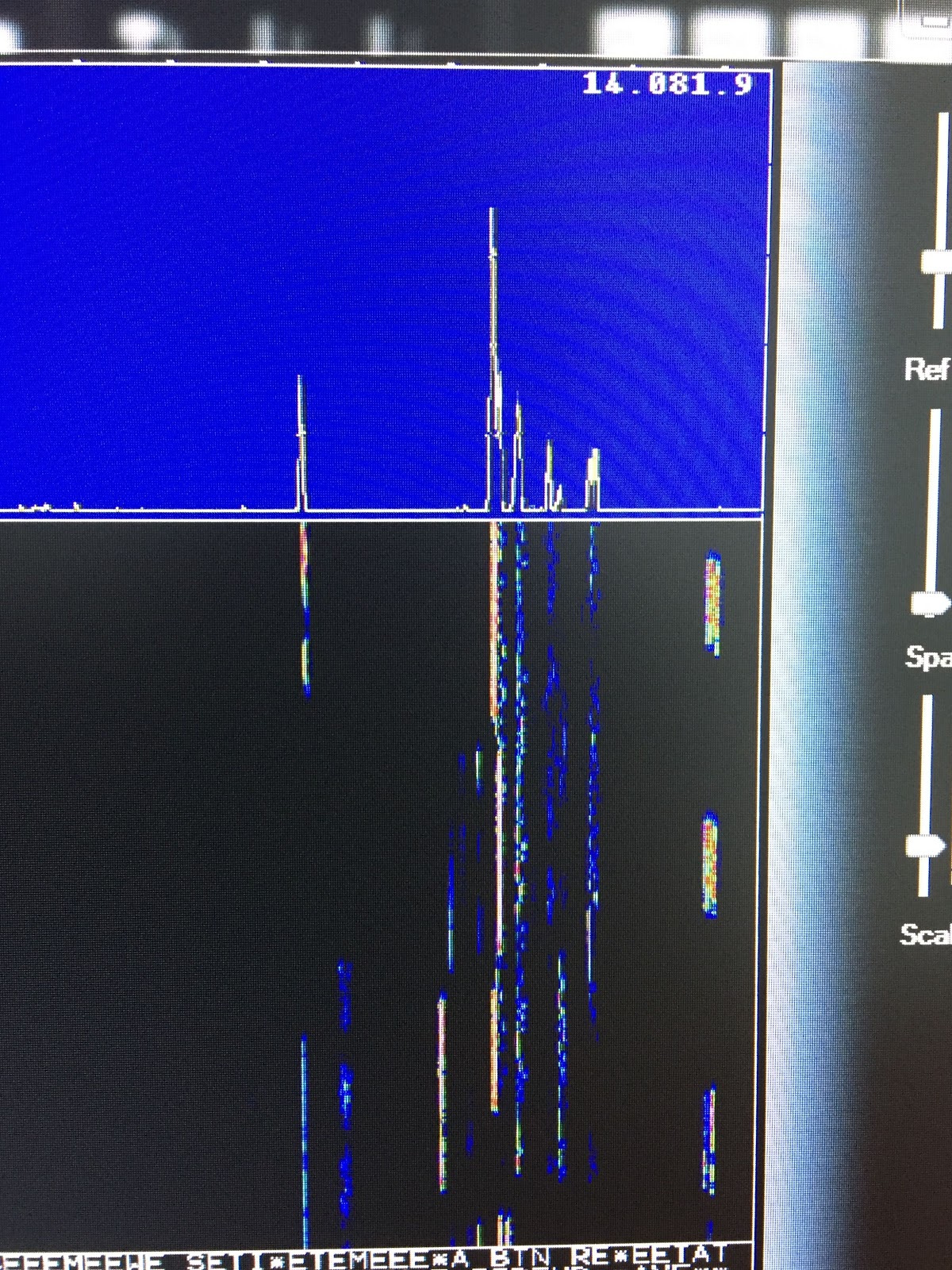 |
| Digi signals. |
Mike Weir, VE9KK, is a regular contributor to AmateurRadio.com and writes from New Brunswick, Canada. Contact him at [email protected].
Reading PC4T’s blog and then WOW!!
|
| Digi signals. |
Mike Weir, VE9KK, is a regular contributor to AmateurRadio.com and writes from New Brunswick, Canada. Contact him at [email protected].
iCW keyer
Around this time of year the kids finish school for the summer holidays and Mrs g7kse takes them for a week away with her before I get some time off myself. It’s a short break but the house is across the road from the beach and the kids love it. As does Angus (the dog). I then have a week at home / work where the place is a bit quiet. So time to catch up on a few loose ends and perhaps an evening mountain biking before I join them at the weekend.
This time I’m planning on building up the iCW keyer that I have. Well I say have, it’s a blank PCB that Chuck W5UXH was kind enough to give me earlier in the year. I can’t currently use iCW very effectively and my CW is suffering so this is somewhat needed. Now.
The keyer board is the full monty. It has all the bells and whistles and uses a new, to me, fubarino microcontroller. Slightly larger than an Arduino micro and with the provision for an SD card it offers the ability to store ebooks that will form the ability to play dit’s and dah’s as a stand-alone unit. The PCB is slightly larger than I’m used to but is well produced and uses professional parts all available from Mouser. It should take a few hours to build and test, perhaps an uninterrupted evenings work but we’ll see how well that goes and review the time at the end.
In summary….I need to turn this stuff into something useful. Wish me luck!

Alex Hill, G7KSE, is a regular contributor to AmateurRadio.com and writes from Cumbria, UK. Contact him at [email protected].
Kickin It With the HR360 Workbench Crew – ETH077

If any of yall listen to the Hamradio 360: Workbench podcast then you will know the names George and Jeremy. They are the host of that podcast and some good friends of mine. Several episodes ago they talked about some miniature data radios and some uses for them. I had some questions about it so I thought what better than to do that to come on and talk about them on an episode so that yall can hear them too.
I got all my questions answered, Thanks George!
We went on to talk about their podcast and things that they had been doing and even an upcoming show topic and then wrapped it up with their thoughts on how Hamvention was this year and what they thought about the new venue.
I think we had a great conversation and I hope yall do to.
Check out the show notes for information about the episode, links to all the items that we talked about and other information. You can also listen to the episode directly on the website or on your favorite podcast listening app.
http://www.everythinghamradio.com/podcast/77
Curtis Mohr, K5CLM, is the author/owner of Everything Ham Radio Blog and Youtube channel. Contact him at [email protected].
So, You Want to Get into the Ham Radio Hobby
Come spend some time with me in this ride-along video blog episode, the first in a series that I am doing to help you begin your journey into the amateur radio hobby. This video is an experiment in that I am trying out this format as a type of “chat” in which I share my thoughts and experiences regarding the ham radio hobby, and how you might start out exploring the hobby.
Regarding the experiment: I have tried to edit the sound to reduce the road noise. Please comment on the noise level, and how well you can hear me talking about the topic. Should I ditch the ride-along format? Comments directly on the YouTube channel are better if you leave a comment on the actual video as displayed on my YouTube channel.
..
73 de NW7US
..
Visit, subscribe: NW7US Radio Communications and Propagation YouTube Channel
RFI – More Vigilance Coming?
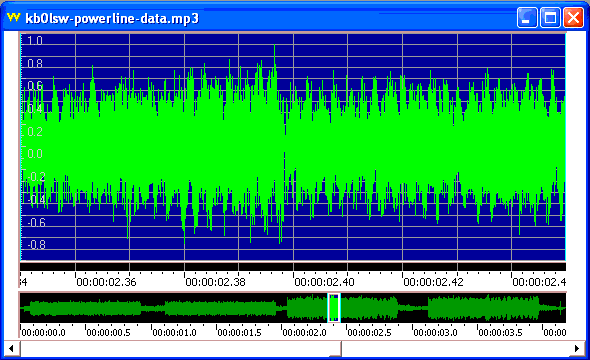
A posting yesterday in the Yahoo MW DXer's Group pointed to a new article at RadioWorld.com, re the new urgency within the broadcast field to address the growing noise floor.
The article "Noise Inquiry Spurs Recommendations" discusses the fallout from last year's FCC Technical Advisory Council's (TAC) Inquiry ET-16-191, seeking public comments on the rapid increase in "man-made RF noise issues".
As radio amateurs have known for decades already, there is a huge problem when it comes to spectrum noise levels. They were even complaining about this way back in 1932's Short Wave Craft ... "The reasons for this extraordinary amount of noise which we have to contend with at the present time are manifold." If only they knew how quiet it really was!
Now that noise is beginning to have severe affects on profit margins when it comes to AM, FM, TV and Wi-Fi connected devices, it seems that there may now be a larger appetite for some resolution.
"Other industries using RF wireless technologies report growing noise trouble as well. A recent IEEE Spectrum article was subtitled “Electronic Noise Is Drowning Out the Internet of Things.” Designers of IoT devices are not getting the range they expect due to unexpectedly high background noise, it reported."
Comments to the enquiry pointed out the usual offenders, all well-known to hams, such as noisy powerlines, switching power supplies, noisy motors etc and emphasized the fact that none of these offenders should cause interference if properly designed.
The TAC Working Group recommended some steps that it thought the FCC should take with the key one being an FCC Notice of Proposed Rulemaking to "resolve unanswered questions and take corrective action".
According to a recent meeting between The Association of Federal Communications Consulting Engineers and FCC officials, it was pointed out that:
- there had been no official RF noise studies done in over 40 years.
- some manufacturers are deliberately cheating to skirt emission requirements.
- those in charge of enforcement (FCC) need to be more diligent.
Other somewhat "telling" recommendations were also put forward and can be viewed in the Radioworld article here.
If you're one of the hundreds (thousands?) struggling with a new mystery noise source, perhaps you can identify the noise signature from one of these two sites:
http://www.arrl.org/sounds-of-rfi
http://www.rfiservices.com/sound.htm
It is reported that the new FCC Chairman seemed receptive to the concerns presented but so far there has been no official action. Hopefully he will soon tackle this with the same gusto shown for chasing down illegal broadcasters. With recent FCC cutbacks and proposed budget slashing from Washington, one wonders if this problem will be given the attention that it needs before it is truly too late to reverse.
Steve McDonald, VE7SL, is a regular contributor to AmateurRadio.com and writes from British Columbia, Canada. Contact him at [email protected].
RFI – More Vigilance Coming?
A posting yesterday in the Yahoo MW DXer's Group pointed to a new article at RadioWorld.com, re the new urgency within the broadcast field to address the growing noise floor.
The article "Noise Inquiry Spurs Recommendations" discusses the fallout from last year's FCC Technical Advisory Council's (TAC) Inquiry ET-16-191, seeking public comments on the rapid increase in "man-made RF noise issues".
As radio amateurs have known for decades already, there is a huge problem when it comes to spectrum noise levels. They were even complaining about this way back in 1932's Short Wave Craft ... "The reasons for this extraordinary amount of noise which we have to contend with at the present time are manifold." If only they knew how quiet it really was!
Now that noise is beginning to have severe affects on profit margins when it comes to AM, FM, TV and Wi-Fi connected devices, it seems that there may now be a larger appetite for some resolution.
"Other industries using RF wireless technologies report growing noise trouble as well. A recent IEEE Spectrum article was subtitled “Electronic Noise Is Drowning Out the Internet of Things.” Designers of IoT devices are not getting the range they expect due to unexpectedly high background noise, it reported."
Comments to the enquiry pointed out the usual offenders, all well-known to hams, such as noisy powerlines, switching power supplies, noisy motors etc and emphasized the fact that none of these offenders should cause interference if properly designed.
The TAC Working Group recommended some steps that it thought the FCC should take with the key one being an FCC Notice of Proposed Rulemaking to "resolve unanswered questions and take corrective action".
According to a recent meeting between The Association of Federal Communications Consulting Engineers and FCC officials, it was pointed out that:
- there had been no official RF noise studies done in over 40 years.
- some manufacturers are deliberately cheating to skirt emission requirements.
- those in charge of enforcement (FCC) need to be more diligent.
Other somewhat "telling" recommendations were also put forward and can be viewed in the Radioworld article here.
If you're one of the hundreds (thousands?) struggling with a new mystery noise source, perhaps you can identify the noise signature from one of these two sites:
http://www.arrl.org/sounds-of-rfi
http://www.rfiservices.com/sound.htm
It is reported that the new FCC Chairman seemed receptive to the concerns presented but so far there has been no official action. Hopefully he will soon tackle this with the same gusto shown for chasing down illegal broadcasters. With recent FCC cutbacks and proposed budget slashing from Washington, one wonders if this problem will be given the attention that it needs before it is truly too late to reverse.
Steve McDonald, VE7SL, is a regular contributor to AmateurRadio.com and writes from British Columbia, Canada. Contact him at [email protected].
 Ham Radio Deluxe |
 W5SWL Electronics |
 Ham Radio Prep |
 KB3IFH QSL Cards  Hip Ham Shirts  HamRadioAuctions HamRadioAuctions Reliance Antennas Reliance Antennas Enigma Shop Enigma Shop |  morseDX  Ni4L Antennas  R&L Electronics R&L Electronics antennas.us antennas.us QRV QRV |
- Matt W1MST, Managing Editor
