 |
 Diversity in the shack
 25 January 2018 | by
 When I get asked ‘what is ham radio?’ I generally get a bit tongue tied and waffle on a bit. There is nothing harder as a ham than actually defining the hobby. This is really down to how diverse the hobby is. Fundamentally at the core is a like of RF. Other than that it sort of sprays out a heap of sub genre’s that have a variety of different followers. Amateur TV, DX chasing, GHz…. the list goes on and on. Perhaps one day a map will be available that shows the full spectrum and a few of the relationships, but for now here is another one. I’m going to call it ham radio services as a working title, it is defined as the ham who uses his knowledge and equipment to provide a service based on RF. APRS igates are an example of this.
So what else is there? The Raspberry Pi has certainly opened up the opportunity to provide low cost services. I have one the is an APRS igate, one that runs my SatNOGS ground station and that was it until last week when I put an unused older Pi2 to good use as an ADSB receiver using a system called PiAware. Essentially a way of melding together an RPi, rtl-sdr dongle and an ADSB antenna. All so that it can listen out for the aircraft beacons and report positional information to the Flightaware website.
The ‘project’ took no more than a couple of hours, mainly because my Micro-SD card died and I had to scrabble around for another one. It is very simple to do and will put your Raspberry Pi to good use. Steps are summarised as
- Sign up with the Flight Aware website and read through the docs on the PiAware page
- Download the image
- Burn the image to a (non corrupt) micro SD card. Plonk it in the pi
- Plug in an Rtl-sdr (or you could splash out on a Flight Aware Prostick)
- Power on
- Find IP address of RPi on network (look in the router settings)
- Go to site (mine is 192.168.1.100). You should have a screen that looks a bit like this

- Claim you receiver (Instructions are on the screen). There will be a link in the place where it says ‘View your site statistics online’
- Sit back and watch the packets come in. When you’re ready go to the FlightAware website and see how well you are doing.

Looking west is best as always from my QTH. Where’s the fun in that? I hear you say?
Its good to experiment, after all there is DX to be had, just not in the conventional sense. Lets take a comparison between WSPR and ADSB. A bit off beat but here goes, WSPR will tell you the distance and signal to noise of your station as heard by another, DX, station. You do the transmitting and someone else does the receiving. With the PiAware setup someone else does the transmitting and you do the receiving. Is this not the same thing? A different band ok but actually the same thing.
Beats attempting to get in contact with some short lived station in a rarely activated location by shouting into a microphone for hours on end. Say I. Wouldn’t it be boring if we all liked the same thing.
One final note. There are lots of RTL-SDR dongles to choose from. The cheap £3 ones from eBay work, they are reliable enough and coupled with the (normally) supplied antenna give me a range around 150-200 nautical miles. the Pro Stick mentioned earlier will extend that range by using a broadband low noise amp (LNA). If you live in an urban environment you can use the Pro Stick Plus that comes with a band pass filter or add in your own. you may also need to adjust gain settings and have a play. I am only using a wire antenna, I will find a reasonable supplier for a colinear or similar and report back.
Onwards and upwards
Alex Hill, G7KSE, is a regular contributor to AmateurRadio.com and writes from Cumbria, UK. Contact him at [email protected].
Need help with a Ham Christmas QSO card
Too early to plan the Christmas QSO card?
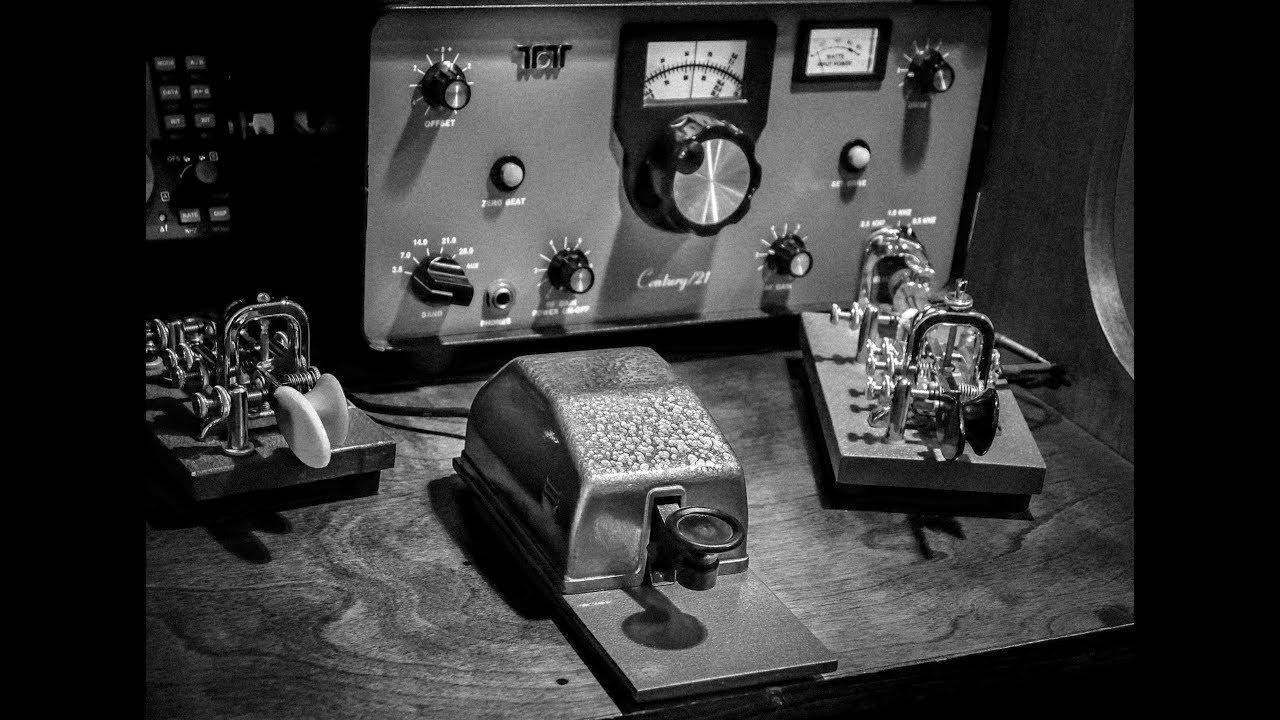
We three keys from ham shacks are,
Sending code that travels afar,
. . .
Richard Carpenter, AA4OO, is a regular contributor to AmateurRadio.com and writes from North Carolina, USA. Contact him at [email protected].
Hunting For NDBs in CLE 228
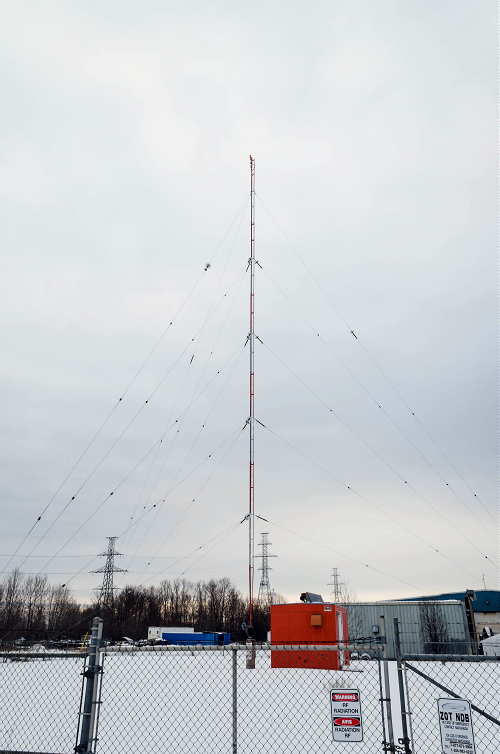 |
| ZQT-263 courtesy: http://www.ve3gop.com/ |
This coming weekend will see another monthly CLE challenge. This time the hunting grounds will be: 260 - 269.9 kHz and 440 - 1740 kHz.
For those unfamiliar with this monthly activity, a 'CLE' is a 'Co-ordinated Listening Event', as NDB DXers around the world focus their listening time on one small slice of the NDB spectrum.
A nice challenge in this one is to hear the Thunder Bay (ONT) NDB, 'ZQT', on 263 kHz. It seems to be well-heard throughout most of North America as its reported 50W does a good job into a very high vertical. Listen for its upper-sideband CW identifier (with your receiver in the CW mode) on 263.384 kHz.
If last month's great MF propagation continues into the weekend, we should see some great logs. Conditions are still very good at the moment.
When tuning for NDBs, put your receiver in the CW mode and listen for the NDB's CW identifier, repeated every few seconds. Listen for U.S. NDB identifiers approximately 1 kHz higher or lower than the published transmitted frequency since these beacons are modulated with a 1020 Hz tone approximately.
For example, 'AA' in Fargo transmits on 365 kHz and its upper sideband CW identifier is tuned at 366.025 kHz while its lower sideband CW ident can be tuned at 363.946 kHz. Its USB tone is actually 1025 Hz while its LSB tone is 1054 Hz.
Often, one sideband will be much stronger than the other so if you don't hear the first one, try listening on the other sideband.
Canadian NDBs normally have an USB tone only, usually very close to 400 Hz. They also have a long dash (keydown) following the CW identifier.
All NDBs heard in North America will be listed in the RNA database (updated daily) while those heard in Europe may be found in the REU database. Beacons heard outside of these regions will be found in the RWW database.
From CLE organizer Brian Keyte, G3SIA, comes the details:
CLE228 - FINAL DETAILS
Hi all,
Here are the final details for this weekend's Co-ordinated Listening Event.
This one uses some challenging frequencies and the possibility of hearing
some experimental amateur beacons. Any first-time CLE logs will also
be very welcome, however modest - it is not a contest!
Days: Friday 26 January - Monday 29 January
Times: Start and end at midday, your local time
Targets: Normal NDBs and Amateur beacons
QRG: 260.0 - 269.9 kHz
plus: 440.0 - 1740.0 kHz
Please log the beacons you can identify that are listed in those ranges
(not NAVTEX signals) plus any UNIDs that you come across there.
The range from 440 kHz gives some relaxing listening - it has wide
open spaces where you can often detect the carrier signals before
identifying them it from an offset. For Europe listeners most of the
targets are in the eastern countries where listeners will have a real
BONANZA - that's a lot! The CLE will be much more of a challenge
for those of us in Western Europe and in the rest of the World.
You can find details of the beacons in these ranges, lists and maps,
by clicking on the 'SEEKLIST' link in the CLE page
( http://www.ndblist.info/cle.htm )
We ask operators of the amateur beacons mainly around 474-478 kHz
to be on air during the CLE using a simple Morse mode which requires
no software to decode it. We are interested in anything operating IN
BEACON MODE in the range (no reports of any QSOs).
If possible, please include the amateur beacons' 6-character Locators
in your log - they are normally transmitted as part of the message.
Send your final CLE log to the List, preferably as a plain text email,
not in an attachment, with CLE228 and FINAL at the start of its title.
Please show on EVERY LINE of your log:
# The full Date (or Day no.) and UTC (the day changes at 00:00 UTC).
# kHz (show the beacon's nominal published frequency if you know it)
# The Call Ident.
Other optional details, Location, Distance, etc., go LATER in the same
line (or in footnotes). Any extra details about UNIDs, especially strong
ones that may be near to you (maybe their approximate direction, etc.)
will help us to discover more about them. Please make your log useful
to old and new members alike by ALWAYS including your own location
and brief details of the equipment and aerial(s) that you were using.
We will send an 'Any More Logs?' email at about 18:00 UTC on Tuesday
evening. From it you can check that your log has been found OK.
Do make sure that your log has arrived at the very latest by 09:00 UTC
on Wednesday 31 January.
The Combined Results should be finished soon after that.
Good listening
Brian
---------------------------------------------------------------------
From: Brian Keyte G3SIA ndbcle'at'gmail.com
Location: Surrey, SE England (CLE co-ordinator)
---------------------------------------------------------------------
If you are interested in some remote listening - maybe due to local
difficulties - you could use any one remote receiver for your loggings,
stating its location and with the owner’s permission if required.
A remote listener may NOT also use another receiver, local or remote,
to make further loggings for the same CLE.
-------------------------------------------------------------------
These listening events serve several purposes. They:
- determine, worldwide, which beacons are actually in service and on-the-air so the online database can be kept up-to-date
- determine, worldwide, which beacons are out-of-service or have gone silent since the last CLE covering this range
- will indicate the state of propagation conditions at the various participant locations
- will give you an indication of how well your LF/MF receiving system is working
- give participants a fun yet challenging activity to keep their listening skills honed
Final details can be found at the NDB List website, and worldwide results, for every participant, will be posted there a few days after the event. If you are a member of the ndblist Group, results will also be e-mailed and posted there.
The very active Yahoo ndblist Group is a great place to learn more about the 'Art of NDB DXing' or to meet other listeners in your region. There is a lot of good information available there and new members are always very welcome. As well, you can follow the results of other CLE participants from night to night as propagation is always an active topic of discussion.
You need not be an ndblist member to participate in the CLEs and all reports, no matter how small, are of much value to the organizers.
'First-time' logs are always VERY welcome!
Reports may be sent to the ndblist or e-mailed to either myself or CLE co-ordinator, Brian Keyte (G3SIA), whose address appears above.
Please ... give the CLE a try ... then let us know what NDB's can be heard from your location! Your report can then be added to the worldwide database to help keep it up-to-date.
Have fun and good hunting!
Steve McDonald, VE7SL, is a regular contributor to AmateurRadio.com and writes from British Columbia, Canada. Contact him at [email protected].
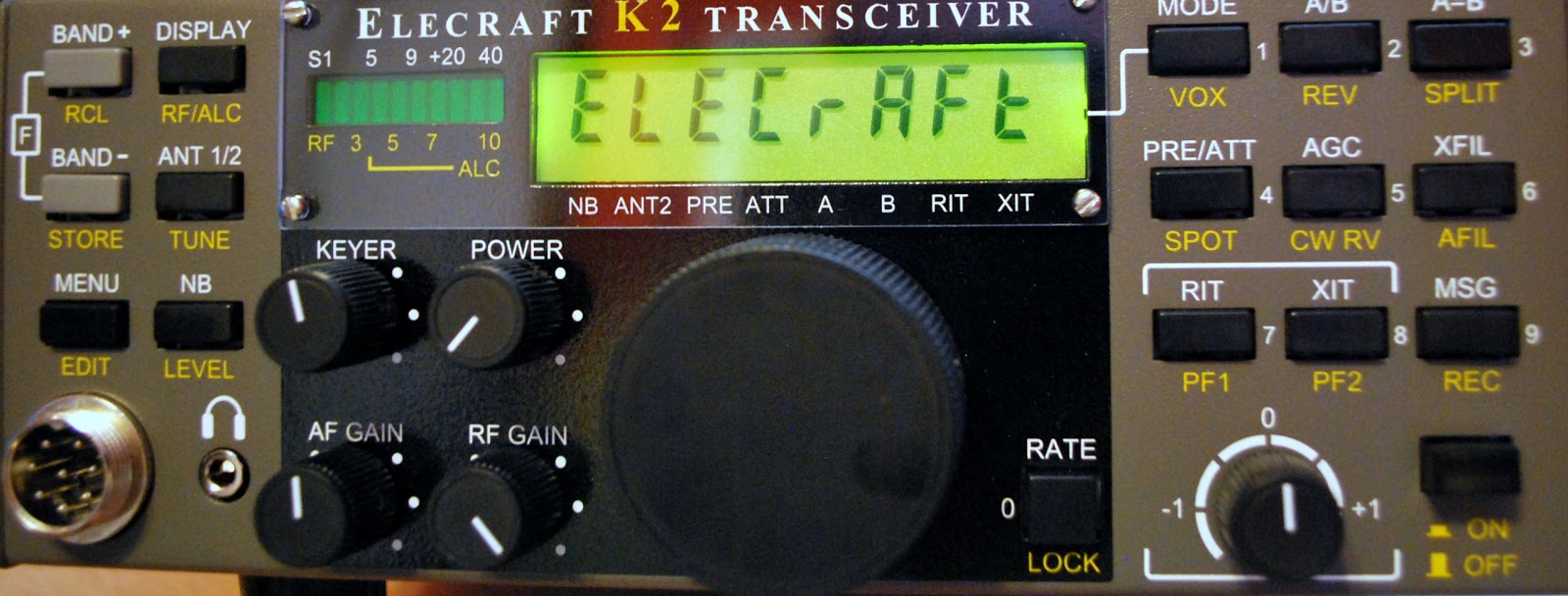
Elecraft K2 out of production……say it’s not so!
Mike Weir, VE9KK, is a regular contributor to AmateurRadio.com and writes from New Brunswick, Canada. Contact him at [email protected].
LHS Episode #204: Jump Around
 In this episode, your hosts discuss the monkeyshines at the ARRL, the overwhelming popularity of a certain digital mode, Spectre and Meltdown (of course), WINE 3.0, WSJT-X, twclock, CLLOG, dxSpot and a whole lot more. Thank you for tuning in and hope your 2018 is going well.
73 de The LHS Crew
Russ Woodman, K5TUX, co-hosts the Linux in the Ham Shack podcast which is available for download in both MP3 and OGG audio format. Contact him at [email protected].
ICQ Podcast Episode 258 – Getting Ready for the Six Metre Season
In this episode, Martin M1MRB is joined by, Edmund Spicer M0MNG, Matthew Nassau M0NJX and Bill Barnes N3JIX to discuss the latest Amateur / Ham Radio news. Colin M6BOY rounds up the news in brief, and this episode’s feature is Getting ready for the six-metre season.
We would like to thank Barrie Hull (GD0SFI) and our monthly and annual subscription donors for keeping the podcast advert free. To donate, please visit - http://www.icqpodcast.com/donate
- Battery Powered 'Smart Bags' Raise Safety Concern
- New Technician License Question Pool Released
- Indonesian Pirates on 7 MHz
- WSPR Beacon En Route to Antarctic
- 3D Printed Radio
- FT8 Operating Guide
- D-Star One v1.1 Phoenix
- AX Prefix on Australia's National Day
- Test Equipment at SOTABEAMS
Colin Butler, M6BOY, is the host of the ICQ Podcast, a weekly radio show about Amateur Radio. Contact him at [email protected].
A Better Antenna for Dualband Handhelds
I’m a fan of using a half-wave antenna on a 2m handheld transceiver (HT). These come in a variety of forms but I’ve tended to use the telescoping half-waves that mount on the HT. These include the Halfwave 2 Meter Flex antenna from Smiley and the MFJ-1714 from MJF. One of the disadvantages of these two antennas is that they are designed for 2m operation only. Put it on a dualband HT and you can only use one of the bands.
Now there is a dualband alternative.

During a discussion of various VHF radios and antennas on the SOTA reflector, Phil/G4OBK recommended this antenna: TWAYRDIO RH 770 SMA-Male Dual Band Telescopic Handheld Antenna. I was mildly skeptical in that the antenna looks like cheap lowcost economy stuff from China. However, for $16.55 (free shipping), it seemed like something I should try out.
I’ve since used this antenna on several SOTA activations and have found it to work quite well. Not having to worry about whether I’m operating on 2m or 70 cm is a big plus. I liked the antenna so much, I now have three.
Recently, I wondered how well the antenna is really performing so I did a side-by-side comparison with the Smiley 2m halfwave. Now this kind of comparison is always a bit dicey unless you have a calibrated antenna range. I got on 2m fm with another ham running a home station some distance away such that I was not pegging his S-meter. We did several A/B comparisons between the Smiley and the RH 770. Much to my surprise, the RH 770 performed significantly better than the Smiley. The other ham saw his meter deflect higher with the RH 770. I can’t give that to you in dB but I can say its a little better. I actually thought that the single-band design might be slightly better due to less complexity in the antenna. The opposite was true. Your mileage may vary. No warranty expressed or implied.
The only thing I don’t like about the RH 770 is that the telescoping sections slide up and down really easy. Too easy for my taste. I’d rather have some stickiness to it so that I am sure it will remain fully extended. But I admit this is more of a personal impression than actual problem.
The antenna is available with a male SMA connector, a female SMA connector or a BNC. That should pretty much cover it.
So thanks Phil/G4OBK for pointing out this antenna. I also highly recommend it.
73, Bob K0NR
The post A Better Antenna for Dualband Handhelds appeared first on The KØNR Radio Site.
Bob Witte, KØNR, is a regular contributor to AmateurRadio.com and writes from Colorado, USA. Contact him at [email protected].
 Ham Radio Deluxe |
 W5SWL Electronics |
 Ham Radio Prep |
 KB3IFH QSL Cards  Hip Ham Shirts  HamRadioAuctions HamRadioAuctions Reliance Antennas Reliance Antennas Enigma Shop Enigma Shop |  morseDX  Ni4L Antennas  R&L Electronics R&L Electronics antennas.us antennas.us QRV QRV |
- Matt W1MST, Managing Editor
