 |
 TX Factor is Back On The Air
 29 May 2018 | by
 Yes, TX Factor episode 21 is finally available and features a review of the IC-7610 transceiver from Icom. Bob shows Mike a thing or two about operating thorough linear satellites. And, have you ever worried about programming your DMR handie to cope with code plugs, gateways and chatrooms? Again, Bob thinks he has the answer.
In our free-to-enter draw we have another two prize give-away: a Prism padded dust cover for your rig and a copy of Andrew Barron’s book Hamsats and Amsats.
It’s all at www.txfactor.co.uk
Happy viewing!
Nick Bennett 2EØFGQ co-hosts TX Factor with Bob McCreadie GØFGX and Mike Marsh G1IAR. Contact the team at [email protected]
LHS Episode #230: FlexRadio Deep Dive
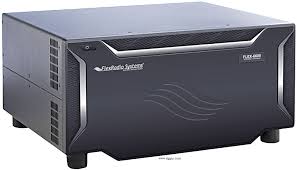 Welcome to Episode 230 of Linux in the Ham Shack. We're freshly back from Hamvention 2018 and ready to roll. In this episode, we do a deep dive into the FlexRadio SDR platform. We have two interviews recorded live from Hamvention all about the Flex architecture, its Linux and Open Source roots and much more. We would like to thank Steve, AI4QR, and Steve, N5AC, for spending some time with us to let us all know about the future of software-defined radio servers.
73 de The LHS Crew
Russ Woodman, K5TUX, co-hosts the Linux in the Ham Shack podcast which is available for download in both MP3 and OGG audio format. Contact him at [email protected].
Weekly Propagation Summary – 2018 May 28 16:10 UTC
Here is this week’s space weather and geophysical report, issued 2018 May 28 0238 UTC.
Highlights of Solar and Geomagnetic Activity 21 – 27 May 2018
Solar activity reached low levels during the period due to an isolated C-class event, a C2 flare from Region 2712 (N13, L=172, class/area Csp/80 on 24 May). No Earth-directed CMEs were observed.
No proton events were observed at geosynchronous orbit.
The greater than 2 MeV electron flux at geosynchronous orbit reached moderate levels on 21-27 May.
Geomagnetic field activity was quiet to unsettled on 23 May due to influence from a positive polarity, coronal hole high-speed stream (CH HSS). Quiet conditions were observed throughout the remainder of the period.
Forecast of Solar and Geomagnetic Activity 28 May – 23 June 2018
Solar activity is expected to be very low throughout the period, with a slight chance for isolated C-class events on 28 May – 04 Jun and 10-23 Jun, due to flare potential from Regions 2711 (N06, L=288, class/area Cai/60 on 24 May) and 2712.
No proton events are expected at geosynchronous orbit.
The greater than 2 MeV electron flux at geosynchronous orbit is expected to reach very high levels on 05-07 Jun with high levels expected on 02-04 Jun and 08-13 Jun. Moderate flux levels are expected for the remainder of the period.
Geomagnetic field activity is expected to reach G1 (Minor) geomagnetic storm levels on 02 Jun with active levels on 01, and 03-04 Jun due to the influence of a recurrent, negative polarity CH HSS. Unsettled levels are expected on 28-29 May and 05-06, 13, 19 Jun. Quiet conditions are expected during the remainder of the outlook period.
Don’t forget to visit our live space weather and radio propagation web site, at: http://SunSpotWatch.com/
Live Aurora mapping is at http://aurora.sunspotwatch.com/
If you are on Twitter, please follow these two users: 1. https://Twitter.com/NW7US 2. https://Twitter.com/hfradiospacewx
Check out the stunning view of our Sun in action, as seen during the last five years with the Solar Dynamics Observatory (SDO): https://www.youtube.com/watch?v=zXN-MdoGM9g
= = = = =
BOOK SALE: Space Weather and Sun Science – get these from Amazon, and help us stay online!
NOTICE: When you buy this (or any item after starting with this link), you are helping us keep our SunSpotWatch.com and other resources “on the air” (up and running!). In other words, you are helping the entire community. So, check out this book:
Here is the link to Amazon: http://g.nw7us.us/fbssw-aSWSC
We’re on Facebook: http://NW7US.us/swhfr
Be sure to subscribe to our space weather and propagation email group, on Groups.io
https://groups.io/g/propagation-and-space-weather
Spread the word!
= = = =
HOW CAN YOU HELP?
I am working on launching a YouTube channel overhaul, that includes series of videos about space weather, radio signal propagation, and more.
Additionally, I am working on improving the educational efforts via the email, Facebook, YouTube, Tumblr, and other activities.
You can help!
Please consider becoming a Patron of these space weather and radio communications services, beginning with the YouTube channel:
https://www.patreon.com/NW7US
The YouTube channel:
https://YouTube.com/NW7US
Spread the word, too!
= = = =
BOOK SALE: Space Weather and Sun Science – get these books from Amazon, and help this service stay online!
NOTICE: When you buy this (or any item after starting with this link), you are helping keep SunSpotWatch.com and other resources “on the air” (up and running!). In other words, you are helping the entire community. So, check out these books:
Here is the link to Amazon: http://g.nw7us.us/fbssw-aSWSC
= = = =
If you are on Twitter, please follow these two users:
1) https://Twitter.com/NW7US
2) https://Twitter.com/hfradiospacewx
= = = =
Check out the stunning view of our Sun in action, as seen during the a five-year span with the Solar Dynamics Observatory (SDO):
https://www.youtube.com/watch?v=zXN-MdoGM9g
= = = =
Visit, subscribe: NW7US Radio Communications and Propagation YouTube Channel
uBITX revised.
Now that manufacturing has now caught up with demand, and there is no time lag on ordering, the uBITX becomes ex stock along with some new modifications and a new revised r4 PCB.
Could the uBITX get any better well certainly it looks like it does!
Here are the changes from Ashhar Farhan as reported today on Groups.io:
Steve, G1KQH, is a regular contributor to AmateurRadio.com and writes from England. Contact him at [email protected].
ICQ Podcast Episode 267 – Dummies Guide to DMR
In this episode, Martin M1MRB is joined by Leslie Butterfield G0CIB, Edmund Spicer M0MNG, and Bill Barnes N3JIX to discuss the latest Amateur / Ham Radio news. Colin M6BOY rounds up the news in brief, and this episode’s feature is - Dummies Guide to DMR
- Is the internet, Millennials or FT-8 Killing Ham Radio?
- 2x1 Contest Amateur Radio Callsigns for Norway
- Amateur Radio Parity Act language in NDA Act
- 2018 IARU HF World Championship Contest
- TF1VHF 4m and 6m Beacons
- New IRTS 8m and 5m Amateur Radio Bandplans
Colin Butler, M6BOY, is the host of the ICQ Podcast, a weekly radio show about Amateur Radio. Contact him at [email protected].
Ham College 41
Ham College episode 41 is now available for download.
General Amateur Radio Exam questions part 12. Digital Modes part 4, HF Antennas part 2.
01:02:16
George Thomas, W5JDX, is co-host of AmateurLogic.TV, an original amateur radio video program hosted by George Thomas (W5JDX), Tommy Martin (N5ZNO), Peter Berrett (VK3PB), and Emile Diodene (KE5QKR). Contact him at [email protected].
Amateur Radio Weekly – Issue 204

Hamvention 2018
Would I come back to Hamvention? Right now, given that it’s always the same weekend as Maker Faire Bay Area? Pfth. Not a chance.
The Life of Kenneth
My visit to Hamvention 2018
What a great event! The new location is superb. It is 1000% better than the old location at Hara Arena.
N6PSE
Faux SDRs & Vaporware Products at Hamvention – “The Fake News”
Reports from Dayton of new products seem to be far apart, and a couple anticipated products seem lackluster or concept mockups.
K9ZW
2018 Hamvention photos: Inside Exhibits
Most of the following photos were taken in the main Hamvention buildings and tents at the Greene County Fairgrounds.
The SWLing Post
2018 Hamvention photos: Friday Flea Market
The selection was pretty amazing. The rain did come and go throughout the day, but the recycled asphalt that was spread between the aisles did help keep mitigate the mud situation.
The SWLing Post
Death of an E-Salesman
Our classic electronics surplus stores are disappearing. Can they be saved?
sparkfun
Post-launch signals received as Amateur Radio heads to Moon
China has launched two microsatellites into a lunar transfer orbit. Following deployment, signals from the DSLWP satellites were received by radio amateurs in Brazil, Chile, and the US, as well as by many others around the world.
ARRL
Ham loses license for interference
N8CAM illegally operated on, and caused interference to, the Michigan Public Service Communication System.
KB6NU
NVIS works very well… except when it doesn’t
Anyone relying on near vertical incident skywave (NVIS) propagation for 24/7 radio circuits between any two points should heed the warnings found in the raw QSO data from the Virginia QSO Party.
Ham Radio . Magnum Experimentum
About Software Defined Radio and RTL-SDR
Software Defined Radio: computer or smartphone does signal processing, not individual and expensive components as with traditional radios. The cheapest way into radio reception, best bang for the buck.
Radio for Everyone
Video
Review: Antenna analyzer N1201SA
HamRadioReviews
Get Amateur Radio Weekly in your inbox.
Sign-up here
Amateur Radio Weekly is curated by Cale Mooth K4HCK. Sign up free to receive ham radio's most relevant news, projects, technology and events by e-mail each week at http://www.hamweekly.com.
 Ham Radio Deluxe |
 W5SWL Electronics |
 Ham Radio Prep |
 KB3IFH QSL Cards  Hip Ham Shirts  HamRadioAuctions HamRadioAuctions Reliance Antennas Reliance Antennas Enigma Shop Enigma Shop |  morseDX  Ni4L Antennas  R&L Electronics R&L Electronics antennas.us antennas.us QRV QRV |
- Matt W1MST, Managing Editor
