 |
 SARC on 24 GHz!
 22 January 2025 | by
 Believed the first in BC
On Jan 22, 2025 at 14:30 pm local time, two members of the Surrey Amateur Radio Communications Society completed what is believed to be the first 24 GHz terrestrial contact in BC.
Scott VA7SC was in grid CN89nb at Crescent Beach and Dino VE7NX was in CN89ic at Boundary Bay, approximately 10 km distant. Scott was transmitting just 1 mW using a mixer and local oscillator into a 24" dish with shepherd's crook. Dino was using a Wavelab module delivering 80 mW output with controller and 12" dish. SSB signals were loud and clear. Antenna orientation was critical, and with a few degrees off-target the signal was gone.
We fully acknowledge and thank Hugh VA3TO and Peter VA3ELE for their assistance in making this a reality.
There's a video at https://youtube.com/shorts/PzVmCyqCIJY
The U.S. Ham Radio Market: Is It Dying?
Is amateur radio in the United States dying? The short answer is NO. But it is CHANGING. Here is why and how.
Author's note: Several months ago, I was contacted by a corporate sales broker to prepare a brief assessment of the ham radio market. This article is a version of that work. It is based upon best available evidence rather than a well-funded deep-dive study of the commercial market for amateur radio.
Those who read online sites devoted to amateur radio, listen to or contribute to on-air rag chews, attend hamfests, or read published media devoted to amateur radio have heard many, many times: amateur radio is “dying”.
But what does the term “dying” mean in this context? The Oxford English Dictionary offers the following definition:
Dying: Adjective. 1. That is at the point of death; in a dying state, close to collapse; 2. That is ceasing to exist, function, or be in use; 3. Esp. of a period of time: final, concluding, closing.
It is clear that the connotation is “ceasing to exist, function, or be in use” by the many hams who claim this.
I address this belief as to whether there is any actual evidence supporting it. Short answer? No. But the hobby itself is changing.
The problem is that there is a disjuncture between the “knower” and the “known,” a well-known philosophical issue in epistemology, going back to Descartes. What these hams “know” is based on several factors, none of which lead to an accurate reading of the larger ham radio “room.” To start, it is based on selective information about the hobby as a whole. I explain why this “information silo” yields an incorrect inference to rank-and-file hams. The elements of how the hobby is changing are described with “best available data.” Conclusions on how these changes are shaping the commercial market for the amateur radio hobby are discussed. In the end, the reader may disagree with my conclusions. I would welcome objective, observable evidence to the contrary as my motivation is simply to better understand the hobby but here is my assessment for my recent consultancy.
Is amateur radio dying? Short answer? No. But the hobby itself is changing.
Selective Information
The widely held perception of the pending “death” of amateur radio comes from a selective set of observations that focus almost entirely on the Baby Boomer generation. This is the bias of one’s “personal windshield” as the basis of knowing.
Here’s what I mean. Driving an automobile to and from a work location, for instance, gives a clear sense of the immediate area of residence, the place of work and the typical route(s) from one to the other. But only during specific times of day when that travel is routine. It rarely gives a complete picture of the communities themselves. For example, freeways cut through neighborhoods without any visibility of them or any inclusion in one’s recollection of what is there, except what is visible via the windshield of the automobile. Contrast this with the use of an aerial view through, say, Google Earth, which allows one to visualize far beyond what the daily drive can allow. This personal windshield view is largely taken-for-granted as observable fact, based on personal observation. This is difficult to challenge by independent facts. But they should be. I do that now.
Collectively, we hams look at hamfests and formal print/digital publications and see mostly elderly hams, members of the Greatest Generation or the Baby Boom. Some, but few, young people. These sources of information largely sample elderly hams since these are festivals organized and managed for the most part by Boomers themselves. (This is what statisticians call a “convenience sample” which doesn’t generalize to a wider population but is valid within the limits of the observations themselves.) The post-Boomer generation participants are geared toward digital media, especially Youtube and such, and are not likely to be nearly as present in conventional print media. Or at a hamfest. (The ARRL has recently been waving its arms editorially to balance this. It has not had much effect in my personal windshield. Has it yours?) Hence, the “personal windshield” suggests that the hobby must be in the process of expiring as is the Baby Boomer generation itself. And that view is powerful at a personal level.
Why This Interpretation is Wrong
This perception is patently false based on independent data, while it is likely very accurate for hamfests. How can a hobby be dying when there are more licensed hams than ever before, some 780,000, according to the FCC? Annual FCC amateur radio license growth is generally 1-2% per year. This out-paces overall population growth in the U.S at 0.5 percent. There are also over 20,000 “repeaters” (think cell towers for ham operators) in the U.S. today (21, 611 as shown on RepeaterBook.com as of a recent check). Each one is installed and maintained at considerable expense by the individual ham or group owning the repeater system. This expense is not trivial. Thus, ham radio numbers are continuing to increase in absolute terms and exceed the rate of general population growth. See Figures 1 and 2 shown below. But why is there the perception of a “dying” hobby in the face of these objectively counter-intuitive indicators? It’s the power of the personal windshield in operation.


There are other social forces at work here, too. The political scientist, Robert Putnam (see Bowling Alone), characterized the social fabric of the U.S. in recent times as declining in social capital, our social connections with each other, promoting the ability to make collective decisions for the benefit of the group. From his group’s website:
Putnam draws on evidence including nearly 500,000 interviews over the last quarter century to show that we sign fewer petitions, belong to fewer organizations that meet, know our neighbors less, meet with friends less frequently, and even socialize with our families less often. We’re even bowling alone. More Americans are bowling than ever before, but they are not bowling in leagues. Putnam shows how changes in work, family structure, age, suburban life, television, computers, women’s roles and other factors have contributed to this decline.
The central premise of social capital is that social networks have value. Social capital refers to the collective value of all “social networks” [who people know] and the inclinations that arise from these networks to do things for each other [“norms of reciprocity”].
Social capital works through multiple channels:
– Information flows (e.g. learning about jobs, learning about candidates running for office, exchanging ideas at college, etc.) depend on social capital.
– Norms of reciprocity (mutual aid) rely on social networks. Bonding networks that connect folks who are similar sustain particularized (in-group) reciprocity. Bridging networks that connect individuals who are diverse sustain generalized reciprocity.
– Collective action depends upon social networks although collective action also can foster new networks.
– Broader identities and solidarity are encouraged by social networks that help translate an “I” mentality into a “we” mentality.
How does this matter? Here are some factoids from the Bowling Alone website, as trends over the past 25 years:
- Attending Club Meetings: 58% drop
- Family dinners: 43% drop
- Having friends over: 35% drop
Have anything to do with the hobby? Uh, have you been an officer in a local club or attended a meeting lately? Indeed, it does!
For the U.S., membership in the largest organization purporting to represent amateur radio exhibits a clear “bowling alone” pattern: there are more ham operators than ever but also a sharp and continuing decline in the American Radio Relay Leagues’ membership as expressed as market-share. See Figures 3 and 4 (see the footnote about latest provisional numbers). Looking only at ARRL membership numbers, for instance, would suggest that the hobby is not doing well. This would be a false reading of the actual strength of the hobby and the market it represents. While there has been a significant growth in the number of FCC-granted amateur licenses, the market share of the ARRL has dropped like a stone since the long-time executive leader Dave K1ZZ was named Chief Executive Officer. (These data do not include the past two years in which there is a significant additional drop in League membership after the controversial print QST cost increase.) Looking only at the market share of the ARRL alone would seriously under-estimate the strength of the market for commercial equipment and services to licensed ham operators. I’ll add that only listening to largely inactive repeaters is another brick in the “bowling alone” wall. Thus, the hobby is far more than ARRL membership or repeater use but these are clear indicants of the change afoot in the hobby itself.


[Author's note: the latest provisional membership number I've been given is 137,000, some 15,000 of which are international members. These charts have been updated in recent articles on this blog.]
Any objective reading of the public sphere of ham radio would suggest that at times the League itself represents a dumpster fire of poor organizational performance (just peruse the voluminous posts in various Forums at QRZ.com). (Note: I am a Life Member and an Assistant Director under two Delta Division Directors.) But what is behind this decline in market-share? Could it be the decline in social capital in general, but exacerbated in the hobby by ineffective League operations? This factor affects local, regional and national clubs, too. Here are some thoughts about it and they complement my recent article which goes deeper into the organizational issues.
More Americans are bowling than ever before, but they are not bowling in leagues. There are more licensed hams than ever before but so few of them are members of another league: the ARRL, National Association for Amateur Radio.
Frank M. Howell, PhD K4FMH
The long time question of ARRL’s lack of transparency, except to “insiders,” contributes a restricted information flow about the hobby. From the Headquarters outward, I liken this communication style to a general message of: We are the ARRL…and You’re Not. It reduces social bonds with the League and shuts off bridges that build consensus toward collective action. The MyARRL Voice organization is a direct repercussion of this abrasive communication style by League headquarters.
This stance by leadership and some staff reduces norms of reciprocity, such as when the League calls on members (and non-members at times) for assistance. It reduces the capability in the hobby of effective collective action towards any change heralded as positive by large groups of amateur operators. Examples: when dues are raised and publication prices are changed; for lobbying activities; for recruitment; and other key social actions. The lack of mutual aid in the form of bonding networks (the lack of actually facilitating hams with similar interests in formal ARRL activities) or bridging networks (those who volunteer but are routinely ignored because they are not “known” by HQ staff or have criticized the ARRL in the past). The lack of women or persons of color in many groups is a reflection of this lack of bridging networks to bring them into the information flow that feeds the collective culture of the hobby.
The OMIK organization is an historical example of an independent group formed when active bridging networks by the ARRL could have supplanted the need for it. From the OMIK website, the organization’s own story:
The OMIK Amateur Radio Association, Inc. was founded on August 17, 1952, as the OMIK Electronic Communications Association by Black amateur radio operators from the states of Ohio, Michigan, Indiana, and Kentucky to deal with discrimination in the dominant culture and to assist Black travelers with information on places where they could safely eat and lodge. Many ham organizations denied membership to Blacks. Therefore, black amateur radio operators needed a Black Amateur Radio organization with its own nets and other activities.
There are many examples of the lack of both bonding and bridging networks created by the ARRL, whose official description is: “the national association for amateur radio, connecting hams around the U.S. with news, information and resources.” The ARRL is the only organization that claims to represent all of amateur radio in the U.S. (Note that it largely controls the IARU so there is also an international influence by the League.) AMSAT, an international organization, suffers from similar organizational effectiveness issues here in the U.S. (internal strife that often spills over into the public sphere). There are others but these two suffice to illustrate my point.
Clearly, social capital in the hobby is at a low ebb, with the group claiming to represent the hobby at large being a critical actor in this decline.
Clearly, social capital in the hobby is at a low ebb, with the group claiming to represent the hobby at large being a critical actor in this decline. For a national non-profit with a paid staff who relies heavily on unpaid volunteers, these actions reducing social capital appear to be related to their market share decline. As Putnam described in his highly praised work, the decline of social capital reflects an important social change. But not “death” of the hobby itself.
To further illustrate how the view of U.S. amateur radio as “dying” continues to be perpetuated, we consider who dominates the hobby. By this, I mean who has power to influence what goes on, what major decisions are made, and how are federal regulations that proscribe the hobby’s being shaped? Is any “change” readily confused with a sign of “death” because it is different from this dominant group’s preferences? I wrote earlier about the “secret storm” approaching amateur radio contesting in the U.S., a sign of a cultural change riding alongside the generational demographic shift in the decline of Baby Boomers. If a dominant group is aging out, then that view carries significant weight in perceptions. Let’s try to describe who they are.
The population comparisons for current ham operators and national organizational membership does, in fact, show this Baby Boomer dominance in League membership. We do not know the age of licensees themselves, only those who hold membership in the ARRL. We do know age patterns of licensees in the UK, courtesy of Ofcom. This age pattern is present in both the US and in the United Kingdom. See Figure 5. Membership in the ARRL has been concentrated in age groups over age 50. Most of the leadership falls into this age group as well. This presents another element giving credence to the personal windshields of hams who fill in the blanks when relevant data are not publicly available. The League’s resistance to release any data that they may have to the public merely exacerbates this dependence on merely personal observations alone.

To examine those who are in key positions to influence the League’s actions, consider two elements. Both are available in the Annual Reports of the ARRL. 2022 is the most recent report available on the ARRL.org website, although 2023 has been released during the writing of this article. One, look at the picture of the Board of Directors and other officers (see page 21). Based on subjective appearances, there appear to be very few under age 50. Only three who present themselves pictorially as women. Only one is a person of color and she is no longer a Board member. Two, the major donors are in the Maxim Society Donors group (see page 23). These individuals, couples or organizations have given $10,000 or more over their lifetime. I have not tried to identify the ages of these individuals. A best guess is that the vast majority of the individuals or couples are also over age 50. But I could be wrong. It is safe to say that members of the Baby Boomer (or perhaps Greatest) generation(s) have more political clout in League matters than any other group.
With Baby Boomer dominance in the League, and likely in local clubs and other positions of power, viewing the changes associated with age tend to be interpreted as “death” rather than simply social change. The organization and ways of doing things (culture) is slipping away in noticeable ways. While we need to know much more about the spatial demography of amateur licensees, this pattern itself suggests that what we see in society overall, we see in ham radio. In other words, the dominant group’s view is proffered to be the correct one. At least, in the group promoting itself as the national association for the hobby in the U.S.
But, not so fast! Let’s further examine strategic activity spaces where this decline is already appearing in the hobby. Activity spaces are the concept that describes the collective actions of routine behavior that effectively define the fabric of the hobby itself. Contesting is one specialized activity that is prevalent by Board of Director members and Maxim Society donors. Individual contest (and DX) clubs can be major political actors with donations and other means to sway the ARRL. Changes there could be a canary in the coal mine of cultural change in the hobby. Changing generational demographics is a pressure toward change in the hobby’s organization and market segmentation, but not necessarily death. It just seems like it to those whose activity space is changing out from under them.
Baby Boomers have an expected 10-15 years left in the hobby as of this writing. The participation by hams in contesting illustrates this pattern. See Figure 7 for where the past two decades of contest participants are located, near most population centers in the U.S. and Canada. Based on 20 years of ARRL Sweepstakes data on individual participants (log-submitters), the map below tends to follow the license distribution across North America.
The results are not positive for typical CW contest participants, perhaps the most traditional activity space in the hobby. There are about 10-15 years left in the viability of this market segment.

Using these data on individual participants in the ARRL Sweepstakes Contests, I’ve estimated their age-based mortality schedule. The results are not positive for typical CW contest participants, perhaps the most traditional activity space in the hobby. There are about 10-15 years left in the viability of this market segment. Participants in the elite ARRL contests exhibit a decided pattern toward nearing their end of life or departure from the market due to infirmities. See Figures 8 and 9. The red line in these graphs are the average age at death for members of that birth cohort. About one half live less with the remainder living beyond this age. The aging pattern—the caterpillar’s hump—is moving past the benchmark of 65 in each subpanel. This is moreso for CW operators than phone. In Figure 9, the expected years until Silent Key status demonstrates the “secret storm” of CW operators substantially declining in the near future.
This is a signal event in this cultural change. It is one that the QST Editor declined to publish for it presented a “too negative of a tone,” although there were no technical limitations to the study. This intentional lack of transparency in objective research using the ARRL’s own data further degrades the social capital in the hobby.
Phone operators, while aging, are where newcomers to this ARRL Contest are entering. Thus, the importance of CW operators in the hobby, to the extent that this pattern generalizes to other contests, will shift toward phone operators. This is a signal event in this cultural change. It is one that the QST Editor declined to publish for it presented a “too negative of a tone,” although there were no technical limitations to the study. This intentional lack of transparency in objective research using the ARRL’s own data further degrades the social capital in the hobby.


The knee-jerk response to this “demography is destiny” impression is to chase children as the recruitment answer. This is because the origins of the hobby itself was based almost wholly on young teens and adults (see Howell, “Amateur Radio’s Lost Tribe: The ‘Blue-Collar Scholars’ Who Started It All.” The Spectrum Monitor, February 2022; available at FoxMikeHotel.com). Many Boomers got involved as teens but many of them did not. (For evidence on this from a national survey of Canadian hams, see this article.) The fastest growing segment of amateurs is comprised of “late-in-life” hams. See Figure 10. While ham licenses grow about 1+ percent per year, However, growth in the “late-in-life” ham category (those who are at least 50 years of age but only licensed 10 years or less) was an annual 2.5 percent. (see Howell 2013). Late-in-life hams have several very desirable market aspects: peak earnings, empty nest (fewer household obligations), and disposable income. Thus, chasing children is not the only marketing strategy for amateur radio as a hobby and the Boomer segment should not be written off for well over a decade. (Note that Boomers also have grandchildren.)

Late-in-life hams have several very desirable market aspects: peak earnings, empty nest (fewer household obligations), and disposable income. Thus, chasing children is not the only marketing strategy for amateur radio as a hobby and the Boomer segment should not be written off for well over a decade.
Changing Organization Due to Demographic Shifts
As noted above, the emergent market for amateur radio lies in HOW ham radio’s activity space is changing. In social science, the activity space designates the “set of places individuals encounter as a result of their routine activities in everyday life.” (see Cagney et al.) Hams writ large do not consider how much the technology is driven by the organization of activities. Ever wonder why one’s CQ call is not answered even though propagation conditions are good? Contests are perhaps the purest example, containing dates, times, frequencies, and rules of competition. EmComm via ARES is another example with rule books, exams, meetings, and random meetings during times of emergencies. Satellite communications depend on the relative passing of particular satellites over locations on the Earth. There are others but the “activity space” concept is a central one to the hobby of amateur radio, much more than is formally recognized in ham radio publications and books. Getting an answer to one’s call of CQ is very different when there is a contest on the calendar, regardless of the propagation conditions.
Hams writ large do not consider how much the technology is driven by the organization of activities. Ever wonder why one’s CQ call is not answered even though propagation conditions are good? Contests are perhaps the purest example, containing dates, times, frequencies, and rules of competition.
For amateur radio, the highest status activity has been “contesting” and “DX chasing.” Compare the publication and website space devoted to these two activities, a sign of status-allocation. The ARRL and numerous other groups organize competition—which are part of a purported “radio sport”— where operators compete for the most contacts. Certain contacts with other participants are worth more than others with elaborate rule-sets for scoring. These are contests. Chasing DX (distant stations) is hunting but for stations in geographic locations that are challenging to contact (not unlike some fishing competitions, for instance). This activity space has been the dominant high-status arena in the hobby for decades, generating its own label of the “contesting mafia.”
Consequently, wealthy hams have spent upwards of $1M or more to guarantee their success through the construction of “super stations” and very elite teams of contesters. Or, send expeditions to faraway places to get on the air so that DXers can try to contact them and therefore “work” the rare location. These activities tend to cost increasing amounts, much more than most hams spend in their career on personal equipment. But as the technology required for being successful to accrue to status symbols of winning major contests has made it possible for fewer hams to accrue these status symbols, it has made it especially difficult for those who are members of younger generations to compete on any type of equal footing. Contest organizers have tried to “handicap” this structural inequality through classes of competition so as to maintain participation levels. But, contesters also know which porch the Big Dog sits upon. Just listen. You’ll hear them barking.
The Cheese Has Moved
Migration and housing patterns have land-use restrictions constraining traditional “high status” activities (e.g., contesting and DXing) requiring towers, high RF power, space, and time to operate. Because of the relatively small number of relatively well-to-do amateur operators who can build (or get access to) super stations, there has been a radical shift in activity space from high-cost, relaxed land-use restrictions, to portable, QRP, and modest satellite operations. These can be conducted in backyard patios, nearby parks, and in temporary vacation or other locations without many issues if the activity space to support them is organized. This organization is fundamentally no different from contesting or DXpeditions.
The cheese in ham radio’s activity spaces has moved intergenerationally…
The activity space of operating in parks began in 2016, by the ARRL I hasten to add, and has continued with phenomenal growth by a third-party after the League washed it’s hands of the NPOTA activity sponsorship. As of June 2019, “parks on the air” (POTA) operators had recorded more than 538,000 contacts. Started by a small group of U.S. volunteers in 2016, POTA now boasts 1,500-plus registered users and has continued to grow at an unprecedented rate. Why? Because it is an activity space in which any licensed ham operator can succeed.
A second activity space that is rapidly growing is satellite communications. The AMSAT organization says that there are at least 20 satellites in orbit that facilitate amateur radio communication. Almost all US astronauts on the International Space Station are licensed hams, since it is a “social media” for them during their off-times which in space. In 2019, there were over 130,000 members of the AMSAT organization. (I am an AMSAT Life Member.) The growth in satellite use by hams is a second activity space that is seeing increased market focus by manufacturers and hobbyists. Why? Because a wide variety of amateurs can participate successfully in working Sats!
Using data from a national survey of Canadian hams by the Radio Amateurs of Canada, Figures 11 and 12 illustrate this path of how the “cheese” has moved generationally in certain patterns of activities. We do not have similar data for the U.S. Canadian Boomers are more frequently using traditional activities while younger hams engage in new ones. This does not directly represent “death” of the hobby that Baby Boomers practice but the emergence of the operational style that younger hams enjoy.


As a youngster in the 1960s, I vividly recall the AM operators on 75 meter phone grousing about the “mush mouths” using the new-fangled SSB. Many AM ops didn’t have a BFO on their receivers; hence, the name. What’s the latest canary in the coal mine?

The explosion of computer-assisted digital data modes may well be a similar social change rather than “death” of the hobby. As noted in my full survey report and in a previous article on this blog, contesting in Canada ranks 15th whereas portable operating is 9th in a list of activities pursued in a given month. Interested readers can see where CW operating ranks in this list. The results are not inconsistent at all in the ARRL Sweepstakes results that Dr. Scott Wright and I obtained. They are prescient indicators of cultural change on the back of demographic shifts but had “too negative of a tone” to warrant publication in the flagship magazine of the League, QST (also noted above). Somehow, an ostrich comes to mind here.
These are behavioral measures of age-graded (and generational) change in how the hobby is being pursued. Boomer hams are following traditional activity space activities while younger amateurs are helping define newer activity spaces. Boomers see death while hobbyists of a younger generation see excitement in different modes of operating. This is change afoot rather than death-and-dying as perceived by those with the most tenure and influence in the hobby.
Boomers see death while hobbyists of a younger generation see excitement in different modes of operating. This is change afoot rather than death-and-dying as perceived by those with the most tenure and influence in the hobby.
Market Presence of Monetized Youtube Channels Focusing on Amateur Radio
If the hobby were dying, would there be an online monetized media segment developing around it? Would some hams claim that this is their sole source of earnings? Not likely. Certainly, those hams do not see evidence of the hobby’s passing. Rather, it is a new, innovative venue for the creation of entertainment content for the ham community and the commercial sector, the latter of which often invests donated equipment for review to these hams. A sampling of popular video channels on Youtube reveals that younger content creators are surpassing the estimated subscriber base versus those in the Boomer generation. See Figure 13.

Two of the most popular channels produced by members of the Baby Boom generation — Jim Heath W6LG and Dave Casler (who is a contract employee of the ARRL) — have subscriber levels and views much lower than many younger content creators. Two of the largest ones, Ham Radio Crash Course at 300,000 subscribers and Ham Radio 2.0 at 153,000, far exceed those produced by Boomer-age creators. The largest one is mostly technically-oriented: Mr. Carlson’s Lab at 371,000 subscribers. (One can debate my allocating him to the “young” group.) These revenue data are estimates and are used for illustration. The fact that the revenue numbers are estimates based on the source’s use of the Youtube algorithm for monetization does not change this group’s presence in making money off of content creation in the hobby. The monetized Youtube arena demonstrates a clear and strong presence that is a more effective way to reach younger amateur radio operators and those who wish to become licensed than print media like QST and the recently defunct CQ Magazine. It seems to be growing whereas print media is not. It would be inconsistent with a hobby space that is in the throes of imminent demise.
General Public Interest in Amateur Radio
What is the interest by the general public in amateur radio? Would a substantial decline in measure of this interest suggest the demise of ham radio? Possibly. But amateur radio has long been out of the public’s eye except during widespread emergencies. Nonetheless, examining these patterns would be useful for any dramatic patterns in this aspect of the health of the hobby. I use a form of Google’s search engine to examine amateur radio’s search patterns.
The trend in Google Searches for the term “amateur radio” (see Figure 14) currently remains fairly flat and not in decline, once the period post-Hurricane Katrina is ignored. The decline from the period beginning in 2004 arises from the central role that amateur radio played in the emergency response operations involving Hurricane Katrina and the high level of news media coverage of those activities.
The relative number of searches—a common mode for determining general public interest in a topic—has remained fairly flat since 2009, a sign that there is no reduction in general interest by the public in amateur radio. Thus, while this form of measured public interest among Internet users does not show an increase in information-seeking over time, it does not show much of a decrease either.

Conclusions on death-and-dying and living all at the same time
How is it that the hobby can be dying and living all at the same time? Schrodinger’s cat may be in the box but there’s a simpler explanation.
Baby boomers have dominated the amateur radio hobby for some decades now, obtaining positions of power in the major organizing associations, the ARRL, AMSAT, and others. The death-and-dying view of the hobby is rooted well within this dominant generation. The definition-of-the-situation, as the social psychologist W.I. Thomas famously said, is real in it’s consequences if men define them as real. Boomers have largely been the group defining the hobby for a long time. From their personal windshields, this is what they see. But it appears largely incorrect today.
We have shown that there is no empirical evidence that the amateur radio in the U.S. is dying. Far from ceasing to exist, the hobby is merely changing, and in line to change significantly over the next decade or so. These changes will cause the market to realign to new elements of activity emphasis and new activity spaces while some traditional practices in the hobby may well fade away.
The often-heard claim that any organized activity is dying is usually a sign that it is merely changing in significant ways that do not fit the definitions promoted by power brokers whose voice defines the situation. The scheduled exit of the Baby Boomer generation gives this appearance because members of this generation are in the positions of power and control in the organized aspects of the hobby. See the Board of Directors for the American Radio Relay League or the AMSAT organization as examples. Younger generation ham operators participate in the hobby differently and are engaging in a break from the activity spaces ensconced in the hands of Baby Boomers. For instance, the new World Radio League and its associated learning company, HamRadioPrep.com, tell me that they have a tremendous youth market for both companies. It is largely in the approach to the youth market. The market for amateur radio products and services is far from being in rapid decline. Astute targeted marketing using data such as these presented here, as well as new professional data collections, can guide the production and profitable sales regimes through the next several decades.
This has consequences in the hobby in several ways. More rancor and conflict, clearly present on certain common websites and social media groups, and dramatic losses in paid membership in the ARRL are two of them. One can see in the common watering-holes that post-Boomer hams and Boomers frequent are largely segregated into difference locations. The age-graded patterns of operator behavior, coupled with a serious lack of younger operators joining the gray beards in the League, is the instrumental canary in the coal mine of this generational shift. The institutional decline in Boomer-dominated groups will foster change at a faster rate.
This means that major manufacturers and resellers of gear for the amateur radio hobby will undergo some repositioning of products. For instance, take a look at the past five or so years in products for portable operating. It is substantial, fostering the emergence of many cottage industries of small portable radios and accessories specifically designed for outdoor operating. The rise of the premium transceiver has focused on the market segment willing to spend several thousands of dollars for a prized, well-featured transceiver. As the Baby Boomer market declines, this market segment may well change, too.

Should the number of FCC granted amateur licenses go into significant decline, would that then mean the hobby is dying? Was it viewed as dying some 20-30 years ago when there were far fewer hams? From the 1970s onward, the number of licenses grow at a fast pace (see table from the Clear Sky Institute above). Should they plateau to the population adoption rates of, say, 1980, that would not mean death of the hobby. It would mean change and perhaps in ways that younger amateurs would see as positive and beneficial. (“OK, Boomer. Time to move over…”)
Perhaps ham operators should recognize that their personal windshields are comfortable and useful but not very good for grand generalizations like the hobby is dying. Yes, an activity space that is well known as “hamfests” are attended mostly by Baby Boomers. Some will die off due to both lack of attendance, sales by vendors who do not get their needed return-on-investment for attending, the aging of hams who organize and operate them, and fewer in the market to go to them. Some already have. Hanging out on Discord servers, Youtube interactions, Zoom group gatherings, and online ordering will likely replace them as well as make them not “periodic” but in near real-time. Print media will evaporate due to cost, storage and lack of interest but interactive digital media will offer more and better information to readers. Remember those aggravating “mush-mouth” SSB operators? They rule today. Who will define-the-situation tomorrow?
There was a time that the American Radio Relay League was the dominant organizer of amateur radio in the United States. In fact, at their 50th Anniversary, the ARRL General Manager John Huntoon made this statement:
“In May, 1914, a small band of radio amateurs led by the late Hiram Percy Maxim, of [Maxim] Silencer fame, and Clarence Tuska, started a national organization and named it the American Radio Relay League. Since that time the story of amateur radio has been the history of the League, the chronicle of amateurs working together for the public welfare and for their common good.” (Huntoon 1965).
John Huntoon. 1965. “Forward.” Fifty Years of ARRL. Newington, Connecticut: American Radio Relay League.
They may still be as this is written. But with the dramatic and continuing drop in market share in the League’s membership over the past decade, corresponding to when the long-time administrator at ARRL Headquarters David Sumner was named Chief Executive Officer, coupled with the palpable and escalating displeasure of a significant majority of licensed amateurs with the National Association, it is hardly the case that the modern story of ham radio in the U.S. solely belongs to the League’s public relations department. This decline also contributes to the Baby Boomer impression of the hobby’s death: wasn’t it largely invented by Maxim and the League in Newington, CT?

Indeed, as I documented in my 2021 article, “Amateur Radio’s Lost Tribe,” it was Clarence Tuska who actually taught the “novice class” Hiram Maxim and his son about the wireless (for an audio version of my article, listen to Episode 363 of the ICQ Podcast). Tuska did it with the parts purchased from Hugo Gernsback’s Electro Imports company in New York City. But the League has no coverage of the first person, Hugo Gernsback, to nationally organize operating wireless enthusiasts in these United States in any of their publications, for it diminishes their claims that amateur radio is what they say it is. This precipitous decline in market share is coupled with the current ARRL CEO’s claim that there are only about 250,000 “active” U.S. hams so their 175,000 137,000 or so members contain the vast majority of them. The Emperor’s Clothes could well be vanishing.
This is change afoot, not the hobby’s demise, for that history will be written by the generations coming after the Baby Boomers. That may not involve the American Radio Relay League.
Progress involves change. Those vested in the status quo rarely see these changes as progress but death. It rarely is. I can find no evidence that ham radio is dying. So, I will return to the beginning.

Amateur radio is not:
- at the point of death
- in a dying state
- close to collapse
- ceasing to exist, function, or be in use
- in a final, concluding, or closing state
The change is largely institutional. There are more activity spaces in the hobby now, organized outside the auspices of the ARRL, leading to other groups shaping and defining what the “history” of amateur radio will be in the future. The demographic decline in the Baby Boomer generation will fuel this transfer of stakeholdership from the National Association for Amateur Radio to a number of others. The emergence of so many cottage companies who offer exciting products into the market is likely to grow. The largest manufacturers may well continue their success but in the market segment who will invest thousands of dollars into equipment that they are able to fit into their residential constraints. This is change afoot, not the hobby’s demise, that that history will be written by the generations coming after the Baby Boomers.
The only thing that would mean the death of the hobby of amateur radio would be if Congress and the FCC abolished the legal service.
Frank Howell, K4FMH, is a regular contributor to AmateurRadio.com and writes from Mississippi, USA. Contact him at [email protected].
LHS Episode #567: Jekyll Deep Dive

Hello and welcome to Episode 567 of Linux in the Ham Shack. In this deep dive episode, first episode of 2025, the hosts examine using a static page generator for web site hosting called Jekyll. With the current upheaval at WordPress, many are looking for other solutions. Topics include differences in the platforms, migration considerations, installation, configuration, styling and more. Thanks for listening and have a great week.
73 de The LHS Crew
Russ Woodman, K5TUX, co-hosts the Linux in the Ham Shack podcast which is available for download in both MP3 and OGG audio format. Contact him at [email protected].
Nothing like Arctic air to brighten your morning.

I got up this morning to -14F that good old Arctic air flow doing a number on the thermometer. Our heat pump was doing its best to keep up and keep the house warm. I did need to put on the space heater in the shack as it was just a bit too chilly for this old guy. I set up for the morning CWops mini-test at 9 am local time....well, I thought I did. I started my Win4icom radio control software and it would not connect to my rig, all settings were gone! I entered all the comport and settings again and got it a go and things connected. Great ready to go.... not so fast, now N1MM+ could not connect and seems all settings were gone there too. I fixed that and seems all things were a go....not so fast, I went to log a contact and was greeted with "cannot log contact no frequency is indicated" Sure enough N1MM+ was not tracking the radio frequency at all. I restarted N1MM+ and all was well and I finally was up and running about 15 minutes into the contest. Now this rarely ever happens, in fact, I can't remember the last time it did. I am willing to have a trade-off like this now and then for the excellent support these programs give my contesting adventures.
In the end I made 70 contacts and had an enjoyable time.
Mike Weir, VE9KK, is a regular contributor to AmateurRadio.com and writes from New Brunswick, Canada. Contact him at [email protected].
SARC Bi-weekly Bulletin
January 21, 2025
Issued during the first and third week of each month, it provides a quick reference for member activities, resources and links for the following weeks.
ANNOUNCEMENTS
Thursday Get-on-the-Air (GOTA) Net Temporarily Discontinued
The GOTA net is for new hams. After a short hiatus, it is expected to resume upon completion of the current basic ham class in March 2025 when newly certified graduates will be anxious to try out their radios and get comfortable making radio contacts.
Writing Help Needed
Do you want to get to know the members of SARC/SEPAR better? Do you want to become a columnist with what is possibly the most widely read amateur radio newsletter in the world? Have we got a job for you! We are looking for a columnist to coordinate the bi-monthly “Member Profile” for the Radio-Active column of The Communicator. The task involves sending out a questionnaire to a prospective candidate and then creating a 500-1000 word story based on the answers, along with a couple of photos. You do not need to be a top-notch writer, and the editors will help with spelling and grammar. If this appeals to you, please contact John VE7TI via [email protected].
Parks-on-the-Air (POTA) Brochure Available
Those of us who do POTA are frequently approached by passers-by enquiring what we are doing. With this in mind, John VE7TI has created a SARC POTA brochure that can be given to those interested in additional information. The .PDF file is available for download at https://bit.ly/POTAbrochure.
10 GHz Beacon Featured in RAC Journal
You have heard about the 10 GHz activity on these pages previously, but the beacon project has caught the attention of Dana Shtun VE3DS who writes the 10m and Down column for RAC's Canadian Amateur magazine. See p. 10 of the January-February 2025 edition: https://www.rac.ca/digitaltca/. Update to the article: The beacon callsign is now VE7SAR/B and the power output 150 mW.
UPCOMING EVENTS
Meet the Royal Marines Event (Jan. 23)
The Royal Netherlands Army Signal Corp., callsign PA25MC, is organizing a communications event on Jan. 23rd from 1100 Z to 2000 Z. PA25MC is organized and supported by PI4VBD, the club station of the Royal Army. Here's their official statement: "PA25MC is on the air for just 1 day to introduce Marines to the world of ham radio. We try to use as many HF-bands as possible in SSB. Marines are used to speaking English but naturally [they will] keep their communications short." Look for PA25MC on the 10, 15 and 20m bands.
ARRL Winter Field Day (Jan. 25-26)
WFD is designed to help increase your level of preparedness and operating skills for disasters in winter environments, as the potential for freezing temperatures, snow, ice, and other hazards present unique operating conditions. It has been suggested that SARC and SEPAR members deploy the SEPAR trailer for this event. Please respond to this email if interested.
BC QSO Party (Feb. 1-2)
A team is being assembled to challenge the BCQP. We plan to operate two radios, CW on one and SSB on the other, both at 1 kw. The contest runs from 8 am to 8 pm Saturday and 8 am to 4 pm Sunday. If you have never contested before, you may choose to monitor or team up with an experienced operator who will help you get started. Let's see if we can beat last year's score of 1858 Qs and 1,842,308 points which got us the Top BC Multi-Op award. Check out contest details at: Orca DX and Contest Club -- BCQP Home Page.
Winlink Coaching (Saturday mornings with Horace by prior arrangement)
In follow-up to the Winlink workshop held on Dec. 14, Horace VA7XHB will be available on Saturday mornings to assist members in setting up Winlink. If interested, contact Horace at [email protected] with your name, callsign, make and model of radio and interface.
Related Item… SARC now has two Winlink Gateways
One is at Surrey Firehall 1 using callsign VE7HME-10 on 145.710 MHz and a second is on Concord tower at 100th Ave and King George Blvd using callsign VE7ADQ-10 on 145.770 MHz. Packet 1200 Baud and VARA FM Wide capable.
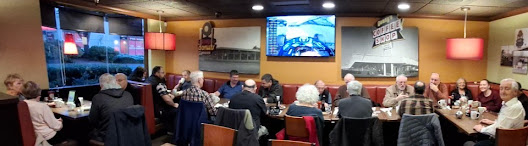
Every Saturday Morning (except when other scheduled events conflict) Members, spouses and prospective members are invited to join the SARC Breakfast social every Saturday morning from 7 to 9:30 am at Denny's Restaurant 6850 King George Blvd, followed by Operations & Training Centre ("OTC") activation from 9:30 am to noon at 5756 142 St. Surrey. At the OTC you may get help with your radio issues, operate the station radios including satellite station, participate in contests, write the exam, or join in workshops and training. Or just engage in friendly discussion with your fellow hams.
SARC Official Calendar
Your official reference for dates and times of events is the SARC Google Calendar, which is updated as details change, so please check the homepage on the SARC website: www.ve7sar.net.
NETS & REPEATERS
Tuesday Nets
Join the SEPAR net every Tuesday at 7:30 pm and the SARC net at 8 pm on either of the repeaters: North repeater is on 147.360 MHz tone 110.9 Hz and South repeater is on 147.360 MHz tone 103.5 Hz. IRLP and Echolink are only available on the North repeater.
Sunday Monthly 220 MHz Net (next one is Jan. 26)
Join the 220 MHz net taking place at 7:30 pm on the last Sunday of every month on VE7RSC repeater 223.960 MHz -1.6MHz tone 110.9 Hz, with net control, Shawn VE7BD. This is not a "chat" net – just check in, exchange signal reports, and get on with your evening.
Yaesu System Fusion (YSF) repeater 443.775 MHz+ tone 110.9Hz
This repeater is connected full-time to CQ-Canada (VE1AO) room 40678 – home to the Cross Canada C4FM Weekly Net on Wednesday 6 pm PST or 0200 UTC. Located on the Concord high-rise in Surrey, it is one of the few System Fusion repeaters in BC that is WIRES-X capable (i.e. it connects to the Internet). Using your Yaesu C4FM radio, you can use this repeater to talk to the world. It is connected to the highly fault-tolerant BC WARN Internet system, which is designed to remain operational during most internet outages. Familiarity with WIRES-X on our YSF repeater can play a crucial role in emergency preparedness.
Net Reminders
"Net reminders" for those running or participating in various nets are automatically sent out by AdvancedAmateur.ca. If you are forgetful like me, you may want to receive reminders by signing up at Net Reminders.
PROJECTS AND AD-HOC GROUPS
Satellite Station Project
Dino VE7NX is available to coach those who wish to learn how to make satellite contacts using SARC's new satellite station. Contact Dino [email protected] or reply to this email if you would like to learn more.
Innovation on 50 MHz and Up
As reported earlier, SARC's 10 GHz beacon VE7SAR/B running 150 mW is in continuous operation from our repeater site on Concord tower in Surrey. In follow-up to this achievement, Dino VE7NX operating from Concord tower, Scott VA7SC in Langley and Kirk VA7RKM in Victoria recently made 3-way contact on 10 GHz by bouncing signals off Mt. Baker. Dino has promised to help members who would like to assemble suitable equipment to monitor the beacon.
What's next, you ask? Stay tuned for announcements about a 6m beacon and 24 GHz beacon, both of which are under construction and testing by Dino VE7NX and Scott VA7SC.
Contesting Group
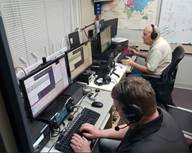
To participate in scheduled contests, or if you wish to operate the club station radios on your own time, please reply to [email protected]. Coaching will be provided as needed. See WA7BNM Contest Calendar: Home for a complete list of available contests. Next big one is the British Columbia QSO Party on Feb. 1-2 (see Upcoming Events above for more information).
IC-7300/IC-9700 Special Interest Group
This group is hosted by John Schouten VE7TI, with the most recent update on pp 37-41 of the January-February 2025 Communicator.
POTPOURRI
Do You Want to Learn CW?
Check out the Long Island CW Club, which has a comprehensive and highly-regarded on-line program for learning CW and how to get comfortable using it: https://longislandcwclub.org/#.
Vancouver Area Frequency List
Reg VA7ZEB has created a Vancouver Area Frequency List, which is a vetted list of useful frequencies across several services including Amateur, EmComm, Broadcast, Weather, LADD, Regional Road, FRS/GMRS, Railway, Airband and Marine. It can be easily downloaded in Generic CSV, Chirp and RT Systems format, or you can download it in PDF format for printing.
Incoming QSL Bureau
Any member wishing to receive in-coming QSL cards should send Ken VE7BC an email at [email protected] or call/text him at 604-816-5775 and the cards will be collected for distribution by Shawn VE7BD. Or, if you are simply wondering if Ken has any cards for you, please contact him.
Download the January-February Communicator in LARGE or SMALL format, or read it on-line like a magazine.
Free VE7DXE Advanced Certification Course: [email protected]
Radio Amateurs of Canada (RAC) Advanced Certification Course
Please contact the course instructor Dave Goodwin, VE3KG, at [email protected] for information on how to register for RAC’s Advanced course.
Link to Basic Ham Class Overview: Welcome to our courses.pdf - Google Drive. The current course commenced Jan. 6, 2025.
ARRL Asks Hams to Send Radiograms via the Web
In a recent issue of the National Traffic System (NTS) Letter, the ARRL encouraged amateur radio operators to utilize the Radiogram portal on the web to submit free messages to friends and family. The link takes you to a webpage where you enter the particulars for sender and recipient, select a message and operators in the NTS will send it on to the recipient. Sending Radiograms helps volunteers hone their skills in preparation for emergencies. What happens next? A volunteer, FCC-licensed Amateur Radio operator will pick up your message from this web site and then send it, by Amateur Radio, over the air to other volunteers in the National Traffic System. The message will be received by a ham who lives in or near your recipient's city. Then, the message will be delivered in person or by telephone. For more information about The National Traffic System and traffic handling visit: https://nts2.arrl.org/training/. A typical sent message reads as follows:
From: JOHN SCHOUTEN
To: FRED SMITH
1234 ANY STREET
SURREY BC V0P 1R9 604 [email protected]
WISHING YOU A VERY HAPPY BIRTHDAY. ALL THE BEST,
JOHN SCHOUTEN
WANTED OR FOR SALE BY MEMBERS

Monty VA7MMW is still looking for a female connector like the one shown for his Yaesu FT-101B. It is a CINCH JONES S-312CCT POWER SOCKET 12PIN. If you can help Monty please contact him at [email protected].
~73, John VA7XB [email protected]
The Case of The Shrinking Technicians
My friend and colleague Frank/K4FMH has published several recent articles on trends in amateur radio licensing and demographics. This one, The Decline in ARRL Membership and Market Share, has some interesting data and observations about licensing trends in the US. (It also comments on ARRL membership trends, but that is not the subject of this post.) This post focuses on the decline in the number of FCC amateur radio licensees in the past few years. See the chart below.
 By License Class

As Frank points out, breaking this out by license class is illuminating. Unsurprisingly, the Novice and Advanced class licensees are experiencing a slow, steady decline. This probably represents the natural decline of a set of licensees when no new licenses are issued. Advanced class licensees declined 4.7% per year from 2019 to 2024. Some of these licensees may be upgrading to higher class licenses, but anecdotally, I think this is a small effect.
 The Technician class is more concerning, with a 7.2% cumulative decline starting roughly in June 2021. (The data is in 6-month increments.) Being the entry-level license and representing about half of the total licenses, it is a strong indicator of ham radio licensing activity, in general. One potential factor contributing to this decline is that COVID-19 restrictions on public gatherings started around March 2020. In most areas, the VE exam opportunities dropped off dramatically, which could have affected the number of new licensees. This triggered a new emphasis on offering online exams, so exam availability improved during the following years.
Fees and Dabblers
Another factor is that the FCC fee implemented a $35 application fee in April 2022. However, this came after the Technician decline started. Although the $35 fee is arguably “reasonable,” I expect it to decrease the number of licensees.
Many Technicians are only dabbling in ham radio.
Dabbler: someone who takes a slight and not very serious interest in a subject, or tries a particular activity for a short period.
These Dabblers may get their license in response to family or friends encouraging them to do it. Or they may have a work connection such as being a firefighter, law enforcement officer, or emergency medical technician. Or maybe they were curious about the hobby, but it did not quite take hold. When they get to the point of renewing their license, many Dabblers will likely decide not to spend the $35. One might argue that the Dabblers are not engaged in the amateur radio service so having them drop out may be just fine. Whatever the reason, the result is fewer licensees.
Frank points out that the General and Extra Class numbers are increasing, reflecting healthier activity in those license classes. However, the slope of those curves is pretty flat, and the General class declined slightly during the past year. From December 2019 to December 2024, the General class numbers increased by 3% and the Extra class by 4%. US population growth was about 3% during this time, so these two license classes are just keeping up with population growth. I’d argue there are fewer Dabblers in the General and Extra ranks as they have demonstrated enough interest and commitment to the hobby that they went to the trouble of earning a higher-level license. Accordingly, the $35 FCC fee would have less effect on these two license classes. (I don’t have data to support this, so it is just my own little hypothesis.)
Back in 2018, I made some comparisons between ham radio and other activities. These ratios have probably not changed much in 7 years.
In 2018, the number of amateur radio licenses in the FCC database was about 0.2% of the US population, which remains about the same today. Of course, not all those licensees are active, so this overstates ham radio activity. Birdwatching came in at 3% of the population, so it’s 10 times more popular than ham radio.
Conclusions
Technician decline is real and should be a cause for concern. I don’t think we should panic but if this trend continues, the ham radio population will wither away. I mentioned the probable impact from COVID-19, which should be a transient event that has now passed. The impact of the FCC license application fee (if any) could be long-lasting.
It is well known that the radio amateur population is skewed towards older individuals…mostly older men. Aging does cause people to leave the hobby over time, either by death or by reduced physical and mental ability. This is probably part of the picture, but why would it only affect the Technician numbers?
What do you think?
73 Bob K0NR
The post The Case of The Shrinking Technicians appeared first on The KØNR Radio Site.
Bob Witte, KØNR, is a regular contributor to AmateurRadio.com and writes from Colorado, USA. Contact him at [email protected].
Many ARRL members couldn’t get there from here…So they left. Here’s how to get them back
“Pay no attention to the man behind the curtain.“
Wizard of Oz (1939)
This line from the classic movie, Wizard of Oz (1939), largely tells the tale of this article. The sidebar statement to the audience revealed that what was actually going on if the audience was astute enough to see it was not what was being presented to the audience in the play itself. Social scientists use this metaphor to describe organizational behavior as “front stage” (intended to be seen by the audience) versus “back stage” (not intended for the audience).
It is this distinction that I focus on in this article. I illustrate how the current voting options for League members just don’t elect hams to positions with the power (rather than authority) to effectively represent them in ARRL actions, policies, and service. I suggest one approach to resolving this problem by arguing that it’s the organization rather than “bad” hires. I outline a significant change in voting options that will force the League’s leadership to be responsive to members for they will then actually elect leaders with the authority and power to serve them. Or face shortly being unelected as part of the political process of a constituency voting. Finally, term limits would keep new blood in leadership positions which will reduce the estrangement between the League’s service and those they say they serve.
“In ham radio, if we don’t say it happened, it didn’t. If we say it happened, it did.” Now-retired ARRL HQ Staff Member over lunch at a Five Guys restaurant to Frank K4FMH
My belief is that members left partly because of changes in QST, both in content and the disputed contract of printed copies associated with pre-paid multi-year memberships, and partly due to the frustration of their concerns just falling on deaf ears for a long period of time. A thorough reading of social media and website Forums will clearly make this case to all but those who have their heads in the sand. My sense is that the QST debacle was the proverbial straw and camel issue.

I’ve characterized this stance by the ARRL toward the marketplace in years past by using a paraphrase of the old Saturday Night Live news anchor, Chevy Chase, as Newington’s collective message to the members. All too often it’s: We’re the ARRL and you’re not. As I noted in a previous article, I had a now-retired League staff member haughtily say in my presence that, “In ham radio, if we don’t say it happened, it didn’t. If we say it happened, it did.” That perspective, unfortunately, has been present in the culture of the ARRL’s Headquarters at least since their 50th anniversary. Chickens have to roost somewhere. They may well be coming home now.
Current ARRL Status in the Marketplace
In the past several blog articles, I documented how the membership of the League has dropped like a stone. If we accept what the ARRL’s CEO says are the reasons, it’s that hams who are not members just aren’t “active” hams. Unless you think that Canada is another planet instead of a previous Section of the ARRL, evidence from our friends north of the border shows that just is not supported by national survey data. Read the 2023 Annual Report and we are told that 75% of all new Technician licenses are “inactive” within 12 months. Assuming they joined the League upon licensure, is that the cause? (I show that it’s not very likely that they did but I’m just giving them the best possible scenario.) But, alas, they can’t or won’t produce the study cited in their Annual Report. Unless the reader, like many in ARRL management, have their heads in the sand on observable data, the ham radio market is doing just fine, thank you. But the League is simply not serving them as so, so many licensed hams want and need them to. After all, their slogan is the National Association for Amateur Radio.
After interviewing a number of American Radio Relay League staff at HQ as well as current and sitting Board members over the past few years now, I learned quite a bit about the lines of power being played out behind the curtain of the official organizational (authority) chart in the public-facing page at ARRL.org. As we will see below, these are the power relationships that stretch behind the “front stage” lines of authority, although it’s the latter that precipitates the fundamental sources of the today’s mess. I’ll explain in detail below.
None were willing to go on record for quotation right now because of reprisal fears for them (or their partners). Some did commit to a public interview in the future should leadership change. The reader would be highly surprised if they knew who in the organization talked frankly about the "inside baseball" of League management in recent years as some publicly appear friendly to the current regime at ARRL. They all say they just do not approve of how the main office, and the venerable League itself, is being managed.
If you’re a reader who can’t deal with investigative journalism ethics like this, turn your browser to another website. (As The Smoking Ape says on his Youtube Channel, go watch some cat videos, lol.)

We will need to cover the “front stage” of what the League presents as the organization and lines of authority before we get to the “back stage” of informal power relationships. I know, boring, right? But important nonetheless. I then produce a sociological assessment of what I see based on my decade experience as a volunteer “flunky” in the Delta Division, fleshed out by my discussions with key actors, frequently “in the room” when power relationships actually determine what the League does. Many of the existing Board, Officers, and key staff will do backflips to show how this analysis is wrong. But my perspective is from the member’s view and their vested interests, not those of the Board, Officers or HQ staff. This nearly always puts those in positions of authority on the defensive. You decide from your experience how accurate my analysis is. Some Board members who privately do not like the autocracy have said it’s spot on…but don’t quote them (yet).
The ARRL Okey Doke In the Organizational Chart
There is a key difference between authority and power. The League officials will focus on authority in the organization chart they make public whereas I will emphasize power relationships:
“Authority is commonly understood as the legitimate power of a person or group over other people…the terms authority and power are inaccurate synonyms. The term authority identifies the political legitimacy, which grants and justifies rulers’ right to exercise the power of government; and the term power identifies the ability to accomplish an authorized goal, either by compliance or by obedience; hence, authority is the power to make decisions and the legitimacy to make such legal decisions and order their execution.” Wikipedia
There is a wide gap in how the official organizational chart says the League operates relative to members and the power relationships that actually make decisions affecting the membership.
To a sociologist, organizations have formal (organization chart) and informal (routine behavior) lines of power, authority and processes for entry into official offices, such as President. Note that the power to control activities may or not be legitimately authorized by the organization itself. There is a wide gap in how the official organizational chart says the League operates relative to members and the power relationships that actually make decisions affecting the membership. Now, this is based on information I’ve gathered through interviews, whether completely reliable or not, but they paint a consistent picture. My professional analysis of a organization as a member has put this into a schematic framework that fits that picture. Bear that in mind. As I noted above, how good of a fit is it for what you have experienced?
My focus is on how members fit into the chart to have an adequate “say” over League matters as reflected in the “back stage” arena. The official organizational charts, narrative text about positions, and such will stand on their own as the “front stage” of the ARRL. The reader will largely see why so many former members just gave up in frustration in recent years. The old saying, “you can’t get there from here,” seems to apply in that what members can vote on leads to little or no authority to enact policies, practices, or actions desired by the members. It’s because the “man behind the curtain” is insulated from any short-term actions by those elected to represent members and their desires for League action.
The old saying, “you can’t get there from here,” seems to apply in that what members can vote on leads to little or no authority to enact policies, practices, or actions desired by the members.
Formal League Organization
Bear with me for a moment on this section as it is important to see what the front-stage in the play is presented to the audience of members.
The ARRL website has a listing of the “organizational structure” of the League. It also has a page for Officers in ARRL. There’s a Field Organization page as well. If you’ve not done so, it’s worth reading. Carefully. Just don’t assume you know what the authority and duties of a position name entails without careful reading, such as the President.
Here’s an excerpt from the Officers page:

Note that the President mainly presides over Board of Directors meetings and is the “face” of the ARRL to several external audiences. Members have no direct say in who the President is because, unlike most other associations, they do not get to vote for this position. This person does make Standing Committee appointments. These Committees are the bowels of the League’s bureaucratic machinery. Issues can move quickly or stay for years, backed-up in Committees. We will see how this movement is shaped below through informal power of the CEO. The President has a cascade of Vice Presidents who manage various tasks. Most come back to the Board for consideration rather than direct action. At times, the CEO just does things without formal Board authorization. The reader might think that the President of an organization is the proverbial Big Kahuna: the boss, leader, chieftain, or top-ranking person in an organization. Not so fast! S/he is not. This is very different from a majority of peer national associations leading amateur radio.
Let’s continue exploring the issue but it has been this way since 1926 (see this PDF file). Remember, the basic organization of the ARRL was established to facilitate regional message-passing (the “relay” in the ARRL), not to be an optimal organizational structure for a national hobby association (international when Canada was an additional Section). If anything, the ARRL is culture-bound, fossilized as some of it may be for today’s amateur radio, and continues myths to promote its importance.
Here’s where the okey doke begins. The CEO rules the headquarters staff and, by this, has the greatest direct effect on the membership experience. Members vote for their individual Division Director who has a seat on the Board of Directors. However, Board members can’t individually change anything except in unison. And they are stymied by infighting coalitions and a desire to become President one day. Remember, a member does not vote on all Division Directors, just one!
The Board selects the President and other Officers, including the Treasurer. The Chief Executive Officer (CEO) is technically “elected” as a formality (after actually going through the hiring process) to be a paid full-time employee of the Corporation. It’s typically for a multi-year contractual period, currently remunerated at $303,246 plus another $45,475 in additional monies (or $348,721 per annum) according to the latest IRS Filing. Here’s where the okey doke begins. The CEO rules the headquarters staff and, by this, has the greatest direct effect on the membership. It’s technically under the “direction” of the Board.
But let’s work through that power relationship between the CEO and the Board of Directors. There’s usually a multi-year contract so unless a Division Director elected by constituent members can get enough other Board members to agree, the CEO can literally thumb his nose at a given Board member’s directions or suggestions. But they aren’t actual “directions” unless the Board officially acts on them. A Division Director can just spin and spin while pushing some policy but unless the full Board decides to act, it’s just that: arm-waving motion. And constituent members just wait. Remember the old phrase, when all is said and done, much more is said than done? Little comes out of it in terms of rapid action to solve some membership problem. There are some nominal exceptions, of course, but this is the routine pattern of behaviors. The Section Manager can just email the Field Services Manager. If an SM goes public with criticism of HQ, I’m told by one or more Board members that the CEO starts discussions with the Division Director about the need to replace that SM. Either way, the Section Manager volunteers for the corporation, with almost no power to do anything but simply ask Newington and reference the Division Director.
I want to emphasize that this narrative should not be interpreted to mean that I do not think that Division Directors or Section Managers do much. Officially, DDs are booked with the IRS at 10 hours per week on the average. Section Managers are not listed in the IRS filing for average effort on the corporation’s behalf. From my experience in the Delta Division, both of the DDs I have served as an Assistant Director spent many hours in meetings, phone calls, working emails, and on the road attending hamfests. My SM has served decades in that elected office with a similar workload. While each gets a travel and operation budget, I do not get the sense that it’s very large, certainly not enough to cover actual expenses. They do a lot! But they just do not have the authority, and certainly not the power, to directly effect change at the League HQ except by request. And this is part of the okey doke in the ARRL organization itself. It’s not necessarily the fault of the individuals serving in either of these elected positions! It’s the organization.
I want to emphasize that this narrative should not be interpreted to mean that I do not think that Division Directors or Section Managers do much...They do a lot!
Recall that the President and other Officers are elected by their peers on the Board. I’ll wager that every Division Director at least thinks about becoming ARRL President. Playing the long-game of “being nice” to competitive peers may provide that opportunity but it doesn’t bode well for quick change to benefit members. Moreover, as identified below, each single Board member has no direct power over HQ policy or actions. None. (Show me the money if I’m wrong.) Please note that some HQ staff do work hard to serve members but not all of them. If they are on the naughty list of the CEO, they may leave when they retire and not a single person speak to them as they exit the building because of the informal power relations at work at Headquarters.
I’m told by Board members “in the room” (Zoom included) that the CEO has argued for a change such that new Board members would be just appointed at the behest of the CEO. Afterwards, Section Managers would simply be appointed, too. This all on the predicate of getting individuals with the “best fit” of credentials and skillset. There is an Ethics & Elections Committee that “vets” candidates for fitness-to-serve in an elected position. Corporate loyalty, not representing the interests of members who elect them, is the political third-rail for the organizational okey doke. I was not a direct party to this discussion but it’s been confirmed by enough people with direct knowledge that I do believe it. Whether the reader does it up to them. I am just reporting a relevant set of remarks that outline the current power relationship associated with the Chief Executive Officer position in Newington. The reader will not see this in the public-facing organizational structure.
Let’s directly examine the organizational management chart, as published on the League website:
ARRL-Organizational-ChartOne sees how HQ is formally organized, all leading to the CEO. There are eight departments, ranging from Operations to Product Marketing & Innovation, in addition to the CFO and assistant. Quite a management load but note the Director of Operations (now vacant due to a separation with the most recent employee, I’m told). Hmm. That person quarterbacks the operations on an daily basis. What does the Chief Executive Officer/League Secretary do? A lot, I suspect. We only know what he tells us. His monthly columns in QST tell us quite a bit.
But he said in his October 2021 QST column, for instance, that “I enjoy starting every day with a coffee and a tour of the social media outlets that feature ham radio, from Facebook to Twitter to Youtube.” A CEO has gotta keep up on that social media! Like many CEOs in the corporate for-profit space, thinking deep thoughts gleaned from Malcolm Gladwell’s latest book or planning a contesting trip to a super-station in the Caribbean with fellow ARRL Officers or staff does immerse the CEO in the culture of contemporary amateur radio. That’s important, right? He has the authority to schedule his time as he sees fit. But there’s an income stream that can be tied to a for-profit CEO’s actions like this. Is there for the non-profit dues-and-donor-driven ARRL? The Operations Manager does free-up time for those “executive” activities at an annual cost of $124,354 plus $20,980 (or $145,334 total) according to the latest IRS filing. That’s what makes it an executive position and not a manager: an executive has a Board and a manager has a boss.
It could well be than many who take issue with League actions (or lack thereof) actually care about the hobby, the organizing group leading it, and their ham radio friends. They recognize that the League is more than the personnel occupying the current positions.
The CEO title emerged late under long-serving David Sumner K1ZZ’s tenure. I’m told by a Board member and staffers from back then that it was largely done as an reward to his years of service, but indeed at Sumner’s vociferous request. Up to that point, the office was League Secretary. But now, with the CEO title, it’s become a boondoggle of struggles over who has the power to actually make policy and procedures enacted by staff at HQ. Just read social media or the Forums or read the mail on the bands.
But the CEO has publicly said that these detractors should just be ignored, largely because they are “self-interested or self-serving” in their complaints (QST, May 2024: 9). He just puts those letters into the recycle bin. The reader can evaluate the context of the CEO’s comments. It could well be than many who take issue with League actions (or lack thereof) actually care about the hobby, the organizing group leading it, and their ham radio friends. But, make no mistake, the choice to publicly redress those who disagree with your management comes from the insular bubble of a CEO that does not face election directly by the membership.
Up to that point, the office was League Secretary. But now, with the CEO title, it’s become a boondoggle of struggles over who has the power to actually make policy and procedures enacted by staff at HQ.
The CEO has a Chief Financial Officer (with an assistant) but this person does not have the usual and customary stated requirements to be an accountant by training or a CPA. This is another surprise in the organizational chart. Anyone, say a history teacher, could become CFO of the ARRL. This person is compensated $200,734 plus $36,017 (or $236,751 total) in additional monies, coming in as the second highest paid employee by the ARRL according to the latest IRS filing. One doesn’t have to be a CPA to run a good spreadsheet but there are usual and customary practices in financial management for a reason. Knowing the fiduciary responsibility to keep secure backups of League finances instead of just relying on a single company laptop is a mere example. One never knows when a hack attack will occur. There is, however, an outside auditor to examine the books for the Annual Report to stay out of trouble with the IRS tax-exempt designation.
Readers should be aware of these formal organizational lines of position and authority. After all, dues are paid and civic engagement to the National Association is warranted, right? But let’s turn to those power relationships that go beyond the boxes-and-lines themselves in the “back stage” arena of the ARRL.
Informal League Power Relationships
Let’s see the voting and power relationships in diagrammatic terms from insider reports and my perspective as a sociologist. (Bear in mind that this is an educated interpretation.) Some of the narrative from above feeds into this articulation of what power relationships factor into this chart. Confidential Board member comments tell me that I have the gist of it.
I’ve put a legend for where members vote and for what position in blue, as well as the voting ability of those elected by members. From those positions, I’ve identified reported power relationships in red. Where there appears to be formal, but weak, authority, I’ve labeled those links in pink.

From just a moment’s study, the reader can quickly see that the two positions that members currently vote for have little to no power to unilaterally affect actions, operations and service at Headquarters! Individually, they can ask but they cannot tell. Members, both current and former, have posted legions of stories on social media and the major amateur radio websites about their frustrations over this. But do not look at the man behind the curtain for it is the okey doke of the CEO’s power rather than authority. Publicly criticize what’s going on behind the curtain and you’re an irrational detractor out for your own fame and glory, says the CEO! (“Second Century,” QST, May 2024: 9). Could it also be an amateur who loves the hobby and the dominant organizing association who sees poor service and is actively commenting to help change it for the better? For many such “detractors,” I believe that it is.
Every two years, members elect a local area official to manage the ARRL Section, or a Section Manager (SM). Most members think that the SM represents their interests and can “go fight City Hall” on their behalf. Wrong! As I noted above, many (like mine) may try but, in practice, SMs themselves are managed by the Field Services Manager in Newington who reports to the CEO. A recent internal battle has resulted in there being a weak line of authority from the Division Director (and BoD member) and each SM in the Division. In practice, most SMs just answer to the Field Services Manager. My SM, Malcolm W5XX, is the longest serving SM in the League but he is largely told, in essence, to “shut up and dribble” on most matters. (My words based on his comments, not his.) The CEO says Section Managers live in different worlds of governance than the Division Directors (see his October 2023 QST column) so they should report to “his” Field Services manager. He makes the claim that the “law” makes them corporately loyal to the ARRL Inc., even though they are directly elected by dues-paying members. Finally, he says they are the “leaders” of the Field Organization, even though he has a Field Services Manager to “manage” them. Okey Doke.
From just a moment’s study, the reader can quickly see that the two positions that members can vote for have little to no power to unilaterally affect actions, operations and service at Headquarters! But do not look at the man behind the curtain for it is the okey doke of the CEO’s power rather than authority.
Likewise, every two years, members elect a Division Director (DD) who sits on the Board of Directors. Each DD has an associated Vice Director who is also elected, often as a slate for a given Division. In practice, this authority is met with weak power to get things done at Headquarters. Why? The CEO has placed an administrative “firewall” between Board members and staff at HQ. See the barrier in the chart above in orange. The Board used to meet in Newington which necessitated communication with staffers on constituent matters by Division Directors but the CEO moved the meetings to posher locales, like Hartford. Don’t worry about your Director’s out-of-pocket expense. It’s covered by his or her travel budget from ARRL. That helped short-circuit face-to-face communication with staff except via the CEO. A Division Director can go through the Standing Committee structure to influence some change. A little lobbying by the CEO, who is a non-voting member of each Committee, and things sort of go how he wants, I’m told by multiple people in the room. Power, rather than authority, the key to the okey doke.
Even if a program is passed through the Standing Committee(s), the CEO can just slow-walk it to death on staff implementation. I’ve watched an approved proposal for club-library map on the League website as well as an ongoing national survey program that I got my Division Director to work through the Standing Committee(s) get to the CEO when he put them in the recycle bin (see his May 2024 QST column on this). The Board did nothing to “direct” the CEO otherwise and they have simply gone into the CEO’s infamous recycle bin. So I’ve witnessed this power relationship myself as well as had it confirmed by Board members and staff. There are numerous other examples but the point is illustrated for the reader.
Even if a program is passed through the Standing Committee(s), the CEO can just slow-walk it to death on staff implementation.
This communications firewall, I’m told, has placed the CEO into an insular bubble allowing him to ignore any requests from a single Board Member should he wish as long as he has enough Board cronies who will not buck his wishes. This prevents any single Director from getting the necessary vote for a given issue to be approved. The CEO may ignore any detractors as he described in his May 2024 QST article and encourage staff members to just ignore members who criticize a policy or action. There is no recourse for members, except to not renew their membership. The recourse for Board members is to go along to get along. For, one day, they too might become President.
These are some of the mechanisms by which the CEO position wields power that outstrips the official lines of authority. There are several. Effectively, the ARRL HQ is a status-dispensing vending machine. Become a public detractor and there will be informal sanctions emanating from the CEO’s power relationships. Appointments to positions in the field services or committees, requests to HQ, and other matters may be delayed or denied for detractors who get on the CEO’s naughty list. All these have been said to me to be true, as a few examples. I am only a direct party to one of them. Did he threaten a detracting blogger with contacting his employer, ostensibly to get him fired? Is there an informal “do not publish” list for QST, managed by the “Four Horsemen” as a member of the review team calls them, for detractors of the League? Did the CEO or his subordinate direct the ARRL VM program to not send a letter of Part 97 noncompliance to an explicitly offending Youtuber for hawking products in his online store while on the air because he helps raise money for the League? Are other services made unavailable to those who offer up nattering nabobs of negativism toward the League? I am only directly privy to one of these events but some people who are do not like this unethical behavior although they feel powerless to prevent it without repercussions. These are some of the informal power mechanisms that stretch beyond the formal organizational chart of authority. The status-dispensing machine will be out-of-order for detractors of the League.
Effectively, the ARRL HQ is a status-dispensing vending machine…The status-dispensing machine will be out-of-order for detractors of the League.
As readers who have been hams for awhile have witnessed since the retirement of David Sumner K1ZZ as (then newly titled) CEO, the Board-CEO relationship has continued to be stymied with this okey doke organizational structure as have (former) member experiences with some staff at HQ. However, I do not see it as only “bad people” at work. (Well, maybe in a few instances.) It is the organizational structure and process that hires individuals from career paths that are ill-suited to non-profit leadership where member service is the prime directive. With this structure, member service was not the prime directive, although there are indeed hard-working individuals at HQ who do render great service to the membership. (I’ve had the privilege of interacting with several of them.) This chart that I’ve created is the embodiment of that ill-fitting organizational structure with power dynamics that serve “executive” worldviews rather than “non-profit management” viewpoints toward service.
I do not see it as “bad people” at work. (Well, maybe in a few instances.) It is the organizational structure and process that hires individuals from career paths that are ill-suited to non-profit leadership where member service is the prime directive.
Note that the President, elected not by members but by the Board, is mainly an emissary to the CEO with Board directives. S/he has no power to require their execution but largely the ability to pass them along. The ARRL is in the clear minority among peer national hobby associations in that members do not directly elect their Presidents. Societies in the UK, Germany, Greece, South Africa, and one of two in Australia all elect their Presidents. RAC and WIA do not, along with the ARRL. The League is very out of step with their peers in this critical aspect of governance.
The Executive Committee has direct bearing in an authority relationship with the CEO. The multi-year contract still protects the almost unilateral authority, and even greater power, over HQ staff and operations. It would still take larger Board action to compel the CEO on any matter to which he objects. This begs the question of how effective and efficient is this organization structure? If market share in memberships has anything to do with it, not very effective and getting worse each year.
Regaining Membership by Changing the Organizational Script
Many ARRL members have just not renewed and walked away. I believe that this alienation is a direct result of having the CEO position and the corporate vision that it perpetuates. Individuals hired from a commensurate candidate pool will behave similarly, although some more than others. Neither of the two positions that members can vote for have sole authority, and little individual power, to effect change that serves the membership. Social scientists have studied the withdrawal effects that alienation from individual agency has on volunteers and the ARRL’s work is driven by volunteers. The “executive washroom” conception of one executive to “run” amateur radio in the U.S. is way out-of-step with the market and present-and-recent membership. For many years, the ARRL HQ was managed by a League Secretary, then General Manager, from which David Sumner K1ZZ was up-titled to CEO. The legacy Secretary position remains as a title-appendage.
How can this dramatic membership decline be changed? I think by changing the fundamental governance mechanisms that produce it. With changes like this, the decline will most likely continue.
One key change would involve the relationship of who is elected by the membership and what power, vested through authority, that these positions have. This would increase the “say” that the membership at large would have over League matters because these individuals would face standing for re-election.
Does the League actually need a Chief Executive Officer? Or, would a Chief Operations Officer, hired from a pool of candidates with experience in the non-profit, membership-driven sector be a superior fit to the ARRL’s needs for service?
The second key change is to undo the gratuitous up-titling that was given to long-serving David Sumner K1ZZ by naming him Chief Executive Officer. Perhaps done in compassion by the Board of Directors to reward Sumner, it has been an organizational yoke around the necks of membership experience. The three successive replacements for Sumner were all hired from what I call the “executive washroom” pool of candidates who focused on being the chief executive from a for-profit corporate career path. They have all failed to lead this non-profit, membership-focused organization as witnessed in the dramatic and continuing decline in absolute membership numbers as well as market share. To continue down this path would not reflect a solid fiduciary relationship to the corporation, to parrot the legelese that is being fed to the Board. To the market of members and potential members, it’s just bad business management.
Does the League actually need a Chief Executive Officer? Or, would a Chief Operations Officer, hired from a pool of candidates with experience in the non-profit, membership-driven sector be a superior fit to the ARRL’s needs for effective service delivery? Note that the current expense for both a CEO and an Operations Manager is $494,055 in the latest IRS Filing. A half million dollars. To put it in perspective, this is what about 8,373 members would pay for membership in the League in a single year (divide $494,055 by $59 annual dues = 8,372.8).

The revised organizational chart with voting and authority lines would accomplish the objectives of giving members significantly more “say” in League matters, issues, and operation. It would also substantially nullify the insular bubble by the top person at HQ.
Here’s the gist of the new script.
- Replace the CEO with a COO hired from the non-profit sector.
- The President and other Officers would be elected directly by the membership.
- The Executive Committee would stagger three Division Directors into the mix, a new one and one departing each year, producing a three-year term for each, with the President as Chair.
- Division Directors would continue to be directly elected by their constituent membership every two years.
- Section Managers in the Division would continue to be directly elected every two years but would now report to Division Directors but be served by Field Services at HQ.
- Institute Streaming of Board Meetings (excluding employment or legal matters) with non-sanitized Board meeting minutes available to every member within one week after each meeting.
- Institute an annual “bottoms-up” evaluation survey of the membership on their interactions with ARRL Headquarters, conducted by an outside party.
Replace the CEO with a COO hired from the non-profit sector. This person does not have to be a licensed amateur radio operator but could become licensed after employment. There is precedent for this (current Director of Publications & Editorial Department, Becky W1BXY, and others). This person would not have “executive” authority but would be a manager of the HQ staff and operation. The key here would be making the President as the executive officer, who would chair the Executive Committee. The COO would report directly to this Executive Committee but would work with each Board member as needed to solve problems for members in each division or Section. The COO would serve on consecutive one-year contracts, hired by the Board. This would facilitate change in the membership service mission of the HQ staff and the COO. While the current CEO just says ignore the complainers, that is simply ignoring what the membership is trying to say, even if it is done in a less than civil fashion. It is the key issue driving membership loss today.
The President and other Officers would be elected directly by the membership, similar to the majority of peer associations, for a two-year term. The President would have succession ability upon re-election for one additional term. The lifetime length of service would be a maximum of four years (or two terms). Other Officers would also stand for direct election by the membership, with parallel service limits, as is the case with many other volunteer membership societies. This would produce movement through this singular executive leadership position, making it open to any member who could stand for election. This will also have the effect of greatly reducing the internal jockeying and political intrigue of the Board of Directors.
The Executive Committee would stagger three Division Directors into the mix, a new one and one departing each year, producing a three-year term for each, with the President as chair. A simple random selection of those eligible could initiate it from the current Board members, staggering the terms appropriately. Should a Division Director serving on the EC not be reelected, another would be appointed by the President to finish that DD’s unfilled term. This committee, chaired by the President, would oversee the COO and the HQ operations on a continuous basis. I could foresee weekly meetings by Zoom of this group. It would, indeed, be more work but this would keep it from being a “title collection” to hang on the wall in the shack. (I’ll simply ask the reader if there’s anyone like this among their local club’s officers.)
Division Directors would continue to be directly elected by their constituent membership every two years. Section Managers in the Division would continue to be directly elected every two years but would now report to Directors and be served by Field Services at HQ. No need for Newington to “manage” SMs other than the routine flow of information. The latter would not have any authority (or power) over Section Managers as it is today. This would increase the interest by rank-and-file members of the League in Section service. Division Directors would work directly with the COO and HQ staff on constituent issues, monitored by the Executive Committee. This does not have to be like the Rules Committee in the U.S. Congress.
Institute Streaming of Board Meetings (excluding employment or legal matters) with non-sanitized Board meeting minutes available to every member within one week after each meeting. Part of the pay no attention to the man behind the curtain charade currently in existence is the highly sanitized Board Agenda and minutes available to the membership. There is no reason for Board meetings to not be live-streamed to members-only except to hide from voting constituents how Division Directors vote and other pertinent officials participate in the meetings. One cannot be transparent by being opaque.
Institute an annual “bottoms-up” evaluation survey of the membership on their interactions with ARRL Headquarters, conducted by an outside party. As a Professor, even after I received tenure, every class I taught was evaluated by enrolled students. I didn’t always like it but it made me a better teacher. An annual evaluation survey of the membership is not difficult to institute through a third party. It is a standard part of formative evaluation research to provide an ongoing tool to improve service delivery to customers, which in this case, is members for the most part. It is common in non-profit settings as well as in many corporate environments. They are usually conducted by outside parties for the same reasons of integrity that independent auditors check the books for the annual report. The results will be professionally summarized with performance metrics and available to members within one month after the evaluation period ends.This will be an instrumental means of helping the ARRL better serve its members. It would be a necessary change along with direct membership voting on the President, other Officers, Division Directors, and Section Managers.
Conclusions
This article is a good faith effort by a professional who has been a consultant to organizations with management issues serving their members, customers, and their market. There would be kinks to work out but my point here is that the long-standing organization of the American Radio Relay League is the problem. I hold no animus to those occupying the positions of authority. They are put there by the system in place. But it is past time to change that organizational chart and how things work in Newington. The canard of “corporate loyalty” to ARRL Inc. as required by Connecticut law is a key part of this okey doke to prevent Division Directors, Section Managers, and Officers of the League from representing the membership. I’m told by other lawyers that this is a misreading of the financial fiduciary elements of the corporate law in that State which is being used as a power relationship by a cabal in office now. The Ethics & Elections Committee, which the President appoints, is the bureaucratic instrument through which that canard is implemented. A straightforward solution IF this interpretation were true would be to move the ARRL Inc. out of Connecticut to another state without such asinine loyalty oaths. But cutting the head off of the organizational snake that is the Chief Executive Officer position is the critical start.
Do I believe that the ARRL Board would even entertain this proposal? Not a chance in Hades. I’m not writing this article to the Board or Officers of the League. It’s written to the marketplace of members (of which I am a Life Member), former members, and potential members. I believe that this outlines the crux of why former members have left in droves and why many are so irate about it. Leaving is clearly their option which I endorse. I also advocate those who choose to stay and demand change in the organizational structure. It’s unclear how best to do that. I’ll explore some options in future articles.
Those employed in Newington are not the only ones who care about the hobby we share or the idea of the American Radio Relay League…League employees are not the League itself as their public relationship system likes to say to us. I hope readers who share those beliefs will work to change what we are getting from the ARRL. That may require drastic steps, including more shrinkage in membership, and competition in the services they provide to members, to push reasonable Directors to see the road ahead.
Let me conclude with the admonition that my writing is far from based upon being irate with any person in the ARRL management, as the CEO has publicly stated most detractors are. Board members will, likely behind closed doors (and email systems), berate and ignore what I’m saying here. Some may even quote things in Latin! There are peers among them who do not like that behavior. To use a frequent phrase by attorneys in letters on behalf of their clients, I am neither “shocked” or “amazed” by the Board, Officers or Staff at HQ calling me names and such. One even called me up and cursed me out a couple of years ago because I asked a simple question on the ARRL Youtube Channel. Nothing was done for that behavior toward a Life Member and volunteer staff, except he got a raise.
Those employed in Newington are not the only ones who care about the hobby we share or the idea of the American Radio Relay League. I became a Life Member and have spent over ten years volunteering for the League’s activities because of that sentiment. League employees are not the League itself as their public relations system likes to imply. I hope readers who share those beliefs will work to change what we are getting from the ARRL. That may require drastic steps, including more shrinkage in membership, and competition in the services they provide to members, to push reasonable Directors to see the road ahead.
Frank Howell, K4FMH, is a regular contributor to AmateurRadio.com and writes from Mississippi, USA. Contact him at [email protected].
 Ham Radio Deluxe |
 W5SWL Electronics |
 Ham Radio Prep |
 KB3IFH QSL Cards  Hip Ham Shirts  HamRadioAuctions HamRadioAuctions Reliance Antennas Reliance Antennas Enigma Shop Enigma Shop |  morseDX  Ni4L Antennas  R&L Electronics R&L Electronics antennas.us antennas.us Ears to Our World Ears to Our World |
- Matt W1MST, Managing Editor
