 |
 Leadership Opportunity for QRP / Portable Ops
 21 August 2019 | by
Since 1954
Hello everyone! I’m letting you know that Bob Heil K9EID and I are trying to identify a person or group who wishes to take over leadership of a two-day event that has been held right before the Huntsville Hamfest at Monte Sano State Park there.
What’s needed is for someone to step forward to directly work with the Huntsville Hamfest Committee to organize a QRP or Portable Operations workshop/seminar over the two days there at Monte Sano.
Monte Sano is a beautiful park with very nice facilities. The Huntsville Hamfest is held at the world-reknowned Von Braun Center in Huntsville, known as Rocket City because of the substantial NASA presence along with many high tech companies and contractors. The Embassy Suites is connected by a sky bridge to the Von Braun Center with other high quality hotels very close by.

Craig Behrens N4MT, former QRP Quarterly Editor, had developed this “two days in Huntsville” concept but had to drop it this year because of very serious health problems. Mark Brown, HH Committee Chairman, says that Craig is unfortunately no longer in the picture for this event. It was held at the cabin complex at Monte Sano State Park on Thursday and Friday before the hamfest started on Saturday morning.
What’s needed is for someone to step forward to directly work with the Huntsville Hamfest Committee to organize a QRP or Portable Operations workshop/seminar over the two days there at Monte Sano. If you’re familiar with the Ten-Tec Rebel QRP rig, it was largely designed there over a two year period thanks to Craig’s leadership. This two day workshop has indeed done remarkable work. And the Huntsville Hamfest is a great venue through which to organize and network with leading amateur radio organizations and operators.

Bob Heil K9EID and I agreed to do the front leg-work to convey this strong interest to various QRP or portable operations communities on behalf of Mark Brown. We are seeking to have a balloon launch during the Thursday session at Monte Sano with live APRS tracking continuing during the hamfest using temporary monitors situated around the vendor arena. Donors of prizes for the recovery of the payload have already been committee.
In addition, Ted Randall of WTWW has agreed to attend the Thursday-Sunday period, broadcasting live on commercial shortwave near Nashville from Monte Sano and the Von Braun Center. Presenters at the Monte Sano two day seminar would be interviewed along with other attendees. This should help showcase your activities and work internationally.

Please contact me at [email protected] if you have serious interest on which you can commit to establish leadership for continuing the very fine work that Craig N4MT and his colleagues have built over the past number of years at the Huntsville Hamfest. This can be a superb chance for you or your group to attach to one of the largest hamfests in the U.S. to enjoy sharing your knowledge and passion for QRP or Portable Ops!
73,
Frank Howell, K4FMH
Bob Heil, K9EID
Frank Howell, K4FMH, is a regular contributor to AmateurRadio.com and writes from Mississippi, USA. Contact him at [email protected].
Hunting For NDBs In CLE247
 |
| courtesy: http://www.ve3gop.com |
This time the hunting grounds will be:
320.0 - 334.9 kHz.
For those unfamiliar with this monthly activity, a 'CLE' is a 'Co-ordinated Listening Event', as NDB DXers around the world focus their listening time on one small slice of the NDB spectrum.
If you've been meaning to participate in CLE, then maybe this weekend is a fine time to try! Lately, we've had a lot of first time submissions so you won't be alone!
As well, if you're trying to learn CW, copying NDBs is perfect practice, as the identifier speed is generally slow and the letters are repeated again every few seconds!
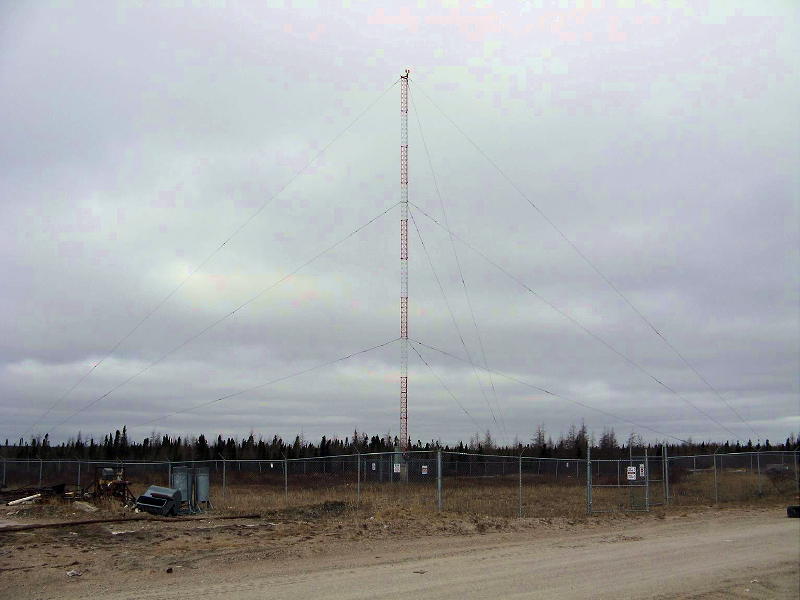
A nice challenge in this one is to hear YER - 334 kHz. 'YER' is located at Fort Severn, in northern Ontario, beside Hudson Bay.
'YER' runs 250W into a 100' vertical and is well-heard throughout North America, Europe and west to Hawaii! Listen for its upper-sideband CW identifier (with your receiver in the CW mode) on 334.404 kHz.
At this time of the season, summer lightning storms should be starting to wane and propagation can often be as good as mid-winter if the lightning cooperates.
When tuning for NDBs, put your receiver in the CW mode and listen for the NDB's CW identifier, repeated every few seconds. Listen for U.S. NDB identifiers approximately 1 kHz higher or lower than the published transmitted frequency since these beacons are modulated with a 1020 Hz tone approximately.
For example, 'AA' near Fargo, ND, transmits on 365 kHz and its upper sideband CW identifier is tuned at 366.025 kHz while its lower sideband CW ident can be tuned at 363.946 kHz. Its USB tone is actually 1025 Hz while its LSB tone is 1054 Hz.
Often, one sideband will be much stronger than the other so if you don't hear the first one, try listening on the other sideband.
Canadian NDBs normally have an USB tone only, usually very close to 400 Hz. They also have a long dash (keydown) following the CW identifier.
All NDBs heard in North America will be listed in the RNA database (updated daily) while those heard in Europe may be found in the REU database. Beacons heard outside of these regions will be found in the RWW database.
From CLE organizer Brian Keyte, G3SIA, comes the details:
Hello all,
Here are all the details for this weekend's co-ordinated listening event.
First time CLE logs too? Yes, please!
Short logs are always as welcome as long ones.
Days: Friday 23 August - Monday 26 August
Times: Start and End at midday, your LOCAL time
Range: 320.0 - 334.9 kHz
Please log the NDBs you can positively identify that are listed in the
frequency range (no DGPS please), plus any UNIDs heard there too.
Send your CLE log to the List, if possible as a plain text email and not
in an attachment. Put CLE247 and FINAL at the start of the email title.
Please show on EVERY LINE of your log:
# The date and UTC (the day changes at 00:00 UTC).
# kHz - the beacon's nominal published frequency, if you know it.
# The Call Ident.
Show those main items FIRST on each line, before any optional details such
as the NDB's Location, Distance, Offsets, Cycle time, etc.
As always, make your log meaningful to everyone by including the listening
location and details of the receiver, aerial(s), etc.
It would be OK to use one remote receiver, with the owner's permission if
necessary, provided that ALL your loggings for the CLE are made using it.
Joachim or I will send the usual 'Any More Logs?' email at about 19:00 UTC
on Tuesday so that you can check that your log has been found OK.
Do make sure that your log has arrived on the List at the very latest by
08:00 UTC on Wed. 28th August.
We hope to complete the combined results within a day or two.
Remember that you can find all CLE-related information from our CLE page
( http://www.ndblist.info/cle.htm ), including a link to the seek lists and
maps provided for this Event from the Rxx Database.
Good listening
Brian
---------------------------------------------------------------------
From: Brian Keyte G3SIA ndbcle'at'gmail.com
Location: Surrey, SE England (CLE coordinator)
---------------------------------------------------------------------
- determine, worldwide, which beacons are actually in service and on-the-air so the online database can be kept up-to-date
- determine, worldwide, which beacons are out-of-service or have gone silent since the last CLE covering this range
- will indicate the state of propagation conditions at the various participant locations
- will give you an indication of how well your LF/MF receiving system is working
- give participants a fun yet challenging activity to keep their listening skills honed
The NDB List Group is a great place to learn more about the 'Art of NDB DXing' or to meet other listeners in your region. There is a lot of good information available there and new members are always very welcome. As well, you can follow the results of other CLE participants from night to night as propagation is always an active topic of discussion.
You need not be an NDB List member to participate in the CLEs and all reports, no matter how small, are of much value to the organizers.
Remember - 'First-time' logs are always VERY welcome!
Reports may be sent to the NDB List Group or e-mailed to CLE co-ordinator, Brian Keyte (G3SIA), whose address appears above. If you are a member of the group, all final results will also be e-mailed and posted there.
Please ... give the CLE a try ... then let us know what NDB's can be heard from your location! Your report can then be added to the worldwide database to help keep it up-to-date.
Have fun and good hunting!
Steve McDonald, VE7SL, is a regular contributor to AmateurRadio.com and writes from British Columbia, Canada. Contact him at [email protected].
Antuino support group
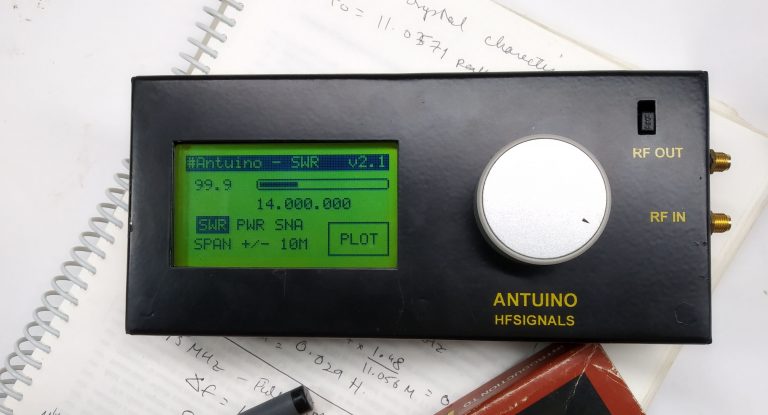
The Antuino the new tool for radio amateurs from HF Signals, I blogged about a few days ago.
Now has it's own dedicated support group to help with problems, modifications and improvements, sign up here.
Steve, G1KQH, is a regular contributor to AmateurRadio.com and writes from England. Contact him at [email protected].
Mini VSWR indicator as reviewed by QST Sept 19
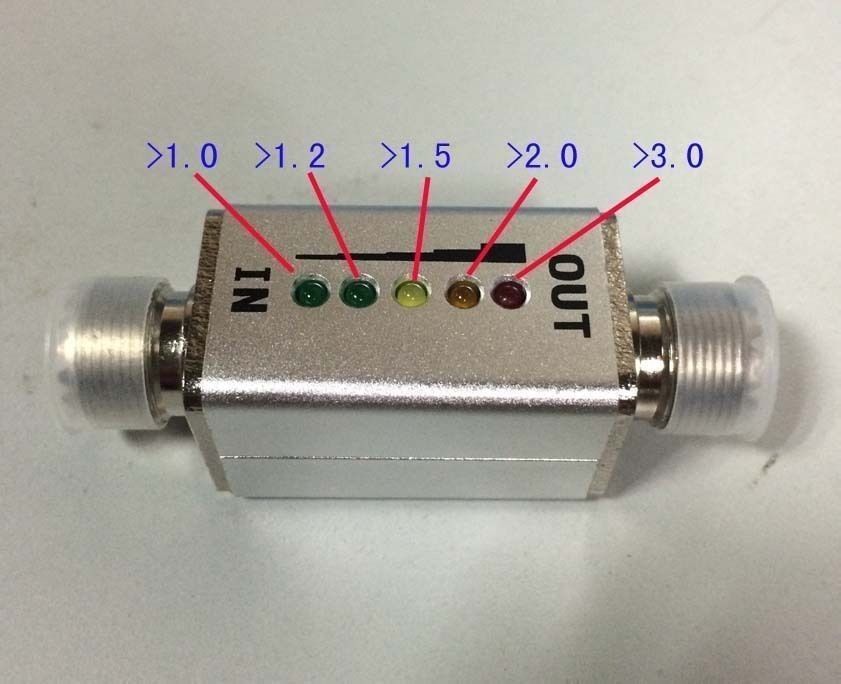
What could be handy little tool, but it pays to do your homework and research across all selling platforms before you open your wallet.
Check out this link for the lowest price I can see at the moment Here
Steve, G1KQH, is a regular contributor to AmateurRadio.com and writes from England. Contact him at [email protected].
Weekly Propagation Summary – 2019 Aug 19 16:10 UTC
Here is this week’s space weather and geophysical report, issued 2019 Aug 19 0141 UTC.
Highlights of Solar and Geomagnetic Activity 12 – 18 August 2019
Solar activity was very low. The visible disk was spotless with no Earth-directed CMEs observed.
No proton events were observed at geosynchronous orbit.
The greater than 2 MeV electron flux at geosynchronous orbit was at high levels on 12-17 Aug with moderate levels on 18 Aug. A maximum flux of 5,340 pfu was observed at 13/1725 UTC.
Geomagnetic field activity was at predominately quiet levels with isolated unsettled intervals observed midday on 16 Aug and early on 18 Aug. Solar wind parameters reflected a nominal environment through the period.
Forecast of Solar and Geomagnetic Activity 19 August – 14 September 2019
Solar activity is expected to continue at very low levels through the oulook period.
No proton events are expected at geosynchronous orbit.
The greater than 2 MeV electron flux at geosynchronous orbit is expected to be normal to moderate levels on 19 – 31 Aug. Flux readings are expected to increase to moderate to high levels on 01 – 14 Sep.due to recurrent CH HSS influence.
Geomagnetic field activity is expected to reach unsettled levels on 20 – 22 Aug, 26 – 28 Aug and 06 – 07 Sep due to recurrent CH HSS activity. Active to G1 (minor) storm conditions are likely on 01 – 02 Sep due to recurrent CH HSS activity.
Don’t forget to visit our live space weather and radio propagation web site, at: http://SunSpotWatch.com/
Live Aurora mapping is at http://aurora.sunspotwatch.com/
If you are on Twitter, please follow these two users: 1. https://Twitter.com/NW7US 2. https://Twitter.com/hfradiospacewx
– – – – – – – – – – – – –
Be sure to subscribe to our space weather and propagation email group, on Groups.io
https://groups.io/g/propagation-and-space-weather
Spread the word!
– – – – – – – – – – – – –
Links of interest:
+ Amazon space weather books: http://g.nw7us.us/fbssw-aSWSC
+ https://Twitter.com/NW7US
+ https://Twitter.com/hfradiospacewx
Space Weather and Ham Radio YouTube Channel News:
I am working on launching a YouTube channel overhaul, that includes series of videos about space weather, radio signal propagation, and more.
Additionally, I am working on improving the educational efforts via the email, Facebook, YouTube, Tumblr, and other activities.
You can help!
Please consider becoming a Patron of these space weather and radio communications services, beginning with the YouTube channel:
https://www.patreon.com/NW7US
The YouTube channel:
https://YouTube.com/NW7US
..
Visit, subscribe: NW7US Radio Communications and Propagation YouTube Channel
ICQ Podcast Episode 301 – Long Island CW Club
In this episode, Martin M1MRB is joined by Leslie Butterfield G0CIB, Edmund Spicer M0MNG, Matthew Nassau M0NJX, Dan Romanchik KB6NU, Ruth Willet KM4LAO and Ed Durrant DD5LP to discuss the latest Amateur / Ham Radio news. Colin M6BOY rounds up the news in brief and this episode’s feature is Long Island CW Club.
ICQ AMATEUR/HAM RADIO PODCAST DONORS
We would like to thank Michael Rosenberg (N9YB), Constantine Papas (KL0S) and our monthly and annual subscription donors for keeping the podcast advert free. To donate, please visit - http://www.icqpodcast.com/donate
- Radio Spectrum Management Traces an Activated Unregistered Personal Locator Beacon
- The Internet’s Impact on International Radio
- Australia: WIA board comment
- AMSAT member wins Alabama Outstanding Youth Ham Award
- First UK 288 GHz CW Contact
- FT8 Digital Mode Club 2nd Anniversary
- BARTG GB60ATG Special Event
- 146MHz band Gets Extra Year
Colin Butler, M6BOY, is the host of the ICQ Podcast, a weekly radio show about Amateur Radio. Contact him at [email protected].
LHS Episode #297: The Weekender XXXII
It's time once again for The Weekender. This is our bi-weekly departure into the world of amateur radio contests, open source conventions, special events, listener challenges, hedonism and just plain fun. Thanks for listening and, if you happen to get a chance, feel free to call us or e-mail and send us some feedback. Tell us how we're doing. We'd love to hear from you.
73 de The LHS Crew
Russ Woodman, K5TUX, co-hosts the Linux in the Ham Shack podcast which is available for download in both MP3 and OGG audio format. Contact him at [email protected].
 Ham Radio Deluxe |
 W5SWL Electronics |
 Ham Radio Prep |
 KB3IFH QSL Cards  Hip Ham Shirts  HamRadioAuctions HamRadioAuctions Reliance Antennas Reliance Antennas Enigma Shop Enigma Shop |  morseDX  Ni4L Antennas  R&L Electronics R&L Electronics antennas.us antennas.us QRV QRV |
- Matt W1MST, Managing Editor
