 |
 My 10,000 Hour RadioSport Challenge | 9,833 – 24 = 9,809 To Go
 26 February 2010 | by
 The 2010 ARRL International DX CW event was my first operating experience when the solar flux indice broke through the 80 barrier. I watched A- and K-index steadily fall and marveled at our G4 class star. I imagined our ionosphere is much like the surface of an ocean. Each successive day reminding me of the local surf report.
Is there another sport as dependent on cosmological mechanics as RadioSport?
Friday night did not produce spectacular results, basically, the first evening is tough. My signal rarely scores on the first, second, or third call. It is however an opportunistic moment at logging multi-multi stations on spaces such as 15m or 20m at sunset using gray line enhancement.
I operated from N1MM’s band map with good effect while hopping between each space after loading needed multipliers. Additionally, I entered the high end of the spectrum into the dialog box then pressed enter for example; 14.080, 21.075, or 28.065 MHz then clicked downward.
I practiced moving through each space as fast as possible while loading or unloading the band map. The swarm network of spotting stations has little bearing in relationship to my location, the influence of propagation, and type of antenna system. I’m not spending expensive time ciphering through the cloud of information, pertinent or not, because of the variability of station configurations.
Saturday produced an entirely different set of results. I submit the existence of station configuration stratification where optimal stations are first logged through the competitive funnel leaving signal space during the last 24-hours of a major for modest stations.
Experience suggested following a Day Two type strategy and log data supported my conclusion 80% yield on day two versus 20% on day one.
Consequently, I logged (Japan = 19), (Hawaii = 17), and (Netherlands Antilles = 5) across five spaces within 24-hours. I’m optimistic as Cycle 24 actually stimulated 10m last weekend with a few South American 100-watt stations (Argentina and Brazil) going into the log.
It is exciting to learn my vertical antenna system is sensing low power stations on the high bands.
Raw Results.
80m | 2 Qs | 1 Mults.
40m | 28 Qs | 11 Mults.
20m | 17 Qs | 8 Mults.
15m | 16 Qs | 10 Mults.
10m | 7 Qs | 3 Mults.
Total = 70 Qs.
Total Multipliers = 33.
Total Raw Score = 6,831 Points.
I have one more antenna system that will complete my coverage of available competitive bands within a home owner association regulated community. Admittedly, those sunspots added additional fun to an otherwise stellar event sponsored by the ARRL’s Contest Branch.
73 from the shackadelic on the beach.
P.S. Thank you Japan and Hawaii for making the difference in my log!

Scot Morrison, KA3DRR, is a regular contributor to AmateurRadio.com and writes from California, USA.
FCC: Lazy Or Just Lackadaisical? (Part 1)

I hate to use a Cavuto-style question as a blog title, but to borrow a Beckian phrase this week I'm feeling like the "question needs to be asked".
Here's an inquiry to the FCC that was posted on the digitalradio 'flector regarding the new ROS rigital rode:
Summary* : Request for clarification of new amateur radio digital mode
Description* : Within the past week, a new digital mode - called ROS - has surfaced on the HR amateur bands. Its creator refers to it as spread spectrum, but there is some debate over whether the mode truly represents spread spectrum as defined by the FCC. I am writing to request a review of the creator's documentation, which I have attached, and a formal ruling on whether this mode is legal for use below 222 mHz by licensed U.S. amateurs. It would be very helpful if the FCC, upon completion of this review, would distribute a public announcement of its determination to appropriate amateur radio and media outlets. Thank you very much in advance for your time and prompt attention to this request. I look forward to hearing from you soon.
Sincerely,
Timothy J. Lilley - N3TL
Solution Details : Dear Mr. Lilley,
Section 97.305 is the rule that specifies where different emission types are allowed to be transmitted on different bands. "ROS" is viewed as "spread spectrum," and the creator of the system describes it as that. We assume that he knows what he created. 97.305 authorizes spread spectrum emission types (defined in Section 97.3) to be transmitted by FCC licensed amateur stations at places we regulate communications only on 222-225 MHz and higher frequency amateur bands. European telecommunication regulatory authorities may authorize amateur stations in Europe to use SS on the HF bands, but this is of no concern to us. The Commission does not determine if a particular mode "truly" represents spread spectrum as it is defined in the rules. The licensee of the station transmitting the emission is responsible for determining that the operation of the station complies with the rules. This would include determining the type of emission the station is transmitting and that the frequencies being used are authorized for that type of emission.
Should you have any further questions, or need additional information, please contact the ULS Customer Support Hotline at (877) 480-3201, selecting option 2.
Sincerely,
Agent 3820
I'm guessing "option 2" routes the caller to an endless audio loop that says "I don't know, you figure it!" or "Sucks to be you! Ha ha ha!". But seriously, how lame is this answer from secret agent 3820? So the FCC just takes for granted whatever the developer determines the mode actually is? I'm sure that they wouldn't take that position in an enforcement case. However, if that's how they roll, I'm developing a new mode that is a digital micro-powered voice communication mode that is Part 15 compliant. It's actual AM running at 100kW, but with my newly developed method of measuring power for this special mode, it's really 1 mW. It says so in the documentation and being the developer of the mode, I should know. What's that? FCC enforcement officers at the door? Tell them to go pound sand! I'm responsible for determining if my emissions comply with the rules, not them. And I live in the Republic of Texas where their laws don't apply. (I redrew the map on my wall.)

Anthony Good, K3NG, is a regular contributor to AmateurRadio.com and writes from Pennsylvania, USA. Contact him at [email protected].
Run ROS, Go Directly To Jail (Do Not Collect QSL Card)????
"From: Henderson, Dan N1NDSubject: RE: Spread SpectrumTo: [deleted for privacy]Date: Tuesday, February 23, 2010, 7:13 AMHi Fred:I ran this by our technical experts. They concur that ROS is a spread spectrum mode and as such is not allowed by the FCC on bands below 222 MHz. Remember that approved emissions vary from IARU Region at times as well as between countries. So while the IARU Band Plan for Region 2 would allow it, SS is not permitted on the HF bands by the FCC/Thanks and 73Dan Henderson, N1NDRegulatory Information ManagerARRL, the national association for Amateur Radio™ "
§97.3(c)(8) SS. Spread-spectrum emissions using bandwidth-expansion modulation emissions having designators with A, C, D, F, G, H, J or R as the first symbol; X as the second symbol; X as the third symbol

Anthony Good, K3NG, is a regular contributor to AmateurRadio.com and writes from Pennsylvania, USA. Contact him at [email protected].
Handiham World for 24 February 2010
Welcome to Handiham World!
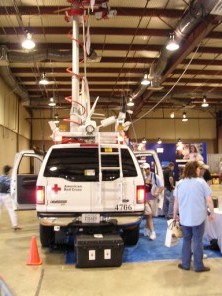
If there is any theme that runs through publicity about amateur radio these days, it is generally one about the reliability of our communications in an emergency situation. In story after story that I see ferreted out by Google News, ham radio operators tell the press and the public about the way amateur radio operators can stay on the air to provide vital communications when cellular phones are overloaded or down altogether and other communications infrastructure has failed. The training and volunteerism of amateur radio operators are also highlights of these articles, and the very best of these stories also include some human factor – a volunteer operator who has helped the community, a team of operators who have worked in tandem with emergency personnel to provide backup communications, and sometimes even a victim who owes a debt of gratitude to amateur radio. These are themes that the ARRL has taken a leadership role in promoting, and the evidence is that the strategy has worked. More new hams than ever joined the ranks of amateur radio here in the United States last year.
Quoting from a story on ARRL’s website, “A total of 30,144 new licenses were granted in 2009, an increase of almost 7.5 percent from 2008. In 2005, 16,368 new hams joined Amateur Radio’s ranks; just five years later, that number had increased by almost 14,000 — a whopping 84 percent! The ARRL VEC is one of 14 VECs who administer Amateur Radio license exams.”
Of the many reasons people become interested in amateur radio, the one I have heard most often in recent years is that new hams want to earn a license so that they will have the means to help in emergencies and to be of service to the community. This, among the other themes, has been expertly promoted by ARRL in special websites, publicity releases, articles, and videos. Taking on the erroneous image of ham radio as an “outdated technology” that has been all but replaced by the internet, ARRL answers the questions of why we are relevant in the 21st Century on its WordPress “We Do That Radio” and “emergency-radio” websites.
Well, with all of that in mind, we turn to the large cardboard envelope I received from Matt Arthur, KA0PQW, this week. Matt had told me he was sending me an article, but I was surprised and delighted to see that it read:
Honored by President Obama
Local ham radio hobbyist recognized
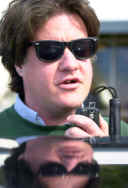
The story appeared in the February 18, 2010 edition of the Star-Eagle newspaper, and featured a photo of Matt, KA0PQW, in his well-equipped ham shack. In the article, staff writer Jody Wynnemer explained that when a letter arrived from the White House, Matt had learned that he had been selected to receive a President’s Volunteer Service Award.
“Congratulations on receiving the President’s Volunteer Service Award, and thank you for helping to address the most pressing needs in your community and our country”, the letter began.
Matt was recognized for his work with the Community Emergency Response Team in Steele County, Minnesota. He recalled how he volunteered and handled communications during a flood in 2007. It had been nine hours until the National Guard could relieve him, and in the meantime he handled traffic in and out of the flood zone, passing messages to authorities in Winona.
Those of us who know Matt as a Handiham leader and volunteer understand what a great spokesman he is for amateur radio. To paraphrase a familiar saying about politics, all good ham radio work is local – at least that’s how it begins. Local ham radio classes, local Skywarn training, local ARES exercises, local club meetings and programs – and local news stories, just like the one that features Matt. Of course ham radio is worldwide by its nature, but getting the word out about the things we can do really does begin right at home.
Congratulations to Matt, KA0PQW, on this wonderful honor!
For Handiham World, I’m…
Patrick Tice, [email protected]

Pat Tice, WA0TDA, is the manager of HANDI-HAM and a regular contributor to AmateurRadio.com. Contact him at [email protected].
LHS Episode #034: Orbital Decay
 Richard is back and everything is right with the world--except Russ. Plans are in the works for setting up at the Dayton Hamvention. Many thanks to all of our listeners who donated to the cause. Our next donation goal, is $150 to get a noise gate for Richard. We know at least a couple listeners who should be happy about this, and we suspect there may be a few others out there. Of course, we're committed to improving the quality of the program whenever and wherever possible.
This episode is a little heavy on the radio side of things. However, don't be deterred. Richard gives us a lot of great information about satellite technology, concepts such as Doppler shift, transponders, antenna polarization, the science of orbits and much more which will appeal to your inner geek whether you're into ham radio, computers or just science and technology in general. Have a great week, and we look forward to seeing everyone in the chat for the next live recording on Tuesday, March 2nd.
Russ Woodman, K5TUX, co-hosts the Linux in the Ham Shack podcast which is available for download in both MP3 and OGG audio format. Contact him at [email protected].
Hot news: ROS digital mode illegal in USA
Hot from the K3UK Sked page. “Breaking news from ARRL. They concur that ROS is a spread spectrum mode and as such is not allowed by the FCC on bands below 222 MHz.”
I had just been giving ROS another try with my K3 and 40W this time, and managed to complete contacts on 20m with Alabama and Washington State. Neither of these are locations I would expect to work under current conditions using another mode. As soon as the announcement was posted on the site it all went quiet.
My sympathies to my fellow digimode enthusiasts in the USA. It has always struck me as ironic that hams in the land of the free have to operate under more rigid controls than those of us in “socialist” Europe.

Julian Moss, G4ILO, is a regular contributor to AmateurRadio.com and writes from Cumbria, England. Contact him at [email protected].
ROS – the chaos continues
Attempts to use the newly developed ROS weak signal mode are resulting in more chaos and frustration this morning as an increasing number of people pile on to the same frequencies. And attempts to decide frequencies to use with the mode seem to indicate total ignorance of other band users and modes. The latest list of recommended frequencies includes:
7.040 – which is going to interfere with the now long-established WSPR weak signal mode
10.140 – which will also interfere with WSPR’s established frequency on that band
14.100.9 – which does not avoid the long established 24/7 packet network which has already complained about interference by this mode, and is also within the range reserved for beacons.
There are a total of three frequencies suggested for 30m, in ignorance of the fact that 30m is supposed to be used only for narrow band modes.
Someone responded to my earlier comment that a body like the IARU should decide which modes can work where, by saying that the IARU does not recommend frequencies for specific modes as that would interfere with experimentation. However I still think they should. When left to individual amateurs you simply get a fight between one group of people who don’t have a clue and another group, users of existing modes, who have strong views about where they should NOT go. Without some overseeing arbitrator this will just end up as a mode war.
I think it is arguable that there just isn’t room for a 2.2KHz wide weak signal mode on the HF bands at all. But if true, who is going to make that decision?

Julian Moss, G4ILO, is a regular contributor to AmateurRadio.com and writes from Cumbria, England. Contact him at [email protected].
 Ham Radio Deluxe |
 W5SWL Electronics |
 Ham Radio Prep |
 KB3IFH QSL Cards  Hip Ham Shirts  HamRadioAuctions HamRadioAuctions Reliance Antennas Reliance Antennas Enigma Shop Enigma Shop |  morseDX  Ni4L Antennas  R&L Electronics R&L Electronics antennas.us antennas.us QRV QRV |
- Matt W1MST, Managing Editor
