 |
 Threat to APRS, Echolink, D-Star in New Zealand
 5 July 2010 | by
 Steve, GW7AAV, spotted a news item on the NZART web page which states that the authorities in New Zealand have become concerned about IRLP, D-Star, Echolink, APRS and similar modes as they do not appear to fit within the New Zealand license conditions. Their concerns include the use of unattended transmitters and unlicensed digipeaters for APRS and amateurs based overseas operating a NZ amateur station via the internet.
It’s easy to forget that other countries don’t have such liberal licensing conditions as we do in the UK, although I would point out that operating an Echolink, D-Star, IRLP or packet radio (including APRS) node is not within the standard license conditions here either – you are supposed to apply for special permission. I know there are many who feel that is a good thing, and even that internet linking is not amateur radio and should not be allowed anywhere in the world, at all, but my opinion is that prohibiting it devalues amateur radio.
This policy is probably one of the main reasons why the APRS RF network is broken for messaging as many people (myself included) who are unwilling or unable to comply with the requirements for obtaining permission avoid the problem by operating receive-only gateways. Consequently we have the situation where smartphone-based APRS using mobile internet connections are more useful than APRS over radio.
I certainly believe that the point of our hobby is to use radio wherever possible, but where the internet makes possible something that could not practically be achieved using RF alone I think that we should be permitted to use it.

Julian Moss, G4ILO, is a regular contributor to AmateurRadio.com and writes from Cumbria, England. Contact him at [email protected].
VHF NFD weekend
Driving home on Friday evening, Dan (whose call I’ve forgotten, sorry…2E0 from Wootton Bassett) asked me if I was going to take part in the contest. I laughed and said no, I’d retired! And to be honest, though I didn’t say so, I hadn’t really got an plans to ‘give any points away’. I did say to Dan, though, if I heard his contest station, G5FS/P, I’d give them a shout.
On Saturday we had a lovely picnic at Blenheim Palace in the sunshine. We headed back in the late afternoon and I checked Twitter. Pretty much the first tweet I saw was from a DXCluster ‘bot’ which tweeted a DX spot of my friend Allan, GM4ZUK/P being heard from Scotland in the Netherlands. I always like to work Allan, so I headed up to the shack to listen. I swung the beam around to the north ( a tricky direction for me, as the antennas are a little shielded by part of the roof). Allan was coming through at fair strength with a few calling. I tried several calls on SSB but didn’t get very far, so I decided to call on CW – Allan managed to dig me out of the noise! Thank you! Conditions weren’t great, but it was nice to make the contact.
Anyway, over the weekend I made a decent number of contacts, purely search and pounce, on 50, 70, 144 and 432MHz. I did work Dan’s contest station, G5FS/P on on 144 and 432MHz. GM4ZUK/P was the best DX on 144MHz, though F6KCP/P in JN18 was a decent distance. ON4AZW/P, EI9E/P, MM0CPS/P, MJ/PA1AW were all nice ones on 144MHz – with lots of G portables worked too. On 432MHz, PA6NL/P from JO21 was (as always) the best DX – with a great number of G portables as well. Should have beamed towards GM on 432, but I didn’t seem to.
With the high noise level on 50MHz, it’s not ideal for working tropo, but I was pleased to work G0FBB/P in JO01 as well more local portables.
On Sunday, I concentrated on 70MHz. Before the contest started, I was surprised to hear EI9E/P from IO62 coming through – and I heard them a few more times during the morning – but couldn’t raise them on the 7W and vertical – I’d have been surprised if they heard me! Best DX on tropo was G3WZT/P in IO90, but G4RFR/P from IO80 was a good one too. There was some Es around too and I worked S51DI (JN76) and 9A6R (JN83) as well.
There was some Es on 50MHz during Sunday afternoon as well – I drove down to see the bees and worked HB9HLM, 9A9AA and IW1ALW (I think!) from the mobile as I drove back and forth. SV9GLW was coming through too – presumably a double hop Es opening.

Tim Kirby, G4VXE, is a regular contributor to AmateurRadio.com and writes from Oxfordshire, England. Contact him at [email protected].
Antenna Lab
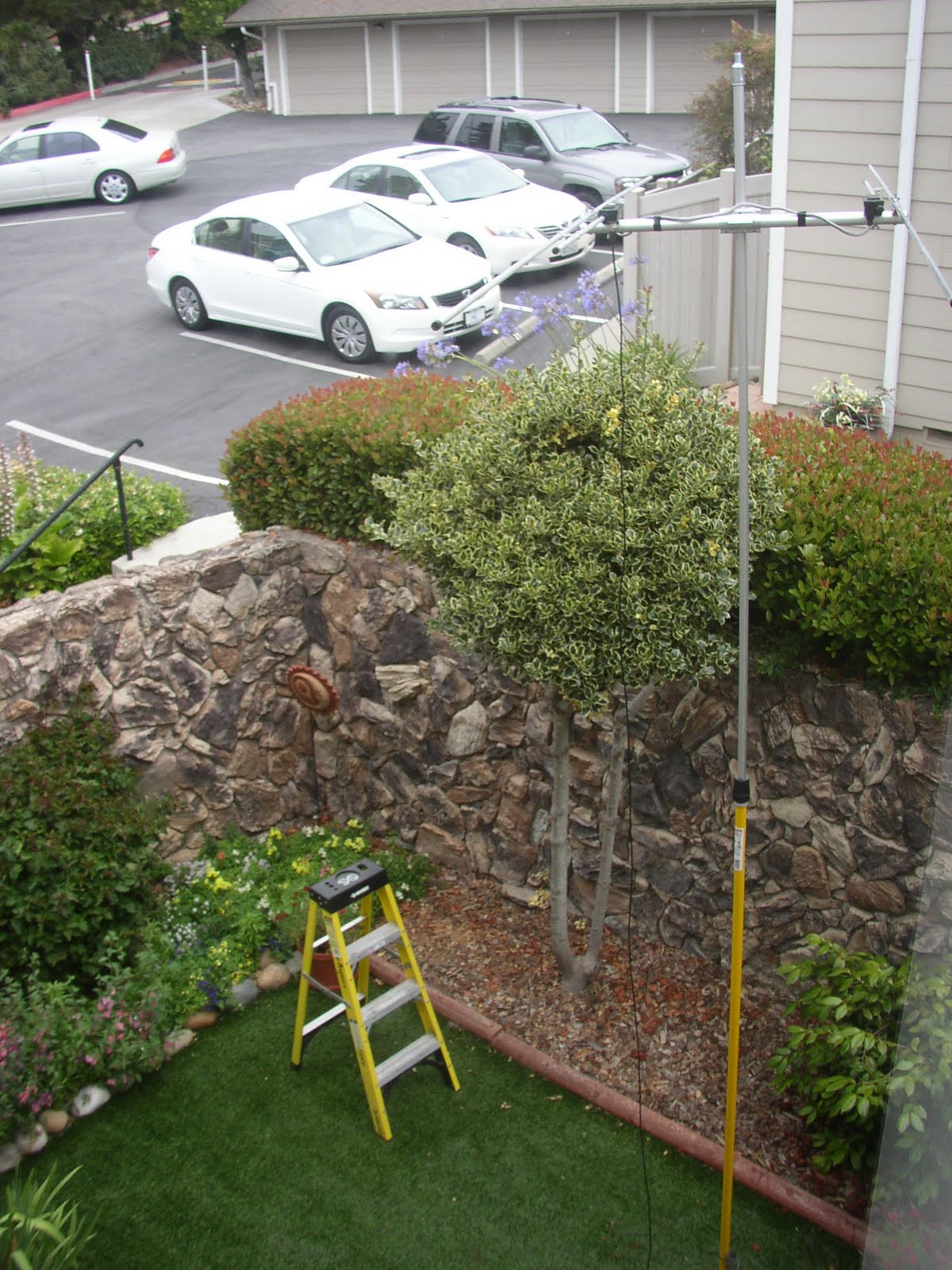 Photograph 1 taken from our second floor window.
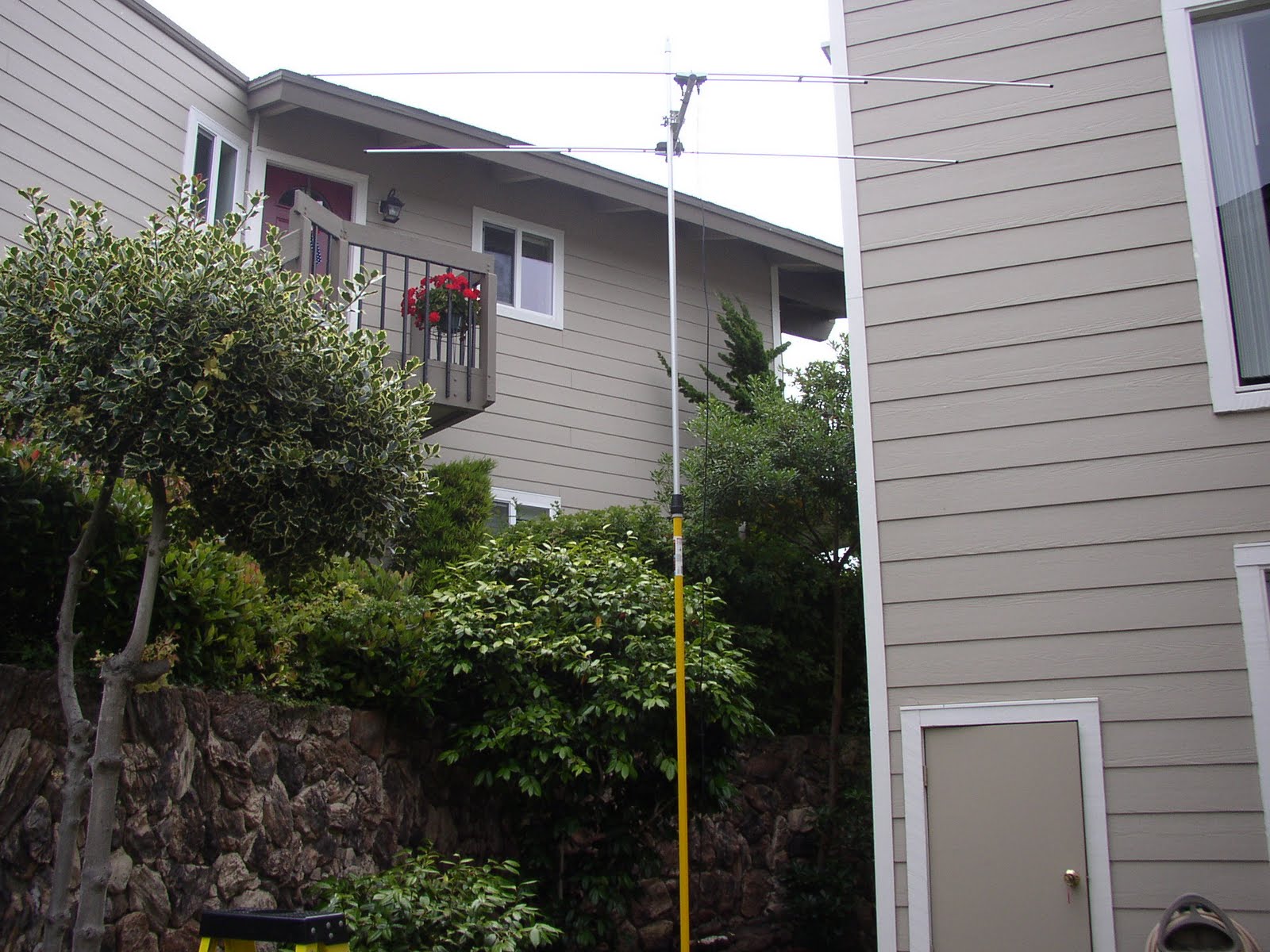 Photograph 2 is a street level few of the 6m 2 element yagi positioned in a difficult operating location.
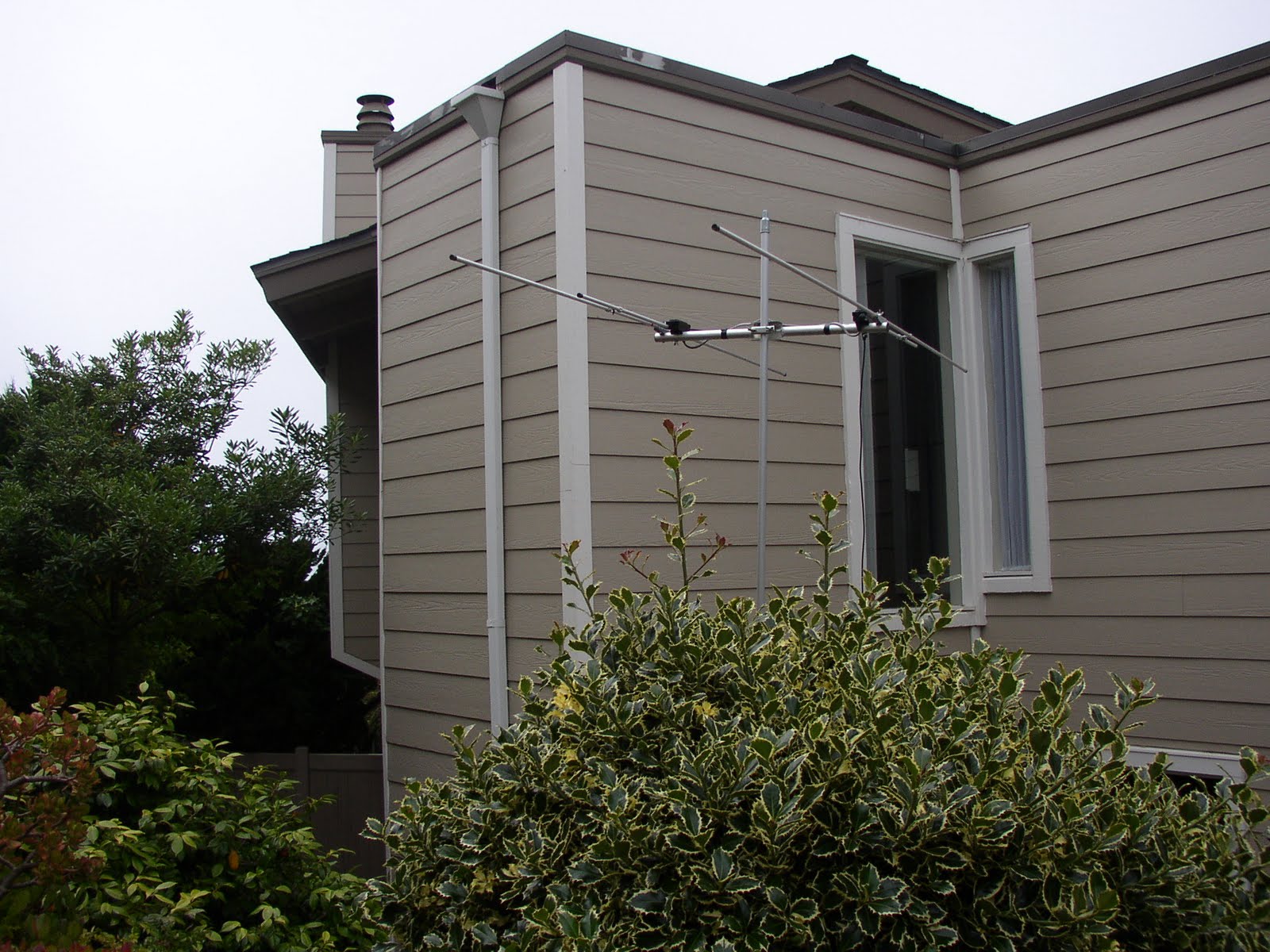 Photograph 3 taken a few steps upward from street level view.
 Photograph 4 highlights additional radials installed yesterday afternoon. The total is thirty across three bands of operation.
 Photograph 5 illustrates the cement like quality of our soil just two hundred yards from the Pacific.
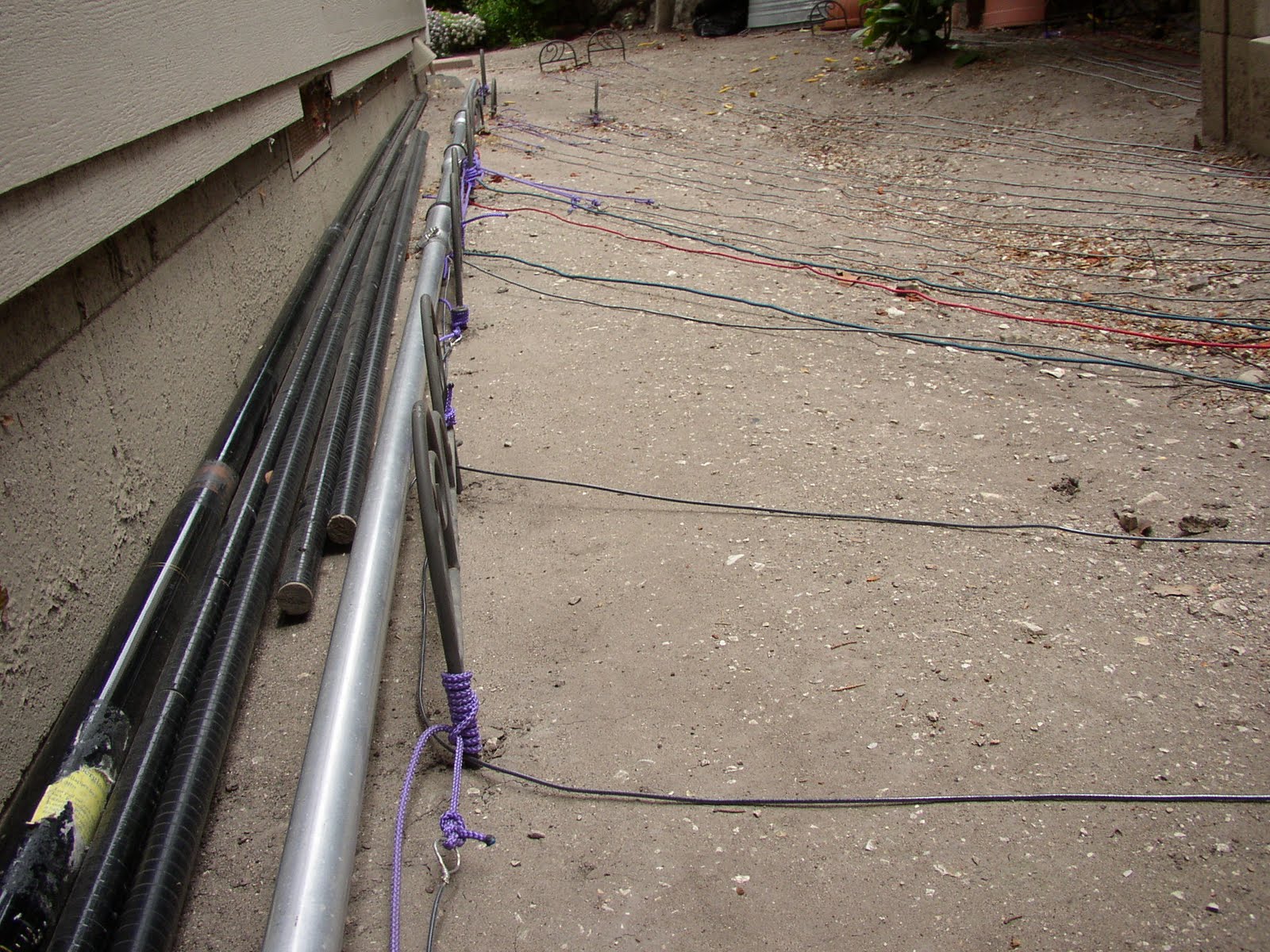 Photograph 6 is an example of re-purposed, decorative lawn fencing.
73 from the busy shack relaxation zone.

Scot Morrison, KA3DRR, is a regular contributor to AmateurRadio.com and writes from California, USA.
Sarge
Nothing like a Drill Sergeant…

Scot Morrison, KA3DRR, is a regular contributor to AmateurRadio.com and writes from California, USA.
Riding with Lynn
I’ve just been for a pleasant afternoon drive down to the coast with Lynn, KJ4ERJ, developer of the APRSISCE software, currently on holiday in Spain. No, I didn’t nip down on EasyJet for the day. Actually I was following him on APRS using the Google Street View feature in the beta version of aprs.fi.
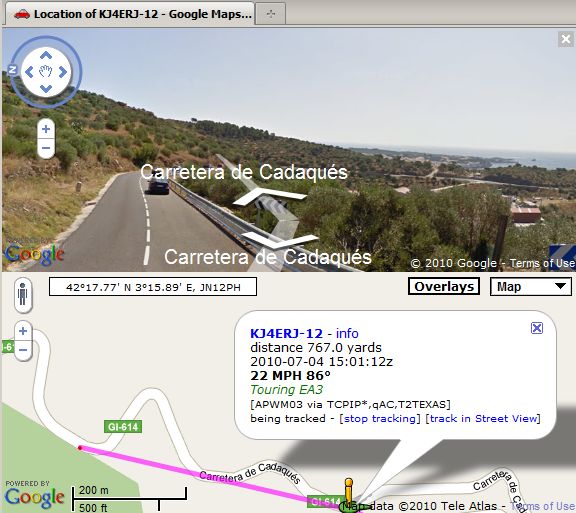 With the new software, when you click on a station you get the option to Track in Street View. If you do then the browser window splits in two, with the top half showing the view the person you are tracking sees, facing the direction he is going, and the bottom half showing the track on the map. It works pretty well. You just have to remind yourself that you are viewing images previously taken by Google, not live images!
This is beta software, so you won’t find it on the regular aprs.fi just yet. But it’s a pretty cool application, I think you’ll agree!

Julian Moss, G4ILO, is a regular contributor to AmateurRadio.com and writes from Cumbria, England. Contact him at [email protected].
ICQ Podcast Series Three Episode Fourteen (04 July 2010) – Going Mobile
Series Three Episode Fourteen of the ICQ Amateur / Ham Radio Podcast. News Stories include:
- Radio Hams travel to space station
- May RAE - callsigns not yet available
- Ham radio satellite SO-67 back on air!
- UK Amateur Radio Licences - 31st May 2010
- New UK Amateur Foundation licence syllabus
- Oman on 50 MHz
- Ham Radio - 2010 National Scout Jamboree
- Thai hams on 50 MHz for contest
- Stealth antenna for 500 kHz
- Ham radio called-out for campsite flood
- Slow Scan TV from the edge of space
- Kid's Ham Radio tower must come down
- 30-months for hoax mayday calls
- BBC to Investigate Radio/TV Interference
- D-STAR illegal in France
- Power line tech could crash aircraft
Your feedback, upcoming events and Martin (M1MRB) discusses Mobile Installations
Colin Butler, M6BOY, is the host of the ICQ Podcast, a weekly radio show about Amateur Radio. Contact him at [email protected].
2010 Field Day Beach Boys Amateur Radio Club Photographs
 Beach Boys Amateur Radio Club | 2 Alpha | Santa Barbara.
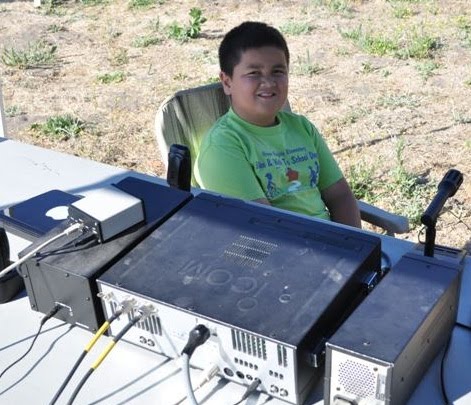 Emerito, N6ETO’s son Vinnie taking a tour of the ionosphere despite closed out conditions.
 Phil, KK6PE working on the laptop prior to official start while Brian and Frank troubleshoot our rotor control box.
 Phil, KK6PE is downloading N1MM Logger for use over the weekend. The club operated from the dialogue box while inputting mode, frequency, and callsign.
 Fred, KI6QDH and John, KG6RFW logging Saturday afternoon 20m contacts.
 Fred, KI6QDH in the pilot’s chair and a box provided screen shading otherwise it was impossible to see one’s input.
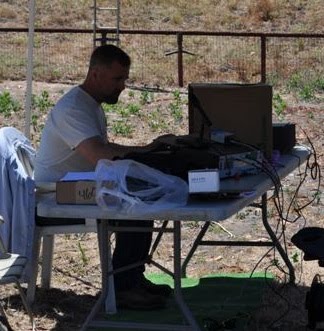 Operating our low band station. I’ve never forgotten field day in Western Pennsylvania as a novice. The low bands were always hot and fun!
 Phil, KK6PE, Ricky, and John, KG6RFW manning our high band station through Saturday evening. Ricky totally dug high frequency operations.
 Saturday night pumps on the low bands and I’m having a blast working both short and long skip. The evening cooled off significantly enough to warrant a North Face sleeping bag and skull cap.
 Ernie, AE6ZE who hosted our first ever field day event in the pilot’s chair on Sunday morning.
 Riding a few hours sleep and back in the chair on 40m early Sunday morning.
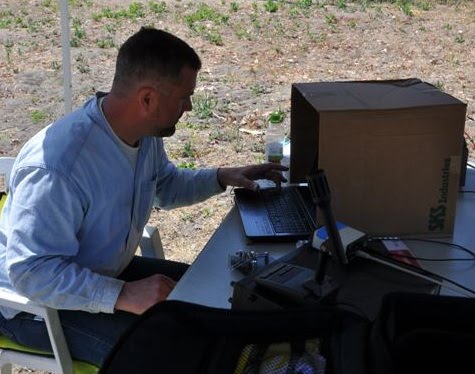 Activity shifted on Sunday as many operators went into the log as 1 Deltas and I imagine it will be an on-going, persistent trend in the forthcoming years.
 KI6QDH and KI6UYB logging contacts either on 15 or 10m because 20m was not as productive as the team had hoped for through the weekend.
 Kord, KI6UYB hitting his groove on the high bands mid-Sunday morning.
 John, KG6RFW summed up our weekend beneath the warmth of Cycle 24 during the final hours of field day.
 73 from the Beach Boys Amateur Radio Club and stay tuned for our next adventure!

Scot Morrison, KA3DRR, is a regular contributor to AmateurRadio.com and writes from California, USA.
 Ham Radio Deluxe |
 W5SWL Electronics |
 Ham Radio Prep |
 KB3IFH QSL Cards  Hip Ham Shirts  HamRadioAuctions HamRadioAuctions Reliance Antennas Reliance Antennas Enigma Shop Enigma Shop |  morseDX  Ni4L Antennas  R&L Electronics R&L Electronics antennas.us antennas.us QRV QRV |
- Matt W1MST, Managing Editor
