 |
 A week’s holiday on the Isle of Wight
 22 August 2010 | by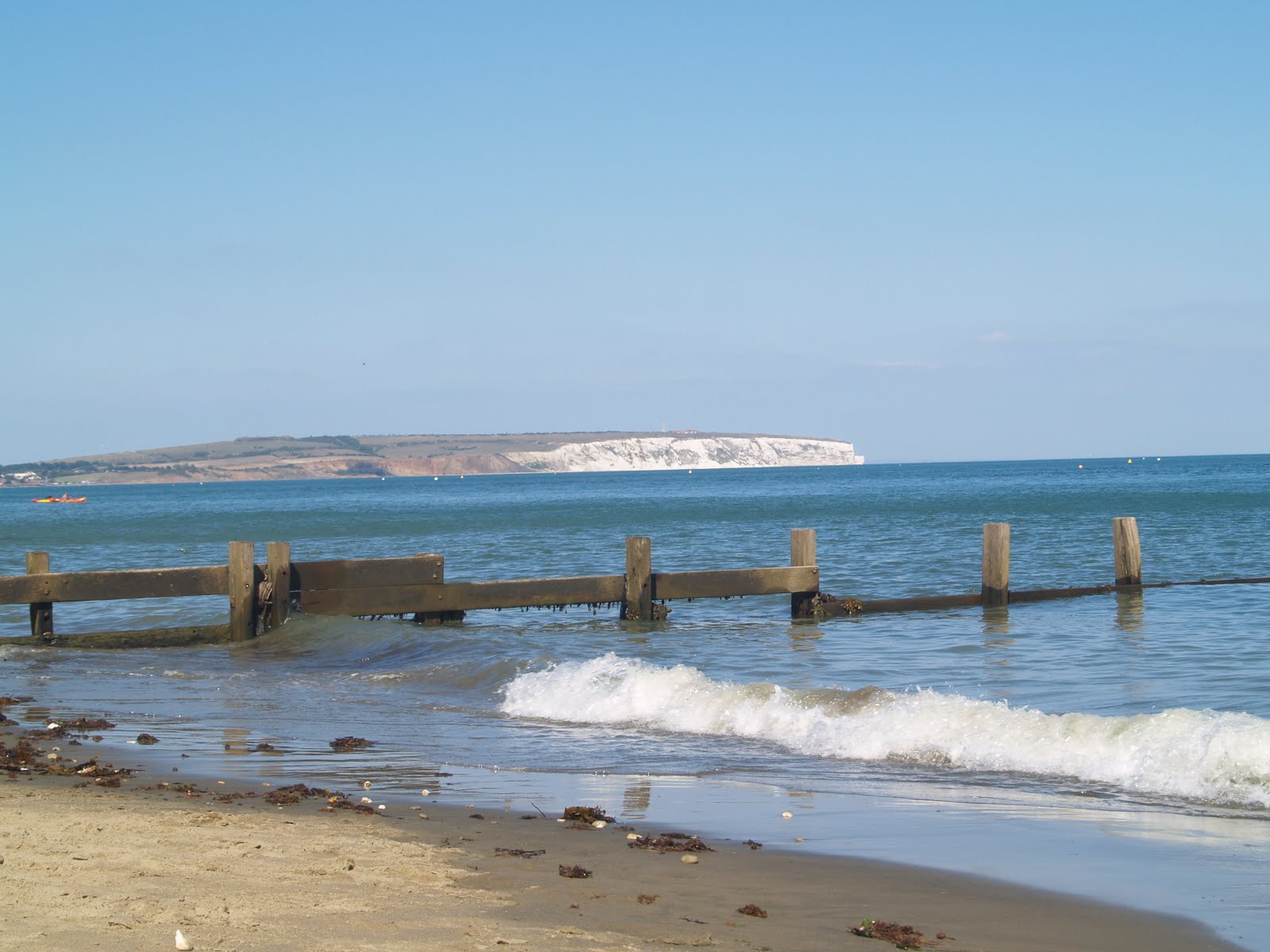
We’re just back from a week’s holiday at Shanklin on the Isle of Wight. Very nice it was too and I think we were probably pretty lucky with the weather. There was certainly some sun and we enjoyed being out and about.
I took a variety of radio gear; FT817 and HF/VHF antennas, IC-E92ED, Wouxun 70MHz and DVAP Dongle. In the end, I really only used the IC-E92ED handheld. Our apartment was located high above Shanklin on the cliffs and I discovered that I could hear all sorts of things on VHF and UHF.
On 19th and 20th August, there was a nice temperature inversion across the English Channel. I heard and worked a number of French and Belgian repeaters across the water, just using the rubber duck antenna on the IC-E92.
Still no QSOs on the Wouxun 70MHz, but having read the review in the latest Practical Wireless, I think the helical antenna is worse than I expected. It may be time to get one of the Garex Flexwhips and see how that improves performance!
Echolink made it possible to connect to my local repeater, GB3TD, using the IC-E92 to access GB3BR in Brighton (a huge signal over a fairly long sea path) and connecting the two repeaters together. Echolink using the iPhone was less successful, owing to a slow GPRS data connection.
Enjoyable mix of radio – all very simple, but plenty of interest all the same.

Tim Kirby, G4VXE, is a regular contributor to AmateurRadio.com and writes from Oxfordshire, England. Contact him at [email protected].
The Windows Genuine Disadvantage
If you visited a shop whose owner appeared to suspect you of being a thief and sometimes insisted on searching your bags before you left, you would probably take your custom elsewhere. And that’s pretty much how I feel about Microsoft. Several times in the last few years since the company developed its obsession with software piracy I have been subjected to heart-stopping moments when, instead of working normally when started up in the morning, one of my computers decided that my copy of Windows wasn’t genuine and I had to waste time jumping through hoops to prove that it was.
The latest occurrence was this morning when I switched on the shack computer – an HP mini-tower – in order to start my APRS gateway, Microsoft Security Essentials popped up a message saying “You may be a victim of software counterfeiting” and stating that it would stop working in 30 days unless I did something about it. It offered a link to check the system. This opened in Firefox where I was requested to download a plug-in. After that I was asked to click a Continue button which was supposed to run the validation check. Nothing appeared to happen. Eventually I tried the second option provided for browsers on which the first one wouldn’t work, which downloaded an .hta file to my desktop. With no other instruction as to what to do next, I clicked on it – all the time wondering if this wasn’t some clever software hoax to trick me into installing malware on my system. Fortunately it wasn’t. I was informed that, hoorah, hoorah, my copy of Windows supplied by HP was indeed genuine after all. Thank you, Microsoft, that’s ten minutes of my life you just wasted. But by the by, if you must be so anal about pirate copies why do you have to make the checks so intrusive and complicated?
The previous time something like that happened was the trigger for me to dump Windows and install Linux on my shack computer. However, as I have written previously, I found Linux forced me to make too many sacrifices which is why in the end I went back to Windows. Linux the OS is fine, it’s the lack of high quality applications (particularly in the ham radio sphere) and the decision by many hardware manufacturers not to provide Linux drivers that makes it frustrating. Having said that, most of the programs I regularly use are either available in Linux versions (like Fldigi) or will run on it under wine (like APRSIS32.) But the truth is, the older I get the more I feel that life is too short for faffing around with computers.

Julian Moss, G4ILO, is a regular contributor to AmateurRadio.com and writes from Cumbria, England. Contact him at [email protected].
Droid Docks
Continuing my series of posts from my Droid mobile device while watching Garbage Moguls on National Geographic this evening.
My first attempt at docking the Droid failed. Why so? Accessories are as important to the bottomline as the device itself. I bought one of those nifty protective shells, hip, slick, and cool. The red casing dressed up the Droid however someone in engineering obviously did not dress their device to the nines.
The red casing was an eighth inch to big for the dock. Yes, Houston, no go on docking the Droid.
Gene Kranz would never tolerate such a situation even though we fly missions to space based on the bottom line of the lowest bidder. Well, I made a command decision that is, remove one part of the case and continue the mission.
Success, if only partial, because mission critical software was not installed on the mothership. I fired up my wireless connection and contacted Motorola for a device driver. They delivered bits and bytes of required code necessary for docking.
Mission success as Droid spoke with mothership and downloaded essential life support software such as R34P and SolderSmoke recordings. My ear buds hummed with dual channel CW/SSB from WRTC 2010 and SolderSmoke. There is yet one more piece of mothership software missing to complete my mission portfolio.
73 from the anywhere, anytime shack.

Scot Morrison, KA3DRR, is a regular contributor to AmateurRadio.com and writes from California, USA.
Shack Relaxation Zone
It’s not writer’s block well may it is writer’s block? It’s not hobby burn out because I’m totally into traditional QSL cards while getting after core shack awards. Recent confirmations include KL8DX, AL1G, FS5KA, and HC8GR. Additionally, I’m into data compiling inside the log database as I’m adding grid squares, counties, propagation numbers, verifying three different QSL channels like eQSL, LoTW, and traditional.
The fall/winter RadioSport schedule spells improved long skip conditions from the shack relaxation zone. I’m listening for DX signals during the weekend on multiple spectrum spaces as 10, 15, and 20m yet faint, ever so faint, are those signals.
I added 6m into my quiver of ham radio activities but it was too late as the e season faded into the summer sunset. There is magic band opportunity later in the year and, hopefully, Cycle 24 will cooperate with an epic weekend. I logged one -Q related to sporadic e propagation before this space went silent.
There is antenna lab and we are nearing completion of K6MM’s No Excuses 160m Vertical. We have the upper section to wind and the final touches on the capacitance hat. My fiberglass push-up mast needs replaced because it wore out sooner than expected. My Kenwood TS850S will arrive later next month and the TS830S which powered my /DV2 activity and /0 South Dakota season, remains in storage.
On the other hand, I’m experimenting with mobile blogging using my Motorola Droid, and the results are changing my computing behavior. Seriously, I’m spending less time in front of the personal computer during the week using instead my mobile device to access the net. I purchased the last docking station just today.
The final days of summer are at hand and the shack relaxation zone enjoyed several changes this season. I’m looking forward to the 2010 – 2011 RadioSport schedule!
Contest on.

Scot Morrison, KA3DRR, is a regular contributor to AmateurRadio.com and writes from California, USA.
Garden party
Olga is having a little party on Sunday afternoon to show off her garden to a few friends and neighbours. So there will not be much time for radio this weekend as I will need to be on hand to help tidy things up, fetch anything she suddenly finds she needs whilst preparing, and finally the hard part – drinking wine and being sociable! But I thought you might appreciate seeing some pictures of the garden taken a few days ago.
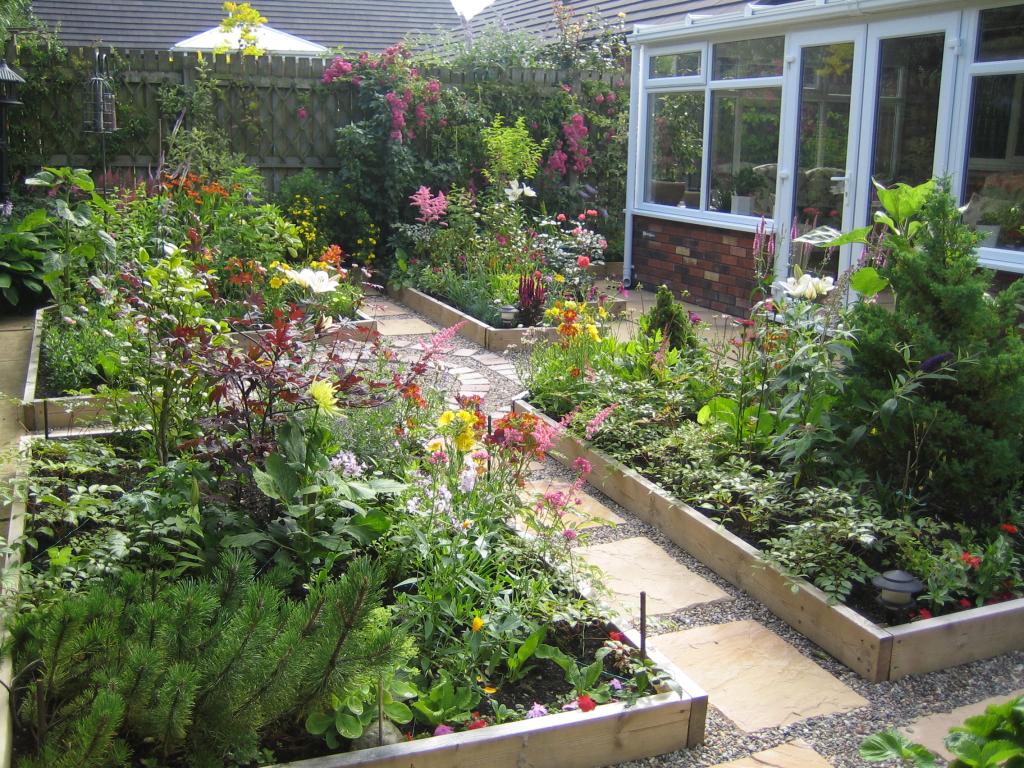


The photos don’t give much of an idea of scale, but the garden is tiny. It is about 20 feet from the back of the conservatory to the thick, high hedge at the bottom of the garden, and about 30 feet from one neighbour’s fence to the other. The lack of space, and the desire not to spoil Olga’s floral wonderland, are just two of the reasons why I think attic antennas are the best option in the circumstances.

Julian Moss, G4ILO, is a regular contributor to AmateurRadio.com and writes from Cumbria, England. Contact him at [email protected].
So that’s what it sounds like
While most of you reading this are hams, I have a number of readers who aren’t and who probably haven’t heard what things sound like on the radio. There are also some hams who aren’t active on the HF bands for any number of reasons who might not have had an opportunity to listen to DX. DX, meaning “distance”, is what hams use to refer to a “far away” contact. The definition of “DX” varies, but in this case I’m talking about a contact with a ham in a foreign country. What I’d like to do is present a short (42 second) clip of a DX station and explain what’s being heard.
First, I’ll note that what you’ll hear is typical of a DX station making brief contacts. There’s not a lot of chat back and forth, but the goal here is to make as many contacts as possible. Second, I picked this clip (recorded earlier today) because the station I was listening to happened to have an exceptionally strong signal and conditions were very good. (For those of you interested, the DX station was using a 2KW amplifier into a 6 element cubical quad. My station is an Icom 756 Pro II with a G5RV antenna up about 10 m in the backyard. I worked him a few minutes before this recording was made.)
With that said, here’s the link to the audio file that I’ll be describing: http://k2dbk.com/rl3a.mp3 (you may need to right-click and save that to your computer, or you may just be able to click on it to play, depending on how your computer is set up.)
I’ll give a start time in seconds for each description to help you follow along, here’s what you’re hearing:
:00 – “Q R Zed stateside, Radio LimaThree Alpha” – QRZ (hams pronounce the letter “Z” like “Zed” because it’s so similar to other letters like C, etc.) is a sort of shorthand for “Who is calling me?”. He uses the term “stateside” because he’s just interested in making contacts with stations in the United States (though often that really includes Canada and Mexico as well.) Radio Lima Three Alpha are the radio phonetics for the callsign RL3A, who is the DX station that I referred to earlier. I’ll explain more about him later, but what’s happening here is that he’s saying “This is RL3A and I’m ready for another contact”.
:03 – At this point various stations are giving their callsigns phonetically (kind of like kids raising their hands in class and saying “pick me, pick me!”). Because of the way radio propagation works, you can’t hear everyone calling him, but you can hear Whiskey Alpha Eight Lima Oscar Whiskey (WA8LOW) along with what sounds like a bunch of other people calling all at once. (In fact, that’s exactly what’s happening).
:07 – “Victor Echo United, what’s the prefix?” Although we heard WA8LOW, RL3A has heard part of a callsign that ends in VUE and he’s asking for the beginning of it.
:10 – First a bit of just noise, then “Roger, roger, Victor Echo Three Victor Echo United fifty-nine, QSL?” The noise (most of which I’ve edited out) is where VE3VEU is giving his complete callsign to RL3A. The reason you can’t hear VE3VEU is because of propagation. That’s a station in Canada and his signal is probably passing right over me, but was mostly likely very strong as heard by RL3A. RL3A acknowledges that he’s heard the complete callsign and gives him a standard signal report, 59. The report is given using the RST (Readability, Signal, Tone) system, but in many cases a simple 59 report is used where the exact value of the report isn’t important. QSL is a shorthand way of saying “Did you get the information that I sent you?”
:16 – More noise while VE3VUE is talking, then at about :21 “Seventy Three Bill, good luck Q R Zed Radio Lima Three Alpha” Seventy-Three (73) is another ham radio “code” which means “best regards” and is a common way to say “so long” at the end of a contact. If you’ve been keeping track, you’ve figured out that the next part is RL3A asking “who wants to be next?”
:25 – More stations calling, then “Whiskey Delta Eight Japan Papa something fifty-nine, over”. This is pretty much the same as the previous contact, but in this case RL3A sent the 59 signal report right away. He’s got most of WD8JP’s call but thinks he might be missing a letter. “Over”, as you might expect, just means that he’s telling the other station to go ahead and talk.
:34 – I cut quite a bit of the noise out here since it was rather long, and then we hear “QSL John, I am Dima, Delta Italy Mike Alpha and the QTH Moscow. Thank you John for the QSO 73 good luck”. In this case, RL3A is using QSL to acknowledge that he has heard the information sent (it can be used either as a question, as in the clip started at :10, or as an answer). Obviously the WD8 station operator has said his name is John (and it turns out that the complete station call was in fact WD8JP, that’s why RL3A didn’t respond with the full callsign again, since he had received it correctly the first time), and RL3A’s name is Dima, which he spells phonetically. You have probably guessed that QTH is a shorthand for “location”, and Dima is located in Moscow. He then closes out the contact with the usual “so long” and after that (though not recorded), he repeated the “loop” of working stations.
I hope you’ve found this informative, if a bit lengthy. If for some reason you have a problem downloading the MP3 file (it’s a bit over 500k bytes in size), please let me know and I’ll help you out.

David Kozinn, K2DBK, is a regular contributor to AmateurRadio.com and writes from New Jersey, USA. Contact him at [email protected].
The ingenious circuits of Sir Douglas Hall
 As a confessed web junkie (how else can you do a site like this) and a ham…… I find many sites that show circuits from decades gone by that are every bit as relevant today as they were when they were originally created.
Then…… there comes a time when you can look at a mere snippet of someones overall body of work and get an interesting glimpse into one of those rare “beautiful minds”. Such is the case with Sir Douglas Hall.
He started publishing articles nearly two decades after he started tinkering with electronics. This site has copies of his published works from the early forties to…… here’s the crazy thing….. the new millennium!!!
I can’t even begin to go over the normal lists like I do for many articles here, but there are tons of articles from various methods of volume control, multiple crystal receivers, portable radio kits (transmitters and receivers), tons of theory….. the list goes on.
I think I need to cache a copy of this page for my next trip so I have plenty of neat stuff to read while traveling, truly neat stuff.
To find these ingenious circuits, go to:
http://www.spontaflex.free-online.co.uk/
**** Update ****
Thanx to Geoff for commenting and letting me know that there are not only updates, but MORE great circuits on the radioconstructors site at:
http://www.radioconstructors.info/
Jonathan Hardy, KB1KIX, is a regular contributor to AmateurRadio.com and writes from Connecticut, USA. Contact him at [email protected].
 Ham Radio Deluxe |
 W5SWL Electronics |
 Ham Radio Prep |
 KB3IFH QSL Cards  Hip Ham Shirts  HamRadioAuctions HamRadioAuctions Reliance Antennas Reliance Antennas Enigma Shop Enigma Shop |  morseDX  Ni4L Antennas  R&L Electronics R&L Electronics antennas.us antennas.us QRV QRV |
- Matt W1MST, Managing Editor
