 |
 Episode #052 Live Rescheduled
 2 November 2010 | by
 Due to extenuating circumstances, we will have to move the recording of Episode #050 to November 16th at 8:15pm CST. We hope to see everyone then.
73 de The LHS Guys
Russ Woodman, K5TUX, co-hosts the Linux in the Ham Shack podcast which is available for download in both MP3 and OGG audio format. Contact him at [email protected].
Being prepared
We Brits and our friends across the Atlantic may share a common language but sometimes it seems as if we live on different planets. One of the most obvious examples of this is that Americans sometimes seem to act as if Armageddon could happen at any minute, something that doesn’t seem to cause much lost sleep over here.
Perhaps I’m jumping to the wrong conclusion based on the higher emphasis given in the USA to the use of ham radio for emergency communications. Read some issues of QST these days and you might think that “emcomms” is what amateur radio is really all about. Many American hams maintain “go kits” – portable radio stations that they keep charged up and ready to go the moment they are needed. Over here we have something called Raynet, but I get the distinct impression that it is a bunch of people who would like to use ham radio to help in an emergency rather than a volunteer emergency service on the lines of, say, Mountain Rescue that has a clearly defined purpose and meets a genuine need.
In his latest blog “Smoke Curls” Jeff, KE9V recently posed the question of whether a portable QRP HF station was really useful in the context of emergency preparedness. Most of the replies seem to illustrate the extent to which the thought of a major disaster is never far away from the American consciousness. My comment that the only benefit I could see in having battery powered HF ready to use was so I could take advantage of the noise-free bands while the power is out – which in fact I did during the outage that occurred during the local floods a year ago – probably seemed rather flippant, though that wasn’t the intention.
My opinion is that emergency communications is a job for the experts and the last thing they need is a bunch of amateurs trying to help but more than likely getting in the way. The Cockermouth floods were the nearest I have ever come to being directly affected by a disaster and it never even entered my head that as a radio amateur I might be able to help. As for needing HF or any other kind of ham radio for personal emergency communications I still feel the likelihood of something happening in which my radio gear might end up being my only means of getting in contact with anyone I needed to is so remote that I’d cross that bridge if I ever came to it.
I would never assemble a “go kit”. And if I did, I know for sure that I would forget to charge the batteries or raid it for parts I needed for something else so it would never work in the unlikely event it was needed.
Is there a cultural difference between us and Americans in this regard, or is it just me?

Julian Moss, G4ILO, is a regular contributor to AmateurRadio.com and writes from Cumbria, England. Contact him at [email protected].
Not the CQWW SSB weekend…or shouting Elephant at contest stations!
Over the years, I’ve developed an aversion to having anything to do with major HF SSB contests unless I’ve got at least a beam antenna. Of course, you don’t *need* a beam antenna and you *can* make contacts and good ones at that, with a dipole or vertical and perhaps 100w or less. The trouble is that each contact seems to go something like this
DX Station: QRZ Contest
Me (enthusiastically): Golf Four Victor Xray Echo
DX Station: QRZ the X-RAY
Me: Golf Four Victor Xray Echo
DX Station: Gee Four Vee Ex I you’re five nine twenty eight.
Me (starting to lose enthusiasm for this): No, it’s Golf Four Victor Xray Echo, Golf Four Victor Xray Echo, OK?
DX Station: QSL, Golf Four Victor Xray India you’re five nine twenty eight. What’s my report?
Me (thinking why did I bother….): No, the last letter is Echo, Echo Echo. Like Espana, Ecuador, Elephant (actually, I’ve never used Elephant as a phonetic, but I might now I’ve thought of it)… QSL
DX Station: QSL – Golf Four Victor Xray Echo – you’re five nine twenty eight OK?
Me: Roger roger (Thinking thank heavens for that…) you’re five nine one four. OK?
Disclaimer: I’m not singling out zone 28 stations! I was just listening to one last night. They’re super operators with great ears…
So, you can see that each contact, even with a semi decent setup is a bit of a trial of patience and I have learned it’s not good for my blood pressure. I’m quite happy to accept that I could put up a bigger antenna (but then it works ok most of the time for CW and data contacts) and that perhaps my voice isn’t that clear (well, sorry, I’m stuck with that).
It’s not that I don’t like contests – I love hearing the activity generated, and I love hearing DX coming through from all parts of the globe. I’m inclined to think, though that there is now so much interference and general aggro that anyone with a normal suburban station is unlikely to have a great time in the major SSB events (CW and data are usually better options).
Anyway, that’s a long way of telling you that I didn’t have any contest QSOs over the weekend. Still, I did have a listen on 7MHz last night about 2100z and very interesting it was too. In between the very loud Europeans there was some great DX from the Far and Middle East. JA3YGP (from memory) and 9K2HN were doing great business and good signals on the vertical and there was an Indonesian station coming through too..
Having switched the HF rig on, I listened around a little more. The 5MHz channels were quiet, though I did hear some Spanish fishermen on 5398khz! Listened on 27.555MHz too – someone told me recently that this is a CB frequency that shows activity even when the 28MHz amateur band is quiet. Not much doing there, though I heard some meteor bursts!
It was nice to listen on HF again though. I realise that I have missed playing HF recently, although not shouting Elephant at contest stations!

Tim Kirby, G4VXE, is a regular contributor to AmateurRadio.com and writes from Oxfordshire, England. Contact him at [email protected].
Taking part
On Saturday I blew the dust (literally!) off my K3’s microphone. After I had finished sneezing, I started making some contacts in the CQ WorldWide SSB DX Contest.
This was not intended to be a serious competitive effort. My intention was to spend all of the time I could spare that weekend making contest contacts and see how many stations I could work. I spent about an hour on Saturday morning before going with Olga to the garden centre, and a couple of hours in the afternoon. On Sunday I was up earlier than normal because the clocks went back overnight, so I operated for about three hours in the morning before lunch. I had intended to do some operating in the afternoon as well but the three hours in the morning had left me feeling a bit tired and stiff so I went for a walk after lunch and then fell asleep on my return home. Getting old is my excuse!
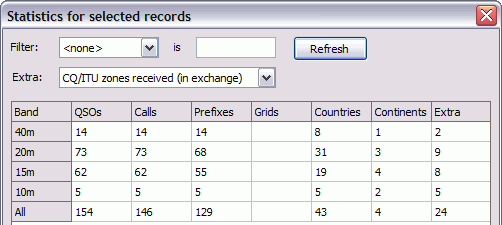
I made a total of 154 contacts in 43 different countries and 4 continents during my six hours or so of operating. The detailed breakdown, for those interested, is shown in the screen grab of the contest statistics dialog from KComm (the Extra field shows the number of CQ zones.) This would give me a claimed score of 17,487 points if my calculations are correct, which by comparison with last year’s results would place me well down the second half of the All Band Single Operator Low Power Unassisted results table.
This was the first time I had made such an effort for an SSB contest. Until now I hated turning on the radio during big SSB contests because the bands sounded like bedlam. But I had never tried with the K3 before. Instead of a mush of intermod, splatter and AGC pumping I could hear everything clearly. Sometimes I could hear two or three stations on the same frequency simultaneously, one in the foreground and a couple in the background. And the superb DSP filtering made it easy to shut out close-by stations so I could copy a weaker one. I often had the passband down to 1.8kHz and copy was still crystal clear.
Initially I started off just working the loud ones because I didn’t want to waste the serious contesters’ time by making them struggle to hear my call. But I found there was no hard and fast rule relating how strong a station was with whether they heard me. One Finnish station, 10dB over 9 with me, just kept on calling as if I wasn’t there. But many weaker ones came right back to my first call.
Frustratingly, a significant number of stations came back to me as “Golf 4 Lima India Oscar” – exactly the same error that was made when I ordered my QRSS beacon kit a couple of weeks ago. What is it about my call? This doesn’t happen on CW (though I used to get replied to as G3ILO very often as the holder of that call is a well known QRP CW operator.)
Conditions didn’t appear to be very good this weekend. I’d hoped to hear some interesting DX on 10m but I heard hardly anyone at all on the band. As always, 20m was the liveliest band, but I made almost as many contacts on 15m, probably because the QRM was less making it easier to make contacts.
I didn’t work any DX and I only worked one all time new DXCC entity – Svalbard, JW5E. I did hear a VK on 15m on Sunday morning but he had a big pileup going and after trying for about five minutes I decided not to waste any more time and move on.
Despite my unspectacular results I thoroughly enjoyed my few hours in the CQ WW DX SSB contest. No doubt QRZ.com and other online forums will be full of grumbles about contests taking over the band for the entire weekend, the only time working people can get on the air etc etc. But if you can’t beat them, why not join them?
My feeling is that contesting is one of the many different activities you can pursue and to get the most from the hobby you should try as many of those different activities as you can. As this post has hopefully shown, having indoor antennas is no obstacle to working a decent number of stations and earning a respectable score for the time spent. It’s not the winning, it’s the taking part that counts. I certainly felt like a real participant in this radiosport event and I look forward to seeing my call in the results table next year.

Julian Moss, G4ILO, is a regular contributor to AmateurRadio.com and writes from Cumbria, England. Contact him at [email protected].
A little contesting this weekend
I spent about 10 hours Saturday and Sunday making some contacts in the CQ WW SSB contest. This is one of the biggest contests, where the goal is to work stations, for the most part, outside of your own country. You get two points for working a station on your own continent (if you’re in North America, one point elsewhere) and three points for working stations on another continent. There are also multipliers for each different country and CQ Zone that you contact. As with other contests, your score is computed by multiplying the number of points by the multipliers. World-class competition stations typically have scores in the millions or even tens of millions for the high-power multi-operator stations. My score was quite a bit more modest, just a bit under 115,000 points. That beats my score from last year, though I’ve done better in the past. (Though I’ve also spent more time in the past.)
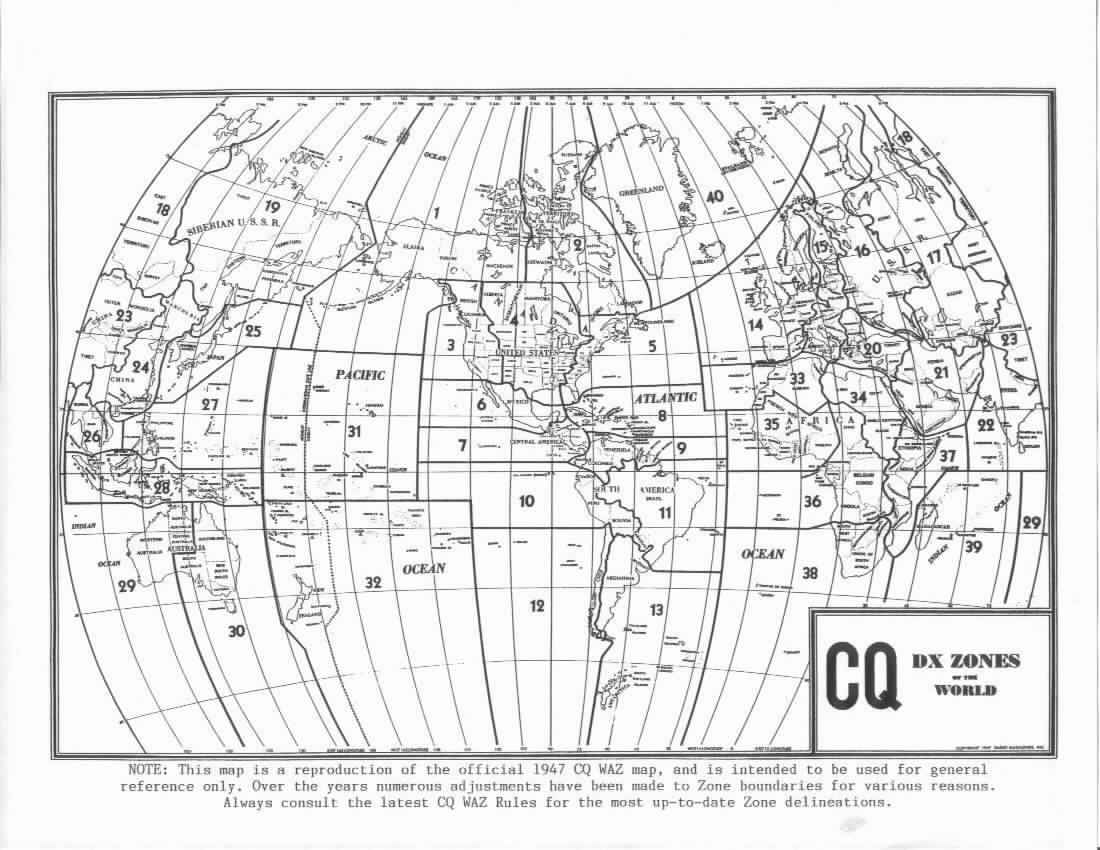
This isn’t one of my favorite contests specifically because it is so popular. Because it is so popular, there are almost always a lot of stations calling, which makes it harder for a small station like mine to be heard. As a result, stations that I’m hearing very well just can’t hear me, and it often took several minutes to work stations that under non-contest conditions could be very easy. In a lot of cases, I’d just give up and move on, sometimes coming back to try to work the stations again later.
Partway into the contest, I came up with a technique that made things a little less frustrating: I intentionally made my station “hard of hearing”. Normally, although I’ve got a very modest antenna (my G5RV), my radio is quite good at pulling in relatively weak stations. However, in this case, there was little point in trying to work very weak stations because they weren’t going to hear me. What I did was to turn off any pre-amplification (kind of like a “hearing aid”) for all bands, and on some bands (particularly 40m and 80m), I put in 8db or more of attenuation. (Kind of like putting in earplugs.) There were still plenty of stations to hear, and with my self-imposed handicap, I found that I was a lot more likely to work these stations.
This technique isn’t something that I’d normally recommend, but for this particular contest, it kept me from wasting time on stations that I really had no chance of working.
Here’s my score breakdown for the contest. One interesting thing is that this is one of a very few contests where I’ve actually worked stations on all six possible HF bands.
Band QSOs Pts Cty ZN
1.8 2 2 2 2
3.5 22 50 17 11
7 62 172 39 12
14 87 223 45 18
21 45 113 25 16
28 8 22 7 3
Total 226 582 135 62
My total score was 114, 654 points, which, as always, is subject to adjustment for any errors that I (probably) made.

David Kozinn, K2DBK, is a regular contributor to AmateurRadio.com and writes from New Jersey, USA. Contact him at [email protected].
A little contesting this weekend
I spent about 10 hours Saturday and Sunday making some contacts in the CQ WW SSB contest. This is one of the biggest contests, where the goal is to work stations, for the most part, outside of your own country. You get two points for working a station on your own continent (if you’re in North America, one point elsewhere) and three points for working stations on another continent. There are also multipliers for each different country and CQ Zone that you contact. As with other contests, your score is computed by multiplying the number of points by the multipliers. World-class competition stations typically have scores in the millions or even tens of millions for the high-power multi-operator stations. My score was quite a bit more modest, just a bit under 115,000 points. That beats my score from last year, though I’ve done better in the past. (Though I’ve also spent more time in the past.)
This isn’t one of my favorite contests specifically because it is so popular. Because it is so popular, there are almost always a lot of stations calling, which makes it harder for a small station like mine to be heard. As a result, stations that I’m hearing very well just can’t hear me, and it often took several minutes to work stations that under non-contest conditions could be very easy. In a lot of cases, I’d just give up and move on, sometimes coming back to try to work the stations again later.
Partway into the contest, I came up with a technique that made things a little less frustrating: I intentionally made my station “hard of hearing”. Normally, although I’ve got a very modest antenna (my G5RV), my radio is quite good at pulling in relatively weak stations. However, in this case, there was little point in trying to work very weak stations because they weren’t going to hear me. What I did was to turn off any pre-amplification (kind of like a “hearing aid”) for all bands, and on some bands (particularly 40m and 80m), I put in 8db or more of attenuation. (Kind of like putting in earplugs.) There were still plenty of stations to hear, and with my self-imposed handicap, I found that I was a lot more likely to work these stations.
This technique isn’t something that I’d normally recommend, but for this particular contest, it kept me from wasting time on stations that I really had no chance of working.
Here’s my score breakdown for the contest. One interesting thing is that this is one of a very few contests where I’ve actually worked stations on all six possible HF bands.
Band QSOs Pts Cty ZN
1.8 2 2 2 2
3.5 22 50 17 11
7 62 172 39 12
14 87 223 45 18
21 45 113 25 16
28 8 22 7 3
Total 226 582 135 62
My total score was 114, 654 points, which, as always, is subject to adjustment for any errors that I (probably) made.
David Kozinn, K2DBK, is a regular contributor to AmateurRadio.com and writes from New Jersey, USA. Contact him at [email protected].
Telling Terry What’s New
About a week or so ago, I had the opportunity to visit the Cheltenham Amateur Radio Association and give the Terry Russell, G3JFH Memorial Lecture.
This was a particular pleasure for two reasons – I grew up in Cheltenham and CARA was the first amateur radio club that I ever attended. I received a lot of support there as I learned the ropes and made a lot of good friends. It was simply wonderful to see many of them last week – they must be doing something right as they didn’t look any different!
Secondly, I knew Terry Russell, G3JFH pretty well. He was an influential member of the club and indeed he was my first contact on the air! He’d also been a friend of my Dad and they’d done lots of cycling together.
When I was trying to decide what to talk about, I thought it might be nice to ‘Tell Terry’ about the trends and developments in amateur radio since he’d passed away a few years ago. So that was what I did. I thoroughly enjoyed the evening and I hope that people found at least something of interest.
Here are the Powerpoint slides in case anyone wants to take a look.

Tim Kirby, G4VXE, is a regular contributor to AmateurRadio.com and writes from Oxfordshire, England. Contact him at [email protected].
 Ham Radio Deluxe |
 W5SWL Electronics |
 Ham Radio Prep |
 KB3IFH QSL Cards  Hip Ham Shirts  HamRadioAuctions HamRadioAuctions Reliance Antennas Reliance Antennas Enigma Shop Enigma Shop |  morseDX  Ni4L Antennas  R&L Electronics R&L Electronics antennas.us antennas.us QRV QRV |
- Matt W1MST, Managing Editor
