 |
 Lucky 10
 9 October 2011 | by
 I understand the reason for split operation when you run a DXpedition. Without split operation you probably wouldn’t be able to hear a thing apart from the big guns shouting for attention. Unfortunately for a little fish like me the split is too wide, most of the time. My classic TS-130V has a RIT of only 2 kHz. Nowadays many operations choose splits of 5 or even 10 kHz, even for CW! Never mind, I’m already glad to be able to hear them.
Today, however, 10 meters was open again and after tuning around I found a 53 signal from T32C. Nice, but I heard them before, so no big deal. But it became nicer when I noted he was working a split of 0 kHz and he was calling out CQ because there were few takers. Out came my mike and with the 12 Watts I am putting out on 10 meters he gave me a 59 report. Yeah, right! I gave him the honest 53, but I don’t think he noticed.
Of course, when my TS-440S is fixed I have a 1oo Watts and wide RIT/XIT again, but unfortunately that hasn’t happened yet. I got the missing parts yesterday and spent tonight putting the VFO#5 back together again. No luck, still lots of dots on the display saying that the PLL won’t lock and I’m measuring 8 Volts where I should be measuring 5 Volts. The search for the fault continues……unfortunately.
Hans "Fong" van den Boogert, BX2ABT, is a regular contributor to AmateurRadio.com and writes from Taiwan. Contact him at [email protected].
ICQ Podcast S04 E21 – Soldering and Leadfree (9 October 2011)
Series Four Episode Twenty-One of the ICQ Podcast has been released. News Stories include :-
- Solar CME and flares kill upper HF bands
- ARISSat used as teaching tool
- Simulated Emergency Test
- VI6CHOGM
- GB400KJB
- AO-51 to support 54th Jamboree On The Air
- WWII HRO receiver donated to museum
- Limited Greek 5 MHz permission
- Sputnik transmitters on-air
- XYL radio ham to stay in touch with husband
Your feedback and Martin (M1MRB) discusses Soldering and Leadfree.
Colin Butler, M6BOY, is the host of the ICQ Podcast, a weekly radio show about Amateur Radio. Contact him at [email protected].
Enough Planning! It’s Time to Put This Antenna Up!
Hopefully Monday will be an antenna-building day. I don’t know that it will all come together in one shot, but if I don’t get this project going it’s never going to get done.
I spent some time in the hardware store yesterday, picking out the many different bits and pieces that I’ll need for the job. Hard to believe how much it all added up to. Gulp! At least I had a coupon for $10 off of my purchase. As it is there are still a couple more little things I need, but I’ll have to drive up to Willmar for those on Monday.
Here’s a rough sketch that I made last March, dusted off and updated slightly. There are still a couple of unknowns — those are the figures in red. I’m not certain that I’ll need to attach anything to the adjacent church-building, since I may get away with just draping the wire in a nearby tree. But I’ll figure that out as I go. I’ve planned enough! It’s time to put this antenna up!


Todd Mitchell, NØIP, is a regular contributor to AmateurRadio.com and writes from Minnesota, USA. He can be contacted at [email protected].
T32C DXpedition….


Mike Weir, VE9KK, is a regular contributor to AmateurRadio.com and writes from New Brunswick, Canada. Contact him at [email protected].
A pile of QSL cards
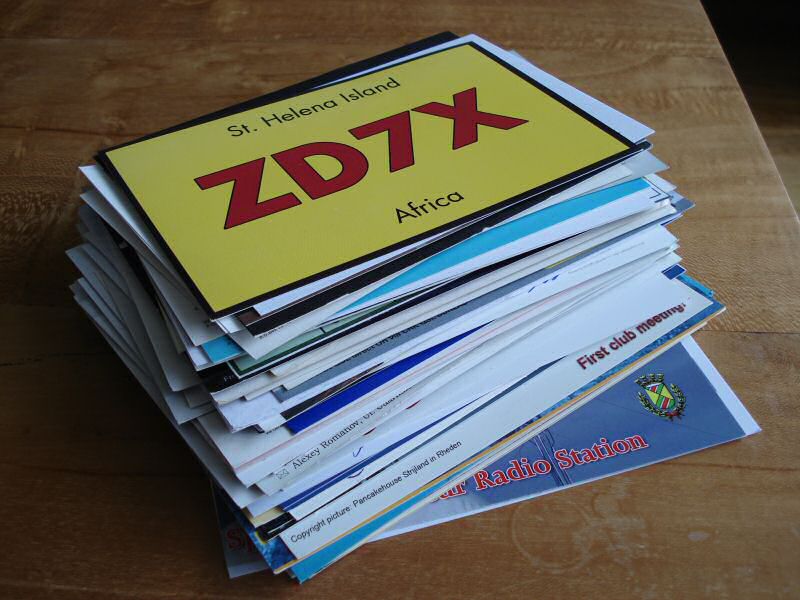
Still like the QSL side of the hobby. Last time I attended the local radioclub there was pile of QSL cards waiting. Along them a long awaited card from ZD7X Tom who was operating from St.Helena in 2007. I got him confirmed now on 20, 17, 12 an 10m. When setting up WSPR this morning I heard a lot of Japanese stations booming in on 12m and 10m. But since I got a father-daughter day today I had no opportunity to make a QSO. Left WSPR on at 10m.
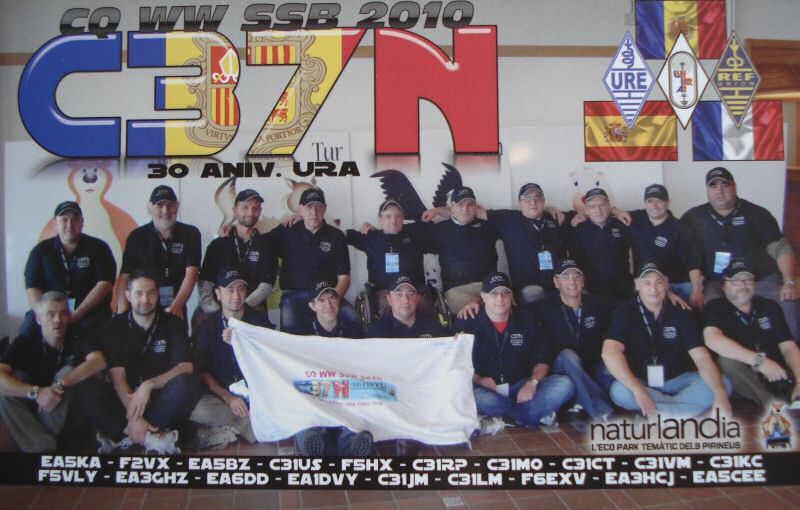
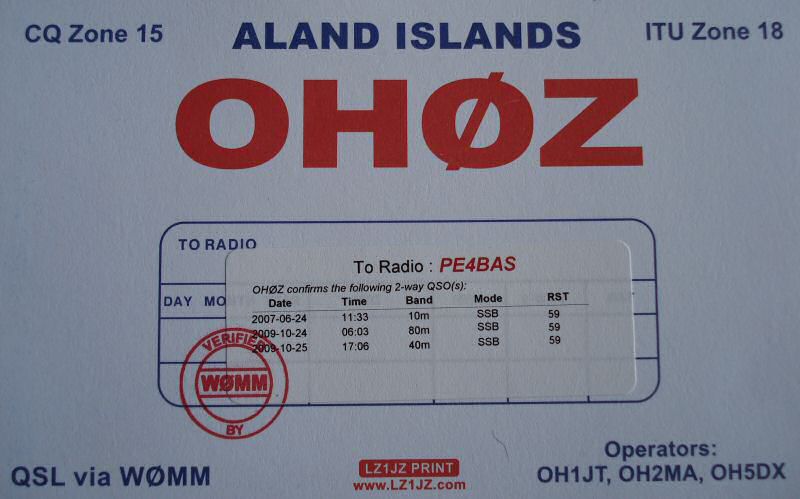

Bas, PE4BAS, is a regular contributor to AmateurRadio.com and writes from Groningen, Netherlands. Contact him at [email protected].
LHS Show Notes #066
Introduction:
- Richard is still in the process of moving, but did get his WinLink rms gateway running as described in a previous episode.
Announcements:
- Jay Forrest has lauched The Linux News Podcast. The podcast will focus on topics such as software freedom, Linux development, Open Source software, Android and mobile devises, security issues, and Linux distribution releases. Our hosts offer their opinions.
- Ohio LinuxFest will be held in Columbus, Ohio on September 9-11, 2011. (Note: Russ will not be there, but maybe YOU can represent LHS. Visit the web site and look at the Ambassadors page to learn how.)
- Texoma Hamarama will be October 21-22, 2011 in Ardmore, OK. Richard might be there, so if you’re in the area, look for him!
Topics:
- Our hosts discuss the ARRL statement regarding HR 607, “Broadband for First Responders Act of 2011″. This bill provides for the re-allocation of the 420-440 MHz band, calling it part of the “Public Safety” spectrum. This is not the case, and we should contact our representatives and voice our opposition to this bill. The ARRL offers sample letters you can send to your representatives.
- Richard and Russ talk about various amateur radio programsfor Linux offered by Ted, WA0EIR.Russ built them all from the available source code on his Linux Mint Debian Edition 10 computer. In order to do so, he installed a number of development libraries:
- libmotif-dev
- libxmu-dev
- libxpm-dev
- libxbae-dev
These are header files necessary for the compiler to properly build the programs.
- Each program requires the following commands to compile and install. Change to the directory containing the program and type:
  ./configure
  ./make
  ./make-install
(You may wish to be root to perform the make-install command.)
- TWLOG – A basic QSO logging program. Useful for day-to-day logging, but not recommended for contest logs. It will export to ADIF. It requires the Xbae Matrix Widget.
- TWPSK – A simple bpsk/qpsk program. Co-written with Hansi, DL9RDZ
- TWCW – A Morse Code trainer that also allows keyboard CW operation.
- TWCLOCK – A world clock application that will also automatically send a CW identifier every 10 minutes.
- Check the /etc/X11/app-defaults directory for the “X resource” files to change the configuration options for these programs. For example, in that directory is a file called twclock that contains the callsign transmitted by TWClock.
- PSK31LX – A curses-based PSK31 program, so it runs in a terminal window or directly in a terminal session. For help, a man page is included. (Type “man psk31lx”.) It makes use of the arrow, control, and function keys. You can choose the audio and serial devices with command line parameters at start. Configuration parameters are stored in your home directory in the file .psk31lx.ini.
Feedback:
- Don, WS4E, asks for Internet resources for handicapped amateur radio operators. He’s familiar with the Handiham organization, but wonders if there are others.There are many newsgroups and mailing lists dedicated to hams with disabilities. A Google search should return several. The Canadian National Amateur Radio Society site Amateur Radio for the Disabled, has several useful links. Richard mentions Lighthouse for the Blind. The ARRL has a page listing several articles. There’s also a Facebook group, Blind Amateur Radio Operators.
- Petr, OK2CQR, the author of CQRLOG, responds to Torsten’s (K5TOR) problems installing CQRLOG on a 64-bit machine: CQRLOG already has native 64-bit version. There is no need to install the 32-bit version. You can use the ppa at launchpad.net with packages for Lucid, Maverick, Natty and Oneirc. Version 1.2.1 will be part of the Oneiric release as well. More information is here.
- Donation from Paul G. Thank you! If you’d like to donate, please visit the website and click on the Donate link.
Contact Info:
- Contact Richard at [email protected], Russ at [email protected], or both at the same time at [email protected].
- Listen to the live stream every other Tuesday at 8:00pm Central time. Check the LHS web site for dates.
- Leave us a voice mail at 1-909-LHS-SHOW (1-909-547-7469), or record an introduction to the podcast.
- Sign up for the LHS mailing list.
- Sign up for the MAGNetcon mailing list.
- LHS merchandise is available at the Merch link on Web site. Check out the Badgerwear or buy one of the other LHS-branded items at PrintFection.com/lhs or Cafe Press. Thanks!
- Thanks to Dave from Gamma Leonis for the theme music.
Music:
- “Rise” by Rob Warren from the album “Rise,” courtesy of Jamendo.
- “Mechanical Butterfly” by Mechanical Butterfly from the album “Mechanical Butterfly,” courtesy of Jamendo.
Russ Woodman, K5TUX, co-hosts the Linux in the Ham Shack podcast which is available for download in both MP3 and OGG audio format. Contact him at [email protected].
LHS Show Notes #065
Introduction:
- Welcome to another episode of Linux in the Ham Shack.
- Richard has moved to another QTH, and that’s provided some challenges.
Announcements:
- The LHS Ambassador Program needs your help. Russ explains what the LHS Ambassador program is all about and how you can get involved. If you’re interested, please contact us at [email protected]
- Richard gives an update on the archiving of Resonant Frequency, The Amateur Radio Podcast.
- Richard complains about the Internet service at his new location, and Russ offers a tip about using wget -c for downloading large files.
Topics:
- Richard updates us on his AX25 project and moving to a new location.
- The Linux kernel goes 3.0: So what? Russ talks about the new Linux kernel, v. 3.0, recently released, and what you can expect.
- Your first license: What should you expect? Richard describes the process for getting your first amateur radio license. At one time, proficiency with Morse code was a requirement, but no longer. Richard used the Gordon West training materials to prepare. Having a local radio club or another ham can be a great help. There are two volunteer examiner groups: ARRL and W5YI. Both offer training materials for their examinations. When you go to a testing session, be sure to bring the required materials. After you pass the test, check the FCC website for your callsign. It often shows up just a few days after taking the test. Most importantly, after you get your callsign, get on the air!
- Revisiting OpenHatch (see episode 059). Russ discusses the OpenHatch project and how you can contribute to the open source community. There is a simple sign-up process to join OpenHatch. You can use OpenID or several other authentication services. OpenID can be used with several web applications. Once you join, you can specify the various skills you have, and the type of assistance you’d like to provide, such as development, bug fixing, documentation, etc. You can also start a new project or link your own project to OpenHatch. You’ll find development, testing and documentation opportunities.
- Russ gives an update on getting SvxLink to work. He had the build of version 11.05 blow up with an error about missing include files. He Googled the error message and found the answer. So he now has a working EchoLink server using SvxLink on 146.225 MHz. So, while it may be a bit challenging to build, it can work and provides a native Linux EchoLink program. (Thanks to Rick, K9AO, who sent an email that gave Russ the push to finish his SvxLink project.)
Feedback:
- We received a donation from Oscar, N6PAZ. Thank you! If you’d like to donate to the podcast, please click the Donate button on the website. Oscar also visited the LHS booth at Dayton, and left a comment on website expressing his appreciation for the LHS website.
- F8ARR conducted a poll on his website asking what operating system his visitors used in their ham shacks. He found 23% were using Linux! He also linked back to the LHS site. Thanks!
- David, N1EA, tells us that the new website for Vinux is vinuxproject.org. Vinux is a remastered version of Ubuntu, optimized for visually impaired users. It includes several ham radio applications, including TLF (The Left Foot), a console-mode logging and contest program.
- AmiZed (KB2MOB) wrote a very nice review of LHS. Thank you for the kind words!
Contact Info:
- Contact Richard at [email protected], Russ at [email protected], or both at the same time at [email protected].
- Listen to the live stream every other Tuesday at 8:00pm Central time. Check the LHS web site for dates.
- Leave us a voice mail at 1-909-LHS-SHOW (1-909-547-7469), or record an introduction to the podcast.
- Sign up for the LHS mailing list.
- Sign up for the MAGNetcon mailing list.
- LHS merchandise is available at the Merch link on Web site. Check out the Badgerwear or buy one of the other LHS-branded items at PrintFection.com/lhs or Cafe Press. Thanks!
- Thanks to Dave from Gamma Leonis for the theme music.
Music
- “Complicated Man” by Lejo Harmeson & Essence from the album “Complicated Man,” courtesy of Jamendo.
- “Don’t Be Harshin’ My Mellow” by Lejo Harmeson & Essence from the album “Complicated Man,” courtesy of Jamendo.
Russ Woodman, K5TUX, co-hosts the Linux in the Ham Shack podcast which is available for download in both MP3 and OGG audio format. Contact him at [email protected].
 Ham Radio Deluxe |
 W5SWL Electronics |
 Ham Radio Prep |
 KB3IFH QSL Cards  Hip Ham Shirts  HamRadioAuctions HamRadioAuctions Reliance Antennas Reliance Antennas Enigma Shop Enigma Shop |  morseDX  Ni4L Antennas  R&L Electronics R&L Electronics antennas.us antennas.us QRV QRV |
- Matt W1MST, Managing Editor
