 |
 Another Great HF Slacker Weekend
 31 October 2011 | by
  I had previously admitted to being an HF slacker…that is, I only really enjoy the high frequency bands when the DX is loud and plentiful on 15 and 10 Meters. For almost a half decade, I’ve listened to the True HF Enthusiasts say things like “move to the lower bands when the solar activity is weak.” Fortunately, things are starting to change.
This weekend was the CQ Worldwide DX Contest (SSB) and the propagation was outstanding on the higher bands. I heard some people say that 10 Meters was never this good before but I suspect their memories may be faulty. But make no mistake, conditions were really awesome. Here’s a report from radio-sport.net.
I was up at our cabin in the mountains, running the FT-950′s 100 watts into a trap dipole at about 30 feet. Clearly, this is not your Big Gun Station but I was able to make 177 contacts, operating most of Saturday and a few hours on Sunday. Mostly, I was just chasing DX and trying to pick up a few new countries. I have to admit that my memory had a little rust problem concerning international call sign prefixes (where is C5A anyway?) but the N1MM software helped me out.
In the end, I did contact a dozen or so new countries, ranging from Mongolia to Croatia. I sure hope these guys upload their logs to Logbook of the World. I really don’t want to be chasing down those QSL cards manually. As I said, I am an HF Slacker.
73, Bob K0NR
Bob Witte, KØNR, is a regular contributor to AmateurRadio.com and writes from Colorado, USA. Contact him at [email protected].
Sirio 4000PL mobile antenna ready for 10m FM
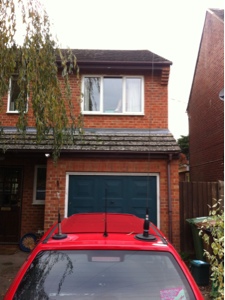

Tim Kirby, G4VXE, is a regular contributor to AmateurRadio.com and writes from Oxfordshire, England. Contact him at [email protected].
If you don’t use it….then lose it.
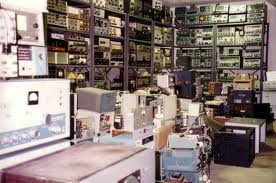 |
| Random shack with random goodies. |

Mike Weir, VE9KK, is a regular contributor to AmateurRadio.com and writes from New Brunswick, Canada. Contact him at [email protected].
ICQ Podcast S04 E23 – RSGB President EGM Answers (29 October 2011)
We are pleased to announce Series Four Episode Twenty-Three issue of the ICQ Podcast, RSGB President EGM Answers has been released. Dave Wilson, M0OBW answers your questions about the RSGB EGM to be held on 19 November 2011.
Questions asked covered The New Board, Transparency, Communications, Bletchley Park & RSGB4FUN, Licensing, RADCOM, Peter Kirby, Membership and the EGM Day.
Colin Butler, M6BOY, is the host of the ICQ Podcast, a weekly radio show about Amateur Radio. Contact him at [email protected].
ICQ Podcast S04 E23 – RSGB President EGM Answers (29 October 2011)
We are pleased to announce Series Four Episode Twenty-Three issue of the ICQ Podcast, RSGB President EGM Answers has been released. Dave Wilson, M0OBW answers your questions about the RSGB EGM to be held on 19 November 2011.
Questions asked covered The New Board, Transparency, Communications, Bletchley Park & RSGB4FUN, Licensing, RADCOM, Peter Kirby, Membership and the EGM Day.
Colin Butler, M6BOY, is the host of the ICQ Podcast, a weekly radio show about Amateur Radio. Contact him at [email protected].
Back on 10 Meter FM
 I have been hearing everyone rave about the improving conditions on the HF bands, especially some great propagation on 10 Meters. Then I came across this posting by G4VXE: The Return of 10M FM. Ah, yes, I do recall having a blast running FM on 29 MHz years ago!
This triggered the thought that the FT-8900 transceiver in my car has 10 Meters in it. Lately, I have been using this quad-band FM rig (10M, 6M, 2M & 70 cm) like a dualband 2M/70cm rig. I almost forgot that it had the other two bands. I plopped a 10 Meter Larsen antenna on the SUV roof and reconfigured the coaxial cables and diplexers to get the right RF to the antenna. Suddenly, I was back on 29.6 MHz FM calling CQ. K8LF (Jerome, mobile in Virginia) came back to my call and we had a nice little QSO.
10M FM is a little bit counter intuitive (some people would say “makes no friggin’ sense at all!”). Here we have a high frequency band which can introduce fading and phase distortion (that destroys FM signals) being combined with our most inefficient modulation format (FM). Why on earth would anyone mess around with this combination?
I think FM is fun on 10 Meters for the same reason it is fun on VHF and UHF. You can be tooling down the highway with no radio noise at all and if the band is open, a signal pops through the squelch. Forget all of the static and Donald Duckness of SSB communication. When the signal is strong, FM is loud and clear.
Its good to have 10 Meters back again!
73, Bob K0NR
Bob Witte, KØNR, is a regular contributor to AmateurRadio.com and writes from Colorado, USA. Contact him at [email protected].
Two Transistor Tranceiver for Ten
With ten metres opening up it seemed the right time to try building Roger G3XBM’s latest project: the XBM10-2. Roger describes it as probably just about the simplest CW transceiver possible for use on 10m, using just two transistors to produce about 60mW out.

This was my first attempt at construction since my radiotherapy and chemotherapy and I found it to be quite a struggle. First of all I found it difficult to concentrate while trying to work out the perf board layout. After that I got a bit frustrated with constantly juggling three pairs of spectacles due to my eyes apparent inability to focus at different distances. I also found soldering difficult due to my hands shaking whenever I brought the iron bit close to a component. I created quite a few solder bridges which I then had to clean up.
Construction took much longer than I would have taken a few months ago. But in the end it did work. Though not on ten metres yet. I’m waiting for a 28.060MHz crystal from the G-QRP club shop before I can try it out on the air.
One issue I have found (which Roger also comments on) is that the rig has a major chirp. It is definitely not T9 and I don’t know whether it is possible to improve on that. But at least it has character. If you hear a weak, chirpy signal near to the 10m QRP activity frequency give it a call. It might be me!

Julian Moss, G4ILO, is a regular contributor to AmateurRadio.com and writes from Cumbria, England. Contact him at [email protected].
 Ham Radio Deluxe |
 W5SWL Electronics |
 Ham Radio Prep |
 KB3IFH QSL Cards  Hip Ham Shirts  HamRadioAuctions HamRadioAuctions Reliance Antennas Reliance Antennas Enigma Shop Enigma Shop |  morseDX  Ni4L Antennas  R&L Electronics R&L Electronics antennas.us antennas.us QRV QRV |
- Matt W1MST, Managing Editor
