 |
 DigiLite Update and Soapbox
 6 November 2011 | by
 Again, this is going to be a shorter version of my blogger ‘blog at http://w0fms.blogspot.com where I intend on having more random thoughts and technical detail than I post here! 🙂
I’ve purchased parts (in the US– all from Mouser for lowest overall cost except for the Analog Devices AD8346ARUZ Modulator IC– which they don’t carry) for the British Amateur Radio Club’s DigiLite “poor man’s” DVB-S SCPC modulator unit.

Almost complete BATC DigiLite DVB-S modulator board. All that is still needed is a MMIC amplifier be added after the QPSK modulator is properly adjusted with the external PLL Oscillator I am still awaiting from Israel.
The unit, as you may remember from my last post, uses an older analog Hauppage PVR-150, 250, 350, 500 and/or probably PVR-USB2 MPEG2 hardware encoder to set fixed constant bit rate (CBR) video and MP2 type CBR audio in a program stream format. This is translated to Transport Stream (TS) format for over the air transmission, Channel, EPG, and other needed DVB-S specific information is also multiplexed by the BATC software which is then sent to a DSPic33 that optionally adds the FEC (particularly at rate 1/2) and randomizes (to take out DC components because RF is inherently AC coupled!) the data– and then forms I/Q data with some pre-distortion with some tricks.. it’s filtered in a atypical way through an ANALOG LC Nyquist filter.. otherwise unfiltered PSK has infinite bandwidth! In commercial products a DSP typically would do this with a digital filter and a DAC. Finally the AD8346 does the I/Q phase shifting and that is the directly at frequency modulated DVB-S.
The LO is generated by a good e-bay find– a PLL L-band Oscillator that you can get from Ultram Tech in Israel custom programmed to one frequency. (I intend on reprogramming the unit with an Arduino [AVR ATMEGA part] board in the future– the chip’s dividers are programmed with SPI.) I have not received the board yet and didn’t want to disassemble and hack the 1152 MHz oscillator I previously bought about two years ago from Israel.
What the software and serializer firmware doesn’t do, thankfully, is care about the type of video that is in the MPEG-2 stream. I verified that tonight. The designers in the UK thought that NTSC would be fine.. and it seems to be.
Here is a video of the DigiLite “doing it’s thing” with rate 2222K video and 128K audio at a bandwidth of 3 MHz- 3MSym/S at 1/2 FEC QPSK. The video was set at NTSC D1 720×480 4:3 and I toyed with the settings until we were absolutely maxed out and were at close to zero null packets. Over the air, about 100K slower video might be a better choice. At 2112K, the null packets averaged 4.5%.. so somewhere in between these settings is about right for NTSC at 3MSym/s QPSK. This proves the digital part of the system out! We are close!
YouTube video of the BATC DigiLite running NTSC!
This is cool.. 1/2 the bandwidth and better quality than most Amateur TV. You’d think it was a no brainer for 70cm to replace 6-8 MHz AM TV? Well it is.. but in my not so humble opinion it’s not legal to run.
—SOAPBOX—
Part 97 defines that a digital phone or image (important definition) signal is legal if it uses the same or less bandwidth than the equivalent analog signal.
DVB-S and other digital standards definitely do. Unfortunately, from commercial license grants researched, I note that ATSC is C7W emission type and DVB-S/S2/C/T is G7W. Image is defined to EXCLUDE “7W” emissions. C7W and G7W are specifically defined as “multiplexed data” in another part of the rules– actually in reference to RTTY in the typical early 1980’s wording of those rules. So because DVB-S is “data” by part 97 definition, the 56K baud/100KHz BW rule applies at 70cm. In my not-so-humble-opinion it is not legal to run DVB-S nor ATSC (?!?) at 70cm because of these antiquated and wrong rules. But it is legal at 33cm and above as wideband data.
There are several who disagree with me on this. But for their definition to be valid technically by the Part 97 rules as they stand ATSC and or DVB-S would have to be G2F (DVB-S) or C2F (ATSC). By the Emissions Designator system that would also imply no audio channel. F2F is what SSTV is and I believe the “image” definition for FM/PM/PSK was specifically written with HF SSTV in mind! NO COMMERCIAL license grant (I found) has it defined that way! I can’t run 70cm DVB-S because I interpret the rules as above. Anyone who disagrees with me and wants to run it is fine with me. Wish you the best and I’m all for you! Likely the FCC nor the ARRL would do a thing to you as they shouldn’t!
What this really means is that the digital rules in US ham radio need fixing in a big way! We need to get rid of all the protectionist crap and realize that for many modes, the handwriting is on the wall for analog. The way the current rules are written in Part 97 makes most new digital modes second-class citizens on the bands. Bogus and Sad IMHO in almost-2012.
— /SOAPBOX —
Fred Spinner, WØFMS, is a regular contributor to AmateurRadio.com and writes from Iowa, USA. Contact him at [email protected].
The start of the contest season
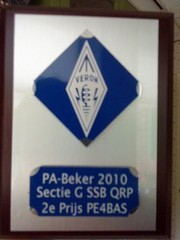 |
| Plaque I received yesterday |
The CQWW SSB is as always the beginning of the small contest season for me. I did a lot of contests in the past but since family life keeps me busy I choose to participate only the important ones. Some of those are only important for me as a Dutchman like the PA-beker contest, Friese elfstedentocht contest and the PACC. I placed myself 2nd in the PA-beker and 4th in the Friese 11 steden last year and this month I’ll try to improve myself, I guess it’s going to get difficult. Next thing to do is to set up the horizontal loop again, after that I will see if there is time and room for any improvements on the station. Anyway, one thing is for shure I really want to have fun that’s the most important thing. First contest coming now is the PA-beker contest which is purely a contest inside the Netherlands, I will participate again in the QRP section with my FT-817. Only this time I will use N1MM as contestlogger instead of the PA0FLE contestlogger I used in the past. Hopefully it will help to beat my score of last year.
Last years declare:
Place / Call / Region / QSO / Multiplier / Score
1 | PA1AT | 19 | 118 | 61 | 7198 |
2 | PE4BAS | 19 | 73 | 48 | 3504 |
3 | PA3DAT | 49 | 69 | 47 | 3243 |
That means if I want to be at first place I need approx 120 QSO and 60 multipliers. Looks easy, but I can tell you it’s difficult to make so much QSOs in 2,5 hours especially when QRP.
Bas, PE4BAS, is a regular contributor to AmateurRadio.com and writes from Groningen, Netherlands. Contact him at [email protected].
Reflecting Upon a 33-year-old Written Logbook, Now Completed
 A couple days ago I made my last entry in the logbook I’ve been using for 33 years. The log has grown up with me and is a bit battered, much like its owner. The first entry I made was on 9/10/78, back when I was a 10-year-old Novice with the call KAØCEM.
It’s a trip down memory lane to page through this logbook, not only to read the entries and the notes I made about changes in my equipment and QTH, but even to see how my handwriting changed over the years. But it’s full now, so it is time to start another logbook.

The first page of my logbook when I was KAØCEM.
I happen to have a nice, new logbook just waiting for the next hand-written entry. Somewhere along the line I acquired it and it’s been on my shelf waiting for the day my first logbook filled up. But now I’m not so sure I want to use it. Things are different now. Back in the day we relied exclusively on QSL cards to confirm our contacts, but now some folks rely on the Logbook of the World — as a courtesy to them I started entering my contacts there this year. But double-logging is as prone to error as it is time-consuming. And as much as I love the nostalgia of the hand-written log, I have to admit that logbook in Ham Radio Deluxe is mighty slick.
So I’ve ordered the chips to upgrade my Kenwood TS-440S, a CAT cable to hook it up to my computer, and from now on it’s a computerized logbook for me.
But one thing is nagging me. There are unanticipated consequences of “progress” like this. For instance, this computerized logbook has a window with constantly-updated DX spots. Nice, huh? But with this instantaneous feedback-loop that we’ve created, it has become harder and harder to have meaningful QSOs with DX stations — as soon as one is spotted there’s a massive pile-up that turns subsequent QSOs into rapid-fire exchanges that consist of nothing more than NØIP 599 TU.
I’m glad my ol’ logbook ended with a better QSO than that. I called CQ DX on 20m and LU1MA responded from Argentina. We didn’t exactly have a ragchew, but at least it lasted for six whole minutes. The second I signed off with him, though, a horde descended upon him like a swarm of thirsty mosquitoes.
I don’t remember that ever happening in the old days, even though there were more CW operators on the air back then. Back at the peak of the third-to-last sunspot cycle I had DX QSOs that routinely lasted 10-15 minutes, sometimes longer. That wasn’t because my CW was slow. Back then I was around 20 WPM; now I’m down to 15 WPM (it’s coming back, though!). It was simply different back then, and I would say it was better. I loved how the DX stations used to call me DR TODD; I’d hear it from more than one country, but never from the USA. We talked with each other back then, no matter how far away the DX station was.
So I’m not sure I’ll keep that DX spot window open in my new computerized logbook. I’m not even sure I’ll enter pile-ups all that much. I’ve learned how to do it, but it’s tedious and not nearly as rewarding as the contacts I used to have with these DX stations. Maybe I’ll call CQ DX more often and hope the fellow on the other end is willing to spend a few more minutes in QSO than he’s used to.
But when I do, he’ll go into my computer. Along with the old days, my written logbook is a thing of the past.


Todd Mitchell, NØIP, is a regular contributor to AmateurRadio.com and writes from Minnesota, USA. He can be contacted at [email protected].
Point The Beams South! Antarctica is On The Air!
According t a post on Southgate’s website, Tomas, CE9VPM, will be active from the Chilean Gab Gonzales Videla base from November 2011 until March 2012 and wants to work stations mainly on 20 meters. No word on specific ranges of frequencies on 20 meters has been released. But if you look, on the bands, I don’t think you could miss the pile up.

Map Courtesy of Wikipedia/Landsat Image Mosaic of Antarctica team
Tomas also has a nice slideshow up on the French Polar Team’s website, showing a map with the location as well as some pictures of the base as well. From the website:
Gabriel Gonzales Videla Station, on the Antarctic mainland’s Paradise Bay (Danco Coast), is named after Chilean President Gabriel González Videla, who in the 1940s became the first chief of state of any nation to visit Antarctica. The station was active from 1951-1958, and was reopened briefly in the early 1980s. It is now an “inactive” station, with fuel and supplies in storage in the buildings for emergency use, or in case the station were to be reactivated in the future. Occasional summer visits are made by Chilean parties and tourists. On the north edge of the station there is a sign identifying Waterboat Point as an official historic site under the Antarctic Treaty. This was the place where the smallest ever wintering-over party (two men) spent a year and a day in 1921-1922.
The article at Southgate also says that Tomas was regularly active as CE9/CE3VPM from the Eduardo Frei Montalva base (South Shetlands) in 2008/2009.
Looking on the site, I saw there was a mailing list for Ham Radio in Antarctica, hosted on Yahoo! I haven’t checked this out, but I’m betting if you wanted to work the continent, that would be a good resource to find out more of who is working on what station and the best time to listen for them.
Has anyone reading worked any of the stations down there? I would love to hear about it.
73.
Rich also writes a Tech blog and posts stories every Tuesday and Thursday on Q103, Albany’s #1 Rock Station website, as well as Amateur Radio stories every Monday thru Friday on AmiZed Studios and hosts a podcast called The Kim & Rich Show with his fiance’ Kim Dunne
Rich Gattie, KB2MOB, is a regular contributor to AmateurRadio.com and writes from New York, USA. Contact him at [email protected].
Ham Nation 24

Hosts: Bob Heil (K9EID), Gordon West (WB6NOA), and George Thomas (W5JDX)
Amateur TV, W0EEE back on the air, and the kick off of Ham Nation Youth Month. For more of Don’s videos and photos, please go to http://ke6bxt.com/TWiT.tv/episode24/index.php.
Guests: Don Hill (KE6BXT), Robert Sudock (WB6FDF), Barry Preston (NC0YDZ), and Sterling Coffey (N0SSC)
Download or subscribe to this show at http://twit.tv/hn.
We invite you to read, add to, and amend our show notes at wiki.twit.tv.
Thanks to Joe Walsh who wrote and plays the Ham Nation theme.
Thanks to Cachefly for the bandwidth for this show.
http://dts.podtrac.com/redirect.mp4/twit.cachefly.net/video/hn/hn0024/hn0024_h264b_864x480_500.mp4
http://dts.podtrac.com/redirect.mp4/twit.cachefly.net/video/hn/hn0024/hn0024_h264b_640x368_256.mp4
http://www.podtrac.com/pts/redirect.mp3/twit.cachefly.net/hn0024.mp3
Dr. Bob Heil, K9EID, is the founder of Heil Sound and host of TWiT.tv's Ham Nation which streams live each Tuesday at 6:00pm PT (9:00pm ET) at http://live.twit.tv. Contact him at [email protected].
Winter hibernation plans
 |
| Some winter fun projects |
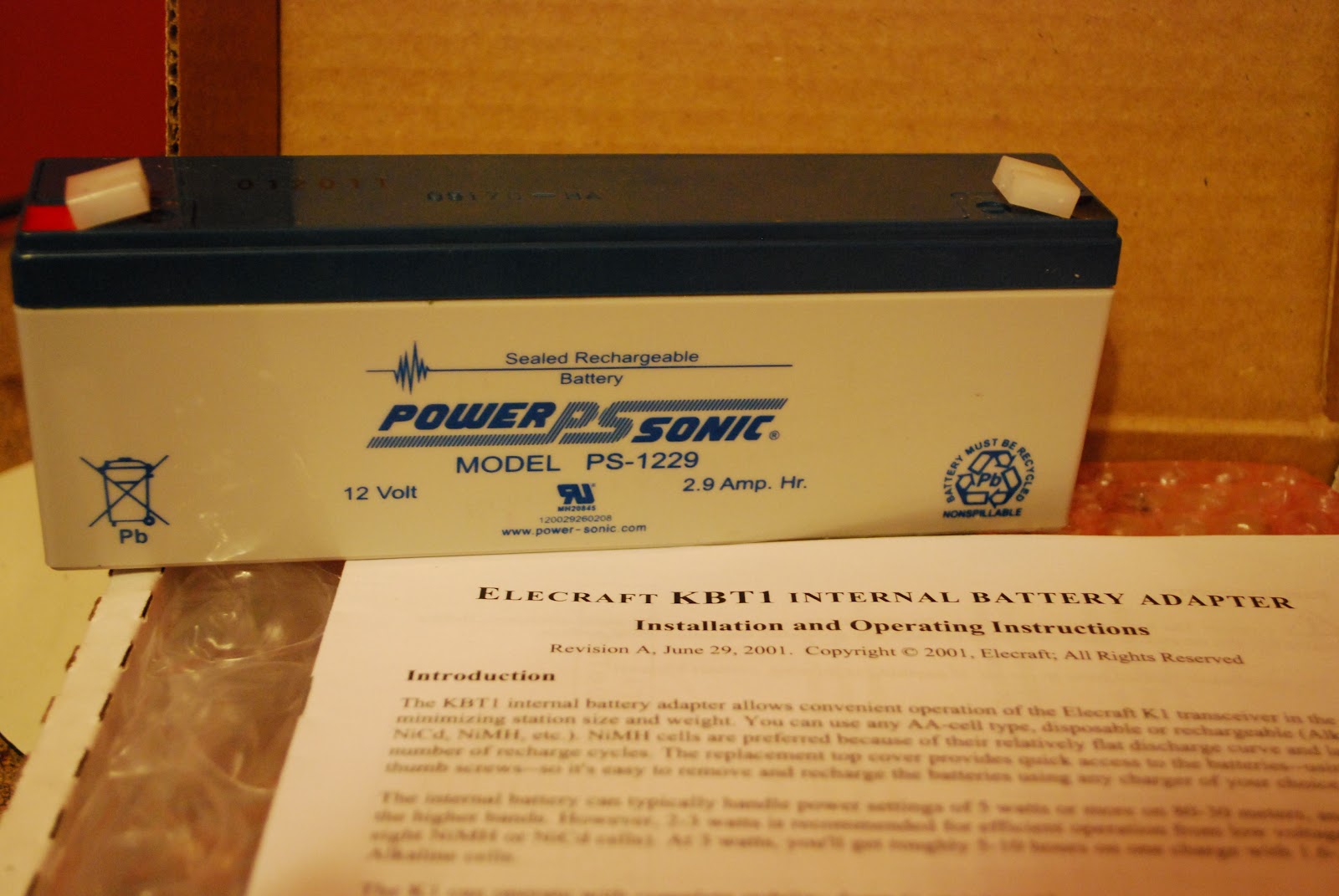 |
| What is wrong with this picture? |

Mike Weir, VE9KK, is a regular contributor to AmateurRadio.com and writes from New Brunswick, Canada. Contact him at [email protected].
W5CYF QRP CW
Tinker John has been posting videos of Amateur Radio for a while now, and I have re-posted them on this blog a time or two because he does a really awesome job showing off Amateur Radio and the different modes he uses. He’s video of him doing QRP CW with just 5 watts. Yeah, I know, a lot of Hams do QRP, CW, but still, this is a great example for anyone looking to see how to do it. John’s videos are almost like a video Elmer. And as I have mentioned in older posts, inspired me to try a couple new things. But, enjoy his 5W CW fun.
Rich Gattie, KB2MOB, is a regular contributor to AmateurRadio.com and writes from New York, USA. Contact him at [email protected].
 Ham Radio Deluxe |
 W5SWL Electronics |
 Ham Radio Prep |
 KB3IFH QSL Cards  Hip Ham Shirts  HamRadioAuctions HamRadioAuctions Reliance Antennas Reliance Antennas Enigma Shop Enigma Shop |  morseDX  Ni4L Antennas  R&L Electronics R&L Electronics antennas.us antennas.us QRV QRV |
- Matt W1MST, Managing Editor
