 |
 CW Abbreviations
 21 November 2011 | by
 If you’re just getting started with CW, you need to know that learning Morse Code is only part of the puzzle. You’ll also need to learn basic CW Operating Procedures, and you’ll need to know some commonly used abbreviations, too. It wouldn’t be a bad idea to print out something like this and keep it near your key until sending and receiving these are second-nature:
| Abbreviation | Meaning | Example |
| ABT | About | ANT 3 EL BEAM UP ABT 40 FT |
| AGN | Again | PSE AGN UR NAME? |
| ANT | Antenna | ANT DIPOLE UP ABT 50 FT |
| BURO | QSL Bureau | PSE QSL VIA BURO |
| CPY | Copy | HW CPY? |
| CU | See you | CU AT SKYWARN TRAINING |
| CU AGN | See you again | 73 HPE CU AGN |
| CUL | See you later | 73 HPE CUL |
| CQ | Calling anyone | CQ CQ CQ DE NØIP |
| DE | This is station | NØBSY DE NØIP KN |
| DR | Dear | FB DR TODD (Often heard from DX stations.) |
| DX | Long-distance | CQ CQ CQ DX DE NØIP |
| EL | Element | ANT 3 EL BEAM UP ABT 40 FT |
| ES | And | 73 JOHN GN ES GB U ES URS |
| FB | Fine business | FB OM TNX FER RPT |
| FER | For | TNX FER NICE CHAT HPE CU AGN |
| FT | Feet | ANT DIPOLE UP 60 FT |
| GA | Good afternoon | GA OM UR RST 579 |
| GB | God bless | 73 ES GB |
| GD | Good day | GD OM TNX FER CALL |
| GE | Good evening | GE OM ES GB |
| GL | Good luck | TNX FER QSO 73 GL |
| GM | Good morning | GM DIETER TNX FER RPT FROM BERLIN |
| GN | Good night | TIME TO HIT THE SACK GN ES TNX FER QSO |
| GUD | Good | UR ANT DOING GUD JOB |
| HI | Laugh | XYL NEEDS A NEW RIG HI HI |
| HPE | I hope/I hope to | HPE CU THIS FRI |
| HR | Here | RIG HR HEATHKIT DX-100 ES HAMMARLUND HQ-170A |
| HW | How | HW CPY? |
| NR | Near | QTH NR MINNEAPOLIS, MN |
| OB | Old Boy | TNX QSO OB |
| OM | Old Man | TNX FER CALL OM |
| OP | Operator’s Name | OP TODD |
| PSE | Please | PSE QSY UP 1 |
| PWR | Power | RIG HR TS-440S PWR ABT 100 W |
| R | Roger (Copy 100%) | NØBSY DE NØIP R R FB TOM |
| RIG | Radio equipment | RIG HR HW-8 |
| RPT | Report (also RPRT) or Repeat | TNX FER RPT/RPRT (Repeat: PSE RPT QTH) |
| SIG | Signal | UR SIG VY WEAK |
| SRI | Sorry | SRI OM MUST GO |
| TKS | Thanks | TKS FER QSO (Same as TNX) |
| TNX | Thanks | TNX FER QSO (Same as TKS) |
| TU | Thank you | NØIP TU 5NN (Typical rapid-fire DXpedition exchange.) |
| U | You | NICE TO MEET U |
| UR | Your/You’re | UR RST 599 |
| URS | Yours | GB U ES URS |
| VERT | Vertical | ANT VERT UP 20 FT |
| VY | Very | UR SIG VY WEAK |
| W | Watt(s) | RIG HW-8 PWR ABT 2 W |
| WID | With | BEEN WID XYL 24 YRS |
| WX | Weather | WX HR COLD ABT 5 F |
| YL | Young lady | FB YL HPE CUL |
| YR | Year | CU NEXT YR AT DAYTON |
| YRS | Years | BEEN HAM 33 YRS |
| XYL | Wife (Ex-young-lady) | XYL CALLING MUST GO |
| 72 | Best regards (QRP) | UR K2 DOING GUD 72 OM ES GB |
| 73 | Best regards | TU 73 CUL |


Todd Mitchell, NØIP, is a regular contributor to AmateurRadio.com and writes from Minnesota, USA. He can be contacted at [email protected].
Why 10 meters is not my favourite band.
Everybody is on 10 meters nowadays! I am no exception, just check out my piece from yesterday. But 10 meters is not my favourite band. I’ll show you why….
http://www.youtube.com/watch?v=70fed-lAcxM
Imagine scanning that in SSB! “Get the aspirin out, honey, I’m going on 10 meters now.” Can it get any worse? Yes, two nights ago someone was singing on 28.325 MHz. And not just for a few seconds, no minute after minute. Amateur radio keeps amazing me.
On a serious note: I can’t make much of the language that is spoken by most of the intruders. It is certainly not Mandarin, but there are definitely Chinese dialects amongst them. Most of what I hear, I think, are from southern Asia, probably the Philippines, Indonesia, Papua New Guinea, etc.
In the mean time I spend more time on 12 and 15 meters than on 10. Especially 12 meters is a fun little band with a lot of the characteristics of 10 meters. Try it out yourself, you’ll like it. See you there.
Hans "Fong" van den Boogert, BX2ABT, is a regular contributor to AmateurRadio.com and writes from Taiwan. Contact him at [email protected].
Flummoxed!
In the APRS world a new piece of software has been creating some excitement. It is a soundcard modem for packet radio by UZ7HO. It runs under Windows and emulates the AGW Packet Engine so that it can be used by any program that is designed to work with it. The reason for the excitement is that this packet modem can decode several packet signals on slightly different frequencies in parallel, resulting in many more decodes on HF where it is quite common for stations to be 50Hz or more off-frequency.
Unfortunately I haven’t been able to try the new packet engine as the PTT won’t key my Elecraft K2 and I don’t know why. My K2 CAT cable has a transistor switch on the DTR line which goes to a 3.5mm jack plug that plugs in the K2 key socket. This was originally used for computer Morse keying using software like MixW, but it can also be used for PTT with digital mode software as the key and PTT lines are common. Using fldigi and even using a serial port test program I am able to activate the DTR line on COM2 and the K2 will respond by switching to transmit. But if I use this software modem no PTT ever occurs so although the audio is generated the packet signal is never transmitted. If I was using a SignalLink or other device such as my homebrew USBlink with fast audio derived VOX then this wouldn’t matter but as I have a PTT connection on this serial port I’d really prefer to make use of it.
If I change the serial port to COM3 then the program will key my Elecraft K3, which uses a different serial cable but still uses DTR for PTT. I tried the original AGW Packet Engine, both free and paid-for Pro versions but that won’t key the K2 either. So the problem must be something to do with my K2 CAT cable. But my poor old brain has been having rather a tough time recently with all the treatment making me feel like a bit of a zombie and I’m finding it rather difficult to think things through logically and find the solution which is probably staring me in the face!

Julian Moss, G4ILO, is a regular contributor to AmateurRadio.com and writes from Cumbria, England. Contact him at [email protected].
ICQ Podcast S04 E25 – US v UK Licensing (20 November 2011)
Series Four Episode Twenty-Five of the ICQ Podcast has been released. News Stories include :-
- Plano Amateur Radio Klub honored
- 12 Mbps RF modems
- Radio Security Service Reunion
- Society donates radio to new group
- Mercer County needs amateur radio operators
- Record numbers at Radio Club licensing session
- Maritime Mobile Net in crew rescue
Your feedback, Propagation Report from Steve Nicholls (G0KYA) and Martin is joined by Chris Howard (2E0CTH) to discuss differences between UK and US Licensing System
Colin Butler, M6BOY, is the host of the ICQ Podcast, a weekly radio show about Amateur Radio. Contact him at [email protected].
Frisian 11 cities contest tomorrow

In last years blogpost about this 11 cities contest I told about this movie I didn’t see then. But now I have and I can recommend watching it. I don’t know if there is a english version or a undertitled one. The story is really nice, I would certainly watch it again. Now for over the past week we did have foggy weather. Actually since last Saturday we only had fog, other parts of the country did see the sun last week. But here in the north it seems the sun cannot break through. Is it a forecast for a very cold winter? Like the winter of 1963? I was not born then but heard stories from my father, and experienced the 1979 winter myself with temperatures of -22 Celsius and snow that sticked to the windows so you couldn’t look outside what was happening. Well to get back to the topic, the Frysian 11 cities contest is tomorrow between 10:00-13:00 UTC on 80m and 2m. The 11 cities from this famous iceskating tour are the multipliers and you can work a extra multiplier which is Bartlehiem . A total of 12 multipliers is possible. You can find a english document with the rules on this page. Although most are calling in dutch everyone worldwide can participate. I will also regulary call in english for those that want to participate from outside the Netherlands and will only particate on 80m. It’s also a good chance to obtain the Friesland Award if you like.
Bas, PE4BAS, is a regular contributor to AmateurRadio.com and writes from Groningen, Netherlands. Contact him at [email protected].
What’s a Country?
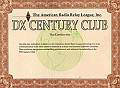 Recently on Google Plus there was a discussion of what qualifies as a separate country in the amateur radio world. The confusion point was that Alaska was showing up in logging software as a “country”. It turns out is is both a country and a state.
The generally accepted countries list is established by the DXCC award. Actually, the correct term is entities, not countries, but in normal conversation people seem to use countries. DXCC stands for DX Century Club, with the minimum award being 100 (Century) countries.
Back to the issue of Alaska — it clearly is one of the 50 United States, so you’ll need to work it to achieve Worked All States (WAS). It is geographically separated from the lower 48 states, so it is also considered a separate country. The same is true for Hawaii — counts as a state and a country.
To find out what counts as a country, you need to study the DXCC Country List. A peek at this list reveals that these US possessions are all considered separate countries for DXCC purposes:
K,W,N, AA-AK# United States of America
KG4# Guantanamo Bay
KH0# Mariana Is.
KH1# Baker & Howland Is.
KH2#* Guam
KH3#* Johnston I.
KH4# Midway I.
KH5# Palmyra & Jarvis Is.
KH5K# Kingman Reef
KH6,7#* Hawaii
KH7K# Kure I.
KH8#* American Samoa
KH8#* Swains I.
KH9# Wake I.
KL,AL,NL, WL#* Alaska
KP1# Navassa I.
KP2#* Virgin Is.
KP3,4#* Puerto Rico
KP5# Desecheo I.
So there are 19 countries, just inside US territory.
The DXCC Rules that define a country are complex, a mix of geographical and political considerations. I won’t even try to explain it here. Be aware that as the political boundaries change, countries can be added or deleted from the list.
73, Bob K0NR
Bob Witte, KØNR, is a regular contributor to AmateurRadio.com and writes from Colorado, USA. Contact him at [email protected].
T32TV
It has been reported on some sites that the T32C team donated some equipment to Tov, T32TV. That is the real ham spirit and if every DXpedition could do that there would be a lot less “most wanted” DXCC entities.
I have been busy with work and kids lately, so I need my sleep and try to catch as much as possible of it. So why does my daughter have to wake me at 06:00 local time Saturday to go to the toilet? She’s almost 6 and more capable than most other kids her age. Gave me an opportunity to sit behind the set, with the rising sun warming up my face. Even though 10 meters is not my favourite band I did check it out. Guess who was calling CQ? Right, T32TV. He wasn’t strong, but very willing to have a real QSO with me and surprisingly I was the only one answering him. I worked T32C, so Christmas Island isn’t a new DXCC entity for me, but QSO’s like the one with Tov are infinitely better.
The other fun thing that I did – before my battery died on me – was a QSO with Frank W7PAQ. With the rise in sunspots you sometimes stumble upon a “local” QSO that travels half around the world. Well, Frank was having a PSK31 QSO with a fellow American ham. So when that ended I called him. Frank really surprised, but pleasantly. We had rag chew DX session, because signals weren’t a 100%, but we kept it up for 10 minutes before Frank had to QSY to a local net. These QSO’s make me walk around with a smile for at least half a day.
Charging the batteries for Sunday morning now. 73 de Hans
Hans "Fong" van den Boogert, BX2ABT, is a regular contributor to AmateurRadio.com and writes from Taiwan. Contact him at [email protected].
 Ham Radio Deluxe |
 W5SWL Electronics |
 Ham Radio Prep |
 KB3IFH QSL Cards  Hip Ham Shirts  HamRadioAuctions HamRadioAuctions Reliance Antennas Reliance Antennas Enigma Shop Enigma Shop |  morseDX  Ni4L Antennas  R&L Electronics R&L Electronics antennas.us antennas.us QRV QRV |
- Matt W1MST, Managing Editor
