 |
 Post-Thanksgiving Leftovers
 27 November 2011 | by
 As most folks know, we had the Thanksgiving holiday here in the US last week. It’s a tradition to not only eat turkey with “all the fixin’s” but also have have some leftovers for a few days after that. I’ve got the same for my blog mostly with respect to things that were still around after Thanksgiving. So, in no particular order:
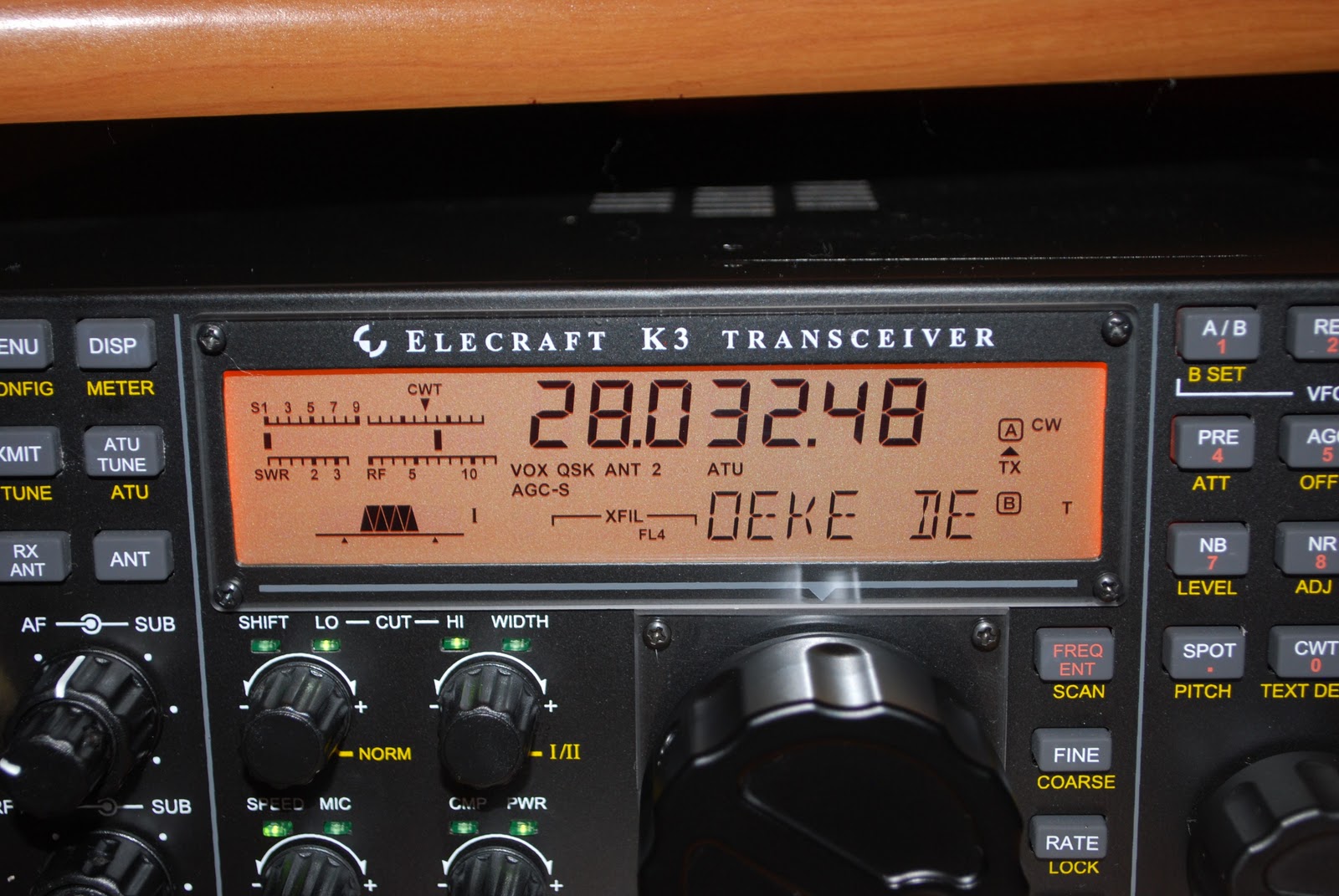
I did my usual “playing around” in the big CQ World Wide DX contest this past weekend. This is one of the “main events” in the ham radio contesting world, and while I didn’t really have time for more than just a few hours of making contacts, I did note a few interesting/amusing/annoying things. In this contest, you get points for working stations in other countries (not your own) with what’s called a “multiplier” based on the country and something called a zone. (The term “DX” refers to a station from another country.) Without going into too much detail, it’s relevant to know that there are 3 zones within the US. Your score is calculated by multiplying your points (number of contacts with stations outside your country) by the zone and country multipliers. You are allowed to work stations in your own country for the multiplier value, you just get zero points for doing so. It’s important to note that while you can get the 3 zone multipliers that are available for the US by working stations in Canada, if you want the country multiplier credit for working the US you must work a station in the US. Since it’s a zero-point contact, what I try to do is to find a US station that’s not busy and work them, since I don’t want to take them away from working their DX. Most operators understand this and have no problem with it, but on at least one occasion I called a US station who was CQing (repeatedly) with no responses only to have him respond “SRI ONLY DX”. In other words, he was telling me that he would not make a contact with me.
As noted, I only work US stations when they aren’t busy which was the case here. A complete contact with both stations exchanging information during a CW contest (which this was) takes around 20 seconds or less. So instead of helping me out by just completing the contact, he probably saved maybe 10 seconds by sending that other information. So much for good sportsmanship. (For what it’s worth, I noted his call and will avoid making contact with that station in the future, even in contests where non-DX contacts “count”.)
Also during the contest, I was working stations on 20 meters just calling stations and tuning up the band to find the next station. It’s not unusual, while doing this, to have another station that is doing the same as you are, and depending on what band you are on and the propagation conditions, you’ll sometimes be able to hear the other station. Sometimes, you wind up moving with that other station (sometimes more than one) and working the next station up the band either just before or just after that station repeatedly. Normally this isn’t a big deal, but I got stuck behind the equivalent of tractor-trailer truck on small road doing 20mph below the speed limit:
There was a station that would usually call the DX station before me and work him first. No problem. However, unlike the normal orderly contact sequence (which for this contest is very simple: a signal report, normally 599, then your zone, which is 5 for me, meaning my half of the exchange is send in CW as “TU 5NN 5”, with “TU” meaning Thank You, acknowledging that I got the contact information from the other station) he’d send something like “TU 5NN 4 4 4 TU DE (his callsign) (his callsign) (his callsign) 73″. You might send your callsign if you think the DX station didn’t get it, but the accepted way of doing it is prior to the other information and only if you think the other station might not have gotten it correctly. What wound up happening is that the DX station (who is normally working stations very quickly; remember that I mentioned it normally takes 20 seconds or less to complete a full contact) would hear the “TU 5NN 4 4” then assume that the other guy was through sending and send his “TU QRZ?” (meaning he got your info and is moving on), only to realize the guy was still sending. In one case I heard the DX start to send his final sequence 3 times “TU … TU … TU” before the other guy finished.
The problem with doing this is that you slow everyone down, and while it’s not against the rules to do this, it’s another example of poor sportsmanship. The station doing this had to know that he was slowing everyone down. (And before everyone jumps on me, this was definitely not a new contester, so it wasn’t a case of “not knowing better”.) I’m not sure why he was doing this, but finally I just gave up and jumped far enough up the band so that he was no longer “in front of me” anymore. (In fact, I went way up the band and started tuning down, meaning that while I might cross paths once more, it would be in opposite directions.
I’ve got a few more leftovers to go, but I think I’ll just put them back in the ‘fridge for next time.
Update on CQ WW CW contest
 |
| The Elecraft K3 in action |

Mike Weir, VE9KK, is a regular contributor to AmateurRadio.com and writes from New Brunswick, Canada. Contact him at [email protected].
Activation Alert: W0/FR-107 (Green Mtn.) –2085m / 6841ft
Date: 27 November 2011
Time: Approx. 1700 UTC – 2000 UTC
Region: CO-Front Range
Elevation: 2085 m / 6841 ft – 1 Points
Call Sign: KD0BIK
Frequencies: 14.342.5-ssb, 18.157.5-ssb, 21.437.5-ssb, +/- 146.52-fm
Equipment: FT-817ND / Buddipole versatee vertical
APRS Track: On Road / On Trail
You might say I was planning my second SOTA activation before the ink was dry on the first. I know I had mentioned in a previous post that I would pace myself on activations and expected I would keep to a once a month activation schedule. While my first activation occurred last weekend, the weather this weekend is supposed to be gorgeous (especially Sunday) and winter weather will soon settle in. Again, I’m not opposed to winter activations…but I figure while I’m still learning and figuring our my complete setup…..a warm class room is better than a cold one. Plus it won’t hurt to burn off those Thanksgiving calories.
Since this is a holiday weekend, and I had just completed my first a week ago. I thought I would plan an easy and close activation to my QTH. Green Mountain is the closest SOTA peak to my QTH and will be a much easier hike than Mt. Herman. I should be able to get to the summit, enjoy some operating time and then back home early enough to get some things done before going back to work on Monday.
With the lessons learned from my first activation, I have a few new additions in my pack. I also packed a lot of things that I never used on my first and those items will stay home.
The first new item actually replaces another and will free up about 3 lbs. of weight. Yes, I’m talking about the Buddipole Nanophosphate A123 battery pack. I’m really looking forward to what this pack can do for me and the reduced weight.
The wind issues I experienced last weekend and the breaking zip ties have also been eliminated. I will be taking one from the wG0AT playbook and mounting my Buddipole versatee adapter directly to my hiking staff. My hiking staff has a removable knob handle with a standard tripod screw mount on top. I have an adapter that will adapt the 1/4” thread to 5′/8”. The versatee will screw down onto that adapter and create a much more secure connection. Finally, I also ordered the new Buddipole adjustable shockcord whip which can be seen in action in this youtube video.
Until next time….
73 de KD0BIK (Jerry)
Jerry Taylor, KD0BIK, is a regular contributor to AmateurRadio.com and writes from Colorado, USA. He is the host of the Practical Amateur Radio Podcast. Contact him at [email protected].
A Pretty Good List From K3NG
K3NG reposted one of his classic articles Things I Wish I Knew When I Was A Young Radio Artisan. Here’s a few items from the list:
With antennas, it’s not about the feet and inches (or meters), think in terms of wavelength.
Don’t worry about the orientation of a dipole when it’s less than a half wavelength above ground.
When the bands are open any goofy antenna will make contacts. People will think this makes a goofy little antenna a good antenna. Not so.
I don’t agree with everything on the list but it is still worth reading.
73, Bob K0NR
Bob Witte, KØNR, is a regular contributor to AmateurRadio.com and writes from Colorado, USA. Contact him at [email protected].
Time issues again
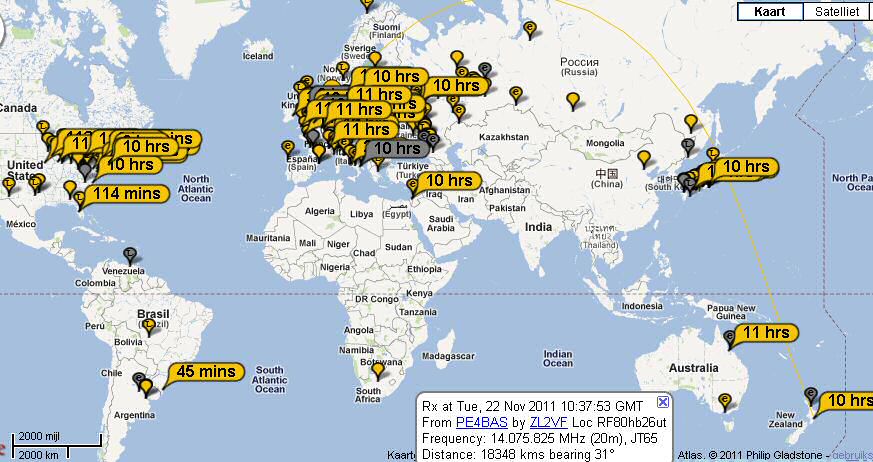
A few months ago I wrote about a time issue I had with a program called meinberg NTP. It suddenly stopped sync time on my laptop. I went back to Dimension4 and have no problems since. Now, I installed meinberg NTP on my desktop as well, using it for JT65-HF, WSPR and other digi mode programs. But last week it stopped sync the time on the desktop as well. So back to D4 I thought, so I downloaded it and installed but although it told the clock has been synchronized it didn’t really update the computer clock. I’ve tried everything to get it working, installed it again, did a restore of Win Vista, seaarched on the internet. But could not solve the problem. I wanted to get active again with JT65, but with the clock out of sync that is impossible. I found a atom time clock on the internet and updated the clock myself. But found that was not the solution. I came across NetTime then and just thought to give it a try. It seems to be working as I can make and receive JT65 again. Strange things happen if you use windows…..
 |
| Results after a QSO with Japan and USA on 20m with 5W on the loop antenna. |
Bas, PE4BAS, is a regular contributor to AmateurRadio.com and writes from Groningen, Netherlands. Contact him at [email protected].
Happy Thanksgiving!
First, the obligatory “my apologies for the lack of posts recently” statement. The usual excuses apply: work, family, sleep, more work, and my forty-something mind and body just doesn’t seem to have the get-up-and-go like it used to sometimes. But I digress. While I have the floor here, let me take a moment to wish everyone Happy Thanksgiving!
On the topic of radio, Oscar, DJ0MY, has created a professional quality keyer using the Arduino Nano module and my open source keyer code. Here’s a video of Oscar’s creation:
Oscar has been a big help in suggesting and testing features of the keyer code. He’s encouraged me to go out on a limb and code features I probably otherwise wouldn’t have, making the code what it is today. Oscar says that he will be creating a webpage detailing his work, probably around Christmastime.
I haven’t been on the air much recently, but I did build and start testing a beta release of the OpenQRP OQtransceiver1 rig.
The rig and the OpenQRP project is the brainchild of Steve, K1EL, the creator of the venerable Winkey. The OQtransceiver1 is a monoband CW 40m unit, featuring NE602s in a superhet design with a narrow CW crystal filter in the receive chain. The radio control is Arduino / ATMega328 based and the firmware is open source. The OQ1 features a CW keyer, frequency counter, RIT, memory keying, two line backlit LCD display, and a CW decoder. Output power is slightly more than 5 watts. The PC board and case is very professional looking and well designed. I’m hoping to contribute to the OpenQRP project with firmware code updates and new features in the coming months. I think the OpenQRP project is a nice concept that will likely produce some neat and innovative gear in the coming years, and provide another outlet for learning in this great hobby of ours.


I don’t care about SWR anyway!
 Did you read about W2LJ’s rookie mistake? Want to read about another one? Had some afternoon time yesterday and fired up my TS-440S with a fresh battery. Yes, full 100 Watt output this time.
I had no laptop, so I decided to do some just plain old CW/SSB again. 21 MHz was open to southern Europe, so I logged EA6UN in CW. He was quite strong, but some Japanese on the same frequency kept calling him even though he clearly stated “BX2?”. He still got me in the end, though, and I got him. The next nice QSO was CX2TQ in SSB on 14 MHz. Weak but readable when the local QRM was gone. First time CX in the log, so that was nice.
A little later I turned to 18 MHz and CT3FT came in very nicely in CW. I totally forgot to tune up and set the beat tone first and in my enthusiasm I answered him right away. When I looked at my SWR Meter I realised my mistake and started to fiddle with my antenna tuner. No need: he came back to me right away and gave me a 559 report. SWR on my side 1:5, output from my rig 12 Watts, reflected power 7 Watts. Does that mean I worked the Madeira Islands using QRP power? (12-7=5 Watts). Never mind, because I scored three new entities in one afternoon! Not bad at all for a cold and rainy afternoon.
Hans "Fong" van den Boogert, BX2ABT, is a regular contributor to AmateurRadio.com and writes from Taiwan. Contact him at [email protected].
 Ham Radio Deluxe |
 W5SWL Electronics |
 Ham Radio Prep |
 KB3IFH QSL Cards  Hip Ham Shirts  HamRadioAuctions HamRadioAuctions Reliance Antennas Reliance Antennas Enigma Shop Enigma Shop |  morseDX  Ni4L Antennas  R&L Electronics R&L Electronics antennas.us antennas.us QRV QRV |
- Matt W1MST, Managing Editor
