 |
 1200+ Mile Contact on 10 Meter Handheld
 8 December 2011 | by
 As Hams, we know the phrase “A little goes a long way” is very true in Ham Radio. Anyone working QRP can tell you that. There are people that have worked the other side of the planet with just a few watts. I worked Japan once with 5 watts with Grayline. But check out this video of 1200+ mile contact on a handheld.I didn’t even know they made 10 meter handhelds. But we can see one here in the video. As well as making that contact with just 5 watts of power. Not too shabby at all. I say keep this video handy for recruitment. This shows how radio can work.
73.
Rich Gattie, KB2MOB, is a regular contributor to AmateurRadio.com and writes from New York, USA. Contact him at [email protected].
Handiham World for 07 December 2011
Welcome to Handiham World!

[email protected]
Handiham Manager

Pat Tice, WA0TDA, is the manager of HANDI-HAM and a regular contributor to AmateurRadio.com. Contact him at [email protected].
Todays activity
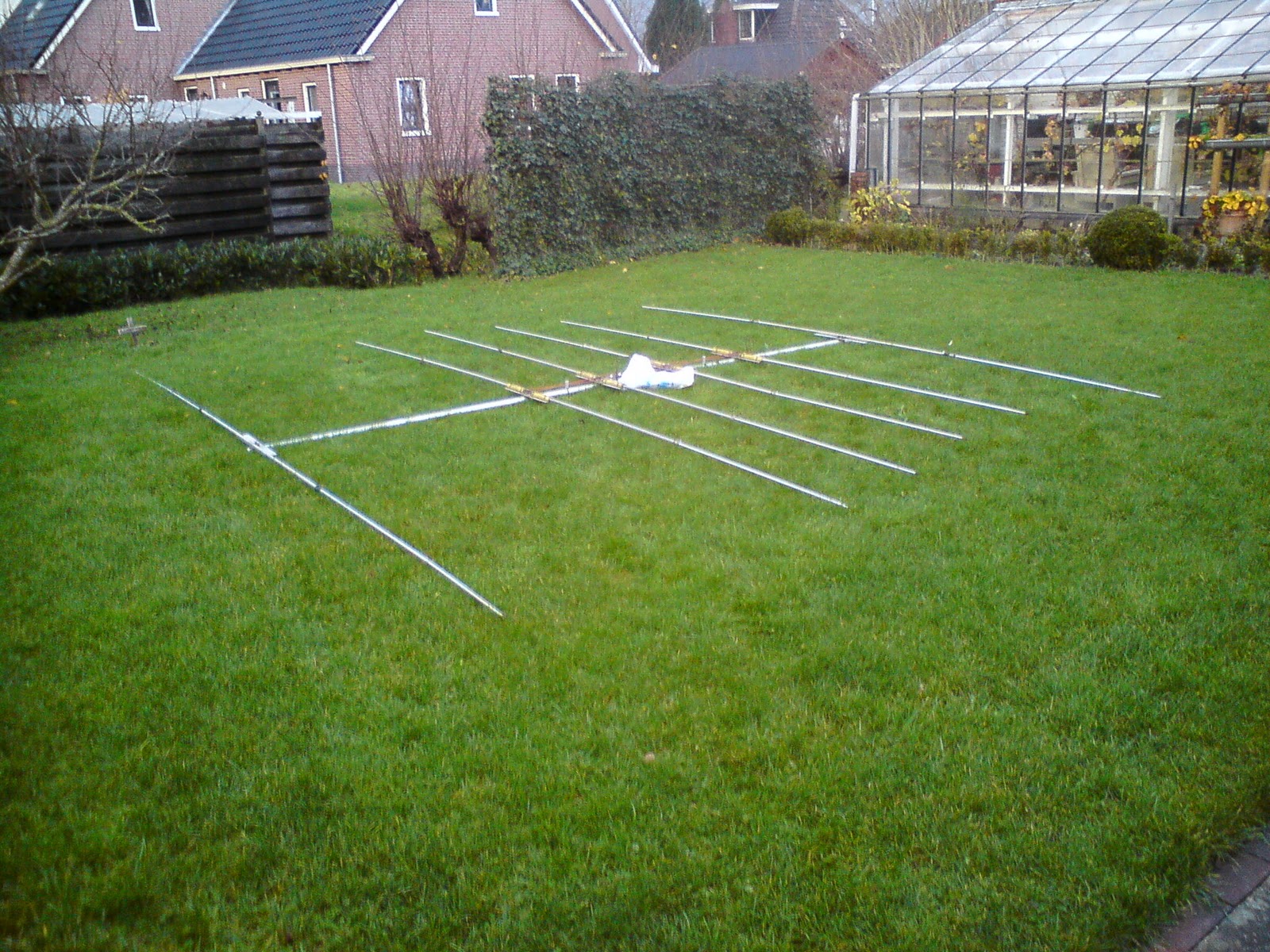
I actually put the old 6 elem. logcell together for the upcoming 10m contest. Never expected that I would actually use it again and forgot to mark bits and pieces. But overall putting it together went smooth. Unfortenately just when I was ready to get it up the small mast it there was a very heavy storm arriving with thunder, lightning, rain and hail. So, I hope to continue Saturday morning if weather and time alows. Some specs of this antenna. 4 elements fed, gain about 11dBi, front to back >30dB, front to side approx 25dB. Unfortenately I don’t have a heigh mast to put it on. So the specs will not be that good as on say 12 Mtr height. I think even on a low mast it will outperform my multiband vertical on 10m. We will see this weekend.
Bas, PE4BAS, is a regular contributor to AmateurRadio.com and writes from Groningen, Netherlands. Contact him at [email protected].
Delta Loop for 10 Meters on a Buddipole

- Vertical Polarization

Horrizonal Polorization of Delta Loop Good for DX
The magic that makes this antenna possible is a TRSB, Triple Ratio Selectable Balun. There is a 2:1 ratio position on this balun that is reversed for a 1:2 ratio to match the coax to the 100 ohm antenna. Any balun with this ratio will work.
-

- Vertical Polorization, Good for Talking to Mobile Ops
-

- Horrizonal Polorization of Delta Loop Good for DX
-

- End of whip burinshed to metal base with Dremel tool
Ten meters is doing pretty good lately. It sure is nice to have this band open again. I worked Alaska and Argentina on 10 meter CW using this antenna. I replied to an Ea7 station on SSB but he didn’t hear me.
The Delta loop is easy to configure and easy to deploy. These photos were taken on the porch of my condo. I’ll take this delta loop to the beach when the WX clears. I needed a rainy day to catch up on things around the house.
For more information on Buddipole Delta Loops; join the Yahoo Buddipole group
Here’s a nice video featuring a Buddipole Delta Loop http://www.youtube.com/watch?v=Ikm-HICGcrI&feature=youtu.be
This antenna can be used on 12 meters also and on 15 and 17 with additional Buddipole Arms and a longer ‘home brew connecting wire’ to close the loop.
I’ll be trying these bands out at the beach, my usual ham radio portable venue.
73
de AA1IK
Ernest Gregoire
Ernest Gregoire, AA1IK, is a regular contributor to AmateurRadio.com and writes from Florida, USA. Contact him at [email protected].
Still alive and kicking (just!)
I don’t see things getting much better for the next 4 months when the chemotherapy will be over as although I do detect an improvement in how I feel as I get towards the end of a cycle I am quickly back to square one after starting the next one. There is not enough change in how I feel from day to day to warrant more frequent postings to One Foot in the Grave. My days seem to merge together so that most of the time I couldn’t even tell you what day of the week it is!
Despite what I have just written I will not actually be one of the people feverishly refreshing the Elecraft order page in order to secure a place near the top of the list for KX3 orders. Though I don’t doubt that the KX3 is a seriously cool piece of radio equipment that will be a big success for Elecraft, I have come to the decision that my FT-817ND meets all my current needs of a portable ham radio. I also can still remember my frustration at the length of time I had to wait to receive my K3 (and the even longer wait until the firmware actually worked and it all performed as expected.) I don’t wish to cause myself the stress of wondering whether I will live long enough to receive my KX3!
That’s not to say I don’t see an Elecraft KX3 in my life (and my shack) at any point. I can envisage a situation where a new toy to play with could make life seem a lot more cheerful. One day it will be possible to order a KX3 and get instant gratification. But until then I’ll content myself with reading the experiences of the early adopters and watching their YouTube videos.

Julian Moss, G4ILO, is a regular contributor to AmateurRadio.com and writes from Cumbria, England. Contact him at [email protected].
One on one with the PC………

was able to multi-task during the contest between two computers using two nice LCD monitors. The next day after the contest the net-book was snuggled in it's case and it was time to use
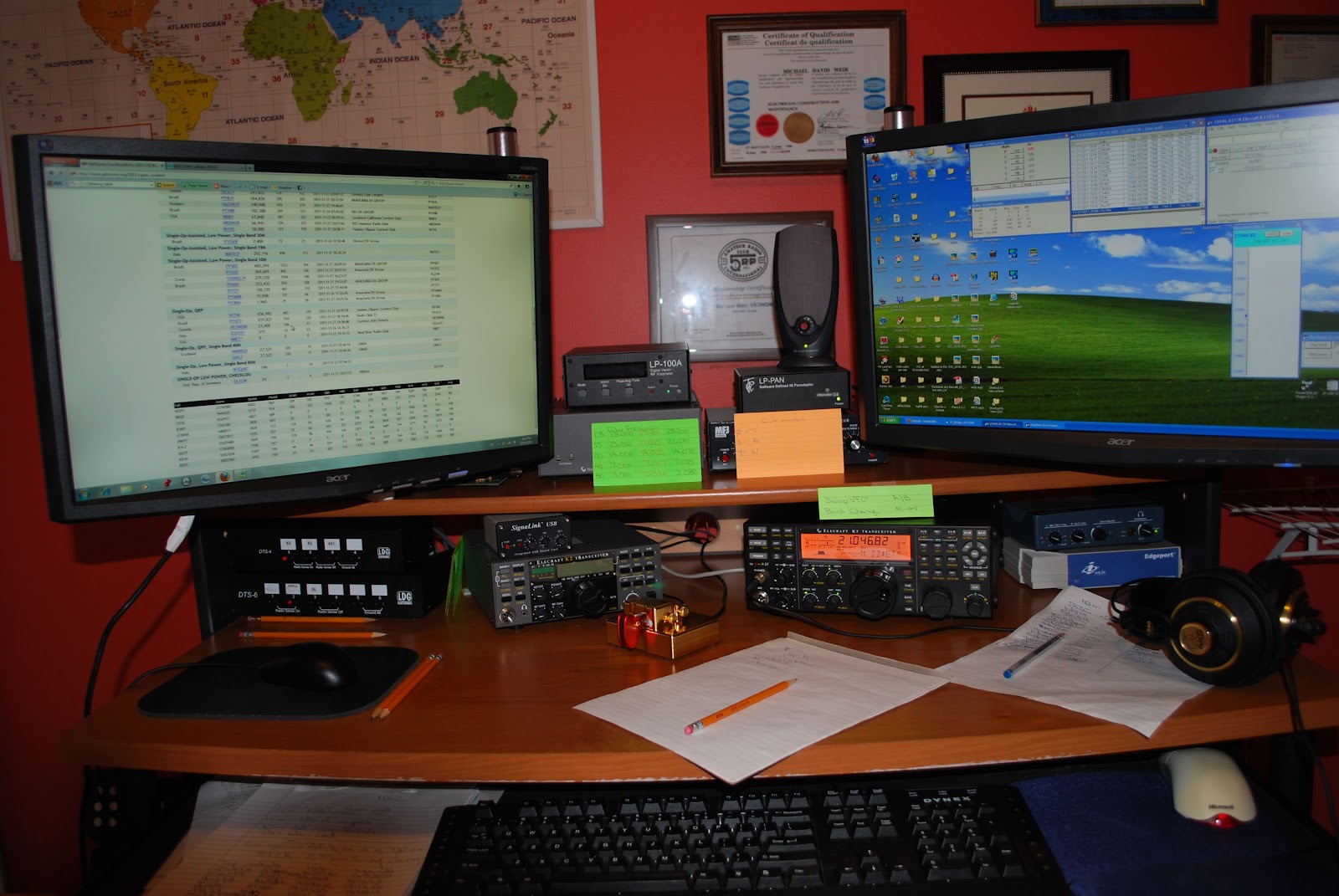 |
| During the contest with both monitors |
both LCD monitors on the main PC as it always had been done....As the PC booted up the one monitor display read "not connected". I then preceded to connect reconnect and change out the video cables but nothing had worked. I was still getting the "not connected" message floating around. I then in WinXP had a look at my video card. Maybe I just had to tell the PC to recognize the other monitor again. In the process of trying a dual monitor setting I did not read the warning that was counting down from 15 seconds. I just said "ok". Well now both monitors were blank with the message "not connected" Well that went well!!! It was off to Google to solve my troubles. Seems the net-book could had changed the monitor refresh rate and or resolution settings. Settings the main PC was not able to recognize and thus the message "not connected". According the the advice derived from Google searches I have to boot in VGA only mode. It was simple, I was told "wait for the Windows logo to appear and press F8". Easy if both monitors were not blank!!! So began the many restarts guessing when to press F8. Well in time I was successful and was able to get into VGA mode and repair both monitors. All is working well now and lesson learned. It turns out the net-book changed both the refresh rate and the resolution.

Mike Weir, VE9KK, is a regular contributor to AmateurRadio.com and writes from New Brunswick, Canada. Contact him at [email protected].
A Ham’s Night Before Christmas
‘Tis the season to be jolly and give of yourself to your fellow man. Though I think that should be all year long, but still, around this time of year, it’s nice to spend time with friends and family and enjoy the time. This year I am feeling especially festive, simply because I am with my family. I know, I’m easy to please. But one of the other things I like this time of year is of course the entertainment. It’s a tradition for me to watch Miracle on 34th Street every year during the holidays. And this one may be a tradition I do every year. Post (or repost from this point on..) “A Ham’s Night Before Christmas”. The video is done by Gary Pearce, KN4AQ, with guitar melody by Don Mercz, WA3AYR. So sit back with your coffee or hot chocolate, grab a candy cane or a sugar cookie, and enjoy!
Rich Gattie, KB2MOB, is a regular contributor to AmateurRadio.com and writes from New York, USA. Contact him at [email protected].
 Ham Radio Deluxe |
 W5SWL Electronics |
 Ham Radio Prep |
 KB3IFH QSL Cards  Hip Ham Shirts  HamRadioAuctions HamRadioAuctions Reliance Antennas Reliance Antennas Enigma Shop Enigma Shop |  morseDX  Ni4L Antennas  R&L Electronics R&L Electronics antennas.us antennas.us QRV QRV |
- Matt W1MST, Managing Editor
