 |
 ICQ Podcast S04 E27 – Science Museum for Amateurs (18 December 2011)
 18 December 2011 | by
 Series Four Episode Twenty-Seven of the ICQ Podcast has been released. News Stories include :-
- SwissCube update
- Experimental D-Star repeater
- Miracle Antenna suspends order-taking
- Digital pictures sent from balloon
- Vietnam operation
- UZ7HO Soundmodem software
- Russian Military OFDM in 40m
- ARRL to inspire Hackers and Innovators
- German CBer's get 12 watts SSB
- 70cm to help paralyzed patients?
Your feedback, Ed Durrant (VK2ARE) provides a Christmas Australian report and Chris Howard (2E0CTH) reports from the London Science Museum for Amateur Radio Operators.
Colin Butler, M6BOY, is the host of the ICQ Podcast, a weekly radio show about Amateur Radio. Contact him at [email protected].
The Ubuntu Linux learning curve………..

trying what they said then getting back to the Youtube video and then back to the same spot in Ubuntu again. That was just a receipe for frustration as this game plan was far from smooth going. It was off to some user groups but that turned out most of the time to be a hunting trip. I would end up going to so many links that the original question was forgotten and at my age that process does not take long. I came to the conclusion the written word in the form of books was the way to go to solve this monkey on my back. I hope to become more familiar with the Ubuntu OS now and get past the wall I have come up against. Over the Christmas break I will be taking a leisurely approach with the help of some books and hands on learning to get Ubuntu in check.

Mike Weir, VE9KK, is a regular contributor to AmateurRadio.com and writes from New Brunswick, Canada. Contact him at [email protected].
Amateur Radio High Altitude Balloon Sets Record
This is one of the coolest stories for the year I think. Ron Meadows, K6RPT and his son, Lee, launched a high altitude balloon along with the group they lead, the California NEAR Project, on December 11th. The balloon was caught in the jet stream at an altitude between 105,000 and 115,000 feet.

Picture of California Near Space Project's Twitter Feed
From there, the balloon was carried east at a speed of about 150 miles an hour and traveled across the United States, all along the way transmitting it’s APRS beacon of K6RPT-11. It then continued to travel across the Atlantic Ocean to Spain into the Mediterranean Sea. The balloon had traveled 6236 great circle miles in just 57 hours.
From the Southgate ARC website:
The balloon, which bore the call sign K6RPT-11 and could be tracked via APRS, traveled through California, Nevada, Utah, Colorado, Kansas, Missouri, Illinois, Indiana, Ohio, Pennsylvania, Maryland, Delaware and New Jersey. “When the balloon left the New Jersey shore behind, it was received by coastal stations as far away as Nova Scotia,” explained CNSP Team Member Don Ferguson, KD6IRE. “When it exceeded the range of these stations, we lost track of it and feared that we would not hear from the balloon again.”
The balloon finally came down December 14th, when it burst off the coast of Algeria.
This is a pretty exciting event and sure to peak the interests of people and perhaps inspire some to try High Altitude Ballooning themselves. This flight for the California Near Space Project was by far a huge success and I can’t wait to read more about their future flights.
For more details on this story, head over to the article on the Southgate ARC website and visit the California Near Space Project website.
Rich Gattie, KB2MOB, is a regular contributor to AmateurRadio.com and writes from New York, USA. Contact him at [email protected].
Snow!
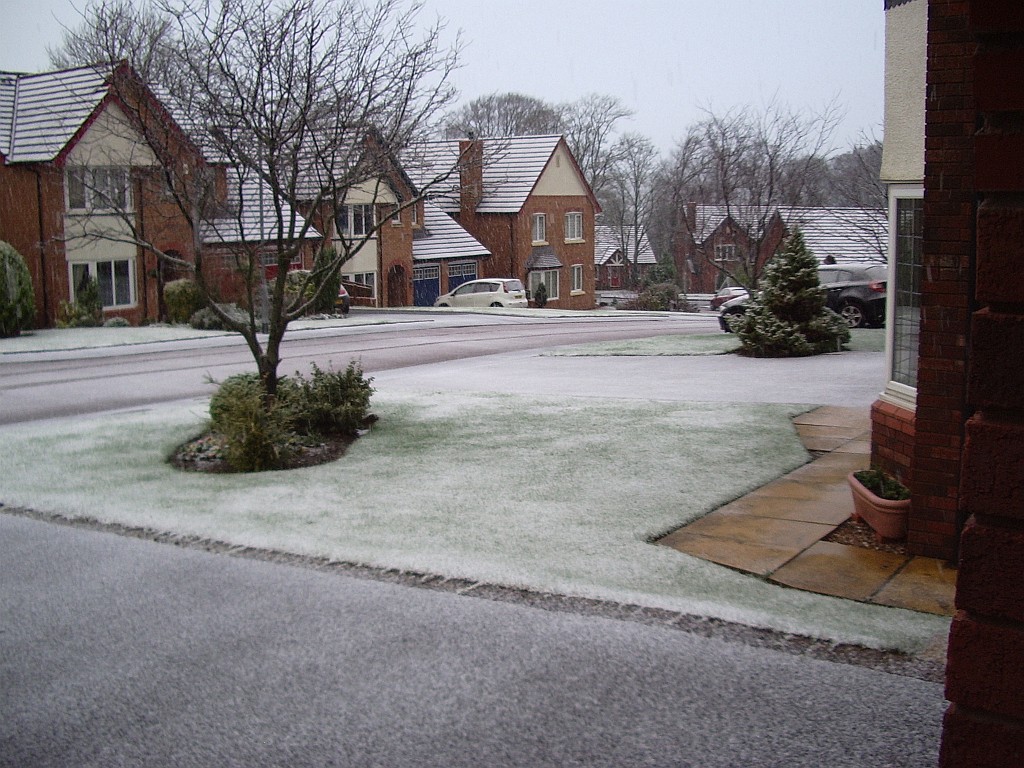
This was the scene that greeted me when I looked outside this morning! Nothing to what folks in the USA get, of course. But considering that it used to be unusual to have any snow at all during the winter here in West Cumbria it’s still noteworthy.
I hope we don’t get any more, though. Apart from the hassle factor of slushy slippery pavements, a thick layer of snow on the roof won’t help my attic antennas to get out.

Julian Moss, G4ILO, is a regular contributor to AmateurRadio.com and writes from Cumbria, England. Contact him at [email protected].
Converting WSPR data to ADIF
- Windows notepad (or another text editor)
- adif2xlsadif.xls and of course Excel
- Log Converter
- Any logger that can import ADIF format
I hope this is helpfull for some of you…
Bas, PE4BAS, is a regular contributor to AmateurRadio.com and writes from Groningen, Netherlands. Contact him at [email protected].
More 100mW on 10m WSPR results
Although the sunspot number was not promising today I decided to give it another 100mW go. And was not dissapointed. Still no VK, but have been received at Reunion Isl. today. Although I thought this 5mW from VU2SWS was amazing I observed her reports today and think that she did not set the power correct in the WSPR program. Probabely she was using 5W, there was a connection with the internet but she reported only 5W WSPR stations. Below my results today. I can now make decent cards with mapper through HRD V4. I will post a step-by step manual tomorrow about converting WSPR data to ADIF.
 |
| WSPR TX with 100mW WSPR RX Worldwide WSPR RX USA East |
Bas, PE4BAS, is a regular contributor to AmateurRadio.com and writes from Groningen, Netherlands. Contact him at [email protected].
Amazing ears…

Just spotted this on 10m:
2011-12-15 13:24 VU2SWS 28.126033 -13 0 MK68gn 0.005 PE4BAS JO33jk 6762 322
That’s amazing this 5mW signal has go into my antenna over a distance of 6762 Km with a again amazing signal of -13dB. It’s hard to believe as I didn’t see my own 0,1W signal spotted by her station, but that can be a lack of internetconnection of course. That brings me to another puzzle at the radiohobby. Signals or propagation seem not always be reciproke. At least not at my station. Overall I receive more then I can transmit even with 100W. This is the case especially on 10m. It happened to me again last ARRL 10m contest. I knew some amateurs (PD1RP) were on a little DXpedition on Texel Isl. using a 2 element moxon in the contest. I could clearly copy them over a distance I think from about 100km. But whatever I tried, they could not hear me. This happens to me once and a while and I don’t know who to blame? Have they got a bad receiver, attenuation on, QRM or QRN? It’s hard to believe but I sometimes think I must have a exceptional quiet QTH as I do not have any QRN/QRM on 10m and a very low noise floor. On the Icom I always have the preamplifier on at this band as I can pull out a lot more stations that way.
Bas, PE4BAS, is a regular contributor to AmateurRadio.com and writes from Groningen, Netherlands. Contact him at [email protected].
 Ham Radio Deluxe |
 W5SWL Electronics |
 Ham Radio Prep |
 KB3IFH QSL Cards  Hip Ham Shirts  HamRadioAuctions HamRadioAuctions Reliance Antennas Reliance Antennas Enigma Shop Enigma Shop |  morseDX  Ni4L Antennas  R&L Electronics R&L Electronics antennas.us antennas.us QRV QRV |
- Matt W1MST, Managing Editor
