 |
 Freedom of Expression on the Forums
 19 January 2012 | by
 Recently, I made a complaint on a well known ham forum concerning derogatory posts regarding God and Religion. I was practically told by the Administrator and Manager of the site in a PM that If I didn’t like it I could lump it! He then proceeded to insult God and Religion himself and so it became obvious that such remarks were a reflection of him and how he ran his site.
My question to hams: Should there be tighter controls over what is said on such forums?
I know blasphemy laws do not exist in the United states and are incompatible with the Constitutional provision for ‘Freedom of Expression,’ but surely forums like this are international in nature and include hams of all religious faiths.
As a journalist I believe in freedom of expression but feel this must be tempered with the protection of inalienable rights, including religious belief.
I would be interested to hear what others think?
Freddy McGavin, EI4GMB, is a special contributor to AmateurRadio.com and writes from County Cavan, Ireland. Contact him at [email protected].
The Day The Music Died
Time sure flies. We are fast approaching the fifth anniversary of the end of Morse code testing for U.S. amateur radio licensing. Prior to February 23rd 2007, an applicant to the amateur radio service that was interested in world wide communication needed not just exhibit a smattering of radio theory, but was also required to demonstrate a deftness in the manly art of telegraphy. A lot of predictions were made, from the death spiral of ham radio into the swirling cesspool of citizens band, to an actual heaven on earth brought about by a genius class, who, once freed from the shackles of a five word per minute test, would be able to deliver ham radio to the promised land. So how did it wash out? It turns out everyone was a little bit right.
A lot of new blood was brought into the hobby, in fact the number of U.S. licensees recently broke the 700,000 mark. Among our new brothers (and sisters!) are some really sharp children of the computer age. I’m of the era when the internet was just a clever system of pneumatic tubes, so I look forward to picking the brains of these nerds. More operators also bring different points of view that make for interesting QSO’s. I’d even call some ex CB’ers true radio men.
The floodgates also let in a few mopes. Five years later many are still on their HT talking about getting on the HF bands. Most of those that made it really aren’t much of a threat to the airwaves though, feeding their signal into a slinky just isn’t likely to cause an international incident. We shouldn’t throw the babies out with the bath water though. Microphone shyness, or other commitments shouldn’t be construed as a lack of dedication to the radio art. My own on air blunders have been met only with kindness. A warm hand on the shoulder can lead these guys down the right path. Ah the true path.
So what about CW? Alive and kicking! To the uninformed Morse’s code probably seems rearward looking, like a trip to the renaissance fair, or perhaps a route 66 tinplate sign hanging in the garage. Of course CW has a heritage and it’s traditions, but it’s beauty isn’t trapped in history. Just because 32,000 years ago one of our forebears recorded the glories of a hunt on the walls of a cave, it certainly doesn’t make capturing a likeness with pencil and paper any less lovely. CW gives the operator not just the chance to buy something, but the chance to be something. CW is the mode of craftsmanship. When Tut’s tomb was prized open, the world wasn’t admiring the desicated bones or the incestuous bloodlines of the boyhood king. It was (and still is ) in awe of the craftsmanship of the workmen that filled that time capsule. I don’t expect Morse telegraphy, or even ham radio, to stoke the furnace in everybody’s loins, but Marconi’s gift gives every ham the chance to craft signals that will still be coursing through the aether long after the four winds have reduced the pyramids to the finest powder. To me that’s pretty darned cool.
Tom Bruzan, AB9NZ, is a special contributor to AmateurRadio.com and writes from Illinois, USA.
CQ Panama
“CQ, CQ, Panama Canal.”
What? Is he kidding? Is that some kind of special event station?
You might hear some strange QSO’s on the air this year as hams work to earn the DXCC Diamond Challenge, commemorating the 75th anniversary of the DXCC award. To earn the award you have to contact 100 or more of the countries that were on the first DXCC list 75 years ago.
Many of the countries from 1937 no longer in exist. That creates some interesting challenges when pursuing this award. The ARRL has a list of current entities to represent former countries from 1937 on their website. Work Ethiopia to get credit for Abyssinia. For the former Belgian Congo, you can work Democratic Republic of the Congo (9Q), Burundi (9U) or Rwanda (9X). How easy is that! The city of Kaliningrad (RF2), which is its own DXCC entity today but politically part of Russia, gives you credit for 1937 Germany, when it was known as Konigsberg. There are some oddities in the list.
My personal favorite is the Canal Zone (KZ5), which of course is now part of Panama. To qualify for the CZ credit, you have to work an Panamanian (HP) station that is within 8 kilometers of the canal.
How would that work? Let’s You might try . . .”CQ, CQ, Panama Canal within 8 KM”…. Or “CQ HP
This is one recent phone contact
ME: QRZ, QRZ HP only.
[I’m thinking. Maybe I’ll get lucky.]
HP Station: HI OM UR 59 here, Name is Ralf. BTU.
[ Hmm…So far, so good…]
ME: Thanks for coming back to me Ralf. What is your exact QTH? Are you within 8 KM of the canal? Over
HP Ralf: What canal? UR 59 hr too. Over.
[I’m thinking maybe Ralf is really in Honduras(HR) or he needs a map.]
ME: The Panama Canal, You know, the big ditch where all the boats go. BTU Ralf
HP Ralf: Oh that canal. I don’t know. I haven’t looked lately. Does that matter? BTW, WX is blah, blah, blah. Rig here is . . .blah, blah, blah. Antenna is blah, blah, blah. Do you want my Grid Square? How about you? Over.
(Obviously Ralf missed the e-mail. Let’s cut to the chase Ralf]
ME: That’s great Ralf. Yes its for a new DXCC award.
HP Ralf: Man, I never heard of that one! That’s some crazy award. I don’t do kilometers, how many feet is that?
[ARGHH! OK, maybe we are getting somewhere at last.]
ME: Its about 26,200 feet. Over
HP Ralf: Sorry OM, there was some bad QRM that time. A lot of guys are calling me like I’m some rare DX all of a sudden. Say again, how many feet is that?
[Panic is setting in.]
ME: 26,200. 26 Two zero zero.
HP Ralf: That is a lot of feet dude. Don’t think I have a tape measure that long. Do you mean from the center of the canal?
[Getting desperate.]
ME: Can you just estimate?
HP Ralf You mean guess? I guess so.
ME: Cool, Good enough for me. Got you in the log. Thanks Ralf. 73
You don’t need confirmations, its on the honor system. You can find the rules at
http://www.arrl.org/news/arrl-diamond-dxcc-challenge
A list of the entities and the corresponding countries today is available on the ARRL web site at:
http://www.arrl.org/files/file/Diamond%20DXCC/DXCC75_Entity%20List%20TABLE_1_3x.pdf
Good Luck and have fun.
73,
Ron, AE5NO
Ron Litt, K5HM, is a special contributor to AmateurRadio.com and writes from Texas, USA. Contact him at [email protected].
Occupy Ham Shack
The subject of this blog post (#occupyhamshack) relates to a new Twitter hash tag which started up a few weeks ago. A Twitter hash tag is typically used within a Twitter Tweet or message and is commonly used as a search term. Depending on the Twitter client you use, you can add columns which will automatically list any tweet showing the particular hash tag. Other common amateur radio hash tags are #hamr #hamradio #arrl #dx #sota. The hash tag #occupyhamshack was started by David Kozinn, K2DBK and it’s gained in popularity. Check out David’s blog site here.
While social media is not a replacement for amateur radio, I’m pleased to see amateur radio gaining a large presence in social media circles. I’m finding more and more hams becoming members of these various sites and the ability to share knowledge is becoming a power tool. I also believe it is helping to introduce the magic of amateur radio through these media platforms.
If you haven’t joined and participated in social media, I strongly encourage it. You can follow me on the platforms I frequent by clicking the icons in the upper right-hand corner in the section titled “Follow Me”.
Now go #occupyhamshack and get on the air…
Until next time…
73 de KDØBIK
Jerry Taylor, KD0BIK, is a regular contributor to AmateurRadio.com and writes from Colorado, USA. He is the host of the Practical Amateur Radio Podcast. Contact him at [email protected].
QST is going digital…………..
when I read my email from the ARRL's regarding the introduction of a digital version of QST. I have to admit I have had the digital version of Monitoring Times for 5 months now and well this digital thing sounds very sci-fi and geeky...BUT......it just has not worked out for me. For example on December 17th I was emailed the new Monitoring times issue.....it's still in my Hotmail in box a month later. It's almost time for the next issue!!! There sure are some cool things about the digital issue with the hyper-links and instant emailing feedback to articles.
I have come to the conclusion there is nothing like the paper version. There is something to say for pulling out a periodical when you have a spare minute. With the digital version I found this very hard to do. It's not easy to roll up a laptop or Kindle and toss it in the glove box of the car. I think QST has the right idea offering both for the same price and not making you chose between the two. I am looking forward to June and see what this digital version has to add to the paper version.

Mike Weir, VE9KK, is a regular contributor to AmateurRadio.com and writes from New Brunswick, Canada. Contact him at [email protected].
Via The Buro
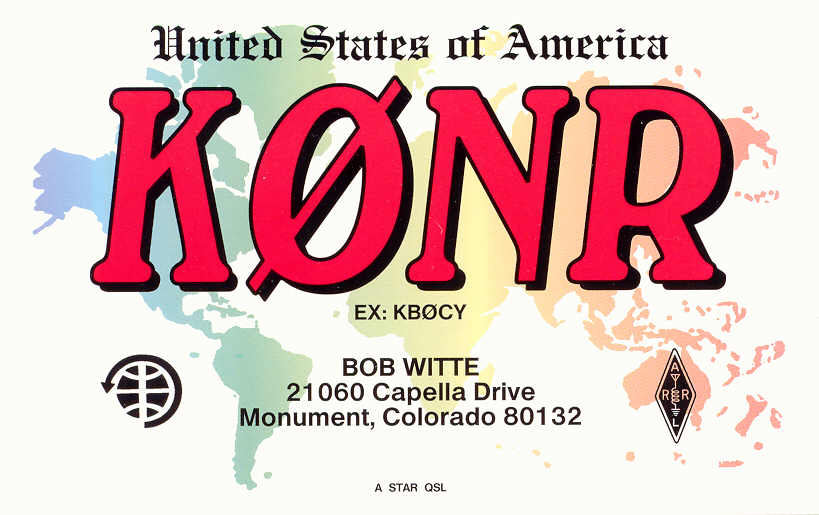 At our local radio club meeting this week, I did a presentation on amateur radio operating awards. The emphasis was on the most common awards: Worked All States (WAS), Worked All Continents (WAC), DX Century Club (DXCC) and VHF/UHF Century Club (VUCC).
I talked a bit about how to obtain a QSL card for written confirmation of a radio contact. As I discussed using the QSL Bureau, it became clear that this is the kind of thing that a new ham might not learn on their own. In fact, they might not know this even exists.
The “Buro”, as it is often called on CW, is really two separate systems: The Outgoing QSL Bureau and the Incoming QSL Bureau. To use the Outgoing QSL Bureau, you need to be an ARRL member and send your outgoing cards to ARRL HQ. They are forwarded on from there to the other country and ultimately to the other amateur. See the Outgoing QSL Bureau information on the ARRL web site for the full story.
The Incoming QSL Bureau delivers cards coming in from other countries. This work is handled by various radio clubs, organized by call area. You do not need to be an ARRL member to use the incoming service. You can find the incoming QSL bureau for your call area here on the ARRL web site. My callsign is KØNR, so I use the WØ QSL Bureau which has this web site: http://www.zeroburo.org/ The WØ QSL Bureau is operated by the Mississippi Valley DX/Contest Club. Thanks, Guys!
Now here is the important part:
If you have worked any DX stations, you may have QSL cards waiting for you at the buro. You should supply your QSL bureau a Self-Addressed Stamped Envelope, which they will use to send you any cards that are waiting.
Look up your Incoming QSL Bureau and follow their specific instructions concerning supplying them with envelopes.
73, Bob K0NR
Bob Witte, KØNR, is a regular contributor to AmateurRadio.com and writes from Colorado, USA. Contact him at [email protected].
Ham Nation 31

Hosts: Bob Heil (K9EID), Gordon West (WB6NOA), and George Thomas (W5JDX)
Gordo’s CES recap, US Supreme Court looking at the FCC, building a voice recorder, and more.
Download or subscribe to this show at http://twit.tv/hn.
We invite you to read, add to, and amend our show notes at wiki.twit.tv.
Thanks to Joe Walsh who wrote and plays the Ham Nation theme.
Thanks to Cachefly for the bandwidth for this show.
http://dts.podtrac.com/redirect.mp4/twit.cachefly.net/video/hn/hn0031/hn0031_h264b_864x480_500.mp4
http://dts.podtrac.com/redirect.mp4/twit.cachefly.net/video/hn/hn0031/hn0031_h264b_640x368_256.mp4
http://www.podtrac.com/pts/redirect.mp3/twit.cachefly.net/hn0031.mp3
Dr. Bob Heil, K9EID, is the founder of Heil Sound and host of TWiT.tv's Ham Nation which streams live each Tuesday at 6:00pm PT (9:00pm ET) at http://live.twit.tv. Contact him at [email protected].
 Ham Radio Deluxe |
 W5SWL Electronics |
 Ham Radio Prep |
 KB3IFH QSL Cards  Hip Ham Shirts  HamRadioAuctions HamRadioAuctions Reliance Antennas Reliance Antennas Enigma Shop Enigma Shop |  morseDX  Ni4L Antennas  R&L Electronics R&L Electronics antennas.us antennas.us QRV QRV |
- Matt W1MST, Managing Editor
