 |
 Shame on me………………
 18 March 2012 | by
Early spring+great weather=yard work, house cleaning, garden prep and blah blah blah and therefore it's > (greater than) ham radio which = shame on me! I have not had really any time for radio!
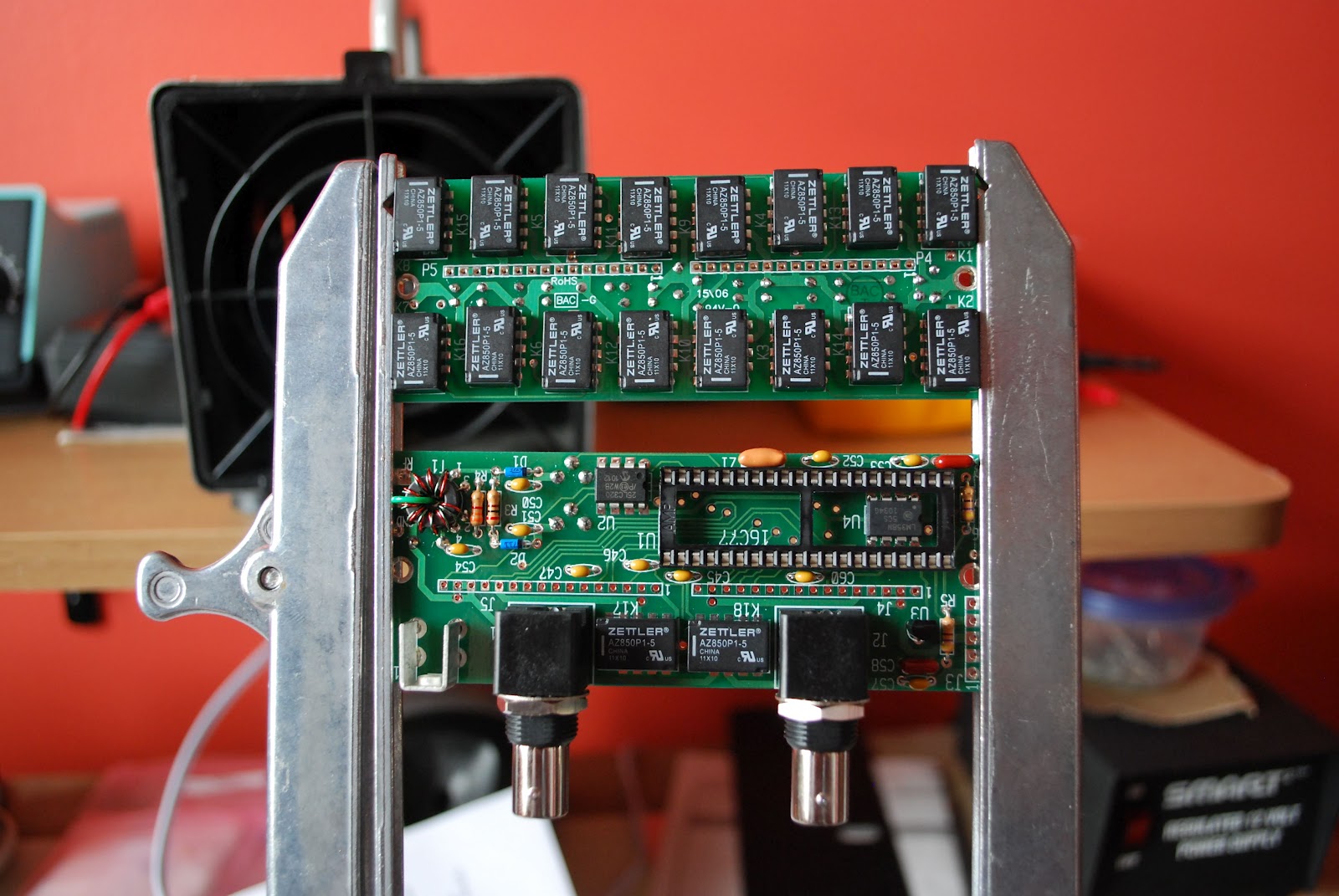 |
| KAT2 in the works |
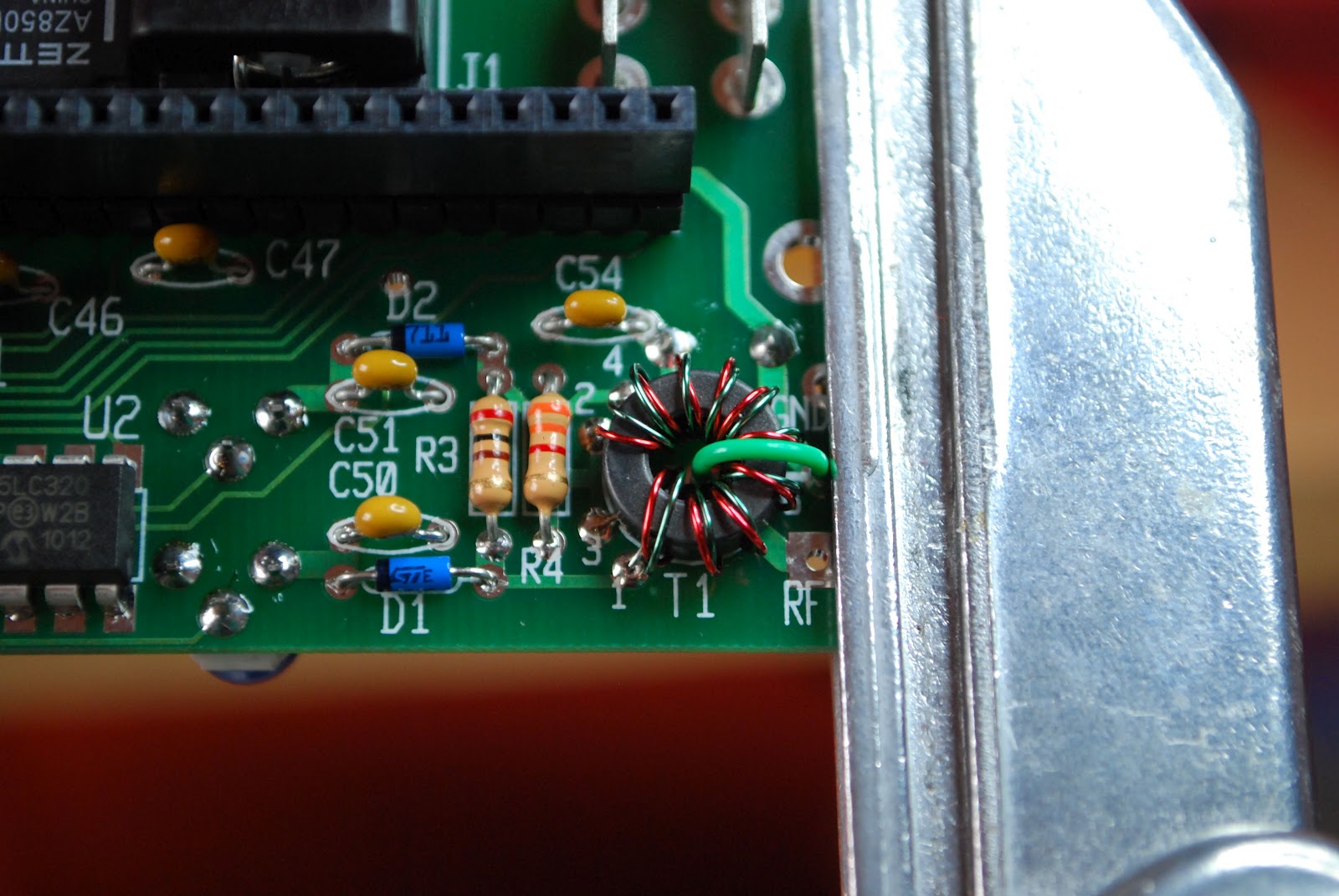 |
| The joys of toroid winding |


Mike Weir, VE9KK, is a regular contributor to AmateurRadio.com and writes from New Brunswick, Canada. Contact him at [email protected].
2012 Virginia QSO Party
I’ve written about the Virginia QSO Party a number of times in the past, so I’m going to keep this posting relatively short. I needed to spend some time getting my gear together for my trip to Florida later this week (where I plan to activate IOTA NA-034), but that left time for some contesting. There were a number of contests this weekend, but I decided to jump into the Virginia QSO Party (VaQP) as I’ve always had a lot of fun. I’m going to re-post my “soapbox” comments from my posting to the 3830 contest scores list. (That’s an email list where folks post their “claimed” scores after a contest. It’s not authoritative, but it gives you a quick chance to see how well you did as compared with other a lot fast than the official scores.)
Here’s what I wrote:
The VaQP is one of my favorite state QSO parties,and I’m glad that I had time to participate this year after missing the last couple of years. Given my location in northern NJ, the only bands that are usable are 40 & 80 (I’ve made a couple of contacts in the past on 160, but I don’t really have an antenna and it’s usually not worth the effort). This year, I had plans that kept me out Saturday evening so I didn’t get on to 75/80 at all. Late Sunday afternoon I tuned around for a bit on 80m but decided that instead of trying to work just the couple of stations that I could hear, I’d stick with 40 and submit as SOSB/40 (mixed mode).
I like this contest for a few different reasons: First, there’s enough activity to keep things going, but not so much that it’s a fight for a little-pistol station like me to have to work to make contacts. I could work everyone I could hear, and I appreciate the nice signal reports that I got from many stations. (Just 100w into a G5RV at about 35′ here.) Second, this is one of the few contests where I can get on and actually hold a run frequency for pretty much as long as I’d like. That’s not something that I get in the big DX contests! Third, this has got to be one of the friendliest bunch of of folks in any contest. When I had a small pileup going (for “rare” NJ!) I would move pretty quickly, but most times I had plenty of time to just throw in a quick word or two, and it was nice hearing when I was a new mult, or just having someone thank me for getting on to help give out points. It’s things like that the remind me why I like this contest so much.
Thanks to the organizers for putting this on, and I look forward to working everyone next year.
(SOSB/40 means that I operated as a single operator on just one band, which was 40m). That pretty much sums it up. I spent a total of around 7.5 hours between Saturday and Sunday in this contest, and it really just flew by. Here’s my score summary (which is very short, since I only used 40m this time):
 Band  CW Qs  Ph Qs  Dig Qs
----------------------------
   40:   26    154
----------------------------
Total:   26    154      0  Mults = 70  Total Score = 16,950
Become A Ham–A Shameless Plug
In addition to my amateur radio blogging, I also host an amateur radio podcast titled the practical amateur radio podcast (PARP). I began podcasting about amateur radio in 2008. PARP is currently in its 5th season and I’m looking forward to many more.
When I was in the final stages of preparing for both my technician and general class exams, I used a set of flash cards from Flash and Pass. I would ask my wife to read the questions to me and I would try to answer. This was especially handy when I wasn’t near a computer and couldn’t take the online sample tests. This process actually worked well for me and helped me polish my knowledge.
In the summer of 2010 when the new US Technician question pool became active, I decided I would create an audio only version of the flash card process. I used the ARRL version of the study guide and the question pool which accompanies that book to record the question, the four possible answers, followed by the question again and then finally announce the correct answer.
I believe the basis for success in using this method depends on first reading the study guide. Second, the use of online sample test sites (many different ones are available), I recommend a site some friends of mine maintain called Ham Tests. However, I really believe it is important for the student to READ THE BOOK!!! Then (and only then) download my twenty audio sessions.
Each audio session is anywhere from 12 to 30 minutes in length (perfect for commute to work or school) and contain every question in the current question pool unless that question relates to a visual diagram. The tech and general pools do have some questions that ask you to reference a diagram. I mention these during the appropriate audio session only as a reminder to study the question directly from the book.
As of today, I have the Become A Ham US Technician (2010 – 2014) and US General (2011 – 2015) sessions available. These sessions are available free of charge. I will record the US Extra (2012 – 2016) audio sessions sometime late Spring or early summer to coincide with the new extra class question pool which starts 1 July 2012.
You can download/stream these audio sessions direct from MyAmateurRadio.com by clicking on the Become A Ham tab. Alternatively, you can also download these sessions via RSS. The RSS links to the Become A Ham US Tech and US General can be found on MyAmateurRadio.com on the Become A Ham tab.
I’ve received many positive comments on both the technician and general audio programs and I’m truly pleased to know many have experienced benefit from the audio programs. If you are preparing for either the US Technician or the US General amateur radio exam, please visit MyAmateurRadio.com. Good Luck!!!
Until next time…
73 de KD0BIK
Jerry Taylor, KD0BIK, is a regular contributor to AmateurRadio.com and writes from Colorado, USA. He is the host of the Practical Amateur Radio Podcast. Contact him at [email protected].
Scafell pike

Yesterday I made a secong attempt to activate Scafell Pike. Usually I got up to summits alone or with the dog bit this time was with a bunch who were training for the 3 peak challenge. Needless to say the summit was in cloud, it snowed then hailed then rained on me as I came down. Still this time I had a whole load more qso’s and a much more satisfying activation. Wast water (in the photo) is a beautiful lake that is surrounded by some impressive fells. Not as nice a Ennerdale but then again I am a bit biased.
Alex Hill, G7KSE, is a regular contributor to AmateurRadio.com and writes from Cumbria, UK. Contact him at [email protected].
Silent Service

Larry Makoski, W2LJ, is a regular contributor to AmateurRadio.com and writes from New Jersey, USA. Contact him at [email protected].
Wouxun Dual Band Mobile
There’s a rumor afloat that Wouxun may be getting closer to releasing their much-anticipated dual band mobile rig.
My source says he’s actually operated a final prototype of the radio (in China) and that it has all the bells and whistles you’d expect in a serious competitor.
The big question mark at this point is how much it’s going to cost. I think that it has to be well under $325 (the approximate street price of a Yaesu FT-7900R). By well under, I’m talking at least $50 cheaper.
My prediction is the price will be $250 and they’ll sell like hotcakes.
What’s your guess?
Matt Thomas, W1MST, is the managing editor of AmateurRadio.com. Contact him at [email protected].
Big Week, Small Handheld

Exultate Festival Choir and Orchestra Performing Handel’s Messiah at Benson Great Hall, Arden Hills, MN on 03/11/12.
What a week and a half it’s been! Last weekend we sang three performances of Handel’s Messiah. The last one, pictured here, was the best — truly out of this world.

NØIP walking near the Duluth Lift Bridge, 03/13/12.
Afterward, without even changing out of my suit, I drove to Duluth with my wife to stay in a bed and breakfast for a couple nights. It wasn’t purely vacation; since this is a busy week for me, I did have to get some work done on this trip. Still, it was sufficient to give me newfound vigor upon my return. A day and a half back in Granite Falls allowed me to do some calling and get some other work done, and then it was back to the Twin Cities for two recording sessions to make a 3-CD set of Handel’s Messiah.

Wouxun KG-UV6D Dual-Band Radio
During this time I tested out my new handheld, which arrived just a couple days before it all began. I went with the dual-band (2m/70cm) Wouxun KG-UV6D (ham radio version), available here. If you buy one of these you’ll want to purchase the USB programming cable to set up your Wouxun using your computer. You may also want to buy an adapter or two to connect antennas to it. I’ve included some photographs in the slideshow below showing two such adapters — 
This radio is working great! Setting up channels using my laptop was a snap, and the controls on the radio itself are pretty simple, too. Using a larger “rubber duckie” antenna I’m able to hit the repeater 12 miles away in Montevideo (though I’m not sure yet how I sound “You sound like you’re sitting right next to me,” I’ve just been told.). Using the car-top antenna I’m full-quieting on the repeater 30 miles away in Marshall, and I can hit the repeaters a little farther away in Willmar, too (though I’m not sure yet how I sound on them). I made a few contacts in Duluth and the Twin Cities this week, and heard good reports each time. So far all I’ve used is 2m, and I’m looking forward to a 70cm contact. While I’m still a confirmed HF CW man, I’m glad to finally have a VHF/UHF handheld that works! If and when my son gets his Technician license, I’ve promised him that I’ll buy him a matching Wouxun KG-UV6D. It would really come in handy around here for him and I to each have one of these.
Click to view slideshow.
All photographs taken by my faithful beloved XYL, Monica, except for the stock photo of the KG-UV6D.


Todd Mitchell, NØIP, is a regular contributor to AmateurRadio.com and writes from Minnesota, USA. He can be contacted at [email protected].
 Ham Radio Deluxe |
 W5SWL Electronics |
 Ham Radio Prep |
 KB3IFH QSL Cards  Hip Ham Shirts  HamRadioAuctions HamRadioAuctions Reliance Antennas Reliance Antennas Enigma Shop Enigma Shop |  morseDX  Ni4L Antennas  R&L Electronics R&L Electronics antennas.us antennas.us QRV QRV |
- Matt W1MST, Managing Editor
