 |
 OAx/K8GU
 3 April 2012 | by
 Loyal readers know that from time to time, I am fortunate to travel to interesting and exotic locales for work—they usually come in pairs, so Greenland and Peru are it for a while. Although the motivation is usually field work, occasionally a conference pops up. The International Symposium on Equatorial Aeronomy occurs every three to four years and can be counted on for an exotic locale. Sarah had such a good time when we attended the 12th ISEA in Crete in 2008 that she insisted on attending the 13th in Peru with me this year. Of course, Evan complicated that a bit, and so we evaluated the pros and cons of leaving him with grandparents or bringing grandparents along, eventually finding a willing pair of grandparents to come along. If you’re interested in a general travelogue (and following posts) and some photographs, you might check out my father’s blogs. This short post is mostly focused on radio aspects of the adventure.
In retrospect, it may not have been such a good idea to bring ham gear to this meeting. Between being the most seasoned traveler in my family and the only one with a functional command of the Spanish language, plus Evan, plus hours of meetings and collaborations each day, there was little time/energy to actually operate. Getting to Peru was uneventful—we took an American Airlines codeshare flight on LAN Airlines via Miama to Lima and got there early in the morning. Unlike their neighbors to the south, Peruvian Customs is by far the most curious I’ve encountered while carrying radio gear—just a minor headache but Sarah was a bit concerned when they took me away for additional questioning. I carry modest gear—a Yaesu FT-840, Astron SS-30 (this should be replaced with something smaller, but it’s what I have), WKUSB, Palm Mini-Paddle, the K8GU portable antenna system, and various cables to connect it all up. After clearing Customs, we boarded a bus to Paracas, where the meeting would be held…
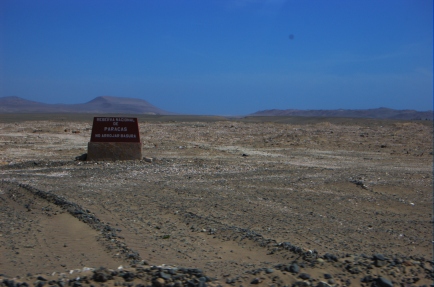
Paracas, which is about four hours’ drive south of Lima, was the site of a major earthquake several years prior and is still in recovery. The hotel that hosted the conference and a few nearby hotels had all been rebuilt from the ground up since the earthquake. The city is on a small bay that is protected from the Pacific. It’s very beautiful—desert sands that go right down to the bay. After a few days at the meeting, I managed to get the antenna set up.
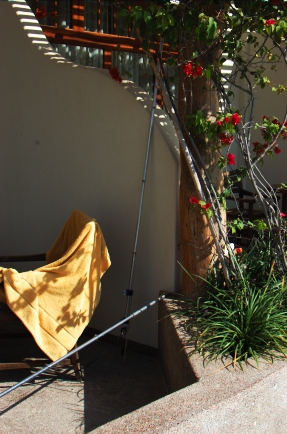
One of the things that surprised me was an excellent JA opening on 20 meters just after sunrise before I went to breakfast and then the meeting. I am pretty sure it was a direct-path opening because the signals did not sound like long path and the long path crosses the southern auroral oval, whereas the direct path does not. (Auroral absorption, by the way, is one reason that the long path can be more effective than the short path.) Any time I called CQ as OA5/K8GU, I was greeted with a roaring pileup. Not bad for an antenna propped up on my veranda. Verticals on the beach rule, and this one wasn’t even really on the beach.
At the request of a friend, I made a special effort to operate on 12-meter CW in the afternoon. The portable antenna would not tune up on 12 meters with the wire radials I had laid out. In a moment of desperation, I assembled some extra pieces of my portable antenna to produce a tuned radial that I clip-leaded to the ground lug as depicted in the photo above. It worked right away and I was quite popular there as well.
A comment about computers—my standard work-issued computer is a MacBook Pro, which although perfect for my work, is essentially useless for amateur radio. I know this will generate a torrent of discussion, but if you are accustomed to real contest/DXpedition logging software available for DOS and Windows, you know that the stuff for the Mac doesn’t cut the mustard. I have logged DX operations on paper (CE/K8GU), or in the case of the OX/K8GU operation, brought along a second computer. However, in a long-delayed flash of insight, I bought and installed VMware Fusion on the Mac in February. It runs Windows XP and TR4W with the WKUSB just brilliantly and with no special configuration. Aside from having to press Fn+F1 to CQ, this was an epic win. KB9UWU tells me that there’s an option in VMware to eliminate this nuisance as well.
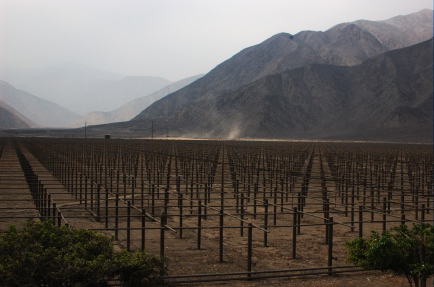
After the meeting in Paracas, we returned to Lima, where we celebrated the 50th anniversary of the Jicamarca Radio Observatory. The cornerstone of the Jicamarca facility is a 49.92-MHz radar that feeds an 18,720-element phased array, pictured above. Jicamarca is one of the most powerful radio transmitters in the world, capable of 4.5 MW output, and is used for a variety of atmospheric, ionospheric, and space science experiments. Like Arecibo, it was originally designed to perform incoherent scatter measurements of the ionospheric electron density profile.
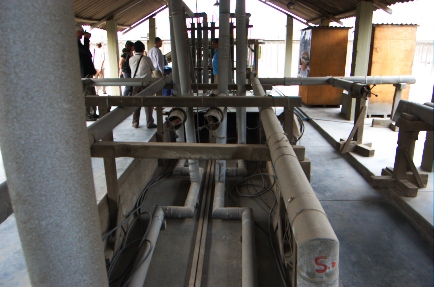
Lots of fire in that wire! Have you ever seen a coaxial cable that’s rated for over a megawatt at 50 MHz? This is the feedpoint of the phased array. There are a few tuned stubs in there, too.
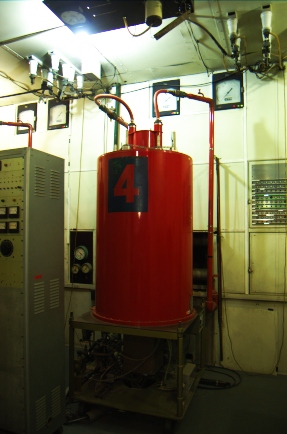
Here’s one of the four 1.5-MW transmitter cavities. A maximum of three are used together. When configured for three transmitters, the driver stage puts out 7 kW! Needless to say, everything is custom made on site. The transmitting tetrodes (8973s, if I recall correctly) are refurbished by the manufacturer as needed.
After Jicamarca, we went to Cusco, which is south and east of Paracas, and much more lush than the deserts around Lima and Paracas.
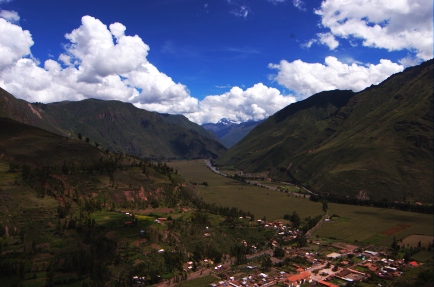
We spent a lot of time being tourists in Cusco and vicinity and I had some difficulty with my computer so I only made a handful of OA7/K8GU QSOs from Cusco on 17 meters. It is quite remarkable how much better the bands were from the coast. As someone who has operated from W3, W8, W9 and W0, I can attest to that difference as well. I missed my morning JA run…
A final thought—we drove through a lot of towns and communities in OA4, OA5, and OA7, on this trip. Nearly every town, no matter how small, had at least one building with an HF fan dipole on the roof. HF is alive and well in a mountainous country like Peru!
QSL information: If you worked OA5/K8GU or OA7/K8GU, the best way to get a confirmation is through ARRL’s Logbook of the World. I have been responding to direct cards (to my FCC address) with a one-day turn-around lately.
Ethan Miller, K8GU, is a regular contributor to AmateurRadio.com and writes from Maryland, USA. Contact him at [email protected].
WØ-SOTA.ORG
Hello friends,
Many who read my blog posts and have listened to episode 50 of the Practical Amateur Radio Podcast know my involvement with SOTA or Summits On The Air. While I’ve been concentrating on getting my new basement ham shack, podcast studio, home office and just general man-cave finished…I’ve also been helping in a small way spin up a new website for the WØ SOTA organization.
Our official press release which we’ve posted to many of the SOTA reflectors and websites is below. If you live in the WØ region or plan to visit someday, please bookmark the WØ-SOTA.org website.
On behalf of Steve, Matt and Bob. If we can help introduce you to the exciting and addictive world of Summits on the Air, please contact us.
Until next time…
73 de KD0BIK
NEWS FROM WØ-SOTA ASSOCIATION
The WØ-SOTA Association has Named 3-Regional Managers Plus Launched a NEW Website (http://w0-sota.org)
We are pleased to announce the WØ-SOTA Association has 3-New Regional Managers to help promote and encourage WØ-SOTA activities:
- Matt Schnizer/KØMOS Northern CO Region
Activator/Chaser for W0-Association
- Jerry Taylor/KDØBIK Central CO Region
Activator/Chaser and promoter via PARP/podcasts
and host for w0-sota.org website
- Bob Cutter/KIØG Western CO Region
Chaser and active SOTA promoter in Western CO
- Steve Galchutt/wGØAT Southern CO Region plus ND/SD
WØ-SOTA Association Mgr
Our BIG News is the WØ-SOTA Association has launched a new website (http://w0-sota.org). This web portal is primarily targeted at new and/or potential SOTA participants in the WØ area who are seeking Summits on the Air information. It also provides distilled content from other sources for already active SOTA regulars with documents, tools, links plus the latest regional news.
The site’s content is divided up into a welcome Homepage, About SOTA, Get Involved, How to …, SOTA-Tools/Resources, W0-SOTA, Contact and What’s Happening. Plus a dynamic feed of regional SOTA news and SOTAwatch realtime Spots plus links to multimedia photos and videos.
We hope you find w0-sota.org helpful in planning, chasing/activating and reporting your SOTA adventures!
Cheers, Steve & WØ-SOTA Team
PS: Special Thanks to our web grammarian, Chuck/N6UHB, who saved us from looking illiterate on w0-sota.org!
Jerry Taylor, KD0BIK, is a regular contributor to AmateurRadio.com and writes from Colorado, USA. He is the host of the Practical Amateur Radio Podcast. Contact him at [email protected].
Handiham World for 04 April 2012
Welcome to Handiham World.
Goodbye, cassettes.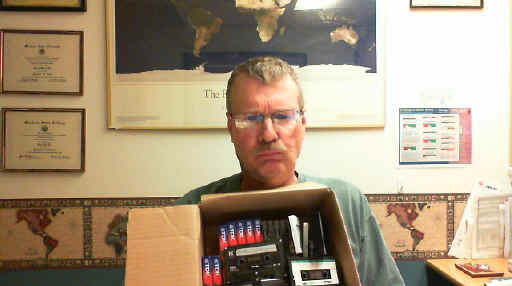
The old way of doing audio: Unhappy Pat poses with box of assorted tape cassettes. Each one holds only a portion of an audio book.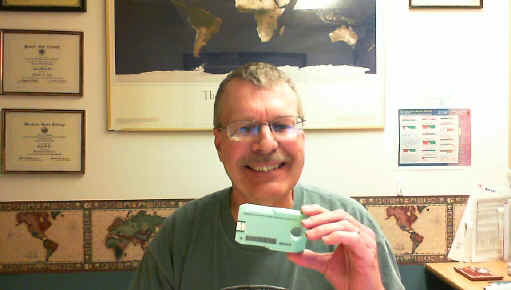
The new way: Smiling Pat holds up a single Library of Congress digital cartridge. Each new digital cartridge holds thousands of DAISY book pages or many hundreds of audio files.
Well, don’t say you didn’t know this was coming. Learning Ally and the Library of Congress have both made the switch to digital audio. Bookshare has been digital for a long time already. Now it is time to announce the final stage in the life cycle of the Handiham tape cassette service, one of the few remaining analog special format services that is still active.
Over the last decade digital audio has steadily overtaken analog tape cassettes in commercial applications. The old cassette format is no longer supported as it once was in boom boxes, portable players, and automobile audio systems. The tapes themselves are harder to find and many households no longer even have equipment to play cassettes. Anticipating the need for a digital system to replace this old technology that was also used by people who could not read regular print, the DAISY Consortium has developed the DAISY format book system that can couple audio files read by humans to specific sections and subsections of books. DAISY can also generate computer speech from computer text of a book, then arrange it all on a DAISY book that includes spoken word audio and all of the text, complete with headings for sections and subsections. Now that the Library of Congress has completed its distribution of the new DAISY-capable digital players to replace the aging 4-track tape cassette players, we feel confident that Handiham members, even those without computers, will still have access to the new digital cartridges.
Make no mistake; the digital audio is far better than the old cassette tape audio. If you are still using tape cassettes, now is the time to check out that new digital player. With the new player you can navigate using audio prompts and find the exact thing in a book that you want. You could never do that with tapes. In the bad old days of taped instruction manuals, it was nearly impossible to find that part about setting the memories on your new radio! With the new digital system, that is an easy task. In the old days, your audio had to come by postal mail. Today you can download it via the Internet and put it on your digital player with a small adapter cable. Even Handiham members without computers can still receive their new digital cartridges in the mail, in special mailers similar to the old Library of Congress tape mailers. The new system is designed to seem familiar to tape users, so that they can more easily learn it and make the transition.
The digital cartridges themselves are just a bit smaller than the old tape cassettes. They have a hole in one end to facilitate grasping the correct end of the cartridge, even by a person with some mobility limitations. The other end of the cartridge has a small USB connector that plugs into the digital player. It slips into the new player only one way, and the experience feels much like putting a cassette tape into the old player. The USB plug is protected by extensions of the plastic cartridge to protect it from damage. This format also keeps it from plugging directly into a standard computer’s USB ports. That is why blind users who receive their audio from Library of Congress digital downloads must use an adapter cable between their computers and their digital cartridges. We can also use such a cable to put Handiham digital audio onto the new cartridges.
There is a cost difference between a tape cassette and the new digital cartridge. Tape cassettes usually ran under a dollar, and because they are falling out of use they are available virtually free from people who are simply getting rid of old technology. The new digital NLS cartridges are around $10 to $12 each, but remember that each one holds the equivalent of hundreds and hundreds of tapes. And because the new digital cartridge has a different form factor than a tape cassette, it requires a new specialized NLS mailer. These run about $2.50 each.
The way the Handiham monthly digest audio program will operate takes into account the cost of these two items. In the old system, we bought tapes and mailers and sent them to our members. The members were responsible for returning the tapes and mailers when they had listened to the audio. The return rate was never 100%, so some tapes and mailers were lost to attrition each month.
In the new system, we will ask our members who want to have digital audio mailed to them by free matter postal mail to purchase their own digital cartridge and mailer, mark them with their callsign or identification, and send them to us for processing each month. We will fill the cartridge and return it. That way each individual has a vested interest in their own cartridge and mailer. This will make the program easier to manage because we won’t have to maintain a supply of our own cartridges and mailers. It also spreads the cost among those users who don’t have computers or Internet services. It has really become labor-intensive to support a smaller and smaller number of Handiham members who use the old tape cassette technology. As our tape duplicators get older, they are more likely to make recording errors. It has gotten to the point where tapes are sometimes custom-produced for a single member who needs something like one of our license courses but who has no computer. So serving that single member can get quite expensive, while hundreds of other members simply download their audio from our website with no staff assistance. The digital cartridge provides a means of still serving that single member with good quality audio, even if they do not have a computer.
So what is the plan?
We will continue to support tape cassettes through the end of 2012, but not for new members, beginning immediately. All new members will be told about the new digital cartridge plan. They will have a choice of either simply downloading the digital audio they need from our website or providing their own digital cartridge and mailer. Members who are currently using the old tape system will be notified of the new cartridge plan and they will be given some options about where to purchase the cartridges and mailers. Members who get their audio via the website will not be affected.
For Handiham World, I’m…
Patrick Tice, [email protected]
Handiham Manager

Pat Tice, WA0TDA, is the manager of HANDI-HAM and a regular contributor to AmateurRadio.com. Contact him at [email protected].
Nuts!
No e-mail from Elecraft today. My brain knows that it will be a week or two before kits start rolling out the door. My heart , however, tells me, “Go home NOW! Check your e-mail NOW! Now, now , now, NOW!”
This is going to be a long couple of weeks. Honestly, I can’t remember being this anxious about a package since being a kid around Christmas time. And the closer it gets, the harder it gets. I didn’t even really think much about this a couple of weeks ago – now my brain in zoning in on it way more often.
It’s a good thing I have distractions, like reading more of Jim W1PID’s reports of portable QRP operations from up in New Hampshire. Here’s another goody:
http://www.w1pid.com/jackson/jackson.html
72 de Larry W2LJ
QRP – When you care to send the very least!
PS: To all my Christian friends out there, wishes for a blessed Holy Week!

Larry Makoski, W2LJ, is a regular contributor to AmateurRadio.com and writes from New Jersey, USA. Contact him at [email protected].
The 2012 MNVOAD Training Conference: Lake County RACES/ARES®
This post was updated on 4/2/12 after Mr. Angelos kindly corrected me on several points.

Mr. Peter Angelos, KCØKRI
The 2012 MNVOAD Training Conference was well-worth attending! My favorite part, of course, was the presentation by Peter Angelos, KCØKRI, on the Lake County, MN RACES/ARES® response to the Pagami Creek Fire in September, 2011. His “keystone” speech was the first of the many sessions that day, and the only plenary session (the other 15 sessions were breakouts). While he focused upon RACES/ARES®, he also discussed principles that apply to any voluntary organization.
Here are my notes from Mr. Angelos’ presentation, in the order presented:
- The Pagami Creek Fire
- RACES/ARES® fills gaps in existing communication-systems, and reduces load on those systems.
- A lightning strike on 8/18/11 13 miles east of Ely started a fire that ultimately caused $23M in response expenses in Lake County. On 9/12/11 this became the largest fire in Minnesota since 1918, with 92,682 acres and over 800 workers assigned through 10/17/11. Fires are an annual occurrence in Lake County, the home of the famed BWCA (Boundary Waters Canoe Area); what made this fire unusual was its size.
- Cell phone coverage is the only phone service available in some parts of the area, and in some parts not even that. An 800 MHz public-safety trunked system using portable antennas was also set up to provide coverage.
- Many hours of training and dedication go into RACES/ARES® in preparing for an event like this.
- RACES/ARES® personnel stayed far behind the actual fire line.
- The Lake County RACES/ARES® group is a “spring chicken,” having been organized in mid-2009.
- On 9/12/11, RACES/ARES® was activated when the fire suddenly grew from 11,000 to 70,000 acres in only 24 hours due to winds gusting up to 35 mph. This drove the fire 16 miles in one day, toward a populated area. As evacuations increased, RACES/ARES® was activated. (In the Q & A that followed, one person asked how many messages were passed. Mr. Angelos said that only a handful of messages were actually passed. The activation of RACES/ARES® was a proactive attempt to prepare for a catastrophe in case this fire reached populated areas. When it became clear that this was not a threat, RACES/ARES® was deactivated.)
- As the smoke plume blew as far as Milwaukee, WI and Minneapolis, MN, the potential for health & welfare inquiries increased.
- A RACES/ARES® communicator was attached to the evacuation shelter manager. Hams were also located at the incident command post, staging area, evacuation checkpoints, and the EOC. The goal was to handle non-emergency traffic to take the load off police, fire, and rescue channels.
- The log of messages kept by RACES/ARES® is helpful for post-event evaluation.

Lake co. RACES/ARES® portable tower, AMCV and MCT deployed at a Canadian National RR mock fuel spill exercise in Two Harbors MN on September 14, 2010. Photo by BJ KDØHHW. (http://n0lcr.org)
The Lake County RACES/ARES® group uses two state-of-the-art vehicles, each outfitted with a PSN (Public Switched Network capable of establishing a cellphone network), as well as 2m/75cm FM/Packet and all HF modes including WinLink, WINMORE, Pactor, and other digital modes. One of these vehicles is a trailer of their own (the “MCT”), while the other is an RV (the “AMCV”) purchased by an 11 county consortium in the northeast Minnesota Arrowhead Region (with help from a grant). This vehicle can provide video conferencing and internet connection via satellite.
- The repeater network available is huge, extending from Ely, MN to Solon Springs, WI.
- RACES/ARES® deployed for a total of five days, suspending operations on 9/16/11 after contributing 633 man-hours. The Lake County RACES/ARES® group provided 445 of these hours, with the remainder provided by mutual aid from RACES/ARES® groups in four neighboring counties.
- The Relationships Necessary for Success
- The Lake County RACES/ARES® group would never have been invited to participate if it weren’t for the well-established relationships that had been built with Lake County Emergency Management and the Lake County Sheriff’s Office.
- Professional conduct and standard ICS documentation-procedures are essential for establishing credibility with served agencies.
- Served agencies expect to see stuff like this duty roster.
- None of this could have happened without the “four C’s” (communication, coordination, collaboration, and cooperation), the hallmark of VOAD. They couldn’t invite themselves to drills — they had to participate in non-emergency events like local marathons and sled dog races to demonstrate their capability and build relationships. Only then did they get invited to their first drill.
- Lake County RACES/ARES® volunteers are required to complete FEMA courses IS-100b, IS-200b and IS-700a.
- These hams are volunteers with the Lake County Emergency Management Department. They are required to have security background checks, they all have photo ID’s issued by Lake County, and they are even insured by the county.
- As a result of this relationship-building, the Lake County Emergency Manager got her amateur radio license (KDØHHW) and joined this RACES/ARES® group herself.
- So much credibility has been established with served agencies that this RACES/ARES® group has been entrusted with the housing and maintenance of the AMCV.
- Building these relationships is “complicated” but worth it. Their relationships are so good now, Mr. Angelos said, “We even have a Christmas pot-luck dinner together.”

Not only was this presentation of RACES/ARES® center-stage at the conference, but the Bloomington, MN Amateur Radio Association had a great display set up out in the vendor’s area, complete with a couple of Buddipoles and HF/VHF radios. Mr. Wayne Snyder, KCØZJB was kind enough to send me some photographs:
If you get a chance to attend a VOAD conference like this, I heartily encourage you to do so. Not only did I learn from KCØKRI’s presentation, I also learned quite a bit from several other breakout sessions. It is clear that ARES® work is not conducted in a bubble. To be efficient and effective (much less to even be invited to participate) in an emergency we must develop relationships with the agencies we serve, from governmental entities to other voluntary organizations. The time to do that is not at the time of the emergency itself, but long before. Conferences like this one can be a great way to learn from each other.


Todd Mitchell, NØIP, is a regular contributor to AmateurRadio.com and writes from Minnesota, USA. He can be contacted at [email protected].
Fred Whitton challenge support
A few years ago, when children, pets and work didn’t need so much attention I took part in a bike race (commonly called a sportive) which took in 6 passes in the lake district (kirkstone, honister, Newlands, Whinlatter, Hardknott and Wrynose) in a 112 mile day out on 2 wheels. This time I shall not be cycling but helping out with the local Raynet group.
Saturday had us checking the local communication paths for the various areas. It’s the first time I’ve been involved in any of this kind of thing so Paul, 2E0EET took me through the basics and now I’m looking forward to being a spectator and watching those who’ve trained for months on end to attempt this formidable ride.
It took me over 7:30 hrs when I did it do giving up the same amount of time with the rig at cockley beck (not too far from the Hardknott summit) seems a small price for my earlier enjoyment.
Alex Hill, G7KSE, is a regular contributor to AmateurRadio.com and writes from Cumbria, UK. Contact him at [email protected].
Seeing the big picture
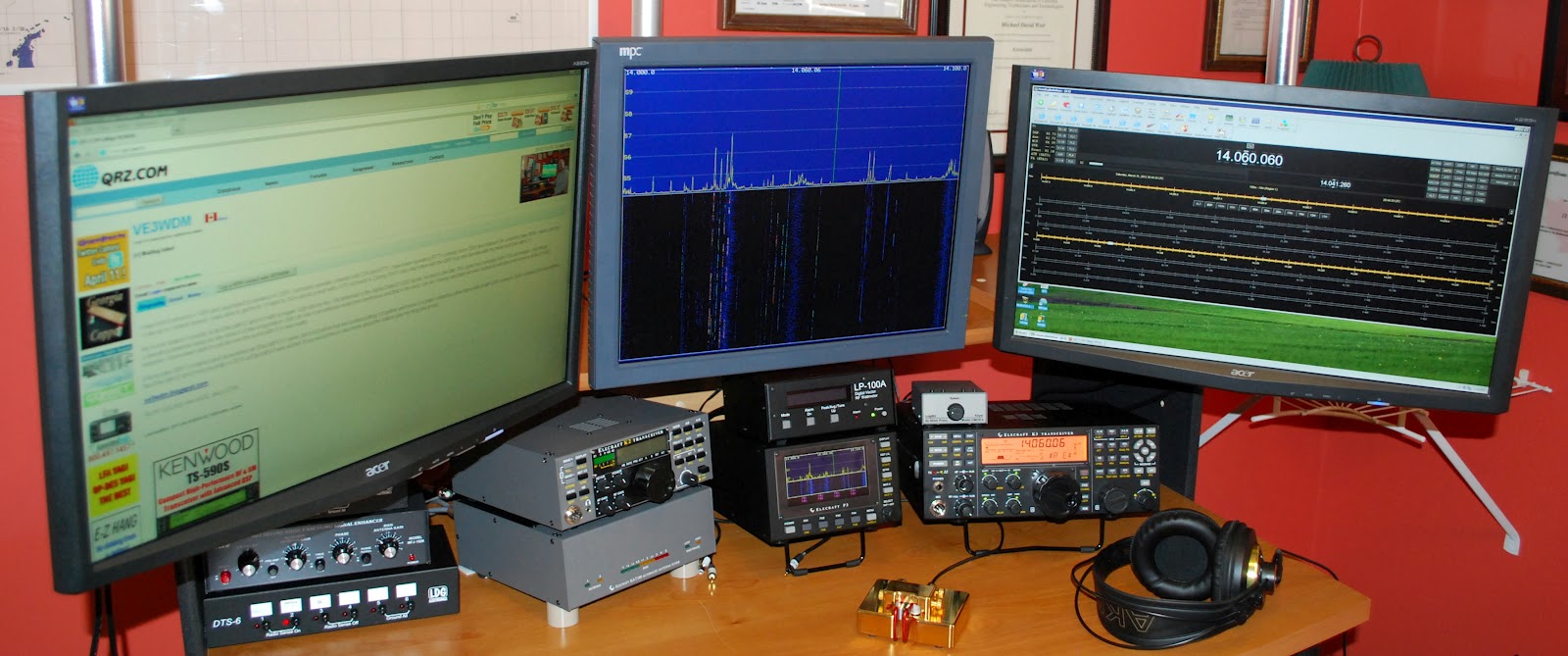 |
| The new setup |
 |
| Old setup |
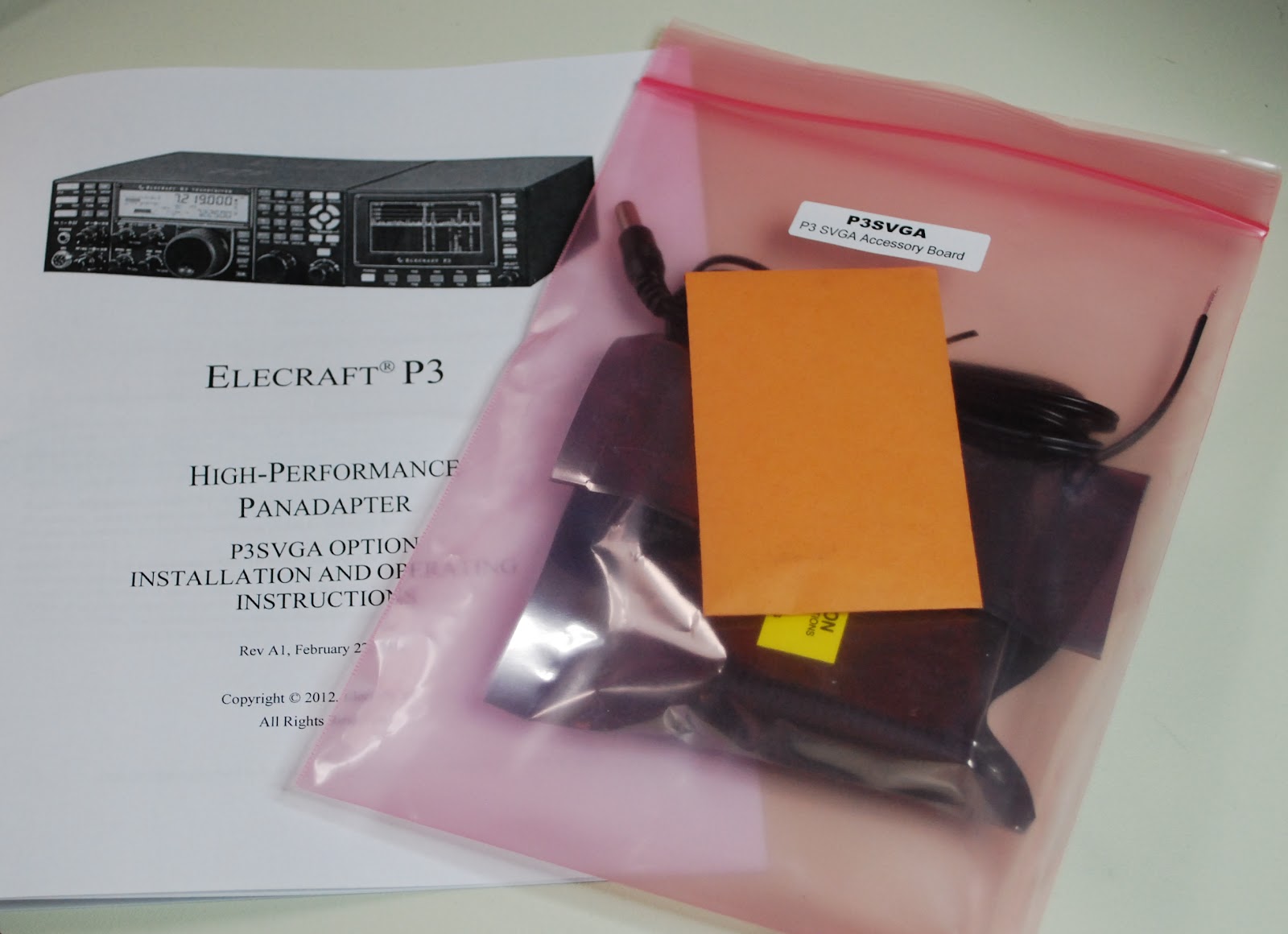 |
| New P3 SVGA |
time to give it a whirl. As a side note I kept a monitor that I was not using but knew I would use it some day. Well the day came when I needed a monitor for the SVGA it's great when I can reuse! The P3 was hooked back into K3 I then powered up the K3 and P3.......BUT the monitor was blank!!! Well lets reboot and try again.....NOTHING..........It them came to me go to the Elecraft site and update the P3's software. I did that and low and behold the monitor came to life with a great looking band scope! It sure is nice to have a scope up close and personal. Now Elecraft has plans to add mouse control, RTTY and CW decoding and more suggestions are piling in. When I added the new monitor I had to do some moving of equipment on the desk. The LP-100A, MFJ 1026 and the LDG switches all found a new home. The monitor was mounted on
moveable arm so when not in use I can move it out of the way. When the final position for all the equipment
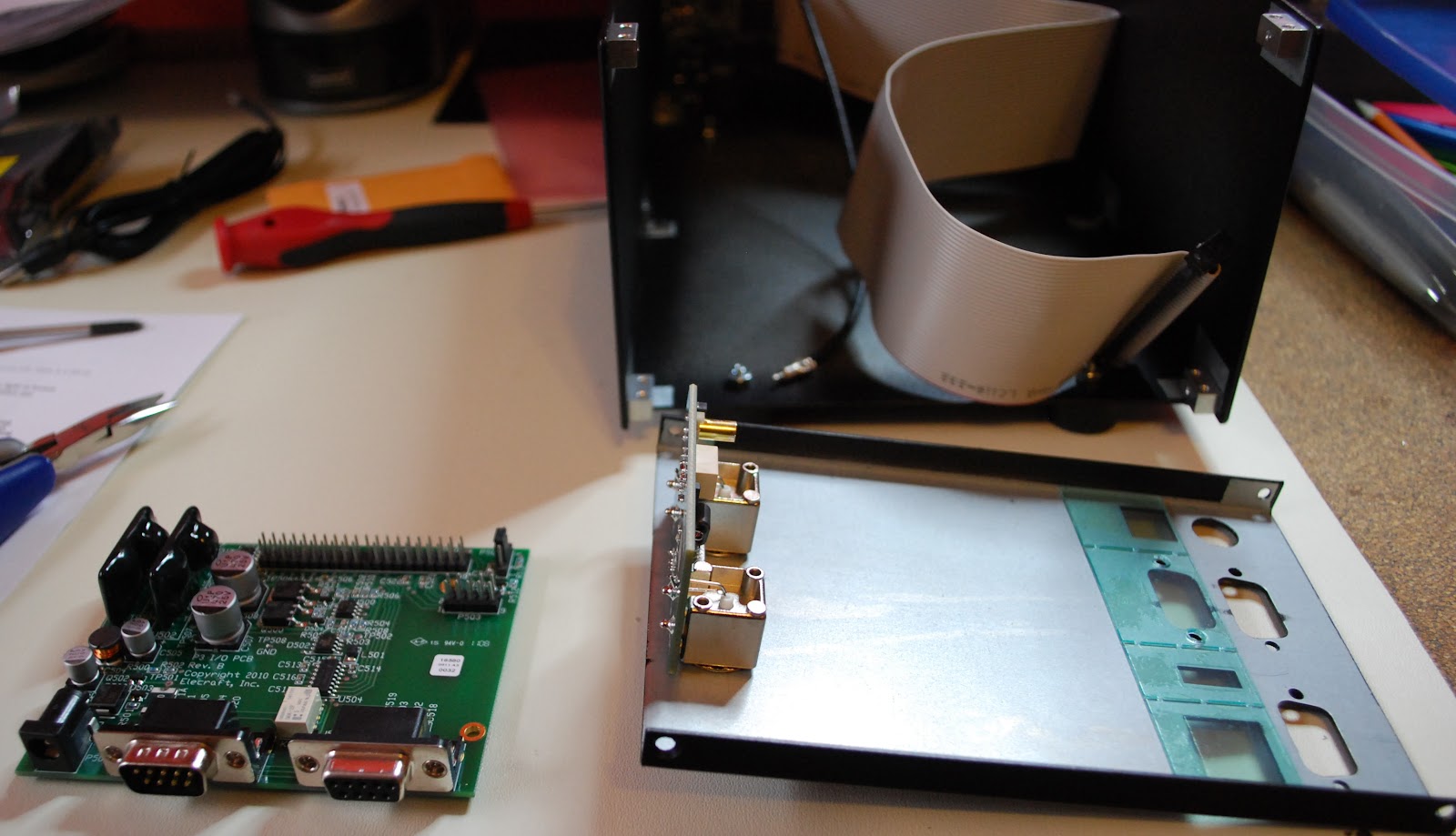 |
| P3 apart and ready for SVGA |
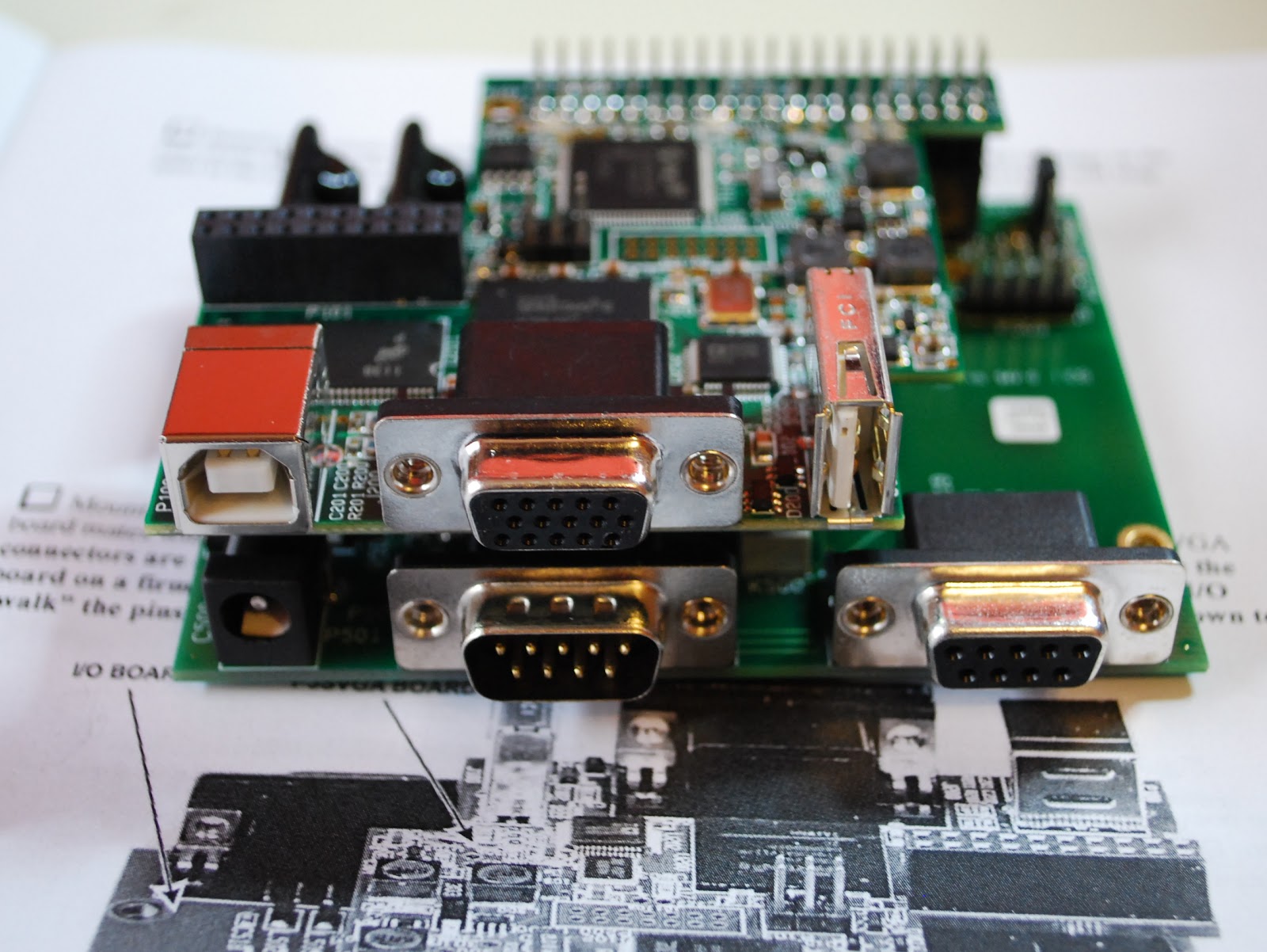 |
| SVGA installed |
labeled cables. My next project is to investigate logging software, radio control software and propagation software. I have been using a hodge-podge of software and I want to clean up the software end of my ham hobby so now it is time to look at some of the free ham software out there....any suggestions would be great!
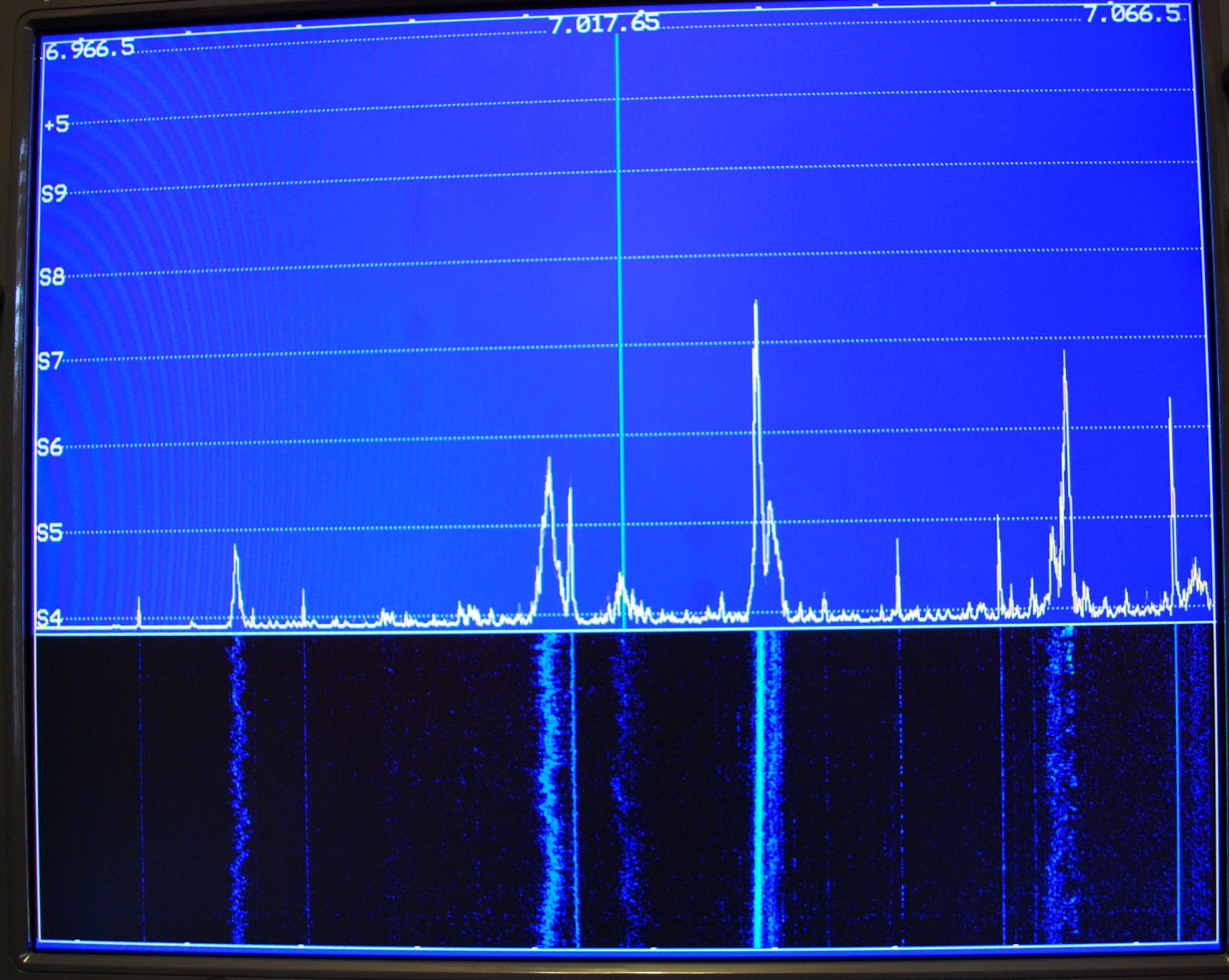 |
| View on the monitor |
 |
| Monitor out of the way |

Mike Weir, VE9KK, is a regular contributor to AmateurRadio.com and writes from New Brunswick, Canada. Contact him at [email protected].
 Ham Radio Deluxe |
 W5SWL Electronics |
 Ham Radio Prep |
 KB3IFH QSL Cards  Hip Ham Shirts  HamRadioAuctions HamRadioAuctions Reliance Antennas Reliance Antennas Enigma Shop Enigma Shop |  morseDX  Ni4L Antennas  R&L Electronics R&L Electronics antennas.us antennas.us QRV QRV |
- Matt W1MST, Managing Editor
