 |
 K7AGE goes to Las Vegas for NAB
 25 April 2012 | by
Randy, K7AGE, attended the National Association of Broadcasters convention in April. Randy took along his camera and has posted three new videos.
Randy explains his day job-
In this video Randy was interviewed by Kirk Harnack host of This Week in Radio Tech as seen on the TWiT.tv netcast network.
This Week in Radio Tech, TWiRT, with Randy K7AGE, from NAB 2012
Wednesday night a Ham Radio Reception is held sponsored by Bob Heil of Heil Sound and BSW. The reception was also streamed live on TWiT.tv network. Randy provides coverage of the event and was interview by Scott Wilkinson, host of Home Theater Geeks, also another TWiT netcast.
Tour around NAB 2012 and the Ham Radio Reception
Randy Hall, K7AGE, is a regular contributor to AmateurRadio.com , produces amateur radio videos, and writes from California, USA. Contact him at [email protected].
W5IG Cool Transmitter
A very creative way to add an important addition to your station. I would argue this may be essential for any radio amateur who find themselves in the hamshack for long periods.
Scott Hedberg, NØZB, is a regular contributor to AmateurRadio.com and writes from Kansas, USA. Contact him at [email protected].
Programming the UV-5R – and a word on the antenna
I mentioned last week that manual programming of the memories of the UV-5R was a step too far, at least for me! At the time I ordered a programming cable from Hong Kong. It’s yet to arrive, but today, I had an idea.
I currently have a programming cable for a Midland CT-790 here. Now that looks to be a clone of a Wouxun radio and I knew that the Baofeng UV-5R was supposed to use the same programming cable as a Wouxun. Would it work, I wondered?
I grabbed the Baofeng UV-5R software from the link on http://www.uv-5r.com and installed it. There was an initial problem, because the programming lead installed itself as COM11 and the UV-5R programming software only went up to COM8. I managed to convince the cable to be COM1 (that takes me back to packet days, playing with COM1….) and then fired up the software.
What I thought were error messages were in fact not! They are clearly interesting translations. After a couple of false starts, I managed to get the computer to read the UV-5R and download the memories into the programming software. From there, it was relatively straighforward to modify the memories and upload them back into the radio without incident. The UV-5R software is pretty basic, but it’s functional. Don’t expect handholding, but it beats trying to program the radio manually.
Since I had the Midland CT-790 (Wouxun KG-UV1P) here, I was curious about the antennas. I swapped the Midland’s antenna onto the Baofeng. Where I had struggled to blip up GB3UK on 430MHz with the Baofeng antenna, it worked better with the Midland. Same story on GB3WH on 145MHz. So it may be that the UV-5R antenna is worth replacing – although it’s certainly adequate. The Midland antenna is slightly longer and more flexible. The Midland antenna, if fitted on the UV-5R has a slight gap at the base which might not be ideal for longer term use.
All good fun and interesting – remembering this was a radio that cost less than £40. As K0NR comments in his blog on the UV-5R, a rig for the price of a tank of petrol/gas. Way less, for us…..!!

Tim Kirby, G4VXE, is a regular contributor to AmateurRadio.com and writes from Oxfordshire, England. Contact him at [email protected].
FT-790R, 1W of Forlorn Hope?
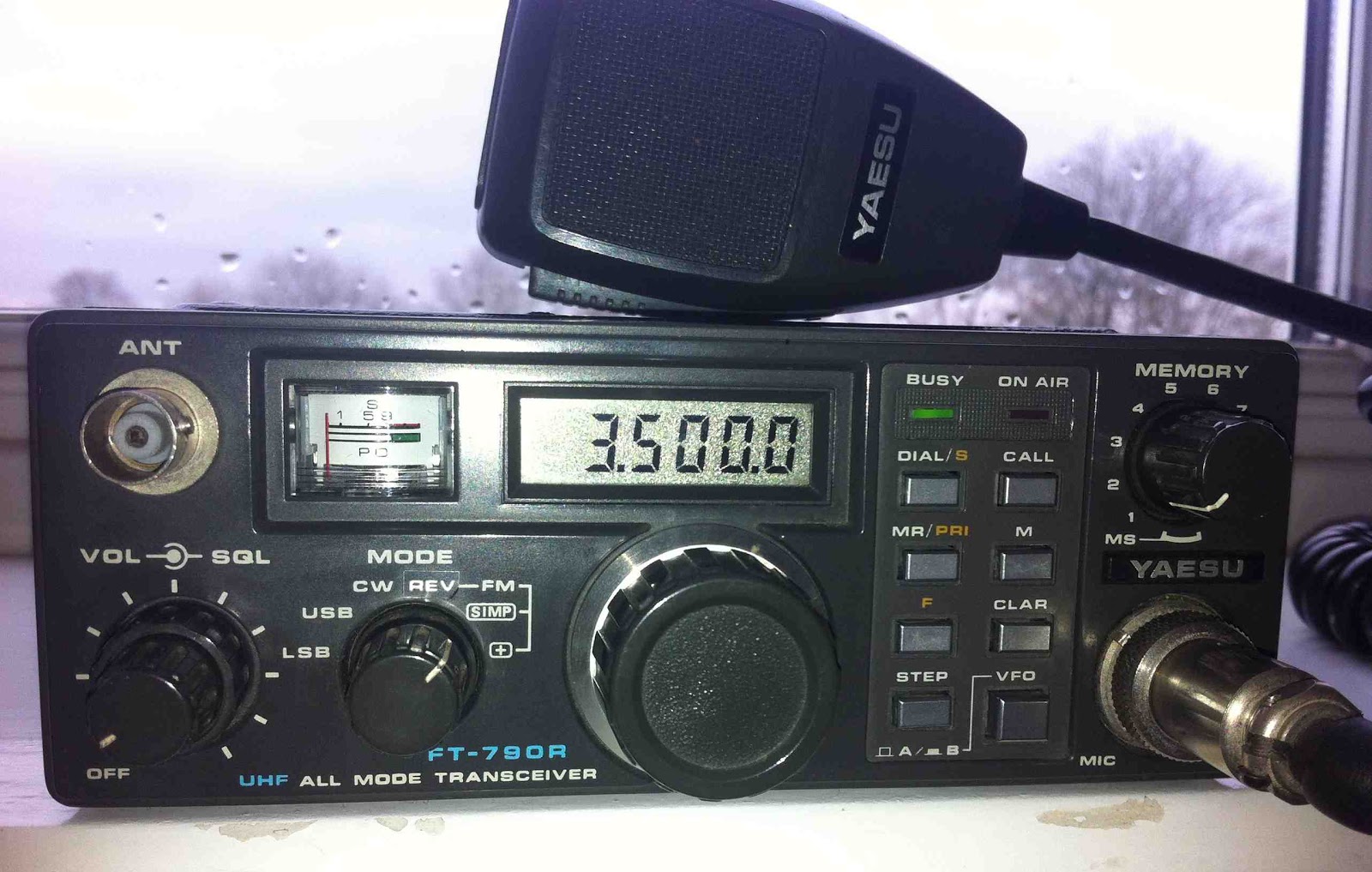 |
| FT-790, forlorn hope? |

Rob Law, MW0DNK, is a regular contributor to AmateurRadio.com and writes from Anglesey, Wales. Contact him at [email protected].
iOS CW app recommendations?

App Store search: "learn morse code"
I would like to use an iPhone app to learn CW. I think that most of my learning and practice will take place on the train each day, so listening to live CW is out of the question. For those of you that may have already done this, I was wondering if you have a favorite CW app. Post your recommendations in the comments.
–Neil W2NDG
Neil Goldstein, W2NDG, is a regular contributor to AmateurRadio.com and writes from New York, USA. Contact him at [email protected].
The fault that wasn’t
I thought my Baofeng UV-3R+ had developed a fault today. Whenever I changed channel the rig went into transmit.
Eventually I realized that the VOX was turned on. The clicks from the rotary channel knob were triggering it! Doh! I think I’m getting too dumb for this game.

Julian Moss, G4ILO, is a regular contributor to AmateurRadio.com and writes from Cumbria, England. Contact him at [email protected].
The World’s First Disposable HT
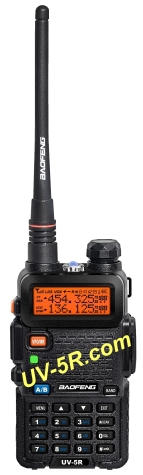 A few weeks back, I was
 wasting time doing important research on the internetz when I came across the Baofeng UV-5R Dualband Handheld Transceiver. This radio seemed to have a boat load of features but the sale price was $65. So I am thinking to myself, just how good is a $65 radio?
The last time I went out to a nice restaurant, I blew through $65 pretty quickly so this was not going to be a large purchase. In fact, I realized that we now have HT’s priced low enough to be an impulse buy. As one of my ham buds told me, “filling up the gas tank of my truck costs more than this radio!”
So, of course, I soon broke down and ordered one and it showed up on my doorstep a few days later. I’ve been using it off and on for a few weeks now. I’ve also noticed that there is a real buzz on the interwebz about this little radio. There is usual Yahoo Group (baofeng_uv5r) and youtube videos.
Here’s the short story:
While not perfect, for $65, this radio is impressive.
Besides using the radio and receiving good signal reports, I did check the receive sensitivity, transmit power and frequency — all good. There are quite a few reviews out there, so take a look at articles by W0HC, PD0AC and OE1RFC. Also, there have been quite a few reports of quality problems with this radio…probably more defects than equipment from the more established ham equipment vendors. See the Yahoo Group discussion to understand this better.
Similar to other radios from China, this radio has a quirky user interface…not as easy to use as my Yaesu FT-60. This means that the programming software is a necessity to get the radio set up correctly, which is the major downfall of the rig. The free software program is crapware, with many people reporting a variety of problems with installation and operation. I did finally get it to work, but it was very frustrating.
I find myself grabbing this HT when I head out the door and leaving my other radios sitting in the desk charger. Someone pointed out to me that the low price of this radio makes it an easy choice — if it gets dropped, broken, lost or stolen, I am only out a tank of gas. While I am kidding about the “disposable radio” idea, the low cost does affect how I use it.
73, Bob K0NR
Bob Witte, KØNR, is a regular contributor to AmateurRadio.com and writes from Colorado, USA. Contact him at [email protected].
 Ham Radio Deluxe |
 W5SWL Electronics |
 Ham Radio Prep |
 KB3IFH QSL Cards  Hip Ham Shirts  HamRadioAuctions HamRadioAuctions Reliance Antennas Reliance Antennas Enigma Shop Enigma Shop |  morseDX  Ni4L Antennas  R&L Electronics R&L Electronics antennas.us antennas.us QRV QRV |
- Matt W1MST, Managing Editor
