 |
 An editorial about the current state of Amateur Radio manufacturing
 12 May 2012 | by
 A reader sent this comment on my post about Heathkit’s demise:
“It would be a limited customer base, as with all the China crap coming in
hard to compete. Also noticed that they are selling 2mt/440 ht’s and
advertising that you do not need a license!!!look for interference to
public service and emergency com, reports against amateur radio, going
to be a tough nut to crack”
I have to disagree. First of all, some of the “crap” from China is actually pretty good, and giving the “big 3” some serious competition. You know, there was a time, back in the early seventies when everyone referred to the influx of Japanese-manufactured electronics as crap too. I remember this first-hand, as my interest in SW and AM DXing started in 1972. Look where that has gone. The Japanese are now the manufacturers of choice for our radios. Now, I cannot say that all of these new low cost radios are good (first-hand experience with a radio from FDC backs that up for me), but the BaoFeng UV-3R has set a new bar for value in a low-cost mini HT, as well as the highly-regarded Wouxun radios. It should be interesting as these companies evolve. Mobile radios are just starting to trickle in now, and who knows what’s next. Outside of radio, what about smartphones? Where are most of them made?
I watched this same thing happen with Shortwave receivers over the last decade. Companies like Degen, Tecsun, and Kchibo, first got into this market by being the manufacturers for labels like Grundig-Eton. The early radios were not good, but then a funny thing happened. The engineers listened to the public and made changes. They adjusted the performance and feature-set of these radios based on what the users were asking for. This is something that their predecessors never did. Sony, Panasonic, Philips, and even Taiwan’s Sangean, rarely made changes based on the enthusiasts comments and reviews. The result is that some of the best performing portable SW receivers for the money now come from China. Panasonic, and Magnavox, are out of the market here. Sony only makes one viable offering now, and Sangean continues to get mediocre reviews, after such a promising start. I personally own a few Tecsun, and Degen radios and although the build quality is not quite as good as the Sony, it’s VERY close now.
As far as selling to the non-licensed public, that problem has always existed. I don’t think that you were required to produce a license to buy any of the HTX radios at Radio Shack in the eighties and nineties, as well as the various commercial offerings they had. You were told by the packaging, and again in the manuals that you were required to have a license. Very few people at hamfests and flea markets ask for licenses before taking the cash from their potential customers. Add to that garage sales, and classified ads, and you can see that the ability to buy un-authorized radio equipment has always been there. Recent experience with jamming in my area led me to a small history lesson while investigating the source of the interference. This has been going on for a VERY long time, and you’d be surprised how much of the problem is caused by licensed Hams.
Craigslist, and eBay have made this easier, yes, and I believe that the equipment being sold should at least be restricted to its intended purpose (limiting Xmit frequencies for Amateur equipment), but we will never stop the sale of equipment to the unlicensed public, just as we will never stop music and software pirating.
The biggest travesty here is the existing players not recognizing the changing market. Kenwood’s new rig is gorgeous, but is another multi-thousand dollar rig what this hobby needs? What the HF side of the hobby needs is a competent, basic 160-10 (or 6) transceiver that can keep the interest of a newly licensed ham going, with a target sell price UNDER $500. 50-100 watts would be ok at this price-point, with the option of adding some power later. I honestly feel that if Kenwood, Yaesu, and Icom don’t wake up, and adjust to the changing market, they might go the way of the classic Shortwave manufacturers.
Sorry for the long editorial, but this is a sensitive subject for me. I have only been a ham for 9 months, and with all of the obligations I have, and trying to make sure there’s something left for retirement, plunking down $1000 on a radio at the moment is out of the question. Many of our new hams are in this same position. Instead of having most of us stay as Technicians, it would be nice to get these new hams interested in something other than their newly acquired VHF/UHF privileges. A General ticket is a fairly small step from Technician, and having some economical starter radios would help
Some of the kits, in my Kit Roundup post fit the bill, but most are CW kits. The SSB kits available are usually low power. There are a couple of examples with a bit more power, but fully assembled the price is already in the Alinco DX-SR8 range. Having said that, the Alinco is probably the closest rig to what I’m thinking of price-wise, but seems to get rather mediocre reviews. I guess for $519 you can’t be all that picky.
This is all my own opinion of course. Feel free to discuss in the comments.
–Neil W2NDG
Neil Goldstein, W2NDG, is a regular contributor to AmateurRadio.com and writes from New York, USA. Contact him at [email protected].
My New EchoLink Station: NØIP-R
[Update 6/8/12: The problem was the coax. Thanks, Antonio, for getting it fixed! (click here for story).]
[Update 5/16/12: Yesterday my EchoLink radio went deaf. For some reason the SWR has soared — the problem is with the transmission line and/or the antenna. Happily the antenna has a lifetime warranty, so if that’s the problem it won’t cost me anything. The hard part is getting at it!]
Finally! My EchoLink station, in the works for a month and a half, is on the air and on the Internet. If you want to give it a whirl, go right ahead! It’s listed as NØIP-R, node 695717.
The idea for this EchoLink station sprang from the SKYWARN class I attended a month and a half ago. I was lamenting the fact that Granite Falls, the city where I live, didn’t have access to the hub-and-spoke repeater system used by the Chanhassen office of the National Weather Service (click on the map to learn more):

Granite Falls is about half-way between Madison and Redwood Falls on the left side of this map.
So I asked Dean Herzberg, NYØI, if there were any plans to connect his nearby repeater to the NWS station with EchoLink. Dean replied, “No plans, but I would surely authorize the connection. I can’t, but you could!”
Um, me? It hadn’t dawned on me that I could do this myself. But once Dean gave me the nudge, I was off and running (or at least hobbling enthusiastically). I thought, hey, I already have a Linux/Ubuntu server running 24/7, and I have an old Yaesu FT-1500M in a box — all I need is an interface and a radio.

Finished EchoLink station. Gotta tidy up those wires!
So I bought a RigBlaster Plug-n-Play USB interface from Ham Radio Outlet and a dual-band antenna off eBay from Edison Fong, hooked it all together and gave it the ol’ smoke test.
It worked! At first I just set it up on a simplex frequency and connected to the EchoLink test server, with the antenna propped up against the wall. That way I could work out a few bugs at low power and in relative privacy.
The whole thing went on the back burner for about a month due to other priorities, but finally I punched some coax through the exterior wall into my bedroom. That’s where the server has been for a couple years, so that’s where the station went (I have a very patient wife!). I terminated the coax with an SO-239 bulkhead connector mounted on a blank wall-plate. On the exterior of the wall I applied hi-tech IPORS caulking compound (Individually Packaged Orally Reconstituted Sealant, i.e. chewing gum!).

Dean Herzberg, NYØI, mounting antenna.
But I just couldn’t bring myself to mount the antenna up there on the peak of my gable. Part of it is because I’m slightly handicapped, but mostly it’s because I would rather give up my ham license than go to the edge of my roof up that high. NYØI to the rescue! I’ve written about Dean before on this blog. He’s a great guy who would give you the shirt off his back. Well, Dean came over a couple days ago and put up my antenna for me, then joined my family for lunch. He’s a MN State Trooper and I’m an ex-cop from the Twin Cities, so we had plenty in common to talk about.
I’ve had to fiddle with the settings in EchoLink to get it to work right, but it seems to finally be working great. The two hardest things to get right were decoding DTMF tones properly and keeping two repeaters from chasing their tails when EchoLinked. After finally figuring out the right DTMF settings, I nearly pulled my hair out trying to test them with my HT. Finally I realized that I was de-sensing my Yaesu FT-1500M every time I transmitted with my HT! When I went a block away, it worked fine.
Now the National Weather Service office can EchoLink directly to Dean’s repeater so that they can hear SKYWARN spotters here in Granite Falls. Alternatively we can link his repeater with the repeater in Madison, to which the NWS already EchoLinks during severe weather — all you have to do is punch in the right DTMF code, and my EchoLink station will dutifully link them up.
Now I just need to get a better smartphone so I can run that EchoLink app . . .
Here are some photos of Dean mounting my antenna and of the station itself:


Todd Mitchell, NØIP, is a regular contributor to AmateurRadio.com and writes from Minnesota, USA. He can be contacted at [email protected].
Museum Ships Weekend 2012
Activating IOTA NA-143 (Pelican Is.) Brazos Valley Amateur Radio Club (BVARC), KK5W will be operating from radio rooms of WWII Submarine USS Cavalla and Destroyer Escort USS Stewart and two other temporary shoreside stations from Seawolf Park in Galveston, Texas. We will be operating on 10-80 meters (SSB and CW).
The club, in cooperation with the USS Cavalla and USS Stewart Historical Foundation invites all amateur radio stations to be a part of living history and commemorate the actions of these historic ships and crews. More information at http://www.bvarc.org/index.php?page=ms Special Event QSL with SASE via KK5W (QRZ.com) is available.
We are hosting a two meter net from Seawolf Park during the event on June 2nd from 1800Z to 1900Z and on June 3rd from 1500Z to 1600Z. If you don’t yet have HF privileges, this is a great way to take part. The repeater frequency is 146.94 Mhz ( – ) (PL 167.9 Hz). This repeater has wide coverage in the Houston-Galveston, Texas area and local hams are invited to participate in the VHF net.
KK5W will be making satellite QSO’s during the afternoon passes of AO-27 and FO-29 on Saturday June 2nd and hope other AMSAT members will be on the air too.
2012 is our fifth year of participation in MSWE. This year we’re coordinating our activities with other Texas museum ships in the area, the Battleship USS Texas in Laporte, Texas and the Tall Ship Elissa in Galveston. Don’t be surprised if you find them on the VHF net too.
This year more than 90 museum ships will be participating, many using their original call signs. Sponsored internationally by the Battleship New Jersey Amateur Radio Station NJ2BB, historic ship radio rooms are activated and QSO’s are invited from amateur radio stations in the United States and around the world. NJ2BB offers a certificate for stations that contact 15 or more ships and many of the individual ships offer individual QSL cards too.
The Museum Ships Weekend event recalls the actions of ships and crews from all periods of history.
Ron Litt, K5HM, is a special contributor to AmateurRadio.com and writes from Texas, USA. Contact him at [email protected].
Not the answer I was looking for
 Awhile back when I assembled the Amateur Radio Kit Roundup, I listed Heathkit as a potential source, and even answered a question in the comments about their rumored return to Amateur Radio stating that I would contact someone about it. I sent an email off asking how they were doing in this regard. Unfortunately I never received an answer. Here is some sad news at the ARRL explaining why (courtesy of a mention at eHam.net this morning). I was not a ham when Heathkit was in its heyday, but knew plenty of people who were, and like most of you, I was impatiently awaiting news of their return to the hobby. Hopefully this is not a permanent end, but only a temporary setback.
Neil Goldstein, W2NDG, is a regular contributor to AmateurRadio.com and writes from New York, USA. Contact him at [email protected].
Ham Radio Instagraming Fool
Well, I haven’t really posted an Amateur Radio story in a looong time, so I figured I was due. Hopefully, many people didn’t miss me too much. But I’m working on a couple ideas for the blog here, that will allow me to have some good stuff for you to enjoy without me getting all burnt out.

My newly repaired rig in one of my Instagram photos.
But in the time I was away, I did get a smart phone finally. For those wondering, an iPhone4S, and I love it. And one of the things I found I liked doing with it, is taking pictures with the 8MP camera that is built into it. The photos always seem to come out looking great. And I have already found a few neat accessories I would love to have available for myself for taking photos and even recording audio. Then allowing me to blog on the go and put up content as soon as I have recorded it or snapped a picture. And then have it of course, propagate out to the various social media sites I frequent.
Since I got my phone, it’s like a paradigm shift has occurred with the media I want to produce. It all seems so much easier and simpler to create it, then share it. All from one or 2 devices, where before, I had to use 5 or 6 devices. It really is empowering. I’ve started with just taking photos with the Instagram app and posting those on my Twitter and Facebook pages. And I’ve also started to play with another app called Blip.me Broadcast, which allows you to record 60 second audio clips and share them as well. Once I figure out how to integrate these into this site, it’s going to be a lot of fun doing this stuff! Till then, here are a few pics I took with Instagram. They of course are Ham Radio related.
73.


[adrotate banner=”12″]
Rich Gattie, KB2MOB, is a regular contributor to AmateurRadio.com and writes from New York, USA. Contact him at [email protected].
Bits and Pieces

At the moment we’re very busy with building and so again no time for the radio hobby. Actually I even have no time to remove the horizontal loop antenna. I don’t care but my XYL doesn’t like the ugly wire thing around the garden. I received the confirmation for QSOs on 12m and 17m with D2AM today. Another QSL that disappears in a dark box. At least I’m showing it here on my blog ;-). So different from DX hunting I did on 11 Mtrs years ago. Those QSLs are all in showmaps placed in ringbands at order of DXCC number as used in the 11 Mtr DXing scene. I could do that for these QSLs as well if I had the same feeling with it. But I don’t…..strange.
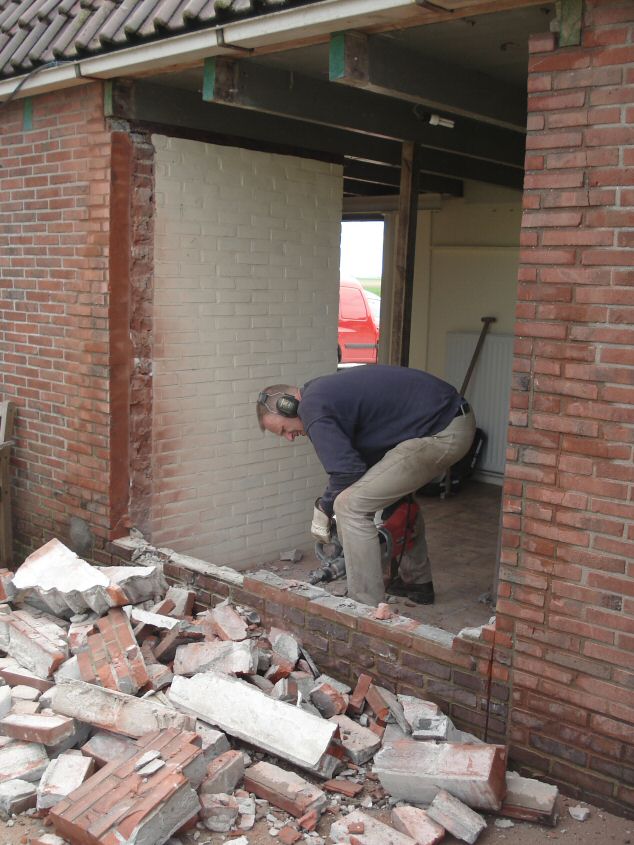
I had a afternoon off from my job to help my carpenter here at home. Very heavy work, it has to be done. We get doors to the garden which we wished for since we came here. Now a dream does come through. When calling with my little Baofeng HT over the PI2DZL repeater when biking home I got a response from PD2VB Bram. I already wrote about him a few posts ago as I managed my first QSOs with the Baofeng with him via the CoVersity network. Bram told me he did go for the full license, actually I misunderstood as he was going the same afternoon. Today I got a e-mail from him that he got through and did pass the exams to gt his full license. Congrats if you read this Bram, another good CB buddy from long time ago has got his full license.
Last year I wrote about CQfriends, a community website for radio amateurs like for instance facebook without all the irritating advertising. It still exists and is becoming quite populair. You can now upload your logs and they start with a exciting new award program. At the moment they are busy with a voting round for award number #1. The nice thing is that this first award is going to be delivered to the winner personally not matter where he lives! A great publicity stunt I think.
Bas, PE4BAS, is a regular contributor to AmateurRadio.com and writes from Groningen, Netherlands. Contact him at [email protected].
Dropping in on MN Section Traffic Manager WØLAW, the Legendary Lawman

Robert Meyer, WØLAW
When I moved out here several years ago, it didn’t take long before my phone rang with a radiogram delivered by Robert Meyer, WØLAW. He lives about a half hour away in the city of Marshall, and is the Minnesota Section Traffic Manager. Robert is a well-known traffic handler, consistently ranking at or near the top of the list for traffic handled each month in this state. He retired as chief jailer of the Lyon County Sheriff’s Office a couple years ago, hence his call sign.
I’d never met Robert in person before, but I’ve wanted to. Having heard through the grapevine that he had just had his new tower’s foundation poured, I decided to look him up last Saturday when I was in the neighborhood for my son’s classical guitar recital. Even though my son and I took him by surprise, he welcomed us warmly and gave us a tour. What a nice fellow!
Robert led us around to his backyard, a beautiful parcel of lush green grass with songbirds feeding tamely at several bird-feeders. A couple of wire antennas hung from his current tower, disappearing into some trees and a river valley beyond. The footing for his new tower, nestled up against the back of his house, was massive!
As we stood there discussing antennas and songbirds, I mentioned to Robert that I’ve always wanted to handle a radiogram but have never mustered the courage to do it. He could have laughed at me, but instead he kindly encouraged me to give it a try and then invited my son and I into his house so he could find “a few things” to help me.
You should see Robert’s shack! When you step inside the front door of his house, it’s in plain view — a most excellent man-cave adjoins his living room. Pretty soon my son and I were marveling at his equipment, stuff we might never see again except in catalogs! Delving into his well-organized file cabinet, in short order Robert came up with a couple of reference sheets and a booklet to help me handle traffic. He also tore off most of an ARRL radiogram pad and gave it to me, refusing to allow me to pay for it.
Click to view slideshow.
I’m grateful for Robert’s hospitality and generosity, not to mention his labor as Minnesota Section Traffic Manager. He represents a side of ham radio that has long been as mysterious to me as the dark side of the moon — QRO SSB NTS traffic handling. Once upon a time I wouldn’t have looked him up, but I think I’ve grown up a little since then. I’ve really come to appreciate the variety of people I meet in this hobby and the variety of activities they do.
Once upon a time my horizon was limited; if you were on HF CW I noticed you, especially if you were QRP, but I didn’t pay much attention to the rest of the ham world. I was cheating myself. I’ve loved CW, but I’m starting to like SSB and digital modes, too. I’ve loved QRP, but I’m also starting to appreciate what QRO can do (and the skill it takes to handle it). I’ve always preferred HF, but as I get to know the local hams I’m becoming surprisingly fond of VHF FM.
So I’m glad I looked up Robert, the legendary lawman — and I’m really glad he welcomed my son and I so warmly. Can you imagine getting a surprise visit from a blogger who snaps a picture of your shack for the world to see? That’s a bit much! Thanks, Robert, for being so nice to us and for being such a good sport.


Todd Mitchell, NØIP, is a regular contributor to AmateurRadio.com and writes from Minnesota, USA. He can be contacted at [email protected].
 Ham Radio Deluxe |
 W5SWL Electronics |
 Ham Radio Prep |
 KB3IFH QSL Cards  Hip Ham Shirts  HamRadioAuctions HamRadioAuctions Reliance Antennas Reliance Antennas Enigma Shop Enigma Shop |  morseDX  Ni4L Antennas  R&L Electronics R&L Electronics antennas.us antennas.us QRV QRV |
- Matt W1MST, Managing Editor
